Bhubaneshwar Travel Guide
The best months are October to February , cool and clear for the temple clusters, the caves and the Konark and Puri day trips. One thing to fix first: Nandankanan zoo and the...
When to visit Bhubaneswar, and the Monday rule
The best months are October to February, cool and clear for the temple clusters, the caves and the Konark and Puri day trips. One thing to fix first: Nandankanan zoo and the state museums are closed on Mondays.
- October to February: cool and clearThe most comfortable season, pleasant by day and mild at night. Ideal for an early Lingaraj darshan, walking the Old Town temple cluster, the Udayagiri caves and the day trips out to Konark and Puri. This is also when the free Sunday Ekamra heritage walk runs, so it is the season serious temple-lovers should aim for.
- Avoid the hot, humid summerApril to June is hot and sticky on the coast, often into the high thirties Celsius, and walking the temple clusters and the open caves is tiring. The monsoon that follows from about June can be heavy on this stretch of the Bay of Bengal, with the odd cyclone alert, so keep an eye on the forecast if you travel then.
- Come early in the dayWhatever the season, start early. The temple clusters and the caves are quietest and coolest in the morning, before the day warms up and the tour groups arrive. An early Lingaraj visit, before the mid-morning rush, is calmer and more rewarding, and it leaves the hot middle of the day for a museum or a long lunch.
- Mind the Rath Yatra surgeThe Puri Rath Yatra, which falls about 16 July in 2026, fills the whole region. Even though the chariot festival is in Puri, Bhubaneswar hotels, trains and roads book out around it, so either plan your visit deliberately for the spectacle and book weeks ahead, or steer clear of those dates if you want a calm temple city.
Nandankanan Zoological Park (the white tigers) is closed every Monday, and so are the Odisha State Museum and the Museum of Tribal Arts and Artefacts. The Dhauli Light and Sound show generally does not run on Mondays either. The temples and the ASI monuments (Rajarani, the Udayagiri caves, Konark) stay open, but if the zoo or the museums matter to you, do not plan them on a Monday. Build the week so Monday is a temples-and-caves day.
How to reach Bhubaneswar
Bhubaneswar has its own airport and is a major railway hub, and it is the natural base and gateway for the Odisha Golden Triangle with Puri and Konark.
- By air to BhubaneswarBiju Patnaik International Airport (BBI) is right in the city and well linked to Delhi, Kolkata, Mumbai, Bengaluru, Chennai and Hyderabad. It has a few international routes such as Bangkok, Dubai, Singapore and Kuala Lumpur, but no direct flights from the West, so visitors from the US, UK and Europe connect through Delhi or Kolkata.
- By trainBhubaneswar railway station is a major hub on the east coast line, with direct trains from Kolkata in about 7 to 8 hours and from Delhi, Chennai and other cities. Book well ahead through IRCTC, especially around the Puri Rath Yatra in mid-summer, when seats vanish weeks in advance.
- The Odisha Golden Triangle baseBhubaneswar pairs naturally with Puri (about 60 to 65 km) and the Konark Sun Temple (about 65 km) in the popular Odisha Golden Triangle, an easy loop by car. We arrange a car with an experienced driver for the temple city, the day trips and the airport transfers, which is far smoother than juggling local buses on a tight schedule.
- Getting around the cityThe temple clusters, the caves and Dhauli are spread out, so a hired car or autos make most sense. App cabs and autos work in the city, and a full-day private cab covering Bhubaneswar, Konark and Puri is commonly quoted at about 3,300 to 4,700 rupees for the car, depending on whether you take a hatchback, a sedan or an Innova.
Fly into Delhi or Kolkata and connect to Bhubaneswar (Biju Patnaik International). There are no significant direct international flights to Bhubaneswar from the West, so plan a one-stop connection through a metro.
Bhubaneswar has a handful of direct international routes (such as Dubai, Bangkok, Singapore and Kuala Lumpur); otherwise connect through Delhi or Kolkata. Kolkata is the closest big hub.
Bhubaneswar airport links the metros and the railway station has direct trains from Kolkata, Delhi, Chennai and beyond. From here the road out to Puri and Konark is quick and easy.
The temples and monuments, and what you actually pay
Bhubaneswar is the temple city: the great Lingaraj, the jewel-like Mukteshwar and Rajarani, and the ancient Jain caves. Some are free living shrines and some are ASI-ticketed, which is worth knowing before you go.
- Lingaraj Temple, the spiritual heartThe great 11th-century Shiva temple, the largest in the city and the heart of the old Ekamra Kshetra. There is no entry fee for those who may enter, and it is commonly open about 6 am to 9 pm with a long afternoon break (often quoted as roughly 12:30 pm to 3:30 pm), so reconfirm darshan hours. Note that non-Hindus are not admitted inside; the next section explains the viewing platform built outside the wall for them.
- Mukteshwar and Brahmeswara, free and lovelyTwo of the finest small temples anywhere, and both free to enter. Mukteshwar is famous for its carved stone gateway, the torana, and opens roughly 6:30 am to about 7:30 pm; Brahmeswara, a little out, opens from about 5 am. They are calm, beautiful and open to all, faith no barrier.
- Rajarani Temple, ASI-ticketedA sculpture-rich 11th-century temple with no deity in the sanctum, so it is open to all visitors. It is ASI-ticketed: commonly about 20 to 25 rupees for Indian, SAARC and BIMSTEC visitors and about 250 to 300 rupees for other foreign nationals, children under 15 free, open roughly 6:30 am to 7 pm (sunrise to sunset). An OCI card generally gets the Indian rate, so carry it and reconfirm at the counter.
- Udayagiri and Khandagiri Jain cavesAncient rock-cut caves (around the 1st century BCE) for Jain ascetics, about 6 km out. The Udayagiri side is ASI-maintained and ticketed, commonly about 15 to 25 rupees for Indians and about 200 to 300 rupees for foreign nationals (listings vary, so reconfirm at the counter), under-15s free, open sunrise to sunset. The Khandagiri side, with an active Jain shrine, is not under ASI and is generally free.
The living temples (Lingaraj, Mukteshwar, Brahmeswara) are free; the ASI monuments with no active worship (Rajarani, the Udayagiri caves) are ticketed at about 15 to 25 rupees for Indians and about 200 to 300 rupees for foreign nationals, with OCI cardholders generally paying the Indian rate. Carry small cash and your photo ID, and reconfirm the current fee at the counter, as ASI rates are revised from time to time and online listings often lag the gate.
The Ekamra Old Town circuit, and the Lingaraj viewing platform
The best way to feel the temple city is the Old Town cluster around Bindusagar, ideally on the free Sunday Ekamra Walk. And there is one rule to understand first: non-Hindus are not admitted inside Lingaraj, but a viewing platform outside the wall lets them see it.
- The Lingaraj entry rule and the viewing platformLingaraj does not admit non-Hindus. Because the compound wall is high, a raised viewing platform was built just outside the wall so that non-Hindus and foreign nationals can see and photograph the temple from outside; ask locally for the platform, reached by following the wall round from the main entrance. It is the same mechanic foreign visitors meet at Puri's Jagannath Temple, and the dignified way to take in the great shrine without causing offence.
- Join the free Ekamra Walk on SundayEkamra Walks runs a free guided heritage walk through the Old Town temple cluster on Sunday mornings, starting around 6:30 am from the Mukteshwar Temple and covering Lingaraj, Parasurameswar, Vaital Deula, Ananta Vasudev and others over about 2 km, ending at Ekamra Van by Bindusagar. Run by the Bhubaneswar Development Authority with Odisha Tourism, the regular season is roughly mid-November to end-February and you book a free slot online at ekamra-walks.com. We can line up your dates with it.
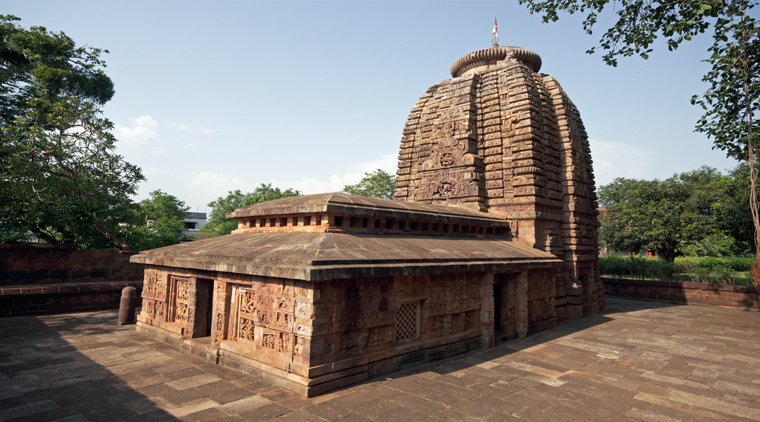
- The Bindusagar clusterThe sacred Bindusagar tank sits at the centre of the old Ekamra Kshetra, ringed by dozens of temples within easy walking distance. Parasurameswar (one of the oldest, 7th century) and the tantric Vaital Deula are highlights, and most of these living shrines are free to enter, so the whole cluster can be seen on foot in a slow morning.
- Pair it with Rajarani and the cavesAfter the Old Town cluster, the ASI-ticketed Rajarani is a short hop, and the Udayagiri and Khandagiri Jain caves are about 6 km out. Together they make a full, varied day in the temple city before you head out to Konark and Puri. A good early start lets you do the cluster, Rajarani and the caves in a single unhurried day.
The non-Hindu entry rule at Lingaraj is long-standing and applied, as it is at Puri's Jagannath Temple. The dignified way to experience Lingaraj from outside is the raised viewing platform built against the wall for that purpose. The good news for every visitor is that Rajarani, the Jain caves, Mukteshwar and Brahmeswara are open to all, so the temple city is rewarding whatever your faith. Dress modestly, remove shoes where asked, and you will be welcomed warmly.
Signature experiences and day trips
Beyond the temples, these are the experiences people remember, and how to arrange them, from the Konark chariot to Ashoka's peace hill and the white tigers.
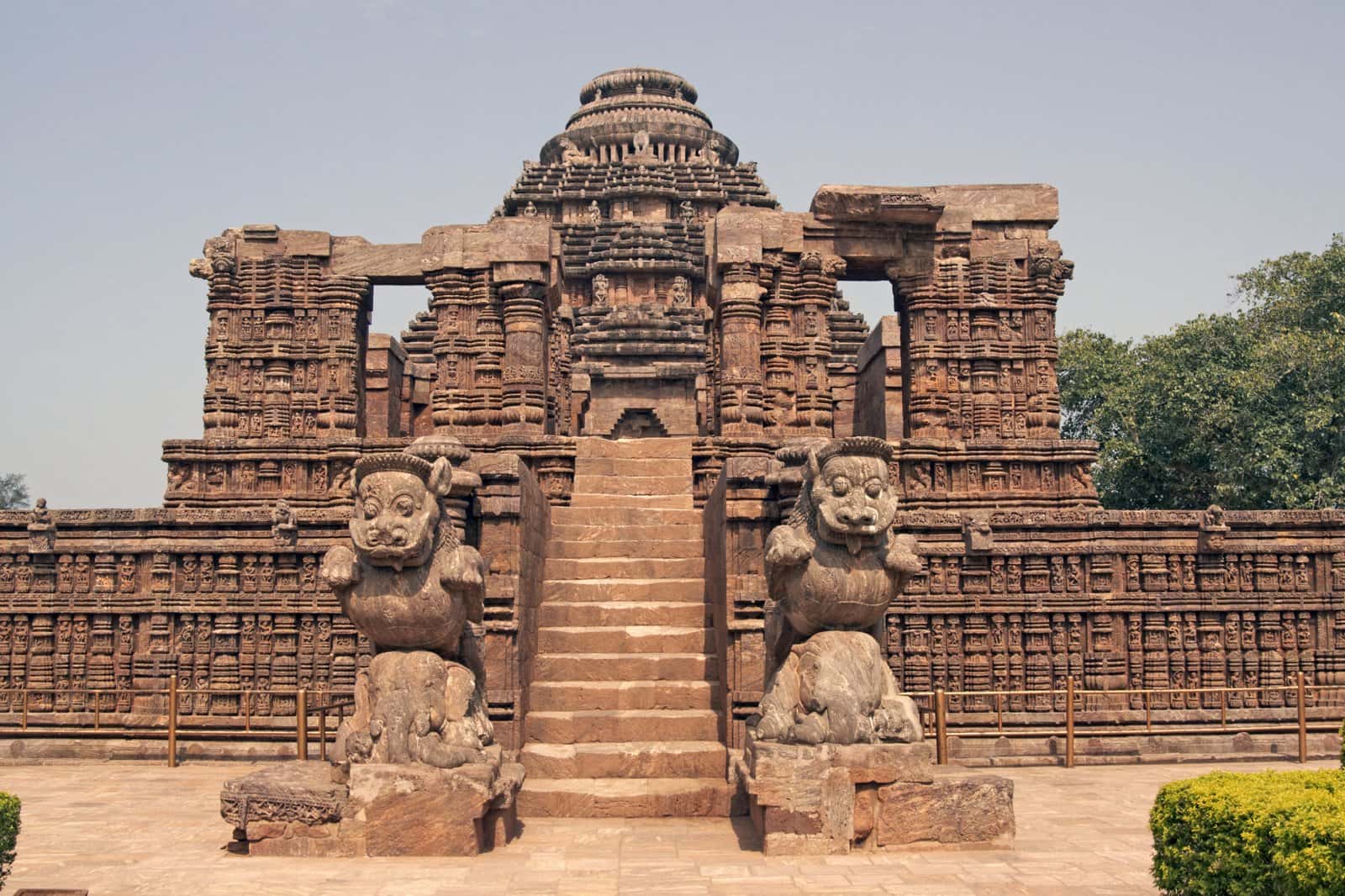
- Day trip to the Konark Sun TempleThe 13th-century Sun Temple at Konark, about 65 km via the Puri road, is a UNESCO World Heritage site shaped as the sun god's giant stone chariot. Entry is about 40 rupees for Indian, SAARC and BIMSTEC visitors and around 600 rupees for other foreign nationals, under-15s free, open roughly sunrise to sunset. An OCI card generally gets the Indian rate. Come early, take a good guide, and read the famous wheel-sundials before the heat builds.
- Pair Konark with Puri for the Golden TriangleFrom Bhubaneswar, Puri (about 60 to 65 km) and Konark (about 65 km) complete the Odisha Golden Triangle. Many visitors base in Bhubaneswar and do Konark and Puri as a single long day trip, or stay a night in Puri for the beach. Remember that non-Hindus are not admitted inside Puri's Jagannath Temple either, and there is a viewing point and rooftops nearby for them.
- Dhauli, where Ashoka turned to peaceAbout 8 km south, Dhauli is where Ashoka's Kalinga War was fought, after which he embraced Buddhism. The hilltop white Shanti Stupa (Peace Pagoda) and Ashoka's rock edicts are the draw. The evening Light and Sound show generally does not run on Mondays, so check the day before you build it into an evening.
- Nandankanan for the white tigersAbout 17 to 20 km out, Nandankanan Zoological Park is famous for its white tigers and a lion and tiger safari, set in forest by a lake. It is closed every Monday and open roughly 7:30 am to 5:30 pm in summer and about 8 am to 5 pm in winter; entry is around 50 rupees for an Indian adult and about 10 rupees for a child, with online booking to skip the queue. A favourite with families.
- Pipili applique and Raghurajpur on the Puri roadOn the road towards Puri, Pipili is famous for its bright applique (chandua) hangings, and Raghurajpur is the heritage village of Pattachitra painters, where many artists will demonstrate the craft at no charge. Both are best bought directly from the artisans, and make colourful stops on a Konark or Puri day.
- A glimpse of Chilika, if you have a spare dayIf you can add a day, Chilika, Asia's largest brackish-water lagoon, is a few hours south and known for its winter migratory birds and the chance of Irrawaddy dolphins. It is a longer trip than the Golden Triangle core, but a lovely change of pace from the stone temples for travellers with time.
Where to stay in Bhubaneswar, and whether to overnight in Puri
Most visitors base in central Bhubaneswar for the temples, the airport and the day trips, and decide whether to add a night in Puri for the beach. Here is how the areas and budgets break down.
- Central and Master Canteen areaThe central business district around Master Canteen, Saheed Nagar and Janpath has the widest choice of business and mid-range hotels, easy access to the railway station and a short hop to the airport. It is the practical base for the temple city and the day trips, and where most tour packages put you.
- Old Town, for temple-first travellersStaying near the Old Town and Lingaraj puts you on the doorstep of the temple cluster and the Sunday Ekamra Walk, which is a real bonus for an early, uncrowded darshan. Choice is more limited here than in the new city, so most travellers stay central and drive the short distance in for the morning.
- A night in Puri for the beachMany travellers do Bhubaneswar as a base and add a night in Puri on the coast, doing Konark on the way. Puri has plenty of sea-facing hotels, but it books out and prices spike around the Rath Yatra, so plan that leg early if your dates fall near mid-July.
- Room budgetsBudget hotel rooms in Bhubaneswar run from roughly 1,000 to 2,500 rupees a night, mid-range about 2,500 to 5,000 rupees, with comfortable business hotels above that. Rates are reasonable for a state capital outside festival surges, and rise sharply across the region around the Rath Yatra, so book ahead if you travel then.
Because the airport, the temple clusters, Dhauli and the Konark and Puri road all radiate from the city, the simplest plan for most travellers is to base in central Bhubaneswar and day-trip out, adding at most one night in Puri for the beach. That keeps your luggage in one place, your darshan early, and your driver familiar with the loop, and it saves the hassle of checking in and out for a compact region you can cover from a single hotel.
Bhubaneswar costs and a realistic daily budget
Bhubaneswar is gentle on the wallet: many temples are free, the ASI monuments cost a few tens of rupees, and the main expense is the car for the spread-out sights and the day trips.
- The big line item is the carBecause the temple clusters, the caves, Dhauli and the Konark and Puri road are spread out, transport is the main cost. A full-day private cab covering Bhubaneswar, Konark and Puri is commonly about 3,300 to 4,700 rupees for the car, depending on vehicle, which split across a family or couple is very reasonable for the ground it covers.
- Entry fees are tinyMost of the great temples (Lingaraj, Mukteshwar, Brahmeswara) are free. The ASI monuments cost only about 15 to 25 rupees for Indians at Rajarani and the Udayagiri caves and about 40 rupees at Konark, with foreign nationals paying more but OCI cardholders generally paying the Indian rate. Nandankanan is around 50 rupees for an adult. None of the tickets will dent a budget.
- A rough daily budgetExcluding your room and long-distance transport, a frugal traveller can do a day on about 1,500 rupees including local transport, tickets and simple meals, while a comfortable day with a private car, all tickets, a guide and restaurant meals runs about 4,000 rupees and up. Odia thali meals are excellent value, and street snacks cost very little.
- Cash, cards and UPIHotels, bigger restaurants and many shops take cards and UPI, but temple tickets, autos, small eateries and artisan villages run on cash, so carry some. ATMs are easy to find in the city. Agree any auto or guide fare before you set off, as a quoted rate to a visitor can start high.
Unlike a fort-and-palace trip, the sightseeing tickets here are almost an afterthought; the real spend is the car that ties the spread-out temples and the Konark and Puri day trip together. Booking a single full-day cab or a package car for the loop, rather than haggling auto by auto, is both cheaper over a day and far less tiring, and it is the one decision that most affects what a Bhubaneswar trip costs.
Practical logistics: food, footwear, guides and getting around
The small things that make a temple-city day smooth, from bare feet at the shrines to the Odia food, licensed guides and how the spread-out sights connect.
- Footwear and temple etiquetteMost temples require bare feet, so wear comfortable, easy-to-remove footwear and carry socks for hot stone floors in summer. Dress modestly at the shrines, cover shoulders and knees, and follow any no-camera signs in the sanctums. A pair of slip-ons saves a lot of fuss across a temple-heavy day.
- Food and waterOdia cuisine is a highlight: the dalma, the thali meals and, in Puri, the Mahaprasad cooked in earthen pots at Ananda Bazaar. Eat at clean, reputed places, prefer bottled or filtered water, and take the usual care with street food in the heat. Vegetarian options are everywhere, given the temple culture.
- Use a licensed guideAt Konark especially, a good guide turns a pile of stone into a story, and the carvings reward one. Arrange a licensed guide through your hotel or operator rather than picking one up at the gate, where unofficial guides cluster and quote high. The same goes for the Old Town cluster, where the history is dense.
- Getting around and connectivityThe sights are spread out, so a hired car or autos make most sense; app cabs and autos work in the city. Mobile coverage and data are good across Bhubaneswar and the Golden Triangle road. Odia, Hindi and English are all widely understood in the tourist trade, so communicating is easy for overseas visitors.
Safety, panda pressure, and staying well
Bhubaneswar is welcoming and generally safe, but the temple touts and panda donation pressure catch some visitors out. A little awareness keeps the day happy and respectful.
- Panda and donation pressure at the templesAt Lingaraj, as at Puri, some pandas (priests) and helpers press hard for large donations or a paid special darshan, sometimes quoting a big figure. Be polite but firm, give only what you choose, and do not hand cash to anyone who simply approaches you outside the official channels. Arranging a licensed guide through your operator avoids most of this friction at the gate.
- Unofficial guides and overchargingUnofficial guides and some auto drivers quote high to visitors, especially at Konark and the caves. Agree any fare or fee before you commit, and prefer a licensed guide and a pre-booked car. The friction here is sales pressure rather than anything threatening, and a firm, friendly no settles it.
- Heat, sun and waterThe open monuments and the climb around the caves are tiring in the heat, so carry water and sun protection, especially April to June, and rest in the hot middle of the day. Drink bottled or filtered water and take the usual care with street food, and you will stay well across a temple-heavy itinerary.
- General safety and solo travellersBhubaneswar is a relatively calm state capital and most travellers, including solo women, find it manageable with standard city precautions: keep valuables close in crowds, use registered cabs at night, and prefer busier areas after dark. The crowds and any pressure peak around the Rath Yatra, so factor that into your dates.
These are working temples, not museums. Dress modestly, remove shoes where asked, do not photograph inside sanctums where it is restricted, and keep voices low during prayer. Non-Hindus should use the Lingaraj viewing platform rather than attempting entry, and everyone should accept that some inner areas are for worshippers. A little respect is repaid with genuine warmth across Odisha.
Bhubaneswar for every kind of traveller, and on access
Bhubaneswar rewards very different visitors in different ways. Here is what it offers you, and the one tip that matters for each, including how a senior visits comfortably.
- Senior travellers and on accessibilityVery doable with planning. The Old Town temple cluster can be walked gently in the cool morning, and a car drops you close at each stop. Go to Lingaraj early to beat the heat and the crowds, keep the hot middle of the day for a rest, and let your operator arrange a smoother darshan and a licensed guide. The caves involve some steps and uneven ground, so take them slowly or admire the lower ones.
- Families with childrenNandankanan zoo with its white tigers and lion and tiger safari is a sure hit, and the Jain caves are fun to clamber around. Just remember the zoo and the museums are closed on Mondays, book the zoo tickets online to skip the queue, and carry water and sun hats for the open sites.
- CouplesThe jewel-like Mukteshwar and Rajarani temples, an early Old Town walk, and the drive out to Konark and the coast make Bhubaneswar a gentle, cultured base. A night in Puri adds the beach and a sea-facing dinner, turning a temple trip into a relaxed long weekend.
- Spiritually inclined visitors and pilgrimsAs the temple city and old Ekamra Kshetra, with Lingaraj at its heart and Puri and Konark close by, Bhubaneswar is a profound base for the Odisha Golden Triangle. An early Lingaraj darshan and the free Ekamra Walk are the deep experiences here, and Puri's Jagannath, the eastern Char Dham, is a short drive on.
- Budget travellersReach the city cheaply by train, and many of its best temples (Lingaraj, Mukteshwar, Brahmeswara) and the Sunday Ekamra heritage walk are free. The ASI monuments cost only about 15 to 25 rupees for Indians, and Odia thali meals are superb value, so a rich few days here costs very little beyond the car.
- PhotographersThe carved Mukteshwar torana and Rajarani's slender nayikas reward early light, the Jain caves are full of texture, and the Konark wheels are unmissable. At Lingaraj, the viewing platform outside the wall is your photo spot, as non-Hindus cannot enter, and the dawn light over Bindusagar is lovely.
How long to stay, and a suggested itinerary
Two to three days is the sweet spot: enough for the temple city and a Konark and Puri day trip, with a fourth day if you want the zoo or Chilika. Here is how to shape it.
- Day one: the temple cityStart early with Lingaraj (the viewing platform if you are a non-Hindu visitor), then walk the Old Town cluster around Bindusagar, taking in Parasurameswar, Vaital Deula and Mukteshwar. After a thali lunch, see Rajarani and drive out to the Udayagiri and Khandagiri caves for the late afternoon. If it is a Sunday in season, join the free Ekamra Walk first thing.
- Day two: Konark and PuriTake the full day for the Golden Triangle out-of-town leg: drive to Dhauli for Ashoka's peace hill, on to the Konark Sun Temple with a guide, and finish at Puri for the Jagannath Temple area and the beach, with stops at Pipili and Raghurajpur if you have the appetite. It is a long but rewarding day; an overnight in Puri splits it more gently.
- Day three: zoo, museums or a slower paceA third day lets you add Nandankanan zoo (not on a Monday) for the white tigers, the Odisha State and Tribal museums for context, or simply a slower morning back among the temples. This is also the day to fit anything the Monday closures forced you to move.
- If you only have a day, or want a fourthOn a single tight day, do an early Lingaraj and the Old Town cluster, then Rajarani and the caves, and save Konark for another trip. With a fourth day, a trip south to Chilika lagoon for the birds and dolphins is the natural add-on for travellers with time.
The single thing that breaks a Bhubaneswar plan is landing the zoo or the museums on a Monday, when Nandankanan, the Odisha State Museum, the Tribal Museum and the Dhauli Light and Sound show are all shut. Make Monday a temples-and-caves day, which stay open, and keep the zoo and museums for any other day. Build the itinerary around that one rule and nothing else will trip you up.
The real questions travellers ask about Bhubaneswar
Straight answers to the questions that come up again and again on the TripAdvisor Bhubaneswar and Odisha forums, so you arrive already knowing the score.
- Can non-Hindus and foreigners enter Lingaraj?No, non-Hindus are not admitted inside Lingaraj, as at Puri's Jagannath Temple. A raised viewing platform was built outside the compound wall so non-Hindus and foreign nationals can still see and photograph the temple. Rajarani, the Jain caves, Mukteshwar and Brahmeswara are open to all, so the temple city is rewarding whatever your faith.
- How many days do I need, and is it worth it?Two days covers the temple city and a Konark and Puri day trip; a third adds the zoo, the museums or a slower pace, and a fourth allows Chilika. Travellers on the forums consistently rate it worth a stop, especially for temple architecture and as the base for the Golden Triangle, even if it is quieter than India's headline cities.
- Konark and Puri in one day, or stay over?You can do Dhauli, Konark and Puri in one long day from Bhubaneswar by car, which is what many visitors do. If you want the beach, the sunset and a more relaxed pace, stay a night in Puri and see Konark on the way. Either works; the day trip is efficient, the overnight is gentler.
- Does an OCI card get me the Indian rate?Generally yes at the ASI monuments, about 40 rupees at Konark and about 15 to 25 rupees at Rajarani and the caves, rather than the foreign rate. Carry the physical OCI card with the linked passport and reconfirm at the counter, as the position has been under review and gate practice can vary.
- What is closed on Mondays?Nandankanan zoo, the Odisha State Museum, the Museum of Tribal Arts and Artefacts, and usually the Dhauli Light and Sound show. The temples and the ASI monuments stay open, so a Monday is best spent on the temple cluster and the caves.
- Is the free Ekamra Walk really free, and how do I join?Yes, it is free, but it runs only on Sunday mornings in the cool season, roughly mid-November to end-February, starting around 6:30 am from the Mukteshwar Temple. Book a free slot online at ekamra-walks.com and turn up early. Outside the season you walk the cluster yourself or with a private guide.
Planning Bhubaneswar from abroad
Bhubaneswar is the gateway and base for the Odisha Golden Triangle with Puri and Konark. A little planning, and one card, make it smoother and cheaper, and the Lingaraj entry rule is worth understanding before you go.
- Understand the Lingaraj entry rule firstNon-Hindus are not admitted inside Lingaraj, as at Puri's Jagannath Temple. A raised viewing platform was built just outside the wall so non-Hindus and foreign nationals can still see and photograph the temple. Rajarani, the Jain caves, Mukteshwar and Brahmeswara are open to all, so the temple city is rewarding whatever your faith.
- Carry your OCI cardIf you hold an OCI (Overseas Citizen of India) card you generally get the Indian rate at the ASI monuments, about 15 to 25 rupees at Rajarani and the caves and about 40 rupees at Konark, rather than the much higher foreign fee. Carry the physical card with the linked passport and reconfirm at the counter, as the position has been under review since OCI cardholders were reclassified.
- Arrive through Delhi or KolkataBhubaneswar airport has a few international routes such as Bangkok, Dubai, Singapore and Kuala Lumpur, but no direct flights from the West, so visitors from the US, UK and Europe connect through Delhi or Kolkata. Kolkata is the closest big hub. We handle the airport transfer and the Konark and Puri trips.
- Do the Odisha Golden TriangleBhubaneswar joins Puri (about 60 to 65 km) and the Konark Sun Temple (about 65 km) in the easy Odisha Golden Triangle, a rewarding loop that is far less crowded than the north. For an overseas Hindu pilgrim, Puri's Jagannath is the eastern Char Dham; for everyone, Konark and the temple city are unforgettable.
Money, timing and temple respect for foreign visitors
The practical basics an overseas traveller needs for the temple city: cash and cards, how long to give it on a wider India trip, and how to be a welcome guest at the living shrines.
- Carry cash, use cards where you canHotels, bigger restaurants and many shops take cards and international cards or UPI, but temple tickets, autos, small eateries and the artisan villages of Pipili and Raghurajpur run on cash. Draw rupees at a city ATM and keep small notes for tickets, tips and the bare-feet shoe-minders at the temples.
- Get a SIM at the airportPick up an Indian tourist SIM or an eSIM when you land in Delhi or Kolkata rather than hunting for one later. Coverage across Bhubaneswar and the Konark and Puri road is good for maps, calls and ride-hailing, which makes the spread-out sights easy to navigate.
- How long to give it on a bigger tripOn a wider India trip, two to three nights in Bhubaneswar is the right weight: enough for the temple city and a Konark and Puri day, without slowing a longer itinerary. It pairs well after Kolkata, and is a calmer, more cultural stop than the big northern cities, which many overseas visitors appreciate.
- Be a welcome guest at the shrinesThese are living temples. Dress modestly, remove shoes where asked, do not photograph inside sanctums where restricted, and use the Lingaraj viewing platform rather than attempting entry. A respectful manner is met with real warmth in Odisha, and the artisans at Raghurajpur in particular love to show their craft to interested visitors.
Bhubaneswar is an unusually rewarding and gentle introduction to eastern India: a walkable wealth of stone temples, a UNESCO Sun Temple and a holy coast within an hour, far less crowded than the northern circuit. Give it two or three nights as the base for the Odisha Golden Triangle, carry your OCI card for the Indian rate if you have one, and let it be the cultural, unhurried chapter of a bigger India journey.
Why Bhubaneswar is called the temple city
Bhubaneswar takes its old name, Ekamra Kshetra, from a legend of a single mango tree, eka amra, that once shaded the holy ground around the Bindusagar tank where Lord Shiva, here worshipped as Tribhuvaneswar, the lord of the three worlds, is said to have dwelt. The city's modern name, Bhubaneswar, is drawn from that same title. Tradition holds that the sacred precinct once held hundreds, even thousands, of temples raised over the centuries by the Kalinga kings, of which a few hundred survive, from the 7th-century Parasurameswar to the towering 11th-century Lingaraj. The Bindusagar tank at the centre is said to gather drops from every holy river in India, which is why pilgrims bathe there before darshan at Lingaraj. No single scriptural verse fixes the count of temples or the legend's details; this is the living tradition of the Ekamra Kshetra as carried in regional temple histories and the Ekamra Purana, and it is why Bhubaneswar is called the temple city of India.
Planning a Bhubaneshwar trip?
Our Odisha travel experts plan your full journey for you: route, hotels, darshan timings and transport. You get a free day-by-day plan and an exact quote on WhatsApp, usually within a few hours. No payment is needed to get your plan.
Tour packages that visit Bhubaneshwar
Every journey below is private, hand-crafted and fully customizable. Tell us your dates and we tailor the itinerary, the pace and the priests or guides around you.
 6D / 5N
Orissa Tour Package
- Visit Parasurameswara Temple
- Visit Dhauli
 5D / 4N
Orissa Golden Triangle Tour
- Visit Rajarani & Mukteswar
- Visit Parsurameswar
Char Dham Yatra In India
- Puri
- Dwarka
 4D / 3N
Orissa Trip
- Visit Bhubaneswar
- Visit Aparasurameshwar