Jaisalmer Travel Guide
The best months are October to March . The showpiece event is the Jaisalmer Desert Festival , three vivid days on the Sam dunes timed to end on the February full moon.
When to visit Jaisalmer, and the Desert Festival to plan around
The best months are October to March. The showpiece event is the Jaisalmer Desert Festival, three vivid days on the Sam dunes timed to end on the February full moon.
- November to February: cool days, cold desert nightsThe most comfortable time for the fort, the havelis and the dunes. Days are a pleasant 15 to 25 degrees. Desert nights from December to January can drop to around 5 degrees, so pack a proper warm layer for the overnight camp; it only makes the starry sky more worthwhile. This is also the clearest-sky window for photographers.
- October and March: warm but doableStill good for sightseeing, with fewer visitors than the winter peak and slightly softer prices. Afternoons begin to warm up by late March, so start early, keep the middle of the day for shade, and pace the dune trips for sunset.
- April to June: fierce desert heatTemperatures regularly top 45 degrees. The fort can be seen in the early morning, but a camel safari in this heat is uncomfortable and can be genuinely risky. Budget travellers sometimes come for the sharply lower rates; if you do, confine every outing to before 9 am and after 5 pm, and never attempt a midday dune walk.
- July to September: off-peak and quietOccasional rain, lower prices and very few tourists. The desert is not at its best, but the city is calm and stays are cheap. Most travellers still prefer the winter window for the camp experience.
The Jaisalmer Desert Festival (Maru Mahotsav) runs for 3 days and is timed so the final day falls on Magh Purnima, the full moon in the Hindu month of Magh, which lands in late January or February depending on the year. In 2027 it is scheduled for about 18 to 20 February 2027, ending on Magh Purnima, but reconfirm with Rajasthan Tourism as the dates shift yearly. Confirm the exact dates on tourism.rajasthan.gov.in before booking, and expect crowded hotels and higher prices during the festival, so book well ahead if that is your target. Be wary of pages that quote a fixed date as fact, as old dates get copied across the web every year.
How to reach Jaisalmer
The overnight train from Delhi and the scenic road from Jodhpur are the two main approaches. Jaisalmer airport runs a seasonal winter schedule only, so check current flights before planning to fly.
- By train from Delhi (the classic approach)The daily Runicha Express (14659) leaves Old Delhi station (DLI) at about 17:35 and reaches Jaisalmer the next morning around 11:55, an overnight run of roughly 18 to 19 hours over about 918 km, in classes from Sleeper to first-class AC. You arrive a short couple of kilometres from the fort and save a hotel night. Book on IRCTC ahead in season, and reconfirm the timing and train number before you travel as schedules change.
- By train from JodhpurDirect trains from Jodhpur to Jaisalmer take about 5 to 6 hours through classic Thar landscape, a scenic daytime journey that pairs neatly with a Jodhpur leg on a Rajasthan loop.
- By road from Jodhpur (about 285 km)About 4 to 5 hours by car on the desert highway. A popular route that lets you stop at Osiyan, the Thar's ancient temples about 65 km from Jodhpur, arrive fresh, and pick up the Sam dunes the same afternoon. We can arrange the car, the driver and the stops.
- By air: check current flightsJaisalmer airport (JSA) operates a seasonal winter schedule only: civilian flights (carriers have included IndiGo, Air India and SpiceJet, to Delhi, Mumbai, Jaipur, Ahmedabad and Bengaluru) generally run about October to March and are usually suspended April to September. Routes and carriers rotate year to year, so confirm current operations directly with the airline or the DGCA or airport site before planning a flight; do not assume service is running.
Fly into Delhi, the main international gateway, then take the overnight Runicha Express from Old Delhi, or connect to Jodhpur by air and drive the scenic 285 km. Jaisalmer has no reliable international connections of its own.
Fly into Delhi or Jaipur, then connect to Jaisalmer by train or as part of a Rajasthan road loop. Jaipur, Jodhpur and Jaisalmer make a natural circuit.
The overnight train from Delhi or daytime trains from Jodhpur and Jaipur are the most reliable way in. The road from Jodhpur is the preferred option for a Rajasthan circuit by car.
The fort, the havelis, and what you actually pay
Jaisalmer is a honey-gold desert city with a living fort, the grandest havelis in Rajasthan, sacred Jain temples and a shimmering lake. The fort is free to enter, but the Fort Palace Museum inside has its own ticket.
- Jaisalmer Fort (Sonar Quila): free to enter, museum has a ticketThe fort walls and lanes are free to walk. The Fort Palace Museum and Heritage Centre inside has a ticket of about 200 rupees for Indians and about 600 rupees for foreign nationals, with an audio guide, and is open roughly 10 am to 5 pm all year except Holi and Diwali. Allow two to three hours to do it properly, and confirm the rate at the counter.
- Patwon-ki-Haveli (the grandest of the five)The finest merchant havelis in Jaisalmer, with some of the most intricate sandstone carving in Rajasthan. The ticket for the main government-managed haveli is reported in the range of about 20 to 60 rupees for Indians and about 100 to 120 rupees for foreign nationals, with small extra charges for a camera; open roughly 9 am to 5 pm. Fees vary between sources, so reconfirm at the counter; three others in the cluster are privately managed.
- Jain temples inside the fortThe Chaturmukha Dharana Vihara complex, with its exquisitely carved interiors, is among the finest Jain temple art in India. Entry is free, but remove your shoes and all leather items before entering; the inner sanctum is open roughly 7 am to noon, and photography may carry a separate charge. The attached Gyan Bhandar library holds ancient palm-leaf manuscripts and is worth a look.
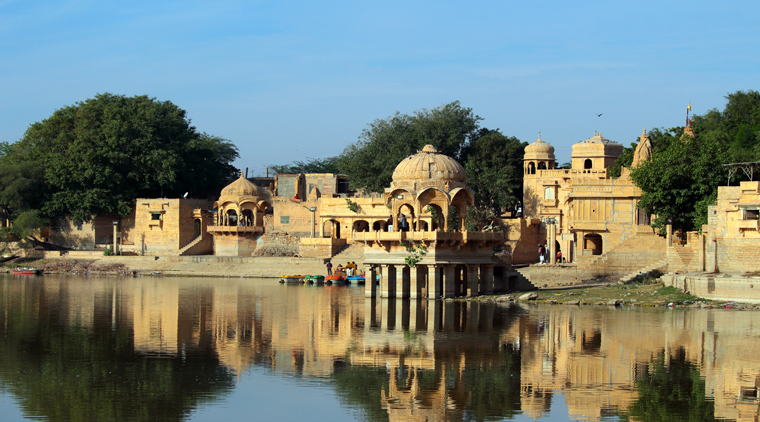
- Gadisar Lake, Kuldhara and the desert museumsGadisar Lake, a 14th-century reservoir about 1.5 km from the fort, is prettiest at sunrise; there is no entry fee and a boat is about 100 to 300 rupees depending on size. Kuldhara, an abandoned village about 18 km out with a haunting backstory, is a short half-day excursion with a small entry charge. The Desert Cultural Centre and the Thar Heritage Museum give excellent context for the region's history and crafts.
Jaisalmer Fort is one of the world's few inhabited forts, home to roughly 3,000 to 4,000 residents. The romance is real, but so is the strain: the fort stands on relatively soft sedimentary rock, and decades of increased water use and sewage from tourist hotels inside have caused serious seepage damage to the roughly 850-year-old foundations, overwhelming the medieval drainage built for a few hundred people. INTACH and the Jaisalmer in Jeopardy campaign helped get the fort onto the World Monuments Watch list of endangered sites, and conservation bodies urge visitors not to stay in fort hotels. Walk in freely, spend as long as you like, eat there if you wish, but choose a hotel outside the fort walls. It is a small choice that helps preserve the place for the next generation.
Desert safari and overnight camp: Sam dunes or Khuri?
The camel safari at sunset and the overnight camp under the stars are what bring most people to Jaisalmer. The key decision is Sam dunes or Khuri, and what kind of camp to choose.
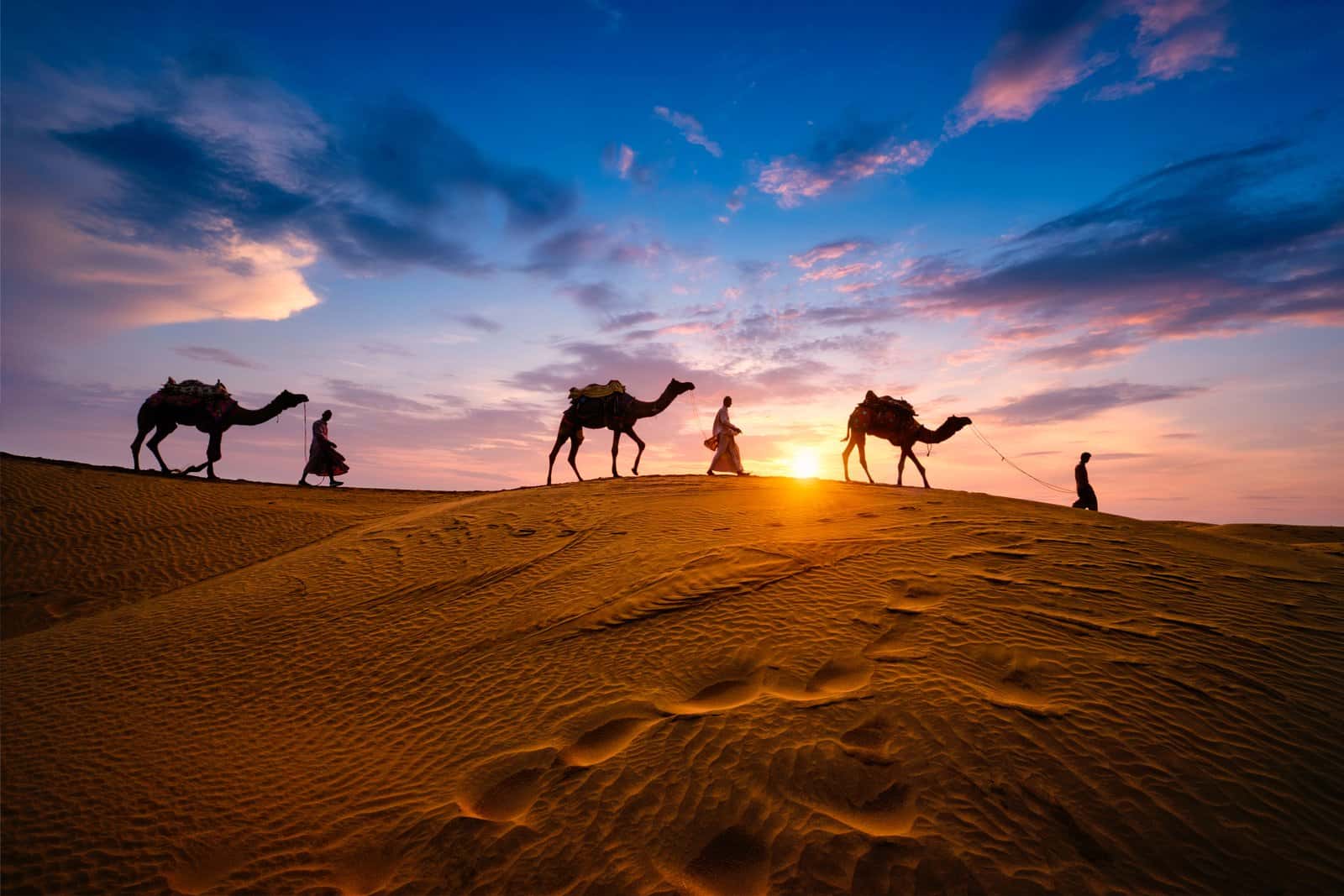
- Sam Sand Dunes (about 40 km): the classic, the busiestThe most visited dune area, with the widest sweep of classic Thar dunes, a partly government-managed entry zone and many private camp operators, and the camps sit close to the dunes. Busy in season with camel trains at sunset, jeep tours and music shows at camp. The sheer scale is spectacular; arrive a little early for a good sunset spot. Most Jaisalmer overnight tours head here, and it suits first-timers who want amenities.
- Khuri dunes (about 45 km): quieter and more intimateA smaller, less commercial dune area managed largely by village families, with far fewer crowds than Sam. Better for a calmer experience, longer rides through scrub desert, a more personal camp feel and an arguably clearer night sky. A good choice for couples, smaller groups and seniors who want quiet over spectacle.
- Choosing a camp and what it costs per personCamp quality ranges from basic mat-on-sand to luxury Swiss tents with proper beds, attached bathrooms and lavish meals, so an overnight with a sunset safari, dinner, a folk programme and breakfast runs roughly 1,500 to 8,000 rupees or more per person, about 20 to 30 percent higher in peak winter. Confirm exactly what is included and that the price is per person, ask about water supply and generator hours, and look for proper beds and attached toilets if you want comfort.
- Sunset camel rides without the overnightIf an overnight camp is not for you, a roughly two-hour sunset camel ride to the dunes and back is widely available and entirely satisfying. Go with a licensed operator arranged through your hotel or a known tour company rather than an unsolicited camel tout at the dune entry, and agree the price and the length of the ride first.
Jaisalmer lies close to the Pakistan border and is a sensitive zone. Foreign nationals must carry their passport at all times. The main attractions, the fort, havelis and the Sam and Khuri dunes, are all freely accessible, but any trip further towards the border than Sam may need clearance from the BSF (Border Security Force). Your operator will advise; do not venture beyond marked tourist areas on your own.
Where to stay in Jaisalmer, and the fort-hotel question
Stay outside the fort walls for conservation reasons, with a fort view from the city below or quiet on the desert edge. Add a night in a desert camp for the dunes.
- Outside the fort, in the city below: the right choiceHotels and havelis-turned-guesthouses in the streets below the fort give you a golden-fort view, easy walking access to the havelis, restaurants and bazaar, and the clear conscience of not adding to the seepage load inside the walls. This is where most well-informed travellers and conservation-minded operators now base themselves.
- The desert camp night at Sam or KhuriPair a city or fort-view hotel with one night in a desert camp for the dune experience. Sam for scale and amenities, Khuri for quiet, with a proper bed and attached bathroom if comfort matters. One camp night is plenty for most travellers; the city is the better base for the rest of the trip.
- Inside the fort: charming, but please do notFort hotels are atmospheric, but the water and sewage from accumulated tourist usage is genuinely damaging the ancient sandstone, a documented conservation issue rather than a niche concern. Walk up and enjoy the fort freely, eat there if you like, but sleep outside the walls.
- Room budgets and the festival spikeOff-season, simple guesthouses below the fort are inexpensive, with comfortable mid-range and heritage stays widely available and luxury desert resorts on the outskirts. All of these rise steeply around the Desert Festival and the December-January peak, when rooms and camps sell out months ahead, so book early or shift your dates.
During the Desert Festival and the December-to-January peak, hotels and tented camps are scarce and dear, often sold months in advance at well above normal rates. If your dates fall on the festival, book well ahead, and if you cannot find a good room, shift by a week into a quieter period rather than settling for a fort hotel.
Jaisalmer costs and a realistic budget
Jaisalmer is gentle on the wallet outside the festival peak. Here is what the main things cost, so you can plan and avoid being overcharged.
- The fixed entry feesWalking the fort and visiting the Jain temples is free. The Fort Palace Museum is about 200 rupees for Indians and about 600 rupees for foreign nationals; Patwon-ki-Haveli is about 20 to 60 rupees for Indians and about 100 to 120 rupees for foreign nationals; Kuldhara is a small charge of around 10 rupees per person plus about 50 rupees for a car; Gadisar boating is about 100 to 300 rupees by boat size. Reconfirm at each counter as fees are revised.
- The desert camp, the big variableThe overnight desert camp with a sunset safari, dinner, a folk programme and breakfast is the single largest cost, roughly 1,500 to 8,000 rupees or more per person depending on basic versus luxury tent, and about 20 to 30 percent higher in peak winter. A standalone sunset camel ride is much less. Always confirm the price is per person before you commit.
- Eating well for littleRestaurant mains run from roughly 70 rupees at simple local places to roughly 260 rupees at the rooftop favourites like Jaisal Italy, so a couple can eat very well for a modest sum. Jaisalmer's vegetarian and multicuisine spots are good value, and a fort-view rooftop dinner is one of the cheaper pleasures of the trip.
- Cash, cards and bargainingCards and UPI work in bigger hotels, restaurants and established shops, but the bazaar, camel rides and small vendors run on cash, and prices to visitors are quoted high. Draw cash at the in-town ATMs, keep small notes, and agree every negotiable price, a ride, a purchase, a tour add-on, before it begins.
Apart from the fixed museum and haveli tickets, almost everything in Jaisalmer is negotiable, and the single habit that protects your budget is to agree the price and confirm whether it is per person before anything begins, whether that is a camel ride, a camp package, a bazaar purchase or a driver's add-on stop. Quotes to visitors start high and a per-tour figure can quietly become per-person, so settling it in writing or out loud first turns the town's main friction into a non-event.
Practical logistics: getting around, money, SIM and the border
The small things that make a Jaisalmer day smooth, from getting around the compact old city to ATMs, connectivity and the border-zone passport rule.
- Getting around town and to the dunesThe fort, the havelis, Gadisar Lake and the bazaar are compact and best on foot, with auto-rickshaws for the short hops. For the Sam or Khuri dunes, about 40 to 45 km out, your hotel or operator arranges a car or jeep, usually as part of the safari package. Agree the fare and the stops first.
- Money and ATMsBank ATMs are in the main town and the bazaar area. Carry cash for camel rides, small eateries and shopping, as not everyone takes cards or UPI, and keep small notes for tips and the short fares.
- SIM, signal and languageMobile coverage in town and at the main dune areas is generally fine for maps, calls and data, though it thins out deeper in the desert. Hindi and Rajasthani are the local languages, but English is widely understood in the hotel, camp and tourist trade, so communicating is easy.
- The border-zone ruleJaisalmer sits in a border-sensitive zone, so foreign nationals must carry their passport at all times and some areas beyond Sam dunes need BSF permission. This never affects the fort, havelis or the main dunes, but check with your operator before any trip further towards the border.
Safety, the arrival scams, and staying well in the desert
Jaisalmer is relaxed and welcoming, but the station touts and shopping-commission hustle catch first-timers, and the desert heat and dryness need respect. A little awareness keeps the visit happy.
- The station and bus-stand touts, and how to handle themTouts wait at the railway station and bus stand posing as taxi drivers or hotel staff, offering a very cheap ride, then steering you to a hotel or camp that pays them commission, or talking down the place you booked. Book your hotel and safari in advance through a known operator, ignore unsolicited offers, arrange your pickup beforehand, and a firm, polite no is all it takes.
- The per-tour-to-per-person camp quoteA common trick is a desert-camp or safari price quoted as if for the whole tour that quietly becomes per person at the camp. Confirm in writing what the figure covers, how many people it is for, and exactly what is included, dinner, breakfast, the camel ride, the folk show, before you pay anything.
- Shopping commissions and pushy guidesDrivers and unlicensed guides may steer you to shops that pay them a cut, where prices are marked up to cover it. Avoid any shop a driver insists on, browse and compare before buying, and decline the free unlicensed guide. The friction in Jaisalmer is commercial, not violent.
- Heat, sun and water in the desertThe Thar is dry and, outside winter, very hot. Drink plenty of bottled or filtered water, carry sun protection and a hat for the dunes, do the camel ride at sunset rather than midday, and pack a warm layer for cold winter nights at the camp. Take the usual care with street food.
Most solo women find Jaisalmer manageable with standard precautions. The persistent friction reported on traveller forums is commercial, the touts, the overcharging and the camp hard-sell, rather than threats to personal safety. Pre-book your hotel and safari, arrange your station pickup in advance, be firm with the touts, dress modestly at the temples, and trust your instinct to walk away from anything that feels off, and Jaisalmer is one of the more relaxed desert stops to travel.
Jaisalmer for every kind of traveller, and on access
Jaisalmer is the Golden City, a place that suits very different visitors in different ways. Here is what it offers you, and the one tip that matters for each, including how a senior visits comfortably.
- Couples and honeymoonersThe most romantic desert destination in India: an overnight camp under a sky full of stars, a camel ride at sunset over the dunes, and a candlelit rooftop dinner over the golden fort. Choose Khuri for a quieter camp away from the Sam crowds.
- Families with childrenChildren love the fort's winding lanes, the Jain temples and the camel ride. Choose a Sam camp with proper facilities, add the Desert Cultural Centre for context, keep the camp stay to one night, and plan around the heat if you travel outside October to March.
- Senior travellers and on accessibilityVery doable with the right choices. Stay outside the fort to avoid sleeping up the steep cobbled lanes, take the fort slowly in the cool morning, choose a comfortable camp with a proper bed and attached bathroom, and pick Khuri rather than the crowded Sam for a calmer sunset. Come October to February when the temperatures are manageable, and use a car with a driver for the dune trips.
- PhotographersThe golden fort at dawn, the carved havelis in soft afternoon light, the camel silhouettes at the Sam dunes at sunset, and the Milky Way over the camp at midnight are among the most photographed scenes in India. Come in December or January for the clearest skies, and ask before photographing people.
- Budget travellersThe overnight train from Delhi saves a hotel night, simple honest guesthouses sit below the fort, and the fort lanes, Jain temples and havelis cost little or nothing. A basic dune camp with a camel ride is affordable, especially outside the festival, and the food is good value.
- First-time India visitorsJaisalmer is one of India's most dramatic yet manageable desert experiences and does not overwhelm the way a big city can. Pair it on a Rajasthan circuit with Jaipur and Jodhpur as a five to eight day loop, ideally in the cool winter months.
How long to spend, and a suggested Jaisalmer itinerary
Two days and one night, with a desert camp, is the sweet spot for most travellers; add a day for the outlying sights and a slower pace.
- Day one: the fort, the havelis and the lakeStart at Gadisar Lake at sunrise, then walk up to the fort in the cool morning for the Fort Palace Museum and the Jain temples before the heat. Spend the afternoon on the haveli walk, Patwon, Nathmal and Salim Singh, and end on a fort-view rooftop for sunset and dinner.
- Day two: the dunes and the desert campTake the morning slowly in the bazaar or at the Desert Cultural Centre, drive out to Sam or Khuri in the afternoon, ride a camel into the dunes for sunset, and stay overnight at a camp for the folk programme and the night sky. Drive back the next morning.
- A third day, if you have itAdd the outlying sights: Kuldhara abandoned village and the royal cenotaphs at Bada Bagh, both short half-day trips, or simply a slower pace in the city. Three days lets you see everything comfortably without rushing.
- How it fits a Rajasthan tripOn a Rajasthan loop, two nights in Jaisalmer (one in the city, one in the desert camp) sits well between Jodhpur and Jaipur. Most travellers reach it by the overnight train from Delhi or the road from Jodhpur, and it is the desert highlight of the classic Jaipur, Jodhpur, Jaisalmer circuit.
The two things that break a tight Jaisalmer plan are the midday heat and arriving at the Fort Palace Museum outside its roughly 10 am to 5 pm hours (it is also closed on Holi and Diwali). Do the fort, the lake and the open-air sights in the cool morning, keep the hot middle of the day for a rooftop lunch or a rest, and save the camel ride for sunset, and the day flows without a wasted hour at a shut gate or a punishing midday dune walk.
Signature experiences, food and shopping in Jaisalmer
Beyond the fort and the dunes, Jaisalmer has a lively old city, excellent rooftop restaurants and a rich craft and textile tradition.
- Eat inside or near the fortJaisal Italy (near the First Fort Gate, Italian and continental, mains roughly 180 to 260 rupees) is a long-standing favourite with a rooftop. Free Tibet (in the fort, French, Mexican and Tibetan, mains roughly 120 to 250 rupees) is loved for its atmosphere. Natraj Restaurant (near Salim Singh ki Haveli, vegetarian multicuisine, with an excellent masala dosa, mains roughly 70 to 270 rupees) is a solid local choice. Desert Boy's Dhani (Dhibba area, dhaba-style Indian, mains roughly 100 to 135 rupees) gives a more local feel. Prices are approximate and shift over time.
- A haveli walk: Nathmal, Salim Singh and PatwonThe three great havelis make a rewarding hour-long walk from the fort: Nathmal-ki-Haveli (an asymmetric twin-facade masterpiece, free to enter), Salim Singh ki Haveli (a later peacock-prow haveli with a small entry fee), and Patwon-ki-Haveli (ticketed, the grandest of all). Each tells a different story of Jaisalmer's merchant princes.
- Shopping for textiles, crafts and silverJaisalmer is known for mirror-work embroidery, block-printed fabrics, Rajput silver jewellery and carved woodwork. Desert Handicrafts Emporium (Court Road, jewellery and textiles) and Jaisalmer Handloom (Court Road, silk) are well-regarded, and Bellissima (Dashera Chowk, arts and crafts) is another. Browse and compare before you buy, and avoid any shop a driver insists on, as it usually pays him a commission baked into the price.
- Gadisar Lake at sunrise and KuldharaA short walk from town, Gadisar Lake is loveliest in the early morning, with birds on the water and the old chhatris reflected in the surface; a pedal or row boat is about 100 to 300 rupees. Pair it on another day with the haunting abandoned village of Kuldhara about 18 km out, open roughly 8 am to 6 pm for a small charge.
The real questions travellers ask about Jaisalmer
Straight answers to the questions that come up again and again on traveller forums, so you arrive already knowing the score.
- Should I stay inside the fort or outside?Stay outside. Fort hotels are charming, but the seepage from tourist water use is a documented threat to the 850-year-old foundations, and conservation bodies urge visitors to base themselves below the walls. You can walk up and enjoy the fort as much as you like; just sleep in the city.
- Sam or Khuri for the camp?Sam (about 40 km) has the biggest dunes, the most amenities and the most crowds, and suits first-timers; Khuri (about 45 km) is quieter, village-run and better for a calm night and a clear sky. Couples and seniors often prefer Khuri, families and first-timers often prefer Sam.
- How much is the overnight camp, really?Roughly 1,500 to 8,000 rupees or more per person depending on a basic tent versus a luxury Swiss tent, about 20 to 30 percent higher in peak winter, usually including the sunset camel ride, dinner, a folk programme and breakfast. Always confirm the price is per person and what it covers before you pay.
- Is the fort free, and what about the museum and havelis?Walking the fort and visiting the Jain temples is free. The Fort Palace Museum is about 200 rupees for Indians and about 600 rupees for foreign nationals; Patwon-ki-Haveli is about 20 to 60 rupees for Indians and about 100 to 120 rupees for foreign nationals. Reconfirm at the counters.
- How do I get there from Delhi, and how long?The daily Runicha Express (14659) leaves Old Delhi about 17:35 and reaches Jaisalmer the next morning around 11:55, an overnight run of roughly 18 to 19 hours. From Jodhpur it is about 5 to 6 hours by train or 4 to 5 hours by road. Reconfirm the train timing on IRCTC.
- Can I rely on flying into Jaisalmer?Only in the winter season, and not reliably. Jaisalmer airport runs flights roughly October to March, suspended through summer, with routes and carriers that change year to year. Confirm current operations with the airline before building a trip around a flight; the train is far more dependable.
Planning Jaisalmer from abroad
Jaisalmer is the most otherworldly stop on a Rajasthan circuit and one of the clearest arguments for coming to India. A little planning, the Living Fort steer and the arrival-scam heads-up make it smooth and responsible.
- Fly in via Delhi, then train or roadFly into Delhi, the main international gateway, or Jaipur. From Delhi the overnight Runicha Express from Old Delhi station (DLI) is the most reliable connection, roughly 18 to 19 hours; alternatively connect to Jodhpur by air and drive the 285 km scenic road. Jaisalmer airport runs a seasonal winter schedule only, generally October to March, so confirm before planning to fly directly.
- Do the Rajasthan triangle: Jaipur, Jodhpur, JaisalmerThe classic circuit pairs the Pink City (Jaipur), the Blue City (Jodhpur) and the Golden City (Jaisalmer) in a five to eight day loop, the most rewarding first experience of Rajasthan for overseas visitors, combining forts, palaces and the Thar desert.
- Carry your passport, and pre-book to dodge the toutsJaisalmer is a border-sensitive zone, so foreign nationals must carry their passport, and station touts target arriving tourists with cheap-ride and commission-hotel offers. Pre-book your hotel and safari through a known operator, arrange your pickup in advance, and ignore unsolicited offers. The main sites are freely accessible; only remote border trips may need BSF clearance.
- The Living Fort steer and the camp choiceStay outside the fort walls for conservation reasons, choose your desert camp with care (Sam for scale, Khuri for quiet, a proper bed and bathroom for comfort), confirm the camp price is per person, and book Desert Festival dates via the official Rajasthan Tourism site if that is why you are coming. A good operator handles all of this.
Money, connectivity and timing for foreign visitors
The practical basics an overseas traveller needs for a desert city: cash, cards, a SIM, the foreigner entry fees, and how many days to give it on a wider India trip.
- Carry cash, expect to bargainCards and UPI work in hotels, bigger restaurants and established shops, but camel rides, the bazaar and small eateries are cash places and prices to visitors are negotiable. Draw cash at the in-town ATMs, keep small notes, and agree every negotiable price before it begins.
- Get a SIM at the airportPick up an Indian tourist SIM or an eSIM when you land in Delhi or Jaipur rather than hunting for one in a small desert town. Coverage in Jaisalmer and at the main dune areas is fine for maps and calls, though it thins out deeper in the desert.
- The foreigner entry fees to expectForeign nationals pay more at the ticketed sites: about 600 rupees at the Fort Palace Museum and about 100 to 120 rupees at Patwon-ki-Haveli, against about 200 and about 20 to 60 rupees for Indians. The fort lanes and Jain temples are free. Carry small notes for the counters and reconfirm the current rates there.
- How long to give it on a bigger tripOn a first Rajasthan trip, two nights in Jaisalmer, one in the city and one in a desert camp, is the right weight between Jodhpur and Jaipur, enough for the fort, the havelis and a desert night without slowing the whole itinerary. Come October to March, and book the festival dates far ahead if that is your aim.
Jaisalmer is an unusually rewarding introduction to India: dramatic but manageable, with a walkable old city, a living fort and a desert night that travellers remember for years. Slot it on the Rajasthan loop after Jodhpur, give it two nights with one in a camp, stay outside the fort walls, pre-book to sidestep the station touts, and let the dunes be the slow, starry chapter of the trip. Many overseas visitors say the camel ride at sunset and the night sky over the camp are the part of Rajasthan they remember most.
Why they call it the Golden City, and the curse of Kuldhara
Jaisalmer was founded in 1156 by the Rajput ruler Rawal Jaisal, who moved his capital to the triangular Trikuta Hill and raised the great fort that still glows like honey at dawn and dusk, the soft yellow Thar sandstone catching the desert light and giving the city its name, Sonar Quila, the Golden Fort. Its other famous tale belongs to Kuldhara, an abandoned village a short drive away: the Paliwal Brahmin community who farmed this hard country are said to have vanished overnight, deserting Kuldhara and dozens of nearby villages rather than submit to a powerful minister's demands, and tradition holds that they left a curse so the land would never be resettled. The empty stone houses still stand, and the story is told to every visitor, though it survives as oral tradition and local history rather than a single documented record.
Planning a Jaisalmer trip?
Our Rajasthan travel experts plan your full journey for you: route, hotels, darshan timings and transport. You get a free day-by-day plan and an exact quote on WhatsApp, usually within a few hours. No payment is needed to get your plan.
Tour packages that visit Jaisalmer
Every journey below is private, hand-crafted and fully customizable. Tell us your dates and we tailor the itinerary, the pace and the priests or guides around you.
 4D / 3N
Jodhpur Jaisalmer Tour
- Visit Jaswant Thada
- Visit Umaid Bhawan Palace
 9D / 8N
Rajasthan Desert Tour
- Visit Amer Fort
- Visit Karni Mata Temple
 10D / 9N
Heritage of Rajasthan Tour Package
- Visit Mandawa Fort
- Visit Junagarh Fort Enjoy Unforgettable Camel Safari
 7D / 6N
Rajasthan Tour Packages From Delhi
- Govind Deoji Temple
- Chokhi Dhani
 11D / 10N
Rajasthan Tour Package 10 Days
- India Gate
- Badi Mahal
 10D / 9N
Rajasthan Luxury Tour Package
- Visit City Palace
- Visit Hawa Mahal