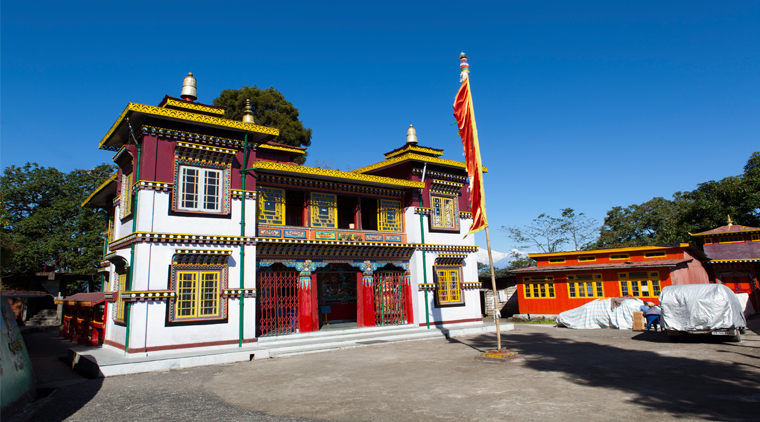
Yuksom Travel Guide
The comfortable months for Yuksom are roughly mid-March to mid-May and mid-October to mid-December , the same windows the national park opens for the high trek. Decide early...
When to visit Yuksom, and the trek season to plan around
The comfortable months for Yuksom are roughly mid-March to mid-May and mid-October to mid-December, the same windows the national park opens for the high trek. Decide early whether you are coming to walk or to wander.
- Spring, mid-March to mid-MayThe loveliest time for the trek, with rhododendrons and magnolias in flower on the climb and reasonable odds of clear Kanchenjunga views. Days are mild, nights still cold at altitude, so carry warm layers even in May.
- Autumn, mid-October to mid-DecemberThe clearest skies of the year and the most reliable mountain views, which is why this is the prime trekking window. It gets sharply cold high up as December nears, so this suits walkers who are prepared for frost at the camps.
- Monsoon, June to September, best avoided for trekkingThe high trail brings leeches, mud and a real risk of landslides on the approach roads, and the mountains hide behind cloud. The valley around Yuksom stays green and quiet, so this is for a gentle cultural visit, not the climb.
- Trekking or not, decide firstIf you only want Yuksom the village, its monasteries and the sacred lake, the shoulder weeks are gentle and uncrowded. If you want the trek, lock onto the spring or autumn window, because the park season and the weather both close it firmly.
The Sikkim Forest Department lists the Khangchendzonga trek from Yuksom as suitable roughly mid-March to mid-May and mid-October to mid-December. Treat these as the planning windows, since the park, the agencies and the weather all line up with them, and reconfirm the current season with your registered operator and the Forest Department before you fix dates, as protected-area rules can change between years.
How to reach Yuksom
Yuksom has no airport or railway of its own. Almost everyone comes up from New Jalpaiguri or Bagdogra near Siliguri, or across from Pelling and Gangtok inside Sikkim.
- From New Jalpaiguri, the nearest railheadNew Jalpaiguri station near Siliguri is the closest railway, at about 153 km and roughly 6 to 7 hours by road on winding hill highways. Most travellers take a shared or private vehicle up from here, and it is the practical way in by train.
- From Bagdogra airportBagdogra near Siliguri is the main airport with wide connections, about 159 km and again roughly 6 to 7 hours by road. Pakyong, Sikkim's own small airport near Gangtok, has limited flights, so most fliers still use Bagdogra and drive.
- From Pelling and GangtokPelling is the easy neighbour at about 40 km, roughly 1 hour 45 minutes, so many travellers pair the two. Gangtok, the state capital, is about 123 km, around 5 hours, and is a common first stop before the drive across to West Sikkim.
- Shared jeeps, the public optionPublic transport is a two-hop affair through Geyzing or Jorethang, then a shared jeep onward to Yuksom that mostly leaves in a narrow early-afternoon window. Reach the junction town in good time, since miss the jeep and you may be stranded for the night.
Fly into Delhi or Kolkata, then connect to Bagdogra near Siliguri and drive about 6 to 7 hours up to Yuksom. There are no international flights into Sikkim, and a foreign national needs a Restricted Area Permit to enter the state.
Route through Delhi or Kolkata to Bagdogra, then drive into West Sikkim. Many visitors break the journey with a night in Pelling or Gangtok before the final hill drive to Yuksom.
Take a train to New Jalpaiguri or fly to Bagdogra, then drive up; or come across from Pelling or Gangtok. Indians need no permit for Yuksom itself, only for the national-park trek.
Permits for Yuksom and the Khangchendzonga trek
This is the single thing to get right before you book. Indians need nothing for the town; foreigners need a permit just to enter Sikkim, and everyone needs a separate permit and a registered guide to trek into the park.
- Indians: nothing for the town, a permit for the trekIndian nationals need no permit at all to visit Yuksom, Khecheopalri or Tashiding. To trek into Khangchendzonga National Park, that is Dzongri, Goecha La and the high axis, you need a Protected Area Permit, arranged through a Sikkim-registered agency with a certified guide. Carry a government photo ID and passport photos; Aadhaar is generally accepted for Indians but PAN is not used for permits.
- Foreigners: a permit just to enter SikkimEvery foreign national needs a free Restricted Area Permit, also called the Inner Line Permit, simply to enter Sikkim, on the strength of an Indian visa. The official Sikkim Tourism list shows West Sikkim including Yuksom, Khecheopalri and Tashiding as open to foreign tourists on this permit. Permit rules for foreigners do change, so reconfirm the current position before you travel.
- Foreigners trekking: a group of two, never soloFor the park trek a foreigner also needs a Protected Area Permit, and crucially it is issued only to a group of two or more foreigners, routed through a registered agency with a guide. It cannot be processed before your permit to enter Sikkim exists, so you cannot start the trek the day you arrive. Budget a buffer day in Yuksom for the paperwork.
- Where the entry permit is issuedThe Restricted Area Permit is free. The official Sikkim Tourism page still lists physical issue points, that is Indian missions abroad, the Mumbai, Kolkata, Chennai and Delhi airport immigration desks, and Sikkim Tourism offices and check posts such as Rangpo and Melli on the road in. From early 2026, however, reports say the foreigner permit has moved to an online e-FRRO clearance applied for after you land in India and before you enter Sikkim, so check the current route. Foreigners must usually register within 24 hours of arrival, so keep copies of your documents handy.
Sikkim's permit regime for foreign tourists changes from time to time, and the route to apply has been moving online. The official Sikkim Tourism Restricted Area Permit page currently lists West Sikkim, Yuksom, Khecheopalri and Tashiding as open to foreigners, and that is what we go by here, but we have also seen recent reports of tighter, more digital rules. So do not treat any permit detail on any page, including this one, as final: confirm the current position directly with Sikkim Tourism or the Foreigners Registration Office, or have your registered operator confirm it in writing, before you commit to flights and dates.
The coronation throne, the oldest monastery, and the sacred lake
Yuksom is small but layered: the stone where Sikkim's first king was crowned, the oldest monastery in the state up a forest path, and a wish-fulfilling lake a short drive away.
- Norbugang coronation throneIn a quiet pine-shaded enclosure stands the stone coronation seat where, in 1642, three lamas consecrated Phuntsog Namgyal as the first Chogyal of Sikkim. A footprint in stone, a chorten and an old prayer hall sit alongside it. This is the founding site of a kingdom, not just a viewpoint, and it is an easy, flat walk from the village.
- Dubdi Monastery, the oldest in SikkimFounded about 1701 and regarded as the oldest monastery in Sikkim, Dubdi sits at about 2,100 m, reached by a steep forest walk of roughly 30 to 45 minutes uphill from town. It is a protected national monument and a working gompa, so let the resident caretaker know you are coming and keep your visit quiet and respectful.
- Khecheopalri LakeAn easy day trip at about 1,700 m, this sacred wish-fulfilling lake is revered by Buddhists and Hindus alike, and by local tradition birds keep its surface clear of fallen leaves. It sits on the same pilgrimage circuit as Yuksom and Tashiding, a gentle and atmospheric outing for trekkers and non-trekkers alike.
- Kartok monastery and lakeRight in the village, the small Kartok monastery and its lake make a calm, five-minute stop, one of the points on Yuksom's short cultural loop. Together with Norbugang and Dubdi it turns a trek base into a place worth a slow day in its own right.
Yuksom and its monasteries sit in what Buddhists call a hidden sacred land, and the whole West Sikkim circuit, Yuksom, Dubdi, Khecheopalri and Tashiding, is a living pilgrimage route. Dress modestly at the gompas, remove shoes where asked, walk clockwise around chortens, ask before photographing monks or rituals, and do not picnic, litter or swim at Khecheopalri, which is a holy lake rather than a picnic spot.
The Goecha La and Dzongri trek, told honestly
This is why most people come: the walk from Yuksom into Khangchendzonga National Park for the closest view of Kanchenjunga in India. Here is the honest version, including the one thing the operators rarely say.
- How long it takesThe full Goecha La trek from Yuksom is commonly about 9 to 11 days round trip, while the shorter Dzongri trek is about 5 to 6 days. Both start and end in Yuksom, climbing through forest to Sachen, Tshoka and Dzongri before the high camps. Plan the days generously, because the mountain rewards a slower, well-acclimatised walk.
- How hard it isIt is graded moderate to difficult. The crux is the climb from Tshoka up to Dzongri at about 3,965 m, which gains close to 1,000 m in a single day, so a rest and acclimatisation day at Dzongri is effectively mandatory. Carry layers for frost, watch for altitude sickness, and do not rush the high days.
- You stop at View Point 1, not the passThe Goecha La pass itself at about 4,940 m has been closed to trekkers since around 2017 to protect the upper habitat. The trek now turns back at View Point 1 at roughly 4,600 m. This is not a loss: View Point 1 and Dzongri give the finest close frontal view of Kanchenjunga anywhere in India, so come for that view rather than the pass.
- Who can do itLocal guides say fit older walkers and even children who can manage five to six hours a day complete the Dzongri trek with support, while Goecha La beyond Dzongri demands more endurance. Anyone with breathing or heart trouble should take medical advice first. Offloading your pack onto a mule is widely recommended for a first high-altitude trek.
Once you leave Yuksom there is no ATM, no card machine and essentially no mobile signal beyond a patch around Sachen, so treat Tshoka, Dzongri and the high camps as fully offline and a cash economy. Draw your money in Pelling, Jorethang or Gangtok before you reach Yuksom, carry enough for the whole walk plus tips for the guide and porters, and tell family at home that you will be out of contact for the trekking days.
Where to stay in Yuksom, and how many nights
Yuksom is a single walkable village of homestays and small guesthouses, plus the trekkers' huts up on the trail. Two nights suits a cultural visit; the trek sets its own length.
- Homestays and small guesthouses in the villageYuksom lodging is mostly simple, friendly homestays and guesthouses strung along the one main street, within walking distance of Norbugang, Kartok and the trailhead. A handful of slightly smarter hotels offer a warmer room and a view, but keep expectations modest, this is a Himalayan village, not a resort town.
- On the trek: huts and tentsHigher up you sleep in basic trekkers' huts or in tents at Sachen, Tshoka and Dzongri. The huts are few and fill quickly, so most organised groups camp. Your operator carries tents, food and warm gear; you carry a day pack and, if you offload, only the essentials.
- How many nights in the villageFor a cultural visit, two nights in Yuksom is the sweet spot: one day for Norbugang, Dubdi and Kartok, and one for a Khecheopalri day trip, with time for the village pace. A single night feels rushed, while trekkers should add the buffer day for permits before the walk.
- Book ahead in seasonIn the spring and autumn trekking windows the better homestays and the trekkers' huts fill up, and outbound shared jeeps sell their seats fast. Reserve your room and your trek operator ahead, and book your seat out of Yuksom a day before you leave.
Yuksom costs and a realistic budget
The village is gentle on the wallet; the trek is where the money goes. Here is what the main things cost so you can plan and avoid being overcharged, with the honest caveat on the figures that move.
- Village days are cheapA simple homestay room runs roughly 800 to 2,000 rupees a night and a local meal of dal, rice and vegetables only a couple of hundred rupees, so a non-trekking day in Yuksom is easy on the budget. Carry cash, since cards and ATMs are unreliable here.
- The trek is the big costA guided Dzongri or Goecha La trek from Yuksom commonly runs in the region of about 15,000 to 20,000 rupees per person for the local arrangement of guide, porters or yaks, food and tents, with branded national operators charging more. Get a written quote of exactly what is included before you commit.
- Park fees: nominal, but confirm themNominal national-park entry and camera fees apply, payable at the Yuksom check post, and foreigners typically pay differential rates and an operator service charge on top. We are not quoting an exact figure here because the published fee notification is old and current rates vary, so confirm the present rates with your operator or at the check post.
- The negotiable extrasOffloading your pack onto a mule is widely cited at around 4,500 rupees for the trek and is well worth it for a first high climb. Private taxis on the approach roads are quoted high to visitors, so agree the fare before you set off, and prefer shared jeeps if you are watching the budget.
Trek costs in Yuksom swing widely between a cheap local arrangement and a branded package, and park fees trace to a fee notification that is years old, so any single number you see online is a guide, not a guarantee. The honest habit is to ask each operator for a written, itemised quote covering permit, guide, porter or yak, food, tents and offload, and to confirm the current park fees at the check post. That one step removes nearly all the cost surprises on this trek.
Practical logistics: jeeps, money, SIM and power
The small things that make a Yuksom trip smooth, from the afternoon-only shared jeeps to the cash-and-power realities of a Himalayan village.
- Shared jeeps run on a tight clockJeeps to Yuksom from Geyzing or Jorethang mostly leave in a narrow early-afternoon window, often around 1 pm, for roughly 100 to 200 rupees, and outbound jeeps from Yuksom go in the early morning. Reach the junction in good time and book your outgoing seat a day ahead, or you can be stranded for the night.
- Draw cash before you arriveATM access in Yuksom is limited and unreliable, and there is none on the trail. Withdraw enough cash in Pelling, Jorethang or Gangtok before you reach the village, and carry it in small notes for jeeps, homestays, meals and tips.
- Signal, SIM and powerMobile coverage is normal in the village but dies on the trek beyond a patch near Sachen, so treat the high trail as offline. Indian SIMs from the main networks work in town; foreign visitors should pick up a tourist SIM in Siliguri or a bigger town. Off-season power cuts happen, so carry a power bank, a torch and spare batteries.
- Food, language and hoursHearty Sikkimese and Nepali food is the norm, and thukpa and momos are the dishes to try. Nepali and English are widely understood. Shops and kitchens close early, often by around 9 pm, so do not count on a late dinner; eat where you are staying if you arrive late.
Altitude, weather and staying well
Yuksom itself is gentle and safe; the real risks live on the trek, where altitude is the thing to respect. A little caution keeps the trip happy.
- Altitude is the main riskThe village at about 1,780 m is easy, but the trek climbs fast, and the Tshoka to Dzongri day gains close to 1,000 m. Take the Dzongri rest day, climb high and sleep low where you can, drink plenty of water, and know the signs of altitude sickness. Descend if symptoms worsen rather than pushing on.
- Weather and the trailMountain weather turns quickly, even in the dry seasons, so carry warm and waterproof layers and good walking shoes. In the monsoon the approach roads are prone to landslides and the trail to leeches, which is why the high walk is an autumn and spring activity, not a year-round one.
- Go with a registered guideThe park trek must be done with a registered agency and a certified guide, which is also your safety net: they carry the permits, know the acclimatisation, and can organise a descent or help if someone falls ill. Do not attempt the high trail independently.
- Health basics and a gentle warningDrink bottled or treated water, take the usual care with food, and bring any personal medication, since the village has only basic facilities and the trail none. Anyone with heart or breathing trouble should get medical advice before booking a high trek.
West Sikkim is widely regarded as one of the calmer, safer parts of India for women travelling alone, and Yuksom is a small, friendly village where homestay hosts tend to look out for guests. The honest constraint is not safety but logistics: the afternoon-only jeeps and the registered-guide rule for the trek. Travel with standard precautions, keep someone informed of your trek plan, and you will find Yuksom an easy and welcoming base.
Yuksom for every kind of traveller, and on access
Yuksom suits very different visitors in very different ways, from hard trekkers to people who will never climb. Here is the one note that matters for each.
- TrekkersThe reason Yuksom exists on the map for most visitors: the trailhead to Dzongri and Goecha La and the best Kanchenjunga view in India. Come in the spring or autumn window, build in the buffer day for permits, and respect the altitude on the Dzongri climb.
- Non-trekkersYuksom rewards people who will never climb a metre: the Norbugang coronation throne, Dubdi monastery, Kartok lake and a Khecheopalri day trip make a calm two-day cultural loop. If you want more to see, base in Pelling and treat Yuksom as a memorable day or overnight.
- Families with childrenThe village, the easy walks and the lake suit families, and local guides say older children who can walk five to six hours a day manage the Dzongri trek. Keep small children to the village and Khecheopalri, and watch everyone for the effects of altitude on the climb.
- Senior travellers and on accessibilityThe village and Norbugang are flat and easy, but Dubdi is a steep forest climb and the trek is genuinely demanding, so weigh the altitude honestly. Fit, regular older walkers do complete Dzongri with guide support; anyone with heart or breathing trouble should take medical advice and may prefer to keep to the village and the lake.
- Backpackers and budget travellersA long-loved trekkers' hub of cheap homestays, hearty food and easy company. Reachable by shared jeep via Geyzing or Jorethang, it is a fine place to organise a trek on the spot or simply slow down for a few quiet Himalayan days.
- PhotographersDawn light on Kanchenjunga from Dzongri and View Point 1, the forest path to Dubdi, the still water at Khecheopalri and the old coronation enclosure. Ask before photographing monks or rituals, and carry spare batteries, since power and signal are both unreliable.
Suggested Yuksom itineraries
How to shape a short cultural visit, or fit the trek and the permit buffer into a wider Sikkim trip, without ending up at a shut gate or a missed jeep.
- The two-day cultural visitDay one, walk to the Norbugang coronation throne and Kartok in the morning and climb the forest path to Dubdi in the cooler afternoon. Day two, take a day trip to Khecheopalri Lake, then enjoy the village pace. This is the no-trek loop that the operator pages ignore.
- The Dzongri short trekArrive, use a buffer day for permits and a gentle acclimatising walk, then take about five to six days for the round trip to Dzongri and back, with the rest day at Dzongri. This is the best Kanchenjunga view for the time most travellers have.
- The full Goecha La trekAllow about nine to eleven days round trip from Yuksom, plus the buffer day, for the walk to View Point 1 and back through Tshoka, Dzongri, Thangsing and the high camps. Build slack for weather, and remember you turn back at View Point 1, not the pass.
- Fitting Yuksom into a Sikkim loopOn a wider trip, pair Yuksom with Pelling, an hour and three-quarters away, for the monasteries and ruins, and with Gangtok and Tsomgo as the eastern leg. Give Yuksom at least an overnight even on a fast loop, so you can stand at the coronation stone in the morning light.
The single thing that breaks a tight trek plan is assuming you can walk the day you arrive. The Protected Area Permit, and for foreigners the entry permit before it, take time, and the paperwork is done in Yuksom and Gangtok, not on the trail. Plan a buffer day in the village for the permits and a gentle acclimatising stroll, and you will start the trek rested and legal rather than scrambling at a check post with the clock running.
The real questions travellers ask about Yuksom
Straight answers to the questions that come up again and again on traveller forums, so you arrive already knowing the score.
- How many days for the trek?Dzongri and back is about five to six days, full Goecha La about nine to eleven, both from Yuksom and both needing a rest day at Dzongri. Add a buffer day before you start for the permits, so plan a week for Dzongri and closer to a fortnight for Goecha La including travel.
- Do I need a permit, and can I go solo?Indians need no permit for Yuksom town and only a Protected Area Permit, with a registered guide, for the park trek; an Indian can trek solo with that guide. A foreigner needs a Restricted Area Permit just to enter Sikkim, and the trek permit is issued only to a group of two or more foreigners, never to a solo foreigner.
- Is Yuksom worth it if I am not trekking?Yes, for a quiet day or two: the coronation throne, Dubdi, Kartok and Khecheopalri are a genuine cultural circuit. But Yuksom is a village, not a sightseeing town, so if you want more to do, base in Pelling and visit Yuksom for a half day or an overnight.
- How do I reach Yuksom by public transport?Two hops: get to Geyzing or Jorethang first, then a shared jeep onward to Yuksom that mostly leaves in the early afternoon, around 1 pm, for roughly 100 to 200 rupees. Reach the junction town by lunchtime, since miss the jeep and there may not be another until the next day.
- Are there ATMs, and is there signal on the trek?ATM access in Yuksom is limited and there is none on the trail, so draw your cash in Pelling, Jorethang or Gangtok first. Mobile signal works in the village but dies on the trek beyond a patch near Sachen, so plan to be offline for the trekking days.
- Can fit seniors or older children do Dzongri?Local guides say yes, fit older walkers and children who can manage five to six hours a day complete the Dzongri trek with support, while Goecha La beyond Dzongri is tougher. Anyone with heart or breathing trouble should take medical advice before booking.
Planning Yuksom from abroad
Yuksom is the soulful trailhead of the Eastern Himalaya, and the one thing to master before you fly is the foreigner permit ladder. Get that right and the rest is easy.
- Master the permit ladder firstAs a foreign national you need a free Restricted Area Permit just to enter Sikkim, and then a separate Protected Area Permit, issued only to a group of two or more, to trek into the park. The trek permit cannot be done before the entry permit exists, so you cannot start on arrival. Reconfirm the current rules with Sikkim Tourism before you book, as they change.
- Book a registered operator earlyThe park trek must go through a Sikkim-registered agency with a guide, and that agency also arranges your trek permit and the buffer day. Choose your operator before you travel rather than hoping to organise it on the spot, and ask for the permit position in writing.
- Get in via BagdograFly into Delhi or Kolkata, connect to Bagdogra near Siliguri, and drive about 6 to 7 hours up to Yuksom, often with a night in Pelling or Gangtok on the way. There are no flights into Sikkim itself, so the road drive is part of the trip.
- Pace it for the altitude and the villageEven if you are fit, the trek climbs fast, so come in the spring or autumn window and let the acclimatisation days do their work. If you are not trekking, Yuksom is a gentle, deeply atmospheric base for the coronation throne, Dubdi and Khecheopalri.
Money, connectivity and timing for foreign visitors
The practical basics an overseas traveller needs for a remote Himalayan village and a cash-only trail: money, a SIM, and how Yuksom fits a wider India trip.
- Carry cash, the trail takes nothing elseATM access in Yuksom is limited and there is none on the trek, so draw rupees in Siliguri, Pelling or Gangtok before you reach the village. Carry enough cash for your whole stay and the full trek, plus tips for the guide and porters, in small notes.
- Get a SIM in a bigger townPick up an Indian tourist SIM in Siliguri or another large town rather than hoping to find one in a Himalayan village. Coverage is fine in Yuksom itself for maps and calls but dies on the high trail, so download offline maps before you set off.
- How long to give itOn a wider India trip, a cultural visit needs only two nights in Yuksom, while the trek dictates its own length, about a week for Dzongri or closer to a fortnight for Goecha La with travel and the permit buffer. Pair it with Pelling and Gangtok for a full West and East Sikkim loop.
- Time it to the seasonCome in the mid-March to mid-May or mid-October to mid-December windows for the trek and the clearest mountains. Outside those, the monsoon and deep winter make the high walk unwise, though the village and the lake stay gentle for a cultural visit.
Yuksom is an unusually rewarding introduction to the Eastern Himalaya: a small, friendly village with a real founding story, a working pilgrimage circuit on its doorstep, and the finest view of Kanchenjunga in India a few days' walk away. The one piece of homework is the permit ladder, which is why we have laid it out so plainly. Sort the permits and a registered operator before you fly, give the altitude its acclimatisation days, and many overseas visitors find Yuksom the quiet, soulful heart of a Sikkim trip.
Why Yuksom is the place where Sikkim began
In 1642, by tradition, three Tibetan lamas of the Nyingma order came together at this forest clearing in West Sikkim and consecrated Phuntsog Namgyal as the first Chogyal, the priest-king of Sikkim, founding the Namgyal dynasty that would rule for more than three centuries until Sikkim joined the Indian union in 1975. The name Yuksom is traditionally read as the meeting place of the three learned lamas. The coronation took place at Norbugang, where the stone throne on which the first king was anointed with water from a sacred urn still stands in a quiet pine enclosure, beside a chorten and a footprint pressed into stone. One of those three lamas, Lhatsun Namkha Jigme, is also remembered as the founder of Dubdi monastery above the village, the oldest in Sikkim. This is the rare travel site where you can stand on the exact spot a nation was born.
Planning a Yuksom trip?
Our Sikkim travel experts plan your full journey for you: route, hotels, darshan timings and transport. You get a free day-by-day plan and an exact quote on WhatsApp, usually within a few hours. No payment is needed to get your plan.
Tour packages that visit Yuksom
Every journey below is private, hand-crafted and fully customizable. Tell us your dates and we tailor the itinerary, the pace and the priests or guides around you.