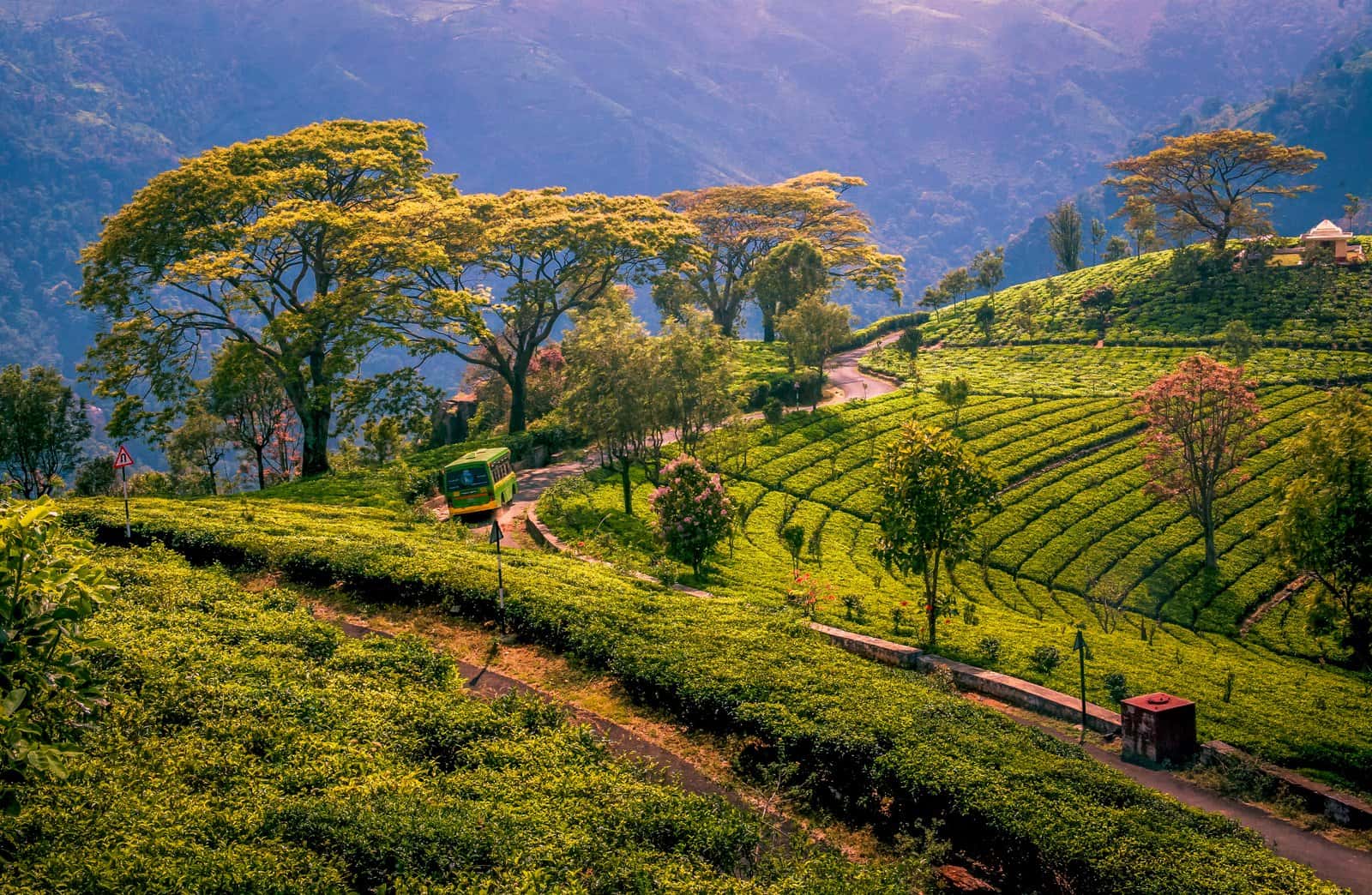
Kotagiri Travel Guide
Tamil Nadu Tourism suggests December to May , and that is sound advice. But the fact worth knowing is that Kotagiri sits partly in the rain shadow of the higher hills, so it...
When to visit Kotagiri, and the rain-shadow secret
Tamil Nadu Tourism suggests December to May, and that is sound advice. But the fact worth knowing is that Kotagiri sits partly in the rain shadow of the higher hills, so it often stays clearer than Ooty in the southwest monsoon.
- December to February: the clearest, coldest airThis is Kotagiri at its best. The northeast monsoon has finished, the air is washed clean, and the long view from Kodanad over the Moyar gorge can run for many kilometres. Mornings are genuinely cold, so carry a proper warm layer even if you are coming from Chennai or Bengaluru in a shirt. Sunrise at the viewpoint is the reason to be here in these months.
- March to May: warm, green and still calmThe Nilgiris fill up with summer visitors in these months, but the crowd goes to Ooty and Coonoor. Kotagiri stays comparatively quiet, which is exactly why you came. Days are pleasant, the tea slopes are bright green, and you may even see mist arriving in the afternoon. Book your room ahead in April and May because the small homestays here are few.
- June to September: the surprise good seasonThis is where Kotagiri is different from its famous neighbours. The higher Doddabetta range takes the worst of the southwest monsoon, so Kotagiri often stays comparatively drier and clearer while Ooty is shut inside cloud. It is not a dry season, and you should expect showers, but a monsoon week in Kotagiri can be lovely if you are happy to walk in the rain.
- October to December: the northeast monsoonKotagiri now takes its own turn with the rain, because the eastern edge of the plateau catches the northeast monsoon. Waterfalls are at their fullest and the shola forest is at its most alive, but views come and go and the estate roads get slippery. By late December the sky usually clears and the best season begins again.
In the Nilgiris the rain does not fall equally. From about June to September, when Ooty and Coonoor are wrapped in cloud, Kotagiri on the eastern rim is often the clearest of the three. From about October to December the pattern flips and Kotagiri gets its share from the northeast monsoon. If your dates fall in the southwest monsoon and you still want the hills, Kotagiri is the sensible Nilgiri choice, and if you want guaranteed long views, come between December and February.
How to reach Kotagiri (and the toy train truth)
The most important sentence on this page: the UNESCO toy train does not come to Kotagiri. It runs Mettupalayam to Coonoor to Ooty. Here is how you actually get here.
The heritage toy train, a UNESCO World Heritage line, runs only from Mettupalayam through Coonoor up to Udhagamandalam, which is Ooty. There is no railway station at Kotagiri and there never was one. If you want the train and Kotagiri in the same trip, ride the train up to Coonoor or Ooty, get off, and take a bus or a taxi across to Kotagiri. Any page or agent who suggests you can take the train to Kotagiri has not checked.
- By air: CoimbatoreCoimbatore is the airport for the whole Nilgiris. Tamil Nadu Tourism puts it at about 69 km from Kotagiri, which in practice is about 2.5 to 3.5 hours by road because of the ghat climb. Fly into Coimbatore from Chennai, Bengaluru, Mumbai, Delhi or Hyderabad, or from the Gulf on the limited international services, and take a pre-booked car up. We can arrange a car and an experienced hill driver for you.
- By train: Mettupalayam or CoimbatoreMettupalayam is the nearest broad-gauge railhead, roughly 33 to 35 km below Kotagiri by the Kotagiri ghat road, which is gentler and far less crowded than the Ooty ghat. Coimbatore Junction, about 69 km away, has the wider long-distance network. From either station a taxi or a TNSTC bus brings you up.
- By road from Ooty and CoonoorCoonoor is only about 21 km away and Ooty about 28 to 33 km, and either drive takes roughly 45 minutes to an hour on a narrow road through tea estates. It is one of the prettiest short drives in South India, so do not rush it. This is also how most people reach Kotagiri: as a move across from the busier towns.
- By bus, which is easier than you expectTNSTC buses run from Coonoor to Kotagiri about every 20 to 30 minutes through the day, from roughly 6 am to about 9 pm, with frequent services from Mettupalayam as well. The fares are almost comically low: the published Coonoor to Kotagiri ordinary fare is around 18 to 25 rupees, and about 20 to 40 rupees covers most short hops. Kotagiri bus terminus sits about 1 km from the centre of town, so you can arrive without a car very easily. Bus and train passengers do not need the e-pass at all.
Fly into Chennai or Bengaluru, then take a domestic flight to Coimbatore and drive up, roughly 2.5 to 3.5 hours. There are no international flights into the Nilgiris. Give yourself a night in Coimbatore if you land late, because you do not want to meet the ghat road for the first time in the dark.
Fly to Coimbatore where a service exists, or to Chennai or Kochi and connect. From Coimbatore airport it is one road journey of about 69 km to Kotagiri. Many NRI families combine Kotagiri with Coonoor, Ooty and Coimbatore in one easy loop.
Take a train to Mettupalayam or Coimbatore and drive up, or ride the toy train to Coonoor and cross to Kotagiri by bus or taxi. If you are driving your own car from Bengaluru, Mysuru, Chennai or Kerala, read the e-pass section below before you set off.
The sights of Kotagiri, with honest distances
Kotagiri's sights are spread out on narrow estate roads. Here is what each one is, how far it really is, and whether it deserves your morning.
- Kodanad View Point, about 16 to 18 kmThe great view of the Nilgiris, and the one thing you should not miss. A watchtower looks out from the rim of the plateau over the Moyar gorge, with Rangaswamy Peak standing away to one side and the plains stretching out below. Most sources report no entry fee and hours of about 6 am to 6 pm, but they genuinely disagree: some give the opening as about 8 am and a few report a small charge of about 10 to 30 rupees. Your whole sunrise plan rests on that opening time, so ask your homestay or driver to confirm it the evening before. Go at sunrise if you can. By mid-morning the haze usually closes the view, and you will have driven 45 minutes on a narrow road for nothing.
- Catherine Falls, about 8 kmA double cascade of the Kallar river in two side-by-side drops. Turn off the Kotagiri to Mettupalayam road at Aravenu. The upper viewpoint is reached by a rough track, best in a jeep or on foot, and the water is at its most powerful in and just after the monsoon. Now the correction that matters: countless websites print the height as 250 metres. Tamil Nadu Tourism, on its own site, gives the fall as 76.2 metres. That is about 250 feet. Somebody once swapped feet for metres and the rest of the internet copied it, so the falls you have read about are roughly a third of the height you were promised, and still well worth the trip.
- Elk Falls, about 7 to 8 kmThe gentle one. A smaller waterfall on the Mettupalayam side near Uyilathi, with no entry fee and only a short walk in from the road. This is the fall for families, for grandparents and for anyone who does not want the rough descent at Catherine. It sits close to the road that leads to the John Sullivan Memorial, so the two pair naturally in one half day.
- John Sullivan Memorial, about 3 to 4 kmThe restored Pethakal Bungalow at Kannerimukku, where John Sullivan, the Collector of Coimbatore, built his first Nilgiri house around 1819, before Ooty existed as a hill station. Restored around 2002 by the district administration together with the Save Nilgiris Campaign, it is now a small Nilgiris museum run by the Nilgiri Documentation Centre, generally open about 10 am to 5 pm, with an entry fee reported as about 10 to 20 rupees. Listings disagree on whether it is closed on Wednesdays, so ring ahead or ask your homestay before you drive out. Small, honest and moving, and the true starting point of the Nilgiris story.
- Rangaswamy Peak and Pillar, about 20 kmA vertical rock tower of around 400 feet standing below a peak of about 1,794 metres. This is sacred ground for the Irula, Kurumba and Badaga communities of these hills, with a small shrine to Lord Rangaswamy. It is a place of worship first and a trek second. Go with a local guide, dress and behave as you would at any temple, and do not treat it as a photo stop.
- Longwood Shola, on the edge of townA small, dark, dripping montane forest right at the edge of Kotagiri, and the most important thing in the town. It has its own section below, because in 2024 it became a Ramsar Wetland of International Importance.
Kotagiri town is walkable, but its sights are not. Kodanad is about 16 to 18 km out, Rangaswamy Peak about 20 km, Catherine Falls about 8 km. These are narrow estate roads where you will average perhaps 25 km an hour, and there are no auto-rickshaws waiting at the viewpoints to bring you home. Either hire a car with a driver for a half or full day, or accept that you will do the town, the shola and one nearby sight on foot and by bus. Trying to do all of it with a scooter and a phone map is how people end up seeing a haze-covered valley at eleven in the morning.
Longwood Shola: a town forest on the Ramsar world list
This small forest at the edge of Kotagiri is a Ramsar Wetland of International Importance, site number 2538, designated on 24 May 2023. Almost no travel page tells you this, and it changes how you see the walk.
- What a shola actually isA shola is a patch of dense, evergreen, montane forest that sits in the folds and valleys of these hills, with rolling grassland in between. The trees are short, gnarled and thick with moss. The floor holds water like a sponge and lets it out slowly all year, which is why a shola is treated as a wetland even though it looks like a wood. This is the natural vegetation of the Nilgiris, and most of it is gone.
- Why the Ramsar listing mattersLongwood Shola, about 116 hectares, is Ramsar site number 2538 on the list of Wetlands of International Importance. Get the date right, because almost nobody does: the official Ramsar Sites Information Service records the designation date as 24 May 2023. The listing was published on the Ramsar service on 31 January 2024 and announced in India's early-2024 batch of new sites, which is why you will see 2024 printed everywhere. It is one of a very small number of shola forests anywhere to carry that status, it is the only natural shola left near Kotagiri, and it is the working water source for the villages around it, which is why the local community has fought so hard to protect it.
- How to visit, honestlyTrails run into the forest from the edge of town, and it is an easy, level to gently rolling walk rather than a climb, with a guide walking you the roughly 1.5 km through the shola. Travel sites quote an entry or guide charge of around 100 rupees per person, but the Forest Department does not consistently post a fixed price, so ask at the gate, pay what is asked, and follow whatever the Forest Department says on the day. Go early, walk quietly, and take nothing out.
- What you will actually seeNot big animals. You come here for the sound of it: the drip of the canopy, laughing thrushes and flycatchers, frogs after rain, and the extraordinary light that comes through the moss and the tree ferns. Bring binoculars if you have them. An hour in Longwood Shola tells you more about the Nilgiris than a whole day of viewpoints.
This is a protected forest and a village water source, not a park. Do not play music, do not shout, do not stray off the path, and carry every wrapper back out with you. If a Forest Department watcher or a local guide asks you to turn back, turn back without argument. The people of Kotagiri have kept this forest alive against real pressure, and the least a visitor can do is walk through it gently.
Tea estates, forest honey, and buying so the money reaches the right hands
Kotagiri is a working tea town and the home of some remarkable Adivasi producer collectives. This is where you buy honey, tea and Toda embroidery properly.
- Walking in the tea, which is freeThe finest thing in Kotagiri costs nothing. Step off the main road onto any estate lane in the early morning, and you are walking between waist-high tea bushes with the mist lifting off the valley and pluckers working the slopes. Stay on the lanes, not in the rows, greet the workers, and ask before you photograph anyone. An hour of this is worth more than any ticketed attraction.
- Tea factory visits, and the honest catchTamil Nadu Tourism invites you to drop in at the tea factories for a tasting, and some estates around Kotagiri and Kodanad do welcome visitors. But be realistic: these are working factories, not the walk-in visitor tour you get at Coonoor. Ask your homestay or your driver to telephone ahead the day before. A proper visit takes about an hour and you will see the withering, rolling, oxidising and drying, then taste the result.
- The Green Shop, and why it mattersKotagiri is the home of the Keystone Foundation, and its own published history is worth getting right: registered as a trust in 1993, surveying bees and honey-hunters around Kotagiri from 1994, first Green Shop opened in 1996, and headquarters moved up to Kotagiri in 1999. Its social enterprise Last Forest was founded in 2010 and runs Green Shops in Kotagiri, Coonoor and Ooty, selling wild forest honey, beeswax products, spices and Toda embroidery. The Adivasi producer collective behind much of it is Aadhimalai Pazhangudiyinar Producer Company, formed in 2013. That is more than thirty years of work by the people whose shop you are walking into.
- About the communities of these hillsThe Nilgiris are the home of the Toda, Kota, Kurumba, Irula and Badaga communities, who lived with these forests and grasslands long before any hill station existed. They are living communities with their own work, faith and rights, not an attraction. Do not go hunting for a village to photograph. If you want to honour them, buy their honey and their embroidery at the producer shops, pay the asking price without bargaining, and read what Keystone publishes about their work.
Every Nilgiri hill town sells tea and honey in shiny roadside shops, and much of it is ordinary stock with a hill photograph on the label. In Kotagiri you can do better. Buy your honey, beeswax balm and Toda embroidery at the producer shop, where the price goes back to the families who gathered and made it. It costs a little more, it lasts longer, and it is the one purchase from your Nilgiris trip that you will be glad of years later.
Where to stay in Kotagiri, and how many nights
There are no big resorts or chain hotels here, and that is the point. You choose between the small town and a homestay out in the tea. Two nights is the sweet spot.
- In town, near the bus standSimple lodges and small hotels within walking distance of the bus terminus, the market and the shola. Best if you are travelling by bus, if you want to eat out cheaply, and if you like being able to walk to a chai shop at seven in the morning. Expect basic comfort rather than charm, and expect to pay roughly about 1,500 to 3,000 rupees.
- Homestays and estate bungalows outside townThis is why people come to Kotagiri. Converted planter bungalows and family homestays sit in the tea a few kilometres out, most with only a handful of rooms, a fireplace, a garden and a long view. A good homestay runs roughly about 3,500 to 8,000 rupees and a heritage planter bungalow about 10,000 to 25,000 rupees. Meals are usually home cooked and included, which matters because there are few restaurants out there.
- How many nightsTwo nights is right. That gives you one sunrise at Kodanad, one morning in Longwood Shola, a half day for the falls and the Sullivan Memorial, and one slow afternoon doing nothing at all, which is the actual point of Kotagiri. One night works if you are moving through. Three or more suits birdwatchers, trekkers and anyone who wants a genuine rest.
- A note on bookingThere are far fewer rooms here than in Ooty or Coonoor, and the good homestays are small. In April and May, in the December to January holidays, and on long weekends, they fill weeks ahead. Book early, and confirm whether your host can arrange a car, because that decides how much of Kotagiri you actually see.
Hill station rooms in the Nilgiris generally do not have air conditioning, because the climate never asks for it. What you should check for instead is heating: a fireplace, a room heater or a hot water bottle, and reliable hot water in the morning. From about December to February a Kotagiri night is genuinely cold, and a room without any heating is a long night. Ask the question before you book, not after you arrive.
Kotagiri costs and a realistic daily budget
Kotagiri is one of the cheapest hill stations in South India to enjoy, because the best of it is free. The one real cost is the car.
- A rough daily budgetExcluding your room and long-distance transport, plan on about 1,200 to 2,000 rupees a day as a budget traveller, about 3,000 to 5,000 rupees mid-range, and about 6,000 rupees and up for a comfortable day with a car, good meals and some shopping at the producer shop. Kotagiri has no expensive tickets to buy, so most of what you spend is food and wheels.
- The car is the main costBecause the sights are spread over 8 to 20 km of estate roads, a car with a driver is the honest line item. A half day of sights is roughly about 1,200 to 1,800 rupees and a full day about 2,000 to 3,000 rupees, depending on the season and the vehicle. Agree the route and the price before you set off, and confirm whether the Kodanad and Rangaswamy roads are included.
- The cheap and the freeElk Falls has no entry fee, and Kodanad View Point is usually free too, though a small charge of about 10 to 30 rupees is occasionally reported. Catherine Falls is free to look at, though a jeep to the upper track will cost you. The John Sullivan Memorial is about 10 to 20 rupees. Longwood Shola is quoted at around 100 rupees per person on travel sites, though the Forest Department does not post a fixed charge. Buses cost about 20 to 40 rupees for the local hops. The green tax at the checkpost is roughly 40 to 50 rupees for a car. Walking in the tea is free and is the best thing here.
- Cash, cards and the checkpostKotagiri has bank ATMs in the main town, and homestays and better shops take cards or UPI. But carry cash: the buses, the small eateries, the jeep at the falls and the green tax at the Nilgiris checkpost are all cash. Draw what you need in Coimbatore or Mettupalayam before you climb, so a broken ATM does not become your problem.
Almost nobody overspends on tickets here, because there are hardly any. People overspend on transport, by hiring a car separately for each outing, or by taking a taxi from Ooty and back on the same day. Do it the other way. Base yourself in Kotagiri, book one car for one full day and knock off Kodanad at sunrise, then the falls, then the Sullivan Memorial, and keep your other days for walking, which costs nothing at all.
Practical logistics: the e-pass, the green tax, getting around and what to pack
Kotagiri is in the Nilgiris district, so the vehicle rules that apply to Ooty apply here too. Get this right before you drive up.
Every non-local tourist vehicle entering the Nilgiris district, Kotagiri included, needs a free Nilgiris e-pass, applied for online in advance at the official Tamil Nadu portal epass.tnega.org and shown at the checkpost, where the police scan the QR code. The system began in May 2024 under a Madras High Court direction and is still running year round, applied to vehicles not registered in the district, whose plates begin TN 43. In the April to June peak a daily cap on tourist vehicles applies, widely reported as about 6,000 on weekdays and about 8,000 at weekends, and it fills early, so apply several days ahead in the season. You do not need it if you come by TNSTC bus or by train. Separately, a green tax or vehicle entry fee is collected in cash at the checkpost. This is not the e-pass and the e-pass does not cover it, but it is small: the district administration's last published scale was reported at about 10 rupees for a motorcycle, about 30 rupees for a car, about 70 rupees for a taxi or light motor vehicle and about 100 rupees for a bus or lorry, and 2026 local guidance puts a two-wheeler at roughly 20 to 30 rupees and a car at roughly 40 to 50 rupees, rising to about 200 rupees for the heaviest vehicles. If a page tells you the car green tax is about 150 to 200 rupees, it is quoting the top of the whole range and not the car rate. Both the pass and the tax have been revised more than once, so reconfirm on the official portal before you travel, and keep about 100 to 200 rupees in small notes in the car, because cards and UPI are unreliable at the checkpost.
- Getting around townThe town, the market, the bus stand and the edge of Longwood Shola are all walkable. Beyond that you need wheels. Auto-rickshaws work for short local runs, but they will not wait for you at Kodanad, so anything past about 5 km should be a taxi hired for the trip, not a one-way ride.
- What to packWarm layers, always, even in May: a Kotagiri evening is cold. A light rain jacket or a small umbrella from about June to December. Shoes with grip, because estate paths and the track at Catherine Falls get slick. A torch, because street lighting outside town is thin. Sunscreen and a hat, because the hill sun is stronger than it feels. And carry water and a snack on any outing, since there is little to buy at the viewpoints.
- Food, language and connectivityKotagiri eats simply and well: idli, dosa, Tamil meals, strong tea and the excellent local bakery habit. Vegetarian food is easy everywhere. Tamil is the language of the town, with Badaga widely spoken around it, and English is understood in homestays and shops. Mobile signal is fine in town and patchy on the estate roads and inside the shola, so download your maps before you set off.
- Driving the ghat, if you drive yourselfThe Kotagiri ghat from Mettupalayam is gentler and quieter than the Ooty ghat, but it is still a hill road: narrow, blind on the bends, and shared with buses and lorries. Use your horn on the corners, give way downhill, keep your headlights on in mist, and do not attempt it for the first time after dark. If you are not a confident hill driver, hire a local driver and enjoy the view instead.
Safety and health: the falls, the leeches, the mist and the wildlife
Kotagiri is a gentle, safe, low-crime hill town. The real risks are not people. They are water, weather, wet forest and the road.
- The waterfalls, which are the real dangerPeople die at Nilgiri waterfalls almost every year, and it is nearly always the same story: someone climbs onto a wet rock at the top of the fall for a photograph. At Catherine Falls the rock above the drop is slick and the current stronger than it looks. Look at the falls from the viewpoint, do not climb above them, do not swim in the pools during or after rain, and keep children firmly by the hand.
- Leeches in the wet monthsFrom about June to December, in the shola and on damp estate paths, you will meet leeches. They are unpleasant, not dangerous. Wear shoes and socks rather than sandals, tuck your trousers into your socks, carry a small pinch of salt or a tube of Odomos in your pocket, and check your ankles when you come out. Do not pull a leech off with force. Salt or a flick with a fingernail does the job cleanly.
- Mist, roads and driving after darkMist can drop over these hills in minutes and take visibility down to a few metres. If it comes while you are driving, slow right down, turn your lights on and pull off if you cannot see the edge. Avoid the outlying estate roads after dark: they are unlit, narrow and unforgiving. Plan to be back in town by evening.
- Wildlife on the lower slopesThe Moyar valley below Kodanad is elephant, gaur and leopard country, and gaur in particular wander onto tea land. Never walk towards a gaur or an elephant for a photograph, and give them a very wide berth. Follow local advice, stay in the vehicle if your driver tells you to, and do not walk the estate lanes at night. Monkeys near the viewpoints will take food from your hand, so keep it in your bag.
Kotagiri is a small working town where people mostly mind their own business, and solo travellers, including women, generally find it easy and unbothered. The sensible precautions are the ordinary ones: tell your homestay where you are walking, do not take the outlying trails alone, be back before dark, and avoid the empty estate roads at night. There is no tout culture here and no pressure to buy, which is precisely why so many people prefer Kotagiri to its famous neighbours.
Kotagiri for every kind of traveller, and on access
Kotagiri is not for everyone, and it is honest to say so. Here is exactly what it gives you, and what it does not, whoever you are.
- Senior travellers, and on accessibilityKotagiri suits older travellers better than people expect, as long as you plan around the car. Stay in a homestay with ground-floor rooms and a view, and let the car do the work: Kodanad has a watchtower reached on the flat from the parking area, Elk Falls is a short walk in, and the Sullivan Memorial is small and level. Skip Catherine Falls' upper track and skip Rangaswamy Peak. Carry any regular medicines with you, as the pharmacies here are basic, and remember the nights are cold and the nearest big hospital is down in Coimbatore or Mettupalayam.
- Families with childrenGood, but only if your children like the outdoors. There is no boating lake, no toy train, no amusement park and no rose garden here. What there is: a waterfall you can walk to, a forest full of frogs and birds, a watchtower over a gorge, and a tea estate to run about in. Older children love it. Very young children may be bored unless you slow right down and let them play.
- Couples and anyone who needs a restThis is Kotagiri's strongest suit. A fireplace, a bungalow verandah, mist coming up the valley, no crowd, no noise and nothing you must see. If what you want is quiet, this is the best of the three Nilgiri towns for you by a distance. Two or three nights, one car day, and the rest spent walking and reading.
- Trekkers and walkersThe reason many people come. Tamil Nadu Tourism itself names the classic routes: the St. Catherine Falls trail, the Kotagiri to Kodanad trail and the Kotagiri to Longwood Shola trail. Rangaswamy Peak is the big one, a guided walk of a few hours, and it must be done with respect for the shrine at the top. Take a local guide for anything beyond the shola, and start early.
- Birdwatchers and photographersLongwood Shola at first light, the Moyar gorge from Kodanad at sunrise, and the tea slopes with mist in them. Bring a long lens and binoculars. The light here is at its best between about December and February, when the air is clean and the view runs for miles.
- Devotees and pilgrimsRangaswamy Peak carries a shrine to Lord Rangaswamy, held sacred by the Irula, Kurumba and Badaga communities of these hills, and the annual worship there is theirs. Visit quietly, remove footwear where you are asked to, do not photograph rituals without permission, and treat the peak as you would any temple. If you are going up for darshan rather than for the view, ask a local guide about the right days.
A suggested Kotagiri itinerary
How to shape two unhurried days so you catch the gorge at sunrise, the shola in the morning cool, and still get an afternoon of doing nothing.
- Day one, before breakfastLeave in the dark and drive the roughly 45 minutes to Kodanad View Point for sunrise. Climb the watchtower, watch the light come up the Moyar gorge, and be glad you got out of bed. Come back to your homestay for a hot breakfast. This is the single best hour in Kotagiri and it depends entirely on going early, so settle the gate opening time with your driver or your host the night before, because reports of it vary.
- Day one, late morning and afternoonTake the same car on to Catherine Falls at Aravenu, about 8 km out, then Elk Falls and the John Sullivan Memorial at Kannerimukku, which sit close together. That is a full car day and it finishes by mid-afternoon. Spend what is left of the day in the town, in the market, and at the producer shop for honey and Toda embroidery.
- Day two, morningWalk into Longwood Shola early, while it is still cool and the birds are up. Give it a slow hour or two. Then walk out through the tea estate lanes on the edge of town, greet the pluckers, and let the mist lift off the valley in front of you. This morning costs almost nothing and is the one most people remember.
- Day two, afternoon, and day three if you have itDo nothing. Sit on the verandah, read, drink tea, watch the weather change. If you want a third day, that is the day for the Rangaswamy Peak walk with a local guide, or a proper tea factory visit arranged the day before, or a slow drive across to Coonoor for its viewpoints and the toy train.
- The one-day version, from Ooty or CoonoorDoable, but do it in the right order. Leave Ooty or Coonoor before dawn, be at Kodanad for sunrise, then take Catherine Falls and the Sullivan Memorial, eat lunch in Kotagiri town, walk the edge of the shola, and drive back in the afternoon. If you leave after breakfast you will reach Kodanad in the haze and wonder what the fuss was about.
The one thing that breaks a Kotagiri plan is treating the viewpoints like museums that are open all day. They are open all day, but the view is not. From about 6 am to around 9 am the air over the Moyar gorge is usually clear and the plains stand out below you. By late morning haze or cloud has often taken it. Build your day so Kodanad comes first, the falls and the museum come next, and the walking comes when the light is soft again.
The real questions travellers ask about Kotagiri
Straight answers to the questions that come up again and again on traveller forums, so you arrive already knowing the score.
- Ooty, Coonoor or Kotagiri: which should I stay in?Choose Ooty if you want gardens, a lake, shops and the full hill-station machinery. Choose Coonoor if you want tea estates and viewpoints with some comfort and the toy train at your door. Choose Kotagiri if what you want is quiet, walking and green, and you are content with a homestay and a car. All three are within about 30 km of each other, so you can stay in one and see the others.
- Can I take the toy train to Kotagiri?No. The Nilgiri Mountain Railway runs Mettupalayam to Coonoor to Ooty, and Kotagiri has no station. Ride the train to Coonoor or Ooty, then take a bus or taxi across, about 21 km from Coonoor and about 28 to 33 km from Ooty.
- Can I do Kotagiri without a car?Partly. Buses from Coonoor and Mettupalayam are frequent and cheap, and the town, the market and Longwood Shola are walkable. But Kodanad at about 16 to 18 km, Rangaswamy Peak at about 20 km and the falls are effectively car-only, because nothing waits to bring you back. If you are car-free, hire a taxi for one half day and walk the rest.
- Is one day enough?One day gives you Kodanad at sunrise, one waterfall and the Sullivan Memorial. Two nights gives you all that plus the shola, the tea walk and an afternoon of rest, and that is the version of Kotagiri that people fall in love with. If you only have half a day, honestly, spend it in Coonoor instead.
- Is Kotagiri worth it in the monsoon?Often, yes, and this surprises people. From about June to September the higher hills take the worst of the southwest monsoon, and Kotagiri on the eastern rim is frequently clearer than Ooty. Expect showers, expect leeches on the forest paths, and pack accordingly. From about October to December the northeast monsoon brings Kotagiri its own rain, and the waterfalls are magnificent.
- Do I really need the e-pass?If you are driving up in a vehicle that is not registered in the Nilgiris, yes. The free e-pass is applied for online at epass.tnega.org before you travel, and the green tax is paid in cash at the checkpost on top of it. The rule has changed more than once since it began in May 2024, so check the official portal a few days before you leave rather than trusting a blog.
- Are there restaurants, or do I eat at the homestay?In town there are simple, good Tamil eating houses and bakeries. Out in the estates there is very little, which is why most homestays include home-cooked meals and why you should say yes to that. Carry water and a snack on any outing, because the viewpoints have almost nothing.
Planning Kotagiri from abroad
Kotagiri is the slow, green, walking chapter of a South India trip. A little preparation on flights, the car and the vehicle permit makes it effortless.
- Getting here from overseasThere are no international flights into the Nilgiris. Fly into Chennai, Bengaluru or Kochi, connect to Coimbatore, and drive up the roughly 69 km to Kotagiri, which takes about 2.5 to 3.5 hours because of the ghat. If you land in the evening, sleep in Coimbatore and climb in daylight. The road is beautiful and you should see it.
- Book the car, not just the roomThis is the mistake overseas visitors make. Kotagiri's sights sit 8 to 20 km apart on narrow estate roads with no ride-hailing and no taxis waiting at the viewpoints. Arrange a car with a driver for at least one full day through your homestay or through us, before you arrive. With a car Kotagiri is effortless. Without one, it is a very pretty town and a long wait.
- The vehicle permit is real, and it is freeAny car taking you into the Nilgiris district needs a free e-pass obtained online in advance at the official Tamil Nadu portal, plus a small green tax paid in cash at the checkpost. If you are hiring a car through an operator, ask them in writing to confirm that the e-pass is done. If you are self-driving a rental, this is your responsibility, not the rental company's.
- Where Kotagiri fits, and what it is notCome to Kotagiri for quiet, tea, forest and long views, not for monuments or nightlife. It is the perfect two-night breath between the temple towns of Tamil Nadu and the backwaters of Kerala. If your family expects sightseeing every hour, give Kotagiri one night and keep the rest for Ooty. If they want to slow down and walk, give it three.
Kotagiri is a kind place to bring elderly parents. It is cool, calm, safe and vegetarian-friendly, the food is simple South Indian home cooking, and nobody will hurry them anywhere. Book a homestay with ground-floor rooms, a warm blanket and hot water, keep the car for the whole day so they can rest between sights, and stick to Kodanad, Elk Falls and the Sullivan Memorial. Do carry their regular medicines with you, because the pharmacies here are basic and the nearest large hospital is down the ghat.
Money, connectivity and the wider South India itinerary
The practical basics for a foreign visitor in a small hill town: cash, cards, a SIM, weather, and how Kotagiri slots into a bigger trip.
- Cash and cardsKotagiri has bank ATMs in the town, and homestays, better shops and the producer shop take cards or UPI. Everything else is cash: the buses at about 20 to 40 rupees a hop, the small eating houses, the jeep at the falls, and the green tax at the checkpost. Draw your cash in Coimbatore before the climb and keep small notes.
- SIM, eSIM and signalBuy an Indian tourist SIM or activate an eSIM when you land in Chennai, Bengaluru or Coimbatore, rather than trying to arrange one in a hill town. Signal is fine in Kotagiri town and unreliable on the estate roads and inside the shola, so download offline maps and tell your homestay your walking plan before you go out.
- How long to give itOn a first South India trip, two nights in Kotagiri is the right weight: enough for a sunrise, a shola walk and a real rest, without slowing the whole itinerary. Pair it with two nights in Coonoor or Ooty if you want the toy train and the gardens, and you have a complete, unhurried Nilgiris week.
- Dress for a cold hill nightForeign visitors arriving from the plains routinely underpack. Kotagiri is at roughly 1,793 metres according to Tamil Nadu Tourism, and from about December to February the nights are genuinely cold, while the monsoon months are wet. Bring a warm layer, a rain shell, and shoes with grip. You will need all three, and the local market sells very little of it.
The visitors who enjoy Kotagiri most are the ones who arrive with the right expectation. It has no famous monument, no lake with pedal boats and no shopping street worth the name. What it has is a forest on the Ramsar world list at the edge of town, an hour of sunrise over a gorge, tea slopes you can walk into, and the house where the whole Nilgiri story began. Come for that, give it two unhurried days, and it will be the part of South India you talk about at home.
Where the Nilgiris story actually begins
Long before any Englishman climbed these hills, the plateau belonged to the Toda, the Kota, the Kurumba, the Irula and the Badaga. The name Kotagiri is widely explained as coming from Kota-giri or Kotar-keri, the hills or the settlement of the Kota people, one of the oldest communities of the Nilgiris, and you should know that no single definitive etymology is recorded; this is the tradition as local historians and the district's own accounts hand it down. Then, in 1819, John Sullivan, the Collector of Coimbatore, came up through these very slopes and built himself a small house at Kannerimukku, a few kilometres from where the town now stands. It was the first European house in these hills, and it came before Ooty existed as a hill station at all. The bungalow still stands, restored, with an entry fee of about 10 to 20 rupees and a room full of old photographs. So when you stand in the garden of the Sullivan Memorial, remember that you are standing at two beginnings at once: the beginning of the hill station the British built, and, in the name of the town itself, the far older presence of the people who were already here.
Planning a Kotagiri trip?
Our Tamil Nadu travel experts plan your full journey for you: route, hotels, darshan timings and transport. You get a free day-by-day plan and an exact quote on WhatsApp, usually within a few hours. No payment is needed to get your plan.