Swamimalai Travel Guide
The comfortable months are October to March , and the big draws are Vaikasi Visakam around May to June and the 10-day Tirukarthikai around November to December, with the temple...
When to visit Swamimalai, and the festivals to plan around
The comfortable months are October to March, and the big draws are Vaikasi Visakam around May to June and the 10-day Tirukarthikai around November to December, with the temple chariot festival among the year's set-pieces. Decide early whether you want a festival crowd or a calm darshan.
- October to March: cool and comfortableThe Cauvery delta is at its most pleasant in these months, so the climb of 60 steps and the temple courtyards are comfortable. The northeast monsoon brings rain mainly around October to December, usually in short bursts, so carry a light umbrella but do not let it put you off.
- April to June: hot and humidHigh summer in the delta is genuinely hot and sticky, tiring for the steps and the open temple. If you must come then, go at opening time or in the evening and keep the middle of the day for rest, a meal and the air-conditioned comfort of a Kumbakonam hotel.
- The festival calendarVaikasi Visakam around May to June marks Murugan's birth star and draws big crowds, while the 10-day Tirukarthikai around November to December is, by most accounts, the heaviest-attended of the year. The temple chariot (car) festival is another set-piece. Thai Poosam falls in January to February and Panguni Uthiram around March to April. All draw heavy crowds, so reconfirm exact dates with the temple.
- Festival or calm, decide firstA festival day is a spectacle but the queues are long and the town is full. If you want an unhurried darshan and time at the bronze workshops, pick an ordinary weekday outside the festival dates and you will have the place almost to yourself.
On Vaikasi Visakam, Thai Poosam, Panguni Uthiram and Skanda Sashti the temple sees its heaviest crowds, and Kumbakonam rooms fill and rise in price. If those dates are the reason you are coming, book well ahead, arrive early, and accept that darshan will be slower than the under-an-hour an ordinary day allows. If calm matters more than the spectacle, simply avoid those exact dates and any local star-day and the visit is gentle.
How to reach Swamimalai
Swamimalai has no airport or railway of its own. Almost everyone bases in Kumbakonam, about 7 to 9 km away, and makes the temple a short hop.
- Via Kumbakonam, the nearest railheadKumbakonam is the nearest railway station, only about 7 to 9 km away, roughly 20 to 30 minutes by road. It is well connected by train within Tamil Nadu and is the natural base. From the station take an auto-rickshaw, a hired car, or the local bus out to the temple.
- The local bus and autoFrom the Kumbakonam bus stand a cheap local bus runs to Swamimalai, reported by travellers as route number 1 for about 5 rupees, and the temple is a short walk from the Swamimalai stop. An auto-rickshaw or a pre-arranged car is the quicker, easier option for a family or seniors.
- Nearest airport: Tiruchirapalli (Trichy)Trichy International is the closest airport at about 90 to 100 km, roughly 2 to 2.5 hours by road, with domestic and some Gulf and Southeast Asia connections. Chennai, about 280 to 300 km away, is the larger gateway if Trichy lacks your flight.
- By road from Thanjavur and ChennaiThanjavur (Tanjore) is about 35 to 40 km from Swamimalai, an easy add-on to a great-Chola-temples trip. Chennai is a long day by road, so most travellers fly to Trichy or take a train to Kumbakonam rather than drive the full distance.
Fly into Chennai, the main international gateway, then take a domestic flight or train south; or connect to Trichy and drive about 2 to 2.5 hours. Base in Kumbakonam and make Swamimalai a short hop.
Several carriers fly directly into Tiruchirapalli (Trichy), only about 90 to 100 km away, which is the quickest way in for diaspora travellers. From there drive to Kumbakonam and on to the temple.
Take a train to Kumbakonam and cover the last 7 to 9 km by auto or local bus, or drive from Thanjavur or Trichy. Kumbakonam is the simplest rail base for the whole Cauvery-delta temple cluster.
The Swaminathaswamy temple, the 60 steps, and darshan
Swamimalai is its hilltop Murugan temple, reached by 60 steps each named after a Tamil year, and the legend of the boy-god who taught his own father. A few rules are worth knowing before you climb.
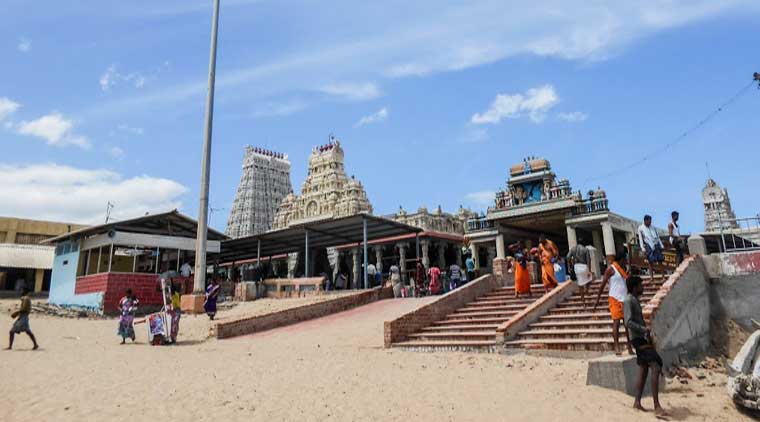
- The hilltop Swaminathaswamy shrineThe presiding Murugan shrine sits atop a hillock about 60 ft high, reached by a flight of 60 steps, each named after one of the 60 years of the Tamil calendar cycle. Shiva's shrine is at the foot of the hill, because here the son is the teacher and the father the disciple, so the son's shrine stands higher.
- Darshan timings, and which to trustThe official Tamil Nadu Tourism page gives timings of about 5:00 am to 12:00 pm and about 4:00 pm to 9:00 pm. Some popular pages quote a 6:00 am open and a 1:00 pm midday close. Treat the morning as roughly early-morning to midday, reconfirm locally, and plan to arrive before the midday closing or in the evening.
- Free queue or special darshanThere is a free darshan queue, and a special-darshan ticket of about 50 rupees for a closer, quicker view of the deity, confirmed on tamilnadutourism.com. Outside festival peaks travellers report the whole darshan usually takes under about an hour, longer on Sundays and auspicious days.
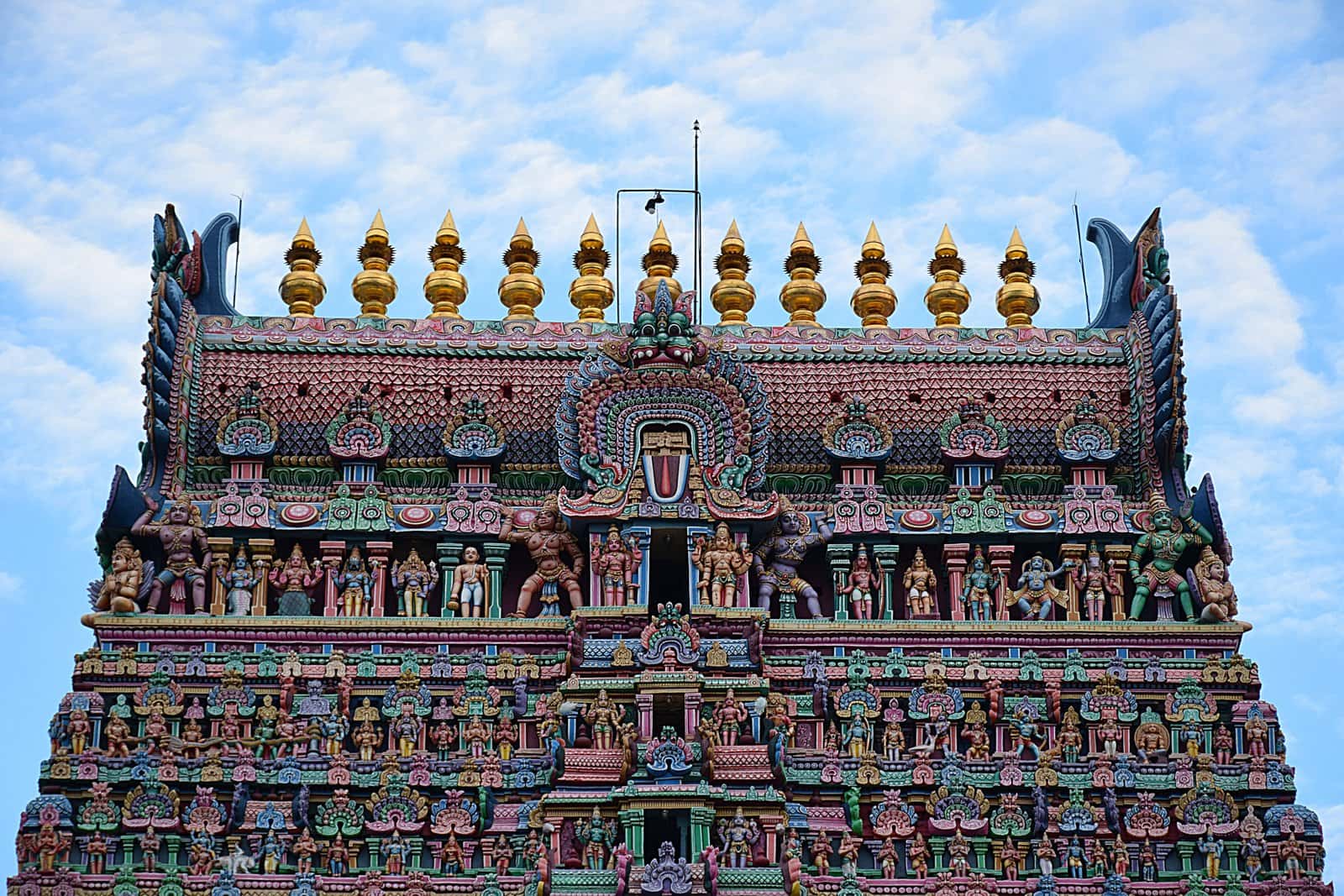
- Around the hillAt the foot are the Shiva (Sundareswarar) shrine and the temple tank, and the small town spreads along the Cauvery. The temple has three gopurams and three precincts in the classic Dravidian plan, with later Chola and Nayak work layered over a much older core.
Swamimalai is an active place of worship, not a monument. Cover shoulders and knees, leave footwear at the foot of the hill before the climb, keep your phone and camera out of the inner sanctum, and ask before photographing any ritual or priest. The dress code is covered in the logistics section below; the short version is traditional and modest, and many sanctums expect men to remove their shirt for the inner seva.
Swamimalai bronze icons: watching a god being cast
The other reason to come is the craft: Swamimalai is the GI-tagged home of Chola-era lost-wax bronze casting, where hereditary sthapathi sculptors still make sacred icons by hand. You can watch the process and, with patience, commission a genuine piece.
- What makes a Swamimalai bronze specialThese are panchaloha icons, cast from an alloy traditionally of five metals, by sculptors called sthapathis trained in the Shilpa Shastra, the old treatise that fixes the proportions and iconography of a deity. The craft has run unbroken here since the Chola era, and the icons carry a Geographical Indication tag granted by the Government of India around 2008 to 2009.
- The lost-wax process you can watchThe method is cire perdue, lost wax: a detailed model is sculpted in beeswax, layered in fine then coarse clay, the wax is melted out, molten metal is poured into the hollow, and the clay mould is broken to reveal the icon, which is then chiselled, engraved and polished. Several workshops in and around town let visitors watch stages of it.
- Buying a genuine icon, not a copyA real lost-wax piece is individually cast and finished, so it is not cheap and a serious commission can take weeks to months. If authenticity matters, deal with an established sthapathi workshop, ask about the GI tag and the alloy, and do not expect a same-day genuine bronze; the quick souvenir versions are a different thing.
- How to arrange a visitWorkshops cluster in and around Swamimalai town, an easy add-on to the temple. A WayToIndia driver or a Kumbakonam hotel can call ahead so a foundry expects you and someone can explain the process; turning up unannounced at a busy workshop is hit or miss.
Most travel pages treat Swamimalai as a temple stop and miss that it is one of the last places on earth where sacred bronzes are still cast the way the Cholas cast them a thousand years ago. Give the workshops an hour or two: watching a god emerge from a broken clay mould is the kind of thing you remember long after another darshan blurs into the rest. If you cannot buy a real piece, you will at least understand why the genuine ones cost what they cost.
The wider temple loop from Swamimalai
Swamimalai sits inside one of India's densest temple landscapes. From a Kumbakonam base you can pair the Murugan darshan with the Navagraha circuit and the great Chola temples.
- Kumbakonam's own templesThe base town has the Adi Kumbeswarar and Sarangapani temples and the famous Mahamaham tank, a short auto ride from your hotel. It is an unhurried, food-rich small town, known for its strong South Indian filter coffee, brass and bronze vessels and metal sculpting.
- The Navagraha circuitThe nine-planet (Navagraha) temples of the Cauvery delta run nearby, and Suryanar Kovil, the Sun temple, is about 20 to 25 km from Swamimalai over near Aduthurai, an easy half-hour drive. Many pilgrims combine the Murugan darshan with one or more Navagraha shrines in a single day, as the WayToIndia Navagraha tour does.
- The great Chola templesThanjavur's Brihadeeswarar Temple, a UNESCO World Heritage Site, is about 35 to 40 km away, with Gangaikonda Cholapuram and Darasuram's Airavatesvara Temple also within reach. A craft and history traveller can pair these with the Swamimalai bronze foundries for a deep Chola day.
- The Arupadai Veedu connectionSwamimalai is the fourth of the six Padai Veedu abodes of Murugan, so devotees doing the full pilgrimage pair it with Palani, Tiruchendur, Tiruparankundram, Thiruthani and Pazhamudircholai. On the WayToIndia Arupadai Veedu tour it is the second temple, reached on an early drive from Chennai.
The mistake is to treat Swamimalai as a quick stop on a packed circuit. From a Kumbakonam base you can do the Murugan temple at the cool ends of the day, the bronze workshops in between, a Navagraha shrine or two, and the great Chola temples on a side trip, all without long drives. Two unhurried nights in Kumbakonam turn a tick-the-box darshan into a proper delta temple pilgrimage.
Where to stay near Swamimalai, and how many nights
Base in Kumbakonam, where the hotels, food and rail links are. Swamimalai itself is a small town. One to two nights is the sweet spot for the temple and the wider loop.
- Kumbakonam: the practical baseAlmost everyone stays in Kumbakonam, about 7 to 9 km away, where the choice of hotels, restaurants, ATMs and the railway station all sit. It is central to the whole temple cluster, so you are never more than a short drive from the next shrine.
- Swamimalai and resort staysSwamimalai town is small, with a few heritage and resort-style stays on its edges, including properties that lean into the bronze-craft and delta-village theme. These suit a traveller who wants calm and space rather than the convenience of the Kumbakonam core.
- How many nightsOne night and a full day covers the Murugan temple, a bronze workshop and a Kumbakonam temple or two. A second night lets you add the Navagraha circuit or the great Chola temples without rushing. Half a day, on a packed circuit, just about gets you the darshan and the climb.
- Booking noteRooms are usually easy to find off-season, but the festival days fill Kumbakonam fast and push prices up. If your dates fall on Vaikasi Visakam, Thai Poosam, Panguni Uthiram or Skanda Sashti, book well ahead.
The smart move in the delta is to settle in one Kumbakonam hotel for both nights and make short spokes out to Swamimalai, the Navagraha shrines and the Chola temples, rather than hopping hotels. The drives are short, the town has the best food and ATMs, and you keep one comfortable base while the temples come to you one cool morning or evening at a time.
Swamimalai costs and a realistic daily budget
Swamimalai is gentle on the wallet. Darshan is free or about 50 rupees for the special queue, local transport is cheap, and the big variable is whether you buy a bronze.
- Temple and transportDarshan is free; the special-darshan ticket is about 50 rupees. The local bus from Kumbakonam is about 5 rupees, while an auto-rickshaw for the short run or a half-day hired car costs more but saves time and suits a family or seniors. These small, fixed costs make the temple itself almost free to visit.
- A rough daily budgetExcluding your room and long-distance transport, plan on roughly a modest few hundred rupees a day for a frugal pilgrim using buses and simple meals, and more if you hire a car, eat in hotels and tip at the workshops. Kumbakonam is an inexpensive town by Indian standards.
- The bronze is the big variableA genuine lost-wax panchaloha icon is a serious purchase, individually cast and finished, so prices run from substantial for a small piece to very high for a large commission, and a real one can take weeks to months. Budget for it as an investment, not a souvenir, and the rest of the trip stays cheap.
- Cash and cardsHotels and bigger shops in Kumbakonam take cards and UPI, but the local bus, small eateries, autos and many workshops run on cash. There are bank ATMs in Kumbakonam, so draw cash there and carry small notes for the temple and the buses.
Practical logistics: dress, photos, food, money and getting around
The small things that make a Swamimalai day smooth, from the temple dress code and photo rules to ATMs, the local bus and the heat.
- Dress code, by ruleTraditional and modest is expected: women in saree, half-saree, chudidhar or salwar with a dupatta; men in dhoti (veshti) with a shirt or formal trousers. Shorts, sleeveless tops and short dresses are discouraged, and at many sanctums men remove their shirt for the inner seva. Dress for a working temple, not a sightseeing stop.
- Photography and footwearPhotography is not allowed inside the sanctum, and you should ask before photographing rituals or priests. Footwear is left at the foot of the hill before the 60 steps, so wear something easy to slip off and carry water in the warm months.
- Food and the Kumbakonam baseEat in Kumbakonam, where the South Indian vegetarian food and the famous filter coffee are a highlight. Simple eateries cluster near the temples; carry your own water on the temple climb and in the hotter months.
- Money, SIM and getting aroundATMs and mobile coverage are reliable in Kumbakonam. Get an Indian SIM or eSIM at the airport if you are flying in. Around town, the local bus, autos and a hired car cover everything; the temple cluster is compact, so you are never far from the next stop.
Safety, the climb, and staying well
Swamimalai is a calm, low-hassle temple town. The main things to manage are the heat, the 60-step climb, and the usual small-town care with autos and souvenir claims.
- Heat, water and the climbThe delta is hot and humid from April to June, and the open temple offers little shade. Climb the 60 steps in the cool of the morning or evening, carry water, and pace yourself. The steps are manageable for most people but the heat is the real test, so time your visit to it.
- Autos and fair pricesAuto drivers may quote high to visitors, so agree the fare before you set off or ask your hotel for the going rate. The local bus is cheap and easy if you prefer to avoid the haggle, and a pre-arranged car removes the friction entirely.
- Buying a genuine bronzeThe one place to be careful with your wallet is the craft. A mass-produced copy can be sold as a genuine Swamimalai bronze, so deal with an established sthapathi workshop, ask about the GI tag and the alloy, and remember a real lost-wax piece is individually cast and takes time.
- Food, water and general healthDrink bottled or filtered water, take the usual care with street food, and carry any personal medication, as Swamimalai is a small town and the nearest full hospitals and pharmacies are in Kumbakonam. Sun protection matters in the warmer months.
Swamimalai is one of the easier temple towns to visit: there is no aggressive donation culture at the gate and the crowds are modest outside festival days. The honest cautions are the heat, the climb for less mobile travellers, and buying a genuine bronze rather than a copy. Manage those three and the visit is calm and welcoming, which is exactly why it suits families, seniors and first-time Tamil Nadu temple visitors so well.
Swamimalai for every kind of traveller, and on access
Swamimalai suits very different visitors. Here is what it offers you and the one tip that matters for each, including how a senior climbs the 60 steps comfortably.
- Pilgrims and devoteesFor devotees of Murugan this is the fourth Arupadai Veedu abode and the place of the Pranava Mantra teaching, so it carries deep meaning. Take the special darshan for a closer view, time the visit outside festival crowds for an unhurried prayer, and pair it with the other five abodes if you are doing the full pilgrimage.
- Families with childrenEasy and rewarding: a short climb, a quick darshan and the wonder of watching bronze being cast. Keep little ones close on the steps and in the workshops, where molten metal is handled, and break the day with filter coffee and a temple-town meal in Kumbakonam.
- Senior travellers and on accessibilityVery doable with planning. The hill is only about 60 ft and the 60 steps are gentler than the long hill climbs at Palani; still, climb in the cool morning or evening, take it slowly with rests, and base in Kumbakonam to keep daily travel short. Use a hired car rather than the bus, and skip the festival crush if comfort matters.
- Craft and art loversThis is your destination as much as any pilgrim's. Give the bronze workshops real time, ask to see the lost-wax stages, and if you can, commission a genuine GI-tagged piece, accepting that a real one takes weeks to months. Pair it with the great Chola temples for the full sculptural story.
- PhotographersThe gopurams, the steps, the foundry work and the delta light are the draws. Respect the no-camera rule inside the sanctum, ask before photographing people at prayer or sculptors at work, and you will come away with the craft and the temple both.
- First-time Tamil Nadu temple visitorsSwamimalai is a gentle, low-hassle introduction: small, calm, easy to reach from Kumbakonam, and paired with a living craft that makes the visit more than a darshan. A good first stop before the bigger, busier temples of the south.
A suggested Swamimalai and Kumbakonam itinerary
How to shape one or two unhurried days from a Kumbakonam base so you catch the temple at the cool hours, the bronze workshops in between, and the wider loop without rushing.
- Day one, morningReach the temple soon after the early opening, climb the 60 steps in the cool, take the special darshan, and pay your respects at both the hilltop Murugan shrine and the Shiva shrine at the foot before the midday closing.
- Day one, late morning and afternoonVisit a bronze workshop in or around Swamimalai to watch the lost-wax casting, then return to Kumbakonam for a temple-town lunch and filter coffee, resting through the hottest part of the day. Late afternoon, see Kumbakonam's own Kumbeswarar and Sarangapani temples.
- Day two, if you have itAdd the Navagraha circuit, starting with nearby Suryanar Kovil, or take a side trip to Thanjavur's Brihadeeswarar Temple and the other great Chola temples. A second night turns a darshan into a proper delta pilgrimage and craft trip.
- The half-day versionOn a packed Arupadai Veedu or Navagraha circuit you can do the Swamimalai darshan and the climb in a couple of hours, though you will miss the bronze workshops and the wider temple loop that make the place special.
The single thing that breaks a tight Swamimalai plan is arriving in the middle of the day, when the temple closes for several hours, roughly from about midday until about 4:00 pm by the official hours. Build your day so the temple falls in the morning or the evening, keep the hot middle of the day for the workshops, a meal and a rest in Kumbakonam, and you will never find yourself at a shut gate with the clock running.
The real questions travellers ask about Swamimalai
Straight answers to the questions that come up again and again on traveller forums and temple-review threads, so you arrive already knowing the score.
- Is it 5 am or 6 am that the temple opens?The official Tamil Nadu Tourism page says about 5:00 am to 12:00 pm and about 4:00 pm to 9:00 pm, while several popular pages say 6:00 am and a 1:00 pm midday close. Treat the morning as roughly early-morning to midday, aim to be there well before noon, and reconfirm locally on the day.
- How long does darshan take?Outside festival peaks travellers report the whole darshan usually takes under about an hour, faster with the special-darshan ticket. Sundays and auspicious or wedding days are busier, so arrive earlier and allow extra time for the queue and security then.
- Can I watch bronze idols being made?Yes. Several workshops in and around the town let visitors watch stages of the lost-wax casting. Have your driver or hotel call ahead so a foundry expects you, and remember a genuine commissioned piece takes weeks to months, so it is not a same-day purchase.
- Should I base in Kumbakonam or stay in Swamimalai?Base in Kumbakonam for the hotels, food, ATMs and rail links; it is only about 7 to 9 km away and central to the whole temple cluster. Choose a Swamimalai or delta-edge resort only if you specifically want calm and space over convenience.
- Is the 60-step climb hard for elderly parents?The hill is only about 60 ft and the 60 steps are far gentler than the long climbs at Palani. Most older travellers manage with rests and the cool hours; use a hired car to the foot, climb slowly, and skip festival days if comfort matters.
- Is the temple open to non-Hindus and foreign visitors?Tamil Nadu temples vary in their access rules and some, such as Palani, require a written undertaking from non-Hindus, so do not assume. At Swamimalai, dress traditionally, behave respectfully, ask at the entrance about current access for non-Hindus, and follow whatever the temple staff advise on the day.
Planning Swamimalai from abroad
Swamimalai is where a diaspora family closes the Arupadai Veedu vow and where a collector commissions a real bronze. A little preparation on dress, darshan and the craft makes it easy.
- Fly to Trichy or Chennai, base in KumbakonamTrichy International, about 90 to 100 km away, is the quickest way in, with some Gulf and Southeast Asia flights; otherwise fly into Chennai. Base in Kumbakonam and make Swamimalai a short hop. A WayToIndia car with a driver removes the local logistics for a family arriving from abroad.
- Dress and darshan, preparedCarry traditional modest clothing: saree, half-saree, chudidhar or salwar for women, dhoti or formal trousers for men, and be ready to remove footwear and, for men, sometimes a shirt for the inner seva. Take the special darshan of about 50 rupees for a closer view, and keep cameras out of the sanctum.
- Closing the Arupadai Veedu vowFor many diaspora families Swamimalai is one stop on the six-abode Murugan pilgrimage. From here it pairs naturally with Palani and the other Padai Veedu temples, and a guided circuit lets elders complete the vow without the strain of arranging each leg themselves.
- Buying a genuine bronze to take homeThis is the place to commission a real GI-tagged lost-wax icon rather than buy a copy abroad. Deal with an established sthapathi workshop, ask about the alloy and the GI tag, and plan ahead, because a genuine piece takes weeks to months and may need shipping or careful packing for the flight.
Money, the craft, and fitting Swamimalai into a wider trip
The practical basics an overseas traveller needs for a small temple town, plus how to weave the bronze craft and the Chola temples into a wider South India trip.
- Carry cash, base in KumbakonamCards and UPI work in Kumbakonam hotels and bigger shops, but the local bus, autos, small eateries and many workshops are cash places. Draw cash at the Kumbakonam ATMs, keep small notes for the temple and the buses, and pick up an Indian SIM or eSIM at the airport when you land.
- Treat the craft as a highlight, not an afterthoughtIf you have travelled this far, give the bronze workshops real time. Swamimalai is one of the last places casting sacred bronzes the Chola way, and understanding the lost-wax process changes how you see every Tamil temple bronze afterwards, whether or not you buy one.
- How long to give it on a bigger tripOn a South India temple trip, one to two nights in Kumbakonam is the right weight: enough for the Swamimalai darshan, a foundry visit, the Navagraha shrines and a side trip to the great Chola temples, without slowing the wider itinerary between Madurai, Thanjavur and the coast.
- Time your visit to your comfortOctober to March is the comfortable window. If you want a festival such as Vaikasi Visakam, plan around it and book far ahead; if you want calm, come on an ordinary weekday and you will have an unhurried darshan and the workshops almost to yourself.
Swamimalai is an unusually rewarding introduction to the Cauvery delta: a small, calm temple town with a deep legend, a gentle climb, and a living thousand-year-old craft you can watch with your own eyes. Slot it into a Kumbakonam base alongside the Navagraha shrines and the great Chola temples, give it a night or two, and let it be the chapter where the south stops being a list of temples and becomes a place where gods are still made by hand.
Where the son taught the father the meaning of Om
Swamimalai takes its meaning from a teaching. In the tradition told here, the gods could not grasp the meaning of the Pranava Mantra, the single sacred syllable Om, and even Brahma the creator failed to explain it. The boy-god Murugan, son of Shiva and Parvati, took the seat of the teacher and unfolded the meaning of Om to his own father, Lord Shiva, who received it humbly as a disciple. For this Shiva praised him as Swaminatha, the teacher of the Lord, and the hill became Swamimalai, the hill of the master. To this day the son's shrine stands at the top of the hillock and the father's at its foot, because here the usual order is reversed and the child is the guru. It is the reason the temple counts as the fourth of the six Arupadai Veedu abodes of Murugan, and why pilgrims climb its sixty steps, each named for one of the sixty years of the Tamil cycle. As with most temple legends, the story comes from oral and Puranic tradition retold in regional histories rather than from a single reliably attributed scriptural verse.
Planning a Swamimalai trip?
Our Tamil Nadu travel experts plan your full journey for you: route, hotels, darshan timings and transport. You get a free day-by-day plan and an exact quote on WhatsApp, usually within a few hours. No payment is needed to get your plan.
Tour packages that visit Swamimalai
Every journey below is private, hand-crafted and fully customizable. Tell us your dates and we tailor the itinerary, the pace and the priests or guides around you.