Tiruchendur Travel Guide
The comfortable months are October to March , and the great set-pieces are the November Soorasamharam during Skanda Sashti and the two 12-day Brahmotsavams. Decide early whether...
When to visit Tiruchendur, and the festivals to plan around
The comfortable months are October to March, and the great set-pieces are the November Soorasamharam during Skanda Sashti and the two 12-day Brahmotsavams. Decide early whether you want a festival or a quiet darshan.
- October to March: the comfortable windowThe coastal weather on the Bay of Bengal is at its most pleasant in these months, which is why most pilgrims and the Arupadai Veedu tours run from about November to February. Mornings are cool and clear, and the open seafront in front of the temple is bearable through the day.
- April to June: hot and humidHigh summer on this coast is hot and sticky, tiring for the open beach and the queue. If you must come then, take an early-morning darshan, carry water and sun cover, and keep the middle of the day for rest.
- The festivals that fill the townThe temple's own great festivals are the two Brahmotsavams, the Masi Brahmotsavam around February to March and the Avani Brahmotsavam around August to September, each running about 12 days, plus Vaikasi Visakam and the November Skanda Sashti. These are spectacular but very crowded.
- Festival or quiet darshan, decide firstSoorasamharam is unforgettable but the crowds are immense and the approach road becomes congested. A normal weekday outside festival season is gentler and lets you do the sea bath, the well and a calm darshan without a crush, so choose the experience you want before you fix dates.
Soorasamharam falls on the final day of the six-day Skanda Sashti, when Murugan is reenacted defeating the demon Surapadman, and Tiruchendur's is the most famous in Tamil Nadu. By the panchang, the Kanda Sashti Vratam in 2026 begins on about 9 November and Soorasamharam falls on about 14 November, with Thirukalyanam the next day. Treat these as expected panchang dates, reconfirm the temple's official schedule before you book, and be wary of pages that copy a fixed date from an earlier year, which happens every year across the web.
How to reach Tiruchendur
Tiruchendur has its own railway station and good road links. Most pilgrims come via Tirunelveli or Thoothukudi, or fly into Tuticorin or Madurai and drive down to the coast.
- By rail, including a station of its ownTiruchendur has its own railway station with trains from Tirunelveli, Chennai and other Tamil Nadu cities. The busier railhead is Tirunelveli, about 52 to 60 km away, well connected across India, from where it is a short taxi or government-bus hop down to the coast.
- By road from the nearby townsThoothukudi (Tuticorin) town is about 35 to 40 km away and Tirunelveli about 52 to 60 km, both with frequent Tamil Nadu government buses and taxis. The roads are good, and we can arrange a car with an experienced driver for a comfortable darshan day.
- Nearest airportsTuticorin (Thoothukudi) domestic airport is the closest at about 30 to 40 km by road, with flights to Chennai. Madurai airport, the larger gateway with wider connections, is about 165 to 180 km, roughly a 3 to 4 hour drive. There are no flights into Tiruchendur itself.
- On the Arupadai Veedu circuitOn the Six Abodes of Murugan tour, Tiruchendur is the coastal high point, usually done as a day trip from Madurai. It also pairs naturally with Kanyakumari, about 90 km south, and with Rameshwaram on a wider southern temple loop.
Fly into Chennai or another major Indian gateway, then connect to Madurai or Tuticorin and drive to the coast. Tiruchendur has no international flights of its own, so plan an internal hop plus a road leg.
This temple draws many Tamil devotees from Singapore, Malaysia and Sri Lanka. Fly into Madurai or Chennai, then connect to Tuticorin or take the train via Tirunelveli, and drive the short final leg down to Tiruchendur.
Take a train to Tirunelveli or directly to Tiruchendur, or fly to Tuticorin or Madurai and drive. Tirunelveli is the simplest rail hub for most journeys, with the short hop down to the temple at the end.
The seashore temple, the well, and the gopuram quirk
Tiruchendur is the only seashore abode of the six, a freshly reconsecrated temple with a rare west-facing gopuram, a cave sanctum, and the sacred Nazhi Kinaru well by the beach.
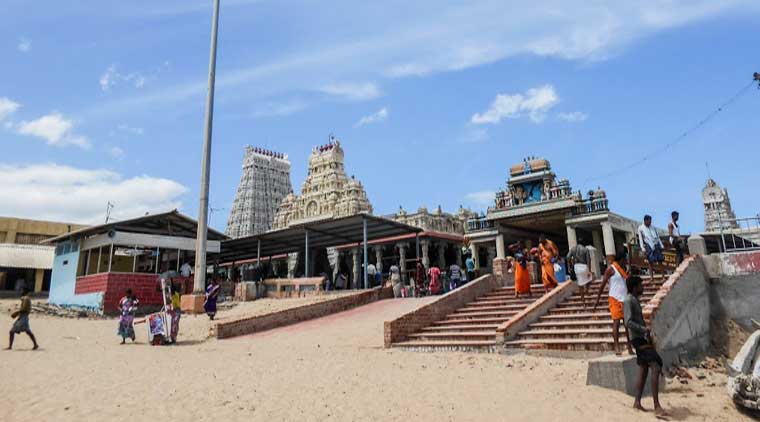
- The seashore temple, freshly consecratedSubramanya Swamy Temple sits at the eastern edge of town right on the Bay of Bengal, the only one of the six Padai Veedu abodes on the seashore. It reopened after its Maha Kumbhabhishekam in about July 2025, the first consecration in roughly 15 to 16 years, so the shrine and its towers are freshly restored.
- The Nazhi Kinaru sacred wellAbout 100 metres or roughly 330 feet south of the temple, almost on the beach, the Nazhi Kinaru (Nali Kinaru) is a spring-fed freshwater well that yields sweet water beside the salt sea. Pilgrims bathe here after the sea, before darshan, as the proper start to a visit.
- The nine-storey western gopuramThe Mela Gopuram rises about 137 to 157 feet over nine storeys, said to be around 300 years old. Tiruchendur is a rare temple whose main Raja Gopuram faces west rather than east, a quirk that locals will happily point out, and the inner sanctum sits in a cave-like shrine where Murugan is worshipped as a saintly child.
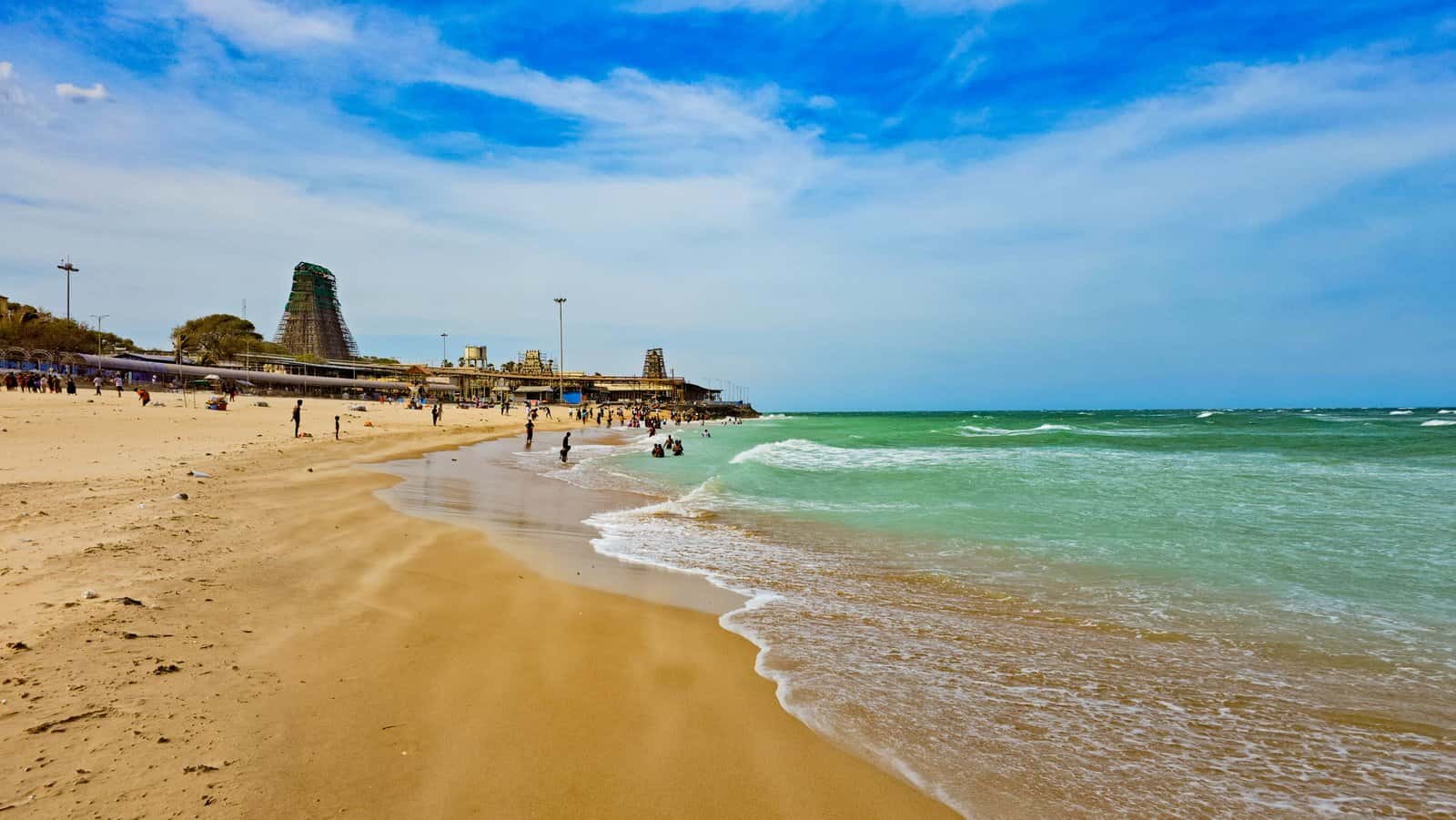
- The Valli cave and the beachWithin and around the complex are the Valli cave, tied to the legend of Valli, and the open beach where the Soorasamharam procession reaches the sea. The seafront views and the surf at the temple's foot are part of what makes Tiruchendur unlike any inland Murugan shrine.
Tiruchendur is a deeply observed temple and the dress code is enforced at the door. Men are expected to remove shirts and vests and wear a dhoti or veshti with a bare upper body or an angavastram inside, and women wear a saree or modest salwar. Phones, cameras and plastic bags are not allowed inside, so use the free cloak and footwear stands. Visitors who ignore the dress rule can be turned away.
Signature experiences at Tiruchendur
Beyond the darshan, these are the experiences that make a seashore temple unlike any other, and how to do them in the right order.
- The sea bath, then the well, then darshanThe defining experience is the ritual order: bathe in the sea at the temple's foot, then in the freshwater of the Nazhi Kinaru well about 100 metres south, then go for darshan. Doing it in this order is the whole point of a seashore abode, and is what most first-timers get wrong.
- An early Viswaroopa darshanThe day opens with Subrapadam and the Viswaroopa Darshan at about 5.30 am. An early-morning darshan, before the queues build, is the calmest and most atmospheric way to see the moolavar in the cave sanctum, with the sea air and the lamps lit.
- An abhishekam, if you book itPalabhishekam, the milk abhishekam, is performed several times a day and lets two devotees sit in the sanctum during the ritual. It is commonly quoted at about 1500 rupees per booking; settle the current rate and slot at the HR and CE counter or portal, then plan your darshan around it.
- Soorasamharam, if your dates matchIf you visit around Skanda Sashti you can watch the Soorasamharam, the reenactment of Murugan defeating Surapadman, with the procession reaching the seashore. It is one of the most powerful temple spectacles in the south, but go knowing the crowds are immense and the approach road is narrow.
- The beach and the local sweetsBeyond the temple, the open Bay of Bengal beach is worth a quiet walk, and the regional macaroon biscuits and the halwa of the Tirunelveli and Thoothukudi belt are worth tasting. A slow morning by the sea is part of the pilgrimage, not a distraction from it.
If you do only one thing properly at Tiruchendur, make it the sea-and-well ritual in the right order: the sea first, then the Nazhi Kinaru well, then the darshan. It is what sets this seashore abode apart from every inland Murugan temple, it costs nothing, and a calm early-morning bath before the queues build is what pilgrims remember long after the trip. Carry a change of clothes and a towel, as there is no fuss made of facilities.
Where to stay for Tiruchendur, and how long
Tiruchendur town is small. Stay in temple lodges near the shrine for an early darshan, or base in Tirunelveli, Thoothukudi or Madurai for more choice. Half a day to one day is the usual length.
- Near the temple: for an early darshanThe HR and CE runs pilgrim lodges and there are private lodges and small hotels near the shrine, plain but convenient for a dawn sea bath and the first darshan. Best for devotees who want to be at the gate when it opens and not commute in.
- Tirunelveli or Thoothukudi: more choiceAbout 52 to 60 km and 35 to 40 km away respectively, both towns have a wider range of hotels and restaurants and make an easy base for a day trip to the coast. Tirunelveli also puts you on the main rail line for onward travel.
- Madurai: on the wider circuitOn an Arupadai Veedu or southern temple loop, many travellers base in Madurai, about 165 to 180 km away, and do Tiruchendur as a long day trip. It is a 3 to 4 hour drive each way, so start early to be at the temple by mid-morning.
- How long to give itHalf a day covers the sea bath, the well and a darshan if the queue is short. A full day lets you take an abhishekam, walk the beach and avoid rushing. Plan a second night only if you are pairing it with Kanyakumari or Rameshwaram on a longer loop.
Around Soorasamharam, Skanda Sashti and the Brahmotsavams, the few lodges near the temple are booked out far ahead and the town is packed. If your dates fall on a festival, book well in advance or, better, base in Tirunelveli or Thoothukudi and drive in early to avoid both the room crunch and the worst of the approach-road congestion.
Tiruchendur costs: darshan, abhishekam and a day budget
Tiruchendur is inexpensive to visit. Here is what darshan, the abhishekam and a day actually cost, so you can plan and book the official tickets rather than guess.
- Free darshan versus the paid queueGeneral darshan is free for every devotee, with a wait of roughly 1 to 2 hours on a normal day. A paid special darshan ticket is commonly quoted at about 100 rupees per head, and a quicker speed darshan at about 250 rupees, each giving a faster queue. Both reach the same sanctum, so the ticket only buys time.
- The abhishekam and sevasPalabhishekam is commonly quoted at about 1500 rupees per booking for two persons, performed several times a day. Larger sevas such as the Shanmugar archana cost more. These rates change, so reconfirm at the HR and CE counter or the official portal before you plan around them.
- A rough day budgetExcluding your room and long-distance transport, a simple darshan day with a special-darshan ticket, food and local transport runs to roughly 800 to 1500 rupees a head; add about 1500 rupees if you take the abhishekam, and more if you hire a car for the trip from Madurai or Tirunelveli.
- Cash, cards and the official portalCarry cash for small lodges, food and offerings, as not everything takes cards or UPI in a small town. Book special darshan, abhishekam and archanai through the official HR and CE online portal where you can, both to lock a slot and to pay the correct, current price.
The single thing that keeps a Tiruchendur visit smooth is to book the special darshan or abhishekam through the official HR and CE portal or counter at the posted price, rather than paying a tout or a middleman outside the gate. The free darshan reaches the same deity, the paid ticket only buys a faster queue at about 100 rupees for special darshan or about 250 for speed darshan, and the abhishekam at about 1500 rupees is fixed, so there is no reason to overpay anyone for access.
Practical logistics: dress, phones, food and getting around
The small things that make a Tiruchendur darshan smooth, from the strict dress code and the no-phone rule to footwear stands, food and the short hops to the railhead.
- The dress code, and what men must doMen are expected to remove shirts and vests and wear a dhoti or veshti with a bare upper body or an angavastram inside the sanctum; women wear a saree or modest salwar below the knee. This is enforced at the door, so dress for it before you join the queue rather than be turned back.
- No phones, no plasticPhones, cameras and plastic bags are not allowed inside the temple. Use the free cloak and footwear stands at several points around the complex, and carry a small cloth bag rather than plastic for any offerings or wet clothes from the sea bath.
- Food and the local sweetsThere are simple vegetarian eateries near the temple and more choice in Tirunelveli and Thoothukudi. The regional macaroon biscuits and the halwa of the Tirunelveli and Thoothukudi belt are local specialities worth carrying away.
- Getting around and the short hopsThe town is small and the temple is walkable from the lodges near it. For the railhead and the towns, government buses and taxis run frequently to Tirunelveli and Thoothukudi. Mobile coverage in town is generally fine for calls and maps.
Safety, the festival crowds, and the sea
Tiruchendur is a safe, well-run pilgrim town, but the festival crowding on the narrow approach road and the open sea are the two things to take seriously.
- The festival crush and the narrow roadOn Soorasamharam, Skanda Sashti, Krithigai and the Brahmotsavams the crowds are immense and the narrow road to the temple becomes badly congested, which travellers describe as genuinely unsafe in the worst of it. If you want a calm darshan, avoid the peak festival days, and keep seniors and small children clear of the crush.
- Care in the seaThe sea bath is part of the ritual, but this is open coast, not a guarded swimming beach. Bathe where other pilgrims bathe, stay close to the shore, keep a firm hold of children, and do not wade out, especially when the surf is up or you are unsure of the currents.
- Heat, water and queuesThe seafront and the open queue can be hot and humid. Carry water, take sun cover in the warmer months, and use the early morning for the bath and darshan. The temple provides free wheelchairs and battery cars for those who need them.
- Belongings and small precautionsIn festival crowds keep your belongings secure, avoid displaying valuables, and agree any taxi fare before you set off, as auto and taxi rates are quoted high to outsiders. Otherwise the town is calm and the temple is well managed.
Tiruchendur is an active Hindu temple drawing devotees from Singapore, Malaysia, Sri Lanka and beyond, and it is generally welcoming to respectful visitors, including overseas Tamils and foreign devotees, provided they follow the dress code and temple discipline. Practices at individual sanctums can vary, so dress correctly, follow the queue, ask before entering any restricted area, and treat the rituals with the seriousness the local pilgrims do.
Tiruchendur for every kind of visitor, and on access
Tiruchendur suits very different visitors in different ways. Here is what it offers you and the one tip that matters for each, including how a senior visits comfortably.
- Devotees and pilgrimsThe heart of a visit is the sea bath, the Nazhi Kinaru well and the darshan in the cave sanctum, freshly consecrated since July 2025. Go early, do the ritual in order, and consider an abhishekam if you want time in the sanctum.
- Families with childrenEasy and rewarding outside festival days, with the beach and the sweets to enjoy. Keep children close in any crowd and at the water, and avoid the Soorasamharam crush with little ones, when the road and the temple are packed.
- Senior travellers and on accessibilityVery doable with planning. The temple provides free wheelchairs and battery-operated cars and free footwear stands, which makes it one of the more senior-friendly Murugan temples. Stay near the shrine, take an early darshan in the cool of morning, and skip the peak festival days for comfort.
- Solo travellersStraightforward and safe in daylight, with frequent buses and taxis from Tirunelveli and Thoothukudi. The town is small and devotional rather than touristy, so it is an easy solo stop on a southern temple loop.
- PhotographersThe west-facing gopuram, the surf at the temple's foot and the festival processions to the sea are the shots, but remember cameras and phones are not allowed inside the temple. Work the exterior, the beach and the gopuram, and ask before photographing people at prayer.
- Couples and first-time pilgrimsA calm, soulful coastal darshan rather than a sightseeing stop. Pair it with Kanyakumari to the south for a sunrise-and-sea couple of days, and do the sea-and-well ritual together as the quiet centre of the trip.
A suggested Tiruchendur plan
How to shape a half-day darshan or a fuller day so you catch the temple at its calmest and do the sea-and-well ritual without rushing.
- Early morning: the ritualArrive at first light, take the sea bath at the temple's foot, then bathe at the Nazhi Kinaru well about 100 metres south, change, and join the queue for an early darshan before the crowds build. This is the calmest window of the day.
- Late morning: abhishekam or beachIf you have booked a palabhishekam, this is the time for your slot in the sanctum. Otherwise walk the beach, see the Valli cave and the west-facing gopuram, and pick up the local macaroons and halwa before the heat peaks.
- Mid-afternoon: a second quiet darshanTravellers report the quietest darshan around 3.30 pm to 4 pm on a weekday. If you are staying the day, a second unhurried darshan then, away from the morning rush, is a gentle way to close the visit before driving back.
- The day-trip version from MaduraiOn a Madurai base, start very early for the 3 to 4 hour drive, reach the temple by mid-morning for the bath, the well and darshan, and drive back in the evening. It is a long day, so a Tirunelveli or Thoothukudi base is gentler if you can manage it.
The temple stays open through the day from about 5 am to 9 pm with no midday closing, so the thing that breaks a Tiruchendur plan is not opening hours but crowds. Avoid Tuesdays, Krithigai and Sashti days, weekends and the festival peaks if you want a calm darshan, aim for an early-morning or mid-afternoon weekday slot, and on a festival day build in a lot of extra time for the congested approach road.
The real questions travellers ask about Tiruchendur
Straight answers to the questions that come up again and again on traveller forums, so you arrive already knowing the score.
- What is the right ritual order?Bathe in the sea at the temple's foot first, then at the Nazhi Kinaru freshwater well about 100 metres south, then take darshan. This sea-then-well-then-darshan order is the proper way to do a seashore abode, and it is what most first-timers get wrong.
- Is there a free darshan, and what does the ticket cost?Yes, general darshan is free with a wait of roughly 1 to 2 hours on a normal day. A paid special darshan ticket is commonly about 100 rupees per head, and a quicker speed darshan about 250 rupees, each giving a faster queue. Both reach the same sanctum, so the ticket only saves time.
- Do men really have to remove their shirts?Yes. Inside the sanctum men wear a dhoti or veshti with a bare upper body or an angavastram, no shirts or vests, and women wear a saree or modest salwar. The dress code is enforced at the door, so come prepared or you can be turned away.
- Can I take my phone or camera inside?No. Phones, cameras and plastic bags are not allowed inside the temple. Leave them at the free cloak stands, and photograph the gopuram, the beach and the exterior instead, where it is permitted.
- When is Soorasamharam in 2026, and is it safe?By the panchang, Skanda Sashti Vratam begins on about 9 November 2026 and Soorasamharam falls on about 14 November, with Thirukalyanam the next day. It is a magnificent spectacle, but the crowds are immense and the approach road is narrow and can be unsafe in the crush, so go only if you are prepared for that, and reconfirm the dates officially.
- Are non-Hindus and foreigners allowed?Tiruchendur welcomes respectful visitors, including overseas Tamils and foreign devotees, who follow the dress code and temple discipline; the temple itself draws pilgrims from Singapore, Malaysia and Sri Lanka. Dress correctly, follow the queue, and ask before entering any restricted sanctum area.
Planning Tiruchendur from abroad
Tiruchendur is the coastal high point of a southern Murugan trip and draws Tamil devotees worldwide. A little preparation makes the sea-and-well ritual and the strict dress code easy to handle.
- Know the sea-and-well ritual before you goThe visit is built around bathing in the sea, then in the Nazhi Kinaru well about 100 metres south, then taking darshan. Carry a change of clothes and a towel, and do the bath early. Knowing this order in advance is the single thing that makes an overseas first visit go right.
- Dress for a strict templeMen remove shirts and vests and wear a dhoti or veshti inside the sanctum; women wear a saree or modest salwar. Phones and cameras are not allowed inside. This is enforced at the door, so dress correctly before you queue rather than be turned back at the gate.
- Pair it with Kanyakumari and RameshwaramFly into Madurai or Chennai, then loop the south: Madurai, Tiruchendur on the coast, Kanyakumari about 90 km south for the sunrise and the cape, and Rameshwaram on a wider temple circuit. Tiruchendur is the seashore Murugan high point of that loop.
- Senior-friendly with planningThe temple provides free wheelchairs and battery cars, and stays near the shrine keep walking short. For elderly parents, take an early-morning darshan in the cool, avoid the festival peaks, and the seashore setting is one of the gentler major Murugan temples to visit.
Money, connectivity and timing for foreign visitors
The practical basics an overseas devotee needs for a small coastal temple town: cash, cards, a SIM, the official booking portal, and how long to give it on a wider India trip.
- Carry cash, book darshan onlineCards and UPI work in bigger hotels and towns, but small lodges, food and offerings near the temple run on cash, so carry enough. Book the special darshan and abhishekam through the official HR and CE portal where you can, to lock a slot and pay the correct posted price.
- Get a SIM at the airportPick up an Indian tourist SIM or an eSIM when you land in Chennai, Madurai or Tuticorin rather than hunting for one in a small town. Coverage in Tiruchendur is generally fine for maps, calls and ride-hailing to the nearby towns.
- How long to give it on a bigger tripTiruchendur is a half-day to one-day darshan rather than a multi-day stop. On a southern loop, give it a morning, then move on to Kanyakumari or back to your Madurai or Tirunelveli base, so it slots in without slowing the whole itinerary.
- Time your visit to your comfortOctober to March is the comfortable coastal window. If you want the spectacle of Soorasamharam, plan around early-to-mid November and book far ahead; if you want a calm darshan, come on a normal weekday outside festival season and you will have the morning sea bath almost to yourself.
Tiruchendur is an unusually moving stop on a southern circuit: a seashore Murugan temple, freshly consecrated since 2025, where the ritual begins in the Bay of Bengal itself. Slot it between Madurai and Kanyakumari, give it a morning, do the sea-and-well bath in the right order, and let it be the coastal, contemplative chapter of the trip. Many overseas Tamil devotees treat a Tiruchendur darshan as the spiritual centre of the whole journey.
Where Murugan met the sea to end Surapadman
Tiruchendur is the shore where, in the Kanda Puranam tradition, Lord Murugan fought his final battle against the demon Surapadman. The asura brothers had won boons from Shiva that made them near-immortal, and oppressed the three worlds, so Murugan was born of Shiva's spark to deliver the devas. Murugan camped here by the Bay of Bengal and, after a terrible war, hurled his divine spear, the vel. Surapadman fled into the sea and rose again as a vast mango tree that spread across the worlds; Murugan split it in two with the vel, and the halves became a peacock, which he took as his mount, and a rooster, which became his banner. Having won, Murugan worshipped his father Shiva on this spot, and the temple was raised on the sandstone reefs of the seaside. It is the only one of the six Padai Veedu abodes set on the seashore, which is why pilgrims still bathe in the sea and the Nazhi Kinaru well before they enter, as if entering the very ground of the legend.
Planning a Tiruchendur trip?
Our Tamil Nadu travel experts plan your full journey for you: route, hotels, darshan timings and transport. You get a free day-by-day plan and an exact quote on WhatsApp, usually within a few hours. No payment is needed to get your plan.
Tour packages that visit Tiruchendur
Every journey below is private, hand-crafted and fully customizable. Tell us your dates and we tailor the itinerary, the pace and the priests or guides around you.