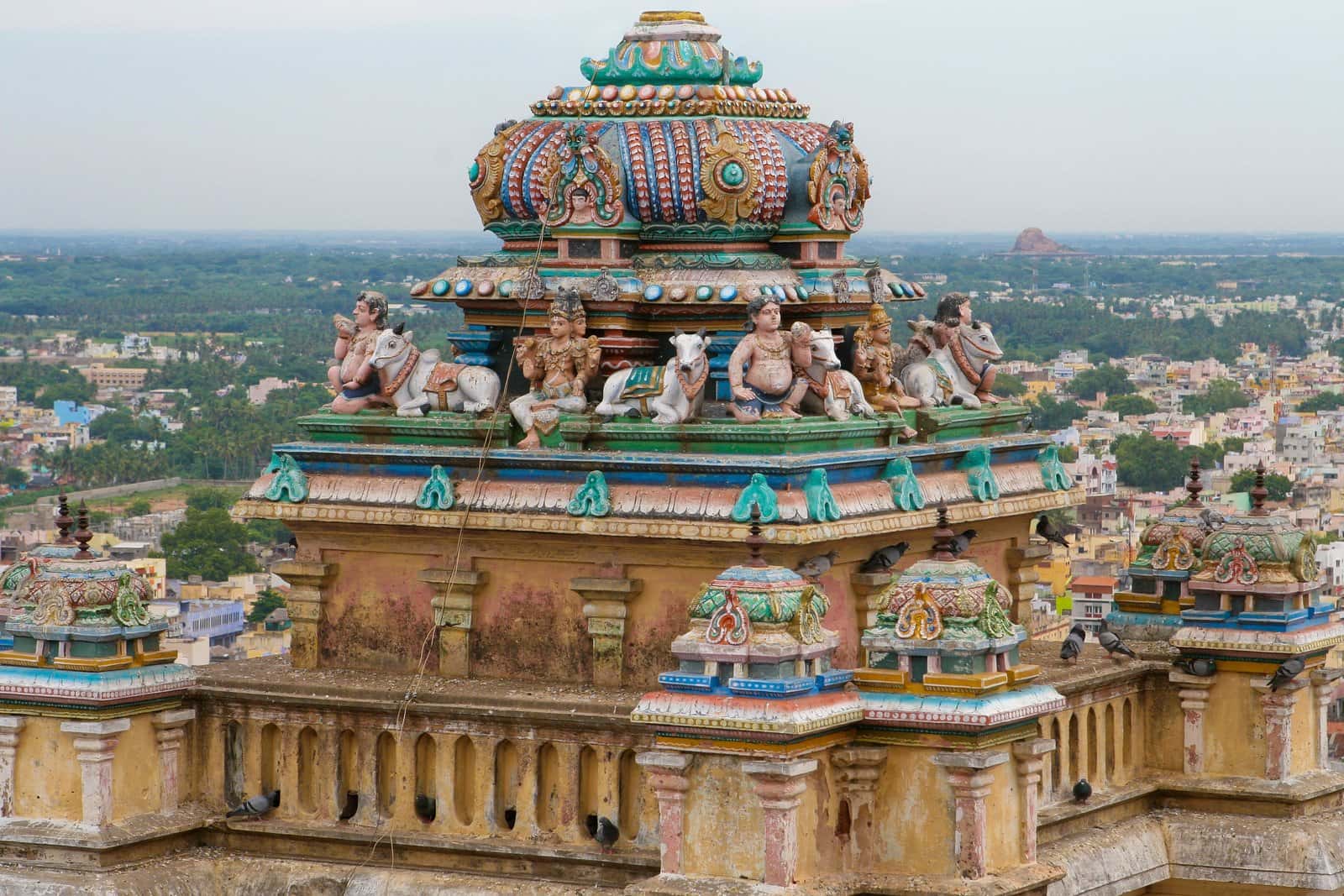
Trichy Travel Guide
The best months are October to March , pleasant for the great temple and the Rockfort climb. The thing to plan is the timing: Srirangam closes in three predictable windows...
When to visit Trichy, and the darshan windows to plan around
The best months are October to March, pleasant for the great temple and the Rockfort climb. The thing to plan is the timing: Srirangam closes in three predictable windows through the day.
- October to March: the comfortable windowThese are the pleasant months for the vast Srirangam walking and the barefoot Rockfort climb, with cool mornings ideal for an early start. This is the peak season for temple visitors, so book rooms a little ahead, especially around the December festivals.
- April to June: hot, so go earlyHigh summer on the Kaveri plain is genuinely hot, often above 38 degrees Celsius, and the temple floors and the Rockfort steps are barefoot stone. If you come then, do the climb and the temples in the cool early morning, rest through the middle of the day, and carry water and sun cover.
- Time the Srirangam darshan, not just the dateSrirangam is open broadly from about 6 am to 9 pm, but the main Ranganatha sannathi closes for pooja in three windows: roughly 7:15 am to 9 am, 12 noon to 1:15 pm, and 6 pm to 6:45 pm. The early Viswaroopam darshan, about 6 am to 7:15 am, is the calm, beautiful start most pilgrims prize.
- Mind Vaikunta Ekadasi in DecemberAround late December or January, Vaikunta Ekadasi brings immense crowds to Srirangam when the Paramapada Vasal, the gate of heaven, is opened at dawn. In the 2026 to 2027 cycle it falls on about 20 December 2026. It is profound, but plan far ahead and reconfirm the exact date.
General darshan at Srirangam is free in every seva slot. A Quick Seva ticket is about 250 rupees per head and a special entrance about 20 rupees, though some agents quote VIP figures up to about 300 to 500 rupees, so confirm the current ticket at the counter rather than with a tout. The temple shuts in three windows through the day, so a little timing turns a long wait into an easy darshan. The signature section below explains the great temple itself.
How to reach Trichy and the temples
Trichy has its own international airport, only a short drive from the temples, which makes it the easiest base for the whole temple delta. The trains and roads are good too.
- By air, including direct from the GulfTiruchirappalli International Airport (TRZ) is only about 8 to 15 km from the temples, with direct flights to the Gulf, Sharjah, Dubai, Kuwait, Doha, Muscat, Abu Dhabi and more, and to Southeast Asia, Singapore, Kuala Lumpur and Colombo, as well as the Indian metros. Most Gulf flights run late at night, so arrange a hotel pickup for the small hours.
- By trainTrichy Junction is a major railway hub on the southern network, well connected to Chennai, Madurai and across the south. Srirangam has its own small station about 1 km from the great temple. Chennai is about 320 km away, roughly 5 to 6 hours by fast train or road.
- By road, and as a circuit baseGood roads link Trichy to Thanjavur (about 55 km, roughly 1.5 hours), Kumbakonam (about 90 km) and beyond. Trichy makes a convenient first base for the Chola-delta circuit, and a car with a driver for the temple days saves a lot of barefoot-and-heat fatigue.
- Getting around the cityAutos and app cabs handle the short hops between the Rockfort, Srirangam and Thiruvanaikaval; agree the auto fare before you set off, as meters are rarely used. City buses are cheap and frequent if you have time, and the three main temples sit within a compact triangle north of the river.
Fly into Chennai and connect by a short flight or train, or route through a Gulf hub straight into Trichy. Trichy is the base for Srirangam and the whole Chola-delta circuit, so flying in directly saves a day.
Trichy has frequent direct flights from the Gulf and from Singapore, Kuala Lumpur and Colombo, landing only about 8 to 15 km from the temples. It is the home airport for the Tamil diaspora returning for a temple pilgrimage, with most arrivals late at night.
Direct flights and a major rail junction connect Trichy to Chennai, Madurai and across the south. From Chennai it is about 320 km, and from here the delta temples are an easy drive.
Srirangam, the Rockfort and the water temple
Trichy's three great sights sit close together: the vast Srirangam temple, the Rockfort with its hilltop shrine, and the Pancha Bhoota water temple at Thiruvanaikaval.
- Sri Ranganathaswamy, SrirangamThe largest working Hindu temple in the world, about 156 acres within seven enclosures and twenty-one gopurams, with the Rajagopuram the tallest temple tower in Asia at about 236 to 240 feet. General darshan is free; a Quick Seva is about 250 rupees. Time your visit around the three daily closure windows, and note the innermost sanctum is open to Hindus while everyone may walk the vast enclosures.
- The Rockfort and Ucchi PillayarAn ancient rock about 275 feet high in the city centre, climbed barefoot by about 437 rock-cut steps to the Ucchi Pillayar (Ganesha) temple at the top, with a sweeping view over Trichy, the Srirangam gopurams and the Kaveri. Open about 6 am to 8 pm. The Thayumanaswamy (Shiva) temple sits roughly halfway up, with a 6th-century Pallava cave temple along the way.
- Jambukeswarar, ThiruvanaikavalAbout 3 km from Srirangam, one of the five Pancha Bhoota Sthalam temples, representing water, with an underground spring that perpetually seeps beside the lingam and an Om-shaped shrine to the goddess Akilandeswari. Open about 6 am to 1 pm and 3 pm to 8:30 pm. A serene, important Shiva temple and a calm counterpoint to Srirangam.
- Lourdes Church and Kallanai damNear the Rockfort, the 19th-century Our Lady of Lourdes Church is a French Gothic basilica modelled on Lourdes in France, a reminder that Trichy is a three-faith city. About 18 to 24 km east, the Kallanai dam (Grand Anicut) is a Chola-built water-diversion structure widely held to be among the oldest still in use, and a popular riverside outing.
Dress modestly: cover shoulders and knees, and avoid shorts and short skirts at the temples. Footwear is left outside everywhere, so the Rockfort climb and the Srirangam enclosures are done barefoot on stone that turns hot by midday, the main reason to start early. At Srirangam the innermost Ranganatha sanctum is open to Hindus only, but everyone may walk the outer enclosures, the bazaar streets and the carved halls, which is most of the experience. The next section is the great temple in full.
Srirangam, a temple laid out like a city
Srirangam is not a single building but a walled temple-town, the largest functioning Hindu temple on earth. Knowing how it is laid out, and when to go, turns a daunting visit into a wonder.
- Seven enclosures and twenty-one towersYou pass inward through seven concentric prakarams, the outer ones full of streets, homes and bazaars, towards the golden-domed sanctum where Ranganatha reclines on the serpent Adisesha. Twenty-one gopurams rise above the complex, crowned by the Rajagopuram, the tallest temple tower in Asia at about 236 to 240 feet, completed in 1987.
- The free darshan, timed rightGeneral darshan is free in every seva slot. Go for the early Viswaroopam darshan, about 6 am to 7:15 am, for a calm and beautiful start, or take a Quick Seva (about 250 rupees per head) to save the queue. Either way, plan around the three closure windows, roughly 7:15 am to 9 am, 12 noon to 1:15 pm and 6 pm to 6:45 pm.
- What everyone can see, Hindu or notThe innermost Ranganatha sanctum is open to Hindus only. But everyone, including non-Hindus and overseas visitors, may walk the vast outer enclosures, the thousand-pillared hall, the carved Sheshagiriraya mandapam and the temple-town streets, which is most of the wonder. If you are a non-Hindu visitor, come anyway: you will still see far more than at most temples.
- Walk it, do not dash itEven between darshans, the outer enclosures, the carvings and the living bazaar streets reward an unhurried hour or two with a good guide. It is a living temple-town, not a museum, so allow time and let it unfold rather than ticking it off.
- Vaikunta Ekadasi, if you can take the crowdsAround late December or January, the Paramapada Vasal (gate of heaven) is opened at dawn and vast crowds pass through. In the 2026 to 2027 cycle it falls on about 20 December 2026. It is a profound experience, but plan far ahead, reconfirm the date, and expect a serious throng.
The Rockfort view, the water temple and the delta circuit
Around the great temple, Trichy offers a barefoot climb to a sunset view, a serene water temple, an ancient dam, and the perfect base for the Chola-delta circuit.
- Climb the Rockfort at golden hourThe roughly 437 barefoot steps to Ucchi Pillayar reward you with the finest view in the city, the Srirangam gopurams and the Kaveri spread below. Late afternoon, as the light softens, is the loveliest time and the stone has cooled. Carry water, take the Thayumanaswamy temple halfway up at your own pace, and pause at the Pallava cave on the way.
- The water temple at ThiruvanaikavalJambukeswarar, the Pancha Bhoota water temple, is a calm, ancient counterpoint to the bustle of Srirangam, with its perpetually seeping spring beside the lingam and the graceful Om-shaped Akilandeswari shrine. Devotees often pair it with Srirangam in the same morning, just 3 km apart.
- Use Trichy as your delta baseFrom Trichy, day-trip to Thanjavur and its UNESCO Brihadeeswarar Big Temple (about 55 km, 1.5 hours) and to Kumbakonam (about 90 km) for the Navagraha and Chola circuits, or push on to Chidambaram. The international airport and the rail hub make Trichy the easiest place to start the delta.
- The three-faith side of TrichyAdd the French Gothic Our Lady of Lourdes Church by the Rockfort and the ancient Kallanai dam on the Kaveri for a fuller picture of the city: Hindu, Christian and Chola engineering in a single day. It is a gentle, photogenic break from temple to temple.
- Eat TrichyThe city serves superb vegetarian meals on banana leaf and excellent filter coffee. Eat at busy, clean places, and drink bottled or filtered water, especially in the heat. A mid-morning tiffin between darshans is part of the rhythm here.
If you do only one thing slowly, make it Srirangam at dawn. The Viswaroopam darshan in the cool early light, followed by an unhurried walk through the outer enclosures before the heat builds, is what pilgrims remember long after the photographs fade. Give yourself the early morning for the great temple and the late afternoon for the Rockfort view, and Trichy opens up in a way a hurried day trip never allows.
Where to stay in Trichy, and for how long
Stay near the Rockfort and the central city for the temples and transport, in the Cantonment for comfort and dining, or in Srirangam to be next to the great temple. One to two nights is the sweet spot.
- Central city and Cantonment: comfort and diningThe Cantonment and central areas hold most of the comfortable and business-class hotels, close to the Rockfort, the railway station and the airport road, with the widest choice of restaurants. Best for travellers who want a good bed, easy cabs and dining, and a short drive to all three temples.
- Near the Rockfort: in the thick of itHotels within walking distance of the Rockfort and the bazaar put you in the heart of the old city, handy for an early climb and the main market. Rooms range from simple lodges to mid-range, and the area is busy and atmospheric rather than quiet.
- Srirangam: next to the great templeStaying in Srirangam itself, near the temple, suits devotees who want to walk to the dawn Viswaroopam darshan and be inside the temple-town before the crowds. Choices are mostly simpler pilgrim lodges and a few mid-range hotels, so book ahead in season and around Vaikunta Ekadasi.
- How many nightsOne full day and night covers Srirangam, the Rockfort and Thiruvanaikaval comfortably if you time the closures. A second night lets you add a relaxed Thanjavur day trip or the Lourdes church and Kallanai dam without rushing. Pilgrims doing the wider delta circuit often use Trichy as their base for two or three nights.
Around Vaikunta Ekadasi in December, and during the big Srirangam car festivals, rooms near the temple are scarce and pricier, sometimes booked weeks ahead. If your dates fall on a festival, reserve early, or base yourself in the central city and Cantonment and drive in for the dawn darshan before the worst of the crowds.
Trichy costs and a realistic daily budget
Trichy is gentle on the wallet: the darshan is free, the temples charge little or nothing, and the food is cheap and excellent. Here is what the main things cost.
- The temple costsGeneral darshan at Srirangam is free; a Quick Seva is about 250 rupees per head and a special entrance about 20 rupees, with some agents quoting VIP rates up to about 300 to 500 rupees, so buy at the counter. The Rockfort and Thiruvanaikaval charge little or nothing to enter, with small fees only for cameras or footwear minding at some gates.
- A rough daily budgetExcluding your room and long-distance transport, plan on about 800 to 1,500 rupees a day as a budget pilgrim, about 2,500 to 4,000 rupees mid-range, and more if you hire a car and driver for the day, which is the comfortable way to link the temples and a Thanjavur trip.
- Cars, autos and guidesA full day with a car and driver to cover the three temples comfortably is typically a few thousand rupees, and a Thanjavur day trip a little more; agree it in advance through your hotel or operator. Autos charge a few hundred rupees for the short temple hops, settled before you start. A licensed guide for Srirangam is worth it to make sense of the seven enclosures.
- Cash, cards and foodHotels and bigger restaurants take cards and UPI, but the bazaars, autos and small eateries run on cash, so carry some. A superb vegetarian meal on banana leaf costs very little, and filter coffee almost nothing, which keeps daily food spending low.
At Srirangam the general darshan is free, the Quick Seva is about 250 rupees per head, and the special entrance about 20 rupees, all bought at the temple counter. Anyone at the gate quoting a much higher mandatory VIP fee or pressing a fast-track for a large sum is a tout, not the temple. Knowing the real counter prices in advance turns the only common friction at the great temple into a non-event.
Practical logistics: temple etiquette, water, language and timing
The small things that make a Trichy temple day smooth, from the barefoot floors and the dress code to drinking water, language and the late-night airport.
- Dress and temple etiquetteDress modestly: cover shoulders and knees, and skip shorts and short skirts at the temples. Leave footwear at the stands outside, walk the enclosures barefoot, keep your voice low inside the shrines, and do the pradakshina (circumambulation) clockwise. Photography is restricted near the inner sanctums, so follow the posted signs and the priests' cues.
- Beat the barefoot heatBecause everything is barefoot on stone, the floors and the Rockfort steps grow hot by late morning. Start early, do the Rockfort and the open courtyards before the sun is high, and carry water. A thin pair of socks is sometimes tolerated on the hottest stretches, but check the signs, as some shrines ask for fully bare feet.
- Water, food and healthDrink bottled or filtered water and take the usual care with street food in the heat. The vegetarian meals are excellent and generally safe at busy, clean places. Carry sun cover and a hat for the open Rockfort climb and the long Srirangam walking, especially from April to June.
- Language, money and the late-night airportTamil is the local language and English is widely understood in hotels and the tourist trade, though less so with autos and small vendors, so keep a written address handy. Carry cash for autos and bazaars. If you fly in from the Gulf, remember most arrivals land in the small hours, so pre-book a hotel pickup.
Safety, the gate touts, and staying well in the heat
Trichy is a calm, welcoming temple city. The main things to manage are the barefoot heat, the long walking, and the occasional tout selling fast-track darshan at the gate.
- The gate-tout and fast-track scamAt Srirangam and the Rockfort, someone may offer a fast-track darshan or a mandatory donation for a large sum. The real tickets, free general darshan and the modest Quick Seva, are bought at the temple counter. Buy there, decline the gate offers politely, and arrange any guide through your hotel or operator rather than the men at the entrance.
- Heat, hydration and the barefoot floorsThe real health risk here is the sun and the hot stone, not crime. Do the Rockfort climb and the open courtyards in the cool early morning or late afternoon, drink plenty of water, wear a hat between temples, and rest through the midday heat from April to June. Watch your footing on the worn, polished steps.
- Crowds and your belongingsOn busy darshan days and at Vaikunta Ekadasi the enclosures get very crowded. Keep your phone and wallet secure in a front pocket or a zipped bag, hold children's hands in the crush, and agree a meeting point with your group in case you are separated in the throng.
- General safetyTrichy is generally a safe, family-oriented city with a relaxed atmosphere. Standard precautions apply: use registered cabs or your hotel's car at night, keep valuables out of sight, and take care crossing the busy roads near the Rockfort bazaar. Solo and women travellers generally find it comfortable with the usual sensible care.
The honest health note for Trichy is about stamina, not danger. Srirangam involves a lot of barefoot walking and the Rockfort is about 437 steps, so older pilgrims should take a Quick Seva to shorten the Srirangam queue, climb the Rockfort only in the cool of the day or enjoy the view from below, use a car between the temples, and keep the middle of the day for rest. Done in the morning, at a gentle pace, it is very manageable.
Trichy for every kind of traveller, and on access
Trichy draws very different visitors. Here is what it offers you, and the one tip that matters for each, including how an older pilgrim does the great temple comfortably.
- Vaishnavite devotees and pilgrimsSrirangam is the foremost of the 108 Vishnu Divya Desams, the spiritual heart of the trip. Take the Viswaroopam darshan at dawn, time the three closures, pair Thiruvanaikaval the same morning, and let a guide walk you through the seven enclosures.
- Senior travellers and on accessibilityVery doable with planning. Srirangam is a lot of barefoot walking and the Rockfort is about 437 steps, so take a Quick Seva to save the queue, climb the Rockfort only if the knees allow or enjoy the view from below, use a car between the temples, and go in the cool morning. There are ramps and helpers at parts of Srirangam, but expect uneven stone underfoot.
- Families with childrenThe temple-town of Srirangam, the Rockfort climb and its big view, and the water temple keep children engaged. Plan around the closures and the heat, keep little bare feet off the hot stone at midday, and carry water and snacks for the long enclosure walks.
- Overseas and NRI pilgrimsFly straight into Trichy from the Gulf, base here, and do Srirangam and the delta circuit with the airport at hand. Note the inner sanctum is for Hindus, but everyone may walk the vast enclosures, so the visit is rewarding for every overseas traveller.
- PhotographersThe Srirangam gopurams from the Rockfort at sunset, the seven enclosures, the carved halls and the serene water temple. Early and late light, a head for the about 437 barefoot steps, and respect for the no-photography zones near the sanctums are all rewarded.
- Budget travellersTrichy has simple, cheap lodges and superb cheap food, free darshan at all three temples, and easy autos and city buses. A rewarding, affordable temple city where the best of it, the dawn darshan and the Rockfort view, costs almost nothing.
A suggested Trichy itinerary
How to shape one or two days so you catch the dawn darshan, avoid the closures and the worst heat, and still have time for the Rockfort view and a delta day trip.
- Day one, early morningStart at Srirangam for the Viswaroopam darshan, about 6 am to 7:15 am, while it is cool and calm, then walk the outer enclosures before the 7:15 am closure. Pair Thiruvanaikaval, just 3 km away, in the same morning for the Pancha Bhoota water temple.
- Day one, afternoon and eveningRest through the midday heat and the noon temple closure, then take the Rockfort in the late afternoon, climbing the about 437 steps to Ucchi Pillayar as the light softens, for the best view in the city. Add the Lourdes church near the Rockfort if you have time before sunset.
- Day two, the delta day tripDrive to Thanjavur (about 55 km, 1.5 hours) for the UNESCO Brihadeeswarar Big Temple, or push to Kumbakonam (about 90 km) for the Navagraha and Chola temples. The Kallanai dam on the way back makes a gentle riverside finish.
- The half-day versionIf you only have a morning, do the Srirangam Viswaroopam darshan and a quick walk through the enclosures, then the Rockfort if the heat allows, and skip Thiruvanaikaval and the day trip. You will see the headline sights but miss the slower magic of the temple-town.
The single thing that breaks a tight Trichy plan is arriving at Srirangam during one of its three closure windows, roughly 7:15 am to 9 am, 12 noon to 1:15 pm and 6 pm to 6:45 pm. Build your day so darshan falls in an open seva slot, keep the hot midday for a rest and a meal, and you will never find yourself waiting at a closed sanctum in the heat with the clock running.
The real questions travellers ask about Trichy
Straight answers to the questions that come up again and again on traveller forums, so you arrive already knowing the score.
- Can non-Hindus enter Srirangam?Yes, almost everywhere. The innermost Ranganatha sanctum is open to Hindus only, but everyone may walk the vast outer enclosures, the thousand-pillared hall and the temple-town streets, which is most of the experience. Overseas visitors regularly say the scale and carvings make it well worth the trip even without the inner sanctum.
- How long do I need in Trichy?One full day and night covers Srirangam, the Rockfort and Thiruvanaikaval if you time the closures. Two nights let you add a relaxed Thanjavur day trip or the Lourdes church and Kallanai dam. Pilgrims doing the wider delta often base here for two or three nights.
- Is the special or quick darshan worth it?General darshan is free and fine outside festival days. The Quick Seva, about 250 rupees per head, is worth it on busy days or if you are short of time or travelling with older pilgrims. Buy it at the temple counter, not from a tout at the gate.
- Is Trichy worth it, or just see Madurai?Both are worth it and they suit each other. Madurai has the Meenakshi temple and a buzzing temple-town; Trichy has the world's largest working temple, the Rockfort and the delta circuit. Many pilgrims do Madurai and Trichy on the same Tamil Nadu trip rather than choosing.
- What should I wear at the temples?Dress modestly: cover shoulders and knees, avoid shorts and short skirts, and be ready to go barefoot inside. Some shrines prefer traditional dress, a dhoti or veshti for men and a saree or salwar for women, but ordinary modest clothing is accepted in the outer enclosures of Srirangam.
- How do I get from Chennai or the Gulf?From the Gulf, fly direct into Trichy's own international airport, about 8 to 15 km from the temples, with most arrivals late at night. From Chennai it is about 320 km, roughly 5 to 6 hours by fast train or road, or a short domestic flight.
Planning Trichy from abroad
Trichy is the air gateway to the temple delta and the home of the world's largest working temple, an easy and rewarding base for overseas and NRI pilgrims, with the sanctum rule spelt out so you know exactly what to expect.
- Fly straight into TrichyTrichy's own international airport has direct flights from the Gulf, Sharjah, Dubai, Kuwait, Doha, Muscat, Abu Dhabi, and from Singapore, Kuala Lumpur and Colombo, only about 8 to 15 km from the temples. For the Tamil diaspora it is the simplest way to a delta pilgrimage, with most flights landing late at night, so pre-book a hotel pickup.
- Know the sanctum rule, then come anywayAt Srirangam the innermost sanctum is open to Hindus only, but everyone, including non-Hindu and overseas visitors, may walk the vast outer enclosures, the thousand-pillared hall and the temple-town streets. That is most of the wonder, so do not let the rule put you off; you will still see far more here than at most temples.
- Do Srirangam rightGeneral darshan is free; take the dawn Viswaroopam darshan, about 6 am to 7:15 am, or a Quick Seva (about 250 rupees), and time it around the three daily closures. Dress modestly, be ready to go barefoot, and allow a couple of unhurried hours rather than a quick dash.
- Base here for the deltaFrom Trichy, reach Thanjavur (about 55 km), Kumbakonam (about 90 km) and the Navagraha, birth-star and Chola temples easily. A car and driver and a coordinator make the temple days smooth, and the airport at hand makes Trichy the natural first base for a diaspora pilgrimage.
Money, comfort and senior care for foreign visitors
The practical basics an overseas traveller needs for a temple city: cash and cards, the barefoot-and-heat reality, senior comfort, and how many days to give Trichy on a wider South India trip.
- Carry cash, but cards work tooHotels and bigger restaurants take cards and UPI, but autos, bazaars and small eateries run on cash, so draw some at the airport or a city ATM. Temple tickets are bought in cash at the counter. Keep small notes for autos and the footwear stands.
- Prepare for barefoot and heatEverything is barefoot on stone that turns hot by late morning, and from April to June the city is genuinely hot. Do the Rockfort and the open courtyards early, carry water and sun cover, and keep the midday for rest. This is the single biggest comfort point for overseas visitors used to a cooler climate.
- Senior and family comfortFor older parents, take a Quick Seva to shorten the Srirangam queue, use a car between temples, climb the Rockfort only in the cool of the day or enjoy the view from below, and go in the early morning. It is one of the gentler great-temple visits to manage with grandparents if you pace it.
- How long to give it on a bigger tripOn a South India temple trip, one to two nights in Trichy is the right weight: enough for Srirangam, the Rockfort, the water temple and a Thanjavur day trip, without slowing the whole itinerary. Pair it naturally with Madurai, Thanjavur and Kumbakonam on a Tamil Nadu loop.
Trichy is an unusually convenient introduction to the South Indian temple world: its own international airport, the largest working temple on earth, a hilltop shrine with a view, and the whole Chola delta a short drive away. Fly in from the Gulf, give it a night or two, time the closures, prepare for barefoot heat, and let Trichy be the base from which the temple delta opens up. Many overseas pilgrims say it ends up being the easiest and most rewarding base of the trip.
How Ranganatha came to recline on the island of the Kaveri
Srirangam takes its sanctity from the reclining form of Vishnu as Ranganatha, resting on the great serpent Adisesha. In the tradition retold across the Vaishnava texts and the temple's own histories, the deity was first worshipped by Brahma, then passed to the solar dynasty of Ayodhya, and given by Rama to King Vibhishana of Lanka as a parting gift. Carrying the image south, Vibhishana set it down to rest on the island between the Kaveri and the Coleroon, and there it would not be moved again, choosing to remain reclining and facing south towards Lanka so that Vibhishana could still see it from afar. Around this spot the great temple grew, enclosure by enclosure over many centuries and dynasties, into the largest functioning Hindu temple in the world, the foremost of the 108 Vishnu Divya Desams. The story belongs to living tradition rather than to a single datable text, so we tell it as the sacred legend it is, and let the seven enclosures and the twenty-one gopurams speak for the history.
Planning a Trichy trip?
Our Tamil Nadu travel experts plan your full journey for you: route, hotels, darshan timings and transport. You get a free day-by-day plan and an exact quote on WhatsApp, usually within a few hours. No payment is needed to get your plan.