Toranmal Travel Guide
The official window is October to May , with October to February the cool, clear prime. The one crowd event is the Gorakhnath temple yatra at Mahashivratri , when barefoot...
When to visit Toranmal, and the yatra to plan around
The official window is October to May, with October to February the cool, clear prime. The one crowd event is the Gorakhnath temple yatra at Mahashivratri, when barefoot pilgrims from three states fill the plateau.
- October to February: the prime monthsThe Maharashtra tourism department gives October to May as the ideal season, and the first half of that window is the best of it. The air is cool and clean, Yashwant Lake sits like glass in the morning, and the viewpoints over the Satpura folds stay clear most of the day. Nights turn genuinely cold on the plateau in December and January, so pack a proper warm layer.
- March to May: warm but workableToranmal stays cooler than the baking Khandesh plains below, which is exactly why the plateau became a hot-weather refuge. Afternoons warm up, so do the lake, Sita Khai and the walking around in the mornings and keep midday for rest and shade. The forest turns drier and the waterfalls stop, but the crowds are thinnest in these months.
- July to September: the green gambleThe monsoon is when Toranmal is at its most beautiful, mist over the lake, the plateau soaked green, and the seasonal waterfall at Khadki Point in full voice, as monsoon visitors report on TripAdvisor. The trade-off is the ghat: the roughly 25 km climb of hairpins demands slow, careful driving in rain, and surfaces can break up. Come in the rains only if you are a confident driver or have an experienced one.
- Yatra or quiet, decide firstAround Mahashivratri the Gorakhnath temple draws thousands of pilgrims, many walking barefoot for days from across Maharashtra, Madhya Pradesh and Gujarat. It is a moving spectacle, but the plateau's tiny stock of rooms fills completely and the lanes are dense with devotees. If you want silence, avoid that week; if you want the fair, book far ahead.
Travel pages give conflicting dates for the Gorakhnath temple fair, and old dates get copied year after year. The rule is simple: the great yatra is tied to Mahashivratri, as both the state tourism description and the district record note. The next Mahashivratri falls on 6 March 2027 by the Drik Panchang calendar. If your trip depends on seeing the fair, or on avoiding it, reconfirm the dates with the Nandurbar district administration or the tourism office before you book.
How to reach Toranmal
Everything funnels through Shahada, the market town at the foot of the hill, followed by a winding ghat climb of roughly 25 km. Rail means Nandurbar or Dondaicha; the practical airport is usually Surat.
- Via Shahada, the gateway townShahada is the last real town before the hill: the district website puts Toranmal about 50 km away, the state tourism page says about 55 km, so plan on 50 to 55 km. The final stretch, roughly 25 km, is a narrow ghat of hairpin bends that traveller accounts call the saat paira, the seven bends. Allow about 1.5 to 2 hours from Shahada, fill your tank and your wallet there, and aim to finish the climb in daylight.
- By rail: Nandurbar or DondaichaNandurbar is the main railhead, about 76 to 84 km away depending on which official figure you trust, and the district site lists long-distance halts including the Prerana Express, the Malda Town to Surat weekly and the Chennai to Jodhpur express. Dondaicha, about 75 km away, is the alternative. From Mumbai, the district site also points to Dhule (about 90 km) and Chalisgaon (about 145 km) as usable railheads, from where you continue by road.
- By air: the contradiction, and the practical answerHere the official sources disagree: the Nandurbar district website names Aurangabad as the nearest airport, while the older state tourism material and Wikipedia point to Surat. In practice Surat, roughly 200 to 260 km away depending on route, is usually the closest major airport, and Mumbai, roughly 500 km away, is the gateway with the widest connections. Whichever you use, the last leg is always the same road up from Shahada.
- By bus: do not count on itThe state tourism page speaks of bus links with Dhule, Nandurbar and Shahada, but the Shahada depot's publicly mirrored timetable currently shows no Toranmal departure at all. Services up the ghat run thinly and change without notice. If a bus matters to your plan, call the Shahada bus stand on 02565 223222 or check the MSRTC portal, and have a taxi fallback. Most visitors simply drive or hire a car.
Fly into Mumbai, the international gateway roughly 500 km away, then continue by a hired car with driver (a long day's drive) or by train toward Nandurbar and a taxi up the hill. Toranmal has no airport and no rail of its own, and that remoteness is the point.
Fly into Mumbai, or consider Surat, roughly 200 to 260 km from the plateau and usually the closest major airport. From Surat the road runs east through Vyara or south via Nandurbar; a hired car makes the connection painless.
Take a train to Nandurbar (about 76 to 84 km) or Dondaicha (about 75 km) and continue by taxi via Shahada. Self-drivers come up from Mumbai or Pune via Dhule and Shahada, or across from Surat; whichever way, the tank gets filled at Shahada.
The lake, the Nath shrines, and the rim viewpoints
Toranmal is a small, close-set circuit: Yashwant Lake at the centre, the Gorakhnath temple and Machhindranath cave carrying the Nath legend, and a rim of gorges and viewpoints looking over the Satpura folds.
- Yashwant LakeThe natural lake at the heart of the plateau, about 1.6 square kilometres of still water named after Maharashtra's first Chief Minister, Yashwantrao Chavan. It is the emotional centre of Toranmal: mirror-calm at dawn, ringed by forest, with boating available in season. Walk its shore in the first hour of light and you will have it nearly to yourself.
- Gorakhnath temple and Lotus LakeThe old shrine of Gorakhnath, the great Nath yogi, is the plateau's living heart of faith and the destination of the barefoot Mahashivratri yatra. Nearby, Lotus Lake, Kamal Talao to locals, sits a short drive from the centre, its surface crowded with lotus blooms in season. Visit both together as one unhurried outing, and dress as you would for any temple.
- Sita Khai and the gorgesAbout 1.5 km from the centre, Sita Khai is a plunging gorge whose name local telling links to Sita of the Ramayana, though the versions vary and no single scriptural source pins it down. The viewpoint over the drop is dramatic, especially when monsoon mist rolls through. Keep children back from the unfenced edges.
- Machhindranath caveA naturally formed cave held by tradition to be the meditation seat of the saint Machhindranath, Gorakhnath's own guru. Reviewers on TripAdvisor love its raw, unvisited feel and warn that there are no food stalls or facilities near it, so carry water and snacks. It is the most atmospheric spot on the hill for anyone drawn to the Nath story.
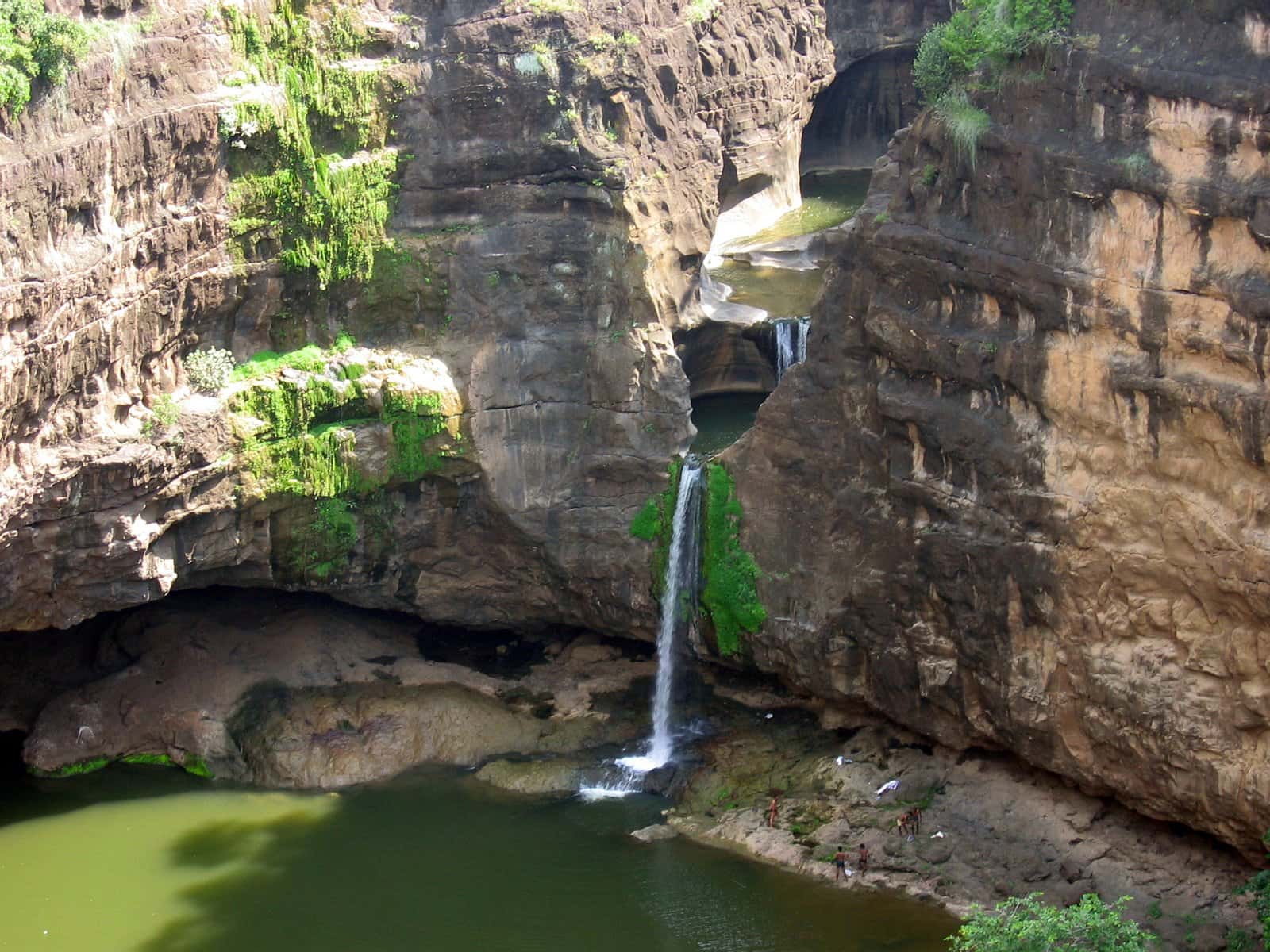
- Khadki Point, Aawashabari and Sunset PointThe rim viewpoints are the scenic payoff: Khadki Point looks into a valley where a seasonal waterfall thunders in the rains and falls silent by winter, as monsoon reviewers report; Aawashabari Point near the Madhya Pradesh boundary gazes over ridge after ridge of Satpura; and Sunset Point, among the highest spots on the plateau, closes the day. The Forest Park and Medicinal Plant Garden makes a gentle extra stop.
Everything sits within a few kilometres of the lake, so a single unhurried day covers the whole circuit by car or on foot in parts. There are no ticket queues and, mostly, no tickets: Toranmal's sights are open landscape and living shrines, not fenced monuments. That freedom comes with responsibility, so treat the temple as a place of worship, the gorge edges with respect, and the forest as the property of the people and creatures who live in it.
Signature experiences on the Toranmal plateau
Beyond the sight list, these are the moments people remember: dawn on the lake, the ghat drive itself, monsoon waterfalls, and nights quiet enough to hear the forest breathe.
- Dawn at Yashwant LakeThe single best free experience on the plateau. Come to the shore in the first light, when mist lifts off the water and the only sounds are birds and the odd temple bell. In a state where every famous lakefront has a selfie crowd, this one has almost nobody, and that is the whole point of coming this far.
- Boating on the lakeThe state tourism page lists boating on Yashwant Lake among Toranmal's signature activities, and travellers mention pedal boats and occasional novelty rides in season. Fees are small and set locally, so ask the current rate at the jetty and pay in cash. If the water is being used for ritual bathing near the temple side, give those bathers their space.
- The saat paira ghat driveThe climb from Shahada is an experience in its own right: roughly 25 km of hairpins through Satpura forest that traveller accounts call the seven bends, with the plains of Khandesh falling away behind you. Drive it slowly, honk before blind corners, and stop only at proper pull-offs to take in the view. In clear weather it is one of the prettiest small ghats in Maharashtra.
- Monsoon waterfalls at Khadki PointIf you take the green gamble and come in the rains, Khadki Point is the reward: reviewers describe a full valley waterfall visible only in the monsoon, with mist pouring over the rim. Bring rain protection for yourself and your camera, and remember the same rain that feeds the falls makes the ghat slower and riskier.
- Nights on the plateauWith almost no traffic, little artificial light and thin mobile signal, Toranmal nights are properly dark and properly silent. On a clear winter night the stars are superb by Maharashtra standards. Carry a torch for walking after dark, stay near your lodge rather than wandering the forest edge, and let the quiet do its work.
- The Nath pilgrimage circuitWalk the trio that carries the plateau's legend: the Gorakhnath temple, the Machhindranath cave and Lotus Lake. Done slowly, with the story in mind, it turns a sightseeing stop into something closer to a small yatra of your own, whatever your faith.
Give the lake both ends of the day: dawn for the mist and stillness, dusk from Sunset Point for the long light over the Satpura ridges. Toranmal does not offer rides, malls or curated entertainment, and visitors who arrive expecting a packaged hill station leave disappointed by lunchtime. Those who let the emptiness slow them down are the ones who come back saying it was the most peaceful weekend they have had in years.
Where to stay in Toranmal, and how many nights
The plateau has a tiny stock of rooms led by the long-standing government hill resort, plus a handful of small private lodges. Book before you climb; one night is the sweet spot, two if you want the slow version.
- The government hill resortThe best-known stay on the plateau is the long-standing government-run hill resort associated with MTDC, with bookings in practice also handled through forest department contacts. Rooms are simple, the setting is the draw, and it fills first at weekends and around the yatra. Book by phone or through the official MTDC channels before you travel rather than assuming a walk-in room.
- Small private hotels and lodgesA handful of private hotels, lodges and holiday resorts operate near the lake and the small bazaar. Standards are modest and honest rather than fancy: clean sheets, local food, hot water by bucket or geyser. Listings put most private rooms at about 1,000 to 3,500 rupees a night and dormitory-style beds at about 500 to 1,000 rupees, with prices rising on holiday weekends and one or two newer camp-style resorts quoting more; reconfirm when you book.
- How many nightsOne night is the natural length: an afternoon circuit of the viewpoints, sunset, a dark quiet night, and the lake at dawn before you descend. A second night suits those who want the slow version, the cave, the forest park, a long morning by the water. Day trips are possible from Shahada but spend most of their hours on the ghat.
- When the plateau fillsAround Mahashivratri the yatra fills every bed and courtyard on the hill, and long weekends in winter draw domestic crowds from Khandesh towns. Outside those spikes you will often have your pick of rooms, but booking ahead still matters because the total number of beds is so small.
This is not a destination where you arrive at dusk and shop for a room. The stock of beds on the plateau is tiny, the ghat is not a road to descend in the dark because a town was full, and mobile signal on top is too patchy to rely on for last-minute searches. Confirm your room, save the property's phone number and directions offline, and climb with daylight in hand.
Toranmal costs and a realistic daily budget
Toranmal is one of Maharashtra's cheapest hills to enjoy once you are up, because there is little to spend on. The real costs are the room, the fuel and the taxi.
- A rough daily budgetBeyond your room, plan on about 800 to 1,500 rupees per person per day for simple meals, boating and small local fees. That figure is an estimate built from listings and traveller accounts rather than a printed tariff, because almost nothing on the plateau has a printed tariff, so carry a margin and treat every number here as a starting point to reconfirm on the ground.
- Rooms, the main line itemDormitory beds run at about 500 to 1,000 rupees and most private rooms at about 1,000 to 3,500 rupees a night per current listings, with the government resort in the same broad band. Holiday weekends and the yatra push prices up. There are no entry fees to speak of for the lake, the viewpoints or the temple, which keeps the rest of the day cheap.
- Transport is the hidden costFuel for the climb, or a hired taxi from Shahada or Nandurbar, is usually the biggest expense after the room. Agree any taxi fare, waiting time and return leg before you set off, since meters do not exist here and quotes vary widely. Sharing a vehicle between families is the standard local economy.
- Cash, cards and the bazaarTreat Toranmal as a cash-only economy: ATMs are scarce to absent on the plateau and card or UPI acceptance is unreliable. Draw what you need in Shahada or Nandurbar, keep small notes for boating, tea stalls and tips, and keep the cash split between bags rather than in one wallet.
Every practical problem visitors report at Toranmal, the fuel worry, the room hunt, the fare argument, the empty wallet, is solved in Shahada before the climb. Fill the tank, draw the cash, buy the water and snacks, confirm the room, agree the taxi price. Ten unhurried minutes at the foot of the hill buy you a completely carefree plateau.
Practical logistics: fuel, cash, signal and food
Toranmal's charm is its bareness, and the same bareness is its only real difficulty. Four scarcities decide the trip: fuel, cash, mobile signal and supplies.
- Fuel: fill at Shahada, alwaysTraveller reviews on TripAdvisor say it plainly: there is no petrol pump on the plateau, and the last dependable fuel is at Shahada before the roughly 25 km ghat. Top up even if the tank is half full, because hairpin climbing burns more than highway running, and a fuel scare on a remote hill is a miserable way to end a holiday.
- Cash and connectivityDraw cash below; ATMs up top are scarce to absent and card or UPI acceptance is unreliable. Mobile coverage is patchy outside the small bazaar core, so download offline maps, save your hotel's number and location, and tell someone your plan. Think of the thin signal as a feature: most visitors finish the weekend glad their phone stopped demanding attention.
- Food: simple, local, mostly vegetarianEating happens at your lodge, the resort kitchen and a small number of local eateries around the bazaar: dal, rice, bhakri, seasonal vegetables, poha and chai, honest and fresh rather than fancy. Menus thin out by late evening, so eat early. Carry snacks and water for the viewpoints and the cave, where there are no stalls at all.
- Language and local lifeMarathi and Hindi carry you everywhere, and you will hear Adivasi languages, Bhil and Pawra, in the villages. English is limited, so a few Hindi phrases and a smile go further than they would in Matheran. Shops keep early hours, the bazaar is small, and the pace of the plateau is the pace of the farms around it.
Full tank, cash, drinking water, snacks, torch, power bank, offline maps, a warm layer in winter and rain protection in the monsoon, plus any personal medicines, because the nearest full pharmacy and larger hospitals are down the ghat in Shahada and Nandurbar. Pack as if for a remote forest rest house rather than a hill resort town, and Toranmal will feel effortless.
Safety on the ghat, health, and forest sense
Toranmal is gentle and honest; there is no scam economy here. The risks are physical and simple: a hairpin ghat, unfenced gorge edges, remoteness from hospitals, and ordinary forest sense.
- Respect the ghatThe roughly 25 km climb of hairpins is the trip's one real hazard. Drive in daylight, slow before every blind bend, honk on the hairpins, and never race a fading evening up or down the hill. In the monsoon add broken surfaces and possible small slips to the list, keep speeds right down, and be willing to postpone the descent if rain turns heavy.
- Edges, water and childrenSita Khai and the rim viewpoints have long unfenced drops, so keep children and enthusiastic photographers well back, especially on wet rock. At the lake, swim only if locals confirm it is safe and only close to shore; still water on an empty plateau is nobody's lifeguard zone. The waterfall valley at Khadki is for viewing, not climbing into.
- Health and the distance to helpMedical facilities on the plateau are basic, and the nearest larger hospitals are in Shahada and Nandurbar, well over an hour down the ghat. Carry personal medicines, a small first-aid kit and any child or elder essentials. Drink bottled or filtered water, eat food that is hot and fresh, and take the usual care in the warmer months with sun and hydration.
- Forest sense after darkThe plateau is ringed by reserve forest. Walk with a torch at night, stay on lanes rather than forest paths, keep food sealed in your room, and give any wildlife, from insects to the occasional larger visitor, the distance it deserves. Nothing here hunts tourists, but the forest is theirs at night and it is polite as well as safe to leave it to them.
Traveller accounts consistently describe Toranmal as safe-feeling and welcoming: the friction that plagues famous hill stations, touts, overcharging, hard selling, barely exists because there is barely a tourist economy. The genuine consideration for a solo traveller or a family is remoteness, not crime: thin signal, few people on the roads at night, help far away. Come with a confirmed room, a charged phone, offline maps and a daylight schedule, and this is one of the calmest places in Maharashtra to travel.
Toranmal for every kind of traveller, and on access
Toranmal rewards travellers who want quiet and punishes those who want entertainment. Here is the honest fit for each kind of visitor, including how seniors can enjoy the plateau comfortably.
- CouplesQuietly romantic in a way manufactured hill stations cannot manage: misty lake mornings, empty viewpoints, dark starlit nights and nobody hurrying you. Rooms are simple rather than plush, so come for the setting, not the suite, and stay the night rather than day-tripping so you get both dusk and dawn.
- Families with childrenChildren love the boats, the open plateau and the waterfall in season, and the compact circuit keeps car time short once you are up. The cautions are the unfenced gorge edges and the thin supplies, so pack snacks, medicines and entertainment for the quiet evenings, and hold hands firmly at Sita Khai.
- Senior travellers and on accessibilityMore senior-friendly than its remoteness suggests, because almost every highlight, the lake shore, Khadki Point, Aawashabari, Sunset Point, is reached by car with only short, mostly level walks. Skip the cave scramble, avoid the monsoon when paths turn slick, travel with a confident driver for the hairpins, and carry all regular medicines since pharmacies are down the hill.
- Backpackers and budget travellersOne of the cheapest hills in Maharashtra once you solve the transport: dorm-style beds and simple rooms, food at local-eatery prices and nothing charging entry. The catch is exactly that transport, since buses up the ghat cannot be relied on; pair up to share a taxi from Shahada and the budget behaves.
- Solo travellersPeaceful, safe-feeling and utterly unhassled, with the caveat that solitude here is real: thin signal, few fellow travellers outside weekends, help far away. Keep your lodge informed of your day plan, walk with a torch after dark, and enjoy the rare Indian destination where nobody at all wants to sell you anything.
- PhotographersDawn mist on Yashwant Lake, monsoon waterfalls at Khadki, layered Satpura ridgelines from Aawashabari and true dark skies in winter. Ask before photographing people, especially in Adivasi villages and at the temple, and protect gear seriously in the monsoon spray.
A suggested Toranmal itinerary
How to shape one unhurried overnight, or a slower two nights, so the ghat is always driven in daylight and the lake gets both dusk and dawn.
- Day one: climb, circuit, sunsetReach Shahada by late morning, do the fill-up ritual, tank, cash, water, snacks, and climb the saat paira with daylight to spare, reaching the plateau by mid afternoon. Check in, then take the short circuit: Sita Khai, the Forest Park, Khadki Point if the season promises water, and end at Sunset Point for the long light over the ridges.
- Day one, eveningEat early, because kitchens wind down as the plateau goes quiet, then give the night its due: a torchlit stroll near your lodge, the strange luxury of silence, and in winter a sky full of stars. This is the part of Toranmal no day trip ever sees.
- Day two: the lake and the Nath circuitBe at Yashwant Lake for first light, the plateau's single finest hour, then take the gentle trio of Gorakhnath temple, Lotus Lake and, if legs allow, the Machhindranath cave. Boat on the lake if the jetty is running, eat, and start the descent with hours of daylight in hand.
- The two-night version, and the half-day mistakeA second night buys the slow plateau: a long forest walk, a second dawn, an afternoon of doing nothing by the water, which is what regulars actually come for. The half-day visit, up and down in one push, spends more hours on the ghat than on the hill and is the one version we advise against.
The single thing that breaks a Toranmal plan is arriving at the ghat as the light fails. The hairpins are unlit, help is far, and the climb that is a pleasure in afternoon sun is a strain in darkness. Whatever your route, set one fixed rule: be up the hill, or safely down it, before dusk, and build the rest of the day backwards from that.
The real questions travellers ask about Toranmal
Straight answers to the questions that come up in TripAdvisor reviews and traveller write-ups, so you arrive already knowing the score.
- Is Toranmal worth it compared with Matheran or Mahabaleshwar?Different product entirely. Matheran and Mahabaleshwar offer polish, choice and crowds; Toranmal offers emptiness, a real lake and a living pilgrimage, with basic rooms and simple food. If your idea of a hill station is markets and viewpoint queues, stay west. If you want the Maharashtra hill experience of thirty years ago, this is it.
- Can a small hatchback do the ghat?In fair weather, yes, driven patiently: the climb is about gradient and hairpins rather than ground clearance, and ordinary cars make it daily. Use low gears, honk on the bends and keep to daylight. In heavy monsoon the calculus changes for every vehicle, and a confident driver matters more than the badge on the bonnet.
- Is there petrol or an ATM on top?Assume no to both. Traveller reviews are blunt that the plateau has no petrol pump, and ATMs are scarce to absent with card acceptance unreliable. Shahada is the supply point for fuel and cash; treat everything above it as a place to spend carefully from what you carried up.
- Is one day enough?A day trip technically covers the circuit but spends its best hours on the ghat and misses the two things Toranmal does better than anywhere nearby: the silent night and the misty dawn on the lake. One night is the honest minimum; two makes it a rest rather than a race.
- What about food, and is it vegetarian?Simple local kitchens dominate, mostly vegetarian Khandeshi home cooking with dal, bhakri, rice and seasonal vegetables; some lodges arrange more on request. Nothing gourmet, everything honest. Carry snacks for the viewpoints, where there are no stalls, and eat early in the evening.
- How crowded does the yatra get?Around Mahashivratri, genuinely crowded: thousands of pilgrims, many barefoot after days of walking from Maharashtra, Madhya Pradesh and Gujarat, fill the temple precinct and every bed on the hill. Come then only for the fair itself, book far ahead, and expect devotion, dust and density rather than a quiet getaway.
Planning Toranmal from abroad
Toranmal is for the overseas visitor who has already seen famous India and wants the country's quiet interior: a tribal-district plateau with one lake, one legend and almost no tourism industry.
- Set expectations firstThis is the opposite of a resort hill station: no cafes, no curated experiences, rooms that are clean rather than boutique, and evenings measured in stars rather than menus. Overseas visitors who love it are the ones who wanted rural India on its own terms. If this is your first India trip, pair it with easier stops; if it is your fifth, it may be the highlight.
- How to slot it into a routeThe natural frames are Mumbai, roughly 500 km south-west, and Surat, roughly 200 to 260 km west and usually the closest major airport. A comfortable pattern is a hired car with driver from either city, a night or two on the plateau, and onward travel through Maharashtra or Gujarat. The driver solves the ghat, the thin buses and the luggage question in one stroke.
- For NRIs bringing parentsToranmal works surprisingly well for older parents precisely because it is a car destination: viewpoints are drive-up, walks are short and optional, and the plateau's calm is the attraction rather than any exertion. Choose the cool October to February window, book the best room you can find, carry all medicines, and keep the itinerary to one unhurried circuit a day.
- The homeland angleFor families with roots in Khandesh, Nandurbar or the wider Maharashtra-Gujarat borderlands, Toranmal is the hill your grandparents' generation knew before tourism found the Sahyadris. Visiting the Gorakhnath shrine, eating bhakri on the plateau and hearing Bhil and Pawra spoken in the villages is a quieter, truer homecoming than any packaged heritage tour.
Money, connectivity and timing for foreign visitors
The practical basics an overseas traveller needs for a remote plateau: cash strategy, the SIM and signal reality, and how many days Toranmal deserves on a bigger India trip.
- Cash strategy: finish it in the cityComplete every money task before the hill: draw rupees in Mumbai, Surat or at worst Shahada, because the plateau has effectively no ATMs and card or UPI acceptance is unreliable. Small denominations matter more than totals here, for boat fees, chai and tips. Keep the cash split between bags, and keep a reserve you do not plan to touch.
- SIM, signal and the offline kitBuy your Indian SIM or eSIM at the airport when you land, not en route, and assume coverage on the plateau is patchy outside the bazaar core, as traveller reports describe. Download offline maps, your booking confirmations and some entertainment before the climb, and warn family that you may be quiet for a day. Many visitors end up grateful for the disconnection.
- How long on a bigger tripTwo nights is the right weight: Toranmal is a pause, not a program. A sensible frame is a west-India loop, Mumbai or Surat, the plateau, then onward to Gujarat's sights or the Ajanta and Ellora caves side of Maharashtra, with Toranmal as the day the trip breathes. Day-tripping it from anywhere defeats the purpose.
- Insurance, roads and the buffer dayStandard travel insurance that covers road journeys is sensible for any remote Indian hill, and the monsoon deserves respect: if heavy rain meets your dates, be willing to shuffle the plan rather than push the ghat. Keep a buffer day between Toranmal and any flight, because this is not a place to be rushing away from on a strict clock.
Be honest with yourself about fit. Toranmal has no tourist infrastructure to catch you: no English-speaking front desks, no cafes with familiar food, no taxi rank. That is exactly its value to travellers who know India, and exactly its difficulty for a first-timer. If you are new to the country, see it with a driver and a well-planned route, or save it for the return trip it will quietly demand.
The plateau of the Nath yogis
Toranmal's name is commonly traced to the torna trees that grow thick on the plateau, and its soul belongs to the Nath yogis. Tradition holds that Machhindranath, the first great master of the Nath lineage, meditated in the natural cave that still bears his name on the hill's quiet edge, and that his disciple Gorakhnath, the order's most celebrated saint, is honoured in the old temple by the lotus-filled lake. Once a year the quiet breaks: at Mahashivratri, thousands of devotees from Maharashtra, Madhya Pradesh and Gujarat walk barefoot for days across the plains and up the Satpura folds to stand before Gorakhnath, in one of Khandesh's great walking pilgrimages. The rest of the year the plateau returns to the silence the yogis chose it for, which is perhaps the truest thing a visitor can share with them.
Planning a Toranmal trip?
Our Maharashtra travel experts plan your full journey for you: route, hotels, darshan timings and transport. You get a free day-by-day plan and an exact quote on WhatsApp, usually within a few hours. No payment is needed to get your plan.