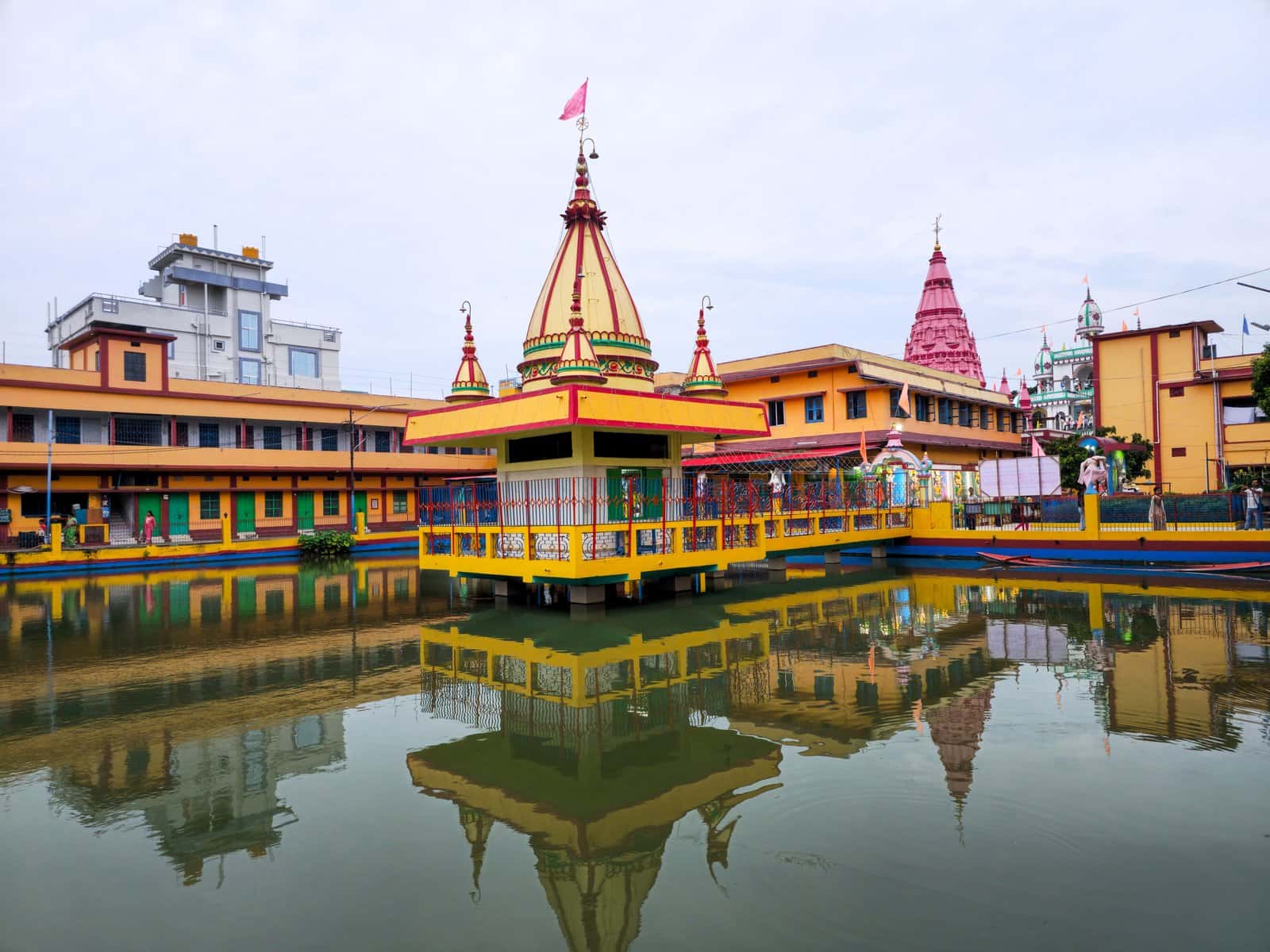
Agartala Travel Guide
Come between November and March , when the air is dry and the light is clean. From June to September Tripura is one of the wettest corners of India, and that changes everything...
The best time to visit Agartala, and the months to avoid
Come between November and March, when the air is dry and the light is clean. From June to September Tripura is one of the wettest corners of India, and that changes everything about how a day works.
- November to February: the season you wantThis is when you should come. The rain has gone, the mornings are cool and clear, and the long drives to Matabari, Neermahal and Unakoti are comfortable instead of punishing. Carry a light jacket, because Tripura's own climate record says winter sets in from November and is coldest in January. If you are travelling with elders or small children, plan the whole trip inside this window and nothing will fight you.
- March to May: warm, then heavyMarch is still pleasant, and it is the month the orchids begin to flower up in the Jampui Hills. From the middle of March the heat builds, and by late May the pre-monsoon storms arrive. If you are coming for the Ashokastami Mela at Unakoti, which falls in April, expect warmth, dust and a real crowd of pilgrims, and start your driving very early in the day.
- June to September: the monsoon, and it means itThe state's official climate profile says the monsoon breaks in late May or the first week of June and lasts until September, and that annual rainfall runs from about 1,922 mm to about 2,855 mm. Humidity crosses 85 per cent. Roads to Unakoti and Jampui become slow and unreliable, and a cloudy Rudrasagar Lake is not the mirror you came to photograph. Travel then only if you must.
- October: the quiet rewardOnce the rain eases, October is a lovely, green, uncrowded month, and the countryside around Udaipur is at its most beautiful. Keep a day of slack in your plan in case a late shower closes in, and you will have the palace and the lake almost to yourself.
Two dates change the mood of the whole state. Diwali at Tripura Sundari Temple, Matabari, is the biggest gathering of the year, and if you want the darshan of Ma Tripura Sundari at her most alive, that is when to come, but book your room weeks ahead and be ready for a very long queue. Kharchi Puja at the Chaturdash Devata Temple in Old Agartala brings a seven-day fair in the month of Ashar, around July, in the middle of the monsoon. Both are wonderful. Neither is a restful sightseeing trip, so decide which experience you actually want before you book.
How to reach Agartala, and why almost everybody flies
Agartala has the Northeast's second busiest airport, a slow but real railway, and a road link to Guwahati that the state itself says takes about 24 hours. Fly, unless you have a reason not to.
- By air: Maharaja Bir Bikram Airport (IXA)This is how you should come. The airport sits about 12 km northwest of the city, it is run by the Airports Authority of India, and the Tripura State Portal calls it the second busiest airport in the Northeast after Guwahati. Flights connect Agartala with Kolkata, Delhi, Guwahati and other Indian cities, and the Kolkata hop is short. Take a prepaid taxi or an app cab into town, and if you have booked with us, your driver will be at the gate.
- By rail: real, but slowAgartala station is at Badharghat and is on the broad gauge network. Trains such as the Tripura Sundari Express and the Kanchanjangha Express connect the city with Guwahati, New Jalpaiguri, Sealdah and Anand Vihar in Delhi. Be clear-eyed about the time: the Agartala to Anand Vihar Tejas Rajdhani is a weekly train, and the current timetable puts the run at roughly 44 hours. It is a wonderful ride if the journey is the point. It is a poor idea if you have five days of leave.
- By road from Guwahati: a full day and nightThe Tripura State Portal says plainly that the road journey from Guwahati via Shillong takes about 24 hours, and that Agartala lies about 1,645 km from Kolkata. Buses and shared vehicles do run, and the Assam and Meghalaya stretch is beautiful, but this is a serious overland journey, not a link you slot casually into a short itinerary.
- Getting around Tripura once you landThe whole state is small, and the sights are spread out along good roads. Hire a car with a driver for the Matabari and Neermahal day, and a separate day or overnight for Unakoti. Local buses and shared vehicles from the Nagerjala bus stand serve Melaghar, Udaipur, Kailashahar and Dharmanagar, and they are cheap and perfectly usable if you have time and patience.
Fly into Delhi or Kolkata, then take a domestic flight to Agartala. Kolkata is the natural connecting point, and the leg is short. Give yourself an overnight in Kolkata if your international flight lands late, because the Agartala flights are mostly daytime services.
Fly into Kolkata or Delhi, then connect to Agartala. Many NRI families from the Gulf pair Tripura with Kolkata and Guwahati in one loop, since all three are well connected.
Fly from Kolkata, Delhi, Guwahati or Bengaluru. If you want the train, the Tripura Sundari Express and the Kanchanjangha Express serve Agartala, and the weekly Tejas Rajdhani runs to Anand Vihar in Delhi over roughly two nights.
The Ujjayanta Palace, the temples, and what the tickets actually cost
Agartala is a Manikya royal city. The white palace, the fourteen-headed gods at Old Agartala and the Bengali-style temples are the heart of it, and for once we can give you the real, current prices.
- Ujjayanta Palace and the Tripura State MuseumThe gleaming white palace in the middle of the city is the one thing you must not miss. Maharaja Radha Kishore Manikya built it in 1901, Gurudev Rabindranath Tagore gave it its name, and its three domes each rise about 86 feet. It served as the State Legislative Assembly until 2011, and today it holds the Tripura State Museum. Give it two unhurried hours, and stay for the floodlighting in the evening.
- The real museum ticket, from the state's own notificationIgnore the old figures you will read elsewhere. The Society for Management of State Museum revised the rates with effect from April 2025. Entry is about 50 rupees for an Indian visitor, about 250 rupees for a foreign national and about 100 rupees for a Bangladeshi visitor. The Light and Sound Show and the Laser Show are about 100 rupees each for an adult and about 50 rupees each for a minor. The combined Gold Package, which covers the museum and both shows, is about 200 rupees for an Indian adult and about 120 rupees for an Indian minor. A still camera is about 800 rupees and a video camera about 2000 rupees, so leave the big lens in the car unless you truly need it.
- Chaturdash Devata Temple, Old AgartalaAbout 6 km out of the city stands the Temple of the Fourteen Gods, where only the heads of the deities are worshipped, not full images. These were the royal deities of the Manikya kings, and the seven-day Kharchi Puja fair held here in the month of Ashar, around July, is one of the great religious gatherings of the Northeast. Even on a quiet day, it is the most atmospheric temple in the Agartala area.
- The city temples and the tea gardenJagannath Bari, with its handsome octagonal tower, stands within the palace grounds and is the easiest darshan in town. Durga Bari comes alive at Durga Puja. Laxmi Narayan Temple and the Gedu Mia Masjid are both worth a short stop. If you have an hour to spare, the Durgabari Tea Estate on the edge of the city is a green, quiet surprise in a state most people never associate with tea.
The state museum society's 2025 notification revises every ticket rate but says only that the timings and other regulations remain unchanged, without restating them. We have not found a current official page that prints the hours, and when we went looking, the unofficial listings openly contradicted one another: some say about 10 am to 5 pm, others say about 11 am to 6 pm, and others describe a split shift with a break in the middle of the day. The only point they all agree on, and which visitors confirm, is that the museum is closed on Mondays. So plan your Agartala day for a Tuesday to Sunday, arrive in the morning, and telephone the museum or your hotel desk to confirm the hour before you set out. We would rather tell you this than give you a false certainty.
The experiences that make the trip: a Shakti Peetha, a water palace and a hillside of gods
Tripura gives you three experiences you will not find together anywhere else in India: darshan at a Shakti Peetha, a boat to a palace standing in a lake, and a forest wall carved with the faces of gods.
- Darshan at Tripura Sundari Temple, MatabariThis is the reason many Indian families come to Tripura at all. Maharaja Dhanya Manikya built the temple in 1501, and Tripura Tourism itself records it as one of the 51 Peethas. The sanctum is shaped like a humble rural Bengal hut, which makes the power of the place feel very close. Behind it lies the Kalyan Sagar tank, whose great tortoises and fish are revered by devotees, and it is from them that the shrine takes its other name, the Kurma Peetha. Do the darshan in the morning, buy prasad at the stalls outside, and sit for a while by the tank before you leave.
- The boat across Rudrasagar to NeermahalNeermahal is a palace standing in the water, and you reach it the way the Maharaja did, by boat. Bir Bikram Kishore Manikya commissioned it in 1921, the work took nine years, and it was finished in 1930 as a summer residence. It has 24 rooms, with the Andar Mahal on the west for the royal family and an open-air theatre on the east where dance and drama were staged over the lake. Take the boat from the Rajghat side at Melaghar, go late in the afternoon when the light softens, and watch the whole palace turn upside down in the reflection.
- Unakoti, one less than a croreThis is the great one. On a forested hillside about 186 km from Agartala, the rock face is carved with colossal Shaiva images. Tripura Tourism's brochure dates them to the 7th to 9th centuries if not earlier, while UNESCO's tentative-list dossier is tighter and puts them in the 8th to 9th centuries CE. The central Shiva head, Unakotiswara Kal Bhairava, is about 30 feet high, and its embroidered headdress alone is about 10 feet. Three enormous Nandi figures lie half buried in the earth. UNESCO put Unakoti on India's Tentative List on 13 December 2022. Wear proper shoes, because there are steps and the stone is wet where the stream runs.
- Sepahijala and the clouded leopardAbout 28 km from Agartala, the Sepahijala Wildlife Sanctuary covers about 18.53 sq km, and the Clouded Leopard National Park inside it was set up in 2007 over about 5.08 sq km. The spectacled monkey is the star, along with the pig-tailed macaque, capped langur and slow loris. There is boating on the lake and a small toy train that children love. Ring the Wildlife Warden's office before you go, because the Forest Department publishes neither its hours nor its ticket rates online.
- The orange hills of JampuiAbout 220 km north, on the Mizoram border, Jampui is the highest range in Tripura at about 3,000 feet, with 11 villages of Mizo and Reang people living largely off orange orchards. The trees are laden from about October to December, which is the time to come, and orchids flower from about March to May. The state's Eden Tourist Lodge at Vanghmun is the place to stay. This is a two-night trip, not a day trip.
- The light and sound show at the palaceMost travellers walk out of the museum and go straight to dinner. Stay instead. The palace runs a Light and Sound Show and a Laser Show in the evening, about 100 rupees each for an adult, or you can buy the Gold Package at about 200 rupees for an Indian adult, which covers the museum and both shows. It is the cheapest, easiest evening in Agartala and it fills the hole that most visitors complain about, that the city has nothing to do after dark.
Give a full, unhurried day to Matabari and Neermahal together. They are both south of the city and they sit naturally in one loop: darshan at Tripura Sundari in the morning while the temple is cool and calm, a simple lunch, then the road across to Melaghar for the afternoon boat to Neermahal and the long, golden light on Rudrasagar Lake. If your trip to Tripura gets cut to one day, that is the day to keep.
Unakoti: day trip or overnight? Here are the real numbers
Every listicle sells Unakoti as an easy day out from Agartala. Tripura Tourism's own brochure says 186 km and about 4 hours each way. Do that maths before you promise it to your family.
- What the official numbers actually sayTripura Tourism's Unakoti brochure gives the road distance from Agartala as about 186 km and the driving time as about 4 hours, and puts the site about 8 km from Kailashahar town. The Unakoti district administration says Kailashahar is about 178 km from Agartala by regular bus. The nearest railheads are Dharmanagar, about 18 km from the site, and Kumarghat, about 26 km from Kailashahar. There is no shortcut and no faster road.
- So a day trip means eight hours of drivingLeave Agartala at first light, and you can be at Unakoti by mid-morning, spend two good hours among the carvings, eat at Kailashahar, and be back in Agartala after dark. That is roughly 8 hours in the car for about 2 hours at the site. Travellers on the TripAdvisor Agartala forum say exactly this: it can be done with a private car and a very early start, but it is tiring, and an overnight is better.
- The overnight, which is what we recommendDrive up in the afternoon, sleep at Kailashahar or Kumarghat, and walk into Unakoti early the next morning when the light comes sideways through the trees and the site is empty. You get the carvings at their best, you get the waterfall, and you can add the Manu Valley and Rang Rung tea estates or Nutan Kalibari on the way back. It turns a grind into the best day of the trip.
- The rail-and-road versionIf you would rather not sit in a car all day, take a train from Agartala to Dharmanagar or Kumarghat and pick up a local taxi or shared vehicle for the last stretch. Tripura Tourism describes this route in its own brochure. It suits budget travellers and anyone who enjoys a slow, rural Indian train.
Families arrive in Agartala with three days, a Matabari and Neermahal day, an Agartala day, and Unakoti squeezed into the third. They set out late, they hit traffic on the Kailashahar road, they reach the site tired at two in the afternoon, and they see the greatest Shaiva rock art in eastern India in forty rushed minutes. Either give Unakoti a night, or give it up honestly and keep it for the next trip. Do not do it badly.
Where to stay in Agartala and across Tripura
Base yourself in central Agartala for everything, and use the state's own tourist lodges when you go further out. You can book most of them online, and here are the rates we saw.
- Central Agartala, near the palaceStay within reach of the Ujjayanta Palace compound and you can walk to the museum, the temples and the main market, and reach the airport in around half an hour. This is where the private hotels cluster, from simple, clean rooms to comfortable business hotels, and it is the right base for the whole trip because every drive, to Matabari, to Melaghar, to Sepahijala, starts from here.
- The state tourist lodges you can book onlineTripura Tourism runs its own lodges and takes online bookings. On 11 July 2026 the portal was showing the Geetanjali Tourism Guest House in Agartala from about 2,464 rupees a night, the Eden Tourist Lodge up at Jampui from about 1,680 rupees, the Kashba View Tourist Lodge at Sepahijala from about 2,999 rupees, and the Sagarika Parjatan Niwas at Amarpur, the Sepahijala Loghut and the Tepania Tourist Log Hut near Udaipur from about 2,240 rupees each. They are plain, safe and very well located, and for Jampui and Sepahijala they are the obvious choice.
- The Neermahal lodge, which is telephone-onlyThe Sagarmahal Tourist Lodge sits at Rajghat, Melaghar, right beside the water and the Neermahal jetty. It appears in Tripura Tourism's own Neermahal brochure with a telephone number, but it is not on the online booking portal, so you have to call. If you want to see the water palace at sunrise before the day visitors arrive, it is worth the phone call.
- How many nights, and whereThree nights in Agartala covers the city, Matabari, Neermahal and Sepahijala comfortably. Add one night at Kailashahar or Kumarghat if you are doing Unakoti properly, and two nights at Vanghmun if you are going up to Jampui. Do not try to run Unakoti or Jampui out of an Agartala base and back in a single day. The distances will beat you.
Agartala is not a big hotel city, and it fills up. Around Diwali, when lakhs of devotees head for Tripura Sundari Temple at Matabari, and during the seven days of Kharchi Puja at Old Agartala, rooms in the city and in Udaipur go early and prices rise. If your dates fall on either, book weeks ahead rather than days, and tell us early so we can hold the rooms while they exist.
Agartala costs, and the prices we refuse to invent
Tripura is one of the cheaper states in India to travel in. Here are the numbers we can actually source, and an honest list of the ones the government does not publish.
- The prices that are fixed and sourcedThe Tripura State Museum at Ujjayanta Palace is about 50 rupees for an Indian visitor and about 250 rupees for a foreign national, with the Light and Sound Show and the Laser Show at about 100 rupees each for an adult and about 50 rupees each for a minor, and the Gold Package covering all three at about 200 rupees for an Indian adult and about 120 rupees for an Indian minor. Cameras are charged separately, about 800 rupees for a still camera and about 2000 rupees for a video camera. These come straight from the state museum society's own notification.
- Rooms, at government ratesThe state lodge rates give you a fair anchor for what a clean, decent room costs in Tripura. On 11 July 2026 the Tripura Tourism portal was showing the Geetanjali in Agartala from about 2,464 rupees and the Eden at Jampui from about 1,680 rupees a night. Private hotels in central Agartala run both below and above that, and homestays are cheaper still. This is not an expensive state.
- The big cost is the carIn Tripura your budget is decided by the vehicle, not by the tickets. A car and driver for the Matabari and Neermahal loop, another for Sepahijala, and a two-day run to Unakoti will be the bulk of what you spend. Rates change with fuel and season, so ask us for a current quote rather than trusting a figure printed on a blog last year. Public buses from the Nagerjala stand are a fraction of the cost if you have the time.
- The prices we will not make upTripura Tourism does not publish the Neermahal boat fare online, and the Forest Department does not publish the Sepahijala entry or camera charges online. Other pages quote numbers for both. We have no official source for them, so we are not going to print a figure and let you budget against it. Carry small cash notes, pay at the counter, and treat these as small amounts. That is the honest answer.
Agartala runs on UPI like any Indian city, and cards work in hotels and bigger restaurants. Once you leave the capital, for the boat at Melaghar, the ticket counter at Sepahijala, tea stalls on the Kailashahar road and prasad stalls at Matabari, it is cash. Draw enough in Agartala for the whole day trip, keep small notes, and you will never be stuck.
Practical logistics: language, food, connectivity and temple etiquette
The small things that make a Tripura day work, from what berma is and how a vegetarian orders around it, to how a quiet capital that sleeps early changes your evening.
- Language is easyBengali and Kokborok are the languages of Tripura, and Bengali will carry you everywhere in Agartala. Hindi is widely understood, and English works in hotels, at the airport and with most drivers. If you speak Bengali, you will find Tripura warm and instantly familiar. If you do not, you will still manage without a moment's trouble.
- Food: know what berma is before you orderTripura is not a vegetarian state, and its indigenous Mui Borok cooking is built around berma, a fermented fish. Tripura Tourism's own cuisine page describes bhangui, sun-dried rice steamed in a banana leaf with ginger, onion and ghee; gudok, fermented fish cooked with beans and potato; and wahan mosdeng, meat marinated with garlic, ginger, turmeric and mustard oil and grilled over charcoal. If you eat everything, try all three. If you are a pure vegetarian, Agartala feeds you very well on Bengali and north Indian food, but say clearly that you want no fish and no berma, because it goes into dishes that look vegetarian.
- Temple etiquette at Matabari and Old AgartalaThese are living, deeply loved shrines, not monuments. Dress modestly, cover your shoulders and knees, leave your shoes at the stand, and switch the phone off inside the sanctum. At Kalyan Sagar behind Tripura Sundari Temple, the tortoises and fish are considered sacred; devotees feed them, so buy the feed from the stall rather than throwing in anything of your own. Photography rules vary, so ask first and never photograph anyone at prayer without permission.
- The city sleeps earlyAgartala is a calm, orderly, small capital, and it winds down early in the evening. Eat by about 9 pm rather than at 10 pm, and do not plan a late night out, because there is not much of one to be had. This is why the Light and Sound Show at the palace is such a useful thing to book: it gives the evening a shape.
- Connectivity, and a border-country quirkMobile data works well in Agartala and along the main roads. Because Bangladesh is only a few kilometres away on three sides, your phone may occasionally latch onto a foreign network near the border and start charging you international roaming. Turn off automatic network selection when you are driving near the frontier, especially around Old Agartala and Sonamura, and check your phone once in a while.
Safety, health and the border rules you must not break
Agartala is one of the calmer, more relaxed capitals in India. The real risks here are the monsoon roads, the heat and humidity, and doing something foolish near an international border.
- How safe it feelsTravellers consistently describe Agartala as peaceful and easy, a small capital where people are courteous and nobody hassles you. There is very little of the tout pressure that wears visitors down in more touristed places. Ordinary Indian city sense is enough: keep your bag close in a crowded market, use a hotel-booked or app cab at night, and be careful of traffic, because the roads are narrow and busy.
- Solo womenSolo female travellers generally report Tripura as comfortable and unthreatening, and the state's fairly high literacy and calm public culture help. The sensible precautions apply: dress modestly, particularly at Matabari and Old Agartala, avoid empty roads after dark, do not take a long rural drive with a driver you have not vetted, and keep someone informed of your plan for the Unakoti or Jampui days, when you will be far from the capital and out of easy reach.
- The border rule, and this one is seriousTripura is surrounded by Bangladesh on three sides, and the international border runs close to villages, fields and even parts of Old Agartala. Do not wander towards the fence, do not photograph the border fence, Border Security Force posts or the Integrated Check Post, and do not cross anywhere except an authorised check post with the correct visa. This is not a place for a curious walk. Both governments take it extremely seriously, and a foreign passport will not protect you.
- Health, heat and waterHumidity is high all year and crosses 85 per cent in the rains, so drink far more water than you think you need, and carry an electrolyte sachet for the long drives. Drink bottled or filtered water. Mosquitoes are a genuine nuisance in the wet months, so carry repellent and use it at dusk, especially near Rudrasagar Lake and in the sanctuary. Good hospitals are in Agartala; Kailashahar and Melaghar have only basic facilities, so carry your regular medicines with you on the long day trips.
- Monsoon roadsFrom June to September the hill roads to Unakoti and Jampui can become slow, slippery and occasionally blocked. If you travel in the rains, keep a spare day, do not book a tight onward flight for the evening you return from a hill trip, and let your driver decide when to turn back. Nobody wins an argument with a wet Tripura hillside.
At Kalyan Sagar, feed the tortoises only what the stalls sell, and never let a child chase or handle them. At Sepahijala and the Clouded Leopard National Park, keep your voice down, do not feed any animal, and carry your plastic back out with you. At Unakoti, the carvings are open to the sky and unfenced in places; do not climb on them, do not touch the faces, and do not chalk or scratch anything. These are 1,200-year-old images of gods, and they are the reason UNESCO is looking at this hillside at all.
Agartala for every kind of traveller, and a word on accessibility
Tripura rewards different travellers in very different ways. Here is the one tip that matters most for each of you, including how an older pilgrim does Matabari without exhaustion.
- Pilgrims and devoteesYou are here for Ma Tripura Sundari, and Matabari deserves an unhurried morning, not a rushed stop. Go early, do the darshan calmly, sit by Kalyan Sagar afterwards, and take prasad home. If you can plan around Diwali, the shrine is at its most alive, but understand you will be one of a very large crowd and the queue will be long.
- Senior travellers, and on accessibilityTripura is very doable for older travellers if you plan the driving, not the sightseeing. Stay in central Agartala, keep the Matabari and Neermahal loop to one full day, and skip the Unakoti day dash entirely, because 8 hours in a car and a hillside of steps is too much; either give Unakoti a night or leave it. Be realistic about steps: Matabari and Unakoti both involve climbing, and there are no lifts or ramps at either. The palace museum is the gentlest of the big sights, and the boat to Neermahal is an easy, seated pleasure.
- Families with childrenChildren love the boat to Neermahal, the toy train and the lake at Sepahijala, and the monkeys. Keep the long drives to a minimum, do the palace in the morning while everyone is fresh, and book the Light and Sound Show for the evening so the day ends well. Do not attempt Unakoti and back in one day with small children.
- Heritage lovers and photographersThis state is a gift and it is nearly unphotographed. Unakoti at first light, the reflection of Neermahal on Rudrasagar in the late afternoon, and the white palace floodlit at night are the three frames to plan for. Remember that the palace charges separately for a still camera, about 800 rupees, and for a video camera, about 2000 rupees, so decide before you walk in.
- Birdwatchers and wildlife travellersRudrasagar Lake draws resident and migratory birds across its 5.3 sq km, and the winter months are the ones to come. At Sepahijala, the spectacled monkey is the species everyone wants, and the sanctuary is easy to reach at about 28 km from the city. This is quiet, unpressured wildlife watching, not a big-park safari, and it suits patient people.
- Solo and budget travellersAgartala is cheap, safe-feeling and easy to move around by shared vehicle and state bus from the Nagerjala stand. The state lodges are plain and good value, the food is excellent and cheap, and the people are welcoming. It is one of the most relaxed capitals in the Northeast for a solo traveller.
How many days for Agartala, and a plan that actually works
Two days sees Agartala. Four days sees Tripura properly. Six days lets you do Unakoti and Jampui without ruining yourself on the road.
- Two days: the city and the classic loopDay one, the Ujjayanta Palace and the Tripura State Museum in the morning, the temples and the tea garden in the afternoon, and the Light and Sound Show in the evening. Day two, the big southern loop: darshan at Tripura Sundari Temple, Matabari, in the morning, then across to Melaghar for the afternoon boat to Neermahal, back to Agartala for dinner. This is the trip most visitors should take.
- Four days: add Sepahijala and Old AgartalaKeep the two days above, then give a half day to Sepahijala Wildlife Sanctuary and the Clouded Leopard National Park, and a half day to the Chaturdash Devata Temple at Old Agartala and the market. The fourth day is your slack: a slow morning, the museum again if you rushed it, and shopping for Tripura's cane and bamboo work at the Purbasha handicrafts emporium.
- Six days: do Unakoti properlyTake the four-day plan and add the Unakoti overnight. Drive up to Kailashahar in the afternoon, sleep there, walk into the carvings at first light, and come back the next day with a stop at a tea estate. This is the version of Tripura that people remember, and it is the one we would book for our own family.
- Eight days or more: add Jampui HillsIf you have the time, put two nights at Vanghmun in the Jampui Hills at the top of your trip, ideally between October and December when the orange trees are laden. Combine it with the Unakoti overnight, since both lie in the north of the state, and you will have seen Tripura as almost no visitor does.
Tripura is not on the standard Northeast circuit. Our own seven-day North East Vacation itinerary runs Guwahati, Kaziranga and Shillong and does not touch Tripura at all, which is exactly why the state is still so uncrowded. The clean way to add it is as a separate flying leg: fly Guwahati to Agartala, give Tripura three or four days at the start or the end, and fly out again. Do not try to reach Agartala from Guwahati by road on a short trip; the state's own portal says that drive takes about 24 hours.
The real questions travellers ask about Agartala
Straight answers to the questions that come up again and again on the TripAdvisor Agartala forum and on IndiaMike, so you arrive already knowing the score.
- Is Agartala worth visiting, or is it just a stopover?If you judge Agartala only by the city, it is a quiet, laid-back capital with one great sight, the Ujjayanta Palace. Travellers on the forums say exactly that. But that is the wrong way to judge it. Agartala is the base for a Shakti Peetha, a water palace, a clouded leopard park and the rock carvings of Unakoti, and Tripura as a whole is one of the least crowded, most rewarding corners of India. Come for the state, and use the city.
- Can I do Unakoti in a day from Agartala?You can, but you should not. Tripura Tourism's brochure gives 186 km and about 4 hours each way, which is 8 hours of driving for about 2 hours at the site. The forum consensus is the same: possible with a private car and a very early start, but very tiring. Give it a night at Kailashahar and you will see it properly.
- Do I need an Inner Line Permit for Tripura?No. Tripura Tourism's own printed Unakoti and Neermahal brochures both state, in the same words, that there is no need of entry formalities like a Restricted Area Permit or an Inner Line Permit to visit Tripura. We checked that against the Ministry of Home Affairs' own list of Protected and Restricted Areas, and Tripura is on neither list. An Indian traveller needs nothing, and a foreign traveller needs only a valid Indian visa. It is one of the easiest Northeast states to enter.
- Can I cross into Bangladesh at Agartala?Yes, but check it yourself before you plan, because this has moved very recently. The Agartala Land Port at the Akhaura crossing is an operational Integrated Check Post, and the Land Ports Authority of India's own figures show how hard the passenger traffic was hit: from about 3,36,678 people in 2023-24 down to about 1,93,821 in 2024-25 and about 74,723 in 2025-26. The cause was India's suspension of tourist visas for Bangladeshi nationals after August 2024. That has now been reversed. Tourist visa issuance restarted on 28 June 2026, and the first traveller crossed at Akhaura on a newly issued tourist visa on 9 July 2026, with Indian nationals reported to be going the other way on tourist visas as well. So the crossing is reopening, not closed. But that change is only days old, so confirm it for yourself and never make it the backbone of an itinerary.
- Is there a train from Agartala to Dhaka?No. The Press Information Bureau's release of 8 February 2024 records that a portion of the Agartala to Akhaura rail link was inaugurated on 1 November 2023 with a freight train from Gangasagar in Bangladesh to Nischintapur in India. That was cargo, not passengers. No regular cross-border passenger service has been announced, so ignore any page that offers you a train ticket to Dhaka.
- What are the Ujjayanta Palace timings and fee?The state museum society's notification, in force from April 2025, sets entry at about 50 rupees for Indians and about 250 rupees for foreign nationals, with separate show tickets. It says the timings are unchanged but does not restate them, and no current official page prints them. The unofficial listings then disagree with each other, giving anything from about 10 am to 5 pm to about 11 am to 6 pm, although every one of them agrees the museum is closed on Mondays. So plan a Tuesday to Sunday morning visit and confirm the hour by telephone on the day.
- How do I get across to Neermahal?You drive to Melaghar, about an hour from Agartala, and take a boat from the Rajghat side across Rudrasagar Lake to the palace. Boats run through the day and you buy the ticket at the jetty. Tripura Tourism does not publish the fare online, so carry small cash. Go in the late afternoon for the best light and the calmest water.
- Can I get vegetarian food, and is Agartala safe?Yes to both. Agartala has plenty of good Bengali and north Indian vegetarian food, but Tripura's indigenous cooking is built on berma, a fermented fish, so say clearly that you want no fish. And Agartala is one of the calmer capitals in India, comfortable for families and for solo women, with ordinary city precautions.
For overseas visitors: permits, the Bangladesh border, and what is true today
Tripura needs no Inner Line Permit and no Protected Area Permit, which makes it one of the easiest Northeast states for a foreign passport. The border crossing is the part you must check.
- The permit question, answered from the sourceTripura Tourism's own official brochures say in print that there is no need for entry formalities like a Restricted Area Permit or an Inner Line Permit to visit Tripura. We then checked that against the Ministry of Home Affairs' own list of Protected and Restricted Areas, which names Arunachal Pradesh, parts of Himachal Pradesh, parts of Jammu and Kashmir, Manipur, Mizoram, Nagaland, parts of Rajasthan, Sikkim and parts of Uttarakhand as Protected Areas, and the Andaman and Nicobar Islands and part of Sikkim as Restricted Areas. Tripura appears on neither list. So you need a valid Indian visa and nothing else. Carry your passport and a photocopy, because hotels will ask, and foreign nationals are registered on the C-Form at check-in as they are everywhere in India.
- The Agartala to Akhaura crossing, honestlyThe Agartala Land Port sits at the Akhaura border point and is the only Indian land port inside the municipal area of a state capital, spread over about 26.94 acres. It is listed as operational by the Land Ports Authority of India. But after 2024 the passenger traffic collapsed. The authority's own published figures show movement falling from about 3,36,678 people in 2023-24 to about 1,93,821 in 2024-25 and about 74,723 in 2025-26. The reason was India's suspension of tourist visas for Bangladeshi nationals in the aftermath of August 2024. That suspension has now ended. Tourist visa issuance restarted on 28 June 2026, and on 9 July 2026 the first traveller crossed into India at Akhaura on a newly issued tourist visa, with Indian nationals reported to be entering Bangladesh on tourist visas as well. We could find no officially published, current schedule for an Agartala to Dhaka bus, so do not assume one is running until you have checked.
- So how should you plan it?Even now that it is reopening, treat any Bangladesh crossing as a bonus, never as a link your itinerary depends on. The restoration is very new and this border has moved fast in both directions. If you want to try, you need a Bangladesh visa endorsed for the Akhaura land route, and you should check the current position with the Land Ports Authority of India and the Bangladesh Assistant High Commission in Agartala shortly before you travel, not months before. Have a fallback flight out of Agartala booked. We will tell you frankly what the position is when you ask us.
- There is no train into BangladeshYou will read that a rail link now joins Agartala to Bangladesh. The Press Information Bureau's release of 8 February 2024 is precise: a portion of the Agartala to Akhaura line was inaugurated on 1 November 2023 with an inaugural freight train from Gangasagar to Nischintapur. That is cargo. No regular passenger service across the border has been announced, so do not plan a rail journey to Dhaka.
The international border wraps around Tripura on three sides and runs very close to ordinary roads and villages, including near Old Agartala and Sonamura. Do not photograph the border fence, the Border Security Force posts or the Integrated Check Post, do not fly a drone anywhere near it, and do not walk towards the fence out of curiosity. This is the one place in Tripura where an innocent mistake becomes a serious problem, and a foreign passport makes it worse, not better.
For overseas visitors: money, connectivity, and slotting Tripura into a Northeast trip
For an NRI family or a first-time foreign visitor, Tripura is a rare thing: a genuinely uncrowded Indian state with a great Shakti Peetha, and it is easy to enter.
- Fly in through KolkataKolkata is your natural gateway. Land there from London, New York, Dubai or Singapore, and take the short domestic hop to Maharaja Bir Bikram Airport, about 12 km from the middle of Agartala. Delhi works too, but Kolkata is closer and the connections are easier. Give yourself an overnight in Kolkata if your international arrival is late, because most Agartala flights are daytime services.
- Money, SIM and the roaming trapBuy an Indian tourist SIM or activate an eSIM at Kolkata or Delhi airport rather than hunting for one in Agartala. Data works well in the city and along the main highways. One genuine local quirk: because Bangladesh is only a few kilometres away on three sides, your phone can jump to a foreign network near the border and start billing you international roaming. Switch off automatic network selection when you are driving near the frontier.
- For an NRI family with eldersThis is a very good trip for parents and grandparents who want the darshan of Ma Tripura Sundari at one of the 51 Shakti Peethas without the crush of a big pilgrimage town. Stay in central Agartala, do Matabari and Neermahal as one full, gentle day, use the boat rather than any long walk, and give the palace museum a slow morning. Leave Unakoti and Jampui for a younger trip, or give them a night each.
- How Tripura fits your India planTripura is not on the usual Northeast circuit, and that is its charm. Our own seven-day North East Vacation runs Guwahati, Kaziranga and Shillong, and it does not include Tripura, so the state has stayed quiet. Add Agartala as a separate three or four day flying leg at the start or the end of a Northeast trip, or pair it with Kolkata for a week of Bengali food, Durga Puja energy and a Shakti Peetha. Ask us and we will build it.
Foreign travellers routinely leave Tripura off a Northeast itinerary because they assume it is hard to enter, restricted, or unsafe. None of that is true. There is no permit, the airport is the second busiest in the region, the capital is calm, and the state is small enough to see properly in four days. The thing that is genuinely uncertain is the Bangladesh border crossing, and that is a bonus, not the trip. Come for Unakoti, Neermahal and Matabari, and you will find one of the last uncrowded corners of India.
One less than a crore, and the sculptor who was left behind
Unakoti means one less than a crore, and Tripura Tourism's own brochure records two stories for the name. In the first, Lord Shiva was travelling to Kashi with one crore gods and goddesses and halted for the night on this hillside. He told them all to rise before sunrise and continue the journey. In the morning, not one of them had woken. Shiva set out alone, cursing the sleepers to become stone images, and so the hill holds one less than a crore of them. The second story belongs to the people who live below the hill. They say a sculptor and potter named Kallu Kumhar, a devotee of Ma Parvati, begged to go with Shiva and Parvati to Kailash. On Parvati's word, Shiva agreed, on one condition: Kallu must carve a crore images of Shiva in a single night. He worked like a man possessed. When dawn broke, the count stood one short of a crore, and Shiva used that one missing image as his reason to leave Kallu Kumhar behind with his gods on the hillside. Stand in front of the thirty-foot face of Unakotiswara Kal Bhairava at first light and you will understand why the second story is the one the villagers tell. These are oral traditions carried by the people of Unakoti and set down by the state's own tourism department; no single scriptural verse can be reliably cited for either, and we will not invent one.
Planning a Agartala trip?
Our Tripura travel experts plan your full journey for you: route, hotels, darshan timings and transport. You get a free day-by-day plan and an exact quote on WhatsApp, usually within a few hours. No payment is needed to get your plan.