Allahabad Travel Guide
The best months are October to March , cool and dry. The great set-piece is the Magh Mela at the Sangam in January and February. Decide early whether you want the mela crowds or...
When to visit Prayagraj, and the mela to plan around
The best months are October to March, cool and dry. The great set-piece is the Magh Mela at the Sangam in January and February. Decide early whether you want the mela crowds or the quiet confluence.
- October to March: cool and clearThe comfortable season, with daytime temperatures roughly about 10 to 25 degrees Celsius and pleasant for the open ghats and long sightseeing days. Nights are genuinely cold in December and January, so carry a layer. This is the window most travellers should aim for outside the mela.
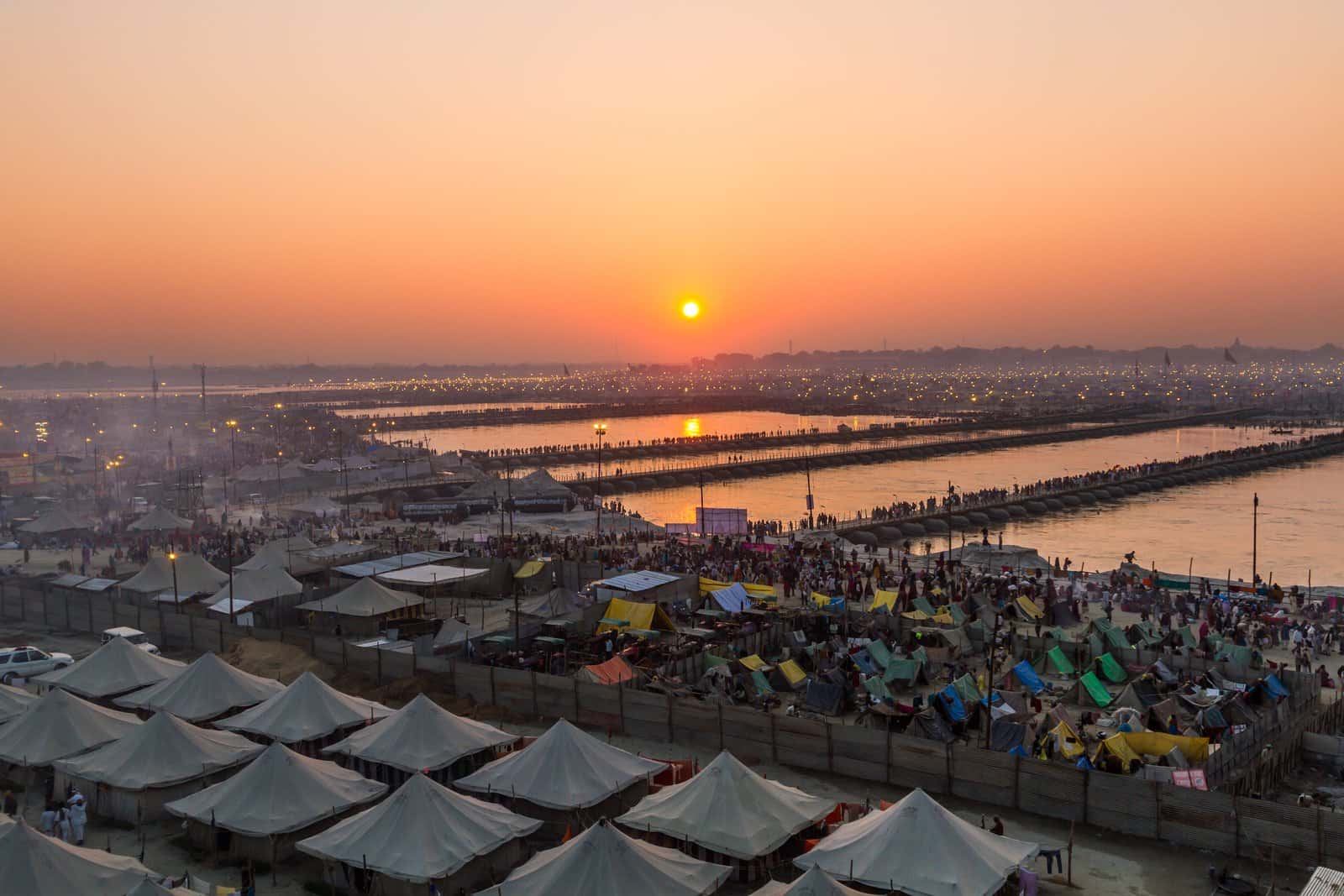
- January to February: the Magh MelaThe annual mela fills the Sangam sands with tents, pilgrims and bathing crowds. It is an extraordinary thing to witness, but the city is packed, rooms are scarce and dear, and the riverbank is intense, so come for the spectacle, not for a quiet trip.
- April to June: hot, and best avoidedHigh summer on the plains is fierce, with highs around 42 to 45 degrees Celsius, tiring on the exposed ghats and the boat. If you must come then, keep the middle of the day for rest and do the Sangam at dawn.
- July to September: monsoon and high riversThe rains cool things a little but the Ganga and Yamuna run high, and the Sangam point can be harder to reach by boat. Some years the bathing area shifts with the water, so check locally before planning a dip in these months.
Prayagraj hosts the annual Magh Mela every winter, but the full Kumbh comes only every few years and the once-in-twelve-years Maha Kumbh is rarer still. The record Maha Kumbh was held here in early 2025, so the years after it are Magh Mela years, not Kumbh years. The next Magh Mela, in 2027, is expected to run from about 15 January to about 6 March 2027, with the biggest bathing days around Makar Sankranti on about 14 to 15 January, Mauni Amavasya in early February and Maghi Purnima around 20 to 21 February. These are expected panchang-based dates, so treat any page promising a Kumbh every year with caution and reconfirm the official snan dates on the mela site before you book.
How to reach Prayagraj
Prayagraj has only a small airport, so most travellers arrive by train into Prayagraj Junction, or fly into Varanasi or Lucknow and continue by road.
- By train, the usual way inPrayagraj Junction is the main railhead, and the city is the headquarters of the North Central Railway with eight stations inside its limits, so connections are excellent. Fast trains link Delhi, about 582 km, Varanasi about 112 km, Lucknow about 183 km and Kanpur about 191 km. Book on IRCTC ahead in the winter season.
- By air, via Varanasi or LucknowThe small Bamrauli airport, code IXD, about 12 km from the city, runs only limited domestic flights, so many visitors fly into Varanasi, about 150 km and roughly 3 hours away, or Lucknow, about 200 km, and continue by train or road. Check current routes before relying on Prayagraj's own airport.
- By roadPrayagraj sits on the main plains highways, with Varanasi about 112 km, Ayodhya about 156 km and Lucknow about 183 km, so it slots neatly onto a sacred Uttar Pradesh loop. We can arrange a car with an experienced driver to link the cities at your own pace.
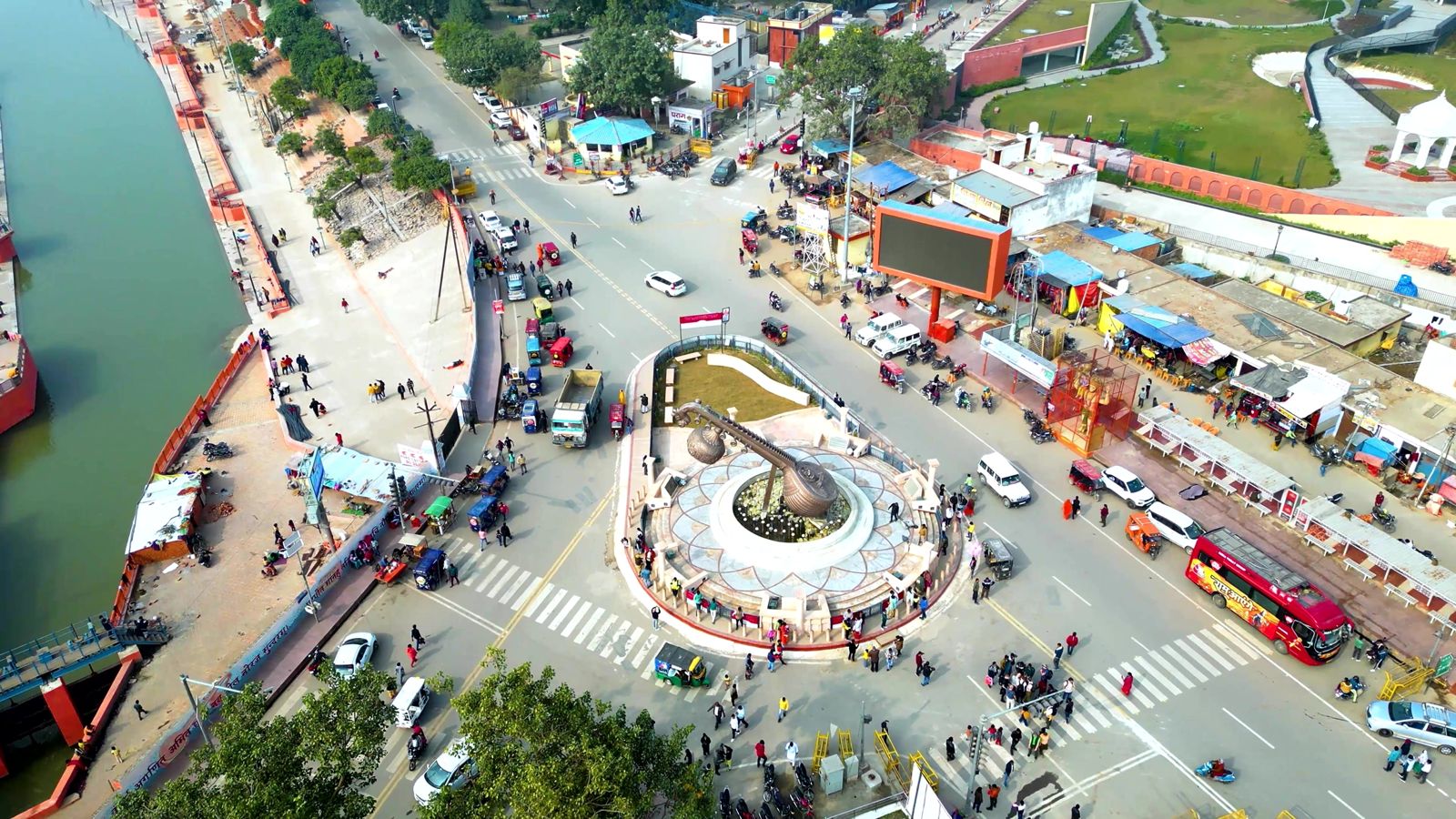
- Getting around the cityAuto-rickshaws, e-rickshaws and app cabs cover the city easily. For the Sangam you take an e-rickshaw or cab to the ghat and then the boat, and a hired car or driver for the day is the simplest way to string together the Sangam, the fort area, Anand Bhavan, Khusro Bagh and the cathedral.
Fly into Delhi, the main international gateway, then take a fast train to Prayagraj Junction, or pair the city with Varanasi by flying into Varanasi and driving the roughly 3 hours. Prayagraj has no international flights of its own.
Fly into Delhi, Lucknow or Varanasi, then continue by train or road. Prayagraj fits naturally on the Varanasi, Ayodhya and Lucknow circuit through Uttar Pradesh.
Take a train to Prayagraj Junction, which is well served from Delhi, Lucknow, Kanpur and Varanasi. The train is the simplest, most reliable way in, since the local airport has only limited flights.
The Sangam, the fort, and the city's great houses
Prayagraj is the sacred confluence, Akbar's fort, the Nehru mansions and a clutch of fine colonial and Mughal monuments. A few access rules are worth knowing before you go.
- Triveni SangamThe confluence of the Ganga, the Yamuna and the mythical Saraswati is the soul of the city and the reason most pilgrims come. You reach the meeting point by boat from the ghats, and the read of the brown Ganga water meeting the greener Yamuna is the classic sight. Read the safety and costs sections before you hire a boat.
- Allahabad Fort, the Akshayavat and PatalpuriAkbar's great riverside fort of 1583 is an active army cantonment, so the bulk of the fort is closed to the public and the full fort opens only around the mela. The Akshayavat, the immortal banyan, and the underground Patalpuri Temple inside have been opened for public darshan since the 2019 Kumbh, reached through an army-controlled gate and corridor with reported hours of about 7 am to 6 pm; access still runs through the cantonment and can be restricted at short notice, so check locally rather than assuming you can simply walk in.
- Anand Bhavan and Swaraj BhavanThe Nehru family mansions are among the most rewarding stops in the city: Anand Bhavan is now a museum of the family and the freedom movement, with the Jawahar Planetarium in the grounds, and Swaraj Bhavan next door was the family's earlier home. They are quiet, green and full of history.
- Khusro Bagh and All Saints CathedralKhusro Bagh, a walled Mughal garden about 1 km from the Junction, holds the sandstone tombs of Prince Khusrau and his family and is one of the calmest stops in the city. All Saints Cathedral on M.G. Marg, completed in 1891, is a striking colonial Gothic church and a working cathedral, so visit quietly.
Prayagraj is a deeply religious place, especially at the Sangam. Dress modestly, cover shoulders and knees near the ghats and temples, and be respectful at the water where people are bathing and performing rites. The riverbank can be crowded and slippery, so wear sensible footwear and watch your step on the ghats.
Signature experiences in Prayagraj
Beyond the monuments, these are the experiences people remember, and how to arrange them without the tourist-trap version.
- The Sangam boat ride at dawnA rowing boat out to the confluence at first light, with the mist on the water and the birds at the sandbanks, is the experience of Prayagraj. Go early to beat the heat and the crowds, agree the fare and the number of people before you board, and tell the boatman up front whether or not you want a puja.
- A holy dip at the confluenceMany pilgrims take a ritual dip where the rivers meet. There are no cloakrooms at the ghats, so you change on the boat itself, which is why families usually hire a whole boat for privacy. Carry a towel and a change of clothes, and keep valuables with someone who stays dry.
- Anand Bhavan and the planetariumGive an unhurried couple of hours to the Nehru mansion and its grounds, then catch a show at the Jawahar Planetarium for about 60 rupees if the timing suits. It is the most reflective, least hectic part of a Prayagraj day, and good for families.
- The Magh Mela, if your dates matchIf you visit in January or February you can walk the tent city on the sands, watch the bathing on a major day, and feel the scale of the gathering. It is dusty, crowded and unforgettable; go early, keep your group together, and read the safety section first.
- An evening at the ghats and Civil LinesWatch the light go down over the rivers from a quieter ghat, then head to the leafy Civil Lines area for dinner and the local chaat and sweets. Remember the markets wind down by about 9 pm, so make the evening early rather than late.
- A slow circuit of the colonial cityPrayagraj rewards a gentle wander past All Saints Cathedral, the University, Chandra Shekhar Azad Park and the old Civil Lines streets, an elegant, tree-lined contrast to the intensity of the ghats.
If you do only one thing slowly, make it the Sangam at dawn. The confluence is at its calmest and most beautiful in the early morning, before the heat and the crowds, and a boat hired with the fare agreed in advance lets you sit quietly at the meeting of the rivers rather than being hurried out and back. Give it an unhurried morning and Prayagraj opens up in a way a midday stop never allows.
Where to stay in Prayagraj, and how many days
Stay in leafy Civil Lines for comfort and food, or near the Junction for easy arrivals. Two days is the sweet spot for the city, more if the mela is on.
- Civil Lines: comfortable and centralThe leafy colonial heart of the city has most of the better hotels, the best restaurants and easy access to Anand Bhavan and the cathedral. It is calmer than the old town and the natural base for most visitors, with a short ride to the Sangam.
- Near Prayagraj Junction: easy arrivalsHandy if you are arriving late or leaving early by train, with plenty of budget and mid-range options and Khusro Bagh within walking distance. Busier and noisier than Civil Lines, but practical for a short, train-based stop.
- How many daysTwo days covers the city comfortably: one for the Sangam at dawn, the fort area and Anand Bhavan, and a second for Khusro Bagh, the cathedral and the colonial streets at a slower pace. One full day works if you are tight, and the mela adds at least a day if you want to walk the tent city.
- Mela-season rooms vanish earlyDuring the Magh Mela, and far more so in a Kumbh year, hotels and tented camps are scarce and sold months ahead at several times the normal price. If your dates fall on the mela, book well ahead or base yourself a little out of the centre.
Prayagraj is a calm city most of the year, but a mela transforms it. Rooms, drivers and even train tickets get scarce and dear in January and February, and dramatically so in a Kumbh year. If you are visiting during the mela, lock in your hotel, your transport and your trains as early as you can, and expect prices well above the usual.
Prayagraj costs and a realistic daily budget
Prayagraj is gentle on the wallet outside mela season. Here is what the main things cost, so you can plan and avoid being overcharged on the boat.
- A rough daily budgetExcluding your room and long-distance transport, plan on about 1,000 to 1,800 rupees a day as a budget traveller, about 2,500 to 4,500 rupees mid-range, and about 6,000 rupees and up for a comfortable day with a car, the boat and good meals. Mela season pushes everything higher.
- The boat, the big variableA shared rowing boat to the Sangam is roughly about 150 to 200 rupees per person once it fills, while a private oar boat for a family is commonly quoted from about 1,200 up to 2,000 rupees or more for the full trip. This is the one cost people overpay, so agree the price and the number of people before you step in.
- The fixed-price thingsAnand Bhavan is about 20 rupees for the ground floor and about 70 rupees for both floors, the planetarium is about 60 rupees, and Khusro Bagh and the cathedral are free. These set fees are a useful anchor against the negotiable boat and any puja.
- Cash and cardsHotels, better restaurants and bigger shops take cards and UPI, but the boat, the rickshaws, small eateries and any puja run on cash. There are bank ATMs across the city, so carry enough cash for the day, especially for the Sangam.
The single thing that saves money and stress in Prayagraj is to fix the boat fare, the number of people and whether you want a puja before you set foot on the boat. Quotes to visitors start high and the pandit upsell is added on the water, so a sum agreed on the bank turns the city's only real friction into a non-event. Everything else, the museums and the gardens, has a fixed or no fee, so the boat is the one number worth nailing down.
Practical logistics: changing for a dip, money, SIM and getting around
The small things that make a Prayagraj day smooth, from the no-cloakroom reality at the ghats to ATMs, transport and the early-closing markets.
- No cloakrooms at the ghatsThere are no proper changing rooms at the Sangam, so if you want a holy dip you change on the boat, which is the main reason families hire a whole boat for privacy. Bring a towel and a change of clothes, and hand your phone and wallet to someone staying dry before you get in the water.
- Getting around townAuto-rickshaws, e-rickshaws and app cabs are everywhere and cheap. For a full day of sights a hired car with a driver is the easiest way to link the Sangam, the fort area, Anand Bhavan, Khusro Bagh and the cathedral without haggling each leg.
- Money, ATMs and marketsBank ATMs are common across the city. Carry cash for the boat, rickshaws and small eateries. Civil Lines and Katra are the main market areas, but most shops close by about 9 pm and the city goes quiet after, so do your shopping and dinner earlier in the evening.
- SIM, signal and languageMobile coverage is good across the city for calls, data and maps. Hindi is the everyday language; English is widely understood in hotels and the tourist trade. The Foreigners Registration Office sits opposite Anand Bhavan if an overseas visitor needs it.
Safety, the boat and pandit trap, and staying well
Prayagraj is a calm, welcoming city, but the Sangam boat fare and the puja upsell catch a lot of first-timers, and the mela crowds need care. A little awareness keeps the visit happy.
- The boat fare overcharge, and how to handle itBoatmen quote visitors high and the price varies wildly, so a private oar boat may be asked at from about 1,200 up to 2,000 rupees or more when a shared boat is roughly about 150 to 200 rupees per person. Agree the exact fare, the route to the Sangam and back, and the number of people before you board, and the friction disappears.
- The boatman-to-pandit puja trapThe classic trap is the boatman rowing you straight to a pandit who begins a puja you did not ask for and then expects a payment, often at least about 500 rupees on top of the fare. Decide before you board whether you want a puja, agree any amount in advance, and a polite firm no is enough to keep the ride to its agreed fare. As our own tour notes put it, limit your dealings with the pandits, whose main aim with visitors is to overcharge.
- Crowds, pickpockets and the melaThe ghats and the mela get very crowded, so keep your group together, watch your belongings, and agree a meeting point if you are separated. Be careful on slippery ghat steps and near the water, especially with children and older travellers, and avoid the riverbank after dark.
- Heat, water and healthDrink bottled or filtered water, take the usual care with street food, and in the warmer months carry sun protection and water for the exposed ghats and the boat. The middle of the day in summer is genuinely punishing, so do the Sangam at dawn and rest in the heat.
Most solo women find Prayagraj manageable with standard precautions. The friction reported by travellers is sales pressure from boatmen and pandits and the crush of the crowds rather than violent crime. Dress modestly near the ghats and temples, be firm about the fare and the puja, keep to busy daytime hours at the Sangam, and avoid the riverbank alone after dark, and the city is one of the calmer Uttar Pradesh stops to travel.
Prayagraj for every kind of traveller, and on access
Prayagraj suits very different visitors in different ways. Here is what it offers you, and the one tip that matters for each, including how a senior visits the Sangam comfortably.
- PilgrimsThe heart of the visit is the dip at the Sangam and the rites at the water. Go at dawn, hire a whole boat for privacy since there are no cloakrooms, and agree the fare and any puja amount in advance so the spiritual moment is not spoiled by a money argument.
- Families with childrenAnand Bhavan and the planetarium, the green parks and a morning boat ride make an easy, varied day. During the mela it is very crowded and dusty, so keep little ones close, go early, and agree a meeting point in case anyone gets separated.
- Senior travellers and on accessibilityVery doable with planning. Take an e-rickshaw or car close to the ghat to limit walking, go at dawn before the heat, and ask the boatman to help with the steps in and out of the boat. Stay in Civil Lines to keep the museums and restaurants close, and skip the peak mela crush if you prefer calm.
- History loversAkbar's fort from the riverbank, the Nehru mansions, Khusro Bagh's Mughal tombs and the colonial Gothic of All Saints Cathedral and the University make Prayagraj a rich, layered city for anyone who travels for the past.
- Solo female travellersGenerally calm and manageable. Dress modestly near the ghats, be firm about the boat fare and the puja, keep to busy daytime hours at the Sangam, and prefer Civil Lines after dark. One of the gentler Uttar Pradesh stops for solo women.
- PhotographersDawn at the Sangam with the boats and the birds, the mela tent city, and the colonial streets in soft evening light. Ask before photographing people at prayer or bathing, and be discreet at the ghats.
A suggested Prayagraj itinerary
How to shape one or two unhurried days so you catch the Sangam at dawn and fit the fort area, the mansions and the gardens around the heat.
- Day one, early morningStart at the Sangam at dawn with the fare and any puja agreed in advance, take the boat to the confluence, and let the calm of first light be the highlight. Back on the bank, have breakfast before the day heats up.
- Day one, late morning and afternoonSee the Allahabad Fort from the riverbank and, if it is mela season or you have arranged access, the Akshayavat and Patalpuri, then spend the cooler late afternoon at Anand Bhavan and the planetarium. Rest through the hottest part of the day.
- Day two, if you have itA slower day for Khusro Bagh in the morning, All Saints Cathedral, Chandra Shekhar Azad Park and a wander through the colonial Civil Lines streets, ending with an early dinner before the markets close.
- The one-day versionIf you have only a day, do the Sangam at dawn, Anand Bhavan in the late morning, and Khusro Bagh or the cathedral in the afternoon. You will miss the slow feel of the city but cover the essentials comfortably.
Two things break a tight Prayagraj plan: the midday summer heat and arriving at Anand Bhavan on a Monday, when it is closed along with public holidays. Build your day so the Sangam and any outdoor walking fall in the cool early hours, keep the hot middle of the day for a rest, and do not schedule Anand Bhavan for a Monday. Reconfirm its hours, about 9:30 am to 5 pm, on the day you go.
The real questions travellers ask about Prayagraj
Straight answers to the questions that come up again and again on traveller forums, so you arrive already knowing the score.
- How much should the Sangam boat cost?A shared rowing boat is roughly about 150 to 200 rupees per person once it fills, and a private oar boat for a family is commonly quoted from about 1,200 up to 2,000 rupees or more for the full trip. Fix the price and the number of people before you board, and confirm whether a puja is included or extra.
- How do I handle the pandits?Decide before you board whether you want a puja. If you do, agree the amount in advance; if you do not, a polite firm no when the boatman rows you to a pandit is enough. No payment is required simply to take the boat to the confluence.
- Can I go inside Allahabad Fort?Usually not. The fort is an active army cantonment and is opened to the public only around the mela. The Akshayavat tree and the Patalpuri Temple inside are reached through an army-controlled gate, and outside mela season you generally need permission, so check locally before counting on it.
- Is there a Kumbh in 2026?No. The record Maha Kumbh was held here in early 2025, so 2026 and 2027 are annual Magh Mela years, not Kumbh years. The next Magh Mela is expected from about 15 January to about 6 March 2027. The full Kumbh and the once-in-twelve-years Maha Kumbh come only every few years, so confirm on the official mela site before you plan around one.
- How many days do I need?Two days is comfortable for the Sangam, the fort area, Anand Bhavan, Khusro Bagh and the cathedral. One full day covers the essentials if you are tight, and the mela adds at least a day if you want to walk the tent city.
- What are the Anand Bhavan timings and fee?Usually about 9:30 am to 5 pm, closed on Mondays and public holidays. Entry is roughly about 20 rupees for the ground floor and about 70 rupees for both floors, with the planetarium about 60 rupees. Reconfirm the show times on arrival.
Planning Prayagraj from abroad
Prayagraj is the calm, historic confluence at the heart of a sacred Uttar Pradesh trip and pairs naturally with Varanasi, Ayodhya and Lucknow. A little preparation makes the boat ride and the pandit upsell easy to handle.
- Be ready for the boat-fare bargainingThe Sangam boat is the one place you will be quoted high. A private oar boat may be asked at from about 1,200 up to 2,000 rupees when a shared boat is roughly about 150 to 200 rupees per person. Agree the fare, the route and the number of people before you board, and the rest of the city is easy and welcoming.
- Know the pandit upsellAt the confluence a boatman may row you to a pandit who starts a puja and then asks for payment, often at least about 500 rupees. Decide in advance whether you want one and agree the amount, or simply decline. This is the single thing to be ready for.
- Pair it with Varanasi, Ayodhya and LucknowFly into Delhi or Varanasi, then loop Prayagraj with Varanasi, about 112 km, Ayodhya, about 156 km, and Lucknow, about 183 km. Prayagraj is the historic, contemplative pause on a sacred Uttar Pradesh circuit, an easy run from Varanasi.
- Practical points for foreignersThe Foreigners Registration Office sits opposite Anand Bhavan if you need it. There are no cloakrooms at the ghats, so if you want a dip you change on the boat and a hired whole boat gives privacy. Dress modestly at the ghats and temples.
Money, connectivity and timing for foreign visitors
The practical basics an overseas traveller needs for a confluence city: cash, cards, a SIM, and how many days to give it on a wider India trip.
- Carry cash, expect to bargain on the boatCards and UPI work in hotels and bigger places, but the boat, the rickshaws, small eateries and any puja are cash, and the boat fare is negotiable. Draw cash at the city ATMs and keep small notes for the Sangam and tips.
- Get a SIM at the airportPick up an Indian tourist SIM or an eSIM when you land in Delhi, Varanasi or Lucknow rather than hunting for one in Prayagraj. Coverage in the city is good for maps, calls and ride-hailing.
- How long to give it on a bigger tripOn a sacred Uttar Pradesh loop, one to two days in Prayagraj is the right weight between Varanasi and Lucknow or Ayodhya: enough for the Sangam at dawn, the mansions and the gardens, without slowing the whole itinerary.
- Time your visit to your comfortOctober to March is the comfortable window. If you want the spectacle of the Magh Mela, plan for January or February and book far ahead; if you want calm, come in the quieter winter weeks and you will have the Sangam dawns almost to yourself.
Prayagraj is a gentler, more historic counterpoint to the intensity of Varanasi: the confluence at dawn, the Nehru mansions, the Mughal garden and the colonial streets make a calm, layered day. Slot it after Varanasi, give it a day or two, and let it be the contemplative chapter on a sacred Uttar Pradesh trip. Many overseas visitors find the quiet morning at the Sangam the part they remember most.
Why the confluence is called the king of holy places
Prayagraj takes its older sacred name, Prayag, from the great yagna or fire sacrifice that tradition says Lord Brahma performed here at the start of creation, which is why it is often called Tirtharaj, the king of pilgrimage places. Its heart is the Triveni Sangam, where the brown Ganga meets the greener Yamuna and, by tradition, the unseen Saraswati joins them from below, so that a single dip is held to wash away the weight of many lifetimes. The Magh Mela returns to these sands every winter and the Kumbh every few years, drawing pilgrims by the millions to the same meeting of waters that has pulled them here for centuries. The British renamed the city Allahabad, and in 2018 Uttar Pradesh restored the name Prayagraj; both names still echo across the railway boards and the ghats, but the confluence at their centre is older than either.
Planning a Allahabad trip?
Our Uttar Pradesh travel experts plan your full journey for you: route, hotels, darshan timings and transport. You get a free day-by-day plan and an exact quote on WhatsApp, usually within a few hours. No payment is needed to get your plan.
Tour packages that visit Allahabad
Every journey below is private, hand-crafted and fully customizable. Tell us your dates and we tailor the itinerary, the pace and the priests or guides around you.