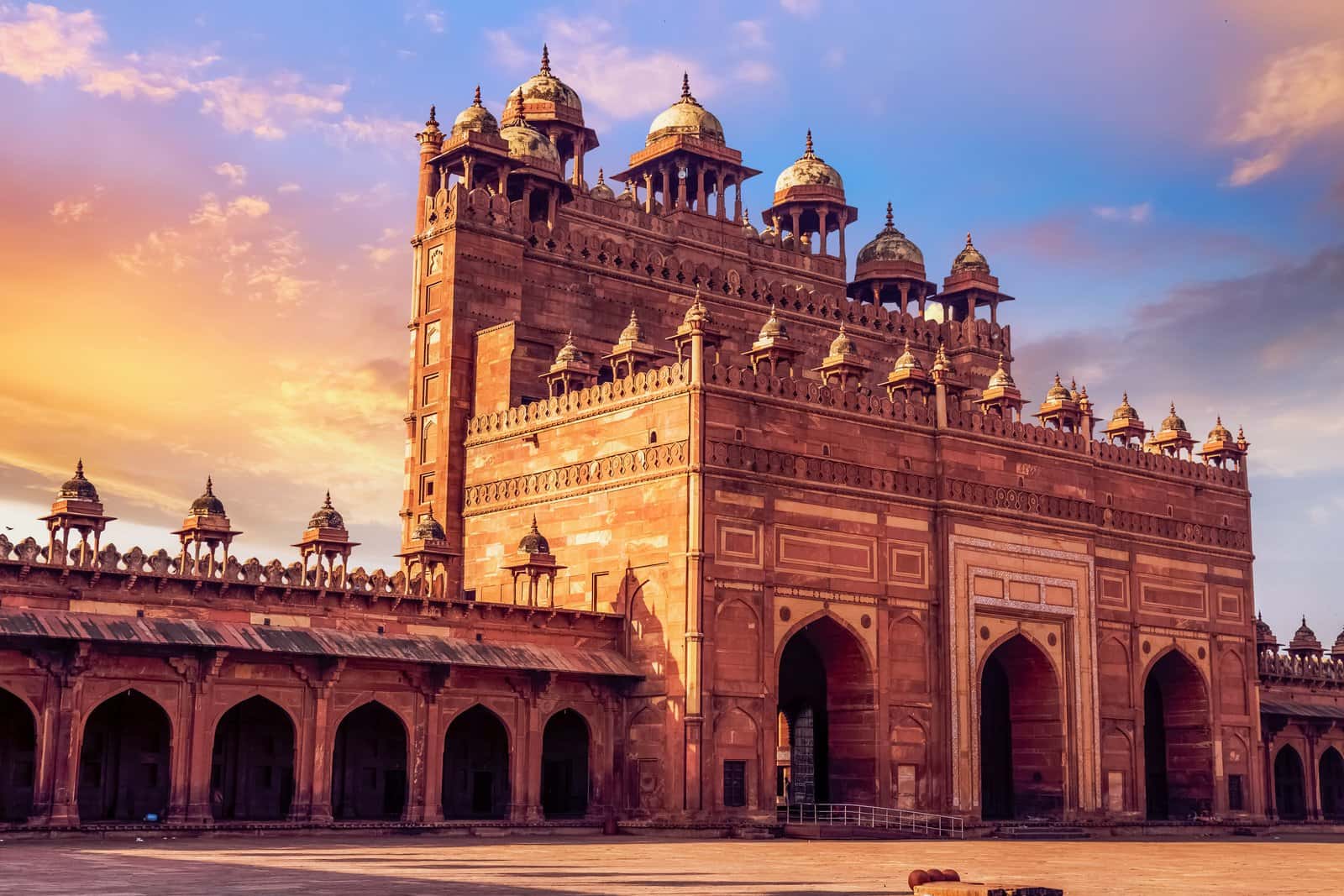
Fatehpur Sikri Travel Guide
The best months are October to March , and the best hours of any day are early morning or late afternoon , when the red sandstone glows and the heat is kind.
When to visit Fatehpur Sikri
The best months are October to March, and the best hours of any day are early morning or late afternoon, when the red sandstone glows and the heat is kind.
- November to February: cool and clearThe most comfortable season, pleasant by day and cool in the early mornings. The sandstone looks its warmest in soft, low light, so aim for the first hour after opening or the last hour before sunset. Mornings can be foggy in December and January, which is atmospheric but worth allowing time for on the drive from Agra.
- October and March: warm but fineStill good for a visit, with fewer crowds than the peak winter weeks. By late March the middle of the day starts to get hot on the open, shadeless terraces, so do the palace early and keep the mosque courtyard, which has more shade, for later.
- Plan around the Friday prayersThe ticketed palace is open every day, but the Jama Masjid is a living mosque and is busiest around the Friday midday prayers. If you want a calm visit to the Salim Chishti tomb, come on another day or outside prayer hours, and you will have the courtyard close to yourself.
- Aim for opening time either wayWhatever the month, the first hour after the opening at about 6 am is the prize: cool air, clean light for photographs, and far fewer touts working the gate. Tour-bus crowds tend to roll in from late morning, so an early start changes the whole feel of the visit.
April to June is very hot here, often around 40 to 45 degrees, and the monuments are open red sandstone with little shade. If you must come in summer, go at opening time, carry water and a hat, and use the shuttle from the car park rather than walking up in the sun. The afternoon glare also flattens the photographs, so a sunrise visit is doubly worth it.
How to reach Fatehpur Sikri
Almost everyone comes by road from Agra, on the way to or from Jaipur. It is an easy half-day stop on the Golden Triangle drive, and there are three honest ways to do it.
- By private taxi from Agra (simplest)About 37 km west of Agra, roughly 1 to 1.5 hours by car on the main Agra to Jaipur road. A taxi with waiting time is typically about 1,500 to 2,500 rupees for the round trip, and keeping the car waiting matters, as return cabs from Sikri can be patchy. This is how most visitors come, often as a morning from Agra. We arrange a car with an experienced driver.
- By government bus from IdgahBudget travellers take a UPSRTC or private bus from Agra's Idgah bus stand for about 60 to 100 rupees one way, around 1.5 to 2 hours with village stops. Buses drop near the Fatehpur Sikri bypass and bus stand, which is about 3 km short of the monuments, so you then take an auto-rickshaw for about 100 to 150 rupees to the car park and the CNG shuttle.
- On the Agra to Jaipur legJaipur is about 205 km on, so Fatehpur Sikri sits neatly between the two and makes a perfect half-day stop without backtracking. If you are driving Agra to Jaipur, see it in the morning and carry on, rather than returning to Agra first. It is the natural break on the Golden Triangle loop.
- By train via BharatpurThe nearest useful railway station is Bharatpur, about 22 to 26 km away, with taxis and shared cabs from there. Fatehpur Sikri has its own small station as well, but services are sparse, so the road from Agra is far simpler for most visitors. Birdwatchers often pair Sikri with the Keoladeo sanctuary at Bharatpur.
All vehicles park about 1 km from the monuments. A CNG shuttle bus runs from the car park to the gate for about 10 to 30 rupees a head, which is well worth it, especially in the heat or for older travellers. Tell your driver to drop you at the car park near the CNG stand, not at the distant bus stand, and you save a needless extra hop.
Fly into Delhi, see Agra and the Taj, then call at Fatehpur Sikri on the drive across to Jaipur. It has no airport or significant trains of its own; it is a road stop on the Golden Triangle.
Fly into Delhi or Jaipur and pick up the Golden Triangle. Fatehpur Sikri falls on the Agra to Jaipur road, an easy add-on with no extra detour.
Come by road from Agra by taxi or the Idgah bus, or by train to Bharatpur and a short taxi ride. Most domestic visitors fold it into an Agra day or the Jaipur drive.
Akbar's city, and what you actually pay
Fatehpur Sikri is Akbar's perfectly preserved red-sandstone capital, abandoned after barely fifteen years. The one thing to understand before you go is that it comes in two parts, and only one of them needs a ticket.
- The Royal Palace complex (ticketed)This is the part you buy a ticket for, open about 6 am to 6 pm. Inside are the Diwan-i-Khas, with the famous carved central pillar where Akbar held his interfaith debates, the five-storey Panch Mahal wind-catcher, the Jodha Bai palace, Birbal's house and the Anup Talao pool. Entry is around 50 rupees for Indians and, generally, OCI cardholders, the same for SAARC and BIMSTEC visitors, and about 550 rupees for other foreign nationals; children under 15 are free.
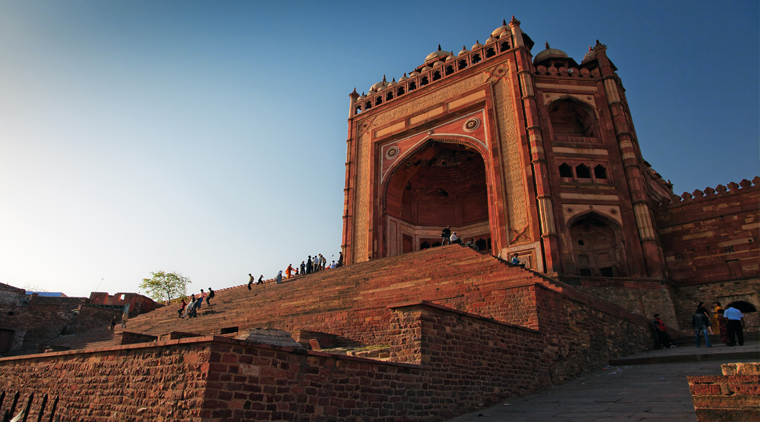
- The Jama Masjid and Buland Darwaza (free)A short walk from the palace, this great mosque is entered through the Buland Darwaza, a victory gateway about 54 metres high, among the tallest in the world. Entry to the mosque is free. It is a living place of worship, so dress modestly and cover your head, and you will leave your shoes at the edge or for a small fee at a stand.
- The tomb of Salim ChishtiInside the mosque courtyard stands the delicate white-marble tomb of the Sufi saint who blessed Akbar with a son. Visitors tie a thread to the carved marble screens and make a wish. Entry is free; any offering is entirely your choice and should be small. Read the safety section before anyone tells you a chadar is compulsory, because it is not.
- Book online to skip the counterYou can buy the palace ticket online in advance, about 35 rupees for Indians and around 550 for foreign nationals, and walk past the queue. It also means no one at the gate can invent a price for you, which is the cleanest single defence against the fake-fee touts.
Foreign nationals pay a small ADA (Agra Development Authority) toll of about 500 rupees, but if you already bought it with your Taj Mahal ticket that same day, it also covers Agra Fort, Fatehpur Sikri, Akbar's tomb and Itmad-ud-Daulah, so you are not charged again. This is why a few sites quote a single combined figure of about 610 rupees for Fatehpur Sikri. Keep your Taj ticket on you to show it is already paid.
The free mosque, and seeing past the touts
The Jama Masjid, the Buland Darwaza and the Salim Chishti tomb are free to enter, and they are the soul of Fatehpur Sikri. Knowing that one fact, before you arrive, is the best protection against the touts this place is known for.
- What the dargah isSheikh Salim Chishti was the Sufi saint who, the story goes, foretold the birth of Akbar's heir. His marble tomb, with its astonishing carved-stone lattice screens, sits in the mosque courtyard and is still a place of living devotion. People of every faith come to tie a wish-thread and sit a while, which is part of what makes this corner so moving.
- It is free, and offerings are optionalThere is no entry charge to the mosque or the tomb. If you wish to make an offering you may, but it is your choice and a small amount is perfectly respectful. Nobody can require a donation of you, whatever they say, and you owe no one a fee simply to walk in and look.
- The wish-thread traditionTying a length of thread to the lattice screen and making a wish is a gentle, centuries-old custom. Caretakers will offer to help and may expect a small tip; a modest note is plenty if you accept their help, and you are free to do it yourself or simply watch.
- Why the touts gather hereBecause the dargah is free and emotional, touts work the approach selling offering cloths and posing as guides. Walk in calm and informed, keep your own pace, and you can enjoy one of the most beautiful corners of Mughal India in peace. The next section is the honest how-to on the chadar pressure.
At the tomb you may be steered to a friend selling an offering cloth (a chadar) and told it is expected, sometimes that the money goes to charity. Reported prices have run from about 700 to 1,100 and on up to 5,100 and even 11,000 rupees. None of it is compulsory. A small thread or a modest note, given only if you wish, is entirely appropriate. A polite, firm no is fine, and you can walk straight to the tomb without buying anything.
Doing Fatehpur Sikri well
An hour and a half does the highlights; a relaxed half-day does them justice. Here is how to get the best of it, and how to arrange a guide who adds to the day rather than ambushing it.
- Take a licensed guide, arranged in advanceThe palace stories (the interfaith debates at the Diwan-i-Khas, the pachisi courtyard where Akbar is said to have used people as living game-pieces) come alive with a good guide. Arrange a licensed guide through your operator or hotel beforehand, so no one has to be turned away at the gate and you are not negotiating in the car park.
- See the palace, then the mosqueStart in the ticketed palace while the light is soft, take in the Panch Mahal, the Diwan-i-Khas and the Jodha Bai palace, then walk over to the free Jama Masjid and the Salim Chishti tomb. Doing them in that order leaves you calm and unhurried for the dargah, which deserves a slow few minutes.
- The signature photographsThe Buland Darwaza from below at a slight angle, the Panch Mahal's open tiers, and the carved marble screens of the tomb are the shots people remember. Early morning and late afternoon give clean light and far fewer people, and the long approach steps to the Buland Darwaza make a fine wide frame.
- Pair it with Agra or BharatpurMost people see it as a morning from Agra or a stop on the Jaipur drive. Birdwatchers can pair it with the Keoladeo bird sanctuary at Bharatpur, about 22 to 26 km away, which makes an easy add-on in the cooler months.
- Keep it to a half-dayThere is no town worth lingering in and few good places to eat, so plan to see the monuments in about 1.5 to 3 hours and move on to Agra or Jaipur for a meal and the night. Carry your own water, as on-site options are limited and not always trustworthy on price.
If you do only one thing slowly, stand under the Buland Darwaza and look up. At about 54 metres it is one of the tallest gateways in the world, and the scale only lands when you stop hurrying past the touts and let it tower over you. Give the gateway and the marble tomb beyond it an unhurried ten minutes each, and Fatehpur Sikri stops being a quick photo stop and becomes the place Akbar built it to be.
Where to stay for Fatehpur Sikri
Almost everyone sleeps in Agra and visits Fatehpur Sikri as a half-day. There are a handful of local options, but the honest advice is to base in Agra or fold Sikri into the Jaipur drive.
- Agra is the natural baseAgra, about 37 km away, has the full range of stays, from backpacker guesthouses near the Taj to heritage and five-star hotels. Sleeping in Agra lets you see the Taj at sunrise, then make Fatehpur Sikri a relaxed morning, which is the pattern almost every itinerary follows.
- The few local options, honestlyThere are a small number of simple hotels and a heritage-style property in and around Fatehpur Sikri village. They are fine for a quiet night and an early start at the monuments, but the choice, the food and the value are far better in Agra, so staying over here only suits travellers who specifically want the dawn quiet.
- Or do not stay at allBecause Sikri is a half-day, many travellers never book a room here. On an Agra to Jaipur drive you simply see the monuments mid-morning and sleep in Jaipur that night, or return to Agra. Treat Sikri as a stop, not a destination, and your nights are easier to plan.
- Bharatpur as an alternativeIf you are combining Sikri with the Keoladeo bird sanctuary, Bharatpur (about 22 to 26 km away, in Rajasthan) has comfortable hotels and forest-edge stays. That makes a pleasant two-in-one for nature lovers, with Sikri in the morning and the wetlands at dawn the next day.
Fatehpur Sikri costs and a realistic budget
Fatehpur Sikri is cheap to see; the only real costs are the transport from Agra and an optional guide. Here is what the pieces cost so you can plan and avoid being overcharged.
- The entry, which is the small partThe palace ticket is about 50 rupees for Indians and OCI cardholders, about 35 rupees online, and about 550 rupees for foreign nationals; children under 15 are free. The Jama Masjid, the Buland Darwaza and the Salim Chishti tomb are free. So for a domestic visitor the actual entry cost is pocket change.
- Transport is the real costFrom Agra, a round-trip taxi with waiting is about 1,500 to 2,500 rupees, an app cab roughly 1,800 to 2,200, and the Idgah government bus about 60 to 100 rupees one way plus about 100 to 150 for the auto from the bypass. The CNG shuttle from the car park is about 10 to 30 rupees a head.
- The optional and the negotiableA licensed guide arranged in advance is the one add-on worth paying for; agree the fee before you start. Everything a tout quotes at the gate, the fake 300-rupee entry, the chadar from about 700 upward, the soapstone sold as marble, is either a scam or a steep mark-up, so settle every price first or simply decline.
- Cash and small notesCarry cash and small notes for the shuttle, the shoe stand at the mosque, a guide tip and water. The official ticket counter and online booking are the only fixed prices here, which makes them a useful anchor against every quote you will hear in the car park.
The real palace ticket is about 50 rupees for Indians (about 35 online) and the dargah is free. Hold those two figures in your head and almost every scam at Fatehpur Sikri falls apart on contact, because every inflated quote, from the 300-rupee fake fee to the thousand-rupee chadar, depends on you not knowing the genuine, tiny cost of entry.
Practical logistics: shoes, water, dress and getting around
The small things that make a Fatehpur Sikri visit smooth: the shoe and dress rules at the mosque, water and shade, and how the shuttle and steps work.
- Shoes and dress at the mosqueThe palace is shoes-on, but at the Jama Masjid and the Salim Chishti tomb you remove your footwear and cover your head, men and women alike. Carry socks if the stone gets hot, dress modestly with shoulders and knees covered, and use the shoe stand for a small fee rather than leaving them loose.
- Water, shade and the heatThe palace terraces are open red sandstone with little shade, so carry your own water and a hat, especially from March onward. The mosque courtyard offers more shade, so save it for when the sun is high if you are visiting later in the morning.
- The shuttle and the stepsUse the CNG shuttle from the car park rather than the kilometre walk, then expect uneven, worn sandstone steps inside both complexes. Firm shoes help, and there is no lift or ramp network, so plan the pace around the least mobile person in your group.
- Bags, drones and securityAs at the Taj, large bags, tripods and drones cause delays or are not allowed at security. Carry only water, your phone or camera and your ticket, and you will move through quickly. There is basic security screening at the palace entrance.
Scams, safety and staying well at Fatehpur Sikri
Fatehpur Sikri is magnificent, and it is also the most tout-heavy stop on the Golden Triangle. A little awareness keeps the visit lovely, and a little care keeps you well in the heat.
- Do not pay anyone but the official counterA common trick is a tout quoting a fake entry fee, often about 300 rupees a head, when the real palace ticket is around 50 for Indians. Buy only at the official ASI counter or online. The mosque and the tomb are free, so anyone charging you to enter them is a fraud.
- Do not accept a guide who approaches youSelf-styled guides swarm the car park and the gate, and many are not licensed. Arrange a proper guide in advance, and a calm, repeated no works on the rest. They are persistent but generally harmless, and they back off when you keep walking.
- Do not be pushed into a chadar or donationAt the Salim Chishti tomb you may be pressed to buy an offering cloth for a large sum, from about 700 up to several thousand rupees, sometimes told the money is for charity. It is never compulsory. Agra police have acted on tourist complaints. Offer a small amount only if you genuinely want to.
- Watch the small tricksSome touts close or hide the toilets to herd you toward a shop or the dargah for commission, or sell soapstone trinkets as marble. Keep your group together, hold your own plan, and you breeze through. None of this is dangerous, just tiring if you are not ready for it.
- Heat, water and healthDrink bottled or filtered water, carry sun protection on the open terraces, and take the shuttle rather than walking up in the midday sun. Watch your step on the worn sandstone, and keep a hat and water on hand from spring through the monsoon.
Fatehpur Sikri is busy and public, and the friction reported by travellers is sales pressure and persistent touts rather than violent crime. Visit in daylight hours when it is crowded, keep your bag in front of you in the press near the gate, be firm with the chadar and guide approaches, and you will find it as manageable as any major Golden Triangle monument.
Fatehpur Sikri for every kind of traveller, and on access
It rewards very different visitors in different ways. Here is what it offers you, and the one tip that matters for each, including how an older traveller visits comfortably.
- Families with childrenA real adventure, with under-15s free at the palace and big open courtyards to roam. Keep children close near the gate where the touts gather, and let a guide bring the pachisi-court and palace stories to life so it is more than a walk through old stones.
- Senior travellers and on accessibilityVery doable with a little planning. Take the CNG shuttle from the car park rather than the kilometre walk, go early before the heat, wear firm shoes for the uneven sandstone steps, and let a pre-arranged guide manage the touts so you can take it gently. There is no lift or step-free route, so plan around the steps.
- CouplesQuiet at sunrise and beautiful in low light, with the marble screens of the tomb and the great gateway making memorable backdrops. Combine it with an Agra sunrise at the Taj for a perfect Mughal day, then drive on to Jaipur in the afternoon.
- History loversFew places tell the Akbar story better, from the interfaith debates at the Diwan-i-Khas to a capital abandoned for want of water after barely fifteen years. A good guide is the difference between stones and a story, so it is the one place on the Triangle where the guide fee earns its keep.
- PhotographersThe Buland Darwaza, the Panch Mahal's tiers and the carved tomb screens are the shots. Come at opening or late afternoon for clean light and room to frame without crowds, and a wide lens for the gateway approach pays off.
- Budget and backpacker travellersReach it cheaply by the Idgah bus and an auto from the bypass, buy the ticket online, skip every guide who approaches, and enjoy the free mosque. A half-day here costs very little once you have the transport sorted.
How long to spend, and a suggested plan
Fatehpur Sikri is a half-day, not a destination. Here is how to shape it as a morning from Agra or a stop on the Jaipur drive, so you catch the best light and miss the worst of the crowds.
- How long it really takesThe highlights take about 1.5 hours; a relaxed visit with a guide and the dargah is about 2.5 to 3 hours. Add the drive each way from Agra and you have a comfortable half-day. There is no need to plan a full day or an overnight here.
- As a morning from AgraLeave Agra early, reach the gate near opening, take the shuttle up, see the palace while the light is soft, then walk to the free mosque and tomb. You are back in Agra for a late lunch with the afternoon free for Agra Fort or Mehtab Bagh.
- On the Agra to Jaipur driveThis is the classic. See the Taj at sunrise in Agra, drive out to Fatehpur Sikri mid-morning, spend two to three hours, then carry on the about 205 km to Jaipur for the night. No backtracking, and you arrive in Jaipur by evening.
- The quick versionIf you are tight on time you can see the Buland Darwaza, the tomb and a brisk loop of the palace in about 75 to 90 minutes. You will miss the slow magic of the place, but you will still have stood under one of the world's great gateways.
The single thing that makes or breaks a Fatehpur Sikri visit is the hour you arrive. Come near the opening at about 6 am and you get cool air, clean light and a quiet gate before the tour buses and the touts hit their stride. Leave it to late morning and you are jostling crowds in rising heat with the hard sell at full volume, so set the alarm and front-load the day.
The real questions travellers ask about Fatehpur Sikri
Straight answers to the questions that come up again and again on TripAdvisor, Quora and IndiaMike, so you arrive already knowing the score.
- What is the real entry fee?About 50 rupees for Indians and OCI cardholders (about 35 online), and about 550 for foreign nationals, with children under 15 free. Sites quote different numbers because some add the ADA toll or muddle the online and counter prices. The mosque and tomb are free; only the palace needs a ticket.
- Is it worth visiting, or a tourist trap?It is genuinely worth it: a complete, abandoned Mughal capital in red sandstone, with one of the world's tallest gateways and an exquisite marble tomb, all for pocket change. The touts make some visitors call it a trap, but the monuments are the real thing once you walk past the hard sell.
- How do I dodge the scams?Buy the ticket only online or at the official ASI counter, decline every guide who approaches and arrange one in advance instead, and remember no chadar or donation is ever compulsory at the dargah. Knowing the palace is ticketed and the mosque is free is the whole defence.
- Do OCI cardholders pay the Indian rate?Generally yes, about 50 rupees rather than the foreign fee, but carry your physical OCI card with the linked passport and reconfirm at the counter, as the rule has been under periodic review. It is worth doing, since it cuts the entry from a few hundred rupees to a few dozen.
- How long do I need?A half-day. About 1.5 hours for the highlights, 2.5 to 3 hours for a relaxed visit, plus the drive from Agra. Almost nobody needs to stay overnight, and most fold it into an Agra morning or the Jaipur drive.
- Train to Bharatpur or road from Agra?Road from Agra is simpler for most, by taxi or the Idgah bus. Take Bharatpur only if you are already going there for the Keoladeo bird sanctuary, since Sikri's own station has sparse services and you still need a taxi for the last leg.
Planning Fatehpur Sikri from abroad
Fatehpur Sikri is the easy, rewarding half-day stop on the Golden Triangle most first-time visitors do. A little planning, and one card, make it smoother and cheaper.
- Carry your OCI cardIf you hold an OCI (Overseas Citizen of India) card you have generally been given the Indian rate, about 50 rupees at the palace rather than the foreign fee of about 550. Government rules charge OCI holders at par with Indians for monument entry. The position has been under periodic review, so carry your physical OCI card with the linked passport and reconfirm at the counter.
- It is a road stop, not a destinationFatehpur Sikri has no airport and few trains of its own. Fly into Delhi or Jaipur, do the Golden Triangle, and call here on the Agra to Jaipur leg. Agra is about 37 km away and the natural base, so you never need to plan a separate trip out here.
- Know the layout before you arriveThe palace needs a ticket; the Jama Masjid and the Salim Chishti tomb are free. Knowing that, and that no donation is ever compulsory, is the best defence against the touts this site is known for. Buy the palace ticket online so no one can invent a price for you.
- Gentle and senior-friendly with planningUse the shuttle from the car park, come early in the cool, wear firm shoes for the steps, and let a pre-arranged licensed guide handle the approach. Done that way, it is comfortable for parents and grandparents on a first trip to India.
On a classic first visit to India, Fatehpur Sikri is the half-day pause between the Taj at Agra and the forts of Jaipur, and it is one of the most rewarding stretches of the whole Golden Triangle. Slot it in mid-morning on the Agra to Jaipur drive, carry your OCI card and your own water, and let it be the quiet, astonishing Mughal chapter between two louder cities.
Money, guides and timing for foreign visitors
The practical basics an overseas traveller needs for a fast monument stop: how to pay, whether to take a guide, and how the half-day fits a wider India trip.
- Carry small cash, pay the right placesBuy the palace ticket online before you arrive (about 550 rupees for foreign nationals) or at the official ASI counter, never from anyone in the car park. Keep small notes for the CNG shuttle, the shoe stand at the mosque and a guide tip. Cards are not useful for the on-the-ground bits here, so draw cash in Agra first.
- A guide is worth it, but arrange it aheadThis is the one Golden Triangle stop where a good licensed guide truly adds to the day, bringing the Diwan-i-Khas debates and the abandoned-capital story alive. Book one through your operator or hotel so you are not negotiating with the crowd at the gate, and agree the fee in advance.
- How long to give it on a bigger tripOn a first India trip, give Fatehpur Sikri a half-day, no more. It is the morning stop between the Taj at Agra and the forts of Jaipur, about 1.5 to 3 hours at the monuments plus the drive, and it slots into the Golden Triangle without adding a night.
- Time it to the cool and the calmOctober to March is the comfortable window, and the first hour after the opening at about 6 am is both the coolest and the quietest, before the tour buses and the hard sell arrive. A sunrise visit here, like at the Taj, is the difference between magic and a hot scramble.
Fatehpur Sikri rewards a little homework more than almost any monument on the Triangle, because the touts here are persistent and the fee confusion is real. Arrive knowing the palace is ticketed and the mosque is free, carry your OCI card if you have one and your own water, keep the visit to a calm half-day, and this abandoned Mughal capital becomes one of the quiet highlights of the whole trip rather than a stressful stop.
Why a perfect capital was abandoned in barely fifteen years
Fatehpur Sikri, the City of Victory, was Akbar's grand experiment. From about 1571 he raised a whole imperial capital in red sandstone on a ridge near the village of Sikri, the home of the Sufi saint Sheikh Salim Chishti, who, the tradition holds, had foretold the birth of the emperor's long-awaited heir. For about fourteen or fifteen years it was the centre of one of the world's great empires, a place of palaces, courtyards, the towering Buland Darwaza and the interfaith debates Akbar staged in the Diwan-i-Khas. Then, around 1585, Akbar moved his court away and the city emptied, most likely because the water supply could not sustain it. It was never resettled, which is why it survives so complete, a Mughal capital frozen at its peak. UNESCO inscribed it as a World Heritage Site in 1986. Standing in its silent courtyards at dawn, you are walking through an emperor's vision that lasted barely a generation and has outlasted empires since.
Planning a Fatehpur Sikri trip?
Our Uttar Pradesh travel experts plan your full journey for you: route, hotels, darshan timings and transport. You get a free day-by-day plan and an exact quote on WhatsApp, usually within a few hours. No payment is needed to get your plan.
Tour packages that visit Fatehpur Sikri
Every journey below is private, hand-crafted and fully customizable. Tell us your dates and we tailor the itinerary, the pace and the priests or guides around you.
 1D
1DAgra Fatehpur Sikri Tour
- Visit Taj Mahal
- Visit Agra fort
 9D / 8N
Golden Triangle Tour With Varanasi
- Enjoy street food in Chandni Chowk
- Visit pink city of Jaipur
 12D / 11N
Rajasthan Tour Package
- Visit Lotus Temple
- Visit world famous Taj Mahal
 9D / 8N
Golden Triangle with Ranthambore & Bharatpur Luxury Group Tour
- Visit Qutub Minar
- Visit India Gate
 9D / 8N
Golden Triangle & Khajuraho Dance Festival Tour
- Enjoy Khajuraho Festival
- Visit Taj Mahal
 9D / 8N
Golden Triangle Tour With Khajuraho
- Visit Qutub Minar & Rajpath
- Visit Hawa Mahal
 9D / 8N
Orchha Khajuraho Tour
- Visit Delhi Sightseeing
- Visit Ram Raja Temple & Chaturbhuj Temple
 7D / 6N
Rajasthan Wildlife Tour
- Visit Chokhi Dhani
- Visit City palace & Jantar Mantar
 7D / 6N
Muslim Pilgrimage Tour
- Visit Jama Masjid
- Visit Buland Darwaza