Gorakhpur Travel Guide
The kind months are November to February , and the one date that changes everything is Makar Sankranti , when the Khichdi Mela fills Gorakhnath Temple. Summer here is fierce and...
When to visit Gorakhpur, and the mela to plan around
The kind months are November to February, and the one date that changes everything is Makar Sankranti, when the Khichdi Mela fills Gorakhnath Temple. Summer here is fierce and the monsoon is wet and heavy.
- November to February: the season to chooseThis is when Gorakhpur is at its kindest. The days are mild, the evenings by Ramgarh Tal are cool and pleasant, and you can walk the temple compound and the Gita Press lanes without tiring. Nights in December and January get genuinely cold on the plains, so carry a warm shawl or a jacket, especially if you plan an early morning darshan.
- Makar Sankranti and the Khichdi MelaThis is the great day of the year here. On Makar Sankranti, which in 2027 falls on about 14 January, devotees pour in to offer khichdi, rice and dal, to Baba Gorakhnath. The Ministry of Tourism describes it as a three-day mela run by the Sri Gorakhnath Mandir Trust, though the fair grounds stay lively for weeks. If you want to feel the faith of Purvanchal in one place, come now.
- March to early June: the heat is realDo not underestimate the summer here. On the long-term climate record May is the hottest month, with an average daily high of about 37 degrees Celsius, and April is barely cooler; on a heatwave day it climbs well beyond that. The open temple courtyard and the lake promenade give you no shade at midday. If you must travel then, keep sightseeing to the early morning and after sunset, drink much more water than you think you need, and rest through the afternoon. You may see other pages claim an average May high of 41 degrees. The climate record does not support it, and we would rather give you the true number.
- Mid-June to early October: the monsoonThe rains are heavy in this river country, and low areas around the district can flood. Travel is still possible, and the countryside turns beautifully green, but road journeys to Kushinagar or the Sonauli border can slow down badly. Please also read the safety section, because the monsoon is the season when this region has historically had its encephalitis cases.
The mela is not on a fixed calendar date. It turns on Makar Sankranti, so the date moves by a day from year to year. For 2027 the panchang gives Makar Sankranti as about 14 January, but before you book a train or a room, please confirm the exact days with the temple trust, whose number is listed on the Government of India Utsav portal, or with us. Beware of pages that print last year's dates as if they were this year's, because that mistake is copied across the web every single season.
How to reach Gorakhpur, and the airport myth to avoid
Gorakhpur is one of the best connected cities in eastern Uttar Pradesh by rail. By air, there is one truth you must know before you book anything for the Buddhist circuit.
Almost every travel page still tells Buddhist pilgrims to fly into Kushinagar International Airport, which opened with great ceremony in October 2021. The reality, from the Airports Authority of India's own figures released under the Right to Information Act and reported in January 2026, is that no scheduled commercial flight has operated from Kushinagar since November 2023. Airlines have signalled an intention to return, and new routes have been discussed under the regional connectivity scheme, but nothing is confirmed. So plan to land at Gorakhpur, and if you truly want to try Kushinagar, open the AAI flight schedule page for that airport first and see for yourself whether anything is flying.
- By air, into GorakhpurYour airport is Mahayogi Gorakhnath Airport, code GOP, a civil enclave inside an Air Force station, about 11 km from the Gorakhnath Temple. IndiGo and Akasa Air fly daily to Delhi, and there are links towards Mumbai, Kolkata, Bengaluru and Hyderabad. One-way Delhi fares are advertised from around 5,218 rupees, but airfares move every day, so treat that only as a starting point. The terminal is small and calm, and a taxi into the city takes about 30 minutes.
- By train, the natural way inGorakhpur Junction is the headquarters of the North Eastern Railway and one of the great junctions of the north. Overnight trains connect it with Delhi, Lucknow, Mumbai, Kolkata and much of the country, and a Vande Bharat service links it towards Ayodhya, Lucknow and Prayagraj. For most Indian travellers, an overnight train that puts you in Gorakhpur at breakfast time is the cleanest, cheapest way to start a Buddhist circuit or a Nepal trip. Book on IRCTC as early as you can in mela season.
- By roadNational Highway 28 runs east from Gorakhpur to Kushinagar and on towards Bihar, and good roads run north to the Nepal border and west to Ayodhya and Lucknow. If you are driving in from Varanasi it is a long half-day, and from Lucknow it is a full day with stops. Please avoid night driving on these highways, since slow tractors and unlit carts are common after dark.
- The WayToIndia route through GorakhpurOn our own Buddha Tour, Gorakhpur is not a stop we invented for a brochure. The route comes down from Balrampur and Shravasti, crosses to Lumbini for the day, and reaches Gorakhpur in the afternoon for a city tour of the Gorakhnath Temple and a night's rest. The next morning it drives on to Varanasi with a halt at Sarnath. That is exactly how the town works in real life: a comfortable base with beds, food, an airport and a great railway junction, sitting in the middle of the holiest sites of the circuit.
Fly into Delhi, then take a connecting flight or an overnight train to Gorakhpur. Do not route yourself through Kushinagar airport on the assumption that it is open. Many Buddhist pilgrims instead fly into Varanasi, see Sarnath, and drive up to Gorakhpur and Kushinagar from there.
Fly into Delhi, Lucknow or Varanasi, then connect onward. Buddhist travellers from Thailand, Sri Lanka and Myanmar most often combine Bodh Gaya in Bihar with Kushinagar, using Gorakhpur as the road and rail hinge between the two.
Take a train straight to Gorakhpur Junction. It is directly connected with Delhi, Lucknow, Mumbai, Kolkata, Patna and Guwahati, and an overnight journey saves you a hotel night. From Ayodhya it is an easy road or rail hop, which is why many families now join the two in one yatra.
The temple, the press, the lake and the great platform
Gorakhpur gives you four things that no other Indian city can give you together: the seat of the Nath yogis, the world's largest publisher of Hindu scripture, a huge city lake, and a railway platform that once held a world record.
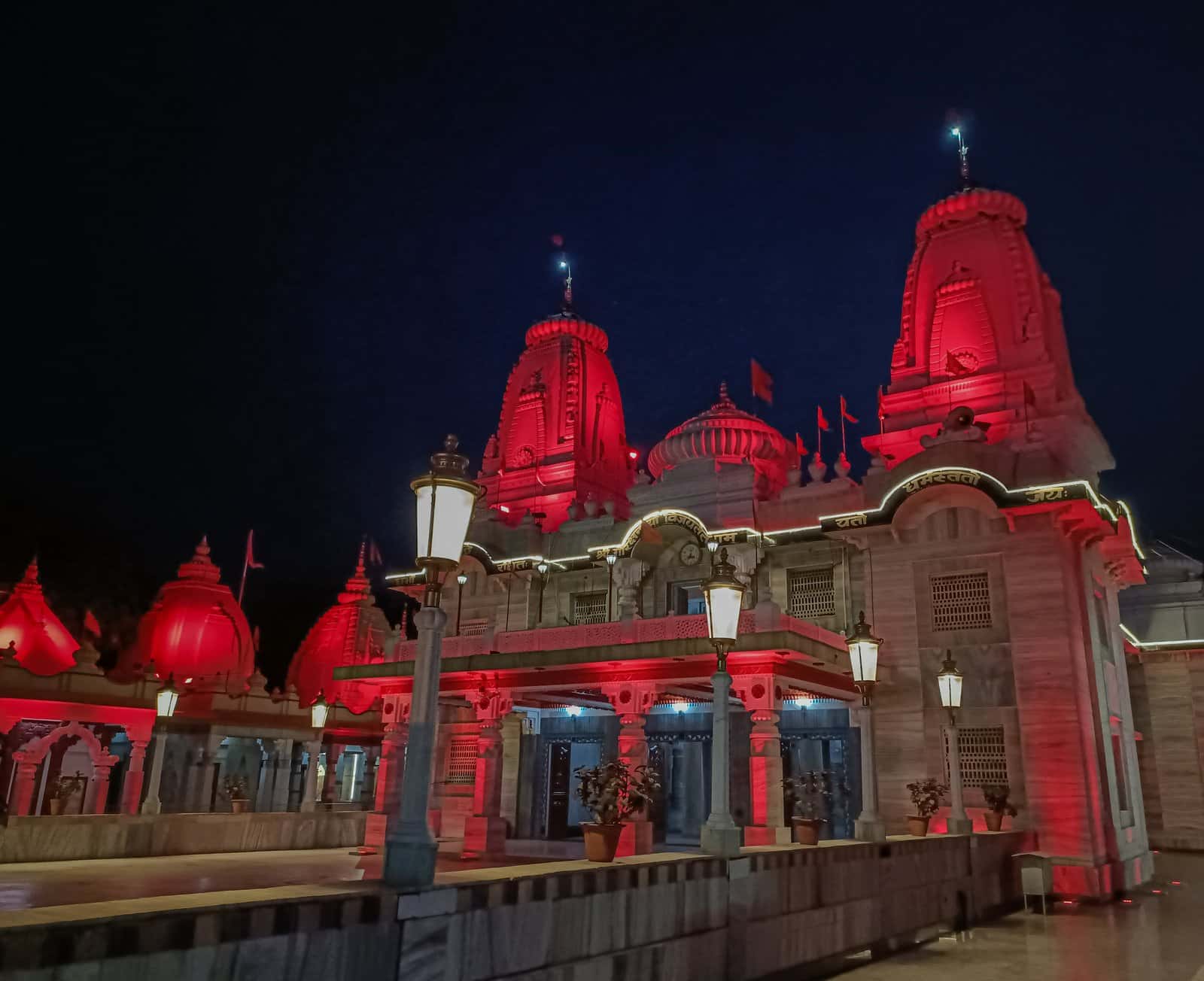
- Gorakhnath Mandir, the GorakshpeethThis is the heart of the city and the reason the city carries its name. It is the seat of the Nath sampradaya, the yogi tradition of Guru Gorakhnath, and it is a living math, not a museum. There is no entry fee. Now please read the next line carefully, because it is where we part company with every other page. The temple's own website does not publish a darshan opening and closing time at all. What it publishes is the aarti schedule: the Mangal Aarti in the brahma vela at about 3 am to 4 am, the Bhog Aarti from about 11 am, and the Sandhya Aarti about 6 pm to 8 pm. The neat window of 3 am to 11:30 am and 4 pm to 9 pm that you will read on the travel sites is not confirmed by the temple anywhere, so we will not print it as a fact. Ring the math helpline on 0551-2255453 and simply ask. Leave your footwear at the stand, dress modestly, and give yourself time to sit in the big compound rather than rushing away.
- The akhand annakshetra, the kitchen that never closesOne thing the temple does tell you on its own website, and almost nobody repeats: the Gorakhnath Mandir runs an akhand annakshetra, a perpetual bhandara, at midday and again in the evening. Any devotee may sit and take prasad there, without any distinction of who they are, and hundreds do so every day. If you are travelling simply, or if you simply want to understand what this math is for, eat there once. It is an old and living tradition of this peeth, not a tourist facility.
- Gita Press and the Leela Chitra MandirFounded in 1923, Gita Press is the largest publisher of Hindu religious texts in the world, and its books have sat in our grandparents' homes for generations. You can walk in. Inside is the Leela Chitra Mandir, a hall of about 684 paintings of the leelas of Lord Rama and Lord Krishna, with a further set of Mewari-style paintings, and all 700 verses of the Bhagavad Gita engraved on marble around the walls. Letters of Gandhiji and old copies of the Gita are kept here too. Dr Rajendra Prasad, our first President, inaugurated the hall in 1950. Footwear comes off at the door, and most visitors spend about half an hour to an hour inside.
- Ramgarh Tal and Nauka ViharThe great lake of Gorakhpur, roughly 678 hectares, about 1,680 acres, is where the whole city comes to breathe in the evening. The Nauka Vihar boating centre runs pedal boats, row boats and a cruise. Here is a small piece of money knowledge that will serve you well: there are two boat operations on this lake. The boats running with Gorakhpur Development Authority permission charge roughly 80 to 200 rupees per person for a ride of about 15 to 20 minutes, and those are the ones that will find you first. The boats run under the State Tourism Department were reported at about 35 rupees for a paddle boat, about 60 rupees for a motorboat and about 100 rupees for a special motorboat. Ask for the Tourism Department counter. There is also a laser light show of about 45 minutes from around 6 pm. Come at sunset, walk the promenade, eat chaat, and you will see the friendly, modern face of the city.
- Gorakhpur Junction and the famous platformEven if you are not a railway person, walk out onto Platform 1. It runs about 1,366 metres, precisely 1,366.33 metres with the ramp, and it was opened on 6 October 2013. Be careful with the claim you will read everywhere: it held the Guinness world record for the longest railway platform, but Hubballi Junction in Karnataka took that record in March 2023 with about 1,507 metres. Gorakhpur is now the second longest in the world, and that is still something to stand on and feel.
- The zoo, the planetarium and the rail museumBeside the lake is Shaheed Ashfaqullah Khan Prani Udyan, the city zoo, with an aquarium and a butterfly section. Nearby are the Veer Bahadur Singh Planetarium, which everyone calls Taramandal, and the railway museum near the junction. Together they make a genuinely good half day for a family with children, which is not something most people expect from Gorakhpur.
- Vishnu Mandir, Geeta Vatika and the ImambaraFor the devout there is the old Vishnu Mandir and the quiet Geeta Vatika, where kirtan continues day and night. The Miyan Sahab Imambara is a reminder of the city's Awadhi past. None of these needs more than a short visit, but together they show you the layered, gentle character of Gorakhpur.
The Gorakhnath Mandir is a working peeth of yogis. Please cover your shoulders and knees, leave leather items and footwear outside, keep your phone away during aarti, and do not photograph anyone at prayer without asking. If you wish to offer khichdi, buy your rice and dal from a shop outside and offer it yourself at the sanctum. Nobody needs to be paid to make your offering for you, and no donation is compulsory anywhere on the premises.
The experiences that make a Gorakhpur day
Beyond ticking off the sights, these are the things that stay with you: an aarti at Gorakhshpeeth, an hour among the scriptures at Gita Press, a boat on the lake, and the road out to Lord Buddha.
- Offer khichdi at Gorakhnath MandirIf you can come on Makar Sankranti, do it. You buy a small packet of rice and dal outside, you stand in the long, patient, happy queue, and you place your offering yourself. Devotees come from every corner of Purvanchal and from across the Nepal border. The Government of India's own festival portal records the beautiful tradition that the first khichdi is offered on behalf of the King of Nepal. Even on an ordinary day, an early morning darshan followed by prasad in the compound is a lovely, unhurried way to begin.
- Spend an hour inside Gita PressThis is the one experience in Gorakhpur that you truly cannot have anywhere else on earth. Walk into the Leela Chitra Mandir, take off your shoes, and stand before the marble panels carrying all 700 verses of the Bhagavad Gita. Read one shloka slowly. Then step out into the sales counter and pick up a small Gita or a Hanuman Chalisa. These are the very books, at the very prices, that made scripture affordable to ordinary Indian homes for a hundred years.
- An evening at Ramgarh TalTake a boat at Nauka Vihar in the last hour of light, roughly 15 to 20 minutes on the water for about 80 to 200 rupees per person with the GDA boats, or from about 35 rupees if you find the State Tourism Department counter, then walk the lakefront as the lamps come on and stay for the laser show at around 6 pm. This is where Gorakhpur relaxes. Families, students, ice-cream carts, chaat stalls. It is the most ordinary and the most likeable hour of your day here.
- The day trip to KushinagarThis is the reason many of you are here. About 51 km east on National Highway 28, roughly 1.5 hours, is Kushinagar, where Lord Buddha attained Mahaparinirvana. You will see the reclining Buddha in the Mahaparinirvana Temple, excavated in 1876, and the Ramabhar Stupa, raised on the site of his cremation. Go early, stay quiet, and let the place work on you. One unhurried day is enough.
- Eat like Gorakhpur eatsWhile you are here you must try the local litti chokha, the hot samosas and jalebi of the Golghar lanes, and the winter khichdi. Purvanchal food is simple, warm and filling, not fancy. Ask your hotel for the nearest well-known sweet shop rather than searching for a fine-dining restaurant, and you will eat far better.
- Chauri Chaura, for those who love historyA short drive southeast of the city is Chauri Chaura, where on 4 February 1922 a crowd taking part in the Non-cooperation movement clashed with the police, who opened fire; the crowd then set the police station alight. The district administration's own record puts the toll at three civilians and twenty three policemen. It was so grave that Gandhiji, who would not accept violence at any cost, halted the Non-cooperation movement across the whole country on 12 February 1922. The Shaheed Smarak memorial stands there today. It is a sobering, important half hour for any Indian traveller, and it teaches a child more about Gandhiji than a chapter of any textbook will.
If you have time for only one thing in Gorakhpur, make it the Leela Chitra Mandir at Gita Press. It costs you nothing but attention. The gallery is quiet, the paintings are extraordinary, and standing before the whole Bhagavad Gita carved into marble is the kind of moment you will describe to your family long after you have forgotten which hotel you stayed in. Give it a full hour, not fifteen minutes.
Where to stay in Gorakhpur, and how many nights
Four sensible areas, each with a different logic: the lake for comfort, the temple road for devotion, Golghar for the city, and the station for an early train.
- By Ramgarh Tal and Taramandal: the comfortable choiceThe newest and best hotels sit near the lake and the Taramandal area, including international brands with pools and proper restaurants. This is the right choice for a family, for seniors, and for overseas visitors who want a soft landing. You will need an auto or a cab into the old city, but the evenings by the lake more than repay it.
- Gorakhnath Temple road: for the devoteeIf your purpose is darshan, especially during the Khichdi Mela, stay on the temple road so you can walk to the mandir in the early morning without fighting for transport. Rooms here are simpler and fill up months ahead in January, so book early.
- Golghar and Civil Lines: the city centreGolghar is the main market heart of Gorakhpur, full of shops and eating places. Staying here puts you within a short ride of everything, and it is the easiest base if you are here for work as well as travel. It is busy and noisy, so ask for a room away from the road.
- Near Gorakhpur Junction: for the early trainIf you are arriving late or leaving on a dawn train to Varanasi or Delhi, take a simple hotel near the junction for that one night. It is not a pretty area, but it saves you an anxious pre-dawn dash across town. Choose a property with a clean, well-reviewed reception and keep valuables with you.
- How many nightsOne night is enough if Gorakhpur is only your base for Kushinagar. Two nights lets you do the city properly, temple and Gita Press and the lake, plus a full Kushinagar day. Three nights turns it into a real Buddhist circuit and Nepal trip, with a day for Lumbini across the Sonauli border.
- Room budgets, honestlySimple, clean rooms run from roughly 1,000 to 2,000 rupees a night, comfortable mid-range hotels from roughly 2,500 to 5,000 rupees, and the branded hotels near the lake from roughly 6,000 to 12,000 rupees. These are online listing ranges, not official tariffs, and everything climbs steeply around Makar Sankranti.
In the days around Makar Sankranti, Gorakhpur fills up. Rooms near the Gorakhnath Temple are taken months in advance, prices rise, and even the ordinary hotels near the station get tight. If your dates fall in that window, book very early, or accept a room further out near the lake and travel in for the early morning darshan.
Gorakhpur costs, and where the prices are official
Gorakhpur is an inexpensive city. The useful thing is knowing which prices are fixed by an official tariff and which are simply what somebody quotes you.
- A realistic daily budgetLeaving out your room and your long-distance travel, plan on roughly 1,500 to 2,500 rupees a day for a simple traveller, roughly 3,500 to 6,000 rupees for a comfortable day with a car and good meals, and about 8,000 rupees and up if you want a branded hotel restaurant and a private cab all day. This is a working city, not a resort town, so your money goes a long way.
- The prices that are officialThe zoo publishes a real tariff. Entry is about 50 rupees for an Indian visitor over 12, about 25 rupees for a child of 6 to 12, free below 6, and about 400 rupees for a foreign visitor over 6. Photography is about 100 rupees for the day and videography about 500 rupees, the sightseeing vehicle is about 20 rupees for an Indian adult, and parking a car is about 50 rupees for four hours. There are discounts of about 10 per cent for students with an ID card, 15 per cent for a group of 20 or more, and 50 per cent for persons with disabilities on producing a certificate.
- The prices that are not officialEverything else is a quotation, not a tariff. Cab firms list Gorakhpur to Kushinagar one way from about 1,499 rupees to about 2,314 rupees, and Gorakhpur to the Sonauli border from about 1,999 rupees, with some quoting around 12 rupees per km. Travellers on IndiaMike report paying about 1,500 to 1,700 rupees for a taxi to the border. Please treat all of these as a guide only, and agree the full price, including waiting time, before the car moves.
- Temples and offeringsThere is no entry fee at the Gorakhnath Mandir, and no charge to walk into Gita Press. Your only spending at either is what you choose: a packet of khichdi to offer, a book from the sales counter, prasad for the family at home. Nobody is entitled to demand a donation from you at any temple gate, so if anybody does, walk on politely.
- Cash, cards and UPIUPI works in most shops and even with many auto drivers, and there are plenty of bank ATMs around Golghar and the station. Still, carry some cash for small stalls, the boat ticket and the temple offering. If you are going on to Nepal, carry clean US dollar notes for the visa on arrival, since Nepali immigration posts prefer dollars.
In Gorakhpur, the difference between a smooth day and an irritating one is a single sentence spoken before you set off: agree the fare, the waiting time and the exact stops with your driver, out loud, before you sit in the car. Cab websites quote from about 1,499 rupees for Kushinagar and from about 1,999 rupees for Sonauli, so you already know roughly what the road is worth. Say it once, kindly, at the start, and the rest of your day will be free of arguments.
Practical logistics: getting around, SIM, language and food
The small, ordinary things that make a Gorakhpur day work smoothly, from e-rickshaws to what language to speak.
- Getting around the cityE-rickshaws and auto-rickshaws are everywhere and are the natural way to move between the station, Golghar, the temple and the lake. App cabs work but are thinner here than in a metro. The city is spread out, so do not plan to walk between the main sights, but each individual area, the temple compound, the Gita Press block, the lakefront, is comfortable on foot.
- Language and mannersHindi and Bhojpuri are the languages of the street, and English is understood at hotels, the airport and the bigger shops. A little Hindi goes a long way, and people here are warm and unhurried with visitors. Address elders as ji, and you will find doors open easily.
- Food, water and eating wellThe vegetarian food is excellent and cheap. Drink bottled or properly filtered water, and be a little careful with cut fruit and cold chutneys from the street in the hot months. Eat where the queue is longest and the turnover is fastest, which is the oldest and best rule in India.
- SIM, data and moneyCoverage across the city is good. Indian travellers can simply use their existing SIM. Overseas visitors should pick up an Indian tourist SIM or an eSIM at the Delhi or Varanasi airport rather than trying to buy one here, since the paperwork in a small city takes time. ATMs are plentiful around Golghar and the station.
- Dress and holy-site etiquetteBoth the Gorakhnath Mandir and the Buddhist sites at Kushinagar ask for modest dress: shoulders and knees covered, shoes off where indicated, voices low. At Kushinagar, please walk clockwise around the stupa, do not point your feet at the reclining Buddha, and let monks in meditation be. These small courtesies are noticed and appreciated.
Many of you will land here purely to go somewhere else, to Kushinagar, to Lumbini, or on to Varanasi. Even then, please give the city three hours. An early darshan at Gorakhnath Mandir and a quiet half hour inside Gita Press can be done comfortably between an overnight train arrival and a mid-morning departure, and it will change the way you remember this place. Leave your bags in the hotel or the station cloak room and go.
Safety, health and the encephalitis question answered honestly
Gorakhpur is a safe, ordinary Indian city. The one question people are afraid to ask out loud is about encephalitis, so let us answer it properly and factually.
For decades Gorakhpur and its neighbouring districts were the centre of India's acute encephalitis syndrome and Japanese encephalitis burden. That history is real and it deserves respect. What has changed is also real: the Uttar Pradesh government's vaccination programme across 2017 and 2018 reached about 8.8 million children across 38 districts, including Gorakhpur, Kushinagar, Deoria, Maharajganj and Basti, and together with sanitation work it cut the toll sharply, with reported AES deaths in the state falling from about 654 in 2017 to about 230 in 2018. Now, for you as a traveller, here is exactly what the CDC Yellow Book's India chapter says, in its own terms: Japanese encephalitis vaccination is recommended for people travelling extensively in rural areas, for long-term travellers, and for people assigned to work in endemic areas; the virus is carried by Culex mosquitoes that breed around paddy fields and irrigation channels; and the peak season is May to November, especially in northern India. The CDC does not list a short, city-based visit among the groups it advises to vaccinate. So we will not tell you to take the vaccine for a two-day darshan trip. If you are taking your family deep into the villages for a long stay in the wet months, that is a genuinely different question, and it is one for your own doctor, well before you fly. In every season, use repellent and cover your arms and legs at dusk.
It is a strange thing: every page whispers about encephalitis, and not one of them mentions what the CDC's India chapter actually puts at the top of its list. First, typhoid. The CDC recommends typhoid vaccine for India even for a short trip, and warns that typhoid picked up in South Asia is often multidrug-resistant. Second, rabies. India carries the highest rabies burden in the world, and rabies immune globulin is generally not available in the country, so a bite or a scratch from a street dog or a temple monkey is a serious matter, not a small one. Carry travel insurance that covers medical evacuation, and do not carry food in your hands or bag near temple monkeys. Third, mosquitoes in general: Uttar Pradesh is one of the seven states that carry most of India's malaria cases, and dengue is endemic and peaks in the monsoon. None of this should frighten you off a winter trip to Gorakhpur. It should simply make you pack repellent, keep your arms covered at dusk, and speak to your doctor about the typhoid shot.
- Heat, in summerThe most likely thing to spoil your trip is not crime, it is the heat. In May the average daily high is about 37 degrees Celsius, and on a heatwave day it goes well past that. The temple courtyard and the lake path have very little shade. Carry water, wear a cap, use ORS if you feel weak, and keep the middle of the day for rest indoors.
- Crowds at the Khichdi MelaThe mela crowd is joyful but it is very large and it pushes. If you are with small children or an elderly parent, go for the earliest darshan of the day rather than the peak hours, hold hands, agree a meeting point in case you get separated, and keep phones and money in an inside pocket. Pickpocketing in a dense queue is the only real crime risk you face here.
- Roads and night travelPlease do not drive the highways after dark if you can avoid it. Slow tractors, unlit carts and stray animals are common on the roads to Kushinagar and to the border. Start early, and plan to be back in the city before nightfall.
- At the border, keep your witsSonauli is a busy transit town and, like all border towns, it has touts who will offer to hurry your paperwork, change your money at a poor rate, or sell you an onward ticket for far too much. Do your own immigration formalities, use a bank or a licensed changer, and never hand your passport to anybody who is not in uniform at the official counter.
- Solo women travellersGorakhpur is generally comfortable for women travelling alone, with the usual Indian city sense: dress modestly, prefer daytime travel between towns, use a hotel-arranged cab at night rather than a random auto, and keep your family updated with your plans. Women travellers report staring rather than trouble, which is tiring but not dangerous.
Gorakhpur for every kind of traveller, and on accessibility
This city serves very different people in very different ways. Here is your specific note, whoever you are.
- Hindu pilgrims and devoteesThis is your city. The Gorakshpeeth is one of the most important seats of the Nath sampradaya anywhere, Gita Press has shaped the devotional life of Hindu homes for a century, and Makar Sankranti here is unforgettable. Pair it with Ayodhya, Varanasi and Kashi Vishwanath, and you have a yatra of real weight.
- Buddhist pilgrimsUnderstand clearly that Gorakhpur is your base, not your shrine. The sacred ground is at Kushinagar, about 51 km east, and at Lumbini across the Nepal border. Gorakhpur gives you the beds, the food, the airport and the trains. Give the circuit at least three nights so that Kushinagar and Lumbini each get a calm, unhurried day.
- Families with childrenBetter than you expect. The zoo, the planetarium, the rail museum and a boat on Ramgarh Tal make a genuinely good family day, and the zoo entry is only about 50 rupees for an Indian adult. Avoid the peak summer weeks with small children, and read the health note above before a monsoon trip into the villages.
- Senior travellers and on accessibilityVery doable with a little planning. Stay near the lake or on the temple road so that walking is short. Go for the earliest darshan of the day, when the queue moves and the crowd is thin. Hire a car with a driver for the Kushinagar day rather than taking a bus, because the sites there are spread out. The temple compound and the Gita Press hall are flat, but the surfaces are uneven and there are steps, so a walking stick and an unhurried pace are wise. In mela week, please do not attempt the peak-hour queue.
- Railway loversGorakhpur is a pilgrimage of a different kind for you. The headquarters of the North Eastern Railway, a platform of about 1,366 metres, and a railway museum with old locomotives. Stand at the end of Platform 1 and look down its length once, and you will understand why the city was proud of that record for ten years.
- Solo travellers and backpackersStraightforward, cheap and friendly. Trains in, e-rickshaws around, simple rooms near the station, and an easy onward bus to the border. This is a working Indian city that is used to travellers passing through, so nobody will bother you much, and the honest, unglamorous ordinariness of it is part of the pleasure.
A suggested Gorakhpur itinerary, from one day to four
How to shape your days so that the temple falls in darshan hours, Kushinagar gets its full morning, and Lumbini does not turn into a rushed border scramble.
- Day one, the cityToday you arrive at Gorakhpur, most likely on an early train. After you check in and eat, go straight to the Gorakhnath Mandir for darshan while the morning is still cool. From there, drive to Gita Press and give the Leela Chitra Mandir a full unhurried hour. Rest through the afternoon. In the evening go to Ramgarh Tal, take a boat for about 15 to 20 minutes, and walk the lakefront as the lights come on.
- Day two, KushinagarLeave early with a car. It is about 51 km on National Highway 28, roughly 1.5 hours. See the Mahaparinirvana Temple with its reclining Buddha, then the Ramabhar Stupa where Lord Buddha was cremated, and the international monasteries in between. Sit quietly somewhere for twenty minutes before you leave, because the whole point of Kushinagar is stillness. Be back in Gorakhpur before dark.
- Day three, LumbiniIf your papers allow it, cross to Nepal. The Sonauli border is roughly 90 to 96 km away, about 2.5 to 3 hours, and Lumbini is a further 20 to 25 km inside Nepal. Please read the overseas visitors section before you plan this, because the rules are very different for an Indian passport and a foreign one. Start at first light so that the border formalities do not eat your day.
- Day four, onwardThe natural continuation is south to Varanasi, halting at Sarnath where Lord Buddha gave his first sermon. That is precisely the route our own Buddha Tour takes out of Gorakhpur. Alternatively, turn west to Ayodhya for Ram Lalla darshan, which many Indian families now join to this trip.
- The three-hour versionIf you are only changing trains, do not just sit in the waiting room. Leave your luggage in the cloak room, take an auto to Gorakhnath Mandir for a quick darshan, then to Gita Press, and be back with an hour to spare. It is entirely possible, and it turns a dead layover into a memory.
It looks possible on a map and it is not. Kushinagar is east of the city and Sonauli is north, in opposite directions, and the border crossing on foot with immigration on both sides is unpredictable. Travellers who attempt both in a day end up seeing neither properly, and often reach the border after dark. Give each one its own morning. Gorakhpur has enough good, cheap rooms that a second night costs you very little.
The real questions travellers ask about Gorakhpur
Straight answers to the questions that come up again and again on TripAdvisor, IndiaMike and the Buddhist circuit forums, so that you arrive already knowing the score.
- Is Gorakhpur worth a day, or is it only a transit town?It is worth a day. The Gorakshpeeth and Gita Press are genuinely uncommon places, and the lake is a pleasant evening. Be honest with yourself, though: this is a working city, not a beautiful heritage town, and if you are on a tight schedule it is entirely reasonable to use it as a base and give your days to Kushinagar and Lumbini.
- Can I fly into Kushinagar for the circuit?As things stand, no. Airports Authority of India figures show no scheduled commercial flight from Kushinagar since November 2023. Plan to land at Gorakhpur, and if you want to check whether anything has changed, look at the AAI flight schedule page for Kushinagar before you book.
- Is one day enough for Kushinagar, and is there a late bus back?One day is plenty for Kushinagar. Buses do run back to Gorakhpur through the evening, but they thin out and the highway is dark, so we advise a hired car for the day rather than depending on a late bus. It costs from about 1,499 rupees one way with a cab firm, and the peace of mind is worth it.
- Taxi or bus to Lumbini?A private taxi to the Sonauli border takes about 2.5 to 3 hours and travellers on IndiaMike report paying about 1,500 to 1,700 rupees, while cab firms advertise from about 1,999 rupees. Buses from near the station are much cheaper and take about 3 hours. Whichever you take, you cross the border on foot and pick up Nepali transport on the other side for the last 20 to 25 km to Lumbini.
- Do Indians need a visa for Nepal?No. Indian citizens do not need a visa for Nepal. Carry your passport or your Election Commission voter ID as proof of nationality, and please take the entry stamp at the immigration post even if the crowd is walking straight through, because an exit without an entry record can cause you trouble later.
- Is Gorakhpur Junction really the longest platform in the world?Not any more, and you should know this before you repeat it. Its platform of about 1,366 metres held the Guinness record from 2013, but Hubballi Junction in Karnataka took the title in March 2023 with about 1,507 metres. Gorakhpur now holds a very respectable second place.
- What are the Gorakhnath Temple timings?Honestly, nobody can tell you with authority, and you should be suspicious of any page that pretends otherwise. There is no entry fee, that much is certain. But the temple's own website publishes no darshan opening and closing time. It publishes the aarti schedule: Mangal Aarti about 3 am to 4 am, Bhog Aarti from about 11 am, and Sandhya Aarti about 6 pm to 8 pm. The tidy 3 am to 11:30 am and 4 pm to 9 pm window you will read elsewhere is an aggregator's figure, not the temple's. Ring the math on 0551-2255453, which is a 24 hour helpline, and ask for the day you are coming, especially in mela season.
- Should we avoid the monsoon because of encephalitis?A short city trip in the monsoon is not considered a high-risk itinerary, and cases have fallen a great deal since the vaccination drives. If you are taking children deep into rural areas for a long stay in the May to November season, that is a different question, and it is one for your doctor. Please read the safety section, where we set out the facts and the CDC guidance in full.
The border rule that decides your whole Buddhist circuit
If you hold a foreign passport, one immigration rule will shape your entire India and Nepal plan, and almost no travel page tells you about it before you are standing at the barrier.
This is the rule that catches people, and it has just changed, so please read it slowly. For years the Indian e-Visa was valid for entry only at airports and seaports, never at a land border. That is no longer true. India has opened four land ports to e-Visa entry: Raxaul from December 2025, Rupaidiha from January 2026, and Jogbani and Darranga from March 2026. The Ministry of Tourism confirmed in March 2026 that the e-Visa is now valid for entry through 33 airports, 19 seaports and 4 land ports. But look at the list again. Sonauli is not on it. On the official checkpost list Sonauli appears only as an authorised EXIT point. So on an e-Visa you may walk out of India into Nepal at Sonauli, and you may not walk back in. If your plan is India, then Lumbini, then back into India by road, you must either re-enter at Rupaidiha, Raxaul or Jogbani on a multiple-entry e-Visa, which means a long detour along the Nepali Terai, or hold a paper sticker visa from an Indian mission, or simply fly back into India. One more honest warning: the Indian e-Visa website is currently inconsistent with itself. Its FAQ still says you may enter only through airports and seaports, while its own authorised-checkpost list now includes the four land ports. Print the checkpost page, carry it, and confirm with an Indian mission before you commit to a land return.
- Going into Nepal: the visa on arrivalMost foreign nationals can take a Nepal visa on arrival at the Belahiya post on the Nepali side of Sonauli. The Nepal Tourism Board publishes the fees as about 30 US dollars for 15 days, about 50 US dollars for 30 days and about 125 US dollars for 90 days, and all three are multiple-entry, so a side trip back out of Nepal will not cost you a second visa. Carry clean US dollar notes and a passport photograph, because the land posts prefer dollars and the ATM queue at a border is not where you want to be. One caution that no travel page prints: Nepal gives no visa on arrival at all to nationals of a short list of countries, including Nigeria, Ghana, Zimbabwe, Somalia, Iraq, Afghanistan, Iran and Syria. If your passport is on that list you must obtain your Nepal visa in advance from a Nepali mission, or you will be turned back at Belahiya.
- Two passports, two completely different daysIf you are an NRI family travelling with an OCI card and a foreign spouse, understand that the same barrier treats you differently. The Indian-passport member walks through with an ID. The foreign-passport member fills a form, pays in dollars and takes a stamp, and must think hard about how they will get back into India, because Sonauli will not readmit them on an e-Visa. Plan for the slower of the two, and keep everybody's documents in one folder with one person.
- Do the stamps properly, both waysThe border here is famously open and people walk across without formality all day long. Do not copy them. Get your Indian exit stamp on the Indian side, then your Nepali entry stamp on the Nepali side, and keep both. An exit without a matching entry record is exactly the kind of paperwork problem that turns a lovely pilgrimage into a bad afternoon in an immigration office.
- The safer plan for most foreign visitorsIf the land re-entry rule worries you, do the circuit the easy way. Fly into Delhi or Varanasi, do Sarnath, Kushinagar and Gorakhpur inside India, and reach Lumbini as part of a separate Nepal leg with an onward flight out of Kathmandu, rather than doubling back over the land border. That way Sonauli is a one-way door and never a problem. We arrange the circuit both ways, and we will tell you honestly which one your passport allows.
Gorakhpur for the overseas and NRI traveller
Gorakhpur is not a polished tourist town, and that is the point. Come with the right expectations, the right season and a little cash, and it will serve you beautifully.
- Set your expectations correctlyThis is an honest, hard-working Indian city, not a manicured heritage destination. The streets are busy, the traffic is loud, and the beauty is in the people and the places of faith, not in the architecture of the main road. Come for the Gorakshpeeth, for Gita Press, and as the base for Kushinagar and Lumbini, and you will be very glad you did.
- Foreign entry rates and small printWhere a site has an official tariff, foreign visitors usually pay more, and it is stated openly rather than hidden. At the city zoo, for example, the published entry is about 400 rupees for a foreign visitor over 6, against about 50 rupees for an Indian adult. There is nothing improper in this, it is normal across India, and knowing the number in advance saves an awkward moment at the counter.
- Money, cards and dollarsCard and UPI acceptance is decent in hotels and larger shops, but carry cash for everything small. If Nepal is in your plan, carry clean US dollar notes for the visa on arrival. Draw your rupees at a bank ATM in the city rather than at the border, where rates and machines are both worse.
- Come in the cool monthsFor an overseas visitor unused to the plains, November to February is the only season we recommend without hesitation. May averages a daily high of about 37 degrees Celsius and heatwave days go higher still, and the monsoon brings heavy rain and slow roads. If you are coming a long way for the Buddhist circuit, come in winter and give yourself unhurried mornings.
- How Gorakhpur fits your wider tripThe classic shape is Delhi, then Lucknow or Shravasti, then Lumbini, then Gorakhpur for the night, then Varanasi with a halt at Sarnath, and on to Bodh Gaya. That is exactly how our own Buddha Tour runs, and it is the reason we know this town's hotels, roads and timings first hand rather than from a brochure.
For many NRI families from the US, the UK and the Gulf, Gorakhpur is not a tourist stop at all. It is the town nearest the village, the place where the elders bought their Gita Press books, the temple where a grandmother offered khichdi every January. If you are bringing children who have grown up abroad, take them to the Leela Chitra Mandir and let them stand in front of those 700 verses in marble. It explains, in one quiet hour, a great deal about where their family's faith came from.
Why the whole of Purvanchal brings rice and dal to Baba Gorakhnath
Gorakhpur takes its name from Guru Gorakhnath, the great siddha of the Nath sampradaya, and the math here, the Gorakshpeeth, is one of the most important seats of that tradition anywhere in the world. Every year on Makar Sankranti, the day the sun turns north, an extraordinary thing happens. Ordinary people, farmers, students, grandmothers, come in their lakhs with nothing but a small packet of rice and dal, and they offer khichdi to Baba Gorakhnath with their own hands. The Government of India's own festival portal records that the Gorakshpeeth is the architect of this tradition of offering khichdi on Makar Sankranti, that the faith which flows here belongs not only to Purvanchal but also to the neighbouring regions of Nepal, and that it is believed the first khichdi is offered on behalf of the King of Nepal. Folk tradition tells of Guru Gorakhnath's begging bowl, which could never be filled however much was poured into it, and so the pouring has simply never stopped. We give you that story as tradition, honestly, and not as scripture: no single reliably attributed verse can be cited for it, and any page that gives you chapter and verse is guessing. What is not tradition, and what you can see with your own eyes on that January morning, is the queue: kilometres of it, patient and cheerful, every hand holding a little rice and dal for a yogi who has been dead for centuries and is still, in this city, entirely present.
Planning a Gorakhpur trip?
Our Uttar Pradesh travel experts plan your full journey for you: route, hotels, darshan timings and transport. You get a free day-by-day plan and an exact quote on WhatsApp, usually within a few hours. No payment is needed to get your plan.