Jhansi Travel Guide
The comfortable window is October to March , when Bundelkhand is cool and dry and the fort, the Light and Sound show and Orchha are all at their best. Summer here is fierce.
When to visit Jhansi and Orchha
The comfortable window is October to March, when Bundelkhand is cool and dry and the fort, the Light and Sound show and Orchha are all at their best. Summer here is fierce.
- October to March: the clear winnerBundelkhand winters are cool, dry and pleasant by day, which suits the open fort ramparts, the long Orchha walks and the evening Light and Sound show. Nights can be genuinely cold from December to January, so carry a layer. This is the season every part of a Jhansi and Orchha trip works best.
- April to June: hot, and best avoidedHigh summer on the Bundelkhand plain is fierce, with daytime highs widely reported around 40 to 45 degrees Celsius. The fort and Orchha offer little shade, so if you must come in these months, keep the middle of the day for rest and do the sights at dawn and dusk.
- July to September: humid monsoonThe monsoon brings green to the Betwa around Orchha and humidity to Jhansi, with rain that can interrupt sightseeing and the open-air Light and Sound show. It is not a bad time for photography, but pack for showers and expect sticky afternoons.
- Decide your nights, not just your monthWhatever the season, the bigger planning decision is where you sleep. Most travellers find the area more rewarding based in Orchha, just over the state line, than in Jhansi itself, which is covered in the where-to-stay section below. Pick the season first, then the base.
The Jhansi Fort Light and Sound show on Rani Lakshmibai is one of the town's set-pieces, and its start time shifts with the season. Per UP Tourism it runs about 6:30 pm in Hindi and about 7:30 pm in English in winter, and about 7:30 pm in Hindi and about 8:30 pm in English in summer. Plan your fort visit so you can stay for the show, and reconfirm the current schedule locally as seasonal times move.
How to reach Jhansi, the great junction
Jhansi is one of central India's big railway junctions on the Delhi to Mumbai and Delhi to Chennai trunk lines. Almost everyone arrives by train, and the fastest from Delhi is the Gatimaan Express.
- By train, the obvious way inJhansi lies on the busy Delhi to Mumbai and Delhi to Chennai trunk routes, so trains are frequent and easy. From Delhi the fastest is the Gatimaan Express, about 403 km from Hazrat Nizamuddin in roughly 4 hours 25 minutes via Agra and Gwalior. The Bhopal Shatabdi and many mail and express trains also stop here.
- The station has a new nameJhansi Junction was officially renamed Virangana Lakshmibai Jhansi, and the Jhansi district government site shows the station code as VGLB. A ticket, app listing or platform board may read Virangana Lakshmibai Jhansi rather than the old Jhansi Junction, so do not be thrown when you search for trains. Some booking systems show the code as VGLJ, so if one code returns nothing, try the other or simply search by the new name.
- Nearest airportsJhansi has only a military airstrip and no scheduled commercial flights as of 2026. The nearest airport with flights is Gwalior, about 100 to 102 km away per the district government site, with connections to several Indian cities; Khajuraho airport is the other option, about 155 km from Orchha. Most overseas visitors fly to Delhi and take the train.
- By roadJhansi sits on National Highway 27 and is well connected by road. Gwalior is about 102 km, Agra about 233 km, and the classic drive on to Khajuraho is about 175 to 180 km via Orchha. State buses and taxis serve all of these, though the train is faster and more comfortable for the Delhi leg.
Fly into Delhi, the main international gateway, then take a fast morning train such as the Gatimaan Express down to Jhansi in about 4 hours 25 minutes, and transfer to Orchha. There are no international flights into Jhansi itself.
Fly into Delhi and join the rail corridor through Agra and Gwalior to Jhansi, or build a wider central India loop through Khajuraho, whose airport is about 155 km from Orchha. The train is the practical spine of this trip.
Take a train to Jhansi on the Delhi to Mumbai or Delhi to Chennai line, or fly to Gwalior about 100 km away and drive. From most Indian cities the rail junction is the simplest and cheapest way in.
From Jhansi station to Orchha, step by step
The single most asked Jhansi question is how to get from the station to Orchha, about 16 km away in Madhya Pradesh. Here is the honest, current guide, including a late-night-arrival plan.
- The distance and timeOrchha sits about 16 km from Jhansi across the state line in Madhya Pradesh, per the Madhya Pradesh government Niwari district page. The road run takes roughly 30 to 45 minutes depending on traffic and whether you go by taxi, private auto or a shared vehicle. It is a short, easy transfer once you know your options.
- Your three transfer choicesA pre-booked taxi or cab is quickest, with online sedan quotes commonly around 900 to 1,500 rupees one way, more for an SUV; agree the fare first. A private auto-rickshaw hired at the station is cheaper and a popular choice. Shared autos and tempos run the route too and cost only a small per-seat fare, but you may wait to fill the vehicle.
- Where to catch whatTaxis and private autos wait outside the station; settle the price before you load your bags. For the cheapest shared autos and tempos, travellers report the bus stand has more frequent departures than the railway station, so a short hop to the bus stand can save money if you are travelling light and not in a hurry.
- Arriving late at nightMany of the best Delhi and southern trains reach Jhansi after dark. If you arrive late, pre-arrange a hotel pickup or a taxi rather than hunting for a shared auto at night, keep your luggage close on the platform, and confirm your Orchha hotel can check you in late. The 16 km run is quick, but a fixed price agreed in advance removes the only friction.
Taxi and auto fares from Jhansi station to Orchha are negotiated, not fixed by a published tariff, and quotes to visitors start high. Sedan cab quotes online cluster around 900 to 1,500 rupees one way, and a private auto is cheaper, but always agree the exact figure before you set off. We can also arrange the Jhansi to Orchha transfer as part of a tour so you step off the train to a waiting car.
Jhansi Fort, Rani Mahal and the Rani Lakshmibai trail
Jhansi's sights are the great hilltop fort, the palace and museum tied to Rani Lakshmibai, and the town's 1857 history. A focused half day covers them well.
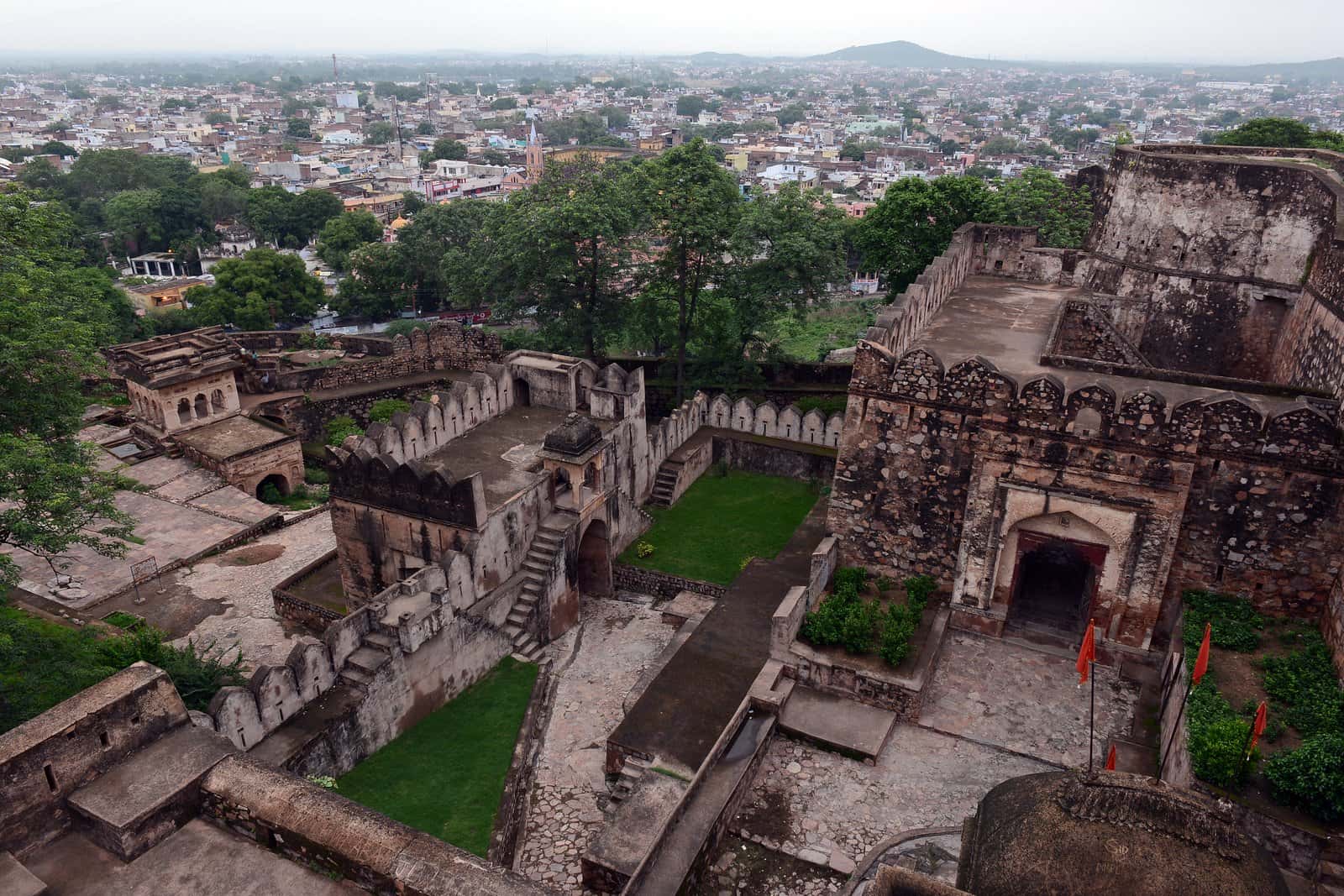
- Jhansi Fort, Jhansi ka QilaThe centrepiece is the ASI-protected hilltop fort built by Raja Bir Singh Ju Deo of Orchha in the early 17th century, forever linked to Rani Lakshmibai and the 1857 First War of Independence. Inside are the Karak Bijli cannon, a garden, a Shiv temple and a sculpture collection. Tickets follow the standard ASI band, commonly around 25 rupees for Indians and around 300 rupees for foreign nationals, bookable on the ASI portal; reconfirm the current fee before you go.
- Rani MahalThe palace associated with Rani Lakshmibai is now a museum showing ASI sculptures of about the 9th to 12th century, per the Jhansi district government site. The exact fee and timings are not posted officially, so treat any quoted figure as unconfirmed and reconfirm at the gate. It is a short, atmospheric stop on the Rani Lakshmibai trail.
- The Government MuseumThe Jhansi State Government Museum holds terracotta, bronzes, weapons, manuscripts, coins and Bundelkhand art across upgraded galleries. Like most Indian government museums it is widely reported to close on Mondays and the second Saturday of the month, though these days are not posted officially, so plan your museum visit for another day to be safe.
- St Jude's Shrine and Rani Lakshmi Bai ParkSt Jude's Shrine is a Roman Catholic shrine run by the Diocese of Jhansi, with Thursday as the special novena day and a large feast around late October. The landscaped Rani Lakshmi Bai Park is a pleasant city green for a stroll. Both are easy add-ons if you have spare time around the fort.
Be realistic: the fort, Rani Mahal and a museum or shrine fill a comfortable half day, and the evening Light and Sound show adds an hour. That is about all the sightseeing Jhansi town offers, which is why most travellers do Jhansi as a half-day stop and give their nights and their wider exploring to Orchha, 16 km away. Plan accordingly and you will not feel short-changed.
Signature experiences around Jhansi
Beyond the fort, the experiences people remember are the Light and Sound show, the day in Orchha, and the quiet Bundela fort and lake at Barua Sagar.
- The Light and Sound show at the fortThe evening show on Rani Lakshmibai and the 1857 revolt is Jhansi's most atmospheric hour, told with audio and lighting across the ramparts. Per UP Tourism it runs in Hindi and English, about 6:30 pm and 7:30 pm in winter and about 7:30 pm and 8:30 pm in summer, with tickets of about 50 rupees for Indians and about 250 rupees for foreign nationals. Reconfirm times locally as they shift with the season.
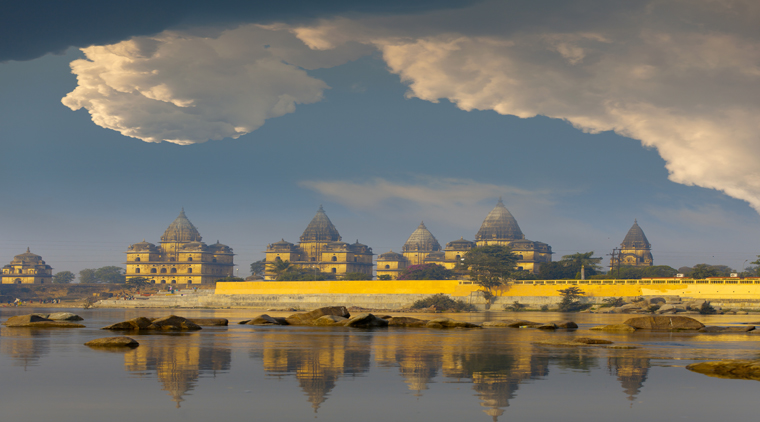
- A day in OrchhaThe real experience of a Jhansi trip is Orchha, 16 km away in Madhya Pradesh, where the Betwa river splits into channels and the Ram Raja, Chaturbhuj and Lakshmi Narayan temples and the riverside chhatris reward a full day. Most travellers find Orchha, not Jhansi, is the part of this trip they remember.
- Barua Sagar for a quiet half dayIf you have a spare morning, Barua Sagar lies about 22 km south-east of Jhansi, pairing a small Bundela fort built around 1705 to 1707 with a large man-made lake. It is calm, uncrowded and a gentle contrast to the busy fort, good for anyone who wants a slower, scenic add-on.
- The Rani Lakshmibai history walkJhansi rewards travellers who care about 1857: the fort ramparts, the spot tied to the Rani's legendary leap, Rani Mahal and the museum together tell the story of one of India's most celebrated freedom fighters. A local guide brings the history alive and is worth arranging for the fort.
- The heritage rail-and-road circuitMany travellers fold Jhansi into a Gwalior, Jhansi, Orchha and Khajuraho circuit, using the short Gwalior train hop and the Orchha and Khajuraho road legs. It is one of central India's richest heritage runs, and Jhansi is its natural hinge.
If you do only one thing slowly, give Orchha a full unhurried day rather than a rushed afternoon. The temples, the palaces and the chhatris along the Betwa at golden hour are what people remember long after the train logistics fade. Base in Orchha for a night, do the fort and the Light and Sound show in Jhansi on arrival or departure, and the trip falls into place.
Where to stay, and the honest case for Orchha
You can sleep in Jhansi near the station, but most travellers are happier basing in Orchha, 16 km away, where the heritage and the calm are. Here is how to choose.
- Orchha: where most travellers should sleepOrchha, just over the state line in Madhya Pradesh, has riverside heritage hotels, homestays and the calm of a small temple town, and it puts you among the palaces and the Betwa. For most travellers this is the better base, with Jhansi reduced to a half-day stop on arrival or departure. Forum consensus strongly favours basing in Orchha.
- Jhansi: handy for the station and a tight scheduleStay in Jhansi if you have an early or late train, a strict half-day plan, or you simply want to be near the railhead. The town has standard business and budget hotels rather than heritage charm, but it is convenient and saves the 16 km transfer if your time is short.
- How many nightsOne night based in Orchha, with a Jhansi half day for the fort and show, covers the core comfortably. Add a second Orchha night to slow down or to add Barua Sagar. If you are continuing to Khajuraho, plan a separate night there rather than trying to rush the 175 to 180 km drive and the temples in one day.
- Book ahead in winterOrchha's best heritage stays are limited in number and fill up in the cool October to March season and around any festival or the Khajuraho dance festival nearby. Book a little ahead in winter, especially for weekends, to secure a riverside room rather than a roadside fallback.
Unless your train times force your hand, sleep in Orchha and use Jhansi only for the fort, the museum and the Light and Sound show. The 16 km transfer is quick, the Orchha base is far more rewarding, and you will see the area the way seasoned travellers do, rather than spending your evening in a transit town.
Jhansi and Orchha costs and a realistic budget
Jhansi is inexpensive once you know the few fixed prices and the negotiable ones. Here is what the main things cost so you can plan and avoid being overcharged.
- The mostly fixed pricesJhansi Fort entry follows the standard ASI band, commonly around 25 rupees for Indians and around 300 rupees for foreign nationals, with a small extra fee for video filming and handheld stills generally free. The Light and Sound show is about 50 rupees for Indians and about 250 rupees for foreign nationals. Reconfirm fort entry on the ASI portal, as the exact figure is not posted officially.
- The negotiable transportThe Jhansi station to Orchha transfer is negotiated: online sedan cab quotes cluster around 900 to 1,500 rupees one way, a private auto is cheaper, and shared autos cost only a small per-seat fare. Agree any taxi or auto fare before you start, since quotes to visitors begin high and come down.
- The longer road legsJhansi to Khajuraho by taxi is the big-ticket transport, with forum-quoted rates for an air-conditioned sedan often in the low thousands of rupees one way for the 175 to 180 km run; confirm the rate and the vehicle class in advance. The Gwalior train hop, by contrast, is cheap, with basic fares of roughly 100 to 150 rupees.
- Cash, cards and ATMsHotels and bigger restaurants take cards and UPI, but autos, small eateries and the museum run on cash. Jhansi has plenty of bank ATMs around the station and market, while small Orchha can have fewer, so draw cash in Jhansi before you transfer and keep small notes for fares and tickets.
Almost the only friction in Jhansi is transport pricing, so the single habit that keeps a trip smooth is to agree every taxi and auto fare before the wheels turn, whether it is the 16 km hop to Orchha or the long Khajuraho run. Quotes to visitors start high and settle quickly, and a fixed figure agreed in advance turns the town's one friction point into a non-event.
Practical logistics: station, luggage, food and getting around
The small things that make a Jhansi day smooth, from the station and the cloakroom to getting around town and finding good food.
- The station and your luggageVirangana Lakshmibai Jhansi is a busy junction, and travellers on forums repeatedly advise keeping a close eye on your bags on the platform. There is a railway cloakroom and paid luggage storage if you want to do the fort between trains, but confirm current hours and rates on arrival rather than relying on old posts.
- Getting around townAuto-rickshaws, e-rickshaws and cycle-rickshaws cover Jhansi town, and the fort, Rani Mahal and museum are short hops from each other and the station. Fares are negotiated and short, so agree a price first; for a half-day of sights, hiring an auto for a couple of hours is the easy way to link them.
- FoodJhansi is a working town with simple, hearty Bundelkhandi and north Indian food rather than a cafe scene; you will eat well at local restaurants and hotel dining rooms. Orchha, by contrast, has riverside cafes geared to travellers, so save your leisurely meals for there.
- Connectivity and languageMobile coverage in Jhansi and Orchha is generally fine for calls, maps and data. Hindi is the everyday language, with English understood in hotels and the tourist trade, so communicating and arranging transfers is straightforward.
Safety, the station, and staying well
Jhansi is a normal Indian junction town: safe with standard care, with the main practical risk being luggage at the busy station rather than anything dramatic.
- Luggage and station senseThe most consistent practical advice from travellers is simply to watch your bags closely at the busy Jhansi junction, especially on crowded platforms and at night. Use the cloakroom or paid storage if you want to sightsee between trains, keep valuables on you, and arrange your onward transfer before you arrive so you are not standing around with luggage.
- Fares and transportThere is no published taxi or auto tariff, so the friction is overpricing rather than safety. Agree every fare in advance, prefer a pre-booked car or hotel pickup for a late-night arrival, and you remove almost all of the hassle of a Jhansi transfer.
- Heat, water and healthIn the warmer months the open fort and Orchha sites are exposed, so carry water and sun protection and keep the middle of the day for rest. Drink bottled or filtered water, take the usual care with street food, and you will stay well across a Bundelkhand trip.
- Solo female travellersTravellers report Orchha as a calm, friendly and easy base for solo women, going quiet at night so it is best to plan activities by day. Jhansi, like any junction town, is fine by daylight with standard precautions, and wandering alone late at night is best avoided. Basing in Orchha and doing Jhansi as a day visit suits solo travellers well.
If you remember one thing for Jhansi, make it luggage discipline at the station and a transfer arranged in advance. The town and Orchha are otherwise gentle and welcoming, and the friction travellers report is busy-platform crowding and fare haggling, not crime. Keep your bags close, fix your fares first, and a Jhansi and Orchha trip is one of the easier heritage runs in central India.
Jhansi and Orchha for every kind of traveller
The area suits very different visitors in different ways. Here is what it offers you, and the one tip that matters for each, including how a senior manages the station transfer.
- History loversThis is your trip: the Jhansi Fort and Rani Lakshmibai story, the museum and the 1857 history, then Orchha's palaces and temples. Arrange a local guide for the fort, give Orchha a full day, and you have one of the richest heritage clusters in central India.
- Families with childrenThe fort, the cannon and the Light and Sound show entertain children, and Orchha's riverside is easy and open. Base in Orchha for calm, keep the Jhansi sightseeing to a focused half day, and manage the late-night station arrivals so tired children are not waiting around.
- Senior travellers and on the transferVery doable with planning. Pre-arrange a taxi or hotel pickup for the 16 km Jhansi to Orchha transfer rather than a shared auto, take the fort slowly as it involves slopes and steps, and prefer daytime train arrivals if you can. Basing in Orchha keeps onward walking gentle and the pace calm.
- Backpackers and budget travellersEasy and cheap: arrive by train, take a shared auto or tempo to Orchha, and stay in an Orchha homestay. The Gwalior, Jhansi, Orchha and Khajuraho run is a classic budget heritage circuit, and the short Gwalior train hop costs very little.
- CouplesOrchha is the romance, not Jhansi: a riverside heritage stay, the chhatris at golden hour and quiet evenings. Do the Jhansi fort and show together, then retreat to Orchha for the night, and the trip turns from transit to a proper getaway.
- PhotographersThe fort ramparts, the Light and Sound show and Orchha's palaces and cenotaphs along the Betwa at dawn and dusk are the frames worth chasing. Ask before photographing people at worship, and budget the golden hours in Orchha rather than the midday glare.
A suggested Jhansi, Orchha and Khajuraho itinerary
How to shape the classic heritage run so Jhansi gets its honest half day, Orchha gets a full day, and Khajuraho is not rushed.
- Day one: arrive and do JhansiTake a fast morning train from Delhi, reaching Jhansi by early afternoon. Do the fort, Rani Mahal and a museum or shrine across a focused half day, stay for the evening Light and Sound show, then transfer the 16 km to your Orchha hotel for the night.
- Day two: a full day in OrchhaGive Orchha an unhurried day: the Ram Raja, Chaturbhuj and Lakshmi Narayan temples, the palaces, and the chhatris along the Betwa at golden hour. This is the heart of the trip, so resist the urge to rush it for the road ahead.
- Day three: on to KhajurahoDrive the 175 to 180 km to Khajuraho, roughly 5 hours via Chhatarpur, and spend the afternoon and the next morning on the Western and Eastern temple groups and the Khajuraho Light and Sound show. Sleep in Khajuraho rather than trying to round-trip in a day.
- The shorter and the longer versionsShort on time, do Jhansi and Orchha as an overnight from Delhi and skip Khajuraho. With more days, add Gwalior at the start, a short train hop away, for its fort and palaces, turning the trip into the full Gwalior, Jhansi, Orchha and Khajuraho circuit.
The single thing that breaks a Bundelkhand plan is trying to round-trip Khajuraho from Jhansi or Orchha in one day. The drive is about 175 to 180 km each way, roughly 5 hours, and the temples deserve an unhurried afternoon plus a morning. Sleep in Khajuraho, see the Western and Eastern groups properly, and you will not spend the trip staring at the road.
The real questions travellers ask about Jhansi
Straight answers to the questions that come up again and again on traveller forums, so you arrive already knowing the score.
- How do I get from Jhansi station to Orchha?It is about 16 km and roughly 30 to 45 minutes. Take a pre-booked taxi, with online sedan quotes around 900 to 1,500 rupees one way, a cheaper private auto-rickshaw hired at the station, or a budget shared auto or tempo. Agree the fare before you start, and pre-arrange a pickup if you arrive late at night.
- Is Jhansi even worth stopping in?For its history, yes: the fort and the Rani Lakshmibai story are genuinely worth a half day, and the Light and Sound show is a fine evening. But the town has limited sightseeing beyond that, and traveller consensus is to do Jhansi as a half-day stop and base in Orchha, which is the more rewarding place to sleep.
- How many days do I need?One night in Orchha with a Jhansi half day covers the core. Add a second Orchha night to slow down or add Barua Sagar, and a separate Khajuraho night if you continue there. The area rewards two to three unhurried days more than a single rushed one.
- Why does my train say Virangana Lakshmibai Jhansi?Because Jhansi Junction was officially renamed Virangana Lakshmibai Jhansi, with the district government site showing the code VGLB. It is the same big junction, so do not worry if your ticket, app or platform board uses the new name rather than the old Jhansi Junction.
- How do I get to Khajuraho and Gwalior?Khajuraho is about 175 to 180 km and roughly 5 hours by road, usually driven via Orchha and Chhatarpur. Gwalior is the easy one: a short train hop of about 1 hour to 1 hour 20 minutes, which is why many travellers build the full Gwalior, Jhansi, Orchha and Khajuraho circuit.
- Is it safe to leave luggage at the station?There is a railway cloakroom and paid luggage storage at Jhansi, useful for doing the fort between trains, but travellers repeatedly advise keeping a close eye on your bags on the busy platforms. Confirm current cloakroom hours and rates on arrival rather than relying on old forum posts.
Planning Jhansi and Orchha from abroad
Jhansi is the railhead for one of central India's most underrated heritage clusters. A little preparation makes the train, the station transfer and the fort fees easy.
- Fly to Delhi, take the fast trainThere are no international flights to Jhansi, so fly into Delhi and take a fast morning train such as the Gatimaan Express, about 4 hours 25 minutes via Agra and Gwalior. Book a reserved chair-car class in advance. The train is far more comfortable and reliable than the long road drive for this leg.
- Know it is a transit hub, sleep in OrchhaJhansi is an arrival railhead in Uttar Pradesh; the heritage you came for is mostly in Orchha, 16 km away across the state line in Madhya Pradesh. Do the Jhansi fort and Light and Sound show, then base in Orchha. This single decision shapes a far better trip than sleeping in the junction town.
- Foreign-national fees and the station nameForeign nationals pay the higher ASI band at the fort, commonly around 300 rupees, and about 250 rupees for the Light and Sound show, so carry small cash. Note the station is now Virangana Lakshmibai Jhansi, code VGLB, so search trains under that name as well as the old Jhansi Junction.
- Fold it into a central India loopJhansi sits perfectly on a Delhi, Agra, Gwalior, Jhansi, Orchha and Khajuraho heritage loop, mixing the fast train spine with short road legs. For a first deep dive into central India, it is one of the most rewarding and least crowded circuits, and we can arrange the trains, transfers and cars end to end.
Money, connectivity and timing for foreign visitors
The practical basics an overseas traveller needs for a junction town and a heritage cluster: cash, cards, a SIM, and how many days to give it.
- Carry cash, draw it in JhansiCards and UPI work in hotels and bigger restaurants, but autos, the museum, small eateries and the fort and show tickets are cash places. Jhansi has plenty of ATMs around the station and market; draw cash there before you transfer, as smaller Orchha can have fewer working machines.
- Get a SIM at the airportPick up an Indian tourist SIM or an eSIM when you land in Delhi rather than hunting for one later. Coverage in Jhansi and Orchha is fine for maps, calls and arranging transfers, so you can book a cab or a hotel pickup easily on the move.
- How long to give it on a bigger tripOn a central India trip, two to three days covers Jhansi as a half day, Orchha as a full day and night, and Khajuraho as a separate night. That is the right weight between the Golden Triangle and the temples, without slowing the whole itinerary.
- Time it to the cool seasonOctober to March is the comfortable window for the open fort and Orchha. Avoid the April to June heat, often around 40 to 45 degrees Celsius, and the humid monsoon, and you will enjoy the ramparts, the riverside and the Light and Sound show in pleasant weather.
Jhansi and Orchha are an unusually easy and rewarding introduction to central India: a fast train from Delhi, a short transfer, and a heritage cluster of forts, palaces and temples that sees a fraction of the Golden Triangle crowds. Slot it after Agra and Gwalior, give Orchha a night, and let it be the quiet, history-rich chapter of the trip that many overseas visitors end up remembering most.
Khoob ladi mardani, woh to Jhansi wali rani thi
Jhansi is inseparable from Rani Lakshmibai, the queen who led its defence in the 1857 First War of Independence and became one of the most celebrated figures in the Indian freedom story. The famous line khoob ladi mardani, woh to Jhansi wali rani thi, meaning she fought valiantly, she was the queen of Jhansi, comes from Subhadra Kumari Chauhan's much-loved Hindi poem Jhansi Ki Rani, written in the 20th century, not from any ancient scripture; it is the verse every Indian schoolchild knows. Tradition holds that, rather than surrender the fort, the Rani escaped on horseback with her young son tied to her back, in the legendary leap from the ramparts that local guides will still point out. The exact details are part history and part legend retold over generations, but standing on the Jhansi Fort walls where she made her stand is the keepsake that stays with travellers long after the trains and transfers are forgotten.
Planning a Jhansi trip?
Our Uttar Pradesh travel experts plan your full journey for you: route, hotels, darshan timings and transport. You get a free day-by-day plan and an exact quote on WhatsApp, usually within a few hours. No payment is needed to get your plan.
Tour packages that visit Jhansi
Every journey below is private, hand-crafted and fully customizable. Tell us your dates and we tailor the itinerary, the pace and the priests or guides around you.