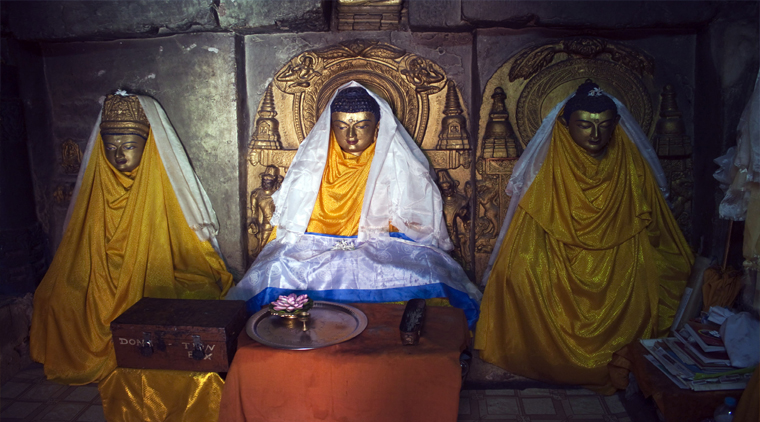
Kushinagar Travel Guide
The comfortable months are about October to March , the cool season on the plains, and the great pilgrim day is Buddha Purnima in spring.
The best time to visit Kushinagar
The comfortable months are about October to March, the cool season on the plains, and the great pilgrim day is Buddha Purnima in spring.
- October to March: cool and comfortableThis is the pleasant season on the plains of Uttar Pradesh, with mild days that suit the walking between the shrines and the quiet sitting the town invites. It is the easiest and most popular time for a pilgrimage, and the light is soft and kind for photographs.
- Buddha Purnima in springThe full moon day of Buddha Purnima, usually in May, marks the Buddha's birth, enlightenment and passing, and Kushinagar is especially moving then, with prayers and pilgrims from many countries. Expect crowds and book ahead if you come for it.
- April to June: very hotHigh summer on the plains is fierce, tiring for walking between the open shrines in the middle of the day. If you come then, do the sights in the cool of the early morning and evening and rest through the heat.
- Winter mornings and fogDecember and January mornings can be foggy, which is atmospheric at the shrines but can delay road and air travel. Keep your plans a little flexible in deep winter, and do not schedule tight onward connections early in the day.
Kushinagar is a gentle place, not a ticketed attraction. Entry to the main shrines, the Mahaparinirvana Temple with its reclining Buddha and the Ramabhar Stupa, is free, and the town is small, flat and quiet. That makes it one of the easiest and most peaceful of all the great pilgrimage places to visit, welcoming to older pilgrims and to anyone seeking calm.
How to reach Kushinagar
The nearest big railway is Gorakhpur, about 51 km away. Kushinagar now has its own international airport, opened in 2021, though flights are still limited.
- By train through GorakhpurGorakhpur is the nearest major railway station, about 51 km away on the national highway, and it is well connected across India. From there, taxis and state and private buses run the roughly one and a half to two hour drive to Kushinagar.
- By airKushinagar has its own international airport, opened in 2021 to serve the Buddhist circuit, but flights are still limited, so check current routes. Many visitors still fly into Gorakhpur or Varanasi and drive, and Varanasi in particular pairs well with the wider circuit.
- By road on the circuitKushinagar sits on the Buddhist circuit road, so most pilgrims arrive by car or coach as part of a wider trip. Roads from Gorakhpur and Varanasi are good, and a hired car with a driver makes the multi-town circuit comfortable.
- Getting around townThe main shrines are close together in a small, flat town, so you can see them on foot or with short auto-rickshaw hops. This gentle layout is a large part of why Kushinagar is so easy and restful to visit. Agree the fare with an auto-rickshaw before you set off, and for a full day it is often simplest to keep one car or driver who waits for you between the shrines and the monasteries on the edge of town.
Fly into Delhi and connect to Varanasi or Gorakhpur, then reach Kushinagar by road; or use the new Kushinagar international flights where they run. Give the Buddhist circuit about a week.
Fly into Delhi or Varanasi, then continue to Kushinagar. Pilgrims from Buddhist countries in Asia are exactly whom the new Kushinagar airport was built to serve, so check for direct or charter flights.
Reach Gorakhpur or Varanasi by train or a short flight, then drive to Kushinagar. It fits naturally on a trip through eastern Uttar Pradesh and the Buddhist circuit.
The reclining Buddha, the cremation stupa and the shrines
The heart of Kushinagar is the reclining Buddha at the Mahaparinirvana Temple and the Ramabhar Stupa where he was cremated.
- The Mahaparinirvana Temple and reclining BuddhaThe central shrine holds a reclining statue of the Buddha, about 6.10 metres long, carved from a single block of red sandstone in the 5th century AD, showing him lying on his right side with his face to the west at the moment of his passing. It is a deeply moving image, and pilgrims often drape it in golden robes.
- The Ramabhar StupaA large brick mound a little outside the temple area marks the spot where the Buddha was cremated. It is one of the most revered and peaceful places in Kushinagar, and many pilgrims walk quietly around it in prayer.
- The Matha Kuar shrine and the ruinsThe Matha Kuar shrine holds another large Buddha image, and around the town lie the brick remains of ancient stupas and monasteries from the days when Kushinagar was a great centre of Buddhist learning. Together they tell the story of the place across many centuries. These quieter ruins see fewer visitors than the main temple, so they are a lovely place to walk slowly in the early morning, imagining the busy monastic town that once stood here among the trees.
- The monasteries of many nationsBuddhists come from across Asia, and many countries have built monasteries and temples here, Japanese, Thai, Chinese, Burmese, Tibetan, Korean and Sri Lankan among them, each in its own national style. Walking among them is like a short journey through the Buddhist world.
Kushinagar is not just a town of monuments but one of the four holiest places of Buddhism, where the Buddha passed into final peace. Reading a little about his last journey and his final teaching before you come turns a walk among old shrines into something far more moving, whether or not you are a Buddhist yourself.
The experiences worth slowing down for
Kushinagar is a place to slow down: sit with the reclining Buddha, walk among the monasteries, and find quiet at the cremation stupa.
- Sit with the reclining BuddhaDo not rush the central shrine. Sit quietly for a while before the great reclining figure, watch the pilgrims and the golden robes, and let the meaning of the place settle. This unhurried time is the heart of a Kushinagar visit.
- Walk among the nations' monasteriesSpend an easy hour or two walking between the Japanese, Thai, Chinese, Burmese, Tibetan and other monasteries. Each is peaceful and welcoming, and together they show how one town holds the devotion of the whole Buddhist world.
- Find stillness at Ramabhar StupaWalk out to the Ramabhar cremation stupa, especially in the soft light of early morning or evening, and take a slow circuit around it in the way of pilgrims. It is the quietest and often the most moving spot in the town.
- Sit in the meditation parkThe large green meditation park among the shrines is made for quiet sitting and gentle walking. Give yourself some time there, away from any hurry, to simply be in the calm that Kushinagar offers so easily.
- Come for Buddha Purnima, if you canOn the Buddha Purnima full moon, usually in May, the town fills with prayer and pilgrims from many countries. It is crowded and intense but unforgettable, so book ahead and come with patience if you want to share that day.
- Join the wider circuitKushinagar is one of four holy places, so many visitors weave it into a circuit with Sarnath, Bodh Gaya and Lumbini. Doing the circuit turns a single visit into the whole arc of the Buddha's life, from birth to final peace. Even if you have time for only one more place, Sarnath near Varanasi is the easiest to add, and the pairing of his first teaching there with his final passing here makes a moving short pilgrimage in itself.
Kushinagar is not a place to tick off quickly. Its gift is calm, so the best thing you can do is slow down: sit longer than you planned before the reclining Buddha, walk gently among the monasteries, and let the quiet of the cremation stupa work on you. Pilgrims who give it unhurried time almost always find it the most peaceful stop on the whole Buddhist circuit.
Where to stay in Kushinagar, and how long
Stay in Kushinagar town near the shrines, in a hotel or a monastery guest room, or use Gorakhpur as a bigger base. Half a day to a day is enough.
- Kushinagar town: near the shrinesThe town has a range of hotels close to the temples, from simple to comfortable, at about 1,500 to 4,000 rupees a night as a guide. Staying here lets you visit the reclining Buddha and the Ramabhar Stupa in the peaceful early morning and evening light.
- Monastery guest roomsSeveral of the international monasteries offer simple guest rooms, often on a donation basis, for a quiet and devotional stay. These suit pilgrims who want to be close to the rhythm of prayer, though comfort is basic. It is best to write ahead or ask on arrival, as rooms are few and are offered as a kindness to genuine pilgrims rather than run as hotels, so come in that spirit and give a fair donation.
- Gorakhpur: a bigger baseGorakhpur, about 51 km away, has more hotels and transport and can serve as a base if you prefer a city, making Kushinagar a half-day trip. This suits those combining the visit with onward rail journeys.
- How longThe main shrines can be seen in about half a day, and a full day lets you add the monasteries and the meditation park at a gentle pace. Most pilgrims give Kushinagar one night as part of a wider circuit trip. If you are travelling only for the pilgrimage rather than sightseeing, even two unhurried nights are well spent here, letting you return to the reclining Buddha and the Ramabhar Stupa at different hours and in different light.
Stay one night in Kushinagar town near the shrines. That lets you see the reclining Buddha and the Ramabhar Stupa in the calm early morning before any coaches arrive, spend a gentle few hours among the monasteries, and leave rested rather than rushed. A single hurried day trip misses the quiet that is the whole point of the place, and the early hours before the day warms up are also the most comfortable for walking between the shrines.
A gentle budget, and free shrines
Kushinagar is kind on the wallet: the main shrines are free, and your main costs are your room, food and travel.
- The shrines are freeEntry to the main shrines, the Mahaparinirvana Temple with its reclining Buddha and the Ramabhar Stupa, is free, and the monasteries welcome respectful visitors. So the sights themselves cost you nothing beyond a donation you may choose to give.
- A rough daily budgetAs a guide only, plan about 1,000 to 2,000 rupees a day beyond your room for a simple pilgrimage visit, covering food, local transport and small offerings. Kushinagar is not an expensive place, which suits a calm, unhurried trip.
- Rooms and staysA hotel runs about 1,500 to 4,000 rupees a night as a guide, and several monasteries offer simple guest rooms, often on a donation basis. Book ahead around Buddha Purnima and in the peak cool season.
- Carry cashCarry enough cash for the town, as small eateries, auto-rickshaws, offerings and simpler stays run on cash. Draw money in Gorakhpur or a larger town before you arrive, as cash machines and card use are limited in Kushinagar itself. Keep a stock of small notes for offerings, tips and short rides, so you are never held up at a counter that cannot change a large note.
Practical tips: dress, respect, cash and timing
The small things that make a Kushinagar visit smooth and respectful, from dress and shoes to cash and the best hours.
- Dress modestly and remove shoesThese are living places of worship, so dress modestly with shoulders and knees covered, and remove your shoes where asked at the shrines. Simple, respectful dress is appreciated by the pilgrims and the monks around you.
- Keep the calmSpeak softly, silence your phone, and move gently near people at prayer or meditation. The quiet is the character of Kushinagar, and keeping it is the kindest thing a visitor can do.
- Visit early or lateThe early morning and the evening are the most beautiful and peaceful times at the shrines, before and after the coach groups. Plan the reclining Buddha and the Ramabhar Stupa for these gentle hours. The soft, low light at these times is also the kindest for photographs and for quiet sitting, and you will often have a famous shrine almost to yourself if you arrive as the gates open.
- Carry cash and a little patienceCarry cash for the town, and keep your plans a little loose in foggy winter mornings when travel can be slow. A guide can add much to the visit by telling the story of each shrine, if you would like one.
Safety, comfort and the season
Kushinagar is a calm and safe pilgrimage town, so the main things to plan for are the heat, the winter fog and the usual travel care.
- The heat and the sunIn the warmer months the open shrines can be tiring in the middle of the day. Carry water, wear a hat, do your walking in the cooler morning and evening, and rest through the hot hours.
- Winter fog and travelDeep winter mornings can be thickly foggy, which can delay road and air travel. Do not book tight early connections, and give yourself buffer time around Gorakhpur and the airport in December and January.
- A calm and safe townKushinagar is a gentle, respectful pilgrim town where visitors generally feel very safe. Take the usual care with your belongings in crowds on festival days, and you will find the place welcoming and easy.
- Food and waterDrink bottled or filtered water and take the usual care with street food, especially in the heat. Simple vegetarian food is widely available and suits the calm, clean spirit of a pilgrimage visit. Several of the monasteries and guesthouses serve gentle, wholesome meals, and carrying a few snacks and a full water bottle keeps the day easy when you are walking between the shrines.
Kushinagar asks very little of you physically: it is flat, small and calm. Come in the cool season, walk in the gentle hours, carry water and cash, and give yourself time to sit rather than rush. Handled this way it is one of the easiest and most restful of all the great pilgrimage places, kind to elders and to anyone seeking peace.
Kushinagar for every kind of traveller
The town suits very different visitors. Here is what it offers you, and the one tip that matters for each, including how gentle it is for older pilgrims.
- Buddhist pilgrims and the devoutThis is one of the four holiest places, so give the reclining Buddha and the Ramabhar Stupa the unhurried time and reverence they deserve. Walk the monasteries of your own and other traditions, and let the whole circuit tell the Buddha's story.
- Senior travellers and on accessWonderfully easy. The town is flat, the shrines are close together, and there is no climbing or hard walking, so it is one of the gentlest of all pilgrimages for older visitors. Take it slowly, rest in the meditation park, and enjoy the calm.
- Meditation and quiet seekersFew places are so made for stillness. Sit in the meditation park or at the Ramabhar Stupa in the early morning, join a monastery's quiet hours if welcomed, and let the town's peace do its work.
- History and culture loversThe 5th-century reclining Buddha, the ancient brick stupas and the monasteries of many nations make Kushinagar a rich, layered place. A good guide brings the long story of the town to life.
- FamiliesA calm, easy and educational stop for families, with the great reclining Buddha, the green park and the many colourful monasteries. Talk the children through the Buddha's story to make the visit meaningful for them.
- PhotographersThe golden-robed reclining Buddha, the monasteries in their national styles, and the soft light at the Ramabhar Stupa are lovely subjects. Photograph gently and with respect, and ask before photographing people at prayer.
A suggested Kushinagar and circuit plan
How to shape a Kushinagar visit and fit it into the four-place Buddhist circuit without rushing.
- Kushinagar in half a day to a dayIn half a day you can see the reclining Buddha and the Ramabhar Stupa. Give it a full day, ideally with a night in town, to add the Matha Kuar shrine, the monasteries and the meditation park at a gentle pace.
- Pair it with Sarnath and Bodh GayaOn the Buddhist circuit, combine Kushinagar with Sarnath near Varanasi, where the Buddha gave his first sermon, and Bodh Gaya in Bihar, where he found enlightenment. Together they trace the arc of his teaching life.
- Add Lumbini across the borderLumbini, the Buddha's birthplace, lies in Nepal, so pilgrims who add it complete the four holy places from birth to final peace. Carry the right documents, as it involves a foreign border crossing.
- A gentle circuit paceGive the whole circuit about a week, moving by road and rail with a hired car for comfort. This lets each place breathe rather than becoming a rushed line of stops, which is against the calm spirit of the pilgrimage.
The most rewarding way to see Kushinagar is as the last chapter of a story: Lumbini for the Buddha's birth, Bodh Gaya for his enlightenment, Sarnath for his first teaching, and Kushinagar for his passing into final peace. Planned as one gentle week rather than four separate dashes, the circuit becomes a moving whole, and Kushinagar its quiet, powerful close.
The real questions travellers ask about Kushinagar
Straight answers to the questions that come up again and again, so you arrive already knowing the score.
- How long do I need?Half a day covers the reclining Buddha and the Ramabhar Stupa. A full day, ideally with a night in town, lets you add the monasteries, the Matha Kuar shrine and the meditation park at a gentle, unhurried pace.
- Is there an entry fee?Entry to the main shrines, the Mahaparinirvana Temple and the Ramabhar Stupa, is free, and the monasteries welcome respectful visitors. You may give a donation if you wish, but nothing is required.
- What is the reclining Buddha?It is a statue about 6.10 metres long, carved from a single block of red sandstone in the 5th century AD, showing the Buddha at the moment of his passing, lying on his right side with his face to the west. It is the central image of Kushinagar.
- Which shrine is the cremation site?The Ramabhar Stupa, a large brick mound a little outside the temple area, marks where the Buddha was cremated. It is one of the most revered and peaceful spots in the town.
- How do I reach it, and is there an airport?Gorakhpur, the nearest big railway, is about 51 km away. Kushinagar also has its own international airport, opened in 2021, though flights are still limited, so many pilgrims still come through Gorakhpur or Varanasi.
- How does it fit the Buddhist circuit?Kushinagar is the place of the Buddha's passing, one of four holy places with Lumbini, his birthplace in Nepal, Bodh Gaya, his enlightenment, and Sarnath, his first sermon. Many pilgrims see all four as one circuit.
Planning Kushinagar from abroad
Kushinagar is where the Buddha passed into final peace, and a little planning on the circuit, the airport and the border for Lumbini makes the pilgrimage smooth.
- See it as part of the circuitMost overseas pilgrims come for the whole four-place circuit. Fly into Delhi and connect to Varanasi or Gorakhpur, or use the new Kushinagar flights where they run, and give the circuit about a week to see Lumbini, Bodh Gaya, Sarnath and Kushinagar.
- Use the new airport if it suitsKushinagar's international airport, opened in 2021, was built for exactly this pilgrimage, but flights are still limited. Check for direct or charter services from your region, and fall back on Varanasi or Gorakhpur if there are none.
- Carry documents for LumbiniLumbini, the Buddha's birthplace, is across the border in Nepal. If you wish to add it, carry the right travel documents, as a foreign border crossing is involved, and plan the crossing into your circuit route.
- A gentle, easy visitKushinagar itself is flat, small and calm, so it is easy for pilgrims of all ages. Dress modestly, remove your shoes at the shrines, and give yourself time to sit quietly rather than rushing between the sights.
Money, connectivity and timing for foreign pilgrims
The practical basics an overseas pilgrim needs for a small circuit town: cash, a SIM, and how many days to give it.
- Carry cashKushinagar is a small town, so carry enough cash for food, local transport, offerings and simpler stays. Draw money in Gorakhpur, Varanasi or a larger town, as cash machines and card use are limited in Kushinagar itself.
- Get a SIM in the cityPick up an Indian tourist SIM or an eSIM when you land in Delhi or Varanasi. Coverage in Kushinagar is generally fine for calls and maps, which helps in coordinating a multi-town circuit.
- How long to give itGive Kushinagar itself a half day to a day, and the whole four-place circuit about a week. Building in a night at Kushinagar lets you experience the shrines in the calm early morning.
- Time it for comfortCome about October to March for the pleasant cool season, and be ready for foggy winter mornings that can delay travel. Buddha Purnima in spring is the great pilgrim day, moving but crowded.
Kushinagar is the quiet, powerful close of the Buddhist circuit, the place of the Buddha's final peace. Plan it as part of the whole journey from Lumbini through Bodh Gaya and Sarnath, use the new airport or Varanasi and Gorakhpur, carry cash and your documents for the Nepal border, and give it unhurried time. Many overseas pilgrims say the stillness of the reclining Buddha stays with them long after the trip.
Where the long journey ended
It was to this quiet place, then a modest town among the sal trees, that the Buddha came at the end of his long life of teaching. Here, tradition holds, in about 483 BC, he lay down on his right side between two trees, gave his last words to his followers, and passed into Mahaparinirvana, the final peace beyond all suffering and rebirth. His body was carried a little way and cremated at the spot now marked by the Ramabhar Stupa. In the fifth century a sculptor carved from a single block of red sandstone the great reclining figure that still lies in the Mahaparinirvana Temple today, six metres of calm stone showing the moment of his passing, his face turned west. For more than fifteen hundred years pilgrims have come from across Asia to sit before it, and to walk in silence around the mound where the fire once burned. To stand here, as you can, is to stand at the last of the four great places of the Buddha's life, where the story that began with his birth at Lumbini comes gently to its close.
Planning a Kushinagar trip?
Our Uttar Pradesh travel experts plan your full journey for you: route, hotels, darshan timings and transport. You get a free day-by-day plan and an exact quote on WhatsApp, usually within a few hours. No payment is needed to get your plan.
Tour packages that visit Kushinagar
Every journey below is private, hand-crafted and fully customizable. Tell us your dates and we tailor the itinerary, the pace and the priests or guides around you.