Abbott Mount Travel Guide
The clean answer is October to early December for the sharpest Himalayan views, March to June for flowers, birds and warm walking weather, and honest caution about the monsoon...
The best time to visit Abbott Mount, and the months to avoid
The clean answer is October to early December for the sharpest Himalayan views, March to June for flowers, birds and warm walking weather, and honest caution about the monsoon. Winter here is cold and clear rather than deeply snowbound.
- October to early December: the clearest mountainsThis is when you come if the Himalayan view is why you are coming. The monsoon has washed the air, the haze has gone, and on a good morning the whole arc of peaks stands up across the valley. Days are pleasant and the nights turn genuinely cold, so pack a proper jacket, not a light one. This is also the window in which the Mayavati Ashram nearby runs its guest season, so if you want to combine the two, plan around it.
- March to June: green, warm and full of birdsSpring and early summer are lovely on this hill. The rhododendrons flower, butterflies come out on the cricket field, and the oak and pine forest is alive with Himalayan birds. Do remember one honest thing that the brochures leave out: the dry pre-monsoon air can be hazy even on a sunny day, and travellers have stood on this hill in bright March sunshine and seen no peaks at all. Come for the walking and the quiet, and treat the view as a gift when it arrives.
- July to mid-September: the monsoon, and why you should think twiceIt rains hard in Kumaon in these months. July at Lohaghat sits at roughly 16 C to 23 C with steady rain. The bigger problem is the road: the climb from Tanakpur through Champawat is a mountain highway where rocks come down, and one traveller lost eight full hours to a single boulder that blocked the road completely. If you must come in the rains, carry proper rain gear as our own Kumaon tour tips advise, keep a spare day in hand, and never drive these roads after dark.
- December to February: cold, clear, and very quietJanuary is the coldest month at nearby Lohaghat, with average highs of about 12 C and lows of about 2 C, and snow is possible between about December and February, most likely in January and February. It is beautiful and almost empty. But remember the power supply here is erratic, so a snowy night can also be a dark and very cold one. Come in winter only if you actively want solitude and you have packed for it.
The single mistake travellers make at Abbott Mount is to arrive in the afternoon, get one hazy dawn and leave disappointed. The panorama is completely dependent on the weather, and Kumaon gives it and takes it away without warning. Be careful how wide you expect it to be: the district administration describes an arc of peaks across the valley, trip reports call it a 360 degree view, and a guest at the KMVN huts described a 180 degree sweep, so the width of the view depends on exactly where you stand. If the mountains matter to you, stay two nights so that you get two sunrises. It costs you one extra night and it roughly doubles your chances.
How to reach Abbott Mount, and the honest distances
Abbott Mount is reached through Lohaghat, about 7 to 8 km below it. The nearest railhead is Tanakpur and the nearest airport is Pantnagar, and you should know that the published distances contradict one another.
- By train, through TanakpurTanakpur is the nearest railway station. Sources put it at anything from about 80 km to about 92 km from Abbott Mount, which in these hills means roughly 3 to 4 hours by road. The train worth knowing is the Purnagiri Jan Shatabdi Express, numbers 12035 and 12036, which links Tanakpur and Old Delhi over a run of about 394 km with AC Chair Car and Second Seating coaches. Going up, 12036 leaves Old Delhi at about 6:25 am and reaches Tanakpur at about 4:10 pm. Coming down, 12035 leaves Tanakpur at about 11:20 am and reaches Old Delhi at about 9:35 pm. Always reconfirm the current timing on IRCTC before you build a plan around it.
- By air, through PantnagarPantnagar is the nearest airport, about 180 to 188 km away, roughly 5 to 6 hours by road. It is a small domestic airport with a limited number of flights, mostly from Delhi, and the schedule changes from season to season. Please do not build a tight connection around it. If you are flying in from abroad or from another Indian city, it is usually easier and safer to land in Delhi and take the train to Tanakpur or drive.
- By road from DelhiIt is a long day. The distance is quoted between about 437 km and about 446 km, and the route runs Delhi, Moradabad, Rampur, Rudrapur, Khatima, Tanakpur, and then up through Champawat to Lohaghat. Start before dawn, eat early, and plan to be off the mountain roads before dark. Many travellers break the run at Tanakpur or Champawat and finish the climb fresh the next morning, which we think is the wiser way to do it.
- The last few kilometresFrom Lohaghat you drive towards Pithoragarh for about 6 km to a point called Marorakhan, turn off towards Abbott Mount, drive about 1 km, take a sharp U-turn and drive about 1 km more, and the road simply ends at the top. The lane is narrow and bumpy but tarred, and a normal car manages it. There is no regular public transport for this last stretch, so take a shared or private taxi from Lohaghat, or arrange a pickup with your stay.
- From elsewhere in KumaonIf you are already in the hills, allow about 6 hours from Nainital by way of Dhanachuli and Devidhura, and about 6 hours from Ranikhet by way of Almora. Kathgodam railway station is about 163 km away, which is further than Tanakpur but far better connected, so it is a sensible fallback if the Tanakpur trains do not suit your dates.
Fly into Delhi, rest a night, then take the Purnagiri Jan Shatabdi to Tanakpur and drive up through Champawat and Lohaghat. Trying to do Delhi airport to Abbott Mount in one push after a long-haul flight is a hard day on mountain roads, and we would not advise it.
Fly into Delhi or Lucknow, then travel by train or road towards Tanakpur. Pantnagar has flights from Delhi but they are limited, so keep it as an option rather than a plan.
Take the train to Tanakpur and drive the rest, or drive up from Delhi across a long day. From within Kumaon, Nainital and Ranikhet are each about 6 hours away, so Abbott Mount fits naturally at the far, quiet end of a longer Kumaon loop.
The church, the cricket field, the graves and the mountain wall
Abbott Mount is small enough to walk in an afternoon. What you have come for is a locked 1942 church, an old cricket ground on the hilltop, quiet graves under the pines, and one of the finest Himalayan viewpoints in eastern Kumaon.
- The Abbott Mount church, built in 1942The little church stands among the trees and it is kept locked. The Champawat district administration says prayers are still held here perhaps once or twice a year. Walk up to it, look at the stonework and the setting, and let it be. Visitors have found the surrounding ground scattered with old graves, and if you are the sort of person who feels a place, this one will speak to you quietly. Do not force doors, do not climb walls, and do not treat a resting place as a photo prop.
- The cricket ground on the hilltopThe flat green field on the crown of the hill is the heart of Abbott Mount and it is where you will spend your evenings. It is a proper little ground with a lap of roughly 400 metres by one visitor's reckoning. The district site calls the pitch what is claimed to be the second highest after Chail in Himachal Pradesh, at just under 7,000 ft. Notice the careful wording. It is a claim the district itself hedges, not an established record. Travel pages, eUttaranchal among them, state flatly that it is the second highest in the world, and a KMVN guest repeats it as fact, but we could find no cricketing authority that certifies any such ranking. Enjoy the story, and please do not repeat it as a record.
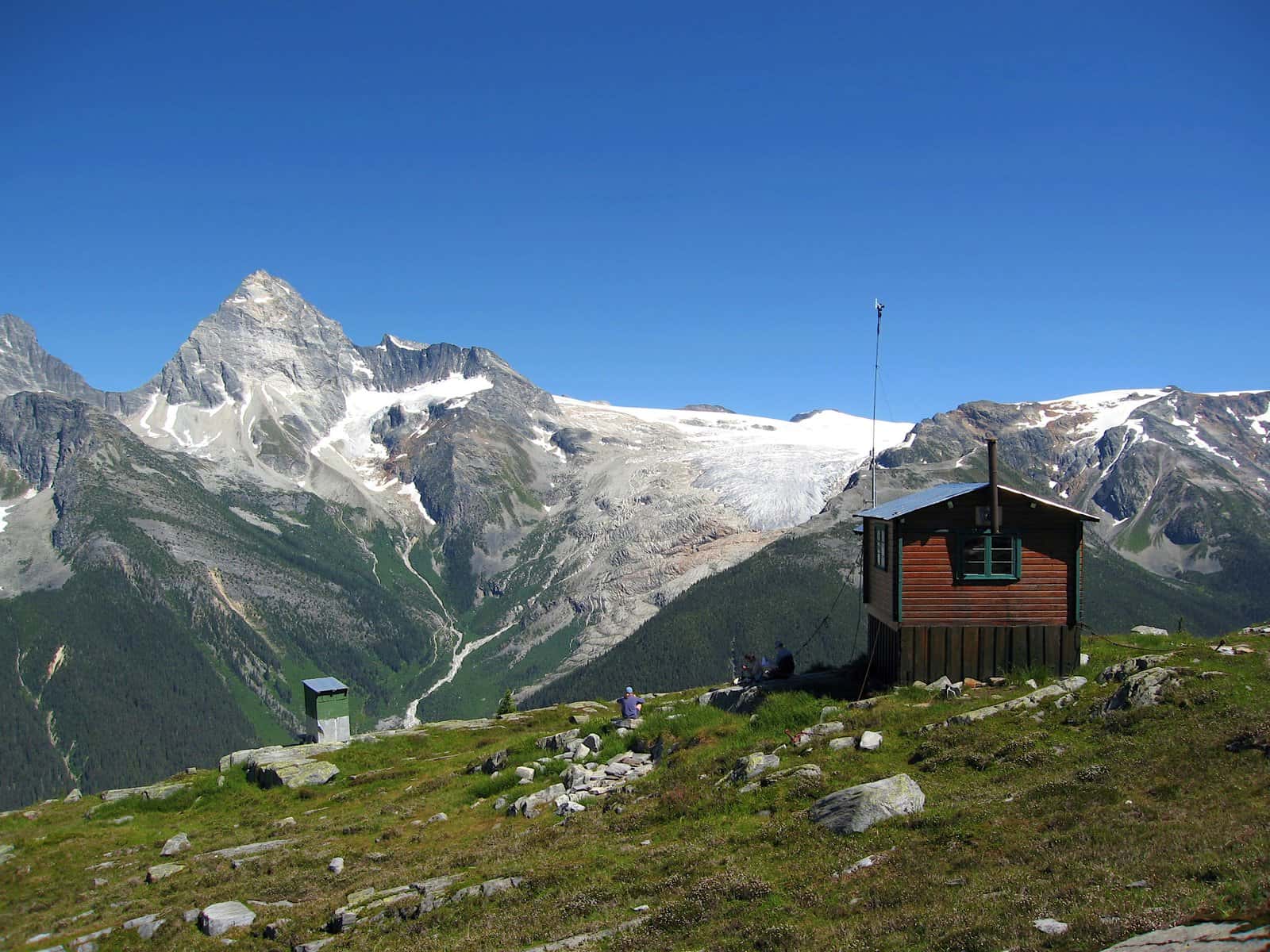
- The mountain wall across the valleyOn a clear morning you look across the valley at a long arc of Himalayan peaks. The district names Trishul, Nanda Kot, Nanda Ghunti and Nanda Devi, and visitors regularly add Panchachuli to that list. Early light is best, so be outside with a cup of tea before the sun comes over the ridge. On a hazy day you will see nothing at all, and that is simply how Kumaon is.
- The old cottages and the abandoned buildingsThe thirteen cottages that John Abbott built still define the hill, and some of them survive. Others, including an old building that visitors describe as a former hospital, stand behind fences in ruins. They are private, unsafe, and locked. Look, photograph from outside, and walk on.
- The forest itselfOak and pine, and in spring, rhododendron. This is a very good hill for birdwatching and for butterflies, and the walking is gentle. If you have brought binoculars, this is where they earn their place in the bag. If you have brought children who need entertaining every hour, please read the traveller-type section before you book.
You will read that a Doctor Morrison performed dreadful experiments in one of these bungalows in the 1920s, and that a room called the Mukti Kothri is haunted. We could find no historical record for any of it. It is folklore, and it has grown because a locked church, a fenced ruin and a few colonial graves in a pine wood will always grow a story. Enjoy it as a story around a bonfire. Do not book a trip believing it is history, and be very wary of any page that tells it to you as fact.
Things to do in Abbott Mount, and the honest answer about doing nothing
A traveller on TripAdvisor answered the question best when asked what there is to do here: absolutely nothing. That is the point of the place. Here is how to spend the nothing well, and what to add nearby if you want more.
- Walk the hill, slowlyToday you simply walk. The circuit of the hamlet, past the cottages, the church and the field, takes an easy hour, and you will meet almost nobody. Do it once in the early morning for the light and once in the late afternoon for the mist coming up the valley. Some stays keep bicycles you can borrow, which is a pleasant way to cover the lanes.
- Sit on the field at sunsetTake a flask of tea to the cricket ground in the evening and stay until the light goes. The valley fills with cloud below you and the peaks turn pink above. This is the memory people carry away from Abbott Mount, and it costs nothing at all.
- Visit Mayavati, the Advaita Ashrama, with respectAbout 9 km from Lohaghat, at about 1,940 m, stands the ashram that Swami Vivekananda founded in 1899 and from which the journal Prabuddha Bharata has been published ever since. There is a library and a small museum. It is a place of profound quiet. Read the ashram's rules carefully in the logistics section below before you plan anything. Visitors report that photography is not allowed inside the compound, and the ashram states plainly on its own guest-house page that it is not a place for tourism and sightseeing.
- Climb to Banasur ka KilaAbout 7 km from Lohaghat, an easy uphill walk of about 2 km from the road brings you to the broken walls of a hill fort. Entry is free, and eUttaranchal suggests giving the whole outing about 2 hours. Tradition holds it to be the stronghold of the demon Banasur, who was defeated by Lord Krishna. It is a lovely, easy morning outing with views over the valley, and it gives your legs something to do.
- Angling for mahseer at PancheshwarAbout 40 km from Lohaghat, the Kali (Mahakali) and the Saryu meet on the Nepal border at Pancheshwar, one of the classic golden mahseer waters of India, and Abbott Mount is often used as the base for it. Angling is by permit only. The Uttarakhand Department of Fisheries runs its angling programme through identified river beats allocated to local cooperatives and groups, and it is those groups that issue the permits to Indian and international anglers, so arrange yours before you travel. Mahseer angling here is run on a catch-and-release basis, so confirm the rule for your beat when you take the permit. The golden mahseer is under real pressure, so if you fish here, fish gently and put every one back.
- Add the old capital of KumaonChampawat town, about 13 to 14 km below Lohaghat, was once the capital of the Kumaon kingdom, and the Baleshwar temple group there is the finest stone temple work in the district. Kumaon's tea gardens are being revived around here too. It makes a very good half day if the weather has closed in on the hill.
If you do only one thing slowly at Abbott Mount, make it the early morning. Get up before sunrise, put on everything warm you have, walk out onto the field alone, and wait. Either the mountains come or the mist does, and both are worth the cold. Travellers who complain that Abbott Mount is boring are almost always people who arrived late, slept in and left by noon. Give the hill a dawn and it gives you something back.
Where to stay at Abbott Mount, and the booking rules that matter
You have three real choices: the KMVN log huts on the hill, the private colonial cottages, or a simple hotel down in Lohaghat. All of them need booking ahead, because there is almost nothing here.
- KMVN Tourist Rest House, the Gold Crest Eco Log HutsThe government-run Kumaon Mandal Vikas Nigam property on the hill is the most reliable booking. Guests describe wood-lined cottages with sitting rooms, verandahs and geysers, opened to the public in April 2022, with the property itself acting as the viewpoint. It is booked online at kmvn.in. The rules are firm: 100% advance at the time of booking, check-in from about 1 pm and check-out by about 11 am, and you must carry your booking receipt and a photo ID or the rest house will not honour the booking.
- The KMVN small print worth readingAn extra person above 5 years of age is charged at 20% of the room rent, and an extra bed costs about 200 rupees per bed per day, subject to availability. On cancellation you get back about 90% if you cancel 15 days or more before check-in, about 75% at 10 to 14 days, about 50% at 5 to 9 days, and nothing under 5 days. In the hills, plans change, so book with those slabs in mind.
- The private colonial cottagesSome of the original thirteen cottages are run as heritage stays, and they are the reason many people come. Be clear-eyed: reviews are honest that these are old buildings and the maintenance is uneven, so ask specific questions about heating, hot water and food before you pay. Ask especially about meals, because there is no eatery on the hill and, as eUttaranchal's food guide says, some cottages include meals while others expect you to bring supplies for the caretaker to cook.
- Lohaghat, the practical baseLohaghat, about 7 km below, has a proper bazaar and a choice of simple hotels. If your budget is tight, if you are travelling without a car, or if you want to be near shops, a chemist and a cash machine, staying in Lohaghat and driving up to Abbott Mount for sunrise and sunset is a perfectly sensible plan and it is what many Indian families quietly do.
- Mayavati Ashram is not a hotelThe ashram has a guest house and it charges no fee, but it is not accommodation in the ordinary sense and you cannot simply turn up. See the rules in the logistics section. Please do not treat a place of meditation as a cheap room.
There is no walk-in market at Abbott Mount. There are only a handful of rooms on the whole hill, no reception desk to shop around at, and no eatery to fall back on if your stay does not serve food. Confirm your room, confirm your meals, confirm your transport from Lohaghat, and confirm that someone will be there to open the door. Do all four before you set out, and this becomes one of the easiest places in Uttarakhand to enjoy.
Abbott Mount costs and budget, with the numbers we can actually source
We will not invent a price for you. Room tariffs here move with the season and nobody publishes a fixed public rate, so here is exactly what we can source, what we cannot, and how to build a realistic budget around it.
- The numbers we can sourceThe KMVN extra bed is about 200 rupees per bed per day and an extra person above 5 years is charged at 20% of the room rent. The Advaita Ashrama guest house at Mayavati charges no fee at all, though donations are welcome. A local car hired for the short Lohaghat to Mayavati round trip cost a travel writer about 400 rupees, which gives you a feel for local hire rates, though that figure is some years old and you should expect more today.
- The numbers nobody publishes, and why we will not guessNeither KMVN nor the private cottages publish a firm public tariff we could open and verify, and rates change between season and off season. Any page that gives you a confident room price for Abbott Mount is guessing. Check live rates on kmvn.in and on the booking sites for your own dates, and remember KMVN takes 100% advance.
- Where your money actually goesOn a trip like this the two real costs are your room and your car. Sightseeing is almost free: the church, the field, the walks and the view cost nothing, Banasur ka Kila costs nothing, and the ashram costs nothing. What you will pay for is the vehicle that carries you up from Tanakpur or Lohaghat and takes you out to Mayavati, Banasur ka Kila and Pancheshwar, because there is no useful public transport for any of it.
- Carry cash, and carry more than you thinkThere is no ATM at Abbott Mount. The nearest cash machine is down in Lohaghat, about 7 km away, and hill ATMs run dry. Draw your cash in Tanakpur or Champawat where the towns are bigger, keep small notes for tea, tips and shared taxis, and do not assume that a card or a UPI scan will work on the hill.
- Fuel, before you climbThere is no petrol pump at Abbott Mount either. Fill up in Lohaghat, or better still in Tanakpur or Champawat, and go up with a full tank. It is a small thing that saves a wasted morning.
The biggest single cost of an Abbott Mount trip is not the room, it is the distance. Delhi to Abbott Mount is about 437 to 446 km each way and a full day of driving in each direction. If you are hiring a car for the round trip you are paying for those two days whether you enjoy them or not. That is why we say plainly that this is a poor choice for a two-day weekend and an excellent choice for four or five days, ideally as part of a wider Kumaon route.
Practical logistics: facilities, food, signal, and the Mayavati Ashram rules
This is the section that changes your trip. Abbott Mount has no ATM, no fuel pump and no restaurant, the power is unreliable, and the ashram next door has written rules that almost no travel page tells you about.
- What simply does not exist hereThere is no cash machine, no petrol pump and no independent restaurant or cafe at Abbott Mount that you can simply walk into. The bank and the fuel pump are in Lohaghat, about 7 km below. Be precise about the food, because this is the one point the guidebooks muddle: there is no eatery on the hill, but the KMVN rest house runs its own kitchen and dining room for its guests, and the private cottages will cook for you if you arrange it in advance. The grid power supply is erratic and load shedding is normal, so carry a power bank and a torch, and if your stay offers a bonfire, take it. There is also no proper waste disposal, so carry your plastic back down with you. This is a hamlet, not a hill station, and packing for it correctly is most of the battle.
- Food, and the question to ask before you bookBecause there is no eatery you can walk into, your stay is your kitchen. eUttaranchal's food guide puts it plainly: some cottages include meals in the package, others ask you to bring your own supplies, and the cottage kitchens are equipped with utensils while the caretakers help with the cooking. The KMVN rest house runs its own dining room, and one guest reported that breakfast was complimentary. Ask exactly what is included before you pay, and mention any vegetarian, Jain or no-onion-garlic requirement in advance, because there is no second option up here. Down in Lohaghat bazaar you will find honest Kumaoni food, and while you are in Kumaon you must try bal mithai, aloo ke gutke, bhatt ki churkani and madua roti.
- Mobile signal and internetSignal on the hill is patchy and travellers have reported almost no connectivity around the playground. In Lohaghat and Champawat the major networks work, though the strength fluctuates. Download your maps offline before you leave Tanakpur, tell your family you may be out of touch for a day, and enjoy it. Being unreachable is part of what you are paying for.
- The Mayavati Ashram rules, straight from the ashramPlease read this before you plan a visit. The Advaita Ashrama states on its own guest-house page that Mayavati is a place for meditation and Advaita practice and is not a place for tourism and sightseeing, and that there is no temple there. Children below 12 years are not allowed. Travellers above 70 years are strongly advised not to come, and so is anyone with high blood pressure, cardiac disease or arthritis, because of the altitude. Smoking and alcohol are strictly prohibited on the premises.
- How a Mayavati stay is actually bookedA stay is a minimum of 2 nights and a maximum of 3 nights. Applications are accepted only through the ashram's online form, not by email, not by post and not in person. The ashram charges no fee, though donations are welcome. It tells you clearly to book your travel tickets only after you receive its written confirmation letter. For 2026 it lists a guest season of about 23 September to 20 November, with booking opening about 1 June 2026, and it does not accept bookings during its retreat blocks of about 12 to 22 September, 1 to 8 October, 26 October to 2 November and 10 to 20 November 2026. Dates change, so always reconfirm on the ashram's own page.
- Language, dress and courtesyHindi and Kumaoni are spoken here and English is understood at the stays. Dress warmly and dress modestly, especially at Mayavati and at the temples of Champawat. Remove your shoes where you are asked to. Greet the people you pass on the lanes, because in a hamlet of this size you will pass the same people again tomorrow.
This is the mistake we most want to save you from. Travel pages list Mayavati Ashram as a sightseeing attraction, so families drive up with small children expecting to look around and perhaps stay the night. The ashram's own rules say children below 12 are not allowed, that a stay must be applied for online in advance and confirmed in writing, and that the place is not for tourism. Respect that. If you want darshan of the spirit of Swami Vivekananda's Advaita Ashrama, apply properly, in season, and come as a seeker rather than a sightseer.
Safety, mountain roads, health and the things that actually go wrong
Abbott Mount is one of the safest, gentlest places you can travel to in India. The genuine risks here are not crime at all: they are the road, the cold, the dark, and being far from a hospital.
- The road is the real riskThe climb from Tanakpur through Champawat is a mountain highway with rockfall, and blockages happen. A travel writer heading to Champawat lost eight hours to a single boulder that came down and stopped the road completely, and that was not even the monsoon. Never drive these roads at night. Start early, keep a day of slack in your plan, and if the weather turns, stop where you are rather than pushing on.
- Cold, dark and altitudeAt about 1,980 m the nights are cold from October onwards and can be bitter in January. The power supply is unreliable, so a cold night can also be an unlit one. Carry warm layers, a torch and a power bank. Altitude sickness is not a serious concern at this height for most people, but the Advaita Ashrama at nearby Mayavati specifically advises against travel for anyone with high blood pressure, cardiac disease or arthritis, and that advice is worth taking seriously for your whole trip, not only for the ashram.
- Medical help, and how far it isThere is no hospital on the hill. Lohaghat has basic facilities, Champawat is the district headquarters, and anything serious means a long drive down. Carry your regular medicines with you in the car rather than in a bag on the roof, bring a basic first-aid kit, and if you travel with elderly parents, keep their prescriptions and a note of their conditions on paper as well as on a phone that may have no signal.
- Solo travellers and solo womenThis is a quiet, family-oriented, very low-crime corner of Kumaon, and travellers including solo women have moved through it without trouble. The sensible cautions are practical ones rather than fearful ones: the hamlet is dark and empty at night, so do not go wandering alone after sunset, tell your stay where you are walking, keep your phone charged for the stretches where there is signal, and prefer a taxi arranged by your hotel to one flagged at random.
- Water, food and the small stuffDrink filtered or bottled water, and carry a bottle on your walks, because there is nowhere to buy one. Leeches appear in the forest during the rains. Dogs on the hill are generally friendly but keep your distance. And if you are here in winter, remember that a wet stone path at 7,000 ft is slippery in a way that a wet path at home is not.
Abbott Mount survives because almost nobody comes. The forest is home to Himalayan birds and butterflies, the graves in the churchyard belong to somebody's family, and the ruins are not a playground. Take your plastic back down with you, because there is no waste disposal system here. Do not play loud music on the field. Do not climb into the abandoned buildings for a photograph. And if you fish at Pancheshwar, take your permit, and put the mahseer back.
Who Abbott Mount is for, who it is not for, and a word on access
This is a place with a very particular character. It is close to perfect for some travellers and a genuine mistake for others, and we would rather tell you that now than have you drive about 446 km to find out.
- CouplesClose to ideal. A wooden cottage, a bonfire, an empty cricket field at sunset and no crowd anywhere. Take two nights, not one, so that you are not spending your whole stay in the car. This is one of the few hill destinations in Uttarakhand where you will genuinely be left alone.
- Families with young childrenBe honest with yourself. There are no rides, no cafes, no market and no wifi you can rely on, and a child who needs a new activity every hour will be miserable. A child who will happily run on a big green field, look for birds and hear ghost stories by a fire will love it. Also note that Mayavati Ashram does not allow children below 12 years, so do not build the trip around a visit there.
- Senior travellers, and on accessibilityVery doable and, in the right season, lovely. The hamlet is small and the walking is gentle and mostly flat once you are up. Come between October and early December when the air is clear and the days are mild, stay at the KMVN huts so you are already at the viewpoint, and arrange a car for the outings so nobody has to walk far. Do keep in mind that the roads up are long and winding, that the nights are cold, that the power may fail, and that serious medical help is a long drive away. If your parents have heart or blood-pressure trouble, please take the ashram's own health warning seriously and speak to your doctor first.
- Solo travellers, writers and readersThis is probably the best kind of visitor Abbott Mount gets. If you want somewhere in India to finish a book, write, think or simply be quiet for a week, few places do it better, and the KMVN huts make a long stay easy. Bring more to read than you think you need.
- Birdwatchers and photographersExcellent, and under-visited. Oak and pine forest, rhododendron in spring, butterflies in summer, and a Himalayan skyline in autumn. Bring your own long lens and your own patience, and be ready for the view to simply not appear on a hazy day.
- Who should not comeIf you want nightlife, shopping, restaurants, reliable wifi or a packed sightseeing list, you will not enjoy Abbott Mount, and you should choose Nainital or Mussoorie instead. There is no shame in that. This hill asks you to slow down, and it is not kind to people who cannot.
How many days do you need, and a suggested Abbott Mount itinerary
Two nights on the hill is the minimum that makes sense, and four to five days from Delhi is the honest length of this trip. Here is how the days actually fall.
- Day one: get yourself into the hillsToday you travel. Take the morning train from Old Delhi to Tanakpur, or start driving before dawn. Either way you will arrive in the hills in the late afternoon. If you are driving, we strongly suggest you stop the night at Champawat or Lohaghat rather than pushing up the last narrow stretch in the dark. Eat early, sleep early, and let the mountains wait until morning.
- Day two: arrive at Abbott Mount and do nothingDrive up the last 7 to 8 km from Lohaghat in the morning light. Settle into your cottage, then walk the hamlet: the lanes, the cottages, the locked church of 1942, the graves under the pines. Take tea onto the cricket field in the late afternoon and stay there until the light goes. If your stay lights a bonfire, this is the night for the ghost stories, told as stories.
- Day three: the mountains, then Mayavati and Banasur ka KilaBe outside before sunrise, because this is your first proper chance at the peaks. After breakfast, drive out to Mayavati if, and only if, you have a confirmed booking or the ashram permits a visit, and go on to Banasur ka Kila for the short walk up to the fort. Come back in the afternoon, and give the field one more evening.
- Day four: your second sunrise, and outThis is why you stayed two nights. If the first dawn was hazy, this is your second chance at the arc of peaks, and it very often comes. After breakfast, drive down. If you have the time and the interest, break the descent at Champawat for the Baleshwar temple group and the old capital of Kumaon, then continue to Tanakpur.
- If you have longer: the full Kumaon loopAbbott Mount is at the far eastern end of Kumaon, so if you have a week or more, do not come and go the same way. Continue north to Pithoragarh and Munsiyari, or swing west to Chaukori, Patal Bhuvaneshwar, Binsar and Kausani. That is very close to the shape of our own Kumaon Tour, which runs Delhi, Bhowali, Binsar, Chaukori, Patal Bhuvaneshwar, Kausani, Nainital and back over about eight days, and Abbott Mount slots into it beautifully as the quiet, colonial, offbeat chapter.
We would rather tell you this than sell you a trip you regret. Delhi to Abbott Mount is about 437 to 446 km and a full day of driving in each direction. Squeeze that into a Saturday and Sunday and you will spend two days in a car for a few hours on a hill that is designed for doing nothing slowly. Give it four days at the very least, five if you can, or fold it into a longer Kumaon route. The place rewards patience and punishes hurry.
The real questions travellers ask about Abbott Mount
These are the questions that come up again and again on TripAdvisor and in trip reports. Here are the straight answers, so you arrive already knowing the score.
- Is there actually anything to do here?Almost nothing, and that is the honest answer a long-time visitor gives on TripAdvisor as well. You walk, you sit on the field, you look at the mountains, you read, you cycle a little, and you sleep well. If that sounds wonderful to you, come. If it sounds like a wasted holiday, please choose somewhere else with a clear conscience.
- Will I really see the Himalayan peaks?Sometimes. When the air is clear you look across the valley at a long arc of peaks, with Trishul, Nanda Kot, Nanda Ghunti, Nanda Devi and often Panchachuli. Trip reports call it a 360 degree view and a KMVN guest called it a 180 degree sweep, so the honest answer is that it is wide, and how wide depends on where you stand. But it is completely weather dependent, and travellers have had bright sunny days on which no peak appeared at all. October to early December gives you the best odds, and two mornings give you far better odds than one.
- Can I stay at Mayavati Ashram, and can I take my children?You cannot walk in, and children below 12 are not allowed. The ashram takes applications only through its online form, confirms in writing, allows a stay of 2 to 3 nights, charges no fee, and runs a limited guest season. It also says clearly that it is not a place for tourism. Apply properly and in advance, or simply do not plan on it.
- Is it haunted?There is a locked church from 1942, some old graves and a ruined building behind a fence, and a lot of stories about a doctor and a room called the Mukti Kothri. We could find no historical record for any of it. It is folklore. It is atmospheric and it is fun to tell around a fire, but do not travel here believing you are visiting a documented haunting.
- Is there an ATM or a restaurant?There is no cash machine and no petrol pump at Abbott Mount, and there is no independent restaurant or cafe you can walk into. The bank and the fuel are in Lohaghat, about 7 km below. On food, be precise, because this is where other pages will mislead you: the KMVN rest house has its own kitchen and dining room for its guests, and the cottages will cook for you if you arrange it, so you will eat, but only through your stay. Draw your cash and fill your tank in Tanakpur, Champawat or Lohaghat before you climb, and settle your meals with your stay in advance.
- How do I get up there without a car?Buses and taxis run as far as Lohaghat. From Lohaghat you take a shared or private taxi for the last 7 to 8 km, and there is no useful public transport for that stretch. The simplest thing is to ask your stay to send a car to meet your bus or your train, and to keep the same driver for your outings to Mayavati, Banasur ka Kila and Pancheshwar.
- Is a weekend from Delhi enough?Honestly, no. It is about 437 to 446 km each way and a full day of driving in each direction. Four days is the sensible minimum and five is better, or fold it into a longer Kumaon route that also takes in Binsar, Chaukori and Kausani.
Planning Abbott Mount from abroad
For an overseas or NRI traveller, Abbott Mount is the deep, quiet, unpolished India that a first-time visitor rarely reaches. It is easy to enjoy and easy to get wrong, and the difference is preparation.
- Understand what you are coming toThis is a hamlet of about thirteen old cottages, a locked church and a cricket field, at about 1,980 m in eastern Kumaon. There are no shops, no cash machine and no eatery you can walk into, and the grid electricity is unreliable, though the KMVN huts do list their own power backup. If you have travelled in India before and loved the quiet places, you will love this. If this is your first visit to India, put Abbott Mount at the end of your trip, not the beginning.
- Give it enough time, and do not fly into Pantnagar blindlyLand in Delhi, rest a night, and then take the Purnagiri Jan Shatabdi train to Tanakpur or drive. Pantnagar airport is about 180 to 188 km away but has only limited flights, so do not plan a tight connection through it. Allow at least four days for the whole Abbott Mount leg, and more if you are adding the rest of Kumaon.
- Carry cash, and arrange your car in advanceCards and UPI cannot be relied upon here. Draw rupees in Delhi and again in Tanakpur or Champawat. Hire a car with a driver for the hills rather than trying to self-drive or piece together shared taxis, and keep the same driver for the whole leg. It is far safer on these roads and, split across a family, it is not expensive.
- The Kumaon heritage angle for NRI familiesFor a family with Kumaoni roots, this corner is worth the effort. Champawat was the old capital of the Kumaon kingdom, its Baleshwar temple group is the finest stone work in the district, the tea gardens are being revived, and the Advaita Ashrama at Mayavati has been publishing Prabuddha Bharata since Swami Vivekananda's time. Bring your parents, bring your children, and let them see where the family's hills actually begin.
- Please respect the ashramIf Mayavati is part of why you are coming, read the ashram's rules and follow them exactly. Apply online in advance, wait for the written confirmation, book your tickets only after it arrives, leave your camera in the car, do not bring children below 12, and do not smoke or drink on the premises. It is a place of sadhana, not a photo stop.
There is no tourist industry here to manage you. Nobody will follow you with a souvenir, nobody will quote you a foreigner price for a cup of tea, and nobody is trying to sell you anything at all. You will simply be a guest in a very small, very old, very quiet place, and the people you meet will treat you as one. That is rarer in India than any monument, and it is the reason travellers who find Abbott Mount tend to keep it to themselves.
Money, connectivity and health for foreign visitors to Abbott Mount
The practical basics for a remote hamlet with no bank, no chemist and an unreliable phone signal, and how many days to give it inside a bigger India trip.
- Get your Indian SIM or eSIM before you leave DelhiBuy your SIM at the airport or in the city, not in the hills, where a foreign passport and a small shop are a difficult combination. Even then, expect the signal at Abbott Mount itself to be patchy or absent, with better coverage down in Lohaghat and Champawat. Download offline maps and save your bookings as screenshots before you leave the plains.
- Money, and the last reliable ATMTreat Tanakpur or Champawat as your last dependable cash machine. There is no ATM at Abbott Mount and the nearest one is in Lohaghat. Carry enough rupees for your whole stay plus your driver's expenses, keep small notes, and do not count on a card being accepted anywhere on the hill.
- Health, altitude and insuranceAt about 1,980 m this is not high altitude, but it is remote. There is no hospital on the hill. Bring your regular medication, a basic first-aid kit and good travel insurance that covers a road evacuation, and carry a paper note of your conditions and prescriptions in case there is no signal. If you have a heart condition, high blood pressure or arthritis, note that the Advaita Ashrama specifically advises such travellers against coming up to Mayavati, and speak to your doctor before you plan this leg.
- How long to give it inside a bigger India tripFour to five days for the Abbott Mount leg, including the travel days from Delhi. It fits best at the end of a Kumaon route that has already taken you through Nainital, Binsar, Kausani or Chaukori, when you are tired of moving and ready to stop. It does not fit at all as a quick add-on to a Golden Triangle trip, and we would rather say so than take your money for a bad itinerary.
The valley below this hill was once the most dangerous place on earth
Before Abbott Mount was a quiet hamlet, these valleys were emptied by fear. A tigress, injured by a bullet that broke the canine teeth on the right side of her jaw so that she could no longer hunt her natural prey, crossed over from Nepal into Kumaon and began to take people instead. She is credited with about 436 human deaths, the highest number ever attributed to a single animal. Villages stopped sending their children out. Fields went unploughed. Then, in the spring of 1907, a young man from Nainital named Jim Corbett followed the blood trail of her last victim, a sixteen-year-old girl from the village of Fungar near Champawat, into the gorge of the Champa river. On 12 May 1907, after a beat driven by close to three hundred villagers, he shot her. Corbett went on to become India's greatest hunter of man-eaters and then, more importantly, one of her first great conservationists, and the national park that bears his name was the first in India. When you stand on the cricket field at Abbott Mount and look down at those green, silent, ordinary valleys, remember what they were, and remember the girl from Fungar.
Planning a Abbott Mount trip?
Our Uttarakhand travel experts plan your full journey for you: route, hotels, darshan timings and transport. You get a free day-by-day plan and an exact quote on WhatsApp, usually within a few hours. No payment is needed to get your plan.