Auli Travel Guide
There are two Aulis. The ski season runs roughly late December to March, with the most reliable snow in January and February. The green season , April to June and September to...
When to visit Auli, for snow or for meadows
There are two Aulis. The ski season runs roughly late December to March, with the most reliable snow in January and February. The green season, April to June and September to November, is for meadows, clear peaks and trekking. Decide which trip you want before you book.
- January and February: peak snowThe most reliable skiing months, with the heaviest snow and temperatures that can drop to about minus 8 degrees Celsius. This is when you are most likely to find real powder on the slopes, but pack genuine winter layers and expect the road from Joshimath to be slow or briefly blocked after a heavy fall.
- Late December and March: shoulder snowThe season usually opens around late December and tapers through March. Snow is less certain at either end, so a December or March trip is a gamble on the weather. Lovely when it lands, but do not book purely for skiing without checking the recent snow situation.
- April to June: meadows and viewsThe green window. The bugyals turn to wildflower meadow, the Himalayan peaks are at their clearest, and the weather is mild and pleasant. This is the time for Gorson Bugyal, the artificial lake and the longer treks rather than snow.
- September to November: clear and quietPost-monsoon air is crisp and visibility is excellent, so the Nanda Devi and Trishul views are superb. Avoid the July to August monsoon, when rain and landslide risk make the mountain roads genuinely dangerous in this belt.
Auli is a real mountain, not a machine-made resort, so how much snow you find depends on the year and the week. Travellers on TripAdvisor and IndiaMike regularly arrive in late December or March expecting deep powder and find patchy cover. If skiing is the whole point of your trip, aim for mid-January to mid-February, check the most recent snow reports before you commit, and treat any earlier or later date as a bonus rather than a promise.
How to reach Auli, and the ropeway truth
Auli has no airport or railway. Everyone comes through Joshimath after a long mountain drive from Rishikesh, Haridwar or Dehradun. The old cable car from Joshimath is suspended, so plan to reach the slopes by road and the chair lift.
- Nearest railheads and airportThe nearest railway stations are Rishikesh, about 256 km away, and Haridwar, about 273 to 299 km; the nearest airport is Jolly Grant at Dehradun, about 272 to 273 km. From any of them it is a long mountain drive, so this is not a fly-in resort.
- The drive to JoshimathFrom Rishikesh, Haridwar or Dehradun to Joshimath is roughly 9 to 11 hours of winding hill road following the Alaknanda. Do not try to drive it in one push from Delhi; break the journey with a night at Rishikesh, Devprayag or Srinagar Garhwal, then continue.
- Joshimath to Auli, the last legJoshimath is the gateway town, 16 km below Auli. With the ropeway suspended, you cover the roughly 13 to 16 km road up to Auli by shared jeep, taxi or 4x4, then take the GMVN chair lift the short hop to the slopes. In heavy snow the road may need a 4x4 with chains.
- From Delhi overallDelhi to Auli is a serious mountain journey, realistically two days each way by road or one long day plus the climb. Most travellers take an overnight train or bus to Haridwar or Rishikesh, then a shared or private vehicle up. We can arrange a car with an experienced hill driver.
Be clear before you plan: the Joshimath to Auli cable car, once about 4.15 km long with a round-trip fare of about 1,000 rupees, has been suspended since January 2023 after land subsidence damaged several of its towers. A reconstruction plan worth about 480 crore rupees has been reported, but there is no confirmed reopening date. Many blogs and operator pages still sell the ropeway as a working highlight and quote the old fare, which is wrong. For now, reach Auli by road plus the chair lift, and confirm the ropeway status with GMVN or the official Uttarakhand heli-services portal before you build a trip around it.
Fly into Delhi, the main international gateway, then take a train or flight to Dehradun or a train to Haridwar or Rishikesh, and drive up to Joshimath and Auli over one to two days. There are no flights or trains to Auli itself.
Fly into Delhi, then on to Dehradun (Jolly Grant) for the shortest road approach, about 272 km to Joshimath. Allow a full day for the mountain drive each way.
Take a train to Haridwar or Rishikesh, or fly to Dehradun, then drive up via Devprayag, Rudraprayag, Karnaprayag and Chamoli to Joshimath, and on to Auli. The rail and road combination through Haridwar is the most common way in.
Getting around Auli and the chair lift
Auli is small and spread along the slope. The GMVN chair lift, short walks and shared jeeps cover most of it, and a 4x4 matters when the road is under snow.
- The GMVN chair liftThe chair lift carries you the short hop between the GMVN complex and the ski slopes near the artificial lake. It is about 800 metres long with a travel time of roughly 5 minutes, and the two-way fare is about 500 rupees per person, though some notices still show about 300 rupees, so reconfirm at the counter. There is no fixed timetable; it runs through its operational hours, which vary with season and weather.
- On footWithin Auli, the artificial lake is an easy walk of about 2 km, roughly 15 minutes plus a short trek, from the GMVN rest house, and Gorson Bugyal is a 3 to 4 km walk up. At nearly 3,000 metres take these slowly, especially on your first day.
- Shared jeeps and taxisShared jeeps and taxis link Joshimath and Auli along the 13 to 16 km road. They are the practical way up and down with luggage or ski gear, and the only realistic option while the ropeway is suspended.
- When it snowsAfter a heavy fall the Joshimath to Auli road can need a 4x4 with chains, and may close briefly until it is cleared. Build a buffer day into a ski trip so a blocked road does not cost you the slopes entirely, and never push a two-wheel-drive car up an icy gradient.
The slopes, the lake and the Himalayan skyline
Auli is its ski slopes, the high artificial lake, the Gorson Bugyal meadow and the wall of Himalayan peaks. A few sit right by the resort; others are a short trek away.
- The ski slopesThe heart of Auli: about 5 km of slopes descending from roughly 3,049 metres to 3,015 metres, lined with oak and conifer, gentle enough for beginners yet long enough for seasoned skiers. The French-built ski lift here is one of the longest in the country. Even out of season the slope walk gives the best of the views.
- The Auli artificial lakeOne of the highest man-made lakes in the world, built to feed the snow guns and extend the ski season. It is a free, easy walk of about 2 km from the GMVN rest house and a quiet spot for the peak panorama, frozen and photogenic in deep winter.
- Gorson BugyalA high alpine meadow at over 3,000 metres, about 3 to 4 km up through the forest. Snow-blanketed in winter and a wildflower meadow in summer, it is the classic short trek from Auli and the gateway to the longer Kuari Pass route.
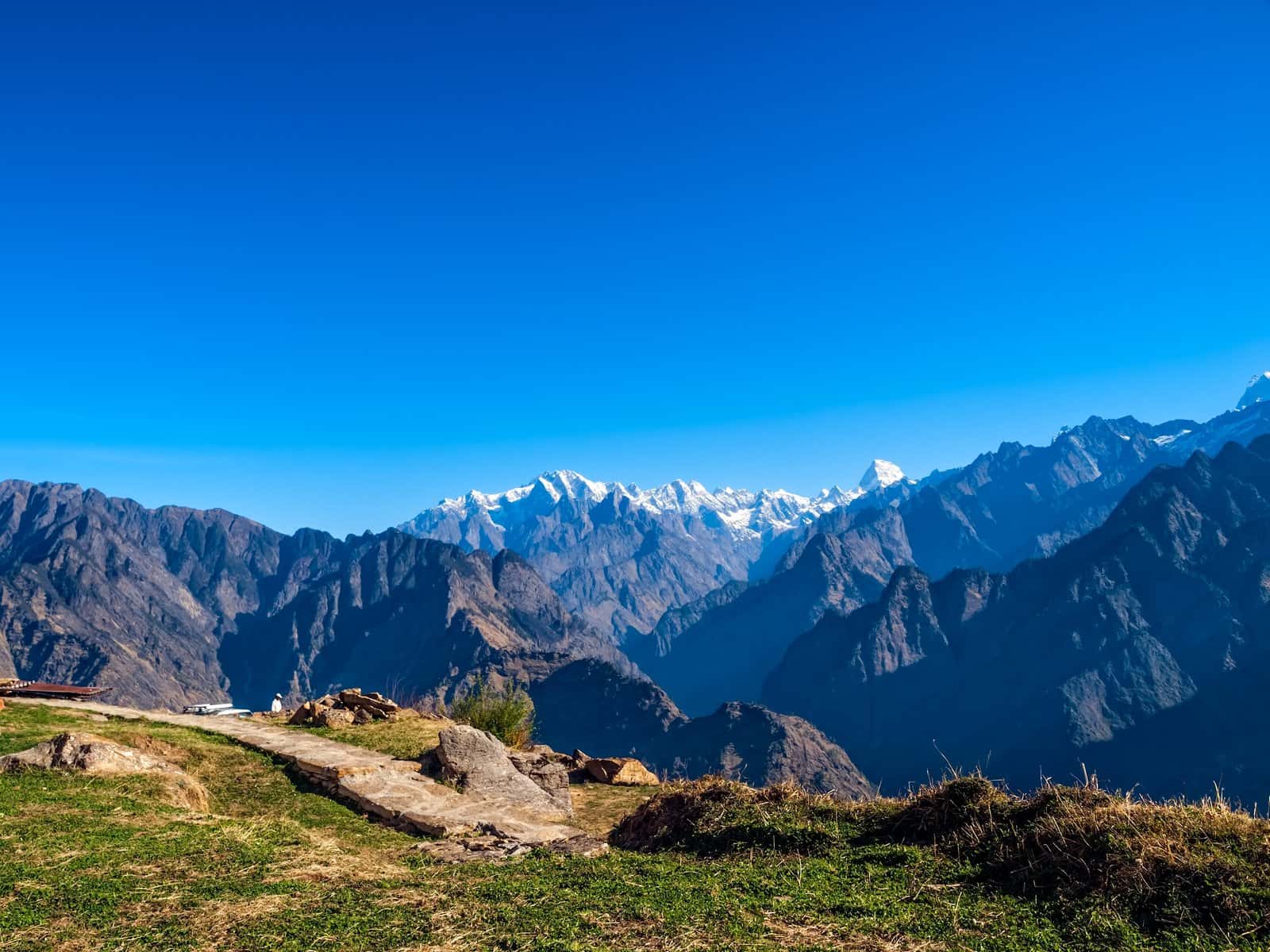
- The Himalayan viewpointsOn a clear morning the slopes and the upper viewpoints frame Nanda Devi, India's second highest peak, with Kamet, Mana Parvat, Dunagiri and Trishul. Catch them early before cloud builds, and bring a long lens if you have one.
- Chenab Lake and ChattrakundBeyond the resort core, Chenab Lake is a quiet glacial pool reached on a longer trek or jeep-and-walk combination, and Chattrakund is a small spring-fed pond among the meadows. Both are for travellers who want to walk further from the crowds.
- Joshimath sights belowThe gateway town has the ancient Narsingh Temple and the Adi Shankaracharya math, the winter seat of Badrinath. If you are acclimatising there for a night, they are an easy and worthwhile way to fill an afternoon.
Skiing, treks and the things people remember
Beyond the snow-selfie, these are the experiences worth your time in Auli, and how to arrange them honestly with sourced rates.
- Learn to ski with GMVN or an operatorAuli is one of the best places in India to learn. GMVN runs official 7-day and 14-day courses with meals, dormitory lodging, gear and lift passes included, and private schools offer shorter packages from about 14,000 rupees and up. If you only have a day or two, hire gear and take a single lesson, covered in the costs section.
- A day on the slopes with hired gearNo course needed for a taster. Hire skis, boots and poles, take a lesson, and ride the slope. GMVN daily hire is roughly 800 rupees for an adult ski pair and about 400 rupees for a lesson, so a first morning on snow is very affordable by world ski-resort standards.
- Trek to Gorson BugyalThe signature short walk, about 3 to 4 km up through the oak and conifer to the open meadow, snow in winter and wildflowers in summer. Go early, take it slowly at altitude, and carry water and a warm layer even on a bright day.
- Walk to the artificial lake at first lightAn easy 2 km stroll for the cleanest morning view of Nanda Devi and the snow guns reflected in the ice. Free, gentle and the kind of quiet that the crowded slope does not offer later in the day.
- Ride the chair lift for the panoramaEven if you do not ski, the short chair-lift ride at about 500 rupees two-way lifts you to the slope and the lake with a 360-degree mountain view. It saves the climb and is the easiest way for seniors and children to reach the top.
- Winter camping and the Kuari Pass trekAuli and Gorson are the launch point for snow trekking and the multi-day Kuari Pass trek, a classic beginner-friendly Himalayan crossing. Use a registered operator, the right gear and a guide, and treat the cold and the altitude with respect.
If you do only one thing slowly, make it a clear morning on the upper slope or at the artificial lake, with Nanda Devi and Trishul sharp against the sky before the cloud builds. The skiing is the headline, but the still, cold dawn over that Himalayan wall is what people remember long after the snow has melted from their photos. Give yourself an unhurried early start and Auli rewards it.
Where to stay in Auli, Joshimath or up top
Stay up in Auli to wake by the slopes, or down in Joshimath to acclimatise and save money. Two to three nights, including a Joshimath night, is the sweet spot.
- Up in Auli: by the slopesThe GMVN ski resort, with about 110 beds in deluxe rooms and a dormitory, plus private resorts around the Clifftop and GMVN area, put you on the snow at first light with the peak views from your window. Best for skiers and anyone who wants the dawn slope to themselves, but options are few and fill fast in season.
- Down in Joshimath: acclimatise and saveJoshimath at about 1,875 metres has far more guesthouses and hotels and a gentler altitude, so a night here both helps you adjust and costs less. Choose accommodation that is certified safe given the subsidence situation, and commute up to Auli by jeep for the day.
- How many nightsTwo to three nights at Auli plus a Joshimath acclimatisation night is the sweet spot: a day for the slopes, lake and chair lift, a day for Gorson Bugyal and the viewpoints, and time to travel. From Delhi the whole trip realistically needs 4 to 6 days because of the long drive.
- Book GMVN officially and earlyReserve GMVN rooms and courses on the official gmvnonline.com portal rather than through unverified resellers. In the December to February snow weeks the handful of Auli properties book out and prices climb steeply, so plan well ahead.
Auli has only a small cluster of resorts and the GMVN property, so in peak January and February snow the rooms genuinely run out and rates climb sharply. If your dates fall in the snow window, book months ahead, or base yourself in Joshimath where there is far more choice and commute up by jeep for the day.
Auli costs, ski hire and course fees
Auli is gentle on the wallet for what it offers. Here is what the lift, the gear hire and the courses cost, so you can budget and compare GMVN with private operators.
- The chair liftThe GMVN chair lift two-way fare is about 500 rupees per person, with some notices still showing about 300 rupees, so reconfirm at the counter. It is the practical way to the slopes while the 1,000 rupee ropeway is suspended.
- GMVN ski equipment hireIndicative GMVN daily rates are about 800 rupees for an adult alpine or nordic ski pair, about 600 rupees for a student pair, about 400 rupees for a ski lesson, about 500 rupees for ski gloves, about 300 rupees for goggles, about 1,200 rupees for a snowboard and about 600 rupees for a snowboard lesson, all plus GST and subject to revision.
- Ski coursesGMVN 7-day and 14-day courses bundle meals, dormitory lodging, gear, lifts and training; you pay 50 percent in advance. Private schools in Auli typically charge from about 14,000 rupees and up for a 5-to-6-night package. Compare what is included before you choose, and reconfirm current rates directly.
- Cash and connectivityAuli has very limited shops and ATMs, so carry enough cash for your stay, the lift, gear hire and tips. Draw cash and pick up a SIM in Rishikesh or Dehradun before you climb, because card and UPI acceptance up the mountain is patchy.
Keep three figures in your head and you can budget Auli without surprises: the chair lift at about 500 rupees two-way, adult ski hire at about 800 rupees a day, and a single lesson at about 400 rupees. A first day on snow with adult gear at about 800 rupees and a lesson at about 400 rupees, plus the lift, is therefore remarkable value for a Himalayan ski slope. Course fees and rooms sit on top, and everything rises in peak snow weeks, so confirm current rates with GMVN before you lock the trip.
Practical logistics: cash, SIM, power and gear
The small things that make an Auli day smooth, from carrying cash and a SIM up the mountain to dressing for real cold and patchy power.
- Carry cash and a SIM from belowAuli has very limited ATMs and shops, and connectivity is patchy. Draw enough cash and buy an Indian or tourist SIM in Rishikesh or Dehradun before you climb, and download offline maps for the drive and the treks.
- Dress for genuine coldIn the snow months temperatures fall below freezing and can reach about minus 8 degrees Celsius. Bring proper insulated layers, waterproof gloves and boots, sunglasses and strong sunscreen for the snow glare, and a warm hat. Even in the green season the early mornings are cold at altitude.
- Expect power and signal hiccupsSnow can disrupt power and mobile signal at the resort, and the road can close briefly after a heavy fall. Carry a power bank, keep devices charged, and do not rely on being reachable every hour while you are up top.
- Food and waterMeals up in Auli are mostly at your resort or the GMVN canteen, with simple options, so do not expect a wide choice of restaurants. Drink bottled or boiled water, and carry snacks and water for the slope and the treks.
Altitude, winter roads and the Joshimath question
Auli is welcoming, but the altitude, the winter roads and the Joshimath subsidence are real. A little awareness keeps the trip safe and your conscience clear.
- Altitude and acute mountain sicknessAuli sits at nearly 3,000 metres, high enough that some visitors who climb straight from the plains get acute mountain sickness, with headache, nausea, breathlessness or poor sleep. Spend a night at Joshimath, about 1,875 metres, to acclimatise, climb gently, stay hydrated, and descend if symptoms worsen rather than pushing on.
- Winter driving and road closuresThe Joshimath to Auli road and the approach from the plains are winding hill roads that snow and rain can block or make icy. Use a 4x4 with chains in snow, never push a two-wheel-drive up an icy gradient, avoid driving the mountain road after dark, and build a buffer day so a brief closure does not wreck the trip.
- Skiing safelyTake a lesson before you ride a slope, wear the goggles and gloves, and do not attempt the longer runs as a beginner. The snow guns and the lift are managed, but you are responsible for skiing within your level. Cold and altitude tire you faster than you expect, so stop before you are exhausted.
- Monsoon and landslide seasonAvoid July and August. The monsoon brings heavy rain and a real landslide risk across this stretch of the Garhwal Himalaya, and the same rain can accelerate the Joshimath subsidence, so it is the wrong time to be on these roads.
Joshimath, the gateway town below Auli, was declared a land-subsidence zone in January 2023 after cracks appeared in many buildings. Surveys reported over 1,400 of about 2,150 houses affected, with the most unstable buildings evacuated, and as of 2026 scientists say the subsidence continues slowly and that monsoon rain can accelerate it. Auli itself sits higher up, but travel responsibly: stay in accommodation certified safe, do not gawk at damaged homes or treat a town in distress as a backdrop, follow district advisories, and keep your spending with local people who depend on it. If that gives you pause, it should, and an honest page would rather you knew than not.
Auli for every kind of traveller, and on access
Auli suits very different visitors in different ways. Here is what it offers you and the one tip that matters for each, including how a senior or a nervous beginner manages it.
- Couples and honeymoonersQuiet, snowy and romantic, with the chair lift, the lake walk and the dawn peaks. Stay up in Auli for a night to catch the sunrise over Nanda Devi, and pick a clear-weather window if you can for the views.
- Families with childrenThe gentle slopes and the chair lift make Auli good for a first snow experience. Watch children closely for altitude symptoms, keep them warm and hydrated, and let them play on the easy slopes rather than the long runs.
- Senior travellers and on accessibilityDoable with planning. Acclimatise at Joshimath, use the chair lift rather than climbing to the slopes, keep the first day gentle, and skip the long treks if the altitude tires you. The long mountain drive is the hardest part, so break it with overnight stops and travel by day.
- Beginner and first-time skiersOne of India's best places to start. The slopes are forgiving, GMVN and private schools run proper beginner courses, and a single lesson with hired gear is cheap. Do not be tempted onto the long runs before you are ready.
- Solo travellersAuli is calm and low-hassle for solo visitors, with GMVN courses and group treks an easy way to meet others. The main cautions are the altitude and the winter roads rather than any safety issue in the resort itself.
- PhotographersThe artificial lake and the upper slope at first light frame Nanda Devi, Trishul and the snow guns beautifully. Shoot early before cloud builds, protect your gear from cold and condensation, and carry spare batteries that drain fast in the cold.
A suggested Auli itinerary from the plains
How to shape a realistic Auli trip that respects the long drive and the altitude, so you arrive acclimatised and leave with the slopes and the views in the bag.
- Day one: reach Rishikesh or DehradunTake an overnight train or a flight to Haridwar, Rishikesh or Dehradun, draw cash, buy a SIM, and rest. Starting fresh for the mountain drive matters more than saving a day.
- Day two: drive to JoshimathThe long 9 to 11 hour hill drive up the Alaknanda to Joshimath. Arrive by daylight, settle in at about 1,875 metres to begin acclimatising, and keep the evening gentle. See the Narsingh Temple if you have energy.
- Day three: up to Auli, slopes and lakeDrive the 16 km up to Auli, take the chair lift to the slopes, hire gear and take a first lesson or simply walk to the artificial lake for the views. Go easy on this first day at altitude.
- Day four: Gorson Bugyal and the peaksA clear morning for the Gorson Bugyal trek and the upper viewpoints, with Nanda Devi and Trishul at their sharpest, then a second go on the slopes if you are skiing. Keep a buffer in case snow has closed the road earlier.
- Days five to six: descend and returnDrive back down to the plains, breaking the journey if you can, and connect to your onward train or flight. From Delhi the round trip realistically needs 5 to 6 days, so do not plan Auli as a weekend dash.
The single thing that ruins an Auli trip is treating it like a quick hill-station weekend. The drive from the plains is a long 9 to 11 hours each way on winding road, and the resort is at nearly 3,000 metres. Squeeze both into too few days and you arrive exhausted, risk acute mountain sickness, and lose the trip to a blocked road or a bad head. Give it 5 to 6 days from Delhi, sleep a night at Joshimath, and let the mountain set the pace.
The real questions travellers ask about Auli
Straight answers to the questions that come up again and again on traveller forums, so you arrive already knowing the score.
- Is the ropeway open?No. The Joshimath to Auli cable car has been suspended since January 2023 after the land subsidence damaged its towers, and there is no confirmed reopening date despite a reconstruction plan. Reach Auli by road plus the chair lift, and ignore pages that still quote the old 1,000 rupee fare as if it runs.
- How much snow will I actually get?It varies by year and week. For the best chance of real snow on the slopes, aim for mid-January to mid-February. December and March are a gamble, and travellers regularly report patchy cover at the edges of the season, so check recent snow reports before you commit.
- How long does it take from Delhi?Longer than most expect. It is a long mountain drive of roughly 9 to 11 hours from the railhead to Joshimath, plus the climb to Auli, so the realistic round trip from Delhi is 5 to 6 days. Auli is not a weekend dash.
- Will I get altitude sickness?Some visitors do, because Auli is at nearly 3,000 metres. Spend a night at Joshimath to acclimatise, climb gently, stay hydrated, and descend if symptoms get worse. Most people are fine with sensible pacing.
- Is it safe to visit given Joshimath?Auli itself sits higher and is not the part that is subsiding, and visiting is reasonable if you travel responsibly: stay in certified-safe accommodation, follow district advisories, avoid the monsoon, and treat the town with respect rather than as a disaster backdrop.
- Is Auli better than Gulmarg for beginners?Auli is gentler, cheaper and quieter, with forgiving slopes ideal for a first course, while Gulmarg has bigger terrain and a longer lift for advanced skiers. For a first Himalayan ski trip, especially with family, Auli is the easier introduction.
Planning Auli from abroad
Auli is the gentle, beginner-friendly face of Himalayan skiing and a fine first snow trip in India. A little preparation makes the long drive, the altitude and the suspended ropeway easy to handle.
- Know it is a long mountain driveAuli is not a fly-in resort. Plan to land at Delhi, reach Dehradun, Haridwar or Rishikesh, and drive up over one to two days. Build the travel time into your plan rather than expecting a quick hop, and let an experienced hill driver handle the road.
- Respect the altitudeAt nearly 3,000 metres, acute mountain sickness is a genuine risk if you climb too fast after a long flight. Spend a night at Joshimath, take the first day at Auli gently, and do not plan a hard ski day the moment you arrive.
- The ropeway is suspended, plan around itThe famous cable car has been closed since January 2023 after the Joshimath subsidence. You reach the slopes by road and the chair lift instead, so do not build your trip around a ropeway photo. Confirm its status with GMVN before you travel.
- Auli versus GulmargIf this is your first Himalayan ski trip, Auli is the gentler, cheaper, more family-friendly choice, with beginner courses and forgiving slopes. Gulmarg is the bigger, more advanced resort. Choose Auli for an easy introduction and a quieter holiday.
Money, connectivity and timing for foreign visitors
The practical basics an overseas traveller needs for a remote, high mountain resort: cash, a SIM, the right season, and how many days to give it.
- Carry cash, do not rely on cardsAuli has very limited ATMs and patchy card and UPI acceptance, so draw enough cash for your whole stay down in Rishikesh or Dehradun. Keep small notes for the chair lift, gear hire and tips.
- Get a SIM before you climbPick up an Indian tourist SIM or an eSIM when you land in Delhi or Dehradun, because connectivity up the mountain is unreliable and you will not find a convenient counter in Auli. Download offline maps for the drive and the treks.
- Time it to snow or to viewsCome mid-January to mid-February for the best chance of skiing, or April to June and September to November for clear peaks, meadows and trekking. Avoid the July to August monsoon, when the roads are dangerous in this belt.
- How long to give itAllow 5 to 6 days from Delhi for a comfortable round trip, including a Joshimath acclimatisation night and two to three nights at Auli. Rushing the drive or the altitude is the classic overseas mistake.
Auli is an unusually gentle introduction to skiing in the Indian Himalaya: forgiving slopes, cheap lessons, real beginner courses, and a quiet mountain quite unlike the bustle of Gulmarg. Give it the days the drive demands, acclimatise at Joshimath, accept that the snow depends on the week, and let the slow, cold, beautiful pace of a remote resort be the point. Many overseas visitors find the dawn view of Nanda Devi the part they remember most.
Auli, the French lift, and a Himalayan slope nobody planned
Auli was a quiet grazing meadow above Joshimath, its name from the old word for a high pasture, long before anyone thought to ski it. The story locals tell is that the bugyals here, the gentle open slopes that herders used for summer grazing, turned out to be almost perfect for skiing: long, smooth, treeless runs falling from about 3,049 metres, ringed by oak and conifer and watched over by Nanda Devi. The Garhwal Mandal Vikas Nigam developed it as a ski resort, imported a chair lift and what is described as one of the longest ski lifts in the country from France, and built an artificial lake high on the slope to feed snow guns when the natural fall is thin. A cable car from Joshimath, once among Asia's longest, carried visitors up until the 2023 land subsidence stopped it. So Auli earned its title as the ski capital of India not through grand design but because a herders' meadow happened to face the right way, and the people of Garhwal saw what it could become.
Planning a Auli trip?
Our Uttarakhand travel experts plan your full journey for you: route, hotels, darshan timings and transport. You get a free day-by-day plan and an exact quote on WhatsApp, usually within a few hours. No payment is needed to get your plan.