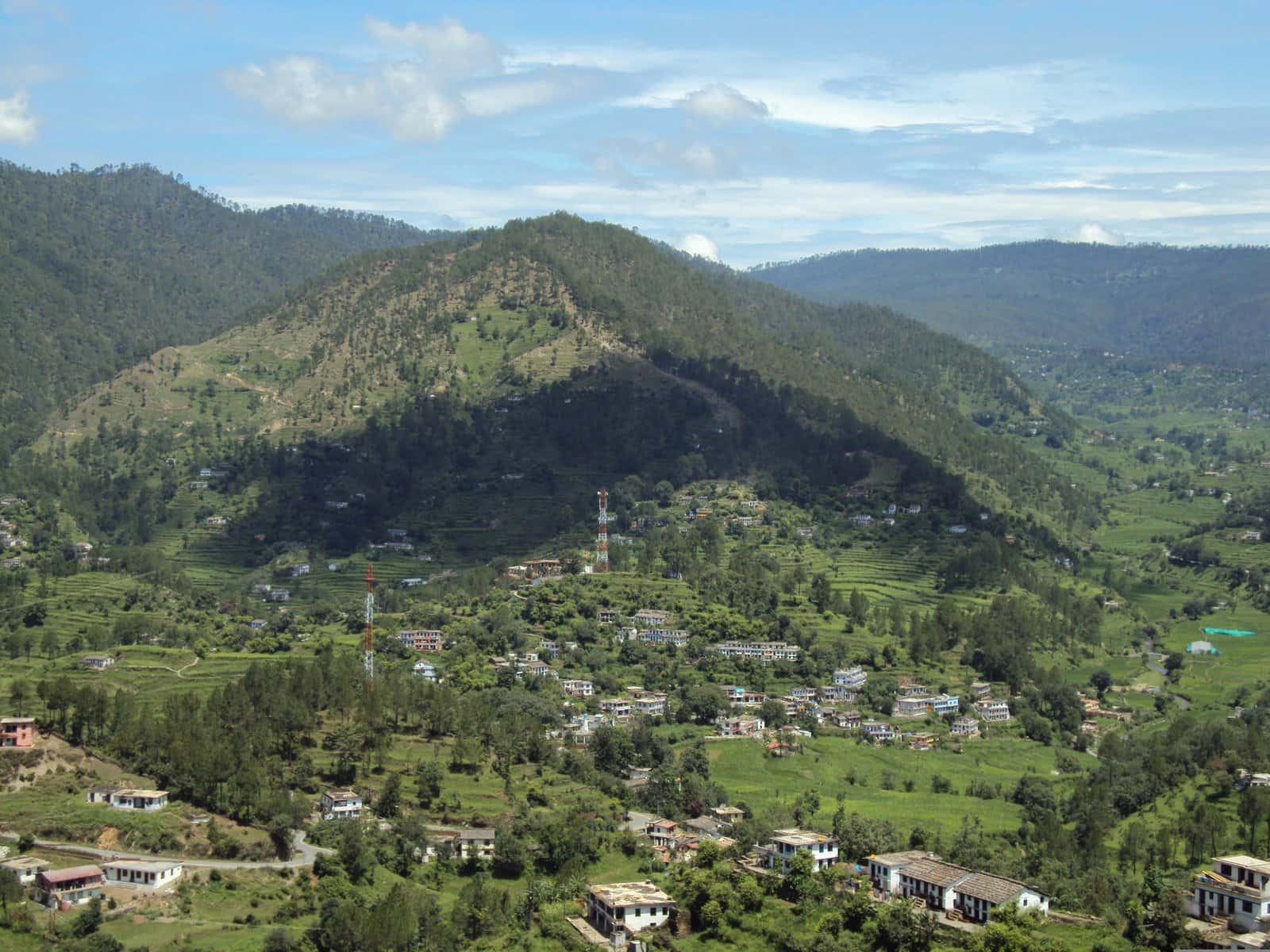
Binsar Travel Guide
The best months are October to December and March to June , but the clearest mountain views come in the cold, crisp window from about October to February . Decide first whether...
When to visit Binsar, and when the Himalaya shows itself
The best months are October to December and March to June, but the clearest mountain views come in the cold, crisp window from about October to February. Decide first whether you are chasing sharp peaks or spring colour.
- October to February: clearest peaks, coldest airThis is when Binsar is at its best for the view. The post-monsoon and winter air is sharp and clean, and on a clear morning the Himalayan wall from the Nanda Devi group across to Panchachuli stands out crisply from Zero Point. Nights are genuinely cold, often near or below freezing in deep winter, so carry serious warm layers.
- March to June: warm days, rhododendron and hazeSpring brings the rhododendron bloom and comfortable daytime walking, and early summer is a cool escape from the plains. Afternoon haze can soften the distant peaks, so do your viewpoint and Zero Point walk early in the morning when the air is clearest.
- July to mid-September: the monsoon, best avoided for viewsHeavy rain clouds the peaks, brings out leeches on the forest trails, and raises the risk of landslips and road blocks on the hill roads in. The forest is lush and green and birdlife is active, but if you have come for the Himalaya, this is the season to skip.
- Decide what you are coming forIf the mountain view is the point, plan for the clear October-to-February window and accept the cold. If you want green forest, birds and bloom and the peaks are a bonus, spring works well. Either way, give yourself a morning, because the Himalaya is a dawn show here.
Even in the best season the peaks are usually clearest soon after sunrise and tend to cloud over or haze as the day warms. The single habit that makes or breaks a Binsar visit is being at a viewpoint or at Zero Point for sunrise rather than mid-morning. Build your day around an early start, keep the afternoon for a slow forest walk or the temple, and you give yourself the best chance of the clear Himalayan wall that people come here for.
How to reach Binsar
Binsar has no airport or railway of its own. Almost everyone comes by rail to Kathgodam, the gateway to Kumaon, then drives up through Almora to the single sanctuary gate.
- Via Kathgodam, the nearest railheadKathgodam, the gateway to Kumaon, is the nearest big railway station, about 105 to 120 km away, roughly 3 to 4 hours by road over the hills via Almora. Overnight and daytime trains link it to Delhi, and taxis and shared vehicles wait at the station for the drive up. This is how most travellers arrive.
- From Delhi by roadDelhi is about 380 to 410 km away, a full day of roughly 9 to 11 hours by road, so most people take a train to Kathgodam rather than drive the whole way. If you do drive, break the run and start early, as the last stretch up to Almora and the gate is slow mountain road.
- Nearest airport: PantnagarPantnagar airport is the closest at about 130 to 152 km, with limited and changeable flights mainly to and from Delhi, so check current routes before relying on it. From Pantnagar it is a long hill drive of several hours; for most travellers the train to Kathgodam is the simpler and more reliable way in.
- The last leg and the gateFrom Almora, the nearest town, it is about 24 to 33 km up to the Ayarpani gate, the single tourist entry to the sanctuary. From the gate a narrow road runs about 10 km through the forest to the rest house and the stays. There is no public transport inside, so arrange your vehicle to take you to your stay.
Fly into Delhi, the main international gateway, then take an overnight or daytime train to Kathgodam and drive up through Almora to Binsar, or hire a car for the full Kumaon loop. There are no international flights anywhere near Binsar.
Fly into Delhi, then reach Binsar by train to Kathgodam and road, or by a long road transfer. Binsar pairs naturally with a wider Kumaon circuit through Nainital, Kausani and Jageshwar.
Take a train to Kathgodam, the Kumaon railhead well served from Delhi, then drive up via Almora. From Delhi you can also self-drive or take a bus toward Almora and continue to the gate by taxi.
Zero Point, the forest, and the old temple
Binsar is its Himalayan panorama from Zero Point, the broad-leaf oak forest of the sanctuary, and the quiet Bineshwar Mahadev temple. A few sights, done slowly, are the whole point.
- Zero Point and its 360-degree viewThe headline sight. From the Forest Rest House road head it is a walk of about 2 km, roughly 50 to 60 minutes uphill through oak and rhododendron to a small watch tower at around 2,400 m. On a clear morning you get a 360-degree sweep of peaks including the Nanda Devi group, Trishul and Panchachuli, and in the best conditions the Kedarnath and Shivling massif. No vehicle goes past the rest house, so this last stretch is on foot.
- The sanctuary forest itselfBinsar Wildlife Sanctuary protects a rare stretch of mature oak and rhododendron forest alive with birds, langur, barking deer and, elusive but present, leopard and Himalayan black bear. The pleasure here is the quiet forest walk and the birdsong, not a tiger-reserve style safari, and an early walk with a guide is the best way to see wildlife.
- Bineshwar Mahadev templeA quiet old Shiva temple set among tall pines, which gives Binsar its name from Bineshwar, a local form of Shiva. The gentle forest walk to it is part of the charm, and it is a calm, uncrowded place for a slow hour rather than a crowded pilgrimage.
- The museum and Pariyadeva PashanA small sanctuary museum explains the forest and its wildlife, and the Pariyadeva Pashan megalithic site nearby carries ancient cup marks cut into the rock. Both are short, low-key stops that add context to a forest stay.
Binsar is a protected forest, not a resort with a view. Keep to the marked roads and trails, do not feed or chase wildlife, carry your litter out, and keep noise down so the birds and animals stay around. Above all, do not walk the forest roads alone after dark, which is covered in the safety section below. Treated with respect, the sanctuary rewards you with the kind of quiet that has vanished from busier hill stations.
Signature experiences in Binsar
Beyond the viewpoint, these are the experiences people remember in Binsar, and how to arrange them in a place with no shops, no tour desks and limited power.
- Sunrise over the peaks from Zero PointThe defining Binsar experience: walk the 2 km up to the watch tower for first light on the Himalaya, when the snow line turns gold before the haze sets in. Start in the dark with a torch and a layer, ideally with your stay's escort, and you will likely have the tower almost to yourself.
- A guided early forest walkThe sanctuary is best experienced slowly on foot. Ask your stay to arrange a local guide for a dawn walk on the forest trails, the time you are most likely to see birds, langur, barking deer and fresh leopard pug marks from the night. It is gentle, atmospheric and the heart of a Binsar stay.
- Sunset and stargazing from your stayEvenings are for the long sunset over the ridges and, with so little artificial light, some of the clearest night skies you will see near the plains. With power often limited to a few evening hours, this is a place to put the phone away and simply watch the dark come in.
- The walk to Bineshwar MahadevPair the wildlife and the view with the quiet old Shiva temple among the pines. The gentle forest walk to it is the point as much as the temple, a calm, uncrowded hour that rounds out the day.
- Birdwatching for the patientBinsar is a quietly rewarding birding spot, with the cold clear months especially good. Bring binoculars, go early, and let your guide point out the resident and winter-visiting species in the oak canopy. This is slow, attentive watching rather than a checklist safari.
- Pairing Binsar with the Kumaon loopMany travellers fold Binsar into a slow Kumaon circuit with Kausani for its own famous peak panorama, Jageshwar for its ancient cluster of stone temples, and Almora for its bazaar and culture. Binsar is the forest-and-quiet chapter between them.
If you do only one thing slowly, make it the sunrise from Zero Point. The walk up in the cold dark and the first gold light on the snow peaks is what people remember long after the drive and the rooms fade. Give yourself an unhurried early start with a torch, a warm layer and an escort, and Binsar opens up in a way a quick midday stop never allows.
Where to stay in Binsar, and how many nights
Stay inside the sanctuary near the rest house to be right by the viewpoints, choosing the state-run KMVN or a private forest lodge. One to two nights is the sweet spot.
- KMVN and the Forest Rest House: simple and well placedThe state-run KMVN Tourist Rest House and the Forest Rest House sit inside the sanctuary, close to the viewpoints and the Zero Point road head. They are simple and atmospheric rather than luxurious, often reported at around 1,500 rupees with meals, and they put you right where the morning view is. Book ahead, as rooms are few.
- Private forest lodges and heritage estatesA small set of private lodges and heritage estates, including the well-known Mary Budden Estate, offer more comfort, character and guided walks at much higher prices. They are the choice for couples and travellers who want the forest experience with more warmth and service, and they also book out, so plan early.
- Everything is inside the gateThere is no town, market or string of hotels inside the sanctuary, so where you stay is where you eat and spend your evening. Meals are taken at your property, there are no shops, and the nearest supplies and ATM are back in Almora, so arrive with what you need.
- How many nightsOne night is enough to catch a sunrise and sunset over the peaks, walk to Zero Point and do a forest trail. Add a second night if you are a birdwatcher, a slow walker, or pairing Binsar with Kausani, Jageshwar or Almora on a wider Kumaon loop and want to settle rather than rush.
Because there is only a handful of stays inside the gated sanctuary, rooms at the KMVN, the Forest Rest House and the private lodges fill up in the clear-view season and on weekends and holidays. Book well ahead, especially for October to February and any long weekend from Delhi, and confirm whether meals are included, since you will be eating where you sleep with no alternative inside the forest.
Binsar costs and a realistic daily budget
Binsar is gentle on the wallet once you are inside, because there is almost nothing to buy. Here is what the main things cost so you can plan and avoid surprises.
- Sanctuary entryEntry is modest. Most sources list about 150 rupees per person for Indian visitors, often described as valid for up to 3 days, about 75 rupees for students and about 600 rupees for foreign nationals, plus a vehicle charge commonly quoted at about 250 rupees for a car. Sources disagree on the exact figures, so pay and reconfirm the current rate at the Ayarpani gate.
- A rough daily budget insideExcluding your room and the long drive in, plan on about 500 to 1,000 rupees a day as a simple traveller and about 1,500 to 3,000 rupees for a comfortable day with a guide and a packed lunch. There is little to spend on inside the sanctuary, so most of your trip cost is the stay and the transport.
- Where the real money goesThe stay and the drive in are the big numbers. KMVN and the Forest Rest House are commonly around 1,500 rupees with meals, while private lodges run much higher. A taxi up from Kathgodam or Pantnagar for the day is the other main cost, so share it where you can.
- Carry cashThere are no ATMs and few card or UPI options inside the sanctuary, so draw cash in Almora or before you leave Kathgodam. Carry enough for the entry tickets, tips, the guide and any extras, because you cannot top up once you are through the gate.
The unusual thing about Binsar costs is how little you spend once inside and how much the getting there matters. There is no bazaar, no string of cafes and no entry-fee-heavy attraction circuit; the entry ticket is small and the days are cheap. Your real budget is the room, the meals at your stay, and the taxi up the hills, so plan those carefully and the rest of the trip looks after itself.
Practical logistics: power, signal, food and getting around
The small things that make a Binsar stay smooth, from the limited power and patchy signal to food, cash and how you move inside a gated forest.
- Power and signal are limited, so prepareMany stays run on solar power and a generator for only a few hours in the evening, and mains electricity can be patchy or absent. Mobile coverage is weak to non-existent in pockets. Charge everything before you arrive, carry a power bank and a torch, and let people at home know you may be off-grid for a day or two.
- Food is at your stayThere are no restaurants or shops inside the sanctuary, so meals are taken at your property, usually simple home-style Kumaoni and North Indian food. Confirm whether your tariff includes meals, mention any dietary needs in advance, and carry your own snacks and water for the walks.
- Getting aroundThere is no public transport inside the gate. Your vehicle brings you in from Almora or the railhead to your stay, and from there the viewpoints, the temple and Zero Point are reached on foot or by short hops on the single forest road. Keep your driver's number for the trip back out.
- Cold, clothing and torchesIt is cold here, sharply so in winter nights, so pack proper warm layers, a windproof, gloves and a hat even in shoulder season. A good torch or headlamp matters because of the limited power and the early Zero Point start, and sturdy shoes help on the forest trails.
Safety in a leopard sanctuary, and staying well
Binsar is calm and welcoming by day, but it is a working wildlife sanctuary, so the real cautions are natural rather than human. A little awareness keeps the visit happy.
- Do not walk the forest alone after darkLeopards, and sometimes Himalayan black bear, move through the forest, and pug marks near the stays at dawn are common. The firm rule is not to walk the forest roads alone after dark. Stay on your property in the evening, and for any dawn or dusk walk beyond it take the resort's escort or a local guide.
- The road and the driveThe single road through the sanctuary is narrow and can be rough, and the hill roads in from Almora and Kathgodam are winding. Drive slowly, travel in daylight where you can, and if you are prone to motion sickness on mountain roads, carry what you usually take.
- Cold, altitude and healthAt around 2,400 m it is cold and the air is thinner than the plains, though not high enough for serious altitude problems for most people. Dress warmly, stay hydrated, take the usual care with the early-morning chill, and carry any personal medicines since there are no shops or pharmacies inside the gate.
- Leeches and the monsoonIn the monsoon the forest trails bring out leeches, and rain raises the risk of landslips and road blocks on the way in. If you visit then, carry salt or a leech repellent, wear closed shoes, and keep your plans flexible in case the hill roads are affected.
Of everything on this page, the single rule to remember is simple: you are sleeping inside a sanctuary where leopards genuinely live, so do not wander the forest roads alone in the dark. Keep to your property after sunset, take an escort for the pre-dawn Zero Point walk, and treat the forest as the animals' space that you are visiting. Follow that one rule and Binsar is one of the gentlest, safest places in Kumaon to slow down.
Binsar for every kind of traveller, and on access
Binsar suits very different visitors in different ways. Here is what it offers you and the one tip that matters for each, including how seniors and families manage a basic forest stay.
- CouplesQuiet, romantic and far from the crowds: sunrise over the peaks, slow forest walks and dark starry evenings with the phone switched off. A private forest lodge and an overnight rather than a day trip lets you catch both sunset and sunrise.
- Families with childrenDoable and rewarding for nature-minded families, with the forest walk, the watch tower and birdwatching, but manage expectations: there is no town, limited power and signal, and a firm no-night-walking rule, so keep children close after dark and bring their own entertainment for the off-grid evening.
- Senior travellers and on accessibilityManageable with planning, but be honest about the challenge. The road in is rough and winding, the stays are basic, and Zero Point is a roughly 2 km uphill walk on a forest trail. Stay near the rest house to limit walking, take the view from the road head or a nearby point if the climb is too much, travel by daylight, and pack warm. Those who prefer comfort and certainty may find it a stretch.
- Solo travellersCalm and safe by day and well suited to a quiet solo break, with the cautions being the road, the cold and the no-night-walking rule rather than any human risk. Tell your stay your walk plans, carry a torch and power bank, and enjoy one of Kumaon's most peaceful stops.
- Birdwatchers and nature loversThis is your place: mature oak forest, rich birdlife, and the patience-rewarding quiet that busier hill stations have lost. Come in the cold clear months, walk early with a guide, and give it two nights to really settle in.
- PhotographersSunrise on the Himalayan wall from Zero Point, the misty forest, and the dark skies at night. Bring a tripod and spare batteries, since power for charging is limited, and shoot the peaks early before the haze builds.
A suggested Binsar itinerary
How to shape one or two unhurried days so you catch the peaks at their clearest and the forest at its most alive, and how Binsar fits a wider Kumaon loop.
- Day one, arrival and eveningDrive up from Kathgodam or Almora, enter at the Ayarpani gate, and settle into your stay by mid-afternoon. Take a gentle forest walk or visit Bineshwar Mahadev before dusk, then watch the sunset over the ridges and an early, quiet evening as the power and the light fade.
- Day two, the sunrise and the viewStart before dawn with a torch and a warm layer, walk the roughly 2 km up to Zero Point with your stay's escort, and watch first light on the Nanda Devi group, Trishul and Panchachuli. Come back for breakfast, then do a longer guided forest trail or the museum before the haze builds.
- A second night, if you have itA second night turns a tick-the-box stop into a proper forest pause: more birdwatching, a slower temple walk, and a second chance at a clear sunrise if the first was clouded. It also lets you arrive and leave unhurried rather than racing the mountain road both ways.
- Fold it into a Kumaon loopBinsar slots neatly between Almora, Kausani for its own famous peak panorama, and Jageshwar for its ancient stone temples. A common shape is Kathgodam to Almora to Binsar to Kausani to Jageshwar and back, with Binsar the quiet forest chapter in the middle.
Two things break a tight Binsar plan: arriving after dark on the rough forest road, and missing the dawn view that is the whole reason to come. Build your day so you reach the gate and your stay in daylight, and so your one full morning is free for the pre-dawn Zero Point walk. Keep the hazy middle of the day for a slow trail, a meal or the temple, and you will not find yourself driving a dark mountain road or standing under a clouded sky at the wrong hour.
The real questions travellers ask about Binsar
Straight answers to the questions that come up again and again on traveller forums, so you arrive already knowing the score.
- Is one night enough?One night covers the essentials: a sunset, a dawn at Zero Point, and a forest walk. Two nights is better for birdwatchers, slow walkers, or anyone who wants a second shot at a clear sunrise and an unhurried arrival and departure on the mountain road.
- Will my phone work, and is there electricity?Expect patchy to no mobile signal in pockets, and power often limited to a few evening hours on solar and a generator. Charge everything before you arrive, bring a power bank and a torch, and treat it as a chance to be genuinely off-grid for a day or two.
- Is it safe at night with the leopards?Yes, with the one firm rule: do not walk the forest roads alone after dark. Leopards and sometimes bear move through the forest, so stay on your property in the evening and take an escort for any pre-dawn or dusk walk. Daytime is calm and safe.
- What does it cost to enter?Entry is modest, commonly about 150 rupees per person for Indians, often described as valid for up to 3 days, about 75 rupees for students and about 600 rupees for foreign nationals, plus a vehicle charge often quoted around 250 rupees for a car. Sources disagree, so pay and reconfirm at the Ayarpani gate.
- Is the monsoon worth it?Not for the view. From about July to mid-September the peaks are usually clouded, the trails bring out leeches, and landslips can block the hill roads. The forest is green and the birds are active, but if you have come for the Himalaya, choose the clear October-to-February window instead.
- Can seniors and young children manage it?With realistic expectations, yes. The road is rough and the stays are basic with limited power, and Zero Point is an uphill walk, so stay near the rest house, travel by daylight, pack warm, and skip the climb if it is too much by taking the view from a nearer point. Families and grandparents who want quiet nature over comfort do well here.
Planning Binsar from abroad
Binsar is the calm, forest-and-mountain heart of a Kumaon trip and pairs naturally with Nainital, Kausani and Jageshwar. A little preparation makes the sanctuary rules and the off-grid stay easy to handle.
- Know it is a gated sanctuary, off-gridBinsar is a protected wildlife sanctuary with one gate, no town inside, limited power and patchy signal. That is its appeal, not a fault. Charge devices, carry a power bank and torch, expect simple stays and home-style food, and come ready to be off the grid for a day or two.
- The foreign-national entry and the rulesForeign nationals are commonly charged about 600 rupees to enter, against about 150 rupees for Indians, plus a vehicle charge; pay and reconfirm at the Ayarpani gate. Carry your passport, keep to the marked trails, and follow the no-night-walking rule in this leopard country.
- Pair it with the Kumaon loopFly into Delhi, train to Kathgodam, then loop Nainital, Almora, Binsar, Kausani and Jageshwar. Binsar is the soulful forest pause between the lakes and the temples, a quiet counterpoint to busier hill stations on a slow Himalayan-foothills trip.
- Manageable for older travellers, with planningStay near the rest house to limit walking, take the view from a road-head point if the Zero Point climb is too much, travel by daylight on the mountain roads, and pack warm. For parents and grandparents who want quiet nature over luxury, Binsar is a gentle, memorable stop.
Money, connectivity and timing for foreign visitors
The practical basics an overseas traveller needs for a remote forest sanctuary: cash, a SIM that may not work inside, and how many days to give Binsar on a wider India trip.
- Carry cash, there are no ATMs insideThere are no ATMs and few card or UPI options inside the sanctuary, so draw cash in Almora or at Kathgodam before you head up. Carry enough for the entry tickets, the guide, tips and extras, because you cannot top up once you are through the gate.
- Get a SIM in Delhi, but expect signal gapsPick up an Indian tourist SIM or an eSIM when you land in Delhi rather than hunting for one in the hills. Even so, expect weak to no coverage in pockets inside the sanctuary, so download offline maps and tell people you may be unreachable for a day.
- How long to give it on a bigger tripOn a Kumaon or wider north India trip, one to two nights in Binsar is the right weight: enough for a sunrise, a forest walk and the temple, slotted between Almora or Nainital and Kausani, without slowing the whole itinerary.
- Time your visit to the clear-view windowOctober to February gives the sharpest Himalayan views and the crispest air, though the nights are cold. Spring brings rhododendron and comfortable walking with hazier peaks. Avoid the July-to-mid-September monsoon if the mountain view is what you have come for.
Binsar is an unusually peaceful introduction to the Indian Himalaya: no crowds, no traffic, just forest, birds and a wall of snow peaks at dawn. Slot it after Nainital or Almora, give it a night or two, and let it be the slow, off-grid chapter of a Kumaon trip. Many overseas visitors say the quiet and the dawn view end up being the part of the foothills they remember most warmly.
Why it is called Binsar, and why it is gated
Binsar takes its name from Bineshwar, a local form of Lord Shiva worshipped at the old Bineshwar Mahadev temple that still stands among the pines on the ridge. Long before it was a sanctuary, this forested crest was a summer capital of the Chand dynasty that ruled Kumaon, who came up here for the cool air and the long view of the snows. In 1988 the broad-leaf oak forest and its wildlife were notified as the Binsar Wildlife Sanctuary, which is why you enter through a single gate, buy a ticket, and follow the forest's rules rather than wandering an open hill town. The result is a rare thing in the crowded Indian foothills: a quiet, protected ridge where the loudest sound at dawn is birdsong, and the reward for the climb to Zero Point is a 360-degree wall of Himalayan peaks.
Planning a Binsar trip?
Our Uttarakhand travel experts plan your full journey for you: route, hotels, darshan timings and transport. You get a free day-by-day plan and an exact quote on WhatsApp, usually within a few hours. No payment is needed to get your plan.
Tour packages that visit Binsar
Every journey below is private, hand-crafted and fully customizable. Tell us your dates and we tailor the itinerary, the pace and the priests or guides around you.
