Deoria Tal Travel Guide
The comfortable windows are March to June and mid-September to November . Spring brings the rhododendron bloom, autumn gives the clearest mirror reflections, the monsoon turns...
When to visit Deoria Tal, and the seasons that change the walk
The comfortable windows are March to June and mid-September to November. Spring brings the rhododendron bloom, autumn gives the clearest mirror reflections, the monsoon turns the trail slick and leech-ridden, and December to February makes it a snow walk for the prepared.
- March to June: bloom and mild daysSpring into early summer is the gentlest window, with rhododendrons in bloom on the climb and warm days while nights stay cold, so carry a layer. The trail is clear of snow and the lake holds its reflection well in the calm of early morning. This is the easiest time for families and first-timers to do the short walk up from Sari.
- Mid-September to November: the clearest reflectionsAfter the monsoon clears, late September into November washes the haze from the sky and gives the sharpest Chaukhamba reflection on the lake. Many seasoned trekkers prefer autumn for exactly this clarity. It cools fast as November arrives and the first snows are not far off, so come earlier in the window for comfort.
- July and August: monsoon, best avoidedHeavy rain makes the stone-paved trail slippery and brings out leeches in the wet forest, and the mountain roads carry a real landslide risk. The views are often lost to cloud and the reflection to wind and rain. Unless you are set on the green, washed-clean forest, the monsoon is the season to skip here.
- December to February: snow walk for the preparedThe trail turns to snow through deep winter, with several feet of cover by January and night temperatures that can fall to around minus 10 degrees Celsius. It is beautiful and increasingly popular as a short snow trek, but it needs proper boots, warm layers and care, and the drive up to Sari itself can get slippery and tricky on snow-covered roads.
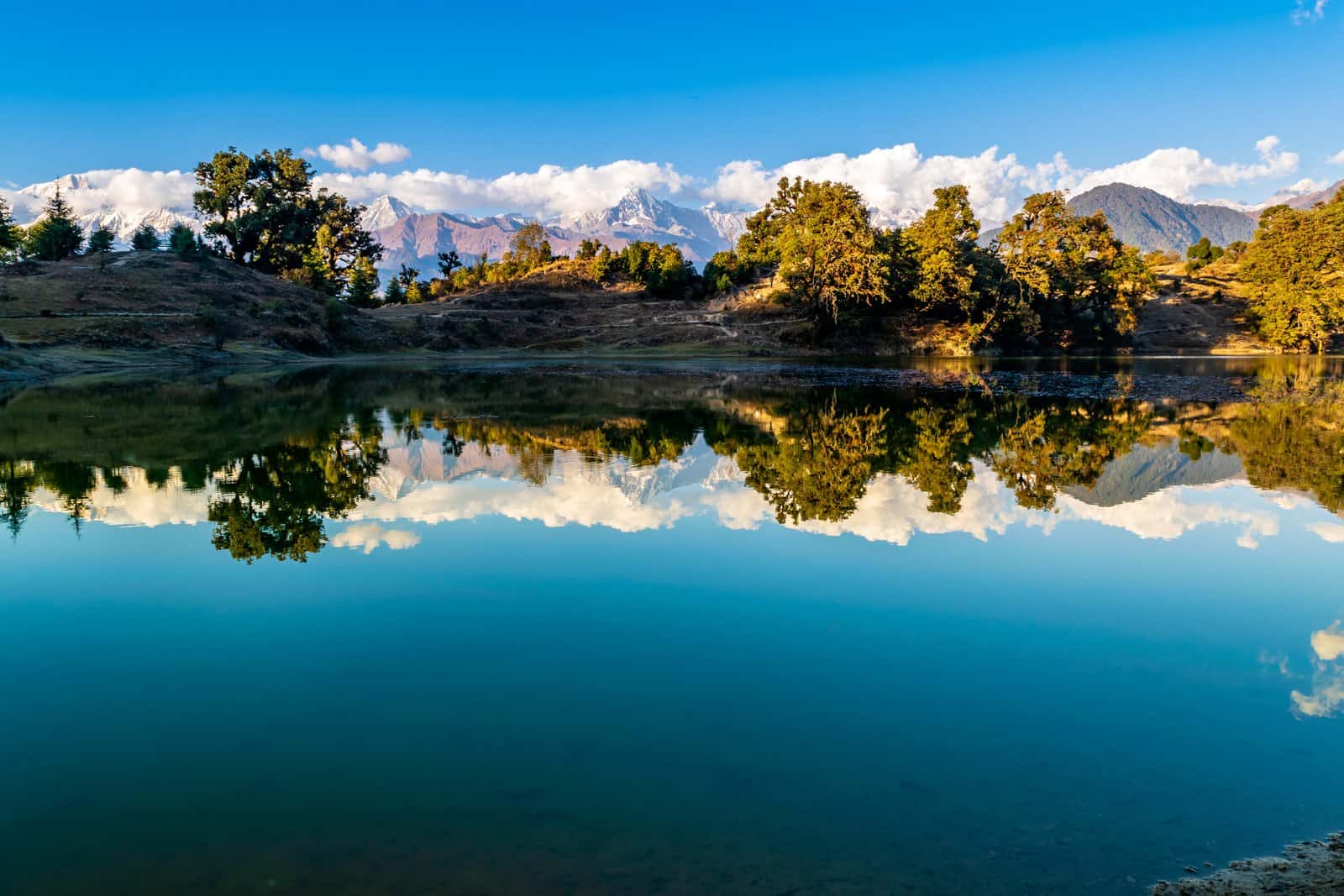
Whatever month you choose, the single thing that decides whether Deoria Tal delivers its famous image is the time of day. The mirror reflection of the Chaukhamba peaks appears on the still water at first light, before the morning breeze gets up and ruffles the surface. By mid-morning the wind usually breaks the reflection. That is why an overnight at Sari or near the lake beats a daytime visit, and why the experienced come up the afternoon before and wait for dawn.
How to reach Deoria Tal, and how long it really takes
Deoria Tal has no airport or railway of its own. Everyone comes by a long mountain road to Sari village through Rudraprayag and Ukhimath, then walks the last 2.5 km. Plan for a full driving day, not a quick hop.
- From Rishikesh and Haridwar, the nearest railheadsRishikesh (Yog Nagari Rishikesh) is the nearest railhead at about 190 to 200 km, with Haridwar a little further, both a long 7 to 9 hour drive up through Devprayag, Srinagar, Rudraprayag and Ukhimath to Sari. Most travellers train to Rishikesh or Haridwar and pick up a car from there for the mountain leg.
- From Dehradun and Jolly Grant airportJolly Grant (Dehradun) is the nearest airport, roughly 200 to 225 km away and about a 7 to 9 hour mountain drive. There is no flight any closer, and there are no flights to Deoria Tal itself, so budget a full day for the road in. Hire a car with an experienced hill driver rather than attempting it cold.
- The last legs: Ukhimath and SariFrom Ukhimath it is about 12 to 14 km to Sari, the last village a vehicle can reach. Ukhimath is the natural supply and overnight stop on the way up, with the few shops you will find on this stretch. From Sari it is on foot, about 2.5 km up to the lake, or by pony for those who need it.
- From DelhiDelhi is roughly 450 km and a long two-day proposition by road. Break the run at Rishikesh or Haridwar overnight rather than pushing the whole way, then make the mountain drive to Sari fresh the next morning when the roads are clearer and the light is good.
Fly into Delhi, the main international gateway, then take a short domestic flight or train to Dehradun or Haridwar and drive up to Sari. Deoria Tal has no international flights of its own and no nearby airport, so allow a full mountain-driving day in, then the gentle 2.5 km walk.
Fly into Delhi, then onward to Dehradun (Jolly Grant) and drive about 7 to 9 hours to Sari, or train to Haridwar and drive from there. Deoria Tal sits naturally on a wider Garhwal or Char Dham road circuit with Chopta close by.
Train to Rishikesh or Haridwar and drive up through Rudraprayag and Ukhimath to Sari, or self-drive from Delhi over two days. The Rishikesh and Haridwar railheads are the simplest way in by rail.
The mirror lake, the panorama, and the walk up from Sari
Deoria Tal is one sight done supremely well: a still lake at about 2,438 metres that mirrors the high peaks, reached by a short forest climb from Sari. A few altitudes and rules are worth knowing first.
- The mirror lake and its 300 degree panoramaDeoria Tal sits at about 2,438 metres, roughly 7,999 feet, ringed by oak and rhododendron forest with a wide panorama that Wikipedia describes as about 300 degrees. From the water you can pick out Chaukhamba, Nilkantha, Bandarpunch, the Kedar range and Kalanag. The signature sight is the Chaukhamba massif mirrored on the still surface at dawn.
- The walk up from SariThe lake is reached on foot from Sari village by a well-marked stone-paved climb of about 2.5 km that most walkers cover in about 45 minutes to 1.5 hours. The first stretch is the steepest, then it eases through the forest. Sari, at about 2,000 metres, is the last point a vehicle can reach, so the walk is unavoidable and part of the charm.
- The forest and its wildlifeThe trail and lake lie inside the Kedarnath Wildlife Sanctuary, a quiet, dense forest of oak and rhododendron. Early risers sometimes glimpse Himalayan birds and small forest animals near the water at first light, and the meadows above hold the state bird, the Himalayan monal, in the right season.
- Onward to Chopta and ChandrashilaDeoria Tal is the gentle opening chapter of the classic Deoriatal to Chandrashila route. From the lake a forest trail leads on toward the Chopta meadows, Tungnath and the Chandrashila summit for those carrying on. If that is your plan, read our separate Chopta and Chandrashila guide, where the higher altitudes and the temple rules are covered in full.
Deoria Tal sits inside the Kedarnath Wildlife Sanctuary. You must stay on the marked trail, carry out all your waste, and follow forest rules; littering or damaging the environment is a punishable offence. Trekkers usually register and pay a small fee at Sari. The detail of the registration, the deposit and the camping restriction is in the costs and logistics sections below, and the real fine is in the safety section.
Signature experiences at Deoria Tal
Beyond the headline reflection, these are the experiences people remember, and how to time them so the lake shows its mirror and the day does not run out on you.
- The dawn reflectionThe single best thing to do here: be at the water at first light, when the air is dead still and the Chaukhamba peaks lie mirrored on the surface. By mid-morning the breeze usually breaks the reflection, so this is a sunrise affair. Sleep at Sari or in a regulated camp near the lake the night before and walk up in the half light.
- A night under the stars, away from the waterCamping right at the lake is no longer permitted, but regulated camps and the small forest rest house let you spend a night near Deoria Tal, away from any town and under a thick spread of stars. Nights are cold even in summer, so choose a camp with proper sleeping bags and warm bedding, and confirm where camping is currently allowed before you book.
- The orchard-lined walk in seasonOn the approach in fruiting season the trail is lined with apple and peach orchards, and the local produce is cheap and excellent, so it is worth pausing to buy some. It is a small, real pleasure of the Deoria Tal walk that the package pages never mention, and a kind gift to carry back.
- Birdwatching and a quiet forest morningThe Kedarnath sanctuary forest around the lake is good for Himalayan birds, and a slow, quiet morning by the water with binoculars rewards the patient. The rhododendron weeks of spring are the prime window for both flowers and nesting birds, and the early hour is when the forest is most alive.
- Carry on to Chandrashila, if you have the legsFor trekkers, Deoria Tal is the soft start of the longer route on to the Chopta meadows, Tungnath and the Chandrashila summit. It is a fine way to acclimatise gently before the higher, harder climb. Plan extra days and read our Chopta and Chandrashila guide for the altitude, the temple season and the 2 pm summit cut-off.
If you do only one thing, make it the lake at dawn. The mirror image of the snow peaks that fills every photograph almost always belongs to the first hour of light, before the wind gets up and the surface ripples. Walk up from Sari the afternoon before, sleep near the lake, and you give yourself the still water and the reflection that people travel here for. Arrive as a daytime stop and you may find a pretty pond and a clouded, wind-blown surface instead.
Where to stay at Deoria Tal and Sari, and how many nights
Stay in a Sari village homestay for comfort and an easy dawn start, in a regulated camp or the forest rest house near the lake for the reflection, or lower at Ukhimath for hotel comfort. One to two nights covers it.
- Sari village homestays: the easy baseSari has many registered homestays and guesthouses, commonly reported at about 800 to 2,500 rupees per person with meals, with simpler rooms at the lower end and en-suite deluxe rooms higher. It is the most comfortable and convenient base, a short drive below the trailhead, and lets you start the dawn walk to the lake without a cold night in a tent.
- Camps and the rest house near the lakeRegulated eco-camps and dome tents near Deoria Tal, commonly reported at about 1,500 to 3,500 rupees per person with meals, and the small forest rest house (usually booked through GMVN at Ukhimath, with very few rooms) let you wake by the water for the reflection. Camping is now pitched back from the lake, not on its edge, so confirm the current arrangement when you book.
- Ukhimath: hotel comfort lower downUkhimath, about 12 to 14 km below Sari, is a small town with the most reliable rooms, power and supplies on this stretch, and the winter seat of the Kedarnath and Madhyamaheshwar deities. Some travellers sleep here and day-trip up to Sari and the lake, though it makes the dawn reflection a very early start.
- How many nightsOne night at Sari or near the lake is enough to do the dawn walk to Deoria Tal and back comfortably. Add a second night if you want to carry on toward Chopta, Tungnath and Chandrashila, or simply to slow down in the forest. A daytime stop with no overnight misses the reflection that is the whole point.
There are no large or luxury hotels at Sari or Deoria Tal, and there will not be. What you get is village homestays, basic camps and a tiny forest rest house, frequently without dependable heating or hot water, especially in the cold months. Pack warm layers and a head torch, carry a power bank, and treat the simple, off-grid nature of the stay as part of the experience. If you need hotel comfort, base at Ukhimath and day-trip up.
Deoria Tal costs, the Sari fee and a realistic budget
Deoria Tal is gentle on the wallet apart from the long drive in. Here is what the main things cost, including the Sari registration and deposit, so you can plan and confirm the current rates on the spot.
- The Sari registration and the garbage depositDeoria Tal sits in the Kedarnath Wildlife Sanctuary, and trekkers usually register at Sari and pay a small fee, commonly reported at about 50 rupees per person, plus a refundable garbage or plastic deposit, commonly reported at about 500 rupees, returned when you show you have carried your waste back out. Some sources instead quote a higher forest entry fee of about 150 rupees for Indian visitors (about 500 rupees for foreign nationals), so the exact charge and how it is split between an entry fee, a camping fee and the deposit varies by source and season. Confirm the current amounts at the Sari registration point before you set out.
- Stay and foodSari homestays run about 800 to 2,500 rupees per person with meals, and camps and the rest house near the lake about 1,500 to 3,500 rupees per person with meals. Simple meals at Sari and Ukhimath are cheap and hot. Carry energy bars and snacks since the only shops up top are a couple of tea shacks that close at sundown, and load supplies at Ukhimath.
- The big cost is the driveBecause Deoria Tal is a long mountain drive from Rishikesh or Dehradun to Sari, the car or shared transport is usually the largest single line in the budget. Sharing a vehicle, or joining an organised trek that bundles the transport with Chopta and Chandrashila, is how most travellers keep this sensible.
- Pony, gear and cashA pony from Sari to near the lake for a senior or someone who needs it is commonly reported at about 500 to 800 rupees one way. Trekking poles, ponchos and sleeping bags can be rented at Gopeshwar and Chopta. Carry enough cash for the trip, since ATMs and card or UPI acceptance thin out fast above Rudraprayag and the homestays, ponies and shacks run mostly on cash.
Two small figures move and should be reconfirmed on the spot: the Sari registration fee, commonly about 50 rupees, and the refundable garbage deposit, commonly about 500 rupees, both of which vary by source and season. Everything else here is modest and cash-based. Confirm the fee and deposit at the Sari registration point, agree any package or pony price in advance, and carry cash, and the budget side of Deoria Tal holds no surprises.
Practical logistics: Sari, ID, network and supplies
The small things that make a Deoria Tal trip smooth, from the Sari registration and ID checks to the patchy phone signal, the supply stop at Ukhimath and the gear you will want.
- Register and carry ID at SariCarry a valid photo ID and keep photocopies to hand, and register at the Sari trailhead before you climb. This is a protected sanctuary with military and forest check posts on the approach, and you may be asked to produce proof of identity, so have it ready rather than buried in a bag.
- Phone signal is patchy, plan for itMobile coverage in the Sari, Deoria Tal and Chopta belt is unreliable, with only intermittent Jio or BSNL signal and long stretches of no network on the trail. Download offline maps before you climb, share your plan with someone, and do not count on a working phone above Sari.
- Stock up at UkhimathShops are very few above Ukhimath, so buy your snacks, water and any supplies there. The only options up top are a couple of tea and snack shacks by the lake that close at sundown. Carry energy bars for the trail, drink only boiled or treated water, and pack a well-equipped first-aid kit, since help is far away once you are on the mountain.
- Gear and clothingBring hardy trekking shoes and a trekking pole for the rugged, sometimes snake-prone terrain, and warm layers, as temperatures stay low even in summer and fall hard at night. Poles, ponchos and sleeping bags can be rented at Gopeshwar and Chopta. Sun protection and a head torch are worth the space for the dawn walk.
Altitude, monsoon leeches, winter snow and the sanctuary rules
Deoria Tal is a short, gentle walk, but it is still high mountain country. The real risks are altitude, the slick monsoon trail and the cold, and respect for the forest rules keeps the trip safe and happy.
- Altitude (AMS) and how to handle itAt about 2,438 metres Deoria Tal is high enough that some people feel mild breathlessness, though serious altitude sickness is uncommon on so short a walk. Take the climb slowly, drink plenty of water and avoid alcohol. If you carry on toward Tungnath, about 3,680 metres, and Chandrashila, over 4,000 metres, the altitude is far more serious and needs an acclimatisation night and real care, covered in our Chopta guide.
- Monsoon leeches and a slick trailFrom July to August the stone-paved trail is slippery with rain and the wet forest brings out leeches. Wear closed shoes and long socks, carry salt or a repellent if you must go then, and watch your footing on the wet stone. The mountain roads also carry a landslide risk in the monsoon, so most travellers simply avoid this window.
- Winter snow and the coldFrom December to February the trail is snow-covered, with several feet by January and nights that can drop to around minus 10 degrees Celsius. It is a lovely short snow walk, but it needs proper boots, traction and warm layers, and the drive up to Sari can get slippery. In any season, turn back if the weather closes in, since help and network are far away.
- Sanctuary rules and the real fineStay on the marked trail, carry out all waste, and do not bring alcohol or drugs into the sanctuary. The official Kedarnath Wildlife Division guidelines warn that violations are punishable under the Wildlife Protection Act 1972 with a fine of up to 1,00,000 rupees or up to 3 years imprisonment, with alcohol and narcotics handled under the NDPS Act 1985. Respect the rules, the silence and the wildlife.
Deoria Tal is one of the gentlest high-Himalayan walks and is manageable solo or as a first trek with sensible precautions: closed shoes for the leeches in the wet season, warm layers for the cold, a guide or a group for the snow months, and an honest read of your own fitness on the steep first section. The friction here is not crime but the mountain itself, the altitude, the wet trail and the cold, so respect those, keep someone informed of your plan, and turn back when it tells you to.
Deoria Tal for every kind of traveller, and on access
Deoria Tal suits very different visitors, and the key question for each is the short steep climb from Sari. Here is what it offers you and the one tip that matters, including how a senior or a young family does it comfortably.
- Families with childrenOne of the friendliest Himalayan walks for families: a short 2.5 km climb to a beautiful lake, manageable for children who are used to a little walking, with the camping and the forest a real adventure. Take the steep first section slowly, carry water and snacks, and keep little ones close to the water and on the marked trail.
- Senior travellers and on accessibilityVery doable with planning. The walk is short but the first stretch is steep, so fit seniors manage it at a slow pace with rest stops, and a pony from Sari to near the lake, commonly about 500 to 800 rupees one way, takes the effort out of it for those who need it. There is no road to the lake, so a pony or a slow walk is the only way up; choose a Sari homestay to keep the rest of the trip easy.
- Beginner trekkersThis is about the best beginner trek in Garhwal: short, scenic, well-marked and a gentle way to test yourself at altitude before anything harder. Build a little walking fitness first, go slow on the first climb, and you can comfortably do the lake and, if you want more, use it as the soft start of the Chandrashila route.
- CouplesA still mirror lake, a star-filled camp night and a shared dawn reflection make Deoria Tal a quiet, romantic escape far from crowds. An overnight near the lake or at Sari lets you catch the reflection at first light rather than racing up and down in a day.
- Solo travellersManageable solo in the open seasons with standard precautions; take a guide or join a group for the snow months. Keep someone informed of your plan, carry your ID and a first-aid kit, register at Sari, and start the dawn walk early both for the reflection and the light on the way down.
- Photographers and birdwatchersThe dawn reflection of Chaukhamba, the rhododendron bloom and the forest birds reward an early riser. Carry binoculars in spring for nesting birds, a tripod for the still-water reflection at first light, and patience for the quiet, and ask before photographing villagers or pilgrims along the way.
A suggested Deoria Tal itinerary
How to shape one or two days so you reach Sari, catch the lake at dawn, and decide whether to carry on toward Chopta and Chandrashila.
- Day one: the long drive and the afternoon walkDrive up from Rishikesh, Haridwar or Dehradun through Rudraprayag and Ukhimath, stopping at Ukhimath to load supplies, and reach Sari by afternoon. Register at the trailhead, then walk the 2.5 km up to the lake in the late afternoon and settle into a camp near the water, or sleep at a Sari homestay and walk up before dawn instead.
- Day two: the dawn reflection and outBe at the lake at first light for the still-water reflection of the Chaukhamba peaks, then walk back down to Sari for breakfast and begin the drive out, or carry your bags on toward Chopta. If you slept at Sari, this is when you make the cool, quiet dawn climb up.
- Carry on to Chandrashila, if you have the daysTo make the full Deoriatal to Chandrashila trek, add two or three days: a forest trail leads from Deoria Tal toward the Chopta meadows, then it is the climb to Tungnath and the Chandrashila summit at dawn. Read our Chopta and Chandrashila guide for the altitudes, the temple season and the 2 pm summit cut-off before you plan it.
- The day-trip versionIf you only have a day, drive to Sari, walk up the 2.5 km, see the lake and walk back, but you will likely miss the dawn reflection that makes it special and you will spend most of the day on the road. An overnight is strongly worth it for so long a drive in.
Two facts should shape every Deoria Tal plan. The mirror reflection belongs to the first hour of light, and the drive in from Dehradun or Rishikesh is a full 7 to 9 hour mountain day, not a quick hop. Both push you toward an overnight: come up to Sari the afternoon before, sleep at the village or near the lake, and walk to the water at dawn. Try to do it as a same-day round trip from the plains and you spend the trip in the car and miss the one image you came for.
The real questions travellers ask about Deoria Tal
Straight answers to the questions that come up again and again on traveller forums, so you arrive already knowing the score on the camping, the climb and the legend.
- Can I still camp right at the lake?No. Camping on the edge of Deoria Tal is no longer permitted; Wikipedia confirms trekkers are no longer allowed to camp at the famous Deoriatal. The long-standing forest department restriction pushed tents back from the water, with travel guides reporting camping is now done about 100 metres or more from the lake. You can still spend a night near the lake in a regulated camp or the small forest rest house, so confirm the current arrangement at Sari when you book.
- Is the walk easy enough for kids or seniors?Mostly yes. It is a short 2.5 km on a stone-paved trail that most cover in about 45 minutes to 1.5 hours, and children used to walking manage it. The catch is the steep first section. Take it slowly, and for an older traveller or anyone who needs it, a pony from Sari to near the lake, commonly about 500 to 800 rupees one way, removes the effort.
- Do I need a permit, and what does it cost?There is no elaborate permit, but as it is inside the Kedarnath Wildlife Sanctuary you register at Sari and pay a small fee, commonly reported at about 50 rupees per person, plus a refundable garbage or plastic deposit, commonly about 500 rupees, returned when you carry your waste out. Some sources instead quote a forest entry fee of about 150 rupees for Indians (about 500 rupees for foreign nationals), so the figures vary by source and season; confirm them at the Sari registration point.
- When should I come for the reflection?For the mirror image, come in March to June or mid-September to November, and be at the lake at dawn before the breeze gets up. Autumn gives the clearest skies and sharpest reflection. The monsoon is wet, cloudy and leech-ridden, and winter is a snow walk that can drop to around minus 10 degrees Celsius at night.
- Can I combine it with Chopta and Chandrashila?Yes, and many do. Deoria Tal is the gentle first leg of the Deoriatal to Chandrashila trek, leading on to the Chopta meadows, Tungnath and the Chandrashila summit. Add two or three days and read our separate Chopta and Chandrashila guide for the altitude, the temple season and the 2 pm summit cut-off.
- Is the Mahabharata legend about Deoria Tal true?It is revered local tradition rather than fixed scripture. Garhwali folklore holds this was the lake where a Yaksha questioned the Pandavas, the Yaksha Prashna, and that it is the Puranic Indra Sarovar where the Devas bathed. The Mahabharata critical edition names no specific lake, so enjoy the story as honest tradition, not as a settled historical fact.
Planning Deoria Tal from abroad
Deoria Tal is the gentlest possible first taste of the high Indian Himalaya, a 2.5 km walk to a mirror lake, but it is remote. A little preparation for the long drive, the altitude, the registration and the seasons makes it easy and rewarding.
- It is a long mountain drive, not a quick hopFrom Dehradun's Jolly Grant airport it is roughly 200 to 225 km and a 7 to 9 hour winding drive to Sari, and there is nothing closer by air or rail. Budget a full day to get in, hire a car with an experienced hill driver, and plan an overnight at Sari or near the lake rather than a same-day round trip.
- Respect the altitude on a first Himalayan walkDeoria Tal is about 2,438 metres, gentle by Himalayan standards, so most overseas visitors feel only a little breathlessness at most. Walk the steep first section slowly, hydrate and skip alcohol. If you carry on to Tungnath and Chandrashila, those are far higher and need an acclimatisation night, covered in our Chopta guide.
- Register, carry ID, and know camping has movedYou register at Sari and carry a valid photo ID, and you will pass check posts, so keep your passport and a photocopy handy. Note that camping right at the lake is no longer permitted, so a regulated camp or the small forest rest house near the lake, or a Sari homestay, is how you spend the night for the dawn reflection.
- Slot it onto a Garhwal or Char Dham loopDeoria Tal pairs naturally with Chopta, Tungnath and Chandrashila and sits near the Char Dham road circuit. Fly into Delhi, then on to Dehradun or Haridwar, and weave Deoria Tal in as the easy mirror-lake chapter before the higher meadows and summit, reading our Chopta guide for the harder climb.
Money, connectivity and timing for foreign visitors
The practical basics an overseas traveller needs for a remote mountain lake: cash over cards, a SIM that mostly will not work up high, and how many days to give it on a wider India trip.
- Carry cash, and draw it lower downATMs and card or UPI acceptance thin out fast above Rudraprayag, and the Sari homestays, the ponies, the registration fee and the lake shacks run on cash. Draw enough cash in Rishikesh, Haridwar or Rudraprayag for the whole stay, and keep small notes for the fee, the deposit, the pony and tips.
- Get a SIM in the city, expect no signal up highPick up an Indian tourist SIM or eSIM when you land in Delhi or Dehradun. Even so, expect only patchy Jio or BSNL coverage around Sari and Deoria Tal and none on much of the trail, so download offline maps before you climb and treat the walk as off-grid above Sari.
- How long to give it on a bigger tripOn a wider Uttarakhand trip, give Deoria Tal one to two nights on its own, or fold it into a three to four night Deoriatal to Chandrashila trek with Chopta. It is the easy mirror-lake pause between Rishikesh and the higher pilgrim valleys, and an overnight is what unlocks the dawn reflection.
- Time your visit to the seasonMarch to June and mid-September to November are the comfortable windows, with autumn the clearest for the reflection. If you want snow and can handle the cold, December to February is beautiful but demanding, with nights around minus 10 degrees Celsius and slippery roads, and is best done with a guide.
Deoria Tal is an unusually kind introduction to the high Himalaya: a short, scenic walk to a mirror lake that reflects famous peaks, with none of the multi-day effort of a serious expedition. Slot it after Rishikesh, give it a night or two, walk up to the water for dawn, and let it be the calm, high chapter of an Uttarakhand trip, with Chopta and Chandrashila next door if you want to go higher. Many overseas visitors find the dawn reflection the image they remember most from the whole journey.
The lake where a Yaksha tested the wisest of the Pandavas
Deoria Tal carries one of the most loved stories in the Garhwal hills. In the local telling, drawn from the Mahabharata, the five Pandava brothers in their forest exile came upon a still, pure lake high in the mountains. One by one, four brothers drank from it despite a warning voice and fell lifeless at the water's edge. When Yudhishthira, the eldest and wisest, arrived, the voice spoke again: it belonged to a Yaksha who would let him drink and revive his brothers only if he answered a long series of questions on dharma, duty and the nature of life, the dialogue remembered as the Yaksha Prashna. Yudhishthira answered truly, and the Yaksha, who revealed himself as Yama, the lord of death and Yudhishthira's own divine father, restored the brothers to life. Garhwali tradition holds that this was the lake, and that it is the Indra Sarovar of the Puranas where the Devas themselves bathed, which is how Deoria Tal, the lake of the gods, got its name. It is worth saying honestly that the critical edition of the Mahabharata names no particular lake, and other Himalayan tarns claim the same story, so this is revered oral tradition rather than fixed scripture. Sit by the water at first light, with the Chaukhamba peaks mirrored on the surface and the forest utterly silent, and you understand why the people of these valleys are so sure it happened here.
Planning a Deoria Tal trip?
Our Uttarakhand travel experts plan your full journey for you: route, hotels, darshan timings and transport. You get a free day-by-day plan and an exact quote on WhatsApp, usually within a few hours. No payment is needed to get your plan.
Tour packages that visit Deoria Tal
Every journey below is private, hand-crafted and fully customizable. Tell us your dates and we tailor the itinerary, the pace and the priests or guides around you.
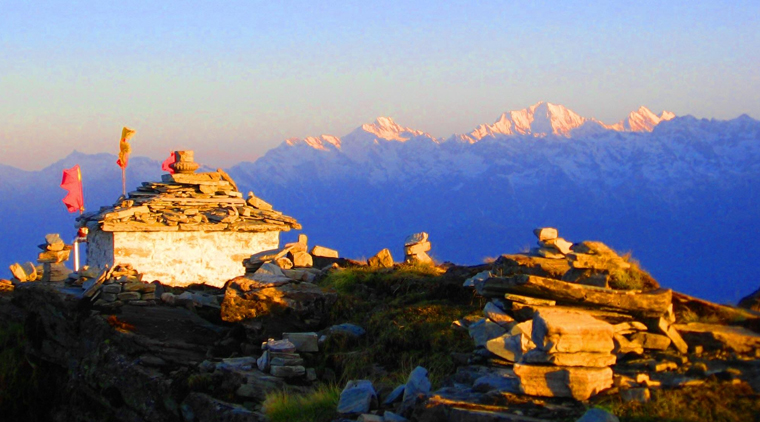 4D / 3N
Chopta Chandrashila Trek
- Deoria Tal
- Ukhimath
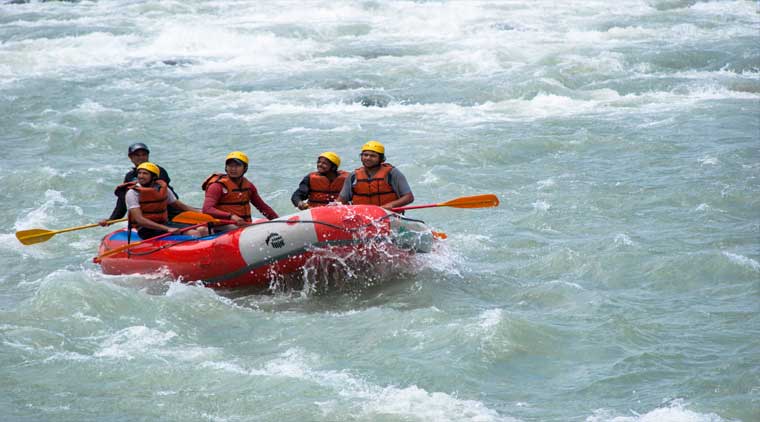 5D / 4N
Rafting in Rishikesh with trekking in Himalayas
- View Of Snow Clad Himalayan Peaks
- Stay At Deluxe Tents