Jim Corbett Travel Guide
The pleasant months are November to February , and the strongest tiger sightings come in March to mid-June . One thing to fix first: the core zones close for the monsoon from...
When to visit Corbett, and the monsoon closure
The pleasant months are November to February, and the strongest tiger sightings come in March to mid-June. One thing to fix first: the core zones close for the monsoon from about mid-June.
- November to February: cool and greenThe most comfortable weather, pleasant by day and genuinely cold on early-morning safaris, so carry a fleece and a windproof layer. Wildlife is active but spread out across a watered park, so tiger sightings are a little less frequent than in summer. Lovely for families and first-timers.
- March to mid-June: best for tigersAs the heat builds and water shrinks, tigers and other animals gather at rivers and waterholes, and the shorter, drier grass gives clearer views. This is the window serious wildlife watchers prefer, right up to the core closure in mid-June. Carry sun protection and water, as April to June afternoons are hot.
- Book early, Dhikala sells outSafari permit booking opens about 45 days ahead for Indian nationals and about 90 days ahead for foreign nationals, and the best zones, especially Dhikala, sell out within minutes of the window opening. Decide your dates early and reserve the moment booking opens.
- Decide weather or wildlife firstWinter gives you a beautiful, comfortable park and good general wildlife; the pre-monsoon heat of April to June gives you the strongest tiger odds but a tougher, hotter ride. Pick the experience you care about most, then choose the month, rather than hoping for both at once.
From roughly mid-June to mid-November the core zones are closed by the rains: Dhikala, Durga Devi, Sonanadi and Pakhro run about 15 November to 15 June, and Bijrani and Garjia about 15 October to 30 June. Only Jhirna and Dhela stay open through the year, so a monsoon visitor (July to early October) is limited to those two. Never assume Dhikala is open in July to October, and check your travel month against the zone seasons before you book anything.
How to reach Jim Corbett
Most travellers reach Corbett from Delhi by an overnight train to Ramnagar or a day's drive. The nearest airport is Pantnagar, with Delhi the main gateway.
- By train to RamnagarRamnagar, about 12 km from the park entrance, is the nearest railhead, with overnight trains from Delhi such as the Ranikhet Express arriving in the early morning. Taxis and resort pickups wait at the station. The early arrival fits a morning safari well, and the train avoids the long road slog.
- By road from DelhiDelhi to Corbett is about 242 to 270 km, roughly a 6 to 7 hour drive through Moradabad and Kashipur or via the Hapur route. We arrange a car with an experienced driver, which is the easiest way for families with luggage and small children, and lets you stop where you like.
- By air via PantnagarThe nearest airport is Pantnagar, about 80 km away, with limited flights from Delhi and a few cities, then a road transfer of about 2 to 2.5 hours. Flight schedules change, so confirm before relying on it. Most overseas visitors simply fly into Delhi and continue by train or car.
- Ramnagar, then onward to your zoneRamnagar is the base town where you collect permits and meet guides. From there the gates are short hops: Bijrani via Amdanda gate, Jhirna and Dhela to the south, and the Dhikala zone via Dhangarhi gate about 18 km out, with the Dhikala lodge a further drive of about 48 km from Ramnagar inside the forest.
Fly into Delhi, the main international gateway, then take an overnight train to Ramnagar or drive down in about 6 to 7 hours. Corbett pairs neatly with a Golden Triangle trip, as the easiest big tiger reserve to reach from Delhi.
Fly into Delhi and continue by train or road to Ramnagar. For a quicker hop you can connect to Pantnagar (about 80 km from the park) on a domestic flight, then transfer by road.
Overnight trains run to Ramnagar from Delhi and other cities, and the road from Delhi is straightforward. Pantnagar airport handles a few domestic flights for those flying in from further afield.
The zones, and what you actually pay
Corbett is divided into safari zones, each with its own gate, season and character. Dhikala is the famous one, but the ticketing has real quirks worth knowing before you book.
- Dhikala, the headline zoneThe largest and most celebrated zone, deep grassland with the best big-game feel and high prey density. There is no day jeep safari here: a day visitor can only take the shared Canter, while a private jeep inside Dhikala is allowed only to guests staying overnight at the forest rest house. Open about 15 November to 15 June, via Dhangarhi gate.
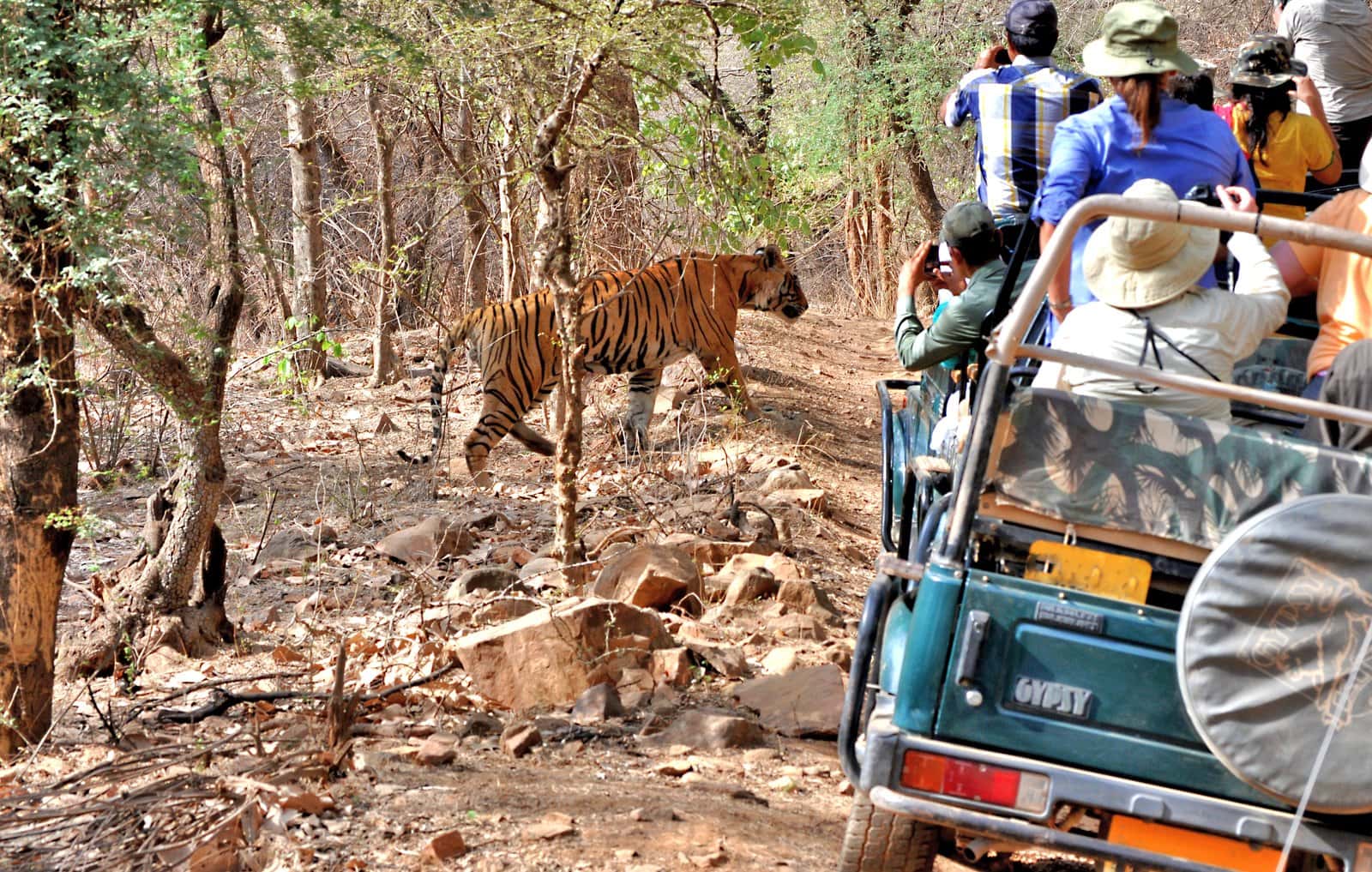
- Bijrani and GarjiaBijrani, entered at Amdanda gate, is a popular day-safari zone with good sightings and rich birdlife, and because it is smaller than Dhikala you can bump into a tiger on the tracks; open about 15 October to 30 June. Garjia runs on a similar season. Both take private gypsy safaris booked by permit.
- Jhirna and Dhela, open all yearThese two southern zones, entered via the Dhela gate, stay open through the year, including the monsoon, so they are your only option in July to October. Drier and more open, with decent tiger and elephant chances and easy access from Ramnagar.
- What a day safari costsPer the official Corbett pricing, a day-safari permit is about 3,380 rupees for Indians and about 6,680 for foreign nationals, plus a gypsy charge of roughly 2,700 to 3,000 rupees and a guide fee of about 900 rupees, all per permit for up to 6 people including 2 children under 12. OCI and SAARC visitors pay the Indian rate. Confirm on the official portal as fees are revised.
The Dhikala day ride is a shared Canter, a 16-seater open bus boarding at Ramnagar or Dhangarhi, not a private jeep. It costs about 1,500 rupees plus 18 percent GST per Indian and about 3,000 rupees plus GST per foreign national, a maximum of 4 seats can be booked at once, and seats sell out fast. It is bumpier and less flexible than a gypsy, so seniors and photographers who can should pick a jeep zone like Bijrani instead, or book a Dhikala overnight.
Permits, the only official portal, and the Dhikala overnight
Corbett permits are online-only and sell out fast, and only one website is official. Here is how booking actually works, and how to avoid the commission trap.
- Only one official portalSafari and night-stay permits are issued only through the official Corbett Tiger Reserve portal, corbettonline.uk.gov.in (the reserve also runs the information site corbettgov.org). Many sites that look official are agents or look-alikes. Book direct, or through an operator you already trust.
- Book early, carry real IDBooking opens about 45 days ahead for Indians and about 90 days ahead for foreign nationals, and the good zones sell out within minutes. Each permit covers up to 6 people including 2 children under 12. Original photo ID is mandatory for every adult, a passport for foreign nationals, and a mismatch can mean cancellation at the gate with no refund.
- The Dhikala overnight, for the full experienceTo get a private jeep inside Dhikala you must book a room at the Dhikala forest rest house. Rooms are about 3,500 to 5,050 rupees for Indians and about 10,450 for foreign nationals per night for two, safari permit included, and the forest department caps a stay at a small maximum number of nights (commonly cited as two to three, so confirm the current limit on the official portal). There is no alcohol, no non-vegetarian food and no night driving, some rest houses have no canteen so carry rations, and rooms vanish weeks ahead, so book the moment the window opens.
- The foreign-passenger ruleIf even one foreign national is in your vehicle, the official rule charges every passenger that gypsy's foreign rate. An OCI card avoids this, since OCI and SAARC visitors are billed at the Indian rate. Plan mixed Indian-foreign groups with this in mind, or split vehicles.
A documented racket bulk-books permits on the official site with fake identities and resells them to tourists at inflated prices, and fake sites take payments for bookings that never happen. Pay only on corbettonline.uk.gov.in or through a known operator, match the name on the permit to your ID exactly, and be wary of heavily discounted last-slot offers on social media.
Signature experiences in Corbett
Beyond the tiger hunt, these are the experiences people remember, and how to arrange them honestly.
- An overnight inside DhikalaSleeping at the Dhikala forest rest house, surrounded by grassland and the sounds of the jungle at night, is the signature Corbett experience and the only way to get a private jeep inside Dhikala. The dawn drives along Thandi Road and Sher Bojhi are the classic tiger tracks. Book early through the official portal.
- Birdwatching along the RamgangaCorbett is one of India's great birding sites, with over 500 recorded species along the river and reservoir. A patient morning with a good guide, especially in winter, rewards you with kingfishers, hornbills, raptors, the ibisbill and fish eagles. The Crocodile point on the Ramganga is a good gharial and mugger stop.
- Garjia temple and the Corbett MuseumThe riverside Garjia Devi temple on a rock in the Kosi, and the small Corbett Museum at Kaladhungi in the naturalist's old home, make gentle non-safari half-days that are easy for seniors and children. Both sit outside the park, so they need no permit.
- A genuine licensed guideEvery safari includes a registered guide, and a good one transforms the trip with tracking skill, knowing where a cat was last seen and reading alarm calls. Arrange yours through your operator or the official booking rather than picking up a tout at the gate, who is not authorised to enter the reserve.
- Riverside time on the KosiOutside the park, the Kosi river and the resorts along it offer easy nature walks and, seasonally, gentle rafting and angling. A relaxed counterpoint to the early-morning safari starts, and a good way to fill the long midday gap between the morning and afternoon drives.
- An elephant-back ride where offeredSome zones and forest lodges offer a forest-department elephant ride that takes you into terrain a jeep cannot reach. Availability varies by season and zone, so treat it as a bonus to confirm on arrival rather than something to bank on, and book it on the spot through the lodge.
No zone guarantees a tiger; the wildlife is free-ranging and unpredictable, and even the best zone in the best month can draw a blank. Treat the tiger as a thrilling bonus, not the point, and the elephants, deer, crocodiles, langurs and hundreds of birds you will almost certainly see turn every drive into a good one. The people who go home disappointed are the ones who came only for a guaranteed cat.
Where to stay near Corbett, and how many nights
Stay inside the forest at a rest house for the deepest experience, or along the Kosi river outside the park for comfort and choice. Two nights is the sweet spot.
- Forest rest houses, inside the parkThe Dhikala, Gairal, Bijrani and other forest rest houses put you inside the reserve, with the night sounds of the jungle and the only private jeep access to Dhikala. They are basic, dry and no-frills, with no alcohol or non-vegetarian food and sometimes no canteen, booked only through the official portal and capped at a small maximum number of nights (commonly cited as two to three, so confirm the current limit when you book).
- Kosi riverside and Dhikuli, outside the parkThe strip along the Kosi river near Dhikuli and Garjia has most of the resorts, from budget guesthouses to luxury lodges, with pools, restaurants and easy access to the Bijrani and Jhirna gates. The natural base for families and anyone who wants comfort, food choice and a drink in the evening.
- How many nightsTwo nights is the sweet spot: it gives you a morning and an afternoon safari, or two mornings, plus the half-day sights and time by the river. One night and a single safari is doable on a weekend dash from Delhi, but a single drive is a coin toss for a sighting. Three nights lets you try two different zones.
- Room budgetsForest rest house rooms are about 3,500 to 5,050 rupees for Indians and about 10,450 for foreign nationals per night for two with the safari included. Outside, budget guesthouses run from roughly 1,500 to 3,000 rupees, mid-range resorts about 4,000 to 8,000, and luxury lodges well above that, all higher on weekends and holidays.
The forest rest houses, and Dhikala above all, are tiny in capacity and sell out within minutes of booking opening, weeks or months ahead. If your heart is set on a night inside the park, decide your dates early, be at your screen the moment the window opens, and have a Kosi-side resort as a backup. The riverside resorts almost always have rooms, so the only thing you ever need to rush is the forest stay.
Corbett costs and a realistic budget
A Corbett trip is mostly the permit, the gypsy and the room. Here is what the main things cost so you can plan and avoid being overcharged by an agent.
- The fixed safari costsA day-safari permit is about 3,380 rupees for Indians and about 6,680 for foreign nationals, plus a gypsy of roughly 2,700 to 3,000 and a guide of about 900, all per permit for up to 6 people. Split across a full jeep that is roughly 1,200 to 1,300 rupees a head for Indians, before the room. These are official, fixed numbers, which makes them a useful anchor against agent quotes.
- The Dhikala optionsThe Dhikala day canter is about 1,500 rupees plus 18 percent GST per Indian seat and about 3,000 plus GST per foreign seat. A Dhikala overnight is about 3,500 to 5,050 rupees for Indians and about 10,450 for foreign nationals per room for two with the safari included. Foreign rates roughly double the Indian ones, which is exactly why an OCI card matters.
- A rough trip budgetExcluding transport from Delhi, plan on about 5,000 to 8,000 rupees a day for a budget couple (a modest room and one shared safari), about 10,000 to 18,000 mid-range (a comfortable resort and a private jeep), and more for a luxury lodge with multiple private safaris. The safari, not the room, is usually the biggest single cost.
- Where an agent adds marginThe permit, canter and rest house prices above are official and the same for everyone. An agent's markup sits on top, often hidden inside a package, so ask for the official permit price separately. Book the permit yourself on corbettonline.uk.gov.in and you only pay an operator for the car, room and arrangements.
Indian senior citizens get about 250 rupees off a day-safari permit, about 750 off a canter seat, and a 50 percent room-rent concession on a forest rest house night, on showing valid ID. Indian students aged 12 to 18 get about 375 rupees off a day safari and about 1,125 off a canter seat with a student ID. They are easy to miss because agents rarely mention them, so claim them at booking and carry the ID to the gate.
Practical logistics: safari slots, ID, food and getting around
The small things that make a Corbett trip run smoothly, from the morning and afternoon slots to ID rules, food inside the park and getting between gates.
- Morning or afternoon, and the timingSafaris run two slots a day, a morning slot from about 6 am and an afternoon slot finishing by about 5 pm, both around 3 to 4 hours. Mornings are cooler and generally the better odds for a tiger; afternoons can be good in summer near water. The canter does not wait for latecomers and cannot be rescheduled, so reach the boarding point early.
- ID rules, taken seriouslyOriginal photo ID for every adult and a passport for foreign nationals are mandatory, and the name must match the permit exactly; a photocopy or a mismatch can mean refusal at the gate with no refund. Children under 12 do not need a permit and share the jeep, but do not get a separate canter seat under the standard ticket.
- Food, water and the dry-park ruleInside the forest rest houses there is no alcohol and no non-vegetarian food, and some have no canteen, so you may need to carry rations and use the kitchen. Carry your own water and snacks for the safari itself, dispose of nothing in the park, and never feed or call to animals.
- Getting around and connectivityRamnagar is the hub for permits, ATMs and supplies, and resorts arrange the short transfers to the gates. Mobile coverage is fine in Ramnagar and along the Kosi but patchy to nil deep inside the forest zones, so tell someone your plan and do not rely on a live signal on a drive.
Safety, jungle etiquette, and the scams to dodge
Corbett is well run and welcoming, but it is a real forest with real animals, and a heavily booked one with a known permit racket. A little awareness keeps the trip happy.
- The permit-resale and fake-site scamOnly corbettonline.uk.gov.in issues permits. A documented racket resells bulk-booked permits at inflated prices, and fake sites take money for bookings that never happen. Book direct or through a known operator, match your ID name to the permit, and be wary of last-slot offers and steep discounts on social media.
- Jungle etiquette and your own safetyStay in the vehicle at all times, keep your voice down, do not stand up or lean out for a photo, and never feed or provoke an animal. Wear neutral colours, no strong perfume, and a hat and sunscreen in summer. Follow your guide's instructions; they read the forest far better than any visitor.
- Health and the cold-and-heat swingWinter dawns are bitterly cold in an open jeep, so carry a fleece, windproof, cap and gloves; summer afternoons are hot, so carry water and sun protection. Take the usual care with street food and drink bottled or filtered water. Carry any personal medicines, as the nearest good hospital is in Ramnagar.
- Don't over-pay the gate toutsUnlicensed touts at the gates offer to arrange a guide or a quick permit; the guide must be a registered one allotted with your permit, and the permit must be the official one. Decline the touts, deal only through your booking, and you avoid both the overcharge and the risk of being turned away.
Corbett is generally relaxed and safe for solo and women travellers, since safaris are guided, shared and time-bound, and the resort strip is family-oriented. The usual sensible precautions apply: prefer a known operator or resort, keep to the booked drives, and choose a busier riverside stay over an isolated one if travelling alone. The main friction reported is sales pressure from agents and gate touts, not anything threatening.
Corbett for every kind of traveller, and on access
Corbett rewards very different visitors in different ways. Here is what it offers you, and the one tip that matters for each, including how a senior visits comfortably.
- Families with childrenA real-life jungle adventure, with under-12s free of permit fees and sharing the jeep, plus easy half-days at the Garjia temple and Corbett Museum between safaris. A private jeep zone is gentler with children than the shared canter, and a riverside resort with a pool keeps the long midday gap happy.
- Senior travellers and on accessibilityVery doable with planning. Indian seniors get about 250 rupees off a day safari, about 750 off a canter seat, and a 50 percent room-rent concession on a night stay, on showing ID. Choose a private jeep in Bijrani over the spine-jarring canter, pick a winter month and a morning slot, and a comfortable riverside resort. The safari jeep involves a high step up and a bumpy ride, so flag any mobility needs to your operator.
- Couples and honeymoonersThe riverside resorts along the Kosi are romantic and quiet, and a Dhikala overnight is a memorable shared adventure for those who do not mind basic, dry lodgings. Winter evenings by a bonfire suit the mood, and a private jeep keeps the drives just for the two of you.
- Budget and weekend travellersReach Ramnagar cheaply by overnight train from Delhi and base in a modest Kosi-side stay. Book the permit yourself to skip the agent margin, and remember a single well-chosen morning safari beats three rushed ones, so spend on the right zone rather than the most.
- Wildlife photographersMarch to mid-June, before the core closure, gives the best tiger sightings as animals gather at water. Choose a private jeep (never the canter) for flexibility, sit at the front, take a morning slot, and favour Dhikala or Bijrani for the classic grassland backdrops. A Dhikala overnight buys you the most jeep time.
- First-time wildlife watchersCorbett is the easiest big tiger reserve to reach from Delhi. Book a guide, manage your expectations because tigers are never guaranteed, and enjoy the elephants, deer, crocodiles, langurs and birds you will almost certainly see. A two-night, two-safari trip is the gentle, satisfying introduction.
A suggested Corbett itinerary
How to shape a two-night trip so you get the best of the safaris, the half-day sights and the river, without rushing a single drive.
- Day one: arrive and settleTake the overnight train to Ramnagar or drive from Delhi in the morning, collect permits, check into a Kosi-side resort, and take the afternoon safari into Bijrani or Jhirna. A relaxed evening by the river sets you up for an early start.
- Day two: the main safari and a sightBe at the gate for the morning slot, which starts from about 6 am and gives your best tiger odds, into Bijrani or your booked zone. Rest through the hot midday, visit the Garjia temple or the Corbett Museum, and take a second afternoon drive or a riverside walk. Two drives in a day is plenty.
- Day three: a last morning, then homeA final morning safari, or a slow birding walk on the Kosi, then drive or train back to Delhi. If you have the room, a Dhikala overnight on these nights instead of a riverside resort turns the trip into the full forest experience.
- The weekend dash versionA Friday night train to Ramnagar, one morning and one afternoon safari on Saturday, the museum or temple, and a Sunday morning drive before heading back. It works, but a single safari is a coin toss for a sighting, so the more drives you fit, the better your odds.
The single thing that breaks a Corbett plan is building the trip around a zone that is shut in your month. In the monsoon, July to early October, only Jhirna and Dhela are open, so a rainy-season plan must be built around those two and not Dhikala or Bijrani. Lock your zone and dates against the season table before you book trains, rooms or a car, and you will never arrive to a closed gate.
The real questions travellers ask about Corbett
Straight answers to the questions that come up again and again on traveller forums, so you arrive already knowing the score.
- Which zone is best for tiger sightings?Dhikala (grassland, high prey density) and Bijrani (smaller, easy to bump into a cat near Amdanda gate) lead on sighting odds, with Jhirna and Dhela as the all-year fallbacks. But no zone guarantees a tiger; the wildlife is free-ranging. Pick a good zone, a morning slot and a pre-monsoon month, and treat the cat as a bonus.
- Can I book a jeep into Dhikala for a day?No. Dhikala has no day jeep safari. A day visitor can only take the shared canter, and a private jeep inside Dhikala is reserved for guests who book an overnight stay at the Dhikala forest rest house. Many people are caught out by this, so book Bijrani for a day jeep or a Dhikala night for the jeep-and-forest experience.
- What is open in the monsoon?In the rains, roughly July to early October, only Jhirna and Dhela stay open; the core zones including Dhikala, Bijrani and Garjia are closed. If you travel then, plan around Jhirna and Dhela and adjust your expectations, as the park is greener and quieter but the famous zones are off the table.
- Morning or afternoon safari?Mornings, from about 6 am, are cooler and generally the better odds for a tiger, so make your priority drive a morning one. Afternoons can be productive in summer as animals move to water near dusk. If you can do both in a day, you double your chances; if you can do only one, choose the morning.
- How much does a safari really cost?An official day permit is about 3,380 rupees for Indians and about 6,680 for foreign nationals, plus a gypsy of about 2,700 to 3,000 and a guide of about 900, all per jeep for up to 6. Split across a full jeep that is roughly 1,200 to 1,300 a head for Indians. OCI and SAARC visitors pay the Indian rate.
- Do OCI cardholders pay the foreign rate?No. OCI cardholders and SAARC nationals are charged the Indian rate, about 3,380 rupees rather than 6,680 for a day permit, per the official Corbett pricing page. Carry the physical OCI card with its linked passport. But if even one foreign-passport passenger is in the jeep, the whole vehicle is billed at the foreign rate.
Planning Corbett from abroad
Corbett is the closest major tiger reserve to Delhi and an easy add-on to a first trip to India. A little planning, and one card, make it smoother and cheaper.
- Carry your OCI cardIf you hold an OCI (Overseas Citizen of India) card you are charged the Indian permit rate, about 3,380 rupees for a day safari rather than the foreign rate of about 6,680. The official Corbett pricing page states that OCI cardholders and SAARC nationals pay Indian rates, so carry your physical OCI card with the linked passport. For a family it is a real saving.
- Mind the foreign-passenger ruleIf even one foreign national is in your jeep, the official rule charges every passenger the foreign rate. With an OCI card you avoid this, since you are billed as Indian. Plan mixed Indian-foreign groups accordingly, or split into separate vehicles so the Indian-passport and OCI travellers are not pulled onto the foreign rate.
- Arrive through DelhiFly into Delhi, then reach Ramnagar by an overnight train such as the Ranikhet Express or about a 6 to 7 hour drive, or hop to Pantnagar airport about 80 km away. A passport is mandatory ID for foreign nationals at the gate, and foreign nationals book their permit about 90 days ahead.
- Book only on the official portalPermits come only from corbettonline.uk.gov.in, and look-alike agent sites add a markup or, worse, take money for bookings that never happen. Book direct or through an established operator, match your passport name to the permit, and avoid discounted last-slot offers on social media.
Corbett slots beautifully onto a Golden Triangle trip: after Delhi, Agra and Jaipur, it is the easiest big tiger reserve to reach, a night train or a half-day drive from Delhi. Give it two nights, take a morning and an afternoon drive, and you have seen India's oldest national park and very likely a wild elephant herd, even if the tiger stays hidden. It is the gentle wild chapter between the forts and the cities.
Money, connectivity and timing for foreign visitors
The practical basics an overseas traveller needs for a remote forest park near Delhi: cash, cards, a SIM, the cold-and-heat kit, and how many days to give it on a wider India trip.
- Carry cash, draw it in RamnagarResorts and bigger restaurants take cards or UPI, but tips, small purchases, gate sundries and the village stretches run on cash. Draw what you need at the ATMs in Ramnagar, the base town, since there is nothing deep inside the forest zones, and keep small notes for the guide and driver tips.
- Get a SIM at the airportPick up an Indian tourist SIM or an eSIM when you land in Delhi rather than hunting for one near the park. Coverage is fine in Ramnagar and along the Kosi for maps and calls, but it drops to patchy or nothing inside the forest, so download offline maps and share your safari plan before you go in.
- Pack for cold dawns and hot afternoonsA winter morning in an open jeep is bitterly cold, so bring a fleece, windproof, cap and gloves; summer afternoons are hot, so bring sun protection and water. Wear neutral colours, skip strong perfume, and carry binoculars and any personal medicines, as the nearest good hospital is in Ramnagar.
- How long to give it on a bigger tripOn a first India trip, two nights at Corbett is the right weight: enough for a morning and an afternoon safari and a half-day sight, without slowing the whole itinerary. It slots after Delhi and the Golden Triangle, an overnight train or a half-day drive away, as the easy wild chapter of the trip.
November to February is the comfortable window with a green park and good general wildlife; March to mid-June is hotter but gives the strongest tiger odds before the core closure. Avoid the July to early October monsoon unless Jhirna or Dhela suit you, since the famous zones are shut. Decide whether you most want comfort or the best tiger chance, then pick the month, and book the permit about 90 days ahead as a foreign national.
How a hunter's name became India's first national park
Corbett is named for Jim Corbett, the Anglo-Indian hunter, tracker and author who through the 1920s and 1930s shot the man-eating tigers and leopards that terrorised villages across Kumaon, and whose books, beginning with Man-Eaters of Kumaon, made him famous. In time the hunter became the conservationist, arguing that the tiger was a vanishing national treasure and helping create the reserve that would protect it. The park was established in 1936 as Hailey National Park, the first national park in India and in Asia; it was renamed Ramganga National Park, and in 1957 renamed again in Corbett's own honour after his death. In 1973 it became the first home of Project Tiger, India's landmark effort to save the species. That a place named for a tiger-hunter is now one of the densest tiger refuges on earth is the quiet irony at the heart of every safari here.
Planning a Jim Corbett trip?
Our Uttarakhand travel experts plan your full journey for you: route, hotels, darshan timings and transport. You get a free day-by-day plan and an exact quote on WhatsApp, usually within a few hours. No payment is needed to get your plan.