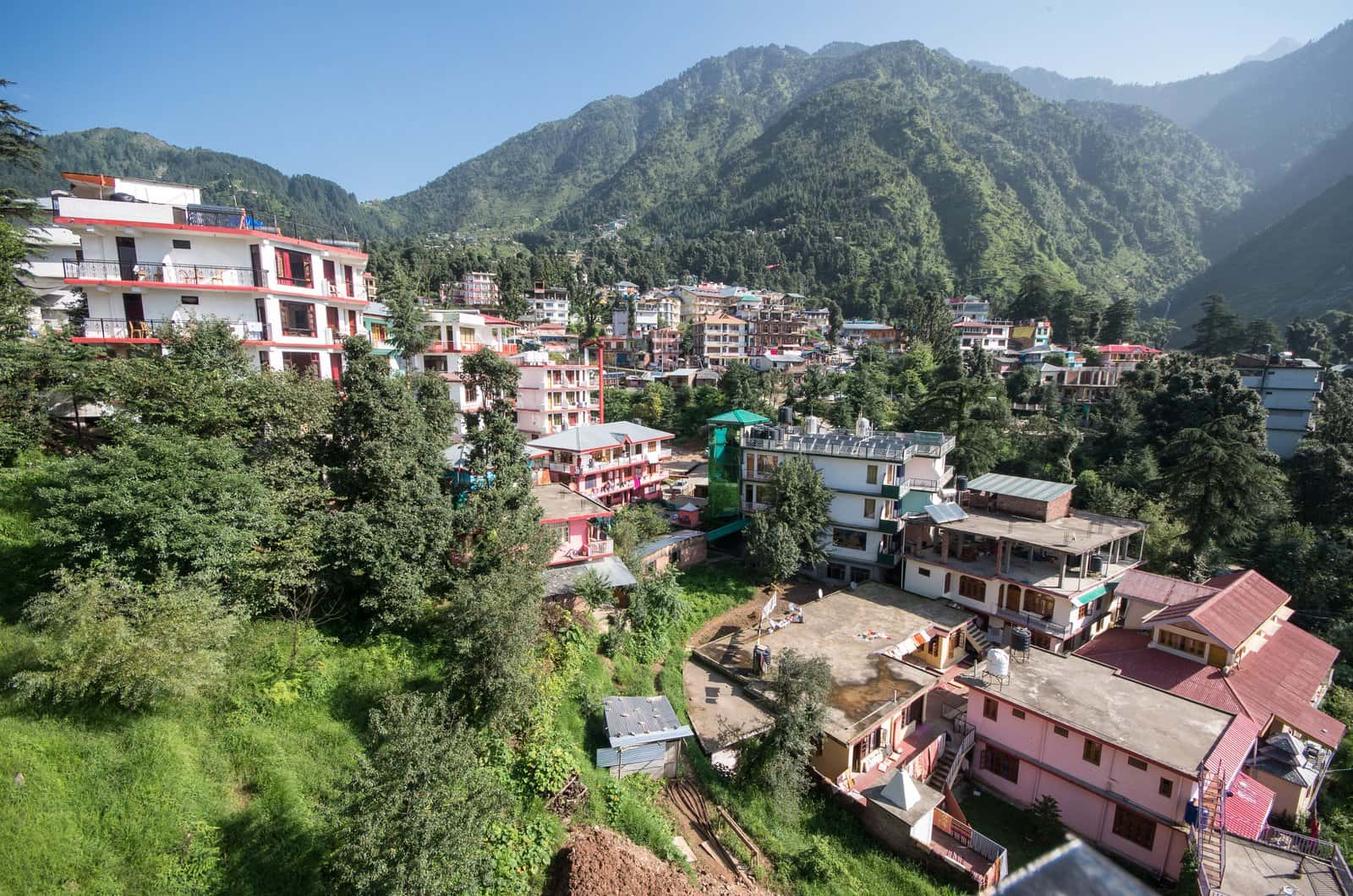
Kasauni Travel Guide
Kausani is a view destination, and the view is a gamble on a clear sky. The sharpest snow panorama comes in the post-monsoon weeks and on clear winter mornings, while the monsoon...
When to visit Kausani, and the months the peaks show
Kausani is a view destination, and the view is a gamble on a clear sky. The sharpest snow panorama comes in the post-monsoon weeks and on clear winter mornings, while the monsoon usually clouds the peaks out.
- September to November: the sharpest viewsPost-monsoon air is the cleanest of the year, so this is when Nanda Devi, Trishul and Panchachuli show at their crispest. Mornings are reliably clear more often than not, the hills are green from the rains, and the days are mild. If a guaranteed look at the snow line is your priority, come now.
- December to February: clear mornings, cold nightsWinter brings beautifully sharp mornings and the chance of snow in town, but nights drop close to freezing, so pack proper layers. The peaks are often at their most dramatic against a hard blue sky, then haze can build through the day, so be up early.
- April to June: pleasant but hazierThe Incredible India page lists this window too, and it is comfortable and good for the gardens, but summer haze and dust soften the snow view, especially in the afternoon. Worth it for the climate, less reliable for the panorama, so do your peak-watching at dawn.
- July to mid-September: monsoon, view usually blankThe rains green the valleys but usually hide the peaks behind cloud for days at a time, and they bring landslide risk on the Kumaon roads. Many monsoon visitors leave without seeing a single snow peak, so come in this window only if you want mist and quiet rather than the view.
Every brochure sells the Kausani panorama as if the snow peaks are always there. They are not. The view depends entirely on a clear sky, and on a cloudy or hazy day you may see nothing of Nanda Devi, Trishul or Panchachuli at all. The two things that load the odds in your favour are the right season, about September to November or clear winter mornings, and the right hour, just after dawn before the haze builds. Budget at least two nights so a single overcast morning does not cost you the whole reason you came.
How to reach Kausani
Kausani has no airport or railway of its own. Almost everyone comes up from Kathgodam railhead by road, or flies to Delhi and drives, with Pantnagar a limited fallback.
- Via Kathgodam, the reliable railheadKathgodam is the nearest big railway station, about 132 to 142 km away, roughly 4 to 5 hours up a winding hill road through Almora or Ranikhet. Trains from Delhi run overnight and by day, and from the station you take a taxi or shared transport up to Kausani. This is the way in most travellers use.
- Pantnagar airport, with caveatsPantnagar is the nearest airport at about 160 to 190 km, but flights are limited and prone to weather cancellation, so do not build a tight plan around it. Check current routes before relying on it. For most travellers, flying to Delhi and continuing to Kathgodam is the dependable choice.
- From Delhi by roadDelhi is about 405 to 433 km away, roughly 11 to 12 hours by car through Ramnagar and Ranikhet or through Haldwani and Almora. It is a long day, so most people break the run, often a night near Nainital or Almora, rather than push it in one go. We can arrange a car with an experienced hill driver.
- The last leg is slow and windingDistances on paper look short, but the mountain roads are slow, so allow more time than a flat-road estimate suggests. The climb from Almora to Kausani is gentle and scenic, and the final ridge approach rewards you with the first wide look at the snow line on a clear day.
Fly into Delhi, the main international gateway, then take an overnight train or a car to Kathgodam and drive up to Kausani. Pantnagar has no international flights and only limited domestic ones, so plan the journey through Delhi and Kathgodam.
Fly into Delhi, then continue to Kathgodam by train or road. Kausani sits easily on a wider Kumaon loop with Nainital, Almora and Corbett, so build it into a week rather than a quick hop.
Take a train to Kathgodam, the Kumaon railhead well served from Delhi, then drive up through Almora or Ranikhet. Book the popular long-weekend trains well ahead, as Kathgodam services sell out far in advance in season.
The panorama, the ashram and the temples
Kausani is its snow view, the Anasakti Ashram where Gandhi stayed, the tea estate, and the Katyuri temples at Baijnath nearby. A few practical notes make each worth the time.
- The Himalayan viewpoint at dawnThe headline sight is the arc of snow peaks, described by both the Incredible India page and the Bageshwar district administration as over 300 km in length, with Nanda Devi, Trishul and Panchachuli the named summits. The viewpoint near the town and many hotel terraces catch it best just after sunrise, before the day haze builds.
- Anasakti AshramAbout 1 km from the town centre, this is where Mahatma Gandhi stayed for 14 days in 1929 and worked on his Anasakti Yoga, a treatise on the Bhagavad Gita. The Incredible India ashram page lists hours of about 7 am to 6 pm, and there is a small museum and a library. Travellers describe entry as free, which is not stated officially, so treat it as donation-supported and confirm on arrival.
- Kausani tea estateAbout 5 km from town on the Bageshwar road, the estate at Pingalkot is run under the Uttarakhand Tea Development Board, which confirms its Kausani tea factory there; the Incredible India page calls the gardens about 200 hectares and travel guides quote roughly 208. You can walk the gardens, see processing in season, and taste and buy the local orthodox tea. The green flush is seasonal, the factory side is often closed from about November to March, and the upkeep can be patchy, so go for the walk and the tea rather than a polished attraction.
- Baijnath, Rudradhari and the poet museumBaijnath, about 17 km away, is a centrally protected ASI group of stone temples on the Gomti, with the main shrine of Shiva and 17 subsidiary shrines, the seat of the Katyuri dynasty from about the 8th century AD; an adjoining temple carries a 1292 AD inscription. Rudradhari Falls is a gentle excursion about 12 km out toward Someshwar, and the Sumitranandan Pant museum, about 200 m from the bus stop, marks the Hindi poet's birthplace.
Kausani is small and quiet, and its sights are gentle rather than grand. The snow panorama is the star, and everything else, the ashram, the tea garden, the temples and the short walks, is a soft supporting cast for a slow day or two. Come for the view and the calm, treat the rest as pleasant extras, and you will leave content. Arrive expecting a packed itinerary of marquee monuments and you may wonder what the fuss is about.
Signature experiences in Kausani
Beyond the viewpoint, these are the experiences people remember, and the honest steer on how to enjoy each without over-expecting.
- Sunrise over the snow lineThe finest free experience in Kausani is the sunrise, when the first light catches Trishul and Nanda Devi and the snow turns gold and pink. Set an alarm, take a hot drink to a terrace or the viewpoint, and give it twenty quiet minutes. On a clear post-monsoon or winter morning it is unforgettable.
- A slow walk through the tea gardensThe estate walk, about 5 km from town, is a calm hour among the bushes with the valley falling away below. See the processing if you visit in season, then taste and buy the local orthodox tea on the spot, which makes a far better souvenir than the tourist-market packets.
- An hour at Anasakti AshramEven non-pilgrims find the ashram peaceful: the simple rooms, the small museum, the prayer space, and a clean view over the hills. It is open about 7 am to 6 pm, costs nothing to look around as far as travellers report, and pairs naturally with the nearby Pant poet museum for a gentle morning.
- The short trek to Rudradhari FallsDrive about 12 km toward Someshwar to Kantali village, then walk roughly 2 km, about 2 hours round, to the modest falls and a small Shiva and Vishnu cave shrine. It is a pretty, easy half-day for anyone who wants a leg-stretch rather than a serious trek.
- Stargazing on a clear nightThe low light pollution and the altitude make for excellent night skies, and there is a small observatory in town that runs public sky-viewing sessions on clear evenings. Check whether it is open during your stay, as hours vary, and wrap up warm against the night cold.
- Onward into deeper KumaonKausani is a fine base for the quieter Kumaon: a short drive on to Baijnath and Bageshwar, or further to Chaukori and the Pindari glacier trailhead. If you have a week, let Kausani be the gentle, view-focused pause before the harder trails.
If you do only one thing slowly in Kausani, make it the sunrise. It is free, it is the whole reason the town exists, and it asks nothing but that you are awake and outside before the light arrives. Give yourself two mornings rather than one so a single overcast dawn does not rob you of the moment, and let the rest of the day stay unhurried. Kausani rewards stillness in a way a quick stop never allows.
Where to stay in Kausani, and how many nights
What matters most here is a room that actually faces the peaks. Stay view-facing on the ridge, give it two nights, and the government KMVN rest house is a well-placed value option.
- Pay for a view-facing roomIn Kausani the view is the product, so the single best money you spend is on a room or terrace that faces the snow line. Confirm the orientation when you book, not just the photos, since some rooms in the same hotel look only at the hillside behind. A clear-morning peak view from your own balcony is worth the premium.
- The KMVN government rest houseThe KMVN Tourist Rest House Trishul, run by Kumaon Mandal Vikas Nigam, is widely rated as having the best location and view in town. Tariffs are not reliably published, so book live rates on the official KMVN site, and forum reviewers advise choosing the cottages over the cheaper small rooms for comfort.
- How many nightsTwo nights is the right length: it gives you two shots at a clear sunrise, time for the ashram, the tea garden and a short walk, and a slow afternoon. One night is a gamble on the weather, and a day trip from Nainital or Almora barely lets you see the place. Add a third night if you plan to push on into deeper Kumaon.
- Room budgetsSimple guesthouses run from about 1,200 to 2,500 rupees, comfortable view-facing mid-range stays about 3,000 to 6,000 rupees, and the better resorts about 7,000 to 15,000 rupees, all rising over long weekends and holidays. Book early in the September to November peak, when the best view rooms go first.
The most common Kausani regret is a comfortable hotel with the wrong aspect, where your room looks at the slope behind rather than the snow line in front. Hotels are not always upfront about this, so ask explicitly for a mountain-facing or valley-facing room, confirm it in writing, and if the view is the reason for the trip, pay the difference for it. A clear morning is wasted from the wrong window.
Kausani costs and a realistic daily budget
Kausani is gentle on the wallet outside peak weekends. Here is what the main things cost so you can plan and avoid being overcharged on taxis.
- A rough daily budgetExcluding your long-distance transport to Kathgodam, plan on about 1,500 to 2,500 rupees a day as a budget traveller, about 4,000 to 7,000 rupees mid-range, and about 8,000 rupees and up for a comfortable view-facing day with good meals. Food is inexpensive and the sights cost little, so the room and the taxi are your main spend.
- The taxi is the variableA local sightseeing taxi for a day is commonly quoted from about 2,500 rupees, and rates vary widely, so agree the price and the route before you set off. Forum travellers advise boarding at Haldwani rather than Kathgodam for cheaper hire, and bargaining gently, since first quotes to visitors run high.
- The low-cost and free thingsThe sunrise viewpoint is free, Anasakti Ashram is reported free to look around, the tea garden walk costs nothing beyond what you buy, and the Pant museum is a small charge of about 10 rupees by traveller accounts, though that figure is unconfirmed. The big-ticket items are simply the room and the car.
- Cash and cardsBigger hotels and the tea estate take cards or UPI, but taxis, small eateries and the bazaar run on cash, and ATMs are limited in a small hill town. Draw enough cash in Almora or before you climb up, and keep small notes for tips and shared transport.
The single habit that keeps a Kausani budget honest is to settle the taxi price and the full route before the car moves, whether that is the day of sightseeing or the airport and railhead transfer. Hill taxi quotes to visitors start high and come down without drama, and a sum agreed in advance turns the town's only real friction into a non-event. Everything else here, the rooms, the food, the sights, is straightforward and fairly priced.
Practical logistics: getting around, cash, food and SIM
The small things that make a Kausani day smooth, from the limited local transport and ATMs to the Kumaoni food worth trying and the winding-road habit that beats motion sickness.
- Getting around townKausani is tiny and walkable in its core, but the sights are spread out, so for the tea estate, Baijnath or Rudradhari you will want a taxi for the day. Shared jeeps and buses run the main routes to Almora and Bageshwar, but they are infrequent, so plan around their timings or hire a car.
- The Kumaoni food to tryLean into the local kitchen: aloo ke gutke, the spiced potato dish, bhatt ki churkani made from black soybean, gahat lentil soup, and the famous bal mithai, a roasted khoya sweet rolled in sugar balls. The cafes also do good coffee and apple-and-apricot bakes in the fruit season.
- Cash, ATMs and SIMATMs are limited, so carry enough cash from Almora or the plains. Mobile coverage in town is generally fine for calls and maps on the main networks, though it thins out on the drives between villages. Hindi and Kumaoni are the local languages, and English is understood in the tourist trade.
- Beat the winding-road sicknessThe drive up from Kathgodam is long and twisty, so if anyone in your group is prone to motion sickness, take medication before you start, sit in the front, keep a window cracked, and break the journey rather than do it in one stretch. This is the most common discomfort of a Kausani trip and an easy one to plan around.
Safety, the roads, and staying well
Kausani is gentle and safe, and at its modest altitude serious mountain sickness is unlikely. The real things to manage are the winding roads, the monsoon landslides and the winter cold.
- Altitude is mild hereAt about 1,890 m, Kausani is low enough that serious altitude sickness is unlikely for most travellers, and no special acclimatisation is needed. If you are pushing on to higher Kumaon trails like the Pindari glacier route, that is a different matter, but the town itself is gentle on the body.
- Monsoon landslides on the roadsThe bigger hazard is the road in the rains. The Kumaon hill roads, including the Bhowali to Almora stretch, are landslide-prone in the monsoon of about July to mid-September, and blockages do happen. Check the Uttarakhand landslide centre and local conditions before you travel in those months, and build in slack time.
- Winter cold and warm layersFrom about December to February, nights fall close to freezing and there can be snow, so pack proper warm layers, a hat and gloves even if the days feel mild in the sun. Hotel heating in budget rooms can be limited, so check what is provided and ask for extra blankets.
- General safety and basicsKausani is a quiet, low-crime hill town, and solo and women travellers generally find it relaxed and easy. Take the usual care after dark on unlit lanes, drink bottled or filtered water, and carry any personal medication, as the nearest full hospitals are down in Almora or the plains.
Travellers worry about mountain sickness in the Himalayas, but at Kausani's modest height that is rarely the issue. What actually shapes a safe trip is the road: the long winding drive that tires drivers and turns stomachs, and the monsoon landslides that can block it. Drive in daylight, break the journey, keep motion-sickness tablets handy, and avoid the heaviest monsoon weeks unless you are watching the conditions. Manage the road and Kausani is one of the easier, safer hill stops in Kumaon.
Kausani for every kind of traveller, and on access
Kausani suits the slow traveller above all. Here is what it offers each kind of visitor, and the one tip that matters for each, including how a senior or a family with a small child manages the drive.
- Couples and honeymoonersSlow, romantic and quiet, with sunrise over the snow line from your own balcony and long unhurried days. Book a view-facing room and give it two nights so a cloudy morning does not spoil the one shot at the peaks. Kausani is built for couples who want calm rather than activity.
- Families with childrenGentle and safe, with the tea garden, the short Rudradhari walk and the stargazing for older kids. The long winding drive is the catch with small children, so break the journey, keep the itinerary loose, and do not over-stuff it, since the constant turns and the changing weather tire little ones quickly.
- Senior travellers and on accessibilityVery doable and gentle on the body, since the altitude is mild and the town is small. Stay in a view-facing, ground-floor or lift-served room so the peaks come to you, use a hired car rather than shared jeeps, and break the long drive up with a night near Nainital or Almora. The sights ask for little walking beyond Rudradhari, which is optional.
- Solo travellersQuiet, low-crime and easy to do alone, and a fine place to slow down with a book and the view. There is little nightlife, so come for the peace rather than the scene, and the cafes and ashram make easy, gentle company for a few days on your own.
- PhotographersThe dawn snow line, the tea gardens in morning light and the clear night skies are the prizes. Use a tripod for the sunrise and the stars, be set up before first light, and give yourself two mornings so weather does not cost you the shot. The golden minutes on the peaks are brief, so be ready early.
- Slow and offbeat travellersThis is Kausani's natural fit: nothing much to tick off, just the view, the walks and the quiet. Travellers who need a packed plan get bored here, while those who want to do almost nothing in beautiful surroundings love it. Pair it with Chaukori or Binsar for a deeper Kumaon slow-travel loop.
Kausani or Almora, Ranikhet, Mukteshwar, Chaukori, Binsar
The question forums ask most is which Kumaon hill station to pick. Here is an honest steer on how Kausani compares with its neighbours on view, crowd and character.
- Kausani: the wide open panoramaKausani's edge is the broad, open arc of snow peaks and the Gandhi and poet heritage, in a small, quiet, view-focused town with a good spread of hotels. Choose it if the single wide sunrise panorama and a slow pace are what you want, and you accept that there is little else to do.
- Almora and RanikhetAlmora is a larger ridge town with markets, the Kasar Devi traveller scene and good views with more bustle, a useful base or stopover. Ranikhet is a green cantonment with golf, gentle walks and a calm, ordered feel, lovely but more about the forest and quiet than a single dramatic snow view.
- Mukteshwar and ChaukoriMukteshwar feels more orchard-and-adventure, with closer-up peak views and a more offbeat, spread-out character. Chaukori is quieter still, a small village base with fine Panchachuli views and far fewer hotels, the pick if you want even more seclusion than Kausani and do not mind less infrastructure.
- Binsar for the wildest viewsBinsar is a wildlife sanctuary with a famous 360-degree panorama from Zero Point and forest seclusion, but it is more remote with limited stays and an entry fee for the sanctuary. Choose Binsar over Kausani if you want the wildest, most secluded view and are happy to trade town comforts for it.
If you want one wide, open snow panorama with heritage, hotel choice and an easy pace, Kausani is the pick. If you want greener forest calm, choose Ranikhet or Binsar; for orchards and a more active, offbeat feel, Mukteshwar; for deeper seclusion and a village pace, Chaukori; and for a larger town with markets and a traveller scene, Almora. On a week-long Kumaon loop you can pair two or three of these, but do not race all of them, since the slow winding roads make four bases in four days exhausting.
A suggested Kausani itinerary
How to shape two unhurried days so you get two chances at a clear sunrise and still see the ashram, the tea garden and the temples.
- Arrival day, afternoon and eveningArrive by mid-afternoon after the long drive up, check into a view-facing room, and take it slow to recover from the winding road. Walk to the viewpoint or the Anasakti Ashram for late light, settle on a terrace with a hot drink, and let the first evening be about catching your breath and your first look at the hills.
- Day one, full dayBe up for sunrise and the snow line, then after breakfast drive to the tea estate for the garden walk and some tea, and on to Baijnath temple. Keep the afternoon gentle, the Pant museum or a cafe, and come back for a second sunset, so you are never far from your room when the light turns.
- Day two, the second sunrise then onwardTake your second shot at the dawn peaks, which doubles your odds of a clear one, then either do the short Rudradhari Falls walk or drive on into deeper Kumaon toward Chaukori, Bageshwar or back down to Nainital. Leave by late morning if you have a long onward drive.
- If you only have one nightArrive in good light, do the ashram and the viewpoint that evening, and pin your hopes on the single sunrise the next morning before you leave. It works if the weather is kind, but it is a gamble, so prefer two nights whenever your schedule allows.
The single thing that decides whether a Kausani trip succeeds is whether you catch a clear dawn on the peaks, and the weather will not always cooperate. The simplest insurance is two nights and therefore two sunrises, which roughly doubles your chance of one clear morning. Build the plan so both dawns are spent in Kausani with nothing else booked early, keep the drives for daytime, and you give yourself the best odds of the view you came for.
The real questions travellers ask about Kausani
Straight answers to the questions that come up again and again on traveller forums, so you arrive already knowing the score.
- Will I actually see the Himalayas?Only if the sky is clear, and it often is not. Forum travellers regularly report cloud and haze hiding the peaks. Load the odds by coming in about September to November or on clear winter mornings, looking just after dawn, and staying two nights for two chances. With those in your favour, the view is among the finest in Kumaon.
- Which month is best for the view?Post-monsoon, about September to November, gives the sharpest air and the clearest peaks, and clear winter mornings from about December to February are also excellent. April to June is pleasant but hazier, and the monsoon of about July to mid-September usually clouds the view out completely.
- Is it worth coming in the monsoon?Only for the green mist and quiet, not the view. In July and August you may see no snow peaks at all, and landslides can block the roads. If your only window is the rains, September is the safer monsoon-tail choice, and you should keep your plans flexible.
- How many days, and is it boring?Two nights is right. There is genuinely little to do beyond the view, the ashram, the tea garden and a short walk, so travellers who want activity find it quiet, while those who want to slow down love it. If you need a busy plan, pair Kausani with more active Kumaon stops.
- Is the KMVN rest house any good?The KMVN Tourist Rest House is widely rated for its location and view, arguably the best aspect in town, but forum reviewers say the cheaper small rooms can be basic and advise the cottages instead. Book live rates on the official KMVN site, as tariffs are not reliably published elsewhere.
- Is a weekend from Delhi realistic?Tight but doable as two nights and three days, ideally with a Friday-night start or a train to Kathgodam to save the long road slog. Book Kathgodam trains well ahead, as long-weekend services sell out far in advance, and accept that much of the time is spent travelling.
Planning Kausani from abroad
Kausani is the gentle, low-altitude, view-and-heritage stop that suits overseas and NRI visitors and parents. A little preparation on months, weather and the drive makes it easy.
- Book the right months for the viewIf you are flying in from abroad you cannot gamble on weather, so come in about September to November or for clear winter mornings, when the snow peaks are most reliable. Avoid the monsoon of about July to mid-September, when the view is usually blank and the roads can be blocked by landslides.
- Plan the journey through Delhi and KathgodamThere are no international flights to Kumaon. Fly into Delhi, then take an overnight train or a car to Kathgodam, about 132 to 142 km below Kausani, and drive up. Pantnagar airport exists but has limited, weather-prone flights, so do not build a tight plan around it.
- It is gentle and senior-friendlyAt about 1,890 m the altitude is mild, so there is little risk of mountain sickness, and the town asks for little walking. That makes Kausani one of the easier Himalayan stops for parents and grandparents, provided you break the long drive up and book a view-facing, easy-access room.
- The heritage is part of the appealFor NRI and overseas visitors the Anasakti Ashram, where Gandhi stayed in 1929 and worked on his Anasakti Yoga, adds a quiet historical layer to the view, open about 7 am to 6 pm. Pair it with the tea estate and the Katyuri temples at Baijnath for a gentle, meaningful day.
Money, connectivity and fitting Kausani into a Kumaon trip
The practical basics an overseas traveller needs for a small hill town, plus how Kausani slots into a wider Kumaon and Corbett route on a first trip to the region.
- Carry cash and a SIM from the cityPick up an Indian tourist SIM or an eSIM when you land in Delhi rather than hunting for one in a small town, and draw cash in Almora or the plains, as ATMs in Kausani are limited. Bigger hotels take cards or UPI, but taxis and small eateries are cash places.
- Give it two nights on a wider loopOn a first Kumaon trip, two nights in Kausani is the right weight: enough for two sunrises, the ashram and the tea garden, without slowing the whole itinerary. Slot it between Nainital or Almora and a deeper Kumaon or Corbett leg rather than as a stand-alone destination.
- Build in slack for the roadsMountain distances are short on paper but slow in reality, and the monsoon can block them. Allow more driving time than a map suggests, prefer daytime drives, and check the Uttarakhand landslide centre in the rainy months so a road closure does not derail a tight overseas schedule.
- An English-speaking driver helpsFor an overseas or NRI family, a hired car with an experienced, English-speaking hill driver takes the strain out of the winding roads and the sparse shared transport, and lets you stop for the views. We can arrange this as part of a wider Kumaon itinerary.
Kausani is an unusually gentle introduction to the Himalayas: low enough to avoid altitude trouble, small and walkable, and built around one of the widest snow panoramas you can reach by road. Slot it into a week with Nainital, Almora and Corbett, give it two nights for the view, and let it be the slow, reflective chapter of the trip. Many overseas visitors say the clear-morning sunrise over Trishul and Nanda Devi is the image they carry home.
The fourteen days that gave Kausani its name
In 1929 Mahatma Gandhi came to this quiet Kumaon ridge and stayed for fourteen days at what is now the Anasakti Ashram, working on his Anasakti Yoga, a commentary on the Bhagavad Gita and on the idea of action without attachment to its fruit. Looking out at the long line of snow peaks, Nanda Devi, Trishul and Panchachuli stretched across the horizon, he is widely said to have called Kausani the Switzerland of India, a phrase the town has carried ever since. The Incredible India destination page repeats the attribution, and the ashram keeps a small museum of photographs and writings from those days. The exact wording of the remark is passed down through tradition rather than from a single verified document, so we record it as the town tells it, and let the view that moved him speak for itself at dawn.
Planning a Kasauni trip?
Our Uttarakhand travel experts plan your full journey for you: route, hotels, darshan timings and transport. You get a free day-by-day plan and an exact quote on WhatsApp, usually within a few hours. No payment is needed to get your plan.
Tour packages that visit Kasauni
Every journey below is private, hand-crafted and fully customizable. Tell us your dates and we tailor the itinerary, the pace and the priests or guides around you.
