Mori Travel Guide
The valley has several seasons, not one. Rafting and river camping suit spring and autumn, the Sankri snow treks run in winter, and the monsoon is the one time to stay away.
When to visit Mori and the Tons valley
The valley has several seasons, not one. Rafting and river camping suit spring and autumn, the Sankri snow treks run in winter, and the monsoon is the one time to stay away.
- Spring, about April to June: rafting and green valleyThis is the high pre-monsoon window when the Tons runs strong on snowmelt and the riverside camps open. Days are pleasant low in the valley and the paddy and apple country is at its greenest. It is also a good time for the walk-in treks before the rains.
- Autumn, about October to November: clear air and calmer riverAfter the monsoon the skies clear, the river settles into its second rafting window and the mountain views sharpen. This is one of the loveliest and most reliable times to come for both the river and the villages.
- Winter, about December to March: the Sankri snow treksUp at Sankri and above, this is the famous season for Kedarkantha and the other snow treks, with the valley under fresh snow. Mori itself stays cold but usually open; heavy snowfall can briefly block the higher road to Sankri, so keep a day of slack.
- Monsoon, about July and August: avoidThe rains bring dangerously high water, landslides and road blocks on a single mountain road with few alternatives. Rafting shuts and driving is risky. If you can only travel in these months, choose somewhere else.
The Tons valley rewards travellers who plan around what they want to do. Come in spring or autumn for the river and the camps, come from about December to March for the Kedarkantha snow trek, and come from about April to June or September to November for the gentlest village and wildflower walking. Do not try to raft and snow-trek on the same trip, and never gamble on the July to August monsoon, when the mountain road is at its most dangerous.
How to reach Mori and Sankri
Everything starts at Dehradun. From there it is a long, winding and beautiful mountain drive up the Tons valley, first to Mori and then on to the Sankri trailhead.
- The gateway is DehradunDehradun is the nearest railhead, about 162 km from Mori, and Jolly Grant (Dehradun) is the nearest airport, about 175 km away. There are no flights or trains any closer, so plan on hiring a taxi or catching a bus and giving the drive most of a day.
- The road up the valleyThe usual route runs Dehradun to Mussoorie to Naugaon to Purola to Mori. Buses run from Dehradun to Purola, and from Purola you change to a bus or shared taxi for the last stretch, with Mori about 30 km on. An alternative approach is via Chakrata and Hanol.
- On to Sankri, the trailheadIf your goal is a trek, you carry on about 25 km beyond Mori to Sankri, at roughly 1,950 m. The full Dehradun to Sankri drive is about 200 km and takes about 8 to 10 hours. There is no motor road beyond Sankri, so this is where the walking begins.
- From DelhiDelhi is the long-distance gateway. Most travellers take an overnight train or bus to Dehradun and start the mountain drive fresh in the morning, rather than trying to push straight through in one exhausting go.
Fly into Delhi, then take a short domestic flight or an overnight train to Dehradun. From Dehradun it is a full day of mountain driving to Mori and Sankri. Give yourself a rest night in Dehradun before the long climb up the valley.
Fly into Delhi and connect to Dehradun by air or rail, then drive up the Tons valley. The valley sits well off the usual tourist circuit, so build in buffer time and confirm your car and driver in advance.
Reach Dehradun by train, bus or flight, then drive up through Mussoorie and Purola. Government buses run as far as Purola and Sankri, and taxis cover the rest, but self-drivers should be comfortable on narrow mountain roads.
The river, the wildlife park and the old temples
Mori is not a town of monuments. Its sights are the Tons River itself, the Govind Pashu Vihar wildlife country above Sankri, and the unusual temples of the Jaunsar-Bawar people.
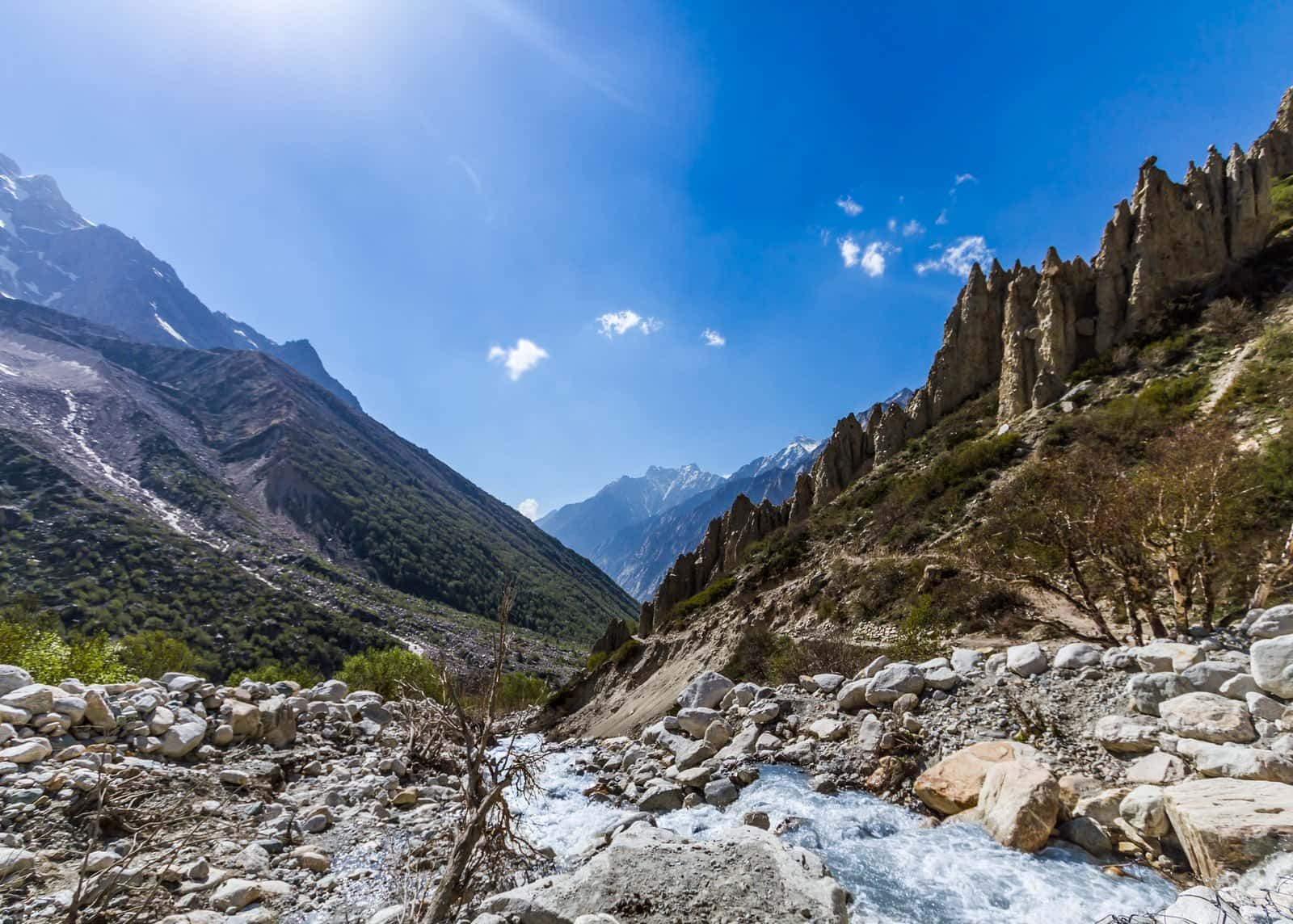
- The Tons River and the valleyThe Tons is the star: the largest tributary of the Yamuna, and it actually carries more water than the Yamuna where the two meet. Its pine-cloaked valley, paddy terraces and apple orchards are the everyday scenery of a Mori stay, and the river is the reason the camps and rafters come.
- Govind Pashu Vihar, above SankriThe Govind Pashu Vihar National Park and Wildlife Sanctuary spreads over about 958 sq km of the upper valley, from about 1,400 m to 6,323 m. It shelters snow leopard, Himalayan tahr, bharal, bears, musk deer and the beautiful Himalayan monal, and the Har Ki Dun valley lies inside it. You meet the park on foot, on the treks from Sankri.
- Netwar, Hanol and the Mahabharata templesThis is one of very few parts of India where Duryodhana and Karna of the Mahabharata are worshipped. There is a Karna temple near Netwar, Duryodhana is revered in the upper Tons and Supin villages, and the great regional deity Mahasu Devta has his most famous shrine at Hanol, a rewarding side trip from Mori.
- Sankri villageSankri, at roughly 1,950 m, is a working trekkers hamlet ringed by deodar forest where the Supin, Tons and Kedarganga come together. Even if you do not trek, a night here for the mountain air, the small cafes and the sound of the river is a pleasure in itself.
Mori has no fort, no famous monument and no big bazaar. What it offers is a quiet, deep river valley and a culture you will not meet in the tourist towns. Treat the drive, the villages, the temples and the forest as the experience, rather than ticking off named sights, and the Tons valley opens up in a way a monument-hunting trip never allows.
Rafting, trekking and camping in the Tons valley
The valley is built for the outdoors: white-water rafting on the Tons, the classic treks from Sankri, river camps and angling, and slow walks through old wooden villages.
- White-water rafting on the TonsThis is the signature thrill, but be clear-eyed: the Tons is an advanced river graded around IV, not the gentle Rishikesh float. Go with a professional outfit, wear the gear, and expect real rapids. It runs on high water in spring and again after the monsoon, and it is not a beginner day out.
- Kedarkantha, the beginner-friendly summitFrom Sankri, the Kedarkantha trek climbs to a summit of about 3,810 m past the campsites of Juda Ka Talab, base camp and Hargaon. Graded easy to moderate and carrying snow from about December to April, it is India's favourite first Himalayan summit and the reason most trekkers come up this valley.
- Har Ki Dun, the cultural valley walkHar Ki Dun, a cradle-shaped valley at about 3,566 m, is reached from Sankri by a jeep road to Taluka and then a walk along the Supin River through the old villages of Osla and Gangad. It is graded easy over a long distance, and its wooden villages and Swargarohini views make it the gentlest of the classic treks.
- Rupin Pass, for stronger legsThe Rupin Pass is a tougher crossing to Sangla in Himachal Pradesh, topping out at about 4,650 m. It starts from Dhaula near Netwar, is graded moderate to difficult and is best in May, June and September. Come to it fit and acclimatised, not as your first Himalayan trek.
- River camps and anglingOn the banks of the Tons, seasonal camps offer tents, bonfires and the sound of the water, and the catchment has long drawn anglers to licensed fishing camps in the rafting season. It is the easy, low-altitude way to enjoy the valley without a big climb.
- Village and culture walksBetween the adrenaline, walk the paddy and apple villages, meet the warm Jaunsari people, and visit the Mahabharata temples. This slow layer is what many travellers remember most fondly about the Tons valley.
Both the Tons and the high treks are serious. Raft only with a licensed outfit and never freelance on a grade IV river, and never attempt a high pass like Rupin as a first trek or without acclimatising. The valley is remote, help is hours away, and the honest choice of the right activity for your level is the single most important decision you make here.
Where to stay: Mori, the river camps or Sankri
Lodging is simple and seasonal. Choose Mori and the river camps for the water and easy days, or Sankri for the trailhead, and set your expectations low on comfort and high on scenery.
- Mori village and dhabasMori has a handful of simple budget guesthouses and roadside dhabas, typically about Rs 800 to 1,500 a night, serving north Indian food, a little Chinese and local Pahadi dishes. It is basic but friendly, and the natural base if you want to stay low by the river.
- Riverside rafting campsIn the rafting season, tented camps set up on the banks of the Tons, often bundling meals and activities. As a rough guide plan on about Rs 1,500 to 3,000 a night, though this is an estimate that varies by camp and season, so reconfirm when you book. This is the classic Tons-valley experience.
- Sankri, for trekkersIf you are trekking, stay the first and last night at Sankri, which has grown a good cluster of homestays and small lodges; well-run homestays here are warmly reviewed by trekkers. It is the last proper roadhead and market before the trails.
- GMVN and forest guest housesThe state-run GMVN operates basic guest houses at Sankri, Taluka and Osla, useful on the Har Ki Dun route, with dormitories and simple rooms. Forest rest houses exist too but need permission. None of this is luxury; it is clean, functional mountain lodging.
Do not come expecting a resort. Above Purola the choice is guesthouses, homestays, GMVN rooms and seasonal tents, and in peak trek season the good homestays at Sankri fill up. Book your Sankri nights ahead if you are trekking in the Kedarkantha winter season, carry a warm layer whatever the month, and treat the simplicity as part of the charm of a genuinely remote valley.
Tons valley costs and a realistic budget
The valley itself is inexpensive, but the long transport and the guided treks are where the money goes. Here is what the main things cost so you can plan honestly.
- The treks, guided from SankriA guided Kedarkantha trek from Sankri commonly costs about Rs 6,000 to 12,000 per person for the 4-night version, Har Ki Dun about Rs 8,000 to 18,000 depending on nights and services, and a full Rupin Pass trek around Rs 24,500. These usually include tents, meals on the trail and a guide.
- Lodging and food low in the valleyA simple guesthouse in Mori runs about Rs 800 to 1,500 a night and a riverside camp about Rs 1,500 to 3,000 a night as a rough, reconfirmable estimate. Dhaba meals are cheap and filling. Your bigger cost is nearly always the transport, not the bed.
- Transport is the real expenseA private taxi from Dehradun to Sankri and back, over roughly 200 km each way of mountain road, is the single largest line in most budgets. Sharing a vehicle with your group, or using the government buses to Purola and Sankri, is the honest way to keep it down.
- Carry cashCard and UPI acceptance is limited and unreliable above Purola, and ATMs are scarce and often out of service. Draw the cash you will need in Dehradun or Purola, and carry a comfortable buffer for guides, tips, camps and the drive back.
Treks that enter Govind Pashu Vihar attract a forest entry and camping fee, collected at the check posts around Sankri and Taluka and usually handled by your operator. The exact rate is set by the Uttarakhand Forest Department and changes from time to time, so any figure you see copied on a blog may be out of date. Ask your operator for the current charge, or reconfirm with the Forest Department, rather than trusting an old number.
Practical logistics: network, cash, permits and roads
The small things that make or break a Tons-valley trip: patchy signal, scarce ATMs, the forest permit, ID copies, and the single mountain road you depend on.
- Network and internetSignal runs thin above Purola. BSNL and Jio hold up best in pockets, Sankri has only limited coverage, and there is no reliable mobile data high in the valley. Tell people at home you will be off-grid, download your maps in advance, and enjoy the disconnection.
- Cash and ATMsWithdraw enough cash in Dehradun or Purola before you head up. ATMs in the valley are few and often empty or offline, and most guesthouses, dhabas, camps and guides work in cash. Running short up-valley is a real and avoidable problem.
- Permits and IDTreks into Govind Pashu Vihar need a forest entry that your operator usually arranges at the Sankri or Taluka check post. Carry several photocopies of your ID, and foreign nationals should carry passport copies, as this is a patrolled forest and border-adjacent belt where you may be asked to show proof.
- Buy supplies before you climbShops thin out fast. Buy your trekking basics, snacks, batteries, medicines and any special items in Dehradun, and top up small things at Purola or Sankri. Above the roadhead there are only a few tea huts, so carry energy food and a good first-aid kit.
The valley depends on a single winding mountain road, and in rain or snow it can close with little warning. Keep a spare day of buffer around flights and trains out of Dehradun, do not plan a tight connection on your last day, and in the monsoon assume the road can be blocked. Patience and slack in the plan are the most useful things you can pack.
Safety and health in a remote mountain valley
The Tons valley is peaceful and welcoming, but it is genuinely remote, and the river and the altitude are the real risks. A little caution keeps a trip happy.
- River safetyThe Tons is an advanced river. Raft only with a licensed, experienced outfit that provides helmets and life jackets, follow the guide, and never swim or freelance in the current. If the water is very high in early season or after rain, accept the guide's call to stand down.
- Altitude on the treksKedarkantha, Har Ki Dun and especially Rupin Pass all gain real height. Ascend gradually, drink plenty of water, and know the signs of altitude sickness, headache, nausea and breathlessness. If symptoms worsen, the rule is simple: go down. Rupin Pass in particular needs proper acclimatisation and fitness.
- Remoteness and medical helpSerious medical care is hours away down the valley. Carry a stocked first-aid kit, your regular medicines and any personal essentials, drink only boiled or purified water, and take normal care with food. Travel insurance that covers trekking and evacuation is strongly worth it for the high routes.
- Weather and roadsMountain weather turns fast. Carry warm and waterproof layers in every season, watch the forecast, and take local advice on the road and the trails seriously. In the monsoon, landslides and blocks are common, which is why we steer you away from July and August.
The valley is friendly and the villages are safe, and solo travellers, including women, generally find Sankri and the organised treks comfortable. The real risks here are the river, the altitude and the remoteness, not crime. If it is your first Himalayan trip, join a reputable group or hire a local guide rather than heading into the forest alone, and you will be in good, experienced hands.
The Tons valley for every kind of traveller
The valley suits very different visitors in different ways, from the first-time trekker to the family that never leaves the river. Here is the one tip that matters for each.
- First-time trekkersThis is your valley. Kedarkantha is India's most-loved beginner summit and Har Ki Dun is a gentle long walk with real village culture. Go with a good group, break the drive with a night at Sankri, and let the guides set the pace.
- Adventure groupsRafting the Tons and a snow summit in one region is a strong draw for fit friends. Keep river and high-trek plans to their right seasons, and book a professional outfit for the water rather than the cheapest quote.
- Families with childrenStay low. A river camp at Mori, easy walks in the paddy and apple villages, and a visit to the Hanol temple make a fine family trip without a hard climb. Keep small children well away from the fast water, and skip the high passes.
- Senior travellersDoable if you stay low and slow. The long drive is the hardest part, so break it, base at Mori or Sankri for the air and the views, and enjoy the river and the villages rather than the summits. Remember that medical help is hours away, so travel within your comfort.
- Solo travellersThe valley is welcoming and the organised treks are sociable and safe. Join a fixed-departure group for company and safety on the trails, keep someone informed of your plan given the network gaps, and you will rarely feel alone at Sankri in season.
- Photographers and birdwatchersDeodar forests, the Tons in full flow, wooden Jaunsari villages and the birds of Govind Pashu Vihar, from the Himalayan monal to soaring vultures, are the rewards. The clear post-monsoon weeks give the sharpest light and the widest mountain views.
How long to give the Tons valley, and a suggested plan
This is not a day trip. The long drive means you should give the valley several days, and how you shape them depends on whether you have come to raft, to trek or to slow down.
- The river-and-village short break, about 3 to 4 daysDrive up from Dehradun with a night on the way or at Mori, spend a full day rafting and by the river, add a day for the Hanol temple and the villages, and drive back. It is the least demanding way to taste the valley.
- The Kedarkantha trek, about 5 to 6 daysDehradun to Sankri on day one, then the classic four-day trek to the summit and back, and out to Dehradun on the last day. This is the most popular reason to come and a well-trodden, guided route.
- The Har Ki Dun trek, about 6 to 7 daysA longer, gentler valley walk from Sankri via Taluka and Osla, with a couple of nights deep in the mountains. Give it a full week door to door from Dehradun to enjoy it without rushing.
- Do not try to do it in a hurryBecause the drive alone is about 8 to 10 hours each way from Dehradun, a one-night dash is not worth it. Build in a buffer day for weather and road delays, especially before an onward flight or train.
The most common way a Tons-valley trip goes wrong is a tight connection on the way home. The single road can slow or close, and the drive back to Dehradun is long. Never book a same-day flight out of Dehradun on the day you leave Sankri; keep a night in Dehradun or Mussoorie as a cushion, and you will avoid the one stress this beautiful valley can throw at you.
The real questions travellers ask about the Tons valley
Straight answers to the questions that come up again and again on traveller forums, so you arrive already knowing the score.
- Is Mori the same as Sankri?No. Mori is a low riverside village and the gateway to the valley; Sankri is a separate village about 25 km further up at roughly 1,950 m and is the actual trailhead. Base at Mori for the river, at Sankri for the treks.
- How hard is the Tons rafting?Hard. The Tons is an advanced river graded around IV, not a gentle float, and it suits experienced rafters with a professional outfit. If you want an easy first raft, that is Rishikesh, not the Tons.
- When can I raft, and can I go in the monsoon?Rafting runs in two short windows, roughly April to early July on snowmelt and again about October to November after the rains. It shuts in the peak monsoon of July and August, when the river is dangerously high, so do not plan a monsoon rafting trip.
- Do I need a permit?For the treks that enter Govind Pashu Vihar, yes, there is a forest entry that your operator normally arranges at the Sankri or Taluka check post. Carry ID copies. The exact fee changes, so ask your operator or the Forest Department for the current rate.
- Which trek suits a first timer?Kedarkantha for a snowy summit with a real sense of achievement, or Har Ki Dun for a gentler, longer valley walk with village culture. Both are beginner-friendly with a guide. Leave Rupin Pass until you are fitter and acclimatised.
- Is there network and an ATM?Barely. Signal is patchy above Purola and there is no reliable data high up, so treat the valley as off-grid. ATMs are scarce and unreliable, so carry the cash you need from Dehradun or Purola.
Planning the Tons valley from abroad
The Tons valley is one of the most rewarding quiet-Himalaya introductions in India, but it is remote. A little preparation turns the long drive and the thin services into part of the adventure.
- Understand how remote it isThis is not Rishikesh or Manali. From Dehradun it is a full day of mountain driving, lodging is simple, and the network drops out. If you want raw, quiet Himalaya with real village culture rather than cafes and crowds, this valley is a gift; if you want comfort and connectivity, plan differently.
- Give it enough daysBuild the valley into a wider Uttarakhand plan and give it at least four to seven days including the drive, not a rushed overnight. Rest a night in Dehradun on the way up, and keep a buffer day before your onward flight in case the road is slow.
- Permits and ID for foreign nationalsThe Sankri treks need a forest entry that your operator arranges, and you should carry passport copies, as this is a patrolled forest and border-adjacent belt. There is no special inner-line permit for the standard treks, but always confirm the current rules with your operator before you travel.
- Go guided for your first tripFor an overseas visitor, the easiest and safest way in is a reputable trek operator or a local guide who handles the transport, the permit, the camps and the food. It removes the language, road and logistics friction and lets you simply enjoy the mountains.
Money, connectivity and timing for foreign visitors
The practical basics an overseas traveller needs for a remote river valley: cash over cards, a SIM that barely works up top, and how to slot the valley into a bigger India trip.
- Carry cash, do not rely on cardsCard and UPI acceptance is thin and unreliable above Purola, and ATMs are scarce. Draw plenty of rupees in Dehradun before you head up, and carry small notes for guesthouses, dhabas, guides and tips. Cash, not plastic, runs this valley.
- Get a SIM before you climbPick up an Indian tourist SIM in Delhi or Dehradun; a BSNL or Jio number gives you the best chance of a signal in the valley, though even then coverage is patchy and there is no reliable data high up. Download offline maps and any bookings before you lose signal.
- Timing on a bigger India tripThe comfortable windows are spring, about April to June, and autumn, about October to November, for the river and the villages, or about December to March if you specifically want the Kedarkantha snow trek. Avoid the July to August monsoon for road safety.
- Pair it with the classic circuitThe valley sits behind Dehradun and Mussoorie, so it pairs naturally with Rishikesh, Haridwar or Mussoorie at the start or end of the trip. Many overseas visitors treat the Tons valley as the wild, off-circuit heart of an Uttarakhand journey.
The Tons valley is an unusually authentic introduction to the Indian Himalaya: no crowds, no commercial gloss, just the river, the deodar forests, the old wooden villages and some of the friendliest hosts in the hills. Come with the right expectations about comfort and connectivity, give it enough time, go guided, and many travellers find this quiet valley becomes the part of India they talk about most warmly afterwards.
Where Duryodhana and Karna are still worshipped
Most of India remembers Duryodhana and Karna as figures of the Mahabharata's losing side, but in the Tons valley they are family. The people of this Jaunsar-Bawar and Rawain country trace their descent from the epic's warriors, and here, almost uniquely in the land, they build temples not to the victorious Pandavas but to Duryodhana, revered in the upper Tons and Supin villages, and to Karna, whose shrine stands near Netwar. Presiding over the wider region is Mahasu Devta, whose great wooden temple at Hanol on the Tons is one of the most powerful shrines of these hills. To travel up the Tons is to enter a corner of India where the Mahabharata is not a distant story but a living genealogy, carved into the wooden temples and sung at the village fairs.
Planning a Mori trip?
Our Uttarakhand travel experts plan your full journey for you: route, hotels, darshan timings and transport. You get a free day-by-day plan and an exact quote on WhatsApp, usually within a few hours. No payment is needed to get your plan.