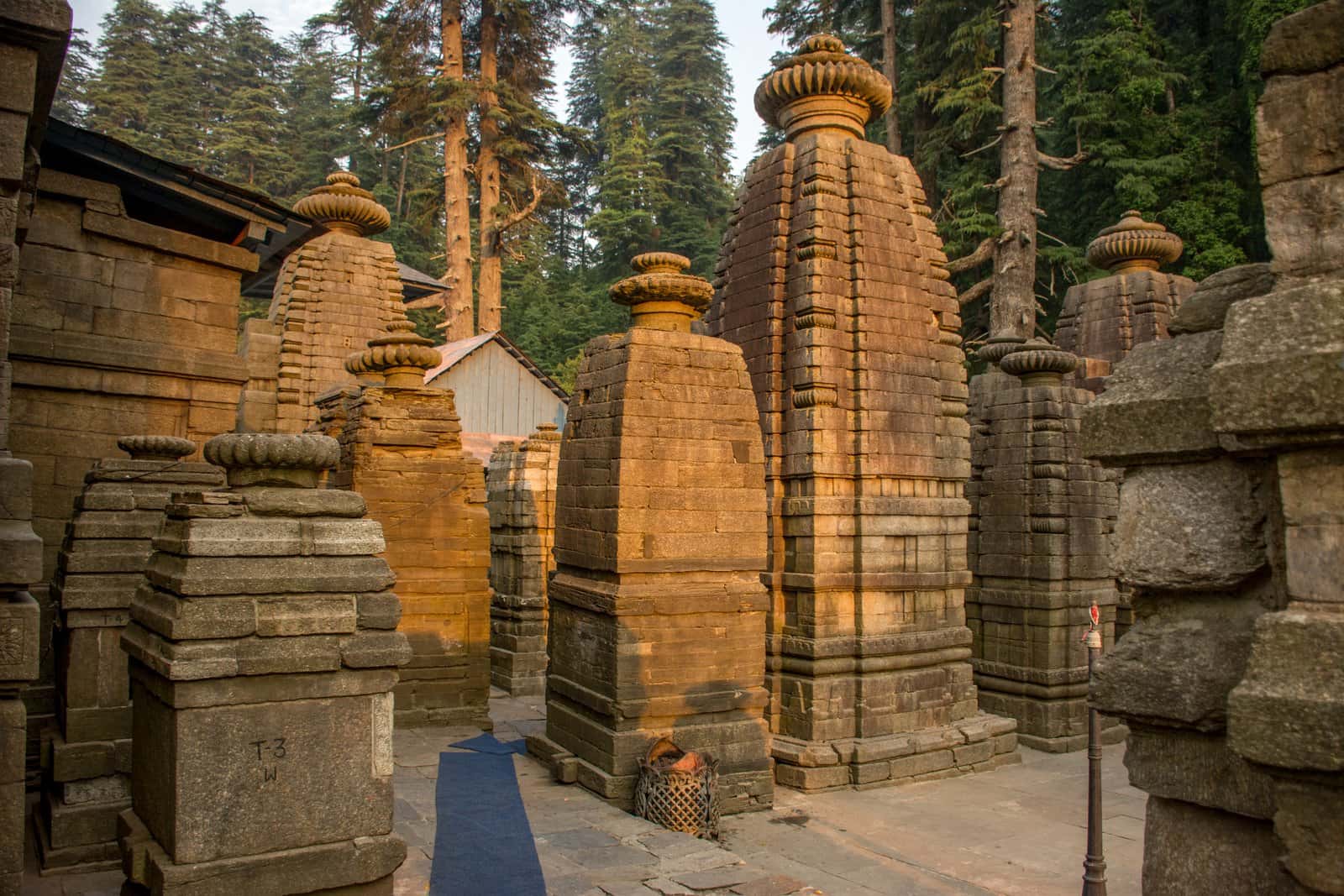
Mukteshwar Travel Guide
Come between mid-October and mid-December if the snow peaks are your reason. Come in March to June for blossom, fruit and warm days. Respect the monsoon, and treat snow as a...
When to visit Mukteshwar, and when you actually see the Himalaya
Come between mid-October and mid-December if the snow peaks are your reason. Come in March to June for blossom, fruit and warm days. Respect the monsoon, and treat snow as a bonus, never a promise.
- Mid-October to mid-December: the clear windowThis is when Mukteshwar gives you what you came for. After the monsoon washes the sky, the air turns crisp and clean, and on a good morning you can see the whole snow wall standing up in front of you. Nights are cold, so carry a proper woollen layer. If the Himalayan view is your main reason to travel, plan for these weeks and nothing else.
- March to June: blossom, fruit and warm afternoonsMarch and April bring the orchard blossom, and by about the end of May to mid-June the peaches, plums, apricots and pears are ripe on the trees around Ramgarh and Mukteshwar. The days are lovely and warm. But be honest with yourself about the view: summer haze can hide the entire snow range for days together, so come for the fruit and the walks, not for the peaks.
- July to mid-September: the monsoon, and why we say noThe hills are green and the Bhalu Gaad waterfall is in full flow, and that is the whole of the good news. Landslides regularly block the roads through Nainital district for hours or even days, the paths turn slippery, and the peaks are behind cloud. If you must travel then, keep your plan loose, use an experienced hill driver, and watch the weather warnings every single morning.
- Late December to early February: cold, quiet and maybe snowThe ridge is beautifully empty, the light is sharp and there is a real chance of snow. But please understand this clearly: snow here is a lottery, not a booking. Some winters give a good fall that whitens the orchards for days, and many winters give barely a dusting. Come for the cold quiet and let the snow be a gift if it arrives.
This is a small thing that saves a lot of disappointment. The India Meteorological Department runs its own observatory and a Doppler weather radar at Mukteshwar and publishes a station forecast for Mukteshwar itself. Mukteshwar at about 2,286 m stands a few hundred metres higher than Nainital and about 51 km away on a separate ridge, so the weather here is genuinely different from the weather at the lake. Before you set out, open the IMD page for Mukteshwar rather than trusting a general Nainital forecast, and you will know whether you are driving up into cloud or into a clear morning.
How to reach Mukteshwar, and getting around once you are there
Kathgodam is your railhead and Pantnagar your nearest airport, but almost everyone finishes the journey by road on a slow, winding hill route. Give the last stretch the time it deserves.
- The official distances, so you can plan properlyThe Nainital district administration gives the distances plainly: Mukteshwar is about 74 km from Kathgodam railway station, about 110 km from Pantnagar airport, about 51 km from Nainital and about 40 km from Bhowali. Do not read these as highway numbers. These are narrow hill roads with hairpin bends, so allow roughly three hours from Kathgodam and roughly two hours from Nainital, and more if the traffic or the weather is against you.
- By train to Kathgodam, the sensible wayKathgodam is the end of the line for Kumaon and the smartest arrival for most Indian travellers. The Shatabdi from New Delhi is the fast daytime option and the Ranikhet Express is the overnight one, and the Uttaranchal Sampark Kranti also runs on this route. Book on IRCTC well ahead in the holiday season, because these trains fill up early. From the station, take a car up the hill.
- By road from DelhiDelhi to Mukteshwar is a long day of driving, roughly 350 km, and you should plan on about eight to ten hours with breaks. The plains stretch is quick, and then everything slows down after Kathgodam. Start early, eat before you begin the climb, and if you are driving yourself, do not attempt the final hill section in the dark on your first visit.
- By air to PantnagarPantnagar is the nearest airport at about 110 km, but flights are limited and the schedule changes, so always check current routes before you build a plan around it. Most overseas and NRI travellers do better flying into Delhi and coming up by train to Kathgodam or by road, which is more reliable and often faster door to door.
- Cars, shared jeeps and buses from the railheadA reserved car from Kathgodam to Mukteshwar is quoted anywhere from about 1,500 to 3,000 rupees depending on the vehicle, the season and how well you bargain. A seat in a shared jeep or tempo is about 150 to 250 rupees and a bus seat about 100 to 150 rupees, usually changing at Bhowali. There is no official fixed tariff on this route, so agree the fare clearly before the car starts.
- Getting around once you are upThere is no local bus network worth planning around and taxis are few. Most travellers keep the car and driver they came up with, or ask the homestay to arrange one for a day. You can rent a scooter for about 500 to 800 rupees a day, which is a lovely way to see the villages, but only if you are genuinely comfortable on steep, narrow, wet hill roads.
Fly into Delhi, rest a night, then take the morning train to Kathgodam and drive up. Do not try to fly in and drive to Mukteshwar on the same day. The hill road at the end is slow and tiring, and you will not enjoy it after a long-haul flight.
Fly into Delhi, and if the schedule suits you, connect onward to Pantnagar, which is the closest airport at about 110 km. Check current flights carefully, as this is a small airport with limited and changeable services.
Take a train to Kathgodam and drive the last roughly 74 km, or drive up from Delhi in a long day. Mukteshwar also fits neatly into a Kumaon loop with Nainital, Binsar, Almora and Kausani, and we can arrange the car and an experienced hill driver for the whole circuit.
Mukteshwar Dham, Chauli Ki Jaali, and the honest list of sights
There are four things to see, and the list is genuinely short. We would rather tell you that now than have you drive nine hours and feel cheated.
- Mukteshwar Dham, the Shiva temple at the topThe temple sits at the highest point of the ridge and gives the place its name. Mukti means liberation and Ishwar means the Lord, and the tradition here is that the Lord granted liberation to a demon on this rock. Inside is a white marble Shiva linga. The last stretch is a flight of steep stone steps, so wear shoes with grip, remove them at the entrance, and dress simply. Go for the early morning darshan when the ridge is quiet and the peaks are out.
- Chauli Ki Jaali, the cliff behind the templeWalk roughly 250 m on from the temple and you reach a wall of rock falling away into the valley, with a natural window worn right through the stone. Chauli means rock and Jaali means the lattice or hole. Local tradition holds that passing through the opening blesses a childless couple. It is the finest viewpoint in Mukteshwar and it is also, in places, completely unfenced. Please read the safety section before you go near the edge.
- The IVRI campus, and what you may and may not do thereThe Indian Veterinary Research Institute has stood on this hill since the British government moved its bacteriology laboratory here in 1893, and the colonial stone buildings and the old rinderpest pillar are genuinely handsome. But please understand what it is: a live research campus with virology laboratories, spread over about 3,450 acres. IVRI's own official page says a National Veterinary Museum at Mukteshwar is still only a proposal. So do not assume there is a museum to visit. Ask politely at the administrative office, and accept a no with grace.
- Bhalu Gaad waterfallAbout 14 km from Mukteshwar, then a walk of roughly 30 minutes down through the forest to a fall of about 60 ft dropping into a clear pool. Bhalu Gaad means the bear's stream. Travellers commonly report an entry charge of about 60 rupees per person and a life jacket rental of about 100 rupees, though these are not published anywhere official, so carry small change. Full flow is in the monsoon, when the path is also at its most slippery.
You will read on almost every travel page that Mukteshwar Dham is 350 years old. We looked for the record behind that number and we could not find one. The Nainital district administration, which is the official authority for this place, describes it only as an old temple of Lord Shiva standing on the top of a rock, and gives no date at all. There is no ASI notification and no temple-trust record we could open that fixes an age. So here is our honest position: the shrine is genuinely old and genuinely revered, the tradition of the Pandavas worshipping Lord Shiva at this rock is beautiful and worth telling, and the exact age is simply not established. We would rather say that than repeat a number nobody can stand behind.
What to do in Mukteshwar when there is nothing to do
This is the section that decides your trip. Mukteshwar is not a place you tick off. It is a place you settle into, and these are the things that make the settling worth it.
- The sunrise, and the discipline of waking up for itThis is the one thing you must do. On a clear morning the sun comes up behind the snow wall and turns Nanda Devi and Trishul pink and then gold, and the whole ridge holds its breath. IVRI's own campus page names the peaks you are looking at: Nanda Devi at about 25,645 ft, Trisul at about 23,360 ft and Panchachuli at about 22,650 ft. Ask your host the night before which way to face, take a hot cup of tea outside, and wait.
- Long, slow village walksThe real pleasure of Mukteshwar is on foot. Walk out through the pine and oak to Sitla, Satoli, Satkhol and Peora, past terraced fields and stone houses, with the valley falling away below you. There is no ticket and no guide required. Carry water, start early, and simply keep walking until you feel like turning back. Two hours of this will do you more good than any sightseeing list.
- Rappelling and rock climbing at Chauli Ki JaaliLocal operators run rappelling, rock climbing, a rope ladder and a zip line on the cliff. Travellers report paying about 200 to 300 rupees per activity and say the rate is negotiable. It is a genuine thrill on a genuine cliff. It is also completely unregulated, so please read the safety section carefully and make the four checks we list there before you clip in.
- The orchards, if your dates matchThe Ramgarh and Mukteshwar belt is the fruit bowl of Kumaon. The blossom is a March and April event, and the peaches, plums, apricots and pears are usually ripe from about the end of May to mid-June. Many orchard homestays will let you walk the terraces and eat what you pick. For the rest of the year the orchards are simply pretty green slopes, so time it if fruit is your reason.
- Birds, and the quiet that lets you hear themThis ridge is one of the finest birding stretches in Kumaon. Himalayan bulbuls, whistling thrushes, barbets, woodpeckers and, if you are patient, the koklass pheasant. You do not need a tour. Sit on a wall in the morning with a cup of tea and let them come to you. Take binoculars if you have them, and ask your homestay host where to sit.
- The night skyWith so little light down below, the stars here are extraordinary on a clear winter night. Wrap up properly, get away from the porch light, let your eyes adjust for a good ten minutes, and look up. This costs nothing and it is one of the things people remember longest about Mukteshwar.
Do not fill your two days here by driving somewhere else. It is very tempting: Nainital is only about 51 km away, Binsar and Kausani are within reach, and a car sits idle outside your homestay. But if you spend both days on the road you will have driven all the way to Mukteshwar and never actually been in Mukteshwar. The ridge only gives you what it has if you stay on it. Do your day trips from Nainital or Almora, and keep Mukteshwar itself for stillness.
Where to stay in Mukteshwar, and how to tell a real homestay
Here the room is the destination. Choose a place with a proper Himalayan view and a kitchen you trust, because you are going to spend a lot of happy hours doing very little in it.
- Mukteshwar top: near the temple and the cliffStaying close to the temple and Chauli Ki Jaali means you can walk to the sunrise and to the cliff without a car. This is the practical choice for a short stay, for seniors who cannot manage long transfers, and for anyone without their own vehicle. It is a little busier on weekends, when day visitors come up from Nainital.
- The village belt: Sitla, Satoli, Satkhol, Peora and DhanachuliThe loveliest stays are strung along the ridge in these small villages, some of them within about 5 to 20 km of the temple. This is where the orchard cottages and the old stone houses are, with wide views and complete quiet. You will need a car for anything at all, and that is exactly the point. Choose this if you have three nights or more.
- How to tell a genuine homestay from a hotelUttarakhand's official homestay policy, under the Deen Dayal Upadhyay Griha Awas scheme, caps a registered homestay at 8 rooms and 24 beds. So if a property calling itself a homestay has twenty rooms and a reception counter, it is a hotel using a friendly word. Both can be perfectly good, but if you want your money to reach a Kumaoni family and you want home-cooked food, ask whether the property is a registered homestay and how many rooms it has.
- What it costs to sleepA simple village homestay is roughly 1,500 to 3,000 rupees a night, a comfortable mid-range room roughly 3,000 to 6,000 rupees, and a boutique orchard resort or heritage cottage roughly 7,000 to 20,000 rupees. All of these climb sharply over long weekends, Christmas and New Year week, and the summer school holidays, so book early for those dates.
- How many nightsTwo nights is the minimum that makes any sense, because it gives you one full day and two mornings, and the mornings are everything. Three nights is the right answer for most people. A resident of Mukteshwar who answers travellers on the TripAdvisor forum puts it simply: stay in one place for a couple of days so you can actually absorb it, instead of tiring yourself out packing and unpacking.
First, does the room itself face the snow peaks, or only the garden? Many properties advertise a Himalayan view that you can only reach by walking to a common terrace, and in December that walk at dawn is cold. Second, is there a back-up for power and hot water, because both fail on this ridge in bad weather. Third, do they cook Kumaoni food, or only the usual hotel menu? Get honest answers to those three and you will have a lovely stay. Skip them and you may spend three nights looking at a wall.
Mukteshwar costs and a realistic daily budget
Mukteshwar is not expensive, but nearly nothing here has a printed price, so the habit that saves you money is to agree the rate before anything starts.
- A realistic daily budgetLeaving aside your room and the long drive up, plan on about 1,500 to 2,500 rupees a day if you are travelling simply, about 3,500 to 6,000 rupees for a mid-range day with a cafe meal and one activity, and about 8,000 rupees and above for a comfortable resort day with a car at your disposal. Mukteshwar has few ways to spend money, which is part of its charm.
- What the activities costRappelling, rock climbing, a rope ladder or a zip line at Chauli Ki Jaali is reported by travellers at about 200 to 300 rupees per activity, and the rate is negotiable. Bhalu Gaad waterfall has a commonly reported entry of about 60 rupees per person and a life jacket for about 100 rupees. None of these figures is published on an official page, so carry small notes and expect them to move.
- Food, and the thali worth orderingA good Kumaoni thali runs about 250 to 400 rupees, and it is far better value and far better eating than the standard hotel menu. Cafes on the ridge charge city prices for coffee and cake, which is the one place your budget can quietly leak. Most homestays include home-cooked meals, and that is usually the best deal in Mukteshwar.
- Transport, the biggest line in your budgetThe car is what costs money here. A reserved car from Kathgodam is about 1,500 to 3,000 rupees one way, a shared jeep seat about 150 to 250 rupees and a bus seat about 100 to 150 rupees. A scooter for the day is about 500 to 800 rupees. If you are keeping a car and driver for a Kumaon circuit, settle the full package rate in writing before you leave the plains.
There is no meter, no tariff board and no fixed price for almost anything in Mukteshwar. The car fare, the rope activity, the day rental, even the waterfall entry, are all quoted by a person and not by a machine. So build one simple habit: ask what it will cost, agree the number out loud, and only then begin. Nobody minds being asked, quotes come down without any argument, and a rate agreed at the start turns the only friction in Mukteshwar into a non-event.
Practical logistics: money, signal, power, fuel and food
Mukteshwar is a village ridge, not a town. A few small preparations in Haldwani or Bhowali will save you a lot of trouble up here.
- Carry cash, and carry it up with youThere is an ATM on the Mukteshwar road, but a single hill ATM can be empty, offline or out of order for days, and many homestays, drivers and small eateries prefer cash anyway. Draw what you need in Haldwani, Kathgodam or Bhowali on the way up. UPI works where there is signal, and signal is exactly the thing that is not guaranteed.
- Signal and power are both patchyCoverage on the main ridge is generally usable, but it drops away in the valleys and in several of the village stays. Power cuts are normal, especially in rain and snow. If you are planning to work remotely from Mukteshwar, and many people do, ask your host directly which network works in their house and whether they have a back-up. Do not assume.
- Fuel, and the fuel rule for the hillsFill your tank in Haldwani, Bhowali or Bhimtal before you climb. Pumps on the ridge are few and can run dry. The standard hill rule applies: never let the tank fall below half, because a detour around a landslide can add fifty unplanned kilometres.
- Eat Kumaoni, not continentalThis is where the trip becomes memorable. Ask your homestay for Bhatt ki Churkani, Aloo ke Gutke with bhang ki chutney, a bowl of gahat soup, madua roti and Ras or Baadi, all cooked with local produce. Buy Bal Mithai to carry home. WayToIndia's own Kumaon travel notes point travellers to exactly this local plate, and any Kumaoni home will cook it for you if you ask a day ahead.
- What to pack that you will forgetA torch, because the ridge is genuinely dark at night and power cuts are common. Shoes with real grip, because the temple steps and the waterfall path are steep and often wet. One warm layer more than you think you need, even in summer, because the evening turns cold fast at this height. Your regular medicines, because the nearest proper chemist may be a drive away.
- Driving here, and the one thing to respectThe roads are narrow, the bends are blind and the drops are real. Sound the horn on the corners, give way to the vehicle coming uphill, and do not drive this ridge at night on your first visit. If you are not fully confident on hill roads, hire a local driver. It is a small cost for a large amount of peace of mind.
Safety at the cliff, on the rope, on the road, and in the cold
Mukteshwar is a gentle, low-crime place. The risks here are not people. They are an unfenced cliff, an unregulated rope, a wet hill road and a cold night.
- The cliff edge at Chauli Ki JaaliThis is the real danger in Mukteshwar and it is not talked about enough. Chauli Ki Jaali is a genuine cliff with a long drop and, in many places, no railing at all. The rock gets slippery in rain and mist. Keep well back from the edge, hold small children by the hand at all times, do not step out for a photograph, and do not go anywhere near it after dark or in fog.
- Before you clip into a rope: the four checksThe rappelling and climbing here is run by local operators, and there is no official tariff, no posted certification and no visible regulator. So check four things yourself. One, look at the harness for frayed webbing or a worn buckle. Two, look at the rope for cuts, glazing or hard spots. Three, look at where the rope is anchored and satisfy yourself it is a proper fixed point. Four, ask for a helmet and refuse to go if there is not one. If anything makes you uneasy, walk away. It is only a photograph.
- Monsoon roads and landslidesFrom about July to mid-September the hill roads across Nainital district take heavy rain, and landslides regularly block them for hours or days. This is not a small inconvenience, it is the reason we do not recommend a monsoon trip. If you are here anyway, check the IMD warnings each morning, never drive a hill road during heavy rain, and build spare days into your plan so a blocked road does not cost you a flight.
- Cold, altitude and the small thingsAt about 2,286 m you will not get altitude sickness, but you will get cold much faster than you expect once the sun drops behind the ridge, and the wind on the cliff is sharp. Carry a warm layer even in summer. The high sun burns quickly at this height, so use sunscreen. Drink boiled or bottled water, and carry your regular medicines, because the nearest good hospital is down in Haldwani.
- Wildlife, and the sensible evening ruleThis is leopard country, as the whole of the Kumaon hills is. Attacks on visitors are very rare and you should not be frightened, but the sensible local habit is worth copying: do not walk lonely forest paths alone after dark, keep children close in the evening, and carry a torch. Ask your host what the local practice is, and follow it.
- Solo travellers and women travelling aloneMukteshwar is a quiet village ridge and is generally a low-friction, low-hassle place for solo travellers, including women. There is no tout culture and no bazaar pressure. The practical cautions are the ordinary ones for any remote hill area: tell your host your walking route, come back before dark, keep your phone charged and remember that signal fails in the valleys.
Travellers ask on the forums every winter whether it is safe to drive in the snow in Mukteshwar, and the honest answer is: not in an ordinary car, not on ice, and not if you have never done it. The hill roads here get icy on the shaded bends, and a two wheel drive car with ordinary tyres has very little grip. If snow is forecast, park the car and let a local driver handle it, or simply stay put at your homestay with a hot cup of tea and enjoy the snow from the veranda, which is honestly the better plan anyway.
Mukteshwar for every kind of traveller, and who should not come
Mukteshwar is a wonderful place for some travellers and a genuinely poor choice for others. A caring guide tells you both.
- CouplesThis is the best possible reason to come. An orchard cottage, a shared sunrise over Nanda Devi, a long walk to a village with no plan at all, and nothing on the schedule. Take three nights, not two. Mukteshwar is one of the loveliest quiet honeymoon and anniversary choices in Kumaon.
- Families with childrenBe careful here, and be honest with yourself. Small children who love a garden, a stream and a bonfire will be very happy. Children of about eight to fourteen who expect a mall road, a boat ride and a games arcade will be bored by the second afternoon. If you are bringing older children, either add Nainital to the trip or make sure your property has activities of its own. And keep every child well away from the cliff edge.
- Senior travellers and on accessibilityMukteshwar is kind to seniors in one way and hard in another. The kindness is that there is nothing to rush for and the air is clean. The difficulty is that the temple is reached by steep stone steps, the cliff path is uneven, and the village walks are on slopes. So stay near the top to keep transfers short, choose a room with the view from the window rather than from a distant terrace, take the steps slowly with a hand for support, and skip Chauli Ki Jaali entirely if balance is a worry. The sunrise from your own veranda is the same sunrise.
- Solo travellers, writers and remote workersThis is an outstanding place to be alone with your work or your thoughts. It is quiet, safe, cheap and beautiful, and a month here would do most people good. Just confirm with your host, before booking, which mobile network actually works in their house and whether they have a power back-up, because that will decide whether a working stay is a joy or a disaster.
- Birdwatchers and photographersCome in the clear window of about mid-October to mid-December, get up before dawn, and be patient. The light on the snow wall at sunrise is the shot, and the ridge is thick with Himalayan birds. Both of you want the same thing: an early morning, a warm jacket and no schedule.
- Who should honestly not comeIf your idea of a holiday is a busy market, a boat ride, cafes with a crowd, and a list of sights to tick off, Mukteshwar will disappoint you and you will blame the place unfairly. Go to Nainital instead, which is only about 51 km away and does exactly that beautifully. There is no shame in choosing the right hill station for the holiday you actually want.
A suggested Mukteshwar itinerary for two and three nights
The plan below deliberately leaves large empty spaces. Those empty spaces are the holiday. Please do not fill them.
- Day one: the long drive upToday you travel. Whether you come by the morning train to Kathgodam or drive the roughly 350 km from Delhi, the day is going to be spent getting here, and the last stretch will be slow. Reach in daylight if you possibly can. Check in, take a hot cup of tea on the veranda, watch the light go off the peaks, eat an early Kumaoni dinner, and sleep. Do not plan anything else.
- Day two, morning: sunrise, temple, cliffToday you wake before dawn. Wrap up warmly, step outside with your tea, and wait for the sun to hit Nanda Devi and Trishul. After breakfast, walk up to Mukteshwar Dham for a quiet darshan, then continue the roughly 250 m to Chauli Ki Jaali for the view. If you want to rappel, this is the time to do it, when the rock is dry and the operators are fresh. Keep well back from the unfenced edge.
- Day two, afternoon and evening: do nothing, on purposeToday after lunch, please do nothing. Read on the veranda, sleep, watch the valley, walk to the next village and back. This is not a wasted afternoon, this is the thing you came for and it is the thing city life will not give you. In the evening, ask your host for a bonfire, eat Kumaoni food, and go out to look at the stars before you sleep.
- Day three, if you have it: the waterfall or the orchardsToday you can pick just one thing. Either drive the roughly 14 km to Bhalu Gaad and walk the roughly 30 minutes down to the falls, or, if you are here between about the end of May and mid-June, spend the morning in an orchard eating peaches and plums off the tree. Then come back and do nothing again. One outing a day is the correct dose in Mukteshwar.
- Adding Mukteshwar to a Kumaon circuitMukteshwar sits very naturally in a longer Kumaon loop. A comfortable shape is two nights Nainital, two or three nights Mukteshwar, then on to Binsar or Kausani, and back to Kathgodam by way of Almora. Do the sightseeing and the boating in Nainital, and let Mukteshwar be the quiet chapter in the middle. Kausani is roughly 80 km on and takes about three hours.
- The mistake to avoidThe most common mistake is to use Mukteshwar as a base and drive out every day to Nainital, Binsar and Kausani. On paper it looks efficient. In practice you will spend six hours a day on hairpin bends, arrive back after dark, and never once see the sunrise you came for. If you want day trips, base yourself in Nainital. If you want Mukteshwar, stay in Mukteshwar.
The real questions travellers ask about Mukteshwar
These are the questions people actually post on the Mukteshwar travel forums, and here are straight answers, including the uncomfortable ones.
- Is Mukteshwar worth it, or is there nothing to do?Both are true, and that is the whole point. There is very little to do. There is no mall road, no market street, no lake and no boating, and a resident of Mukteshwar who answers travellers on the TripAdvisor forum says exactly that. If you want to be entertained, it is not worth it. If you want to sit on a ridge and watch the Himalaya turn gold with a cup of tea in your hand, there are few better places in India.
- Is two nights enough?Two nights is the honest minimum, because it buys you one full day and, more importantly, two mornings. Three nights is better and is what we would recommend. One night is a waste of a nine hour drive.
- Can I use Mukteshwar as a base for Nainital, Binsar and Kausani?You can, but we would gently advise you not to. These are slow hill roads, and a day trip out and back will eat six hours and your sunrise. Base in Nainital for day trips. Base in Mukteshwar for stillness. Trying to do both from one bed leaves you tired and short-changed.
- Can I come by bus or shared taxi from Kathgodam?Yes. A seat in a shared jeep or tempo is about 150 to 250 rupees, and a bus seat about 100 to 150 rupees, usually changing at Bhowali. It is slower and it is not comfortable with heavy luggage or with elderly parents, but it works and it is cheap. A reserved car is about 1,500 to 3,000 rupees and is what most families take.
- Will I definitely see the snow peaks?No, and please do not book on that promise. The clean view comes on the crisp mornings of about mid-October to mid-December and on the days right after winter rain or snow. From April to June the haze can hide the range for days, and in the monsoon it is behind cloud. Check the IMD forecast for Mukteshwar itself before you set out, and be lucky.
- Is it safe to drive in the snow?Not in an ordinary car, and not if you have never done it. The shaded bends ice over. If snow is forecast, hand the wheel to a local driver or simply stay put at your homestay and enjoy it from the veranda.
- Can I visit the IVRI campus?Do not assume so. IVRI is a live research campus with virology laboratories, not a tourist site, and its own official page says a National Veterinary Museum at Mukteshwar is still only a proposal. Ask politely at the administrative office, be prepared to be turned away, and never let that decide your trip.
- Can I rent a scooter?Yes, for about 500 to 800 rupees a day, and it is a lovely way to see the villages. But only if you genuinely ride well. These are steep, narrow roads with blind bends and no shoulder, and they are slippery in rain. If in doubt, take a car with a driver.
Why the British came here in 1893, and the tigress that made the hill famous
Mukteshwar has one of the most interesting back stories of any small hill station in India, and almost no travel page tells it. It is worth knowing before you walk up to the temple.
- Why a laboratory ended up on a Kumaon ridgeIn the nineteenth century cattle plague was destroying livestock across India, and the government set up a bacteriology laboratory at Pune. IVRI's own official history records that in August 1893 it was decided to move that laboratory into the Himalaya, because the cold, clean mountain air preserved vaccines and sera far better and the hills were remote enough that disease could not escape from the experimental herds. Mukteswar was chosen, and about 3,000 acres were bought in the Kumaon hills.
- What that decision left behindIt left a small English hill village on an Indian ridge: stone laboratories, a church, an old post office, quarters and lanes, all built for scientists rather than for holidaymakers. That is why Mukteshwar looks and feels different from Nainital. It was never a resort. It was a workplace, and it still is. The campus today runs to about 3,450 acres and houses the Division of Virology and the Division of Temperate Animal Husbandry.
- The temple that was here firstThe Shiva temple was standing on the rock long before the laboratory arrived, and IVRI's own campus page acknowledges it, recording that the historic temple of Lord Shiva known as Mahadeo stands at the highest point overlooking the institute and that the name of the place is derived from it. So the order of things is worth remembering as you walk up: the temple gave the hill its name, and the science came afterwards.
- What to look for as you walk the campus roadEven from the public road you can see the old colonial stone buildings and the character of a purpose-built research village. Look at the doors, the chimneys and the way the lanes follow the ridge. Remember that people are working behind those windows on live animal viruses. Walk quietly, do not photograph the laboratories, and do not wander in through open gates.
The most famous thing that ever happened on this hill is a story most travel pages leave out, and the few that tell it usually credit the wrong book. In the Author's Note to Man-Eaters of Kumaon (1944), Jim Corbett describes a young tigress who fought a porcupine and came away blinded in one eye, with about fifty quills, one to nine inches long, driven into her right foreleg and under the pad. Unable to hunt properly, festering and starving, she killed a woman who was cutting grass beside her, and after that she became a man-eater. She killed twenty-four people before she was finally accounted for. Corbett then gives her a whole chapter, The Muktesar Man-Eater, in his later book The Temple Tiger and More Man-Eaters of Kumaon (1954), where he tells how he shot her on this hill and found, when he skinned her, that the quills were still ingrown under her pad. He tells it without any triumph and with real pity for the animal. Carry that story in your head as you walk the quiet forest paths of this ridge, and let it remind you to respect the leopard country you are standing in.
Planning Mukteshwar from abroad
For an overseas or NRI traveller, Mukteshwar is one of the best value quiet Himalayan stays in India. But you must come here to rest, not to sightsee, and you must give the journey the time it needs.
- Understand what you are bookingThis is not Shimla or Manali. There is no promenade, no shopping street and no nightlife. What there is, is a ridge with an enormous Himalayan view, orchards, birdsong, home-cooked Kumaoni food and complete silence. If that is what you want after a long year abroad, Mukteshwar is close to perfect. If you want a busy hill station, please choose Nainital instead. We would rather you enjoy your holiday than book the wrong one with us.
- Give the journey a whole dayFly into Delhi, and do not attempt to reach Mukteshwar the same day. Rest a night, then take the morning train to Kathgodam and drive up the last roughly 74 km, or drive the roughly 350 km from Delhi over about eight to ten hours. The final hill stretch is slow and winding, and it is much harder after a long-haul flight than it looks on the map.
- Bringing parents or grandparentsThis is one of the gentlest hill stations in Kumaon for elders, because there is nothing they are expected to keep up with. Stay near the top so transfers are short, ask for a ground floor room, and choose a property where the snow view is visible from the room itself. The temple steps are steep, so let them take those slowly, and let them skip the cliff. The sunrise from their own veranda will move them just as much.
- Time it to the clear windowIf this is a once-in-a-few-years trip home and the Himalaya is what you are coming for, plan for the roughly mid-October to mid-December window when the air is clear and the peaks are out. That is also just after the festival season, when Kumaon is at its most beautiful. Avoid the monsoon months entirely, because landslides can block the roads and you will not see a thing.
Many overseas visitors try to see too much of Uttarakhand in one visit and end up spending their whole holiday inside a car on hairpin bends. Do not do that. Pick two places, give each of them three nights, and let one of them be Mukteshwar. Sitting still on one ridge and watching the same mountain change colour for three days will give you a far deeper feeling for the Himalaya than a week of driving past six of them. It is also far kinder on the body when you are still adjusting to the time difference.
Money, connectivity and comfort for foreign visitors
A village ridge asks for a little preparation. Sort out your SIM, your cash and your expectations about power before you leave the plains, and everything after that is easy.
- Get your SIM in Delhi, not in the hillsBuy an Indian tourist SIM or activate an eSIM at Delhi airport when you land. There is no reliable place to buy and activate a SIM on this ridge, and the paperwork for a foreign passport takes time. Ask your homestay host in advance which network actually works at their house, because coverage varies a lot from one village to the next.
- Carry cash up from the plainsThere is an ATM on the Mukteshwar road, but a single hill ATM is not something to depend on. It can be empty or offline for days at a time. Draw your cash in Delhi, Haldwani or Kathgodam. Cards work at the bigger resorts, but drivers, small eateries, the waterfall entry and the rope activities all run on cash and small notes.
- Expect power cuts, and plan around themElectricity fails on this ridge, especially in rain and snow, and hot water can go with it. This is normal and nobody will apologise for it. Carry a power bank and a torch, charge everything when the power is on, and ask before booking whether the property has a generator or an inverter. If you need to take a work call from Mukteshwar, do not leave that to chance.
- Food, water and the small comfortsDrink bottled or boiled water. Eat the home-cooked Kumaoni food, which is fresh, simple and excellent, rather than asking for a continental menu that a village kitchen will do badly. A Kumaoni thali outside is about 250 to 400 rupees. Bring your regular medicines with you, as the nearest good chemist and hospital are down in Haldwani.
The temple, the laboratory and the Muktesar tigress
Three things share this ridge, and they explain it completely. First came the temple: an old shrine to Lord Shiva on the highest rock, from which the place takes its name, Mukti and Ishwar, the Lord of liberation. The Nainital district administration calls it simply an old temple of Lord Shiva on the top of a rock and gives no date, and we will not invent one for it. Then, in August 1893, the British Indian government decided to move its bacteriology laboratory out of the plains and into the Himalaya, because the cold clean air of these hills preserved vaccines and the remoteness kept the cattle plague from escaping. They bought about 3,000 acres here, and the stone laboratories, the church and the quiet lanes of the research campus have shaped the character of Mukteshwar ever since. And then there was the tigress. Jim Corbett writes of a young tigress on this hill who lost an eye to a porcupine and carried about fifty quills festering in her right foreleg. Unable to hunt, she killed a woman cutting grass beside her, and became a man-eater who took twenty-four lives before Corbett shot her. He describes her briefly in the Author's Note to Man-Eaters of Kumaon (1944) and at full length in the chapter The Muktesar Man-Eater in The Temple Tiger and More Man-Eaters of Kumaon (1954). When he skinned her he found the quills still ingrown under her pad, and he wrote about her with pity rather than pride. Stand at the temple at sunrise, with the laboratory roofs below you and the forest falling away into the valley, and all three stories are in front of you at once. That is Mukteshwar. It has almost nothing to see, and it has more to think about than most places twice its size.
Planning a Mukteshwar trip?
Our Uttarakhand travel experts plan your full journey for you: route, hotels, darshan timings and transport. You get a free day-by-day plan and an exact quote on WhatsApp, usually within a few hours. No payment is needed to get your plan.