Ramgarh Travel Guide
Come between mid-October and mid-December if you want the snow peaks. Come between the end of May and mid-June if you want peaches, plums and apricots. Respect the monsoon, and...
When to visit Ramgarh, and the weeks the fruit is actually on the tree
Come between mid-October and mid-December if you want the snow peaks. Come between the end of May and mid-June if you want peaches, plums and apricots. Respect the monsoon, and treat snow as a gift, never a booking.
- Mid-October to mid-December: the clear windowThis is when the ridge gives you what you came for. After the monsoon has washed the sky, the air turns crisp, and on a good morning the whole snow wall stands up in front of you across the valley. The orchards are bare, the light is beautiful, and the guest houses are quiet. Nights are genuinely cold, so carry a proper woollen layer. If the Himalayan view is your main reason to travel, plan for these weeks and nothing else.
- End of May to mid-June: the fruit weeksThis is the reason Ramgarh is called the Fruit Bowl of Kumaon. Peaches, plums and apricots on the Ramgarh and Mukteshwar belt are usually ripe from about the end of May to mid-June, and apples come later in the year. The days are warm and lovely. But be honest with yourself about the view, because the summer haze can hide the entire snow range for days together. Come now for the fruit and the walks, not for the peaks.
- March and April: blossom, and empty lanesThe orchards are in blossom, the ridge is pink and white, and hardly anyone is here. This is our quiet favourite. There is no fruit to eat yet and the haze is beginning to build, so take it for what it is: a soft, pretty, restful fortnight with the whole hillside to yourself.
- July to mid-September: the monsoon, and why we say noThe hills are green and the streams are full, and that is the whole of the good news. Landslides regularly block the roads through Nainital district for hours or even days, the tracks turn slippery, and the peaks are behind cloud. If you must travel then, keep your plan loose, use an experienced hill driver, and read the weather warnings every single morning.
- Late December to early February: cold, quiet and maybe snowThe ridge is beautifully empty and the light is sharp. There is a real chance of snow, and please understand this clearly: snow here is a lottery, not a booking. Some winters whiten the orchards for days and many winters give barely a dusting. Come for the cold quiet, take a hot water bottle, and let the snow be a gift if it arrives.
This is a small habit that saves a lot of disappointment. Ramgarh has no weather station of its own. The nearest India Meteorological Department observatory, which also carries a Doppler radar and publishes its own station forecast, is at Mukteshwar on the next ridge at about 2,286 m. Nainital sits lower and on a different ridge, so its forecast is not the forecast for your orchard. Before you set out, open the IMD page for Mukteshwar, and you will know whether you are driving up into cloud or into a clear morning.
How to reach Ramgarh, and getting around once you are there
Kathgodam is your railhead and Pantnagar your nearest small airport, but everybody finishes the journey by road on a slow, winding hill route through Bhowali. Give that last stretch the time it deserves.
- The distances, and the honest driving timesRamgarh sits roughly 50 to 55 km from Kathgodam railway station, roughly 25 to 30 km from Nainital, roughly 15 to 20 km beyond Bhowali, and roughly 20 to 30 km from Mukteshwar. Even the official figures argue with each other here, and we would rather show you that than hide it: Wikipedia places Umagarh at Ramgarh about 25 km from Nainital, while the archived Uttarakhand Tourism page said 35 km, because there is more than one road and they measure from different points. Please do not read any of these as highway numbers. These are narrow hill roads with hairpin bends, so allow about two to two and a half hours from Kathgodam and about an hour to an hour and a half from Nainital, and more if the weather or the traffic is against you.
- By train to Kathgodam, the sensible wayKathgodam is the end of the broad gauge line for Kumaon and the smartest arrival for most Indian travellers. The Shatabdi from New Delhi is the fast daytime service and the Ranikhet Express is the overnight one, with the Uttarakhand Sampark Kranti also running on this route. Book on IRCTC well ahead in the holiday season, because these trains fill early. From the station, take a car up the hill.
- By road from DelhiDelhi to Ramgarh is a long day, roughly 300 to 330 km, and you should plan on about eight to nine hours with breaks. A route travellers on the TripAdvisor Nainital forum recommend runs Delhi, Ghaziabad, Hapur, Gajraula, Moradabad, Rampur, Bazpur, Kaladhungi, Haldwani, Kathgodam, Bhimtal, Gagar and up to Ramgarh. Start early, eat before you begin the climb, and never attempt the final hill section in the dark on your first visit.
- By air to PantnagarPantnagar is the nearest airport at roughly 75 to 90 km, but it is a small airport served mainly by regional carriers under the UDAN scheme, largely from Delhi, and the flights and frequency change. Always check current routes before you build a plan around it. Most overseas and NRI travellers do better flying into Delhi and coming up by train to Kathgodam or by road, which is more reliable door to door.
- Cars, shared jeeps and buses from the railheadA reserved car from Kathgodam to Ramgarh is commonly quoted at about 1,500 to 2,500 rupees depending on the vehicle, the season and how well you bargain. A seat in a shared jeep or tempo, usually changing at Bhowali, is about 100 to 250 rupees, and a bus seat is about 100 to 150 rupees. There is no official tariff on this route and no fare board, so agree the number out loud before the car starts.
- Getting around once you are upThere is no local bus network worth planning around, and taxis on the ridge are few. Most travellers simply keep the car and driver they came up with, or ask the homestay to arrange one for a day. Everything else in Ramgarh is done on foot, and the walking, on quiet orchard lanes with the valley falling away below you, is the best thing about the place.
Fly into Delhi, rest a night, then take the morning train to Kathgodam and drive up. Please do not try to land and drive to Ramgarh on the same day. The hill road at the end is slow and tiring and you will not enjoy it after a long flight.
Fly into Delhi, and if the schedule happens to suit you, connect onward to Pantnagar, the nearest airport at roughly 75 to 90 km. Check the current flights carefully, because this is a small airport with limited and changeable services.
Take a train to Kathgodam and drive the last roughly 50 to 55 km through Bhowali and Gagar, or drive up from Delhi in a long day. Ramgarh also fits beautifully into a Kumaon loop with Nainital, Mukteshwar, Almora and Binsar, and we can arrange the car and an experienced hill driver for the whole circuit.
Tagore Top, Meera Kutir, Dadi Point, and the honest list of sights
The list of things to see in Ramgarh is genuinely short, and not one of them has a ticket counter. We would rather tell you that now than have you drive nine hours and feel cheated.
- Tagore Top, the poet's hillThis is the hilltop above Ramgarh where Rabindranath Tagore had his house, and today it is a viewpoint and nothing more. There is no ticket, no guide, no timings board and nobody waiting to receive you. The track up is unpaved and steep in places. Neemrana, which runs the old bungalows on the ridge, puts it at about 4 km from its property, and the archived Uttarakhand Tourism page called it a trek of around 5 km from Ramgarh, so treat it as a walk of an hour or so and not a stroll. Today go up in the morning light, sit for half an hour, look at the peaks, and then walk back down. That is the whole experience, and on a clear day it is enough. Please read our literary heritage section below before you go, because the story you have been told about this hilltop and Gitanjali does not stand up the way you think it does.
- Meera Kutir, the Mahadevi Verma houseThe cottage of the great Hindi poet Mahadevi Verma stands at Umagarh. She built it in 1937 and named it Meera Temple, and travellers here call it Meera Kutir. It is today a museum and a library, and it is also something more: Kumaun University's own public manual records an independent chair, the Mahadevi Verma Peeth, at Umagarh in Ramgarh, funded by the Government of Uttarakhand, and the university runs the Mahadevi Verma Srijan Peeth as a working literary centre. Now the part nobody tells you. Although it is called a museum, no official source publishes any visiting hours for it. That is why some travellers walk up and find a locked door. Ask your host to telephone ahead, and go in the morning on a working day.
- Dadi Point and the ridge viewpointsDadi Point is the best known viewing spot on the Ramgarh ridge, and like everything else here it is simply a place on a road with a view. On a clear morning you look straight out at the snow line. Take a flask of tea, go early, and give it time. The mist usually lifts first and settles again by the middle of the day.
- Madhuban at Talla RamgarhIn the lower village stands Madhuban, the Himalayan centre of the Delhi branch of the Sri Aurobindo Ashram, set inside a large fruit orchard. Please understand what it is. It is a working place of yoga, meditation and practice with its own programmes and its own discipline, and it is not a sightseeing stop. If you wish to visit or stay, write to the ashram in advance through its own website and go on its terms. If you are simply passing, admire it from the road with respect.
- The old church, the bungalows and the ridge itselfRamgarh was once a cantonment of the British army, and the colonial bungalows scattered along the ridge, some of them nineteenth century and now run as heritage stays, are the real architecture of the place. There is no monument to tick off. The sight, properly speaking, is the ridge: terraced orchards, stone houses, pine and oak, and the Himalaya standing behind it all.
This is the honest brief. Ramgarh has no lake, no mall road, no market street, no ropeway and no ticketed monument. Tagore Top, Dadi Point and the orchard lanes are unmanned. Meera Kutir is a university institute with no published hours. Madhuban is an ashram. If your idea of a holiday is a list of sights with entry gates and a photograph at each one, Ramgarh will disappoint you and you will blame the place unfairly. Come here to stay still, to walk, to read and to look at the mountains, and it will give you more than any list could.
Things to do in Ramgarh when there is nothing to do
This is the section that decides your trip. Ramgarh is not a place you tick off. It is a place you settle into, and these are the things that make the settling worth every hour of the drive.
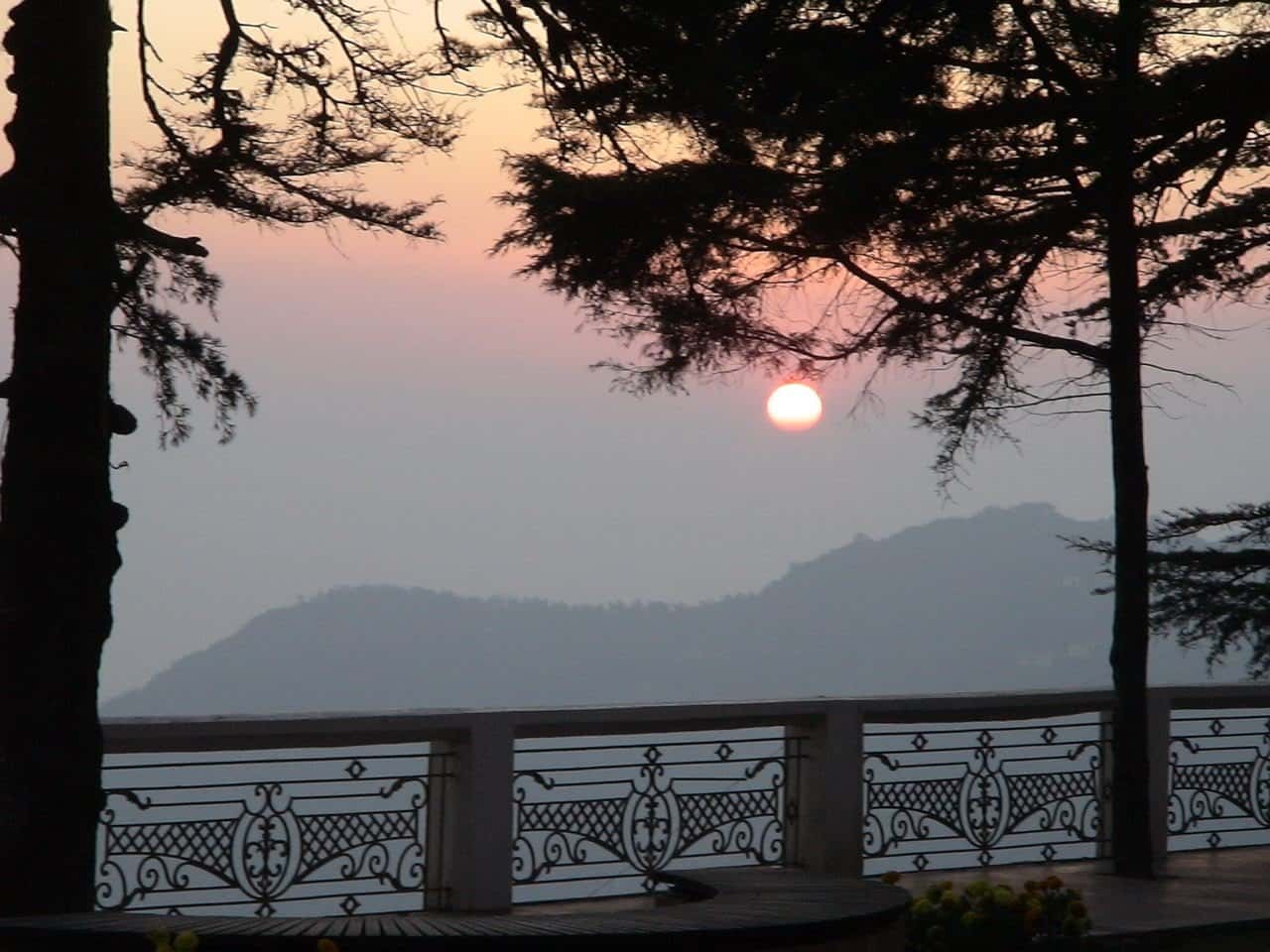
- The sunrise, and the discipline of getting up for itThis is the one thing you must do. On a clear morning the sun comes up behind the snow wall and the whole range turns pink and then gold, and the orchards below you are still in shadow. Ask your host the night before which way to face and where to stand. Take a hot cup of tea outside, wrap up properly, and simply wait. It costs nothing and it is what people remember about Ramgarh long after they have forgotten everything else.
- Long, slow orchard walksThe real pleasure of Ramgarh is on foot. Today you can walk out from Malla Ramgarh through the terraces to Nathuakhan, roughly 9 km away, or wander down towards Talla Ramgarh and back up. There is no ticket, no guide and no route to book. Carry water, start early, greet the people you pass, keep to the lanes and off the private terraces, and simply keep walking until you feel like turning back.
- The fruit, and how an orchard visit really worksThe orchards are private working farms. There is no ticketed orchard, no visitor centre and no guided orchard tour you can book. If picking fruit with your children matters to you, the way in is to book an orchard homestay or estate that lets its guests walk the terraces and eat what they pick, and to come between about the end of May and mid-June. Ask the property this question directly before you book, and never step into somebody's orchard without being invited.
- The literary pilgrimage, done properlyGive one slow morning to the writers. Walk up to Tagore Top, then to Meera Kutir at Umagarh if your host has been able to telephone ahead. Carry a book. Ramdhari Singh Dinkar and Agyeya also lived on this ridge. This is not a monument trail, it is an atmosphere, and you get it by sitting still in the right places rather than by walking fast between them.
- Birds, and the quiet that lets you hear themThis ridge is one of the finest birding stretches in Kumaon, and the orchards bring them close. Himalayan bulbuls, whistling thrushes, barbets and woodpeckers, and if you are patient, a good deal more. You do not need a tour. Sit on a wall in the morning with a cup of tea and let them come to you. Take binoculars if you have them, and ask your host where to sit.
- The night sky, and a bonfireWith almost no light below, the stars here are extraordinary on a clear winter night. Wrap up, get away from the porch light, let your eyes adjust for a good ten minutes, and look up. Ask your homestay for a bonfire and a plate of hot Kumaoni food, and you will have had the best evening of your trip without leaving the garden.
Do not spend your Ramgarh days driving somewhere else. It is very tempting, because Nainital is only about 25 to 30 km away, Mukteshwar is about 20 to 30 km on, and a car is sitting idle outside. But if you spend both days on hairpin bends you will have travelled all the way to Ramgarh and never actually been in Ramgarh. Do your sightseeing from Nainital. Keep Ramgarh for stillness. The ridge only gives you what it has if you stay on it.
Where to stay in Ramgarh, and the Talla or Malla decision
Here the room is the destination. Ramgarh is two villages, an upper one and a lower one, and choosing between them is the single most important booking decision you will make.
- Malla Ramgarh, the upper villageMalla Ramgarh is the higher part, running up to about 1,900 m, with the ridge above it going higher still. This is where you find the wide open Himalayan views, the old cantonment bungalows and most of the heritage stays, and it is the side to choose if the snow peaks are your reason for coming. It is colder, and the last stretch of road is steep.
- Talla Ramgarh, the lower villageTalla Ramgarh is the lower part, from about 1,400 m, greener, warmer, deeper into the orchards, and home to Madhuban. Choose it if you want fruit trees at the window and a gentler climate rather than a long view, and if you are travelling with elderly parents who will feel the cold and the height. You will see less of the snow line from here.
- How to tell a genuine homestay from a hotelUttarakhand's official homestay policy, run under the Deen Dayal Upadhyay Griha Awas scheme, caps a registered homestay at 8 rooms and 24 beds. So if a Ramgarh property calling itself a homestay has twenty rooms and a reception counter, it is a hotel using a friendly word. Both can be perfectly good, but if you want your money to reach a Kumaoni family and you want home-cooked food, ask whether the property is a registered homestay and how many rooms it has.
- The KMVN rest house, the state optionKumaon Mandal Vikas Nigam, the state tourism corporation, runs a Tourist Rest House at Malla Ramgarh, and it is the cheapest reliable bed on the ridge. Its published terms charge an extra bed at about 200 rupees per bed per day and an extra person above five years at about 20 percent of the room rent, and the corporation says openly that it may change its tariff without notice. So take the current rate from the KMVN website itself and not from a blog. A traveller on the TripAdvisor Nainital forum asking about a Ramgarh trip was told simply that KMVN Ramgarh is okay, which is a fair summary: clean, plain, well placed and inexpensive.
- What it costs to sleepA simple village homestay is roughly 1,500 to 3,500 rupees a night, a comfortable mid-range room roughly 3,500 to 7,000 rupees, and an orchard estate or heritage bungalow roughly 7,000 to 20,000 rupees. All of these climb sharply over long weekends, Christmas and New Year week and the summer school holidays. Treat these as indicative bands and reconfirm with the property.
- How many nightsTwo nights is the honest minimum, because it buys you one full day and, far more importantly, two mornings, and the mornings are everything here. Three nights is what we would actually recommend. One night is a waste of a nine hour drive.
First, is the property in Talla or Malla Ramgarh, because that decides your view and your climate. Second, does the room itself face the snow peaks, or only the garden, because many places advertise a Himalayan view that you can reach only by walking to a common terrace, and in December that walk at dawn is very cold. Third, is there a back-up for power and hot water, because both fail on this ridge in bad weather. Fourth, if you are coming for the fruit, does the property have its own orchard and will guests be allowed to walk in it. Get honest answers to those four and you will have a lovely stay.
Ramgarh costs and a realistic daily budget
Ramgarh is not expensive, and there is very little here to spend money on. But almost nothing has a printed price, so the habit that saves you money is to agree the rate before anything begins.
- A realistic daily budgetLeaving aside your room and the long drive up, plan on about 1,200 to 2,000 rupees a day if you are travelling simply, about 3,000 to 5,000 rupees for a mid-range day with a cafe meal and a car for a few hours, and about 8,000 rupees and above for a comfortable estate day with a car at your disposal. Ramgarh has very few ways to spend money, which is a large part of the point of it.
- Transport, the biggest line in your budgetThe car is what costs money here. A reserved car from Kathgodam is about 1,500 to 2,500 rupees one way, a shared jeep seat is about 100 to 250 rupees and a bus seat about 100 to 150 rupees. If you are keeping a car and driver for a wider Kumaon circuit, settle the full package rate in writing before you leave the plains, because renegotiating on a hill road never goes well for the traveller.
- Food, and the thali worth orderingA good Kumaoni thali runs about 250 to 400 rupees and it is far better eating and far better value than a hotel menu. Most homestays include home-cooked meals, and that is usually the best deal in Ramgarh. There is no restaurant strip here, so if you are arriving late, tell your host in advance that you will want dinner.
- The things with no price at allThe sunrise, the orchard lanes, Tagore Top, Dadi Point and the birds are all free. There is no entry fee anywhere in Ramgarh because there is nowhere that takes an entry fee. Almost everything you will remember about this trip costs nothing, and the only real spending decisions you have are your room, your car and your dinner.
There is no meter, no tariff board and no fixed price for almost anything on this ridge. The car fare, the day hire, the extra bed, even the dinner for a guest who did not book meals, are all quoted by a person and not by a machine. So build one simple habit. Ask what it will cost, agree the number out loud, and only then begin. Nobody minds being asked, quotes come down without any argument, and a rate agreed at the start turns the only friction in Ramgarh into a non-event.
Practical logistics: cash, signal, power, fuel and food
Ramgarh is a scattered orchard village, not a town. A few small preparations in Haldwani or Bhowali on the way up will save you a great deal of trouble later.
- Carry cash, and carry it up with youDo not count on finding a working ATM on the ridge. A single hill ATM can be empty, offline or out of order for days, and many homestays, drivers and small eateries prefer cash anyway. Draw what you need in Haldwani, Kathgodam or Bhowali on the way up. UPI works where there is signal, and signal is exactly the thing that is not guaranteed here.
- Signal and power are both patchyCoverage on the upper ridge is generally usable, but it drops away in the orchard valleys and inside several of the older stone houses. Power cuts are normal, especially in rain and snow. If you plan to work remotely from Ramgarh, and many writers do, ask your host directly which network actually works inside their house and whether they have a back-up. Do not assume.
- Fuel, and the fuel rule for the hillsFill your tank in Haldwani, Bhimtal or Bhowali before you climb. Pumps on the ridge are few and can run dry. The standard hill rule applies here: never let the tank fall below half, because a detour around a landslide can add fifty unplanned kilometres to your day.
- There is no market, so shop before you climbRamgarh has no market street and no proper chemist. Whatever you need, your regular medicines, a torch, batteries, snacks for the children, nappies, a sim card, buy it in Haldwani or Bhowali. The nearest reliable shops and the nearest good hospital are down in Haldwani, and that is a long way when you actually need it.
- Eat Kumaoni, not continentalThis is where the trip becomes memorable. Ask your homestay for Bhatt ki Churkani, Aloo ke Gutke with bhang ki chutney, a bowl of gahat soup, madua roti, and Ras or Baadi, all cooked with local produce, and buy Bal Mithai to carry home. WayToIndia's own Kumaon travel notes point travellers to exactly this local plate, and any Kumaoni home will cook it for you if you ask a day ahead.
- Driving here, and the one thing to respectThe roads are narrow, the bends are blind and the drops are real. Sound the horn on the corners, give way to the vehicle coming uphill, and do not drive this ridge at night on your first visit. If you are not fully confident on hill roads, hire a local driver. It is a small cost for a very large amount of peace of mind.
- Walk with respect, because this is somebody's farmThe lanes are public and the terraces are not. Every orchard you pass belongs to a family who lives from it. Stay on the path, do not pick fruit that has not been offered to you, close any gate you open, and greet the people you meet. A namaste and a smile will get you invited in far more often than a camera will.
Safety on the road, in the cold, and on a lonely ridge
Ramgarh is a gentle, low-crime village. The risks here are not people. They are a wet hill road, a landslide, a cold night, and the simple fact that help is a long way down the hill.
- Monsoon roads and landslidesFrom about July to mid-September the hill roads across Nainital district take heavy rain, and landslides regularly block them for hours or days. This is not a small inconvenience, it is the reason we do not recommend a monsoon trip. If you are here anyway, check the weather warnings each morning, never drive a hill road during heavy rain, and build a spare day into your plan so a blocked road does not cost you a flight.
- The unpaved tracks and the dropsThe walk up to Tagore Top and many of the orchard lanes are unpaved, uneven and steep in places, and there is no railing anywhere. In rain and mist they turn slippery. Wear shoes with real grip, keep small children by the hand, do not walk close to the edge for a photograph, and do not go out on these tracks after dark or in fog.
- Cold, sun and the small thingsAt this height you will not get altitude sickness, but you will get cold much faster than you expect once the sun drops behind the ridge, and the wind at Dadi Point is sharp. Carry a warm layer even in summer. The high sun burns quickly here, so use sunscreen. Drink boiled or bottled water, and carry all your regular medicines, because there is no proper chemist on the ridge and the nearest good hospital is down in Haldwani.
- Wildlife, and the sensible evening ruleThis is leopard country, as the whole of the Kumaon hills is, and the orchards and forest edge are exactly the sort of ground they cross. Attacks on visitors are very rare and you should not be frightened, but the local habit is worth copying. Do not walk lonely forest paths alone after dark, keep children close in the evening, and carry a torch. Ask your host what the local practice is, and follow it without arguing.
- Solo travellers and women travelling aloneRamgarh is a quiet orchard village and is generally a low-friction, low-hassle place for solo travellers, including women. There is no tout culture and no bazaar pressure, because there is no bazaar. The practical cautions are the ordinary ones for any remote hill area: tell your host your walking route before you set out, come back before dark, keep your phone charged, and remember that the signal fails in the valleys.
Travellers ask on the forums every winter whether it is safe to drive in the snow up here, and the honest answer is: not in an ordinary car, not on ice, and not if you have never done it. The hill roads get icy on the shaded bends, and a two wheel drive car with ordinary tyres has very little grip. If snow is forecast, park the car and let a local driver handle it, or simply stay put at your homestay with a hot cup of tea and watch the snow fall on the orchard from the veranda. That is honestly the better plan anyway.
Ramgarh for every kind of traveller, and who should not come
Ramgarh is a wonderful place for some travellers and a genuinely poor choice for others. A caring guide tells you both, plainly, before you book.
- CouplesThis is the best possible reason to come. An orchard cottage, a shared sunrise over the snow line, a long walk to a village with no plan at all, and nothing whatever on the schedule. Take three nights, not two. Ramgarh is one of the loveliest quiet honeymoon and anniversary choices in the whole of Kumaon, and it is far gentler than the crowded hill stations.
- Families with childrenBe careful here and be honest with yourself. Small children who love a garden, a bonfire, a stream and a fruit tree will be very happy, especially in the June harvest weeks. Children of about eight to fourteen who expect a boat ride, a market and a games arcade will be bored by the second afternoon. If you are bringing older children, add Nainital to the trip, and keep every child away from the unfenced drops.
- Senior travellers and on accessibilityRamgarh is kind to seniors in one way and hard in another. The kindness is that there is nothing to rush for and the air is clean. The difficulty is that the lanes are steep and uneven, the track to Tagore Top is unpaved, and there is no reliable medical help on the ridge. So stay in Talla Ramgarh or at a property with a level garden, choose a room with the view from its own window rather than from a distant terrace, skip the climb to Tagore Top without any regret, and carry every medicine you take. The sunrise from your own veranda is exactly the same sunrise.
- Writers, readers, solo travellers and remote workersThis is an outstanding place to be alone with your work or your thoughts, and it has been for a hundred years, which is why Tagore, Mahadevi Verma, Dinkar and Agyeya all came here. It is quiet, safe, inexpensive and beautiful. Just confirm with your host, before booking, which mobile network works inside their house and whether they have a power back-up, because that alone decides whether a working stay here is a joy or a disaster.
- Birdwatchers and photographersCome in the clear window of about mid-October to mid-December, get up before dawn, and be patient. The light on the snow wall at first sun is the photograph, and the orchards bring the birds within arm's reach. Both of you want the same three things: an early morning, a warm jacket and no schedule at all.
- Who should honestly not comeIf your idea of a holiday is a busy market, a boat ride, cafes with a crowd and a list of sights to tick off, Ramgarh will disappoint you. A destination expert on the TripAdvisor Nainital forum put it plainly: Ramgarh is worth a day trip only, but to stay in peace and idle, one can stay as long as one wants. That is exactly right. Go to Nainital instead, which is only about 25 to 30 km away and does the busy hill station beautifully. There is no shame in choosing the right hill for the holiday you actually want.
A suggested Ramgarh itinerary for two and three nights
The plan below deliberately leaves large empty spaces in it. Those empty spaces are the holiday. Please do not fill them.
- Day one: the long drive upToday you travel, and that is all you do. Whether you take the morning train to Kathgodam or drive the roughly 300 to 330 km from Delhi, the day will be spent getting here and the last stretch will be slow. Reach in daylight if you possibly can. Check in, take a hot cup of tea on the veranda, watch the light go off the peaks, eat an early Kumaoni dinner and sleep. Do not plan anything else, and do not let anyone talk you into a sunset point.
- Day two, morning: sunrise, then the writers' walkToday you wake before dawn. Wrap up warmly, step outside with your tea, and wait for the sun to hit the snow wall. After breakfast, walk up to Tagore Top for the view, and then, if your host has been able to telephone ahead, on to Meera Kutir at Umagarh. Carry a book and sit for a while. This is the morning that makes Ramgarh a literary pilgrimage rather than just a pretty ridge.
- Day two, afternoon and evening: do nothing, on purposeToday after lunch, please do nothing at all. Read on the veranda, sleep, watch the valley, walk down an orchard lane and back. This is not a wasted afternoon. This is the thing you came for, and it is precisely the thing that city life will not give you. In the evening ask your host for a bonfire, eat well, and go out to look at the stars before you sleep.
- Day three, if you have it: the orchards or a slow driveToday pick just one thing. If you are here between about the end of May and mid-June, spend the morning in your property's orchard eating peaches and plums off the tree. Otherwise take a gentle drive or walk out to Nathuakhan, roughly 9 km away, or to Dadi Point for the view. Then come back and do nothing again. One outing a day is the correct dose in Ramgarh.
- Adding Ramgarh to a Kumaon circuitRamgarh sits very naturally in a longer Kumaon loop. A comfortable shape is two nights in Nainital for the lake and the sightseeing, two or three nights in Ramgarh for the stillness, then on to Mukteshwar, Almora or Binsar, and back down to Kathgodam. Do the busy things in Nainital and let Ramgarh be the quiet chapter in the middle. WayToIndia's own Kumaon tour notes recommend exactly this: a stop at Ramgarh, the fruit orchard village, from a base near Bhowali.
- The mistake to avoidThe most common mistake is to use Ramgarh as a base and drive out every day to Nainital, Mukteshwar and Kausani. On paper it looks efficient. In practice you will spend six hours a day on hairpin bends, arrive back after dark, and never once see the sunrise you came for. If you want day trips, base yourself in Nainital. If you want Ramgarh, stay in Ramgarh.
Tagore, Mahadevi Verma, and the Gitanjali story you have been told
Ramgarh's literary heritage is real, moving and genuinely worth the journey. One of the stories told about it is also, on the evidence, simply not true. Here is the honest record.
- What the official record actually saysFirst, a disclosure, because this whole section depends on it. Uttarakhand Tourism's destination page for Ramgarh is no longer live on the state's new website, so everything we quote from it here is taken from the archived copy of that page, and we have linked it in our sources. That archived page says Ramgarh is popularly referred to as the fruit bowl of Uttarakhand, that it was founded by the British, that it sits at a height of around 1,789 m, and that it was visited frequently by the Nobel laureate Rabindranath Tagore and by the Hindi poet Mahadevi Verma. Wikipedia adds that Tagore and the social worker Narain Swami established ashrams on this hill. So the state's own record is clear that Tagore loved this place and kept coming back to it. That much is solid, and it is lovely.
- The visit Ramgarh remembers, and it is a sad oneThe scholarly record, through the Scottish Centre of Tagore Studies citing Krishna Kripalani and the Dutta and Robinson biography, is this. In 1902 Tagore's daughter Renuka fell ill with tuberculosis. On his doctors' advice he took her to the Himalaya in May 1903 for a change of air, carrying her in his arms at one stage on the mountain road, and keeping her cheerful with poems he made up for her. Those children's poems were published as Sisu, The Child, in 1903, and are known in English as The Crescent Moon. Renuka died in September of that year, aged thirteen. One small honesty, because we promised you one. The biographers say the Himalaya. They do not write the word Ramgarh. It is the local and the tourism record that place that journey on this hill, and we think they are right, but you should know which part is documented and which part is remembered.
- Now the claim about Gitanjali, and the dates behind itAlmost every page in the current top ten tells you flatly that Tagore wrote Gitanjali on this hilltop. The state's own tourism copy carried the story too, but look at how carefully it was written: the archived Uttarakhand Tourism description of Tagore Top says this is the house where Tagore resided in the early 1900s and is said to have written parts of one of his most famous collections of poems, Gitanjali. Even the state only said is said to. Now the dates. Banglapedia, the national encyclopaedia of Bangladesh, records that Gitanjali was written in Bangla during 1908 and 1909. The Bengali collection was published on 4 August 1910. The English Gitanjali, Song Offerings, came out in November 1912 from the India Society of London, and the Nobel Prize in Literature followed in 1913, which the Nobel Foundation's own record confirms. Not one dated source we could open, official or scholarly, places the writing of any part of Gitanjali at Ramgarh.
- Mahadevi Verma, and what is really at UmagarhMahadevi Verma, one of the great voices of modern Hindi poetry, built her cottage at Umagarh in 1937 and named it Meera Temple, though everyone here calls it Meera Kutir. She did not come only to write. She worked with the village, for the education of its women and for their economic independence, and Wikipedia records that she got the idea for her famous story Lachma at Ramgarh. Today the bungalow is known as the Mahadevi Sahitya Museum and holds a library of her works and those of other writers. It is also a university institution: Kumaun University's own public manual, published under the Right to Information Act, records an independent chair called the Mahadevi Verma Peeth at Umagarh, Ramgarh, in language and literature research, fully funded by the Government of Uttarakhand, and the same manual records that the Ministry of Culture sanctioned a grant of 80 lakh rupees to the Mahadevi Verma Srijan Peeth to build a Writer's Home named for Amritlal Nagar, of which 40 lakh rupees had already been released. So it is a museum, a library and a living literary chair at once. What it does not have is published visiting hours, and that is the practical fact that matters to you.
- And the writers who came afterWikipedia, citing a Times of India report, records that Ramdhari Singh Dinkar and Sachchidananda Hirananda Vatsyayan, the poet known as Agyeya, also lived on this ridge. Ramgarh has been a place writers come to work for well over a century, and if you sit on a veranda here for two days with a notebook, you will understand exactly why they kept coming back.
We want to be very precise here, because this is the one claim on this page that everybody repeats and nobody checks. We are not telling you that Tagore did not write a line of Gitanjali on this hill. We cannot tell you that, and anyone who does is guessing: he kept a house here and he came back to it again and again, and no source we could open rules this hill in or out for the writing years of 1908 and 1909. What we are telling you is this. Nobody has ever shown it. The dated record puts the writing in 1908 and 1909 and the publication in 1910 and 1912, and it does not mention Ramgarh. The state's own page only ever said Tagore is said to have written parts of it here. So the popular claim is not supported by the record, and we will not print it as a fact. If we repeated a claim we cannot support, you would have no reason to trust the fare we quote you, the road we send you down or the season we tell you to travel in. And the documented story, a father carrying his dying daughter up a mountain road and making up verses to keep her smiling, is more moving than the legend anyway.
The real questions travellers ask about Ramgarh
These are the questions people actually post on the Nainital travel forums about Ramgarh, including one that nobody ever answered. Here are straight answers, including the uncomfortable ones.
- Which Ramgarh is this?This is the hill village in the Ramgarh block of Nainital district, Uttarakhand, in the Kumaon hills, on the road between Bhowali and Mukteshwar. It is not Ramgarh district in Jharkhand, not Ramgarh in Rajasthan and not Ramgarh Tal in Gorakhpur. When you search, add the word Kumaon or Nainital, and half your confusion disappears.
- Is Ramgarh worth it, or is there nothing to do?Both are true, and that is the whole point. There is very little to do. A destination expert on the TripAdvisor Nainital forum tells travellers plainly that Ramgarh is worth a day trip only, but that to stay in peace and idle, one can stay as long as one wants. If you want to be entertained, it is not worth it. If you want to sit on a ridge in an orchard and watch the Himalaya turn gold with a cup of tea in your hand, there are very few better places in India.
- Can I visit an orchard and pick fruit with my children?This is the question the internet never answers. A traveller asked on the TripAdvisor Nainital forum whether any public orchard near Ramgarh and Bhowali offered guided tours for plum, peach and apricot, and the thread closed without a useful reply. Here is the answer. The orchards are private working farms. There is no ticketed orchard and no bookable orchard tour. The only honest way in is to stay at an orchard homestay or estate that lets its guests walk the terraces, and to come between about the end of May and mid-June.
- Talla or Malla Ramgarh?Malla, the upper village, running up to about 1,900 m, for the wide Himalayan views, the heritage bungalows and the cold. Talla, the lower village, from about 1,400 m, for the deeper orchards, the gentler climate and elderly parents. If your reason for coming is the snow line, book Malla and pay for a room that faces it.
- Is two nights enough?Two nights is the honest minimum, because it buys you one full day and two mornings, and the mornings are the whole trip. Three nights is what we would recommend. One night is a waste of a nine hour drive, and a day trip from Nainital shows you a road and a view but not the place.
- Is KMVN's rest house any good?It is clean, plain, inexpensive and well placed at Malla Ramgarh, and a TripAdvisor forum regular answering a Ramgarh question simply said that KMVN Ramgarh is okay, which is fair. Book it on the KMVN website and take the current tariff from there, because the corporation reserves the right to change its rates without notice.
- Will I actually see the snow peaks?On the crisp mornings of about mid-October to mid-December, yes, and the view is superb. From about April to June the summer haze can hide the whole range for days at a stretch, and in the monsoon you will see cloud. Read the IMD forecast for Mukteshwar, on the next ridge, rather than the forecast for Nainital, and set your expectations before you drive up.
- Did Tagore write Gitanjali here?Nobody has ever shown that he did, and we will not print it as a fact. Please see our literary heritage section above for the full dates. In short: Tagore did have a house on this hill and came back to it often, which the state's own tourism page records, and his documented Himalayan journey of May 1903 with his dying daughter Renuka produced the poems of The Crescent Moon. But the Bengali Gitanjali was written in 1908 and 1909 and published on 4 August 1910, and the English Song Offerings came out in November 1912, and no dated source we could open places any of that writing at Ramgarh. Even the state's own page only said he is said to have written parts of it here. The documented story is the better one anyway.
Planning Ramgarh from abroad
For an NRI family flying home for a few weeks, or an overseas visitor who wants the Himalaya without the crowds, Ramgarh is one of the best value quiet stays in north India. Here is how to plan it properly.
- Understand what you are buyingYou are not buying sightseeing. You are buying an orchard, a veranda, a snow view and three days of doing nothing. If you arrive expecting attractions you will be disappointed, and if you arrive expecting rest you will come home restored. Say this clearly to everyone in your travelling party before you book, especially to teenagers, and you will avoid the only real problem this trip has.
- Give the journey the time it needsFly into Delhi, sleep one night, then come up. The morning train to Kathgodam followed by a car up the hill is the most comfortable way. Delhi to Ramgarh by road is roughly 300 to 330 km and about eight to nine hours, and it is a hill road for the last part of it. Please do not land at Delhi and drive up on the same day. It is a miserable way to begin a rest.
- Bringing parents and grandparentsThis is one of the gentler Himalayan choices for an older traveller, but choose carefully. Stay in Talla Ramgarh or at a property with a level garden and a room facing the view, skip the unpaved climb to Tagore Top entirely, and carry every medicine, because there is no proper chemist on the ridge and the nearest good hospital is down at Haldwani. Warm clothes matter more than you think, even in June, because the evening turns cold very fast.
- Fit it into a wider India tripRamgarh works beautifully as the quiet chapter of a Kumaon fortnight: Delhi, then Nainital for the lake, then Ramgarh for stillness, then Mukteshwar or Binsar, and back to Kathgodam. It also pairs well with Jim Corbett National Park, which is on the same side of the country. We can arrange the car and an experienced hill driver for the whole circuit.
When you type Ramgarh into a search engine from abroad, you will be shown Ramgarh in Jharkhand, which is an industrial and cantonment district, and Ramgarh in Rajasthan, which is a desert town. Neither is this place. This Ramgarh is a small orchard village in the Ramgarh block of Nainital district in Uttarakhand, in the Kumaon hills, PIN 263137, on the road between Bhowali and Mukteshwar. Add the word Kumaon or Nainital to every search, and tell your driver Ramgarh near Bhowali, and you will end up in the right hills.
Money, connectivity and timing for foreign visitors
The practical basics an overseas traveller needs for a village with no market, no bank and unreliable signal: cash, a SIM, power, and how many days to give it.
- Carry cash up the hillDo not count on an ATM on the ridge. Draw your cash in Delhi, Haldwani or Bhowali on the way up. Homestays, drivers and small eateries here run on cash, and UPI needs a signal that is not always there. Small notes are useful, because change is scarce in a village with no market.
- Get your SIM before you leave the plainsPick up an Indian tourist SIM or an eSIM when you land in Delhi rather than trying to buy one in a hill village, because you will not find a shop that sells one. Then ask your host, before you book, which network actually works inside their house, because coverage on this ridge varies from room to room.
- Expect power cuts, and plan around themPower cuts are normal here, especially in rain and snow. Bring a torch and a power bank, charge everything when the power is on, and if you have a meeting you cannot miss, ask your host directly whether the property has a generator or an inverter. Do not simply hope.
- How long to give it, and whenThree nights is the right weight on a wider India trip, and two is the honest minimum. Come in about mid-October to mid-December for the clear mountain view, or between about the end of May and mid-June if fruit and warm days matter more. Avoid the monsoon months of about July to mid-September, when landslides regularly close these roads.
The poems Tagore really wrote on the way to these hills
The story Ramgarh tells about itself is that Rabindranath Tagore wrote Gitanjali on this hilltop. It is a lovely story, and it is not supported by the dated record. Banglapedia puts the writing of the Bengali Gitanjali in 1908 and 1909. The Bengali collection was published on 4 August 1910, the English Gitanjali, Song Offerings, in November 1912 by the India Society of London, and the Nobel Prize in Literature followed in 1913. No dated source we could open places any of that writing at Ramgarh, and even the state's own tourism page said only that Tagore is said to have written parts of it here. We cannot prove he never did. We can only tell you that nobody has ever shown it, and that we will not sell you a legend as a fact. The documented story is sadder and far more beautiful. In 1902 Tagore's daughter Renuka fell ill with tuberculosis, and in May 1903 his doctors sent her to the Himalaya for the air. He took her himself. His biographers record that on the mountain road he carried her in his arms, and that he kept the moody, frightened, high-spirited child cheerful by making up poems for her as they went. Those poems were published that same year as Sisu, The Child, which the English-reading world knows as The Crescent Moon. Renuka died in September 1903. She was thirteen. So when you stand on Tagore Top and look at the snow line, you do not need Gitanjali. Think instead of a father on a hill road with a dying daughter in his arms, making up children's verses to make her smile. That is a true thing, and it is enough.
Planning a Ramgarh trip?
Our Uttarakhand travel experts plan your full journey for you: route, hotels, darshan timings and transport. You get a free day-by-day plan and an exact quote on WhatsApp, usually within a few hours. No payment is needed to get your plan.