 7D / 6N
 All Sacred Circuits
Jyotirlinga · Shiva
Bhimashankar Jyotirlinga
Bhimashankar is the Jyotirlinga of the forests. The temple stands deep in the Sahyadri hills of Maharashtra, inside a wildlife sanctuary where the giant squirrel called Shekru still leaps through the trees. The holy Bhima river begins its journey here, and pilgrims and trekkers both climb to this shrine, each finding their own reason to fall silent before the Lord.
The story of this place
The tradition links this shrine to the great battle between Lord Shiva and the demon Tripurasura. It is said that the heat of that battle was so intense that the river Bhima itself evaporated, and the river that rises here today carries the memory of that divine war. The Bhima flows on to Pandharpur, where she is known as Chandrabhaga, so the waters born at Bhimashankar go on to bathe the feet of Lord Vitthal.
The temple you see is a graceful blend of old and new. The core shrine, in the Nagara style, dates back to around the 13th century. The sabhamandap and the shikhara were added in the 18th century by Nana Phadnavis, the famous statesman of the Peshwa court. Chhatrapati Shivaji Maharaj is said to have made endowments for the worship here, and one of the large bells that Chimaji Appa brought from the Vasai Fort after his victory over the Portuguese hangs at Bhimashankar.
In our own time the shrine received a new chapter. The forests around it were declared the Bhimashankar Wildlife Sanctuary, protecting the sholas of the Western Ghats and the rare Malabar giant squirrel, the Shekru, which is the state animal of Maharashtra. So the Lord here is guarded not by walls but by a living forest.
What you will see
The road ends at the small temple village on the hilltop, and from the parking area you walk down a stairway of around 150 steps, lined with stalls selling flowers and prasad. The temple below is modest and beautiful, built of dark stone, with fine carving on its pillars and door frames. Inside, the Jyotirlinga of Lord Bhimashankar rests in a small sanctum, and the air is cool even at noon.
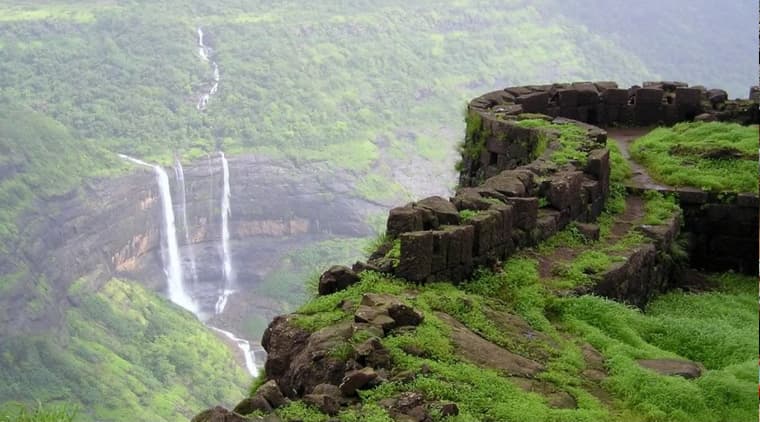
Do not rush back after darshan. The temple sits inside the sanctuary, and the forest around it is worth a slow hour. In the monsoon, mist rolls over the ridges and small waterfalls appear beside the road. Birdwatchers come here through the year, and if you are lucky and quiet you may spot the Shekru high in the canopy.
For the young and fit, Bhimashankar is also one of Maharashtra's favourite trek destinations. Trekkers climb from Khandas village on the Karjat side, by the gentler Ganesh Ghat path or the steeper Shidi Ghat route with its ladders, reaching the temple in about 3 to 5 hours. Arriving at the Jyotirlinga on your own feet, through the forest, is an experience close to the old way of yatra.
Darshan, timings and temple etiquette
In its normal rhythm, the temple day begins with the Kakada Aarti around 4:30 in the morning, darshan starts around 5, and abhishek is performed through the morning hours. There is a madhyan aarti around 3 in the afternoon when darshan pauses briefly, then Shringar Darshan continues into the evening until the temple closes around 9:30 at night. On Mondays, Pradosh days, in Shravan and on Mahashivratri, the abhishek hours are extended and the rush is much larger.
One important note for 2026: the temple was closed from January to mid June 2026 for major renovation work, including a new assembly hall, built ahead of the Simhastha Kumbh Mela of 2027. It reopened for darshan on 15 June 2026 with limited daily slots and online registration on the temple's official portal, shreebhimashankar.com, and the arrangements are being expanded step by step. Until things settle, please register online, carry the ID you registered with, and check the current darshan hours on the official portal or with your consultant before you travel.
Special poojas, including abhishek and yearly poojas, are performed by the temple's priests; book them through the temple's official online registration and not through touts. Dress modestly, keep your voice low inside, and remember you are in a sanctuary: no plastic, and carry your waste back with you.
Best time to visit
October to February is the best season, with clear cool weather, good forest walks and comfortable darshan. This is also the best time for spotting the Shekru and for birdwatching.
The monsoon, from June to September, turns Bhimashankar into a green, misty world of waterfalls, and trekkers love it, but paths are slippery and weekends get crowded with day visitors from Pune and Mumbai. Summer is hot in the plains but the hilltop stays bearable; start early and finish your darshan by noon. Mahashivratri and Shravan Mondays bring the biggest pilgrim crowds of the year.
How to reach
Pune is the gateway. The temple is about 110 to 125 km from the city depending on the route, a drive of roughly 3 to 4 hours, the last stretch climbing through the ghats. Pune has the nearest airport and the nearest major railway station, and state buses also run to Bhimashankar from Pune.
From Mumbai, most pilgrims drive via Pune, or trek up from Khandas on the Karjat side. If you are combining the Jyotirlingas of Maharashtra, we usually plan Bhimashankar from Pune, then Trimbakeshwar from Nashik, and Grishneshwar near Ellora, in one comfortable circuit.
Tips from our travel experts
Start from Pune early in the morning, take darshan before the midday rush, walk in the forest for an hour, and drive back before dark; the ghat road is best done in daylight. On weekends and Shravan Mondays, add a good buffer for traffic near the top.
Remember the 150 odd steps between the parking and the temple; they are easy going down and slower coming up, so give elders time. Carry a light jacket outside summer, and rain protection from June to September. In the current phase after the 2026 reopening, do not travel without completing the online registration on the official portal.
If you are trekking from Khandas, go in a group, start at dawn, and choose Ganesh Ghat unless you have real experience with exposed ladder climbs. Mobile network is weak in parts of the forest, so tell your family your plan.
For our NRI and OCI travellers
Bhimashankar fits naturally into a Maharashtra darshan circuit: land at Mumbai or Pune, take Bhimashankar, then Shirdi, Trimbakeshwar and Grishneshwar over 4 to 5 easy days. Ask us to sequence it so no single day has two long drives.
If you are planning around the Nashik Simhastha Kumbh Mela in 2027, book everything months ahead; the whole region, including Bhimashankar, will see very large crowds that year. For the online darshan registration you will need an ID; your OCI card or passport works, just carry the same document you registered with.
Questions travellers ask us
Is Bhimashankar temple open now?
Yes. The temple was closed from January to mid June 2026 for major renovation ahead of the Simhastha Kumbh Mela 2027, and it reopened on 15 June 2026 with limited daily slots and online registration on the official portal, shreebhimashankar.com. Arrangements are being expanded in phases, so check the portal or ask your consultant for the current darshan hours before you travel.
How far is Bhimashankar from Pune and how long is the drive?
About 110 to 125 km depending on the route, which takes roughly 3 to 4 hours. The last stretch is a winding ghat road, so we suggest starting early and returning before dark.
How difficult is the trek to Bhimashankar?
The trek starts from Khandas village on the Karjat side and takes about 3 to 5 hours. Ganesh Ghat is the gentler forest path, while Shidi Ghat is steeper and has ladder sections for experienced trekkers. A person of normal fitness can do Ganesh Ghat comfortably; start at dawn and go in a group.
What is special about the forest here?
The temple stands inside the Bhimashankar Wildlife Sanctuary in the Western Ghats. It protects rich evergreen forest and the Malabar giant squirrel, the Shekru, the state animal of Maharashtra. Plastic is not welcome here, so carry your waste back.
Which river begins at Bhimashankar?
The Bhima river rises here. The tradition links its origin to the heat of the battle between Lord Shiva and the demon Tripurasura. The same river is worshipped as Chandrabhaga at Pandharpur, the town of Lord Vitthal.
What are the normal darshan timings?
In its normal rhythm the temple runs from the Kakada Aarti around 4:30 in the morning to closing around 9:30 at night, with a short pause for the afternoon aarti. Abhishek is performed in the morning hours and longer on Mondays and in Shravan. After the June 2026 reopening the hours are being restored in phases, so always check the official portal first.
A note on the tours below. These packages travel close to Bhimashankar Jyotirlinga, but a package may not include a guided visit to the site itself. If you would like this place added to your journey, please tell your Way to India travel consultant and they will happily build it into your itinerary for you.