 10D / 9N
 All Sacred Circuits
Divya Desam · Vishnu
Sri Padmanabhaswamy (Thiruvananthapuram) Divya Desam
The capital of Kerala takes its very name from the Lord of this temple: Thiruvananthapuram, the city of the sacred Anantha. Inside the East Fort, Lord Padmanabha reclines on the serpent Anantha in a form so large that you see him through three doors, one for the face, one for the hands, and one for the feet. This is one of the 108 Divya Desams, and a darshan here is among the most moving experiences in South India.
The story of this place
The temple is very old. It is praised in the hymns of the Tamil Alvar saints, and references to the shrine go back to around the 8th century. The deity here is Lord Vishnu in Ananthashayanam, the yoga of eternal rest on the coils of the serpent Anantha, with Lord Brahma rising on a lotus from his navel. Ancient texts like the Skanda Purana and Padma Purana mention this kshetram, and the temple tank beside it is called Padma Theertham, the lotus spring.
The temple as you see it today owes much to Marthanda Varma, the famous 18th century ruler of Travancore. In 1750 he dedicated his entire kingdom to Lord Padmanabha and ruled it as Padmanabha Dasa, the servant of the Lord. Every Travancore king after him carried that title, and even today the temple is run by a trust headed by the members of the erstwhile royal family.
In recent years the temple became known worldwide for its vaults. In 2011, on the orders of the Supreme Court of India, five of the temple's underground vaults were opened and their contents were recorded, with valuables reported in the press to be worth over one lakh crore rupees. One vault, called Vault B, was not opened. In 2020 the Supreme Court upheld the role of the royal family in the temple's administration. We share this only as documented history; for devotees, the true wealth of this temple has always been the Lord himself.
What you will see
The temple rises inside the East Fort with a tall gopuram in the Dravidian style, while the inner courtyards carry the woodwork and copper roofs of classic Kerala architecture.
The main darshan is unlike any other. The deity is about 18 feet long, so the sanctum has three doors. Through the first you see the face and chest of the Lord, with his hand resting near a Shiva linga. Through the second you see the golden lotus and Lord Brahma. Through the third you see the sacred feet. The deity is made in a special way, with thousands of saligrama stones brought from the Gandaki river in Nepal, bound together with an ancient herbal plaster called katusarkara. Because of this, abhishekam is not done on the main deity, and the form you see has remained unchanged for centuries.
In front of the sanctum is the Ottakkal Mandapam, a platform carved from a single block of stone. Around you are long corridors lined with carved granite pillars, life-size murals of Lord Vishnu, Lord Ganapati and Narasimha Swamy, and a flag post about 80 feet tall covered with gold-plated copper sheets. Photography is not allowed inside, so let your eyes do the remembering.
Darshan, timings and temple etiquette
This temple follows its rules strictly, so please read this section carefully before you go.
Entry is permitted only to Hindus, as officially stated by the temple, and we request all our guests to respect this custom of the shrine. The dress code is traditional and firmly enforced. Men wear a mundu or dhoti tied at the waist and reaching the heels, and shirts are not worn inside. Women wear a sari, the Kerala set-mundu, a half sari, or a skirt and blouse. Trousers, jeans, churidars and western wear are not permitted as they are. Dhotis are available on rent near the entrance, and the temple currently allows a dhoti to be wrapped over pants or a churidar, but rules can change, so check the official temple website before you go.
The temple opens very early. Morning darshan begins with the Nirmalya Darshanam at about 3.30 am and continues in slots until about noon. The temple then closes and reopens in the evening from about 5 pm until about 7.20 pm. These are patterns, not promises; timings shift during festivals, so confirm the current schedule on the official website. Keep phones and cameras away, speak softly, and move gently with the queue through the three doors.
Best time to visit
October to March is the pleasant season in Thiruvananthapuram, with clear days and cool mornings. The monsoon months of June to September are heavily rainy but beautiful, and the temple functions as usual.
The temple celebrates two annual ten-day festivals, in the Malayalam months of Meenam, around March and April, and Thulam, around October and November. During these days the temple is at its most alive, with processions and Kathakali performances at the temple's own performance hall. Once every six years the temple also holds the Murajapam, a tradition of continuous Vedic chanting begun in the time of Marthanda Varma.
How to reach
This is one of the easiest great temples of India to reach. It sits at East Fort in the centre of Thiruvananthapuram, about 1 km from Thiruvananthapuram Central railway station and about 6 km from the international airport. Direct flights connect the city with the Gulf, Singapore and all major Indian cities, which makes it very convenient for our NRI guests.
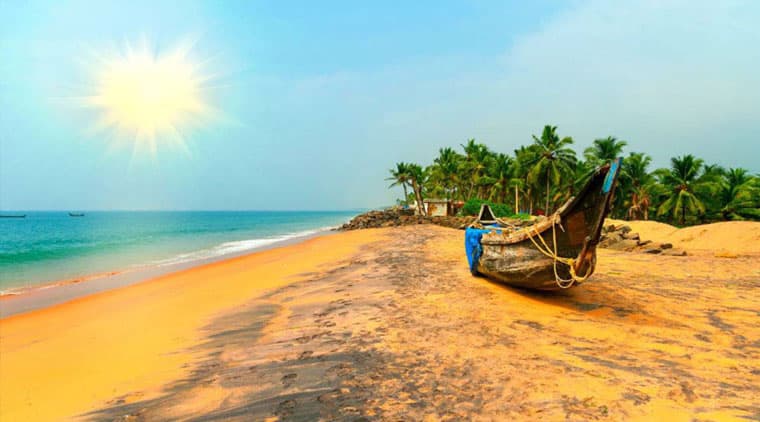
Most travellers stay near the city centre or at Kovalam beach, which is about half an hour away, and come to the temple early in the morning. If you are doing a Kerala holiday, the temple fits naturally at the start or end of your trip.
Tips from our travel experts
Come for the early morning darshan if you can. The queue moves faster, the air is cool, and the temple in lamplight is something you will never forget. Carry your dhoti or set-mundu with you, wear it from the hotel itself, and keep a small cloth bag for essentials since you will walk barefoot on stone.
Leave your phone, camera and large bags at the hotel or in your car. Give yourself at least 1 to 2 hours for the full darshan, more on weekends and festival days. After darshan, walk around Padma Theertham and the fort streets outside, where the old agraharam houses and small shops still keep the flavour of the royal capital.
For our NRI and OCI travellers
The temple admits only Hindus, and you may be asked to confirm your faith at the entrance, so carry patience and respect for the custom. The dress code applies fully to overseas visitors as well, and children also follow it, so prepare the whole family before you leave the hotel.
Thiruvananthapuram airport is barely 20 minutes from the temple, so many of our NRI guests keep the darshan for their landing day or departure day. If your parents cannot stand long, come on a weekday morning outside festival season, when the queue is kindest. And do tell your children the story of the king who gave his whole kingdom to the Lord; it is one of the most beautiful true stories of devotion in India.
Questions travellers ask us
What is the dress code at Sri Padmanabhaswamy temple?
Men wear a mundu or dhoti reaching the heels, without a shirt. Women wear a sari, set-mundu, half sari, or skirt and blouse. Western wear is not permitted as it is. Dhotis are available on rent near the entrance, and currently a dhoti wrapped over pants or a churidar is allowed, but please confirm the latest rules on the official temple website.
Can non-Hindus enter the temple?
No. The temple officially permits entry only to Hindus, and visitors may be asked to confirm their faith at the entrance. We request all travellers to respect this long-standing custom of the shrine.
What are the darshan timings?
The temple opens very early, with Nirmalya Darshanam at about 3.30 am, and morning darshan continues in slots until about noon. It reopens in the evening from about 5 pm to 7.20 pm. Timings change during festivals, so check the official temple website for the current schedule.
Why is the deity seen through three doors?
The reclining form of Lord Padmanabha is about 18 feet long, too large to be seen at once. Through the first door you see the face and chest, through the second the navel with Lord Brahma on the lotus, and through the third the sacred feet. Devotees move slowly past all three doors.
Can I see the famous temple treasure?
No. The vaults are not open to visitors. In 2011 five vaults were opened and inventoried on the orders of the Supreme Court, and one vault, Vault B, was not opened. The contents are not on public display, and the temple's administration was clarified by the Supreme Court in 2020.
Is photography allowed?
No. Photography is not allowed inside the temple, and it is best to leave phones and cameras at your hotel or in your vehicle so that your darshan is unhurried.
A note on the tours below. These packages travel close to Sri Padmanabhaswamy (Thiruvananthapuram) Divya Desam, but a package may not include a guided visit to the site itself. If you would like this place added to your journey, please tell your Way to India travel consultant and they will happily build it into your itinerary for you.
Yatras where you stay right by the temple
10D / 9NYou stay at Kovalam
 12D / 11N
You stay at Kovalam
 7D / 6N
You stay at Kovalam
 6D / 5N
Beaches Of Kerala
From₹30,490* / person
Explore →EMI from ₹1,493/mo
You stay at Kovalam
 11D / 10N
You stay at Kovalam
 8D / 7N
You stay at Kovalam
 6D / 5N
You stay at Kovalam
 9D / 8N
Kerala Nature Trails
From₹46,791* / person
Explore →EMI from ₹2,291/mo
You stay at Kovalam
 5D / 4N
You stay at Kovalam
 8D / 7N
You stay at Kovalam
 3D / 2N
You stay at Kovalam
 4D / 3N
You stay at Kovalam
 4D / 3N
You stay at Kovalam