 5D / 4N
 All Sacred Circuits
Arupadai Veedu · Murugan
Swamimalai Murugan Temple
At Swamimalai, the son became the teacher of the father. The tradition says Lord Murugan explained the meaning of the Pranava mantra, Om, to Lord Shiva himself on this small hill near Kumbakonam. That is why the Lord here is called Swaminatha Swamy, and why his shrine stands above his father's. Sixty steps, one for each Tamil year, carry you up to him.
The story of this place
The tradition of Swamimalai is told with a smile in every Tamil home. Young Murugan once asked Lord Brahma the meaning of the Pranava mantra, Om. Brahma, who recites the Vedas at creation, had no answer. For this, the child imprisoned Brahma himself. The devas pleaded, and Lord Shiva came to ask his son to release him. When Lord Shiva then asked whether Murugan himself knew the mantra's meaning, the boy replied that he did, but a lesson must be taught properly, with the student giving the teacher due respect. So the great Lord Shiva stood as a humble student, and his little son taught him the meaning of Om. From that day the Lord here is Swaminatha, the teacher of his own father.
Swamimalai is counted among the six abodes of Lord Murugan sung in the Sangam work Tirumurukatruppadai, and the saint poet Arunagirinathar praised this shrine in his Thiruppugazh. The temple you see today, with its gopurams and mandapams, grew over many centuries and is administered by the Hindu Religious and Charitable Endowments Department of the Tamil Nadu government.
What you will see
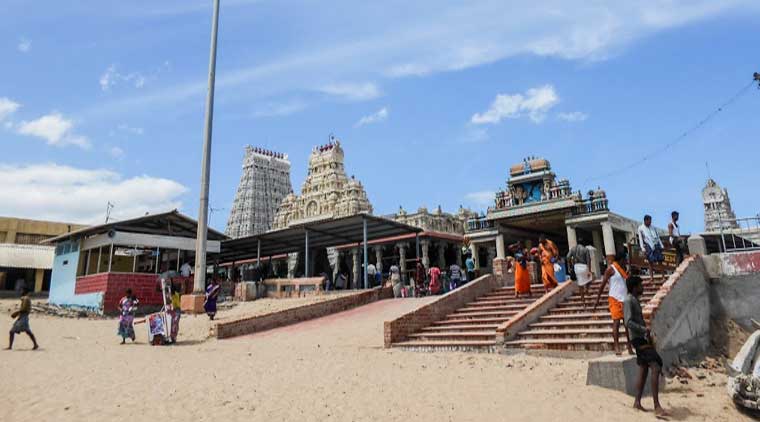
The temple rises on a small hillock, about 60 feet high, beside a channel of the Kaveri. Sixty stone steps lead up, and each step carries the name of one of the sixty years of the Tamil calendar. Devotees believe that climbing them with the Lord's name in your heart is a prayer for every year of life.
The temple has three precincts at three levels, one at the base, one halfway up, and one around the sanctum at the top. In the sanctum you have darshan of a striking idol of Swaminatha Swamy, about 6 feet tall, holding a staff. Look for the elephant before the Lord: at Swamimalai, Lord Murugan has an elephant mount, said to be a gift from Indra, an iconography seen only here and at Thiruthani. At the foot of the hill are the shrines of Lord Shiva as Sundareswarar and the Goddess as Meenakshi, so the son truly stands above the father here, teacher above student. On Thursdays, the Lord is adorned with the diamond vel.
Swamimalai is also the home of Tamil Nadu's master bronze makers. The sthapathis here still cast idols by the lost wax method that came down from the Chola age, and Swamimalai bronze icons carry their own Geographical Indication tag. Watching a workshop at work is a lovely half hour after darshan.
Darshan, timings and temple etiquette
The temple's official hours are 6 in the morning to 1 in the afternoon, and again 4 in the evening to 9 at night. The doors stay closed from 1 to 4 in the afternoon, the usual rhythm of Tamil temples, so plan your darshan for the morning or the evening. On monthly Krithigai days and major festivals, the temple stays open through the day. Six pujas are performed daily, from the Viswarupa puja at dawn to the Ardhajama puja at night.
Dress modestly and simply, as you would at any great shrine of the Lord. The climb of 60 steps is gentle and short, and elders can take it slowly with the handrail. Keep your footwear at the stand below, keep your voice low near the sanctum, and if you wish to offer an abhishekam or archana, ask at the temple counter about the day's schedule.
Best time to visit
October to March is the pleasant season in the Kaveri delta, ideal for the full circle of temples around Kumbakonam. The summer months are hot, so keep darshan for early morning or evening.
Vaikasi Visakam, in May or June, is the main festival of Swamimalai, celebrating the birth of Lord Murugan. Monthly Krithigai days are special to the Lord and draw steady crowds, with the temple open through the day. If you love festivals, come then; if you want silence and an unhurried darshan, a weekday morning is gold.
How to reach
Swamimalai is a short drive from Kumbakonam, hardly 15 to 20 minutes by road. Kumbakonam is the nearest railway station, well connected on the main line through the delta, and Thanjavur is about 35 km away. The nearest airport is Tiruchirappalli, about 90 km, roughly a 2 hour drive.
Most of our guests stay at Kumbakonam and cover Swamimalai along with the town's great temples and the Navagraha shrines scattered around it. The UNESCO listed Airavatesvara temple at Darasuram is only a few minutes from Swamimalai, so keep an hour for it on the same outing.
Tips from our travel experts
Come for the dawn puja if you can. The hillock catches the first light, the steps are cool underfoot, and you will have the sanctum almost to yourself. Count the steps as you climb; finding the step of your own birth year is a small joy every devotee remembers.
After darshan, visit a bronze workshop in the village and see the sthapathis at work. If you plan to buy an idol, buy directly from an established workshop and ask for a receipt; genuine Swamimalai bronzes are heirlooms. And keep one full day for Kumbakonam itself, the town around is a treasury of temples.
For our NRI and OCI travellers
Swamimalai sits at the centre of the Chola country, so it pairs naturally with Thanjavur's Brihadisvara temple and Darasuram on a heritage circuit. Many of our overseas families order a custom bronze idol here and have it shipped home; allow a few months for a made to order piece, and we will connect you with reputed workshops. If a family elder observes the Sashti viratham, timing your visit to a Krithigai or Sashti day makes the darshan especially sweet.
Questions travellers ask us
Why is Lord Murugan called Swaminatha at Swamimalai?
The tradition says that at this place Lord Murugan taught the meaning of the Pranava mantra, Om, to his own father, Lord Shiva, who stood before him as a student. Swaminatha means the teacher of the Lord. To mark this, Lord Murugan's shrine is on top of the hillock and Lord Shiva's shrine is at its base.
What is the meaning of the 60 steps?
The sixty steps that lead up to the sanctum are named after the sixty years of the Tamil calendar. Devotees climb them as a prayer covering every year of life, and many pause at the step named for their own birth year.
What are the temple timings at Swamimalai?
The official hours are 6 am to 1 pm and 4 pm to 9 pm, with the temple closed from 1 to 4 in the afternoon. On monthly Krithigai days and major festivals it stays open through the day. Do confirm the current schedule before you travel.
Is it true that Lord Murugan rides an elephant here?
Yes. At Swamimalai the Lord's mount is an elephant, said in the tradition to be a gift from Indra, instead of the usual peacock. This iconography is seen only at Swamimalai and Thiruthani among the six abodes.
What else can I see near Swamimalai?
Kumbakonam, 15 to 20 minutes away, is full of great temples, and the Navagraha shrines lie in a circle around it. The UNESCO listed Airavatesvara temple at Darasuram is a few minutes' drive. Swamimalai village itself is famous for its bronze idol workshops.
A note on the tours below. These packages travel close to Swamimalai Murugan Temple, but a package may not include a guided visit to the site itself. If you would like this place added to your journey, please tell your Way to India travel consultant and they will happily build it into your itinerary for you.
Yatras where you stay right by the temple
5D / 4NYou stay at Swamimalai
 7D / 6N
You stay at Kumbakonam