 18D / 17N 5
 All Sacred Circuits
Jyotirlinga · Shiva
Trimbakeshwar Jyotirlinga
Trimbakeshwar stands at the feet of the Brahmagiri hill near Nashik, at the very spot where the holy Godavari river is born. Among the twelve Jyotirlingas this one is unlike any other, for the tradition sees in its lingam three small faces together: Brahma, Vishnu and Mahesh. It is also one of the seats of the Simhastha Kumbh Mela, so the whole town breathes an old and serious sanctity.
The story of this place
The tradition tells of Sage Gautama, who lived here with his wife Ahalya and carried the burden of an unintended sin. To wash it away, he performed long penance on the Brahmagiri hill and prayed that Ganga herself descend at this spot. Lord Shiva, pleased with the sage, granted the wish, and Ganga came down in the south as the Godavari. That is why devotees call the Godavari the Ganga of the South, and why a bath at her source here is held so purifying.
The Jyotirlinga of Trimbakeshwar is unique. Inside the sanctum, in a small hollow, the tradition worships three thumb-sized lingas together, embodying Brahma the creator, Vishnu the preserver and Shiva the destroyer. At every other Jyotirlinga you bow to Lord Shiva alone; here the tradition sees the Tridev together, and the name Trimbakeshwar, the Lord of the three, carries this meaning.
The present temple was built in the 18th century by Peshwa Balaji Baji Rao, known as Nanasaheb, on the site of an older shrine, and it is one of the finest black basalt temples of Maharashtra. The famous Nassak diamond once adorned the deity here before it was taken away in the colonial period. Trimbak is also one of the ancient towns where pandits keep the Hindu genealogy registers, the handwritten family records of pilgrims going back generations.
What you will see
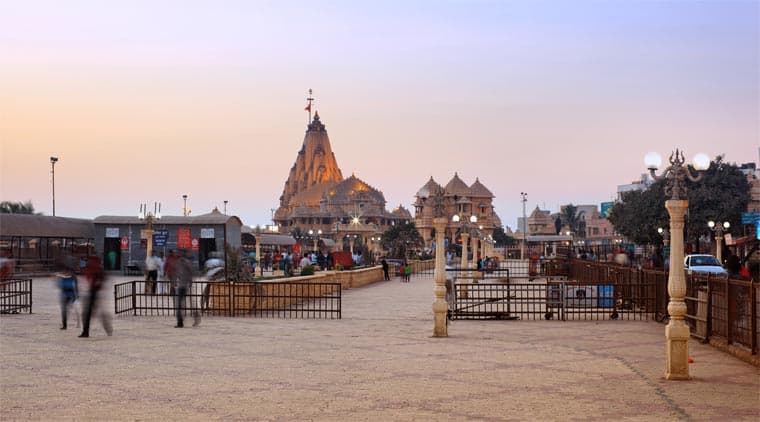
The temple stands within a stone courtyard against the green wall of Brahmagiri, and its carved basalt body and shikhara are worth slow, careful looking. Inside, the sanctum is small and dark, and the three-faced lingam sits low in its hollow. Over it the temple places a gold mask of the Tridev, and on Monday evenings a jeweled crown, which devotees believe comes down from the age of the Pandavas, is brought out for darshan; ask locally for the current time of the crown darshan.
In the temple premises is the Kusavarta kund, the sacred tank that the tradition honours as the source of the Godavari. Pilgrims take a dip or sprinkle its water on their heads before darshan. During the Simhastha Kumbh Mela, this kund is where the great ritual baths of Trimbakeshwar take place.
Above the town rises Brahmagiri hill, where the Godavari first appears. Fit pilgrims climb it as a small yatra of its own; the views over Trimbak and the Sahyadri ridges are beautiful, especially after the rains. The town itself is full of maths, ashrams and Vedic gurukuls, and walking its lanes in the morning, with the sound of chanting from the schools, is an experience in itself.
Darshan, timings and temple etiquette
The temple follows the old rhythm of three daily pujas. As per the temple trust, the morning puja honours Brahma Deva at about 7 to 8:30, the midday puja honours Mahadev at about 10:45 to 12:30, and the evening puja honours Vishnu. In general the temple is open for darshan from early morning until about 9 at night, but timings change on festival days, and the temple can close at short notice in emergencies such as very heavy rain warnings. Always check the trust's official website, trimbakeshwartrust.com, or ask your consultant for the current schedule.
Entry into the sanctum area is regulated by the temple, and most devotees have darshan of the Jyotirlinga from outside the garbhagriha in the queue. Follow the instructions of the temple staff on the day; they manage the flow with care.
Special pujas are a large part of Trimbakeshwar's life. Rudrabhishek and Laghurudra can be booked directly on the trust's official website, and we strongly advise you to book only there. Trimbakeshwar is also the one place where the Narayan Nagbali ritual is traditionally performed, along with Kalsarpa Shanti and Tripindi vidhi; these are conducted by the local authorised priests over one to three days. If you need such a vidhi, ask the temple trust's official channels to connect you to an authorised priest, and settle everything in writing before you travel.
Best time to visit
October to February is the most pleasant season, cool and clear, good for both darshan and the Brahmagiri climb. The monsoon months turn Trimbak into one of the greenest corners of Maharashtra, with clouds sitting on Brahmagiri, but rain can be very heavy and the temple has closed for safety on extreme days, so keep a flexible plan between June and September.
Shravan, Mahashivratri and the Nivrittinath yatra days bring big crowds. And remember the Simhastha Kumbh Mela: it comes to Nashik and Trimbakeshwar every 12 years, and the next one is in 2027. A Kumbh visit is a blessing of a lifetime, but it needs booking many months in advance.
How to reach
Trimbak is about 30 km from Nashik city, a drive of under an hour. The nearest big railway station is Nashik Road, about 40 km away, with direct trains from Mumbai and many cities. By road, Mumbai is roughly 170 to 180 km, about 4 to 5 hours.
For flights, Nashik's Ozar airport has limited connections, so most of our guests fly into Mumbai and drive up, or club Trimbakeshwar with Shirdi, which is about 100 km from Nashik. Within the town everything is walkable; vehicles park a short distance from the temple.
Tips from our travel experts
Come for the early morning darshan and keep the rest of the day for Kusavarta, the town and Brahmagiri. If you plan the Brahmagiri climb, do it in the morning with water and good shoes, and skip it in heavy rain.
Book Rudrabhishek or any vidhi on the trust's official website before you travel, and be careful with the many agents around the temple who promise quick pujas; deal only with authorised priests. Combine your visit with Nashik's Panchavati area, where the tradition places Lord Rama's stay during vanvas, and the Godavari ghats of the city.
If your dates fall on a Monday, plan to be at the temple in the late afternoon for the crown darshan, and confirm the time locally that morning.
For our NRI and OCI travellers
Trimbakeshwar holds a special gift for overseas Indian families: the genealogy registers. The hereditary pandits here keep handwritten records of pilgrim families going back generations, and many NRI guests have found their great grandfather's entry in these books. If tracing your family line matters to you, tell us before the trip and keep a full day for it.
Many families also come to Trimbakeshwar for ancestral rituals and vidhis like Narayan Nagbali, which need one to three days and prior booking with authorised priests. Plan these dates first and build the rest of your Maharashtra circuit, Shirdi, Nashik and Bhimashankar, around them. For the 2027 Simhastha Kumbh, start planning a year ahead; the world will be coming.
Questions travellers ask us
What is unique about the Trimbakeshwar lingam?
Inside the sanctum, in a small hollow, the tradition worships three small lingas together, seen as Brahma, Vishnu and Mahesh. Every other Jyotirlinga is worshipped as Lord Shiva alone; only at Trimbakeshwar does the tradition see the Tridev together. A gold mask covers the lingas, and on Mondays a jeweled crown is brought out for darshan.
Is Trimbakeshwar really the source of the Godavari?
Yes, the Godavari rises on the Brahmagiri hill above the town, and the Kusavarta kund in the temple premises is honoured as her source. The tradition says Ganga descended here as the Godavari in answer to Sage Gautama's penance, which is why the river is called the Ganga of the South.
When is the next Kumbh Mela at Trimbakeshwar?
The Simhastha Kumbh Mela comes to Nashik and Trimbakeshwar every 12 years, and the next one is in 2027. The ritual baths at Trimbakeshwar take place at the Kusavarta kund. If you plan to attend, book your stay and travel many months in advance.
How do I book a Rudrabhishek or Narayan Nagbali?
Book Rudrabhishek and Laghurudra directly on the temple trust's official website, trimbakeshwartrust.com. Narayan Nagbali, Kalsarpa Shanti and Tripindi vidhi are performed by local authorised priests over one to three days; arrange them through the trust's official channels and confirm everything in writing. Please avoid unknown agents near the temple.
How far is Trimbakeshwar from Nashik and Mumbai?
About 30 km from Nashik city, under an hour by road, and roughly 170 to 180 km from Mumbai, a drive of about 4 to 5 hours. The nearest major railway station is Nashik Road, about 40 km away.
What are the temple timings?
The temple is generally open from early morning until about 9 at night, with three daily pujas: Brahma puja in the morning, Mahadev puja at midday and Vishnu puja in the evening. Timings change on festival days, and the temple can close at short notice during extreme weather, so check trimbakeshwartrust.com before you travel.
A note on the tours below. These packages travel close to Trimbakeshwar Jyotirlinga, but a package may not include a guided visit to the site itself. If you would like this place added to your journey, please tell your Way to India travel consultant and they will happily build it into your itinerary for you.
Yatras with the temple a short drive away
18D / 17N 5About 28 km from your stay at Nasik
 13D / 12N
About 28 km from your stay at Nasik