 18D / 17N 5
 All Sacred Circuits
Shakti Peetha · Shakti
Vindhyavasini Shakti Peetha
At Vindhyachal, on the bank of the Ganga near Mirzapur, lives Maa Vindhyavasini, the Goddess who dwells in the Vindhya hills. Devotees hold this as a jagrit, living seat of the Devi, and the town sits conveniently between Varanasi and Prayagraj. With the new Vindhya corridor opening up the temple, this is a wonderful time to bring her darshan into your yatra.
The story of this place
Vindhyavasini means the one who resides in the Vindhyas, and her story is told in the Durga Saptashati. The tradition says that on the night Lord Krishna was born in Mathura, a divine girl child was born to Yashoda in Gokul. When Kansa seized the child and tried to dash her against the stone, she slipped from his grip, rose into the sky in her true form as the Goddess, and declared that his destroyer was already alive. The tradition says she then chose the Vindhya hills as her home, and here she has been worshipped ever since. It is also said that the Goddess settled at Vindhyachal after slaying the demon Mahishasura.
Vindhyachal is counted among the great seats of Shakti, and its tradition is special. Devotees here will tell you that this is not a place where a part of Sati fell; it is the place the Devi herself chose to live. That is why she is worshipped as a fully awake, ever present Mother, and why pilgrims have come to this riverside town for centuries, in every season, with every kind of prayer.
What you will see
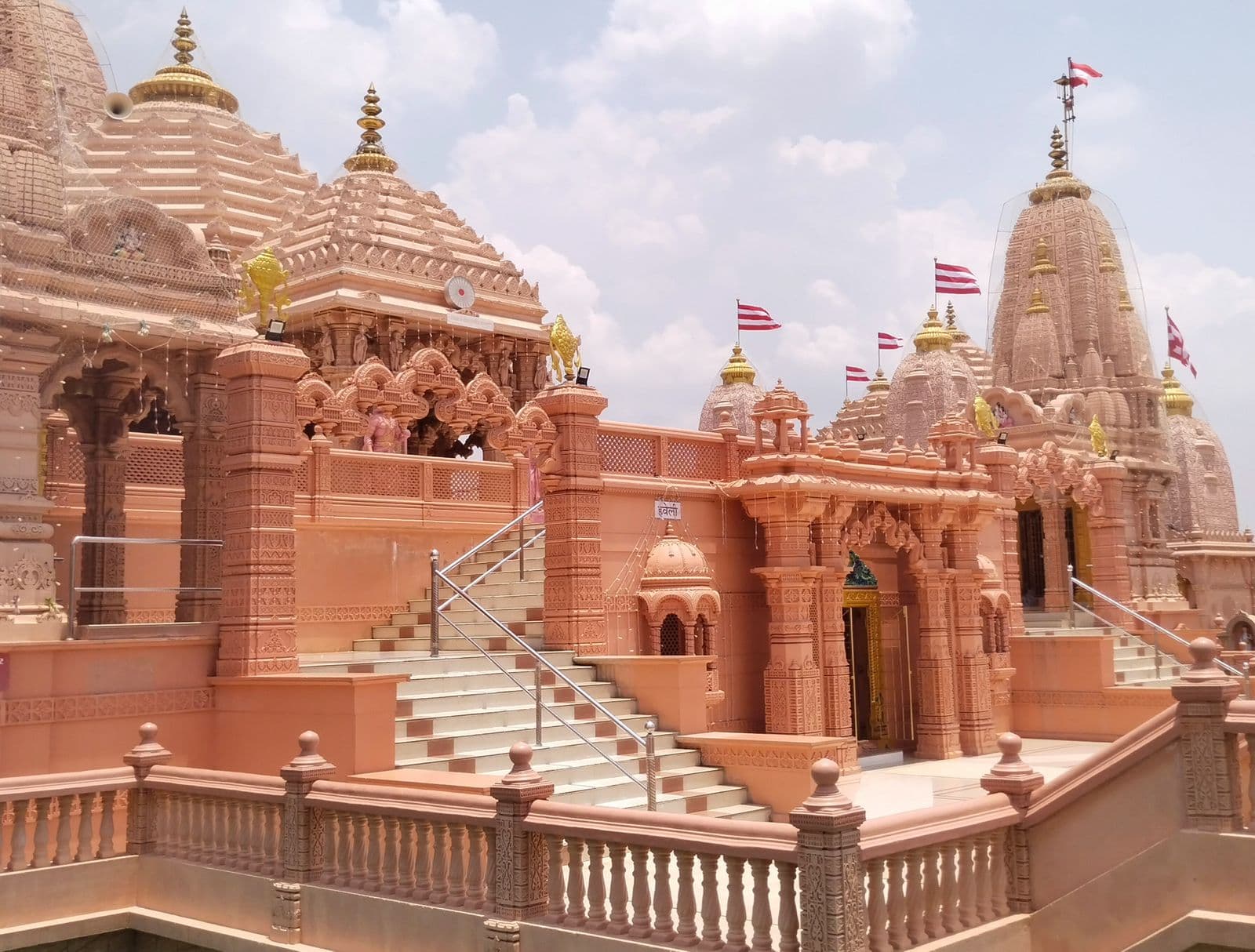
The temple of Maa Vindhyavasini stands close to the Ganga, and the darshan of the Mother, dark faced and beautifully adorned, is brief and powerful as the line moves through the sanctum. Around the temple, the Vindhya corridor has been built on the pattern of the Kashi Vishwanath corridor, with pink stone from Ahraura carved by artisans from Jaipur and a wide parikrama path of about 50 feet around the temple. The project is designed so that the temple is visible from the bank of the Ganga itself.
Vindhyachal is also the only place where devotees worship the three great forms of the Devi in three separate temples: Maa Vindhyavasini, Maa Ashtabhuja on a hillock outside town, and Maa Kali in the cave temple of Kali Khoh. Visiting all three is the famous Trikona, the triangle parikrama of Vindhyachal, and completing it is considered the full darshan of this kshetra. Local vehicles do the round easily, and many devotees walk it as a vow.
Darshan, timings and temple etiquette
The temple opens very early, around 5:00 in the morning, and darshan continues through the day with breaks for the Devi's shringar, bhog and aarti, closing at night after the final aarti. The break timings shift with the season and the crowd, so check the current schedule on the temple's website or with your consultant, and plan around the aarti hours if you wish to witness one.
On ordinary days the darshan is easy and unhurried. During both Navratris, the picture changes completely: lakhs of devotees come to Vindhyachal, the queue runs through the corridor for hours, and the whole town glows with lamps. In Navratri of 2024 about 15 lakh pilgrims had darshan here, and during the Prayagraj Maha Kumbh of 2025 more than a crore visited. If you come during Navratri, join the line early in the morning, keep water with you, and treat the wait itself as tapasya. Dress modestly, leave footwear at the stands, and hold your children's hands firmly in the sanctum press.
Best time to visit
October to March is the comfortable season, with pleasant days for the Trikona parikrama and the riverside. The two Navratris, in Chaitra around March or April and in Ashwin around September or October, are the soul of Vindhyachal, and if you can bear the crowds, there is nothing like the town in those nine nights.
For a quiet darshan with time to sit by the Ganga, choose an ordinary weekday between October and March. Summer afternoons are harsh in this part of Uttar Pradesh, so keep temple visits to mornings and evenings from April to June.
How to reach
Vindhyachal sits between Varanasi and Prayagraj, which makes it simple to add to a Kashi or Sangam yatra. The nearest airport is Lal Bahadur Shastri International Airport at Varanasi, about 72 km away, roughly a 2 hour drive.
By train, Vindhyachal station is barely 1 km from the temple and lies on the main Delhi to Howrah route, with Mirzapur station about 9 km away as the bigger stop. By road, you can drive from Varanasi in about 2 hours and continue onward to Prayagraj the same day. Many of our guests do exactly this: morning darshan at Kashi Vishwanath, afternoon at Vindhyachal, and the Sangam at Prayagraj the next morning.
Tips from our travel experts
Do the full Trikona parikrama, not just the main temple. Vindhyavasini, Kali Khoh and Ashtabhuja together take about half a day with a local vehicle, and the cave shrine of Kali Khoh in particular stays with you.
If your dates fall in Navratri, book your stay in Mirzapur or Varanasi well in advance, and come to the temple at first light. On any day, keep small notes ready for offerings, and after darshan spend a few minutes at the Ganga bank by the temple. With the corridor open to the river, that view of the Mother's temple from the water side is new, and it is beautiful.
Questions travellers ask us
Did a part of Sati fall at Vindhyachal?
The tradition of Vindhyachal is special. Devotees hold that no part of Sati fell here; instead, the Goddess herself chose the Vindhya hills as her home after her leela at Kansa's prison, and after slaying Mahishasura. That is why Vindhyavasini is worshipped as a living, ever present form of the Devi.
What is the Trikona parikrama?
It is the triangle of three temples at Vindhyachal: Maa Vindhyavasini near the Ganga, Maa Kali in the Kali Khoh cave, and Maa Ashtabhuja on a hillock. Devotees visit all three to complete the darshan of this kshetra. With a local vehicle it takes about half a day; many devotees walk it as a vow.
What is the Vindhya corridor?
A corridor project built around the temple on the pattern of the Kashi Vishwanath corridor, with pink Ahraura stone carved by Jaipur artisans and a parikrama path about 50 feet wide. It has opened up the temple precinct and is designed to make the temple visible from the bank of the Ganga.
How crowded is Navratri at Vindhyachal?
Very. Lakhs of devotees come during both Navratris; in 2024 about 15 lakh pilgrims visited during Navratri alone. Queues run for hours, so join early in the morning, carry water, and book your stay in Mirzapur or Varanasi well in advance.
Can I visit Vindhyachal from Varanasi in one day?
Easily. The drive is about 2 hours each way, and Vindhyachal railway station also sits on the main Delhi to Howrah line, about 1 km from the temple. Many pilgrims combine Kashi, Vindhyachal and Prayagraj into one smooth two to three day circuit.
A note on the tours below. These packages travel close to Vindhyavasini Shakti Peetha, but a package may not include a guided visit to the site itself. If you would like this place added to your journey, please tell your Way to India travel consultant and they will happily build it into your itinerary for you.
Yatras with the temple an easy day trip away
18D / 17N 5About 54 km from your stay at Varanasi
 19D / 18N
12 Jyotirlinga Tour Package from Delhi
● Starts Delhi
From₹85,000* / person
Explore →EMI from ₹4,162/mo
About 54 km from your stay at Varanasi
 18D / 17N
12 Jyotirlinga Tour Package from Mumbai
● Starts Mumbai
From₹90,000* / person
Explore →EMI from ₹4,407/mo
About 54 km from your stay at Varanasi
 10D / 9N
About 54 km from your stay at Varanasi
 4D / 3N
About 54 km from your stay at Varanasi
 9D / 8N
About 54 km from your stay at Varanasi
 11D / 10N
Golden Triangle Tour With Varanasi And Khajuraho
● Starts Delhi
From₹57,658* / person
Explore →EMI from ₹2,823/mo
About 54 km from your stay at Varanasi
 6D / 5N
Haridwar Rishikesh Varanasi Tour Package from Delhi
● Starts Delhi
From₹30,490* / person
Explore →EMI from ₹1,493/mo
About 54 km from your stay at Varanasi
 3D / 2N
Kashi Vishwanath Jyotirlinga Tour Package
● Starts Varanasi
From₹14,188* / person
Explore →EMI from ₹695/mo
About 54 km from your stay at Varanasi
 7D / 6N
Lucknow Ayodhya Allahabad Varanasi Tour
● Starts Lucknow
From₹35,923* / person
Explore →EMI from ₹1,759/mo
About 54 km from your stay at Varanasi
 13D / 12N
About 54 km from your stay at Varanasi
 4D / 3N
About 54 km from your stay at Varanasi
 3D / 2N
Varanasi Tour By Air
From₹14,188* / person
Explore →EMI from ₹695/mo
About 54 km from your stay at Varanasi
 10D / 9N
About 54 km from your stay at Varanasi
 8D / 7N
About 54 km from your stay at Varanasi