 8D / 7N
 All World Heritage Sites
UNESCO World Heritage · Cultural · inscribed 2017
Historic City of Ahmadabad
In 2017, the old walled city of Ahmedabad became the first city in India to be named a UNESCO World Heritage City. This is not a monument you look at from outside. It is a living city of gated lanes called pols, carved wooden houses, mosque and temple side by side, where six hundred years of life continue every morning. Walk it early, with a guide, and Ahmedabad will win your heart.
The story of this place
Sultan Ahmad Shah founded Ahmedabad in 1411 on the eastern bank of the Sabarmati river, and the city has remained the beating heart of Gujarat ever since. From the sultanate period the old city keeps the Bhadra citadel, the surviving city gates, and a remarkable family of mosques and tombs whose carving borrows freely and beautifully from the temple craftsmanship of Gujarat. In later centuries came grand Hindu and Jain temples, and the merchant havelis with carved wooden facades.
What truly earned Ahmedabad its World Heritage title, though, is the way its people live. The old city is organised into pols, tightly packed neighbourhoods entered through a single gate, each with its community well, its small shrine, and its chabutaro, the raised bird feeder that is a signature of Ahmedabad's lanes. Hundreds of pols still function today as they have for centuries.
And this city holds one more chapter of India's story. In 1917 Gandhiji made his home on the Sabarmati's bank, and from his ashram here he began the Dandi March in 1930. When you visit Ahmedabad, you walk through the city of the sultans, the city of the merchants, and the city of the Mahatma, all in one day.
What you will see
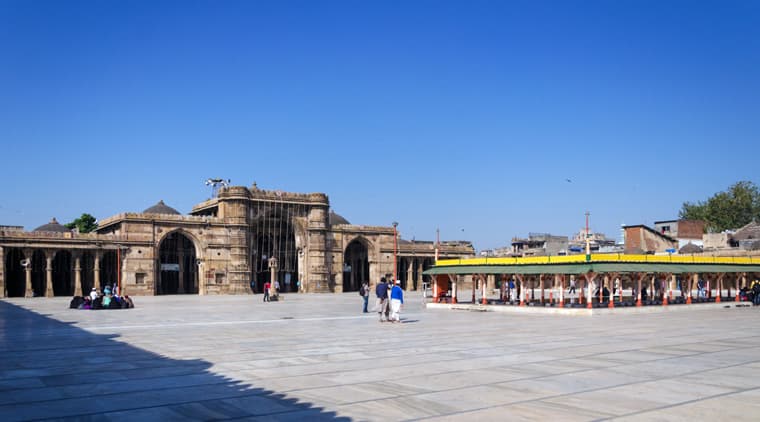
Begin with the walled city itself. The Bhadra Fort and the Teen Darwaza gateway mark the royal centre laid out by Ahmad Shah. The Jama Masjid of 1424 is one of the most beautiful mosques in western India, its prayer hall a forest of carved stone pillars, calm even when the streets outside are loud. Close by is Manek Chowk, a jewellery market by day that turns into a famous street food square at night.
The most loved single artwork of the city is the jali of the Sidi Saiyyed Mosque, built in 1573. Its stone window, carved as a tree with intertwining branches, is so fine that it has become the symbol of Ahmedabad, and the design inspired the logo of IIM Ahmedabad. Go and stand before the real one; photographs do not do it justice.
Then give the pols their time. Wander the lanes around Manek Chowk with a guide, look up at the carved wooden balconies, find the chabutaras and the hidden Jain derasars. A short drive from the walled city, across the river, is Sabarmati Ashram, where Gandhiji lived from 1917 to 1930. His simple cottage, Hriday Kunj, and the museum beside it make a quiet, moving hour. If you have time, the Adalaj stepwell on the northern edge of the city is a lovely add on.
The morning heritage walk
The best single thing you can do in Ahmedabad is the morning heritage walk run under the Ahmedabad Municipal Corporation. It starts from the Swaminarayan Mandir in Kalupur, with reporting at about 7:30 in the morning, and winds for about two and a half hours through roughly twenty stops, ending at the Jama Masjid around 10:30. People lovingly call it the Mandir to Masjid walk, and that name tells you what Ahmedabad is.
On the walk you pass through living pols, past carved havelis, secret community wells, bird feeders, and small temples that outsiders would never find alone. The storytellers who lead it know every lane. Book a day or two ahead through the official heritage walk website or your consultant, and confirm the current starting time, since schedules can change. Wear comfortable shoes, carry water, and finish with breakfast in the old city; your guide will point you the right way.
Best time to visit
October to February is the comfortable season, with pleasant mornings that suit the heritage walk perfectly. If you can plan around mid January, Uttarayan, the kite festival, fills the sky above the old city with colour; it is chaotic and joyful and very Ahmedabad. Navratri, in September or October, brings garba nights that Gujarat does better than anywhere on earth.
Summer, from April to June, is very hot, so keep sightseeing to early morning and evening. The monsoon months bring rain in spells and a softer light on the old stone. The walled city itself never closes; mosques close to visitors briefly at prayer times, and the Sidi Saiyyed jali is best seen in daylight.
How to reach
Ahmedabad is one of the best connected cities in India. Sardar Vallabhbhai Patel International Airport has direct flights from major Indian cities and several international hubs, which makes it especially easy for our NRI guests. Ahmedabad Junction, the main railway station at Kalupur, sits right at the edge of the old city, minutes from the heritage walk starting point.
By road, Ahmedabad connects to Vadodara and Mumbai by expressway and to Udaipur in Rajasthan in about 5 hours, so many of our guests join Gujarat and Rajasthan in one journey. Within the city, autos and taxis are easy, but remember that the old city lanes are for walking; that is the whole point.
Tips from our travel experts
Give the old city one full morning at least: heritage walk first, then the Sidi Saiyyed jali and Bhadra area, and keep Sabarmati Ashram for the calm of the afternoon. In the evening, eat at Manek Chowk once; go hungry and try a little of everything.
Dress modestly for mosques and temples, and carry socks if you do not like walking barefoot on warm stone at the Jama Masjid courtyard. The pols are people's homes, so photograph doorways and balconies with a smile and a namaste first. Ahmedabad is also the right place to buy textiles; the city's block prints and weaves are famous, and your guide can point you to honest shops. The Sabarmati Ashram is open every day, and the mosques of the old city welcome visitors outside prayer times, so this is heritage that asks mainly for your time.
For our NRI and OCI travellers
For Gujarati families abroad, Ahmedabad is usually the landing city, and too many treat it only as an airport. Keep two nights. Do the morning heritage walk with your children; there is no better way to show them the Gujarat their grandparents describe, lane by lane, chabutaro by chabutaro. At Sabarmati Ashram, stand in Hriday Kunj for a few quiet minutes; for children who have only read about Gandhiji, seeing his charkha and his room does what no textbook can. Direct international flights make Ahmedabad an easy first or last stop, and it pairs naturally with Statue of Unity, Dwarka and Somnath on a longer Gujarat yatra.
Questions travellers ask us
Why is Ahmedabad a UNESCO World Heritage City?
The walled city founded by Sultan Ahmad Shah in 1411 keeps its historic urban fabric alive: the Bhadra citadel, gates, sultanate mosques and tombs, later Hindu and Jain temples, and hundreds of living pol neighbourhoods. In July 2017 UNESCO inscribed it, making Ahmedabad the first Indian city on the World Heritage List.
What is a pol?
A pol is a gated micro neighbourhood of the old city, entered through a single gateway, with tightly packed houses, a community well, small shrines and a chabutaro, the raised bird feeder. Families have lived in the same pols for generations, and walking through them is the heart of the Ahmedabad experience.
How do I join the morning heritage walk?
The walk runs under the Ahmedabad Municipal Corporation and starts from the Swaminarayan Mandir at Kalupur, with reporting at about 7:30 am, ending at the Jama Masjid around 10:30 am. Book a day or two ahead on the official heritage walk website or through your consultant, and confirm the current timing.
Is Sabarmati Ashram inside the old city?
No, it is on the western bank of the Sabarmati river, a short drive from the walled city. Gandhiji lived here from 1917 to 1930 and began the Dandi March from this ashram. It is open every day; keep about an hour for the cottage and the museum, and check current timings before you go.
What is special about the Sidi Saiyyed jali?
The Sidi Saiyyed Mosque, built in 1573, has a stone window carved as a tree with flowing, intertwined branches. It is considered one of the finest pieces of stone lattice work in India, has become the symbol of Ahmedabad, and even inspired the logo of IIM Ahmedabad.
Is Ahmedabad worth more than a transit stop?
Very much so. Keep at least one full day: the heritage walk and old city in the morning, Sabarmati Ashram in the afternoon, and Manek Chowk street food at night. It also pairs easily with day trips to the Adalaj stepwell, and with Rani ki Vav and Modhera in north Gujarat.
A note on the tours below. These packages travel close to Historic City of Ahmadabad, but a package may not include a guided visit to the site itself. If you would like this place added to your journey, please tell your Way to India travel consultant and they will happily build it into your itinerary for you.
Tours where you stay right by it
8D / 7NYou stay at Ahmedabad
You stay at Ahmedabad
 7D / 6N
Fascinating Gujarat Holiday Tour Package
● Starts Ahmedabad
From₹35,923* / person
Explore →EMI from ₹1,759/mo
You stay at Ahmedabad
 6D / 5N
You stay at Ahmedabad