01
Jaisalmer Fort
Trikuta Hill
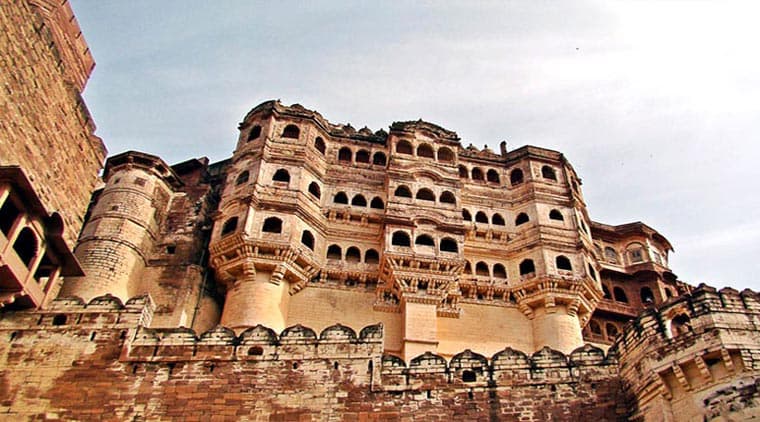
A living fort, built in 1156, with 99 bastions
November to March is the best time. Days are pleasant and desert nights are cold. April to June is very hot, up to about 46 C. The Desert Festival comes in late January or February.
Overview
This is a 3 nights and 4 days Jaisalmer tour package. You start and end at Jaisalmer airport or the railway station. You stay two nights in a hotel in the town, and your third night is in a desert camp at the Sam dunes.
On Day 1 you see Gadisar Lake and the sunset at Bada Bagh. On Day 2 you walk the fort, the Jain temples and the havelis. Day 3 takes you to Kuldhara in the morning, then to Sam for a camel ride and a night in the dunes. On the last day you see the sunrise on the sand, stop at the War Museum, and leave.
You can add one more day for Longewala and Tanot Mata, near the border. We explain below why that day needs its own plan.
Yes, for the main places. The fort and havelis need one full morning. Bada Bagh and Gadisar fit into the first evening. Kuldhara and the dunes take the third day.
Add a fourth night if you want Longewala and Tanot. Longewala is about 110 to 120 km from the town, so it needs a whole day. If you want Jodhpur too, our Jodhpur Jaisalmer tour joins the two cities. For a wider plan, see our Rajasthan tour packages.
This is the question most pages skip. Jaisalmer airport is seasonal. It runs flights only in the winter months.
If you fly in from abroad, land in Delhi first and rest for one night. Then take the morning flight to Jaisalmer in winter, or fly to Jodhpur and drive. Please book your flight only after you check the current schedule, as routes change each season.
Jaisalmer Fort is a living fort. Rawal Jaisal built it in 1156 on Trikuta Hill, and a few thousand people still live inside its walls. It has 99 bastions. Since 2013 it is a UNESCO World Heritage Site, as one of the Hill Forts of Rajasthan.
Inside you find the royal palace, small temples, homes, shops and the seven Jain temples. These temples were carved between the 12th and 15th centuries. The main temple is of Bhagwan Parshvanath. The Ministry of Tourism says the temples hold nearly 6,000 statues, and many were brought by Jain families who left their homes in 1947.
Here is the rule that changes your day. The Ministry of Tourism gives the Jain temple hours as 8 am to 12 noon. Some guides say they stay open a little later, but plan to finish by noon. So you must start your fort walk early. Take off your shoes and leave any leather item, such as a belt or a purse, outside. Wear clothes that cover your shoulders and knees.
The fort also has the Gyana Bhandar, an old library of Sanskrit and Prakrit manuscripts. UNESCO says the hill under the fort is at risk from water seeping into it. That is one reason we keep your hotel outside the fort walls.
See three. They stand close to each other in the old town, below the fort.
Ticket rates and camera fees change, so please confirm the current rate at each gate.
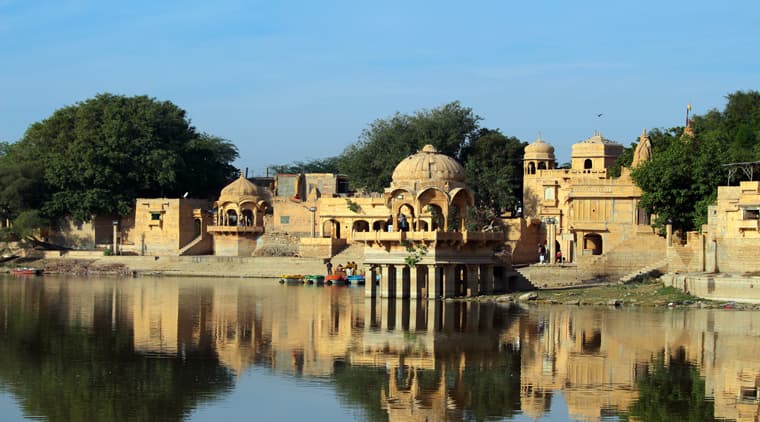
Gadisar Lake is about 1.5 km from the fort. It was the old water tank of the town. Sources agree it was rebuilt by Rawal Gadsi in the 1300s, though they give different years. You enter through Tilon ki Pol, a carved stone gate, and you can take a boat out on the water. The Ministry of Tourism also notes a laser water show after dark. Ask locally if it runs that evening.
Bada Bagh is about 6 km north of the town. It is a hill of sandstone chhatris, the memorials of the royal family. Rawal Jait Singh II built a dam here in the early 1500s. His son Lunkaran laid the garden and the first chhatri. The gates open from about 8 am to 6 pm, and the light is best at sunset.
Kuldhara is about 18 to 20 km south-west of Jaisalmer by road. Paliwal Brahmins from Pali settled here. Historians say two memorial stones in the village record deaths in 1235 and 1238. So people lived here by the early 1200s.
During the 1800s the people left, and by the end of that century very few were still there. Nobody knows why for sure. A falling water supply is one reason given, and a 2017 study suggests an earthquake. Local legend blames the cruelty of the minister Salim Singh, and says the people left in one night. Some versions add 83 more villages. That number is a legend, not history.
Walk the lanes slowly. You see the house walls, the old wells and a small temple. Peacocks often walk among the ruins. Go in daylight, as there is little shade and no light after dark. Confirm the current ticket and closing time at the gate.
Sam is about 40 to 46 km west of Jaisalmer, about 1 hour by car. The Ministry of Tourism says the dunes rise up to about 60 m. Tent camps line the road, and the evening brings camel rides, jeep drives, folk music and dance. It is lively and easy, which suits families with children.
Khuri is about 45 to 53 km from the town, by the road to the south-west. It is a small village of mud houses, and it is quieter. Pick Khuri if you want a calm night and fewer crowds. We plan Sam by default, and we can switch you to Khuri.
One thing may have changed at Sam. In December 2025, one news report in Patrika said that most resorts there now give tents only to families and couples, after trouble with large groups. This is the choice of each resort, not a government order, so it can differ from camp to camp. If you are a group of friends, tell us early so we pick the right camp.
Yes, on an extra day. The Ministry of Defence's Bharat Ranbhoomi Darshan site puts Longewala about 120 km from Jaisalmer, about 2.5 hours by road. A map check gives a little less, about 110 km. The Battle of Longewala was fought from 4 to 7 December 1971. Today there is a war memorial, a museum and equipment used in the battle.
Tanot Mata is a temple of the Goddess near the border, about 120 to 137 km from Jaisalmer by the road you take. Devotees believe the Goddess saved the temple in the 1965 and 1971 wars, when the shells that fell near it did not explode. Some of those shells are kept in the temple museum. The BSF has looked after the temple since the 1965 war. The temple opens from about 6 am to 10 pm.
Please know these rules before you go:
November to March is the best time. Days are mild, between about 4.6 C at night and 35 C by day in the coldest months. Nights at the desert camp are very cold in December and January, so carry warm layers.
April to June is very hot, up to about 46 C. The airport is also closed in these months. If you must come in summer, see the places early in the morning and late in the evening.
The Desert Festival runs for three days in late January or February. In 2026 it ran from 30 January to 1 February, with camel races, folk music and the Maru Shri contest. Hotels fill up fast in those days. For a ready festival plan, see our Jaisalmer Desert Festival page. The Bikaner Camel Festival tour also comes in January.
Try the sweet of the town, the ghotua laddoo. It is made of gram flour, sugar, desi ghee, saffron and cardamom, pounded with a wooden hammer until it turns soft. The word ghotua means pounding. For it, go to the family shop of Dhanraj Ranmal Bhatia in Bhatia Market, near the fort, which is also known for panchdhari laddoo. The Tribune says the family has made sweets for ten generations.
For a meal, ask for dal baati churma and mirchi bhajiya, both named by the Ministry of Tourism as local dishes. Kesariya thandai is a cool saffron milk drink. Laal maas is a mutton dish, so vegetarian families should ask before they order a thali.
For shopping, look for mirror-work textiles, silver jewellery and small yellow-stone carvings in Sadar Bazaar and Bhatia Market. Most leather sold here is goat leather, so do not pay extra because a seller calls it camel leather. Shops outside the fort walls often give better value.
You will also see bhang shops near the fort gate. Bhang is a strong drug. Keep children and elders away from it, and never drive after it.
We read the top pages that sell Jaisalmer packages. Most give no day-by-day plan, and none gives the road distance for each day. Only one says the airport is seasonal, and none gives the months. None explains the border pass, the night rule near the border or the rule for foreign passport holders.
This page gives you each of those, with dates. It also tells you about the Sam camp rule for groups, the Jain temple morning hours, and the real history of Kuldhara. Official sources come first, then trusted guides. Where sources differ, we tell you so.
If you want a longer desert trip, see our Rajasthan desert safari and Rajasthan desert tour. For forts and palaces across the state, see the Heritage of Rajasthan tour package. To add the lakes, see our Udaipur tour package.
November to March is the best time. Days are pleasant and desert nights are cold. April to June is very hot, up to about 46 C. The Desert Festival comes in late January or February.
Indian families with children and elders, couples, first-time visitors to Rajasthan, history lovers, and NRI and OCI families who want the fort, the havelis and one night in the dunes.
Easy
Day by day
A carefully paced plan, day by day. Tap any day for the stay, meals and altitude detail.
Today you arrive in Jaisalmer, the Golden City. Our driver meets you at the airport or the railway station. The airport is about 12 to 17 km from the town, about 30 minutes by car. If you come by road from Jodhpur instead, the drive is about 265 to 285 km, about 5 to 5.5 hours.
Check in to your hotel and rest after lunch. The desert sun is strong even in winter. Drink water often.
At about 3.30 pm, drive to Gadisar Lake, about 1.5 km from the fort. Walk in through Tilon ki Pol, the carved stone gate. Small temples and pavilions sit along the water. Take a boat out if you like, and look back at the fort walls on the hill.
Then drive about 6 km north to Bada Bagh. Reach by about 5 pm in winter. Walk up among the sandstone chhatris of the royal family and wait for the sunset. The yellow stone turns gold, then orange. After dark, come back to the town for dinner. Ask for dal baati churma and a glass of kesariya thandai.
Special Tips for This Day: Carry a cap, sunglasses and a light shawl, as the desert turns cool soon after sunset. For the best photo at Bada Bagh, stand on the higher ground with the chhatris between you and the setting sun. Elders can see Gadisar from the car park side and skip the steps. Keep your ticket safe, as some sites check it again inside.
Today you walk through history. Leave the hotel by 8 am. The Jain temples inside the fort open only from about 8 am to 12 noon, so they come first.
Climb the slope through the fort gates. The lanes are narrow and full of life. People live here, and small shops sell tea and cloth. Inside the Jain temples, take off your shoes and leave any belt or purse made of leather outside. Look up at the carved ceilings and the rows of stone figures. The main temple is of Bhagwan Parshvanath.
Next, see the royal palace of the fort, if you wish, and stand on a bastion. From here you see the whole town in yellow stone, and the desert beyond.
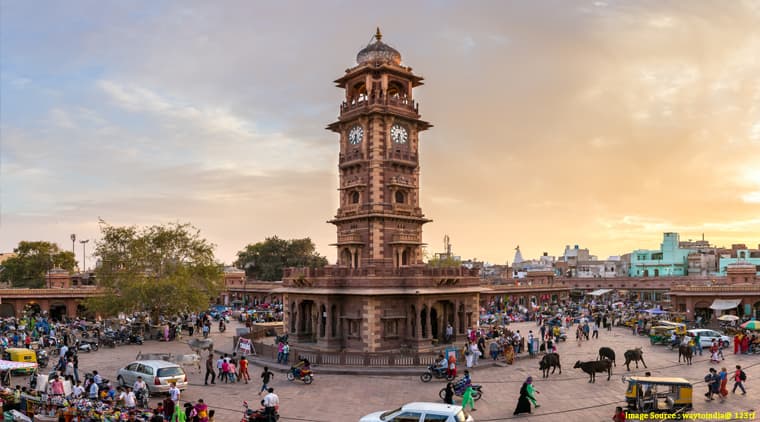
Walk down to the old town for the havelis. See Patwon ki Haveli first, then Salim Singh ki Haveli with its peacock roof, and then Nathmal ki Haveli with its two stone elephants. They are a short walk apart.
After lunch, rest at the hotel. In the evening, walk through Bhatia Market and Sadar Bazaar. Stop at Dhanraj Ranmal Bhatia for ghotua laddoo, and buy a box for home.
Special Tips for This Day: Wear walking shoes you can slip off fast, as you remove them at every temple. Carry socks, because the stone floors get hot by late morning. The fort lanes are steep and have bikes passing, so elders can take an auto-rickshaw up to the main square. Photos inside some temples may need a camera ticket, so ask at the gate first.
Today you go into the desert. After breakfast, drive about 18 to 20 km south-west to Kuldhara, about 30 to 40 minutes. Go early, as there is no shade.
Walk the straight lanes of the old village. The stone houses still stand in rows, with their walls and doorways. You see wells, a small temple, and often peacocks. Paliwal Brahmins lived here for more than 500 years and then left during the 1800s. Your guide may tell you the ghost story. The real reason is still not known.
Come back to Jaisalmer for lunch and pack a small bag for the night. At about 3 pm, drive about 40 to 46 km west to the Sam dunes, about 1 hour. Check in to your tent at the camp.
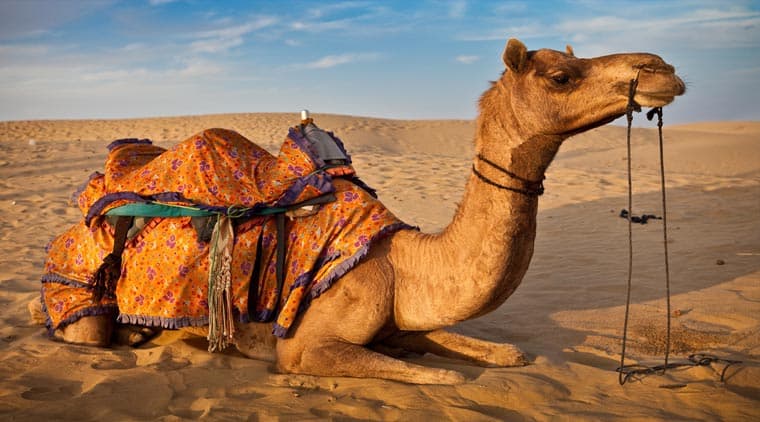
Before sunset, sit on a camel and ride out to the high dunes. The sand is soft and cool in the evening. Watch the sun go down over the Thar. Then come back to the camp for folk music and dance around the fire, and a Rajasthani dinner. Later, step away from the lights and look up. On a clear night the sky is full of stars.
Special Tips for This Day: Desert nights from December to February are very cold, so pack a warm jacket, a cap and socks for the camp. Keep your phone and camera in a zip bag, as fine sand gets into everything. Hold the saddle with both hands when the camel stands up and sits down, as it moves back and forth. Elders who find the camel hard can see the sunset from the jeep or from the camp.
Today you wake before the sun. Walk out to the dunes in the dark with a shawl around you. As the sky turns pink, the dunes take shape around you, and the camp slowly wakes up.
Have breakfast at the camp and drive back to Jaisalmer, about 40 to 46 km, about 1 hour. Freshen up at a hotel if your flight is late, or go straight on.
On the way out, stop at the Jaisalmer War Museum on the Jodhpur highway, about 10 km out of town. The Army's Desert Corps built it, and it opened on 24 August 2015. Inside, the Laungewala Hall tells the story of the battle on the night of 4 December 1971. A second hall, the Indian Army Hall, covers the wars of 1947 to 1948, 1965 and Kargil. Entry is free, and a short film is shown for a fee.
Then our driver drops you at the airport or the railway station. If you leave by road for Jodhpur, the drive is about 5 to 5.5 hours. If you added the Longewala and Tanot day, you stay one more night in the town and go to the border tomorrow.
Special Tips for This Day: Check the airport schedule the night before, as winter flights can change. Shake the sand out of your shoes and bags before you pack. Children enjoy the halls, so give them time there. If you have a late train, rest in the afternoon and see the sunset from the fort before you leave.
Travel tips
On this trip you walk the lanes of Jaisalmer Fort, see the Jain temples and the carved havelis, watch the sunset at Bada Bagh, walk through empty Kuldhara and sleep in a camp at Sam. Here is what you should know before you go, and while you travel.
The best months are November to March. Avoid April to June, when the heat goes up to about 46 C.
From December to February, nights in the dunes are very cold. Pack a warm jacket, a cap and socks, even if the day felt warm.
Jaisalmer airport runs only in winter. In summer, fly to Jodhpur and drive about 5 to 5.5 hours.
In the 2025 to 2026 season, flights ran from October to March, to Delhi, Mumbai, Jaipur, Bengaluru and Ahmedabad. Air India has announced winter flights again from 25 October 2026. The airport is about 12 to 17 km from the town. Check the current schedule before you book.
Jaisalmer has its own railway station, with a few overnight trains from Delhi and Jodhpur. Check the current trains on the official IRCTC site.
About 265 to 285 km, about 5 to 5.5 hours. Jodhpur airport runs all year, so this is the way in from April to September.
Land in Delhi and rest one night. Then take the morning flight to Jaisalmer in winter, or fly to Jodhpur and drive. A long flight and a long drive on the same day is too much for most parents.
The Ministry of Tourism gives the hours of the seven Jain temples inside the fort as 8 am to 12 noon. Start your fort walk early.
UNESCO says the hill under the fort is at risk from water seeping into it. So we keep your hotel outside the walls, and you still walk the fort every morning you like.
Sam is lively and easy for families. Khuri is quieter. We plan Sam by default and can switch you to Khuri.
In December 2025, one news report in Patrika said most Sam resorts now give tents only to families and couples. It is each resort's choice, not a government order, so it can differ. Tell us early if you are a group of friends.
Longewala is about 110 to 120 km from Jaisalmer, and Tanot Mata about 120 to 137 km. Plan a full extra day, and leave the border area before sunset.
A June 2026 Home Ministry order put the border areas under special rules for foreign nationals, and it names OCI card holders too. Jaisalmer town, Sam, Kuldhara and Khuri are left out, but Tanot and Longewala are not. Please tell us early, and we help you check the current process.
Try the ghotua laddoo of the town. Buy mirror-work textiles and silver jewellery in Sadar Bazaar and Bhatia Market.
Kesariya balam, padharo mhare des
Kesariya Balam is a well-known Rajasthani folk song. Its words call a loved one to come to my land. Ask the singers at your camp fire if they know it. When the music stops, walk a few steps into the dark and look up at the stars over the Thar. You carry that quiet home with you.
What's included
What travellers say
“Had a wonderful experience with way to india for my badrinath kedarnath yatra.everything was well organized-from travel accommodation to food. A special thanks to Ms. Neha who managed everything so beautifully n was extremely supportive n cooperative throughout the journey. They took great care of us n darshan was done very smoothly.”3 weeks ago · Google
“A big thanks to Way To India for organising such a truly memorable and spiritually fulfilling experience during our 12 Jyotirlinga Darshan pilgrimage from 1st May to 18th May. They organized the entire journey exceptionally well, ensuring that every aspect of the trip was smooth, comfortable, and hassle-free. From transportation and hotel arrangements to darshan planning and coordination, everything was managed professionally. Despite the extensive travel across multiple destinations, the itinerary was well-structured, allowing us to complete all the Jyotirlinga darshans comfortably. Thanks to staff of Way To India, especially, Ms Neha, who was supportive, responsive, and attentive throughout the journey, always ready to assist whenever needed. Her dedication and careful planning made this sacred pilgrimage stress-free and enjoyable. I sincerely appreciate their excellent service, commitment, and hospitality. Highly recommend Way To India to anyone planning a spiritual tour, especially for the 12 Jyotirlinga Yatra. Thank you for making this divine journey so special and memorable.”4 months ago · Google
“We have successfully completed the 12 Jyotirlinga Yatra, with Waytoindia and it was a truly blessed and unforgettable journey. Every aspect of the tour was well planned and professionally organized, from transportation and accommodations to temple visits and sightseeing. Visiting all twelve sacred Jyotirlingas was a deeply spiritual experience. The itinerary was designed efficiently, allowing us to have darshan at each shrine comfortably while enjoying the cultural and religious significance of every destination. We sincerely appreciate the excellent support and coordination throughout the trip. The team was always available to assist, ensuring a smooth and stress-free pilgrimage. Thank you Waytoindia for making our dream of completing the 12 Jyotirlinga Yatra a reality. We highly recommend this tour to anyone seeking a well-organized and spiritually enriching pilgrimage experience. Har Har Mahadev! 🙏🕉️”5 months ago · Google
Travelled with Way to India?
Share your experience on Google — it takes a minute and helps fellow travellers plan with confidence.
FAQ
Three nights and four days cover the main places in Jaisalmer: the fort, the Jain temples, the havelis, Gadisar Lake, Bada Bagh, Kuldhara and a night in a desert camp at Sam. Add one more day if you want to visit Longewala and Tanot Mata near the border.
November to March is the best time to visit Jaisalmer. Days are mild and nights are cold, so carry warm clothes for the desert camp. April to June is very hot, up to about 46 C, and the airport does not run then. The Desert Festival is in late January or February.
Yes, but Jaisalmer airport is seasonal. It runs only in the winter months. In the 2025 to 2026 season, flights ran from October to March, to Delhi, Mumbai, Jaipur, Bengaluru and Ahmedabad. Air India has announced winter flights again from 25 October 2026. In summer, fly to Jodhpur, about 265 to 285 km away, and drive about 5 to 5.5 hours.
The Ministry of Tourism gives the hours of the seven Jain temples inside Jaisalmer Fort as 8 am to 12 noon. Plan your fort walk for the early morning and finish the temples by noon. Take off your shoes, leave leather items such as belts and purses outside, and wear clothes that cover your shoulders and knees.
Sam is about 40 to 46 km from Jaisalmer and is lively, with many camps, camel rides and folk shows. It suits families. Khuri is about 45 to 53 km away and is quieter, with mud-house villages. A December 2025 news report says many Sam resorts now give tents only to families and couples, so groups of friends should tell us early.
Yes, when you book a known camp. A December 2025 news report says many Sam resorts now take mostly families and couples, after trouble with large groups. Nights are very cold in winter, so carry warm layers. Agree on the rate for camel rides and dune drives before you start, and keep children close in the dark.
Longewala is about 110 to 120 km from Jaisalmer, about 2 to 2.5 hours by road. The Ministry of Defence gives about 120 km. Tanot Mata temple is about 120 to 137 km, by the road you take. The temple opens from about 6 am to 10 pm. Both together make a full day, so plan an extra day.
For the Babliyan border post, about 20 km beyond Tanot, you need an online pass since 12 February 2026. Each adult needs one, booked on the Shri Tanot Mata Mandir Trust website, and the trust says only Indian citizens are allowed. Under a June 2026 Home Ministry order, foreign nationals, including OCI card holders, need permission for the border areas. Sam, Kuldhara and Jaisalmer town are left out of that rule.
Plan to see Kuldhara in daylight. It is an empty village about 18 to 20 km from Jaisalmer by road, with no lights and little shade. Confirm the current ticket and closing time at the gate. The village emptied during the 1800s, and the real reason is still not known.
The Jaisalmer Desert Festival runs for three days in late January or February. In 2026 it ran from 30 January to 1 February, with camel races, folk music and the Maru Shri contest. The dates change each year, so check with Rajasthan Tourism before you book.
Try the ghotua laddoo, a soft sweet of gram flour, ghee and saffron. The Dhanraj Ranmal Bhatia shop near the fort is known for it. Also try dal baati churma and mirchi bhajiya. Buy mirror-work textiles and silver jewellery in Sadar Bazaar and Bhatia Market.
Yes, with a few changes. Fly in during winter to avoid the long drive. Take an auto-rickshaw up the steep fort lanes. Elders can see the sunset at Sam from a jeep instead of a camel. Carry warm clothes for the camp night, and rest after lunch every day.
Before you book
You may also like
Tell us your dates and group size. A WayToIndia travel expert replies within a few hours with a plan you can customise freely. Planning India journeys since 2010.
Explore Way to India
© 2026 Way to India. All rights reserved.