Gangtok Travel Guide
The best windows are March to May and October to early December . The one season to plan around is the monsoon, when the mountain roads slide.
When to visit Gangtok, and the season to avoid
The best windows are March to May and October to early December. The one season to plan around is the monsoon, when the mountain roads slide.
- March to May: spring and clear viewsPleasant days, blooming rhododendrons and orchids, and good odds of clear Kanchenjunga views. The flower valleys of North Sikkim, like Yumthang at about 11,800 ft, are at their best around April and May, which is the classic window for the North Sikkim loop.
- October to early December: crisp and snowyThe post-monsoon air is at its clearest, with sharp mountain views, and by December the higher reaches see the first snow. It is a favourite window for photographers, but it is also peak season, so rooms and cabs run dearer and need booking ahead.
- Go gently with the altitudeEven the easy day trips reach real height: Tsomgo Lake is at about 3,780 m. Take the first day in Gangtok slowly, drink water, and do not plan a high pass for the day you arrive. The town itself, at about 1,650 m, is a comfortable base to acclimatise before you climb.
- Shoulder weeks are gentler on the walletLate February to early March and the second half of January are quieter and cheaper than the spring and autumn peaks, with fewer crowds at MG Marg and on the Tsomgo run. You trade some flower colour and snow certainty for calm and value, which suits a slower trip.
From about June to September the monsoon brings heavy rain and frequent landslides on the mountain roads, which can close the routes to North Sikkim and the high passes for hours or days. If you must travel then, keep your plan flexible, build in spare days, and do not book a tight, must-hit North Sikkim itinerary you cannot afford to lose.
How to reach Gangtok
Gangtok has no big airport of its own. Almost everyone comes in through Bagdogra airport or the New Jalpaiguri railhead, then drives up into the hills.
- By air via Bagdogra (IXB)Bagdogra, near Siliguri, is the main gateway, about 124 km and roughly 4 hours away by road on the winding hill route. It has good links to Delhi, Kolkata and other metros. We arrange a car and driver from the airport up to Gangtok, which is the simplest way to cover the climb.
- By rail via New Jalpaiguri (NJP)New Jalpaiguri, the nearest major railhead, is about 115 km and roughly 3 to 4 hours from Gangtok by road. Shared and reserved jeeps and taxis run the route all day. Book long-distance trains to NJP well ahead in season, as they fill fast in spring and autumn.
- Pakyong (PYG), the local airportPakyong is only about 33 km from Gangtok but has limited flights that are prone to weather cancellations on the short mountain approach. Treat it as a bonus if a convenient flight exists, and keep Bagdogra as your reliable fallback rather than building the whole trip around it.
- The hill drive is part of the tripWhichever way you arrive, the last leg is a long, scenic climb up the Teesta river valley. It is beautiful but slow, with traffic and the odd roadwork halt, so do not schedule a tight onward connection on arrival day. Carry a layer, as the temperature drops noticeably as you climb.
Fly into Delhi or Kolkata, then a domestic flight to Bagdogra and drive up to Gangtok. Sort your Sikkim foreign permit online before you arrive (see the overseas section below).
Fly into Kolkata or Delhi, connect to Bagdogra, then drive. The road climb from the plains to Gangtok takes about 4 hours.
Fly or train to Bagdogra or New Jalpaiguri, then take a reserved or shared jeep up to Gangtok. The hill drive is part of the experience.
The permits: what Indians and foreigners each need
Sikkim is the rare Indian state you cannot simply wander into. The headline sights all sit in protected border zones, and getting the permits right is the single most important part of planning Gangtok.
- Foreigners: a permit just to enter SikkimThe whole of Sikkim is a Restricted Area for foreign nationals, so every foreign visitor needs a Restricted Area Permit (the Sikkim Inner Line Permit) simply to enter the state. From about January 2026 the foreigner permit process moved online through the e-FRRO portal, applied for after you land in India but before you enter Sikkim, so arrange it through the official online channel or let your registered operator handle it, rather than relying on a paper permit at the gate. Carry your passport and the permit at all times.
- OCI cardholders are treated as foreign nationals hereUnlike at most Indian monuments, an OCI (Overseas Citizen of India) cardholder is treated as a foreign national for Sikkim. OCI holders are grouped with foreign nationals under the permit rules, so you need the Restricted Area Permit to enter the state, you need the operator-arranged group protected-area permit for Tsomgo and North Sikkim, and you cannot visit Baba Mandir, Nathula or Gurudongmar. Carry the physical OCI card with its linked passport and confirm the current rule with your operator.
- Indians: a simple permit for the border tripsIndian nationals do not need a permit just to enter Sikkim, but Tsomgo, Baba Mandir and Nathula still sit in a protected border zone, so you need a protected-area permit for those. For the Nathula run the permit is arranged as a group through a registered Gangtok travel agent, who handles the form and the vehicle pass, so you cannot simply drive up yourself. Carry a government photo ID and a couple of passport photos.
- North Sikkim needs its own permitLachen, Lachung, Yumthang Valley and Gurudongmar each fall under a separate protected-area permit, again arranged only through a registered operator in a group. The official rule sets the North Sikkim permit for a minimum of 3 days and 2 nights and a maximum of 5 days and 4 nights, and the high roads are weather and landslide dependent, so build in spare time.
Foreign nationals are not permitted at Nathula Pass or at Gurudongmar Lake on security grounds, even with a guide, and the foreigner protected-area permit for the Tsomgo run covers Tsomgo Lake only, not Baba Mandir, which the check post issues to Indian nationals only. Foreigners can usually visit Tsomgo Lake and the Lachen, Lachung and Yumthang side with the right protected-area permit. If you hold a foreign passport or an OCI card, tell us early so we plan a route you are actually allowed to take, rather than one that ends at a check post.
Indians need a protected-area permit only for the border trips (Tsomgo, Nathula, North Sikkim), arranged through a registered operator. Foreigners and OCI cardholders need a Restricted Area Permit just to enter the state, arranged online via e-FRRO after landing in India and before entering Sikkim, plus the operator-group permit for Tsomgo and the Lachung side, and they are barred from Baba Mandir, Nathula and Gurudongmar. When in doubt, send us your passport or OCI details and we sort it.
Gangtok's sights, from MG Marg to Rumtek
In and around the town are the litter-free promenade of MG Marg, the great Rumtek monastery and the ropeway, with the protected high-altitude lakes a permitted day trip away.
- MG Marg, the heart of townA pedestrian-only promenade and one of India's first litter-free and smoking-free zones, lined with cafes and shops. There are fines for spitting or smoking, so keep it clean. It is the best place for an easy, traffic-free evening stroll, and the natural place to base yourself in town.
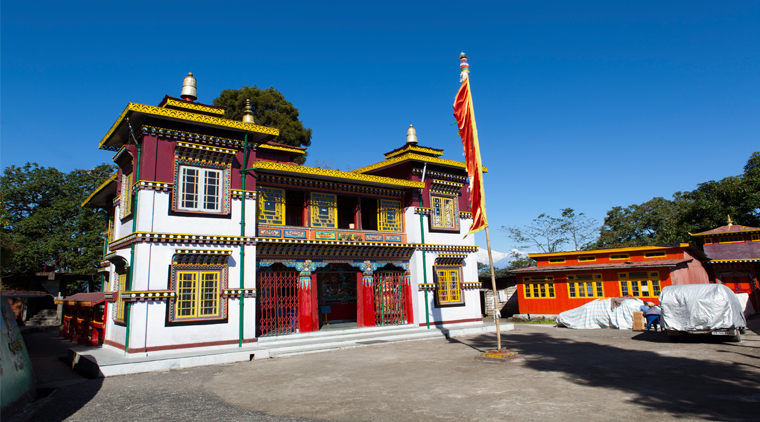
- Rumtek MonasteryOne of the most important Buddhist monasteries in Sikkim, set on a hill across the valley with murals, prayer wheels and a calm courtyard. A short drive from town and an easy half-day. Dress modestly and remove shoes inside the shrine, and go early when the light is soft and the courtyard quiet.
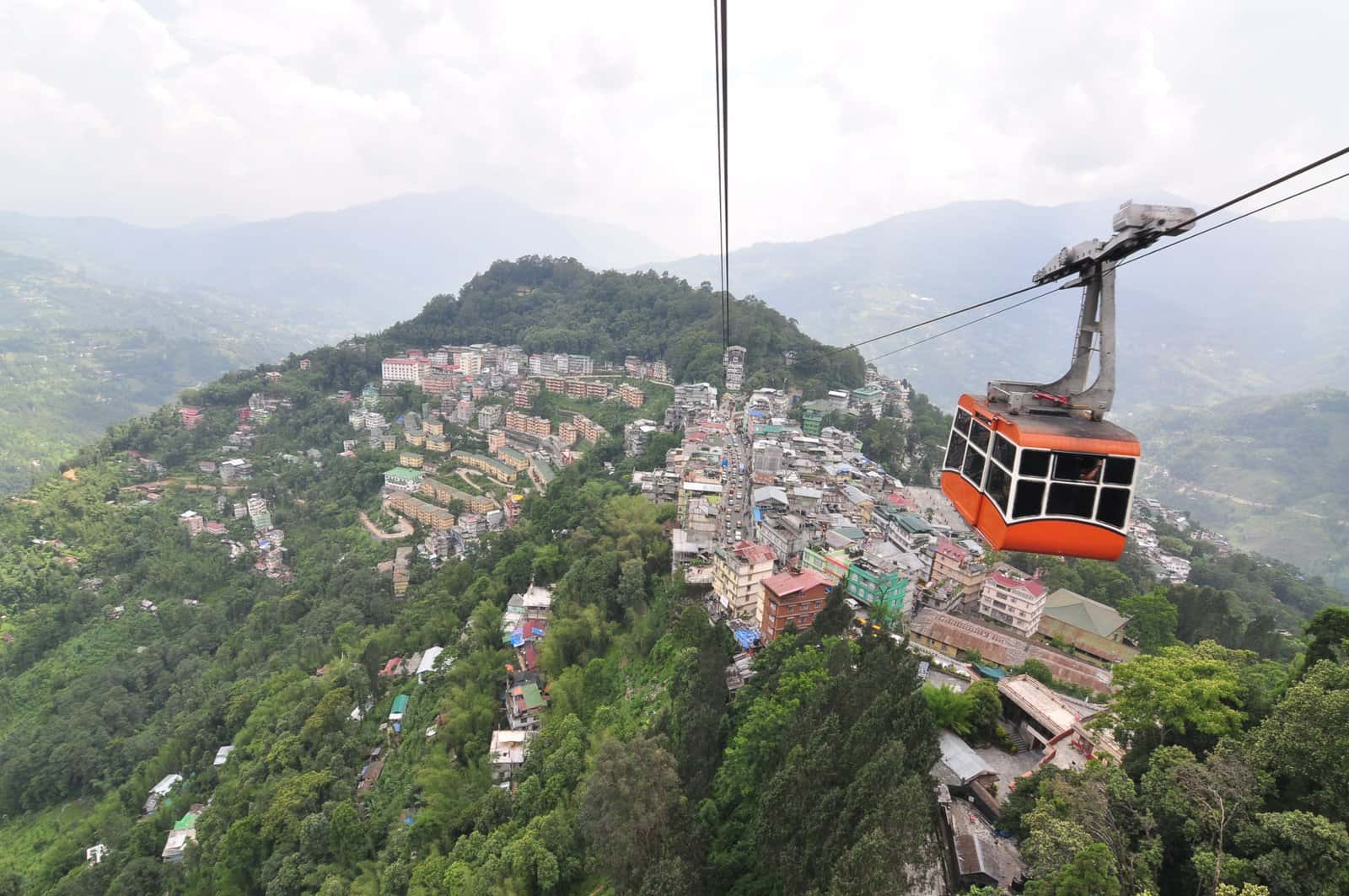
- The Gangtok ropeway and town viewpointsA short cable-car ride lifts you over the town for a bird's-eye view of the ridges and valleys, with a stop near Deorali. Pair it with a viewpoint like Tashi for the Kanchenjunga panorama on a clear morning. Both are quick, gentle and good for all ages, including grandparents and young children.
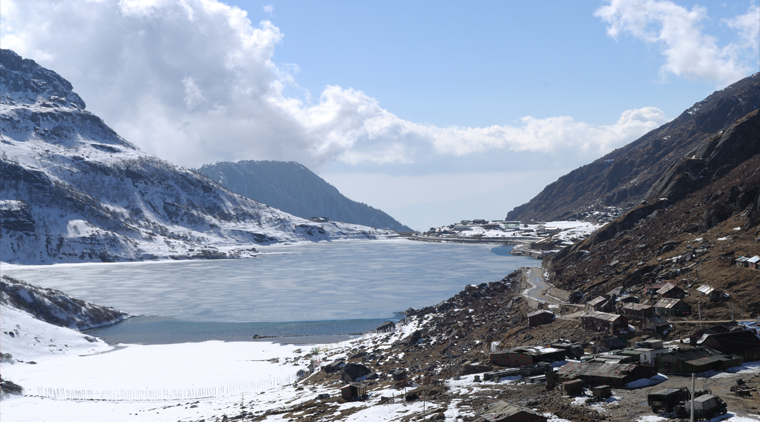
- Tsomgo (Changu) Lake and Baba MandirThe classic permitted day trip, a glacial lake at about 3,780 m with Baba Mandir higher up. You go as a registered-operator group with the protected-area permit. Carry warm layers even in summer, and take the altitude gently. Foreign and OCI visitors can usually reach the lake but not Baba Mandir or Nathula beyond it, both of which the check post keeps to Indian nationals only.
It is tempting to rush straight from the airport to Tsomgo, but the lake is at about 3,780 m and Baba Mandir is higher still, so jumping to that height on your arrival day invites a headache and a wasted outing. Spend your first day in Gangtok town at about 1,650 m, walk MG Marg and visit Rumtek, then take the high day trip once you have a night's acclimatisation behind you.
Signature experiences in and beyond Gangtok
Beyond the town, the experiences people remember are the high lakes, the border pass and the wild valleys of North Sikkim, all of which take a little arranging.
- The Tsomgo Lake and Nathula day tripThe signature outing: the glacial Tsomgo Lake, Baba Mandir, and for Indian visitors the border pass at Nathula. Book it as a registered-operator group with the bundled permit, a day or two ahead, and confirm the Nathula open day before you fix the date. A shared seat including the permit is commonly about 800 to 1,000 rupees per person.
- North Sikkim: Lachung, Yumthang and GurudongmarThe two or three day loop to the flower valley of Yumthang at about 11,800 ft and the high lake at Gurudongmar is the trip of a lifetime, all by protected-area permit through a registered operator, with a minimum 3-day, 2-night permit. The roads are weather dependent, so keep your plan flexible and pack for real cold.
- A monastery morning at RumtekGo early when the light is soft and the courtyard quiet, ideally during a prayer session. Pair it with the smaller Enchey monastery in town for a gentle, low-altitude half-day that suits seniors and families who want to skip a high pass.
- An evening on MG MargWalk the traffic-free promenade in the evening, eat momos and try local dishes like thukpa and the fermented-millet drink tongba, and browse for woollens, prayer wheels and Tibetan crafts near Lal Bazaar and the government emporium. A relaxed MG Marg evening is the gentle counterpoint to the high days.
- The ropeway and the Kanchenjunga frameRide the ropeway for the valley view, then drive out to a viewpoint like Tashi at dawn for the Kanchenjunga panorama on a clear morning. Easy, scenic and good for every age, and a fine fallback on a day the high passes are shut by weather.
- Slow tea and a flower showLower-key Gangtok pleasures include the Flower Exhibition Centre near White Hall, the Namgyal Institute of Tibetology with its rare manuscripts and thangkas, and a quiet cup of Temi tea. These low-altitude stops fill a half day comfortably and ask nothing of your lungs.
The experiences people travel to Sikkim for, Tsomgo, Nathula and the North Sikkim loop, are all permit-and-group trips, not things you can decide on a whim once you are there. Tell us your dates ahead so we can line up the registered-operator group, the permits and the vehicle, and so we can swap the plan if Nathula falls on a closed Monday or Tuesday or the North Sikkim road is blocked.
Where to stay in Gangtok, and how many nights
Stay near MG Marg to be in the heart of town, or on a quieter ridge for the views. Three to four nights in Gangtok, plus the North Sikkim loop, is the comfortable shape.
- Around MG Marg: in the heart of itWalking distance to the promenade, the cafes, the shops and the taxi stands for the day trips. Convenient and lively, though the busier lanes can be noisy, and parking is tight. Best for first-timers who want to step straight into the evening scene and arrange trips easily.
- On a quieter ridge or above townProperties on the upper ridges and the Development Area trade a short drive into the centre for calm, gardens and big valley views. Better for couples and anyone who wants space and a Kanchenjunga sunrise from the balcony, though you will rely on a cab for MG Marg.
- How many nightsThree to four nights in Gangtok covers the town, Rumtek, the ropeway and the Tsomgo or Nathula day trip with a rest day for the altitude. Add two to three nights for the North Sikkim loop to Lachung, Yumthang and Gurudongmar, which is why a full Sikkim package commonly runs about 7 to 8 nights.
- Room budgetsBudget hotels and guesthouses near MG Marg commonly run about 600 to 1,500 rupees a night off-season, with mid-range and view properties higher. Peak months of roughly October to December push room rates up by about 20 to 40 percent, so book the high season well ahead.
Spring (March to May) and autumn (October to early December) are the busy windows, and rooms in town and on the view ridges fill weeks ahead while rates rise by roughly 20 to 40 percent over the quiet months. If your dates fall in peak season, book early, and remember the North Sikkim hotels in Lachung and Lachen are simple and limited, so they go first of all.
Gangtok costs and a realistic daily budget
Gangtok is moderate on the wallet, but the high trips and private cabs add up. Here is what the main things cost, so you can plan and avoid being overcharged.
- A rough daily budgetExcluding your room and the long drive in, plan on about 1,500 to 2,500 rupees a day as a budget traveller, about 3,000 to 5,000 rupees mid-range, and more once you add private cabs and the high trips. The big variable is transport: shared jeeps are cheap, private cars are not.
- Food on MG Marg and beyondLocal eateries and momo stalls start near 100 rupees a plate, while sit-down restaurants on MG Marg run about 300 to 1,000 rupees a head depending on the place. The Sikkimese and Tibetan food, the momos, thukpa and gundruk, is a highlight, so eat local and eat well.
- Taxis and the day tripsLocal sightseeing by private taxi runs roughly 2,500 rupees for a half day and about 3,000 to 5,000 rupees for a full day depending on the car and season. The shared Tsomgo, Baba Mandir and Nathula day trip including the permit is commonly about 800 to 1,000 rupees per person; a private car for the same is dearer.
- Cash and cardsMG Marg shops and bigger hotels take cards and UPI, but shared jeeps, small eateries and North Sikkim villages run on cash. There are ATMs in central Gangtok, but they can be empty or down in the hills, so draw enough cash in town before you head to Lachung or Lachen.
In Gangtok the room and the transport, not the sightseeing, decide your budget. Entry fees are modest and MG Marg costs nothing to enjoy, but a private cab for the high day trips and the North Sikkim loop is the real spend, and peak-season rooms add roughly 20 to 40 percent. Sharing a jeep on the Tsomgo run and travelling in a small group spreads the permit and vehicle cost and is how most people keep the trip affordable.
Practical logistics: getting around, money, SIM and rules
The small things that make a Gangtok day smooth, from shared jeeps and ATMs to the litter-free MG Marg rules and the patchy mountain signal.
- Getting around townCentral Gangtok is steep but walkable, and MG Marg is pedestrian-only. For the hills around town, shared jeeps from the main stands are the cheap local way, and private taxis cover the day trips. There is no metered auto culture, so agree a private taxi fare before you set off.
- Money and ATMsCarry cash. MG Marg and bigger hotels take cards and UPI, but shared jeeps, small eateries and the North Sikkim villages of Lachung and Lachen are cash places. Draw enough in central Gangtok before any high trip, as mountain ATMs can be empty or offline.
- SIM, signal and the litter-free ruleMobile coverage is fine in Gangtok town but patchy to absent on the high roads and in North Sikkim, so download offline maps. MG Marg is a litter-free, smoking-free zone with fines for spitting or smoking, and much of Sikkim discourages single-use plastic, so carry a reusable bottle.
- Pack for altitude and coldEven in summer the high lakes are cold and the air is thin, so carry warm layers, a windproof, sun protection and any personal medicines for the day trips. The town is mild, but Tsomgo, Nathula and the North Sikkim valleys can be near or below freezing, so do not travel up in shirtsleeves.
Safety, altitude and the mistakes to avoid
Most spoiled Sikkim trips come down to permits, weather and altitude rather than crime. A little awareness keeps the days smooth and well.
- Do not assume you can go solo to the high spotsTsomgo, Nathula and North Sikkim cannot be done on your own. The protected-area permits are issued through a registered Gangtok operator, usually as a group, so arrange them ahead rather than turning up and hoping. A solo walk-in to a border check post will simply be turned back.
- Do not fix a Nathula date blindlyNathula Pass is open only Wednesday to Sunday and is closed every Monday and Tuesday, and foreign nationals cannot go at all. Even on open days the army can close it for weather or security, so confirm the current status through your operator one day before, rather than locking your dates around it.
- Take the altitude seriouslyTsomgo is at about 3,780 m and Gurudongmar at about 5,400 m, where altitude sickness is a genuine risk. Do not rush a high day on your arrival day, keep warm and hydrated, ascend gradually, and if you have heart or breathing trouble, get medical advice before booking the high trips. Come down if you feel really unwell.
- Respect the monsoon and the roadsFrom about June to September landslides can close the mountain roads with no warning, stranding vehicles for hours. Do not plan a tight, must-hit itinerary then; keep spare days and a flexible route, and follow your driver's call on whether a high road is safe that day.
Sikkim has a well-earned reputation as a calm, low-crime, welcoming state, and Gangtok is gentle for families, seniors and solo women alike. The real risks here are altitude, weather and the long mountain drives, not theft or harassment. Watch the height, watch the road, dress warm for the high days, and keep the usual care with hygiene and water, and a Sikkim trip is one of the easier mountain holidays in India.
Gangtok for every kind of traveller, and on access
Gangtok rewards very different visitors in different ways. Here is what it offers you, and the one tip that matters for each, including how a senior or a family handles the altitude.
- Couples and honeymoonersMisty ridges, monasteries and the romance of MG Marg in the evening, with the high lakes as a shared adventure. Spring and autumn give the clearest Kanchenjunga views for the photos, and a quiet ridge hotel beats a busy central one for a honeymoon.
- Families with childrenThe ropeway, the lakes and the gentle town walks suit families well. For high days, watch little ones for altitude tiredness at Tsomgo, keep them warm, carry snacks and water, and do not push a baby or toddler to Gurudongmar at about 5,400 m.
- Senior travellers and on accessibilityGangtok town is comfortable, but it is steep and the high trips reach serious altitude. Take a rest day first, use the ropeway rather than long climbs, keep the day trips short, and if you have any heart or breathing condition, get medical advice before Tsomgo or Gurudongmar. Many seniors happily do the town and Rumtek and skip the very high lakes.
- Friends and young groupsGreat for the Nathula and North Sikkim adventure, the food on MG Marg and the photography. Going as a group also fits the registered-operator permit rule neatly and spreads the cost of the permit and the vehicle.
- Backpackers and budget travellersReach Gangtok cheaply by shared jeep from NJP or Bagdogra and stay near MG Marg from about 600 to 1,500 rupees a night. Even budget travellers must still join a registered-operator group for the permitted high trips, so factor the shared-jeep day trip of about 800 to 1,000 rupees into the plan.
- PhotographersSpring rhododendrons, autumn clarity and winter snow each give a different Sikkim. Yumthang in bloom, Gurudongmar's blue water and the Kanchenjunga sunrise from a Gangtok viewpoint are the standout frames, and the post-monsoon weeks give the sharpest air.
A suggested Gangtok and Sikkim itinerary
How to shape four to seven days so you acclimatise first, catch the high lakes on a clear day, and give North Sikkim the slack it needs.
- Day one: arrive and acclimatiseDrive up from Bagdogra or NJP, about 4 hours, and settle into Gangtok at about 1,650 m. Keep it gentle: an evening walk on MG Marg, momos and an early night. Do not schedule a high pass for arrival day, as your body needs the night to adjust.
- Day two: town, Rumtek and the ropewayA low-altitude day: Rumtek Monastery in the soft morning light, the ropeway and a viewpoint like Tashi, and Enchey monastery or the Tibetology institute in town. This is also the day to confirm your Tsomgo or Nathula permit and the open-day status with the operator.
- Day three: the Tsomgo and Nathula day tripWith a night's acclimatisation behind you, take the registered-operator group trip to Tsomgo Lake at about 3,780 m, Baba Mandir, and for Indians the border pass at Nathula (open Wednesday to Sunday). Warm layers, water and an easy pace. Foreign and OCI visitors turn back at the lake.
- Days four to seven: North Sikkim and outAdd the North Sikkim loop to Lachung, Yumthang at about 11,800 ft and Gurudongmar at about 5,400 m, on a minimum 3-day, 2-night protected-area permit through your operator, then drive back down to Bagdogra or NJP. A full Sikkim trip with North Sikkim commonly runs about 7 to 8 nights.
Two things break a tight Sikkim plan: putting the Nathula trip on a Monday or Tuesday when the pass is shut, and leaving no slack for a landslide or a weather closure on the North Sikkim road. Slot the Nathula run on a Wednesday-to-Sunday open day, keep a spare day in the North Sikkim loop, and you will not find yourself stuck at a check post or watching the trip cancel from a blocked road.
The real questions travellers ask about Gangtok and Sikkim
Straight answers to the questions that come up again and again on traveller forums, so you arrive already knowing the score on permits, altitude and time.
- Which permits do I need, and which can I get myself?Indians get a protected-area permit only for the border trips (Tsomgo, Nathula, North Sikkim), arranged through a registered operator. Foreigners and OCI holders need a Restricted Area Permit just to enter the state, now applied for online via e-FRRO after landing in India and before entering Sikkim, plus the operator-group permit for the protected areas they are allowed into.
- Can a foreigner visit Nathula and Gurudongmar?No. Foreign nationals are barred from Nathula Pass and Gurudongmar Lake on security grounds, and the foreigner Tsomgo permit covers the lake only, not Baba Mandir, which is kept to Indian nationals. Foreigners can usually reach Tsomgo Lake and the Lachung and Yumthang side with the right protected-area permit, so plan a route that ends where you are allowed, not at a check post.
- Is an OCI cardholder an Indian or a foreigner here?For Sikkim, an OCI cardholder is treated as a foreign national, not as an Indian. So you need the Restricted Area Permit to enter, the operator-group permit for Tsomgo and the Lachung side, and you cannot visit Baba Mandir, Nathula or Gurudongmar. Carry the physical OCI card with its linked passport.
- We are an OCI and a foreigner travelling together, can we do the same trip?Yes, broadly: both of you need the Restricted Area Permit and both are limited to the same permitted areas, so you can share the same Gangtok, Tsomgo and Lachung itinerary. Neither of you can do Baba Mandir, Nathula or Gurudongmar, so plan those out and tell your operator both nationalities up front.
- How many days does a foreigner need?Allow at least four to five days for Gangtok and Tsomgo with a rest day for altitude, and about seven days if you add the permitted North Sikkim valleys. The North Sikkim protected-area permit itself runs a minimum of 3 days and 2 nights, so it cannot be squeezed into a quick dash.
- Which days is Nathula open, and how much does the Tsomgo trip cost?Nathula is open Wednesday to Sunday and closed Monday and Tuesday, weather and army permitting. The shared Tsomgo, Baba Mandir and Nathula day trip including the permit is commonly about 800 to 1,000 rupees per person; a private car costs more. Confirm the open-day status one day before.
Planning Gangtok from abroad
Sikkim is one of the few Indian states a foreigner cannot just walk into. Get the permit reality right before your long flight and the rest of the trip falls into place.
- Sort your foreign permit online before you arriveThe whole of Sikkim is a Restricted Area for foreign nationals, so you need a Restricted Area Permit (the Sikkim Inner Line Permit) just to enter. From about January 2026 this is arranged online through the e-FRRO portal, applied for after you land in India but before you enter Sikkim, rather than stamped on the spot, so apply through the official online channel or let us handle it as your registered operator, and travel with your passport and the permit.
- OCI cardholders still need the permitSikkim treats an OCI cardholder as a foreign national, so you do need the Restricted Area Permit to enter, plus the operator-arranged group permit for Tsomgo and North Sikkim, and you are barred from Baba Mandir, Nathula and Gurudongmar. Carry the physical OCI card with its linked passport and confirm the current rule with your operator before you travel.
- Know where foreigners cannot goForeign nationals are not allowed at Nathula Pass or at Gurudongmar Lake on security grounds, and your Tsomgo permit covers the lake only, not Baba Mandir, which the check post keeps to Indian nationals. You can usually visit Tsomgo Lake and the Lachen, Lachung and Yumthang side with the right protected-area permit, so we plan a route you are actually permitted to take rather than one that ends at a barrier.
- Arrive through BagdograFly into Delhi or Kolkata, connect to Bagdogra (about 124 km and roughly 4 hours by road below Gangtok), and let us arrange the car up. The protected-area trips are still group-and-operator only, so book them with us ahead, and remember a foreigner's stay in Sikkim is capped at 30 days per permit.
- Mind the altitudeTsomgo Lake sits at about 3,780 m, so even the easy day trip reaches real height. Take your first Gangtok day gently, and if you or your parents have any heart or breathing condition, get medical advice before the high outings. Carry warm layers even in summer, as the lakes are cold year round.
Sikkim is an unusually gentle, clean and safe introduction to the Indian Himalaya, but it is also the rare state where the paperwork comes first. The single thing to get right before your flight is the permit: the online Restricted Area Permit to enter, and the plan for which protected areas you are allowed into. Get that sorted with your operator early, and Gangtok rewards you with monasteries, momos and mountain views without the usual big-city friction.
Money, connectivity and timing for foreign visitors
The practical basics an overseas traveller needs for a Himalayan border state: cash, cards, a SIM, the altitude, and how many days to give Sikkim on a wider India trip.
- Carry cash, especially for the hillsCards and UPI work on MG Marg and in bigger hotels, but shared jeeps, small eateries and the North Sikkim villages run on cash. Draw rupees at the airport and in central Gangtok before any high trip, as mountain ATMs are sparse and can be offline. Keep small notes for tips and tea.
- Get an Indian SIM at the airportPick up an Indian tourist SIM or an eSIM when you land in Delhi or Kolkata, as a foreigner's SIM can be awkward to buy in a small hill town. Coverage is fine in Gangtok but patchy to absent on the high roads and in North Sikkim, so download offline maps before you climb.
- How long to give Sikkim on a bigger tripOn a wider India trip, give Sikkim at least four to five days for Gangtok and Tsomgo, or about a week if you add the permitted North Sikkim valleys. It pairs naturally with Darjeeling and Kalimpong on the same Bagdogra gateway, which many of our packages combine into one Himalayan loop.
- Time it to the season and your comfortMarch to May and October to early December are the comfortable, clear windows. Avoid the June to September monsoon for the high roads. If altitude worries you, weight your trip towards Gangtok, Rumtek and Tsomgo and treat Gurudongmar, which you cannot visit as a foreigner anyway, as no loss.
Gangtok, the hill town that guards Kanchenjunga
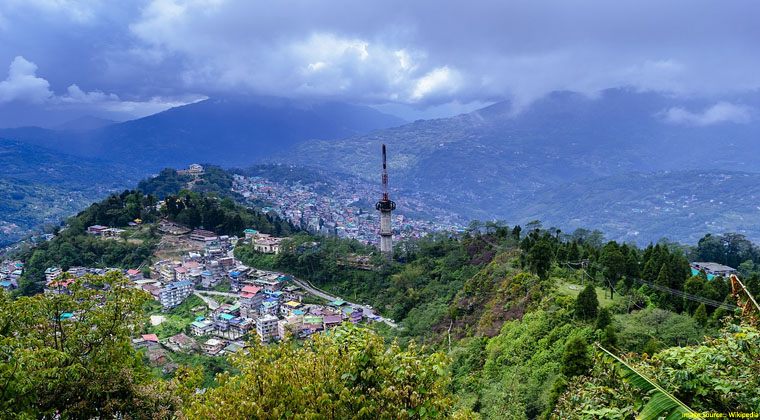
Gangtok climbs a steep Himalayan ridge in the shadow of Kanchenjunga, the third-highest mountain on earth, which the Sikkimese revere as a guardian deity rather than a peak to be conquered. The town's name is usually traced to a phrase meaning a hill or a high ground that is fit to live on, though the exact origin is debated and no single reading is firmly settled. What is certain is its character: once the seat of the Namgyal kings of Sikkim and a trading waystation on the old caravan road to Tibet through the Nathula pass, Gangtok today is a Buddhist, orderly, famously clean mountain capital where prayer flags fray in the wind above a litter-free promenade, and the great white mountain shows itself, on a clear dawn, to anyone willing to wake early and look north.
Planning a Gangtok trip?
Our Sikkim travel experts plan your full journey for you: route, hotels, darshan timings and transport. You get a free day-by-day plan and an exact quote on WhatsApp, usually within a few hours. No payment is needed to get your plan.
Tour packages that visit Gangtok
Every journey below is private, hand-crafted and fully customizable. Tell us your dates and we tailor the itinerary, the pace and the priests or guides around you.
 6D / 5N
Sikkim Tour Package: Gangtok, Nathula & North Sikkim (6D/5N)
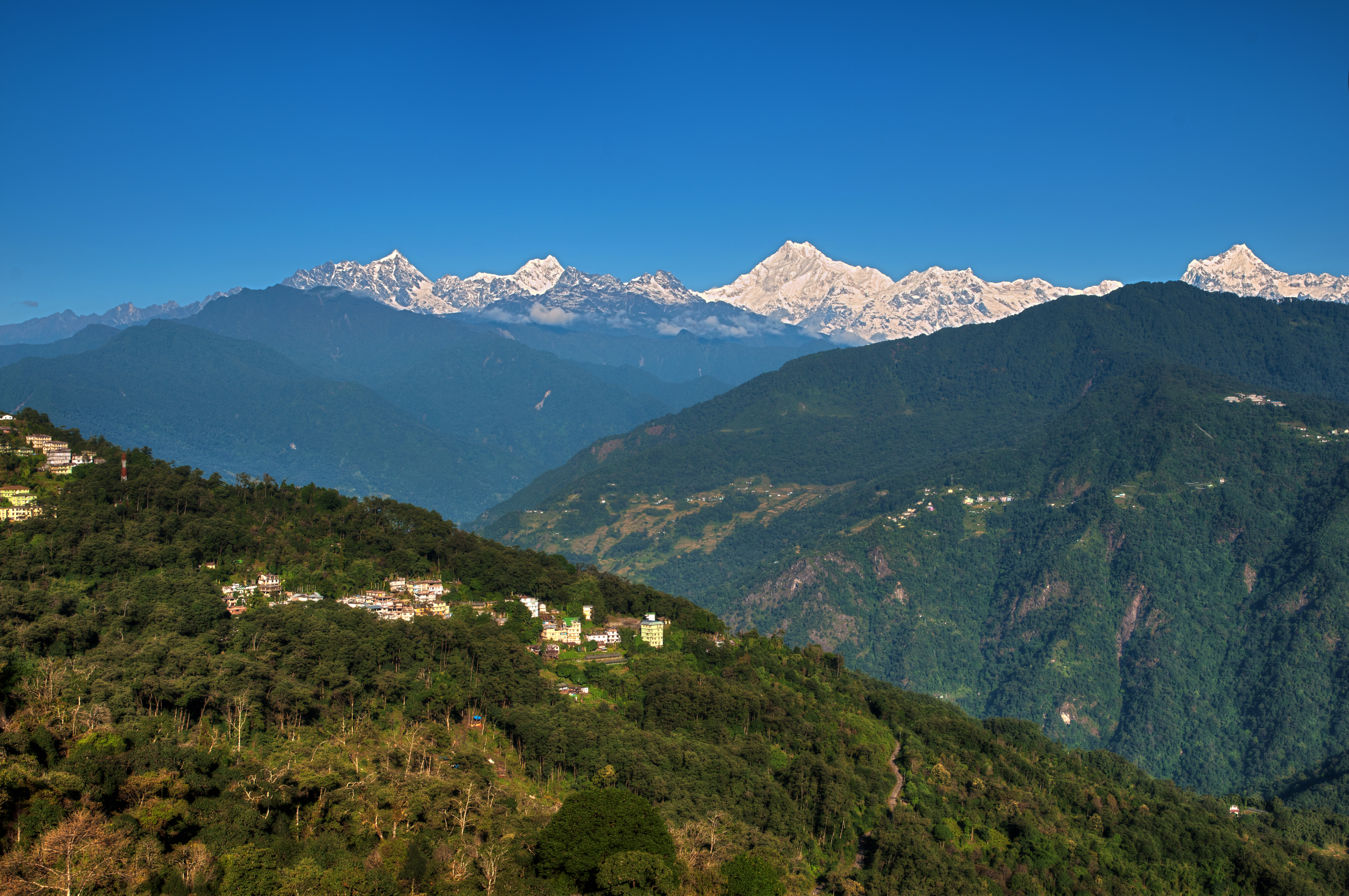
- Old silk-route views from Nathula Pass on the Indo-China border, roughly 54 km east of Gangtok (Indian nationals only)
- Tsomgo (Changu) Lake, a glacial lake at about 3,780 m, around 40 km from Gangtok
 7D / 6N
Darjeeling Gangtok Kalimpong Tour Package
- Visit Darjeeling Sightseeing
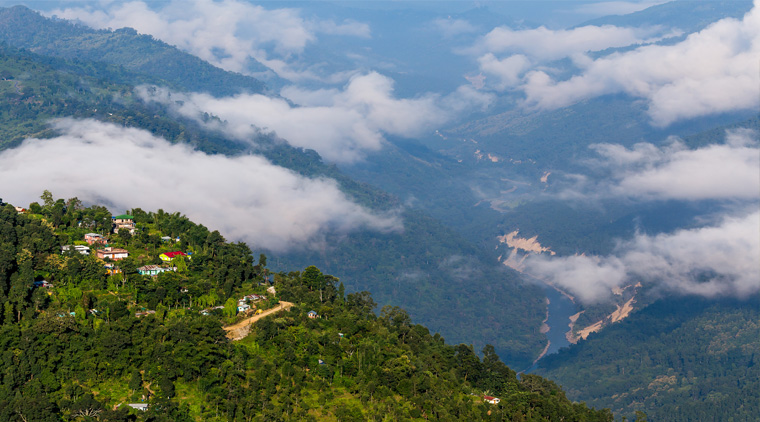
- Visit Tashi View Point
 10D / 9N
Darjeeling Sikkim Tour Package
- Visit Darjeeling is one of most cool hill stations of India.
 6D / 5N
Darjeeling Tour Package for Couple
- Visit the Lal Bazaar
- Visit the Rumtek Monastery
 8D / 7N
North Sikkim Tour
- Visit North Sikkim Tour