
Kaziranga Travel Guide
Kaziranga is open from about October to mid-May and fully closed from about June to September for the Brahmaputra flood. The clearest sightings tend to come late in the season...
When to visit Kaziranga, and when it is shut
Kaziranga is open from about October to mid-May and fully closed from about June to September for the Brahmaputra flood. The clearest sightings tend to come late in the season once the tall grass is cut back.
- November to February: cool and comfortableThe most pleasant weather, with daytimes often below about 25 degrees Celsius and nights dropping to around 7 to 10 degrees. The open jeep at dawn is genuinely cold, so carry a warm layer. This is the popular window, so book safaris ahead.
- February to April: best for sightingsAs the tall elephant grass is cut and burnt back and water sources shrink, rhinos, deer and the occasional tiger become much easier to spot near the open beels. Days warm up, but for actually seeing animals this is often the strongest stretch.
- June to September: closedThe park is completely shut while the Brahmaputra floods the grasslands and the animals move up to the Karbi hills. Do not plan a Kaziranga safari in these months. An elephant joy ride outside the park is sometimes the only option.
- October opening: reconfirm the dateThe season usually opens around October, but the 2025-26 season opened early in late September. The exact opening date moves year to year with the flood, so check the current date on the official Assam forest portal before you book flights or rooms.
The single most common bad surprise is arriving in summer to find the gates shut. Kaziranga closes completely for about June to September every year because the Brahmaputra floods the park, a natural cycle the grasslands depend on. If your only free dates fall in the monsoon, choose a different park or wait for the October to mid-May season. Treat any page that sells you a June or July Kaziranga safari with suspicion, and reconfirm the current opening and closing dates on the official portal.
How to reach Kaziranga
Kaziranga has no airport or railway of its own. Most visitors fly into Guwahati or Jorhat, then drive to the Kohora base on the highway.
- Via Guwahati, the main gatewayGuwahati (Lokpriya Gopinath Bordoloi) airport is the big international and domestic gateway for the Northeast, about 217 to 245 km from Kaziranga and roughly a 4.5 to 5 hour drive along National Highway 715. Most visitors fly in here and drive across.
- Via Jorhat, the nearest airportJorhat domestic airport is much closer at about 88 to 97 km, roughly 2 to 2.5 hours by road, and is the quickest air route if you can get a convenient flight. It suits travellers heading on to Upper Assam or the tea estates.
- By train to Furkating or GuwahatiKaziranga has no station. The nearest railhead is Furkating Junction at about 75 km; Guwahati is the major junction with wide connections, about 4.5 hours by road. From either you finish the journey by car to the Kohora base.
- The Kohora base on the highwayKohora, on the highway, is the usual base, with the Central Range gate, the resorts and the eateries. Bagori and Agaratoli ranges are short drives along the same highway, so almost everyone arrives at Kohora first.
Fly into Delhi or Kolkata, connect to Guwahati, then drive about 4.5 to 5 hours to the Kohora base. Kaziranga has no international flights of its own, so plan a connection through a metro and an overnight in Guwahati if your flight lands late.
Connect through Kolkata or Delhi to Guwahati, or look for a flight into Jorhat, which is closer to the park. From Guwahati it is a half-day drive on the highway.
Fly or take a train to Guwahati, the Northeast hub, then drive across, or fly into Jorhat for the shorter road leg. The nearest railhead is Furkating Junction, about 75 km from the park.
The four ranges, and which to book
Kaziranga is not one place but four tourist ranges, each with its own character. Choosing the right range for what you want to see is the single most useful decision you make.
- Central Range (Kohora): the all-rounderThe main gate and the most reliable range for a first visit, with a high chance of one-horned rhino, swamp deer, wild buffalo and, with luck, a tiger across open grassland and beels. If you do only one jeep safari, most people do it here.
- Western Range (Bagori): rhino and tiger countryOpen grassland that is strong for rhino and has a good reputation for tiger sightings. It is also where Indian nationals ride the elephant safari, so many visitors pair a Bagori morning elephant ride with a jeep run.
- Eastern Range (Agaratoli): birds and the boatThe best range for birdwatchers, with wetlands full of waterfowl and raptors, and the only range offering the Brahmaputra country-boat ride from which you may spot the Gangetic river dolphin. Quieter and gentler than the grassland ranges.
- Burapahar Range (Ghorakati): the quiet trekThe least busy range, with the Kukurkata trek of about 11 km return to the Baneswar Shiva temple, the one walking trail currently open. Good for travellers who want forest and solitude over a high sighting count.
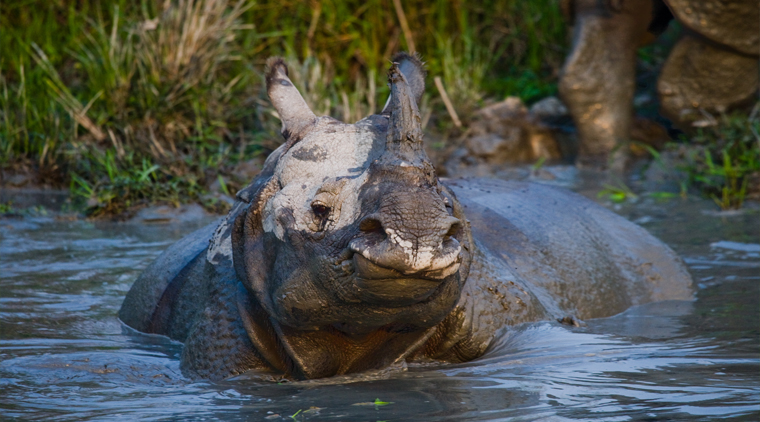
Kaziranga holds roughly two-thirds of the world population of the greater one-horned rhinoceros across about 430 sq km of grassland, wetland and forest on the south bank of the Brahmaputra. It was inscribed as a UNESCO World Heritage Site in 1985 and is also a tiger reserve. Nowhere else gives you so high a chance of seeing a wild rhino, often several in a single morning, which is why it tops most Northeast wildlife trips.
Safaris and signature experiences
The park is all about the safari, jeep and elephant, with a river boat and a forest trek for variety. Here is how each works and how to arrange it.
- The jeep safari, the workhorseAn open jeep with a driver and a mandatory forest guide, running about October to mid-May, with a morning session from about 7 am and an afternoon session from about 1:30 pm, each up to about 2 hours. The track is bumpy, so it covers ground and gets you to the beels where the animals gather.
- The elephant safari, morning onlyFrom about 1 November to about 30 April, mornings only, in batches starting around 5:15 am. It brings you closer to rhinos across the tall grass than a jeep can, but it means a cold pre-dawn start and the afternoon elephant ride has been discontinued. Foreigners ride at the Kohora elephant zone, Indians at Bagori.
- The Brahmaputra boat ride at AgaratoliA country-boat ride on the river from the Eastern Range is a gentle change of pace and your best chance to glimpse the Gangetic river dolphin and riverbank birdlife. Arrange it locally at Agaratoli and confirm the day and the timing in advance.
- The Kukurkata trek at BurapaharThe one open walking trail, about 11 km return to the Baneswar Shiva temple in the Burapahar range, for travellers who want forest on foot. Go with the guide arrangement the range requires, and start early.
- Do two or three safaris, in different rangesOne safari rarely does the park justice. Many experienced visitors do a morning elephant ride and an afternoon jeep, then a second range the next morning, so they cover Kohora and Bagori or Agaratoli rather than seeing one range twice.
- Sober colours, early startsWear olive, khaki, brown or grey inside the park and avoid bright red, white or black, which draw animal attention. Every good safari here is an early one, so plan your sleep around a pre-dawn alarm.
If you do only one thing well, make it an early Central Range jeep safari on a clear winter morning, when the mist lifts off the grassland and the rhinos come out to feed. It is the image people carry home from Kaziranga long after the drive and the cold dawn fade. Give yourself at least two safaris if you can, in two different ranges, and the park rewards you far more than a single rushed run ever will.
Where to stay near Kaziranga, and how many nights
Most visitors stay at Kohora on the highway, close to the Central Range gate. Two nights is the comfortable length to do the park properly.
- Kohora: the main baseThe cluster of resorts, jungle lodges and eateries along the highway at Kohora, beside the Central Range gate. Most convenient for an early Kohora safari and for arranging jeeps. Ranges from simple lodges to comfortable resorts, all a short drive from the gate.
- Towards Bagori and AgaratoliA few properties sit closer to the Western and Eastern range gates along the highway, handy if you have set your heart on those ranges for a dawn start. Otherwise Kohora is central enough to reach all three grassland and wetland ranges.
- How many nightsTwo nights is the sweet spot: arrive, do an afternoon jeep, then a full day of a morning elephant or jeep safari and an afternoon in a second range, with a relaxed second evening. One night allows only one or two safaris and a rushed feel. Three nights suits keen photographers and birders.
- Book ahead in peak seasonFrom November to February, and especially around the holidays and long weekends, the better lodges fill up. Book your stay and your first safari slot together, well ahead, rather than hoping to sort it on arrival.
Kaziranga slots naturally into a Northeast loop. A common shape is Guwahati for the Kamakhya temple and the Brahmaputra, Kaziranga for the rhinos, and Shillong and Cherrapunji in Meghalaya for the hills and waterfalls, all linked by road. Two nights at Kaziranga sits comfortably in a week-long Assam and Meghalaya trip without slowing the whole itinerary, and we can arrange the car and driver for the full loop.
Kaziranga safari costs and a realistic budget
Costs centre on the safaris. Here is what the entry, the jeep, the elephant ride and the camera fees run to, so you can plan and avoid being overcharged.
- Entry and camera feesPark entry has historically been about 100 rupees per person for Indian nationals and about 650 rupees for foreign nationals, with a still-camera fee of about 100 rupees and a video-camera fee of about 1,000 rupees. These were revised for 2025-26, so confirm the current figures on the official portal.
- The elephant safari rateFrom about 1 November 2025 the elephant safari is about 1,350 rupees per person for Indian nationals and about 2,700 rupees per person for foreign nationals, inclusive of the entry ticket. It is morning only, so budget a pre-dawn slot.
- The jeep safari rateA private jeep is priced per jeep, not per head, seating about 5 to 6 people, and quotes have ranged widely from about 2,500 rupees up to about 9,000 rupees per jeep per safari depending on range, nationality and season. A shared-jeep seat is cheaper. Confirm the rate at the counter or portal before you commit.
- What is included, and what is notA jeep package usually covers the forest entry permit, the jeep and the mandatory guide. Professional camera fees, tips and any agent or hotel service charge are often extra, so ask exactly what your quote includes before you book.
Kaziranga safaris are booked through the official Assam forest safari portal (linked from the Assam Tourism site) or a registered operator, with the permit fee, vehicle charge and guide fee paid in advance. Rates were revised for the 2025-26 season, so the single safest habit is to reconfirm the current per-jeep and per-person figures on the official portal rather than trusting an old blog number, and to keep the ID details of every traveller handy, since foreign-national bookings require passport details.
Practical logistics: booking, ID, money and getting around
The small things that make a Kaziranga trip smooth, from how the safari booking works to ID, cash, clothing and the early starts.
- Booking and IDBook safaris on the official Assam forest portal or through a registered operator, ideally a day or more ahead in peak season. Carry the ID you booked with for every traveller; foreign nationals need passport details, and ID is checked at the gate.
- Money and cardsSafari bookings are paid in advance online, but carry cash for tips, the guide, small eateries and the village stalls, as not everyone takes cards or UPI. There are ATMs around Kohora, but draw what you need before a long safari day.
- Getting aroundThere is no useful public transport between the ranges; you move by your resort car, a hired taxi or your safari jeep. Distances along the highway between Kohora, Bagori and Agaratoli are short, but you still need a vehicle for each dawn start.
- Clothing and the early startPack a warm layer for the cold open jeep at dawn in winter, sober olive or khaki colours for inside the park, sturdy shoes, and insect repellent. Every good safari is an early one, so the most useful habit is simply going to bed early.
Safety, mosquitoes and staying well
Kaziranga is a safe and welcoming park, but it is warm, wet and forested, so the real care is health: mosquitoes, the cold dawn and sensible safari behaviour.
- Mosquitoes, malaria and Japanese encephalitisThis is a wet, forested belt where mosquito-borne illness including malaria and Japanese encephalitis is a recognised risk, generally higher in the wetter months. The dry winter season carries lower risk. Take a travel-health consultation before you come, use a good repellent, and cover up at dusk and dawn.
- Protect yourself from bitesCarry a DEET-based repellent, wear long sleeves and trousers around dawn and dusk when mosquitoes are worst, and use the bed net or screened, air-conditioned room your lodge provides. These simple steps matter more here than in a dry-climate destination.
- Behave on safariStay in the vehicle, keep your voice down, never feed or approach an animal, and follow the guide. These are wild rhinos and elephants, and a charging rhino is dangerous. The rules exist for your safety and the animals' calm.
- The cold dawn and the bumpy trackWinter mornings are genuinely cold in an open jeep, so dress warmly. The jeep track is rough, so anyone with a bad back should brace for the bumps or consider the elephant ride. Carry water, sun protection and any personal medication.
Kaziranga's rhino numbers are a hard-won conservation success that depends on strict protection, so travel lightly: book only registered safaris, do not pressure a guide to go off-track or too close, take your litter out, and never buy any wildlife product. The flood cycle that closes the park in summer is part of what keeps the grassland alive, so respect the season. Good behaviour on safari is part of why the rhinos are still here to see.
Kaziranga for every kind of traveller, and on access
Kaziranga suits very different visitors in different ways. Here is what it offers you and the one tip that matters for each, including how a senior visits comfortably.
- Families with childrenChildren love the rhinos and elephants, and the jeep safari is the easier option for young kids than the very early elephant ride. Plan for the cold dawn, carry snacks and repellent, and keep the safari short enough to hold their attention.
- Wildlife photographersBook the Central or Western range for the open grassland and the rhinos, go in February to April when the grass is low, and choose the early morning light. Bring a long lens and pay the camera fee, and consider three safaris across two ranges.
- Senior travellers and on accessibilityVery doable with planning. The jeep is bumpy, so sit cushioned and braced; the elephant ride needs a climb to mount and a pre-dawn start, so judge it honestly. Stay at Kohora to keep drives short, dress warm for the cold dawn, and a calmer afternoon jeep can be gentler than the dawn elephant.
- First-time safari visitorsStart with a Central Range jeep safari, the most reliable for sightings, then add an elephant ride or a second range. Two nights and two or three safaris give a true sense of the park rather than a single lucky or unlucky run.
- BirdwatchersMake for the Eastern Range (Agaratoli) and the Brahmaputra boat ride for waterfowl, raptors and the chance of a river dolphin. Winter brings migratory birds, and a patient morning here rewards the binoculars.
- Couples and slow travellersPair a couple of safaris with quiet afternoons at a lodge and the Guwahati and Shillong loop. Kaziranga is less about nightlife and more about early mornings and big landscapes, which suits a calm, unhurried trip.
A suggested Kaziranga itinerary
How to shape two unhurried days so you cover more than one range and catch the park at its best light.
- Day one, arrival and afternoonDrive in from Guwahati or Jorhat, check into a Kohora lodge, and take an afternoon jeep safari in the Central Range from about 1:30 pm to settle in and get your first rhino sighting. Early dinner, because tomorrow starts before dawn.
- Day two, morningTake a pre-dawn elephant safari from about 5:15 am, at Bagori if you are an Indian national or the Kohora elephant zone if you are a foreign visitor, for the closest grassland approach to the rhinos. Back for breakfast and a rest.
- Day two, afternoonDo a second jeep safari in a different range, the Western Range for more grassland and tiger chances or the Eastern Range for birds and the Brahmaputra boat. Two ranges in a day give a fuller picture than repeating one.
- The longer versionAdd a third night for a Burapahar trek or a slow birding morning at Agaratoli, then drive on to Shillong and Cherrapunji. Keen photographers happily fill three or four safaris here without seeing the same thing twice.
The thing that breaks a tight Kaziranga plan is assuming you can take an elephant ride in the afternoon. The afternoon elephant safari has been discontinued, so the elephant ride is morning only, in batches from about 5:15 am, and it must usually be arranged ahead. Build your day so the elephant ride falls on a morning, keep the jeep for the afternoon slot, and confirm your elephant slot when you book rather than hoping for one on the day.
The real questions travellers ask about Kaziranga
Straight answers to the questions that come up again and again on traveller forums, so you arrive already knowing the score.
- Which range should I book?Central Range (Kohora) for the most reliable all-round sightings on a first visit, Western Range (Bagori) for rhino and tiger grassland, Eastern Range (Agaratoli) for birds and the river boat, and Burapahar for a quiet trek. If you do one, do Kohora; if you do two, add Bagori or Agaratoli.
- Jeep or elephant safari?Do both if you can. The elephant ride, morning only, brings you closer to rhinos across the grass; the jeep covers more ground and reaches more beels. Many visitors do a dawn elephant ride and an afternoon jeep, then a second jeep range the next day.
- Is it open in June?No. The park is completely closed from about June to September every year for the Brahmaputra flood, and reopens around October, sometimes earlier. Plan your trip for the October to mid-May season and reconfirm the current opening date.
- Do I need malaria tablets?This is a wet, forested belt with a recognised malaria and Japanese encephalitis risk, higher in the wetter months and lower in the dry winter season. Take a travel-health consultation before you come, use repellent, and cover up at dawn and dusk.
- How many safaris and how many days?Two nights and two to three safaris across two ranges is the comfortable answer for a true sense of the park. One night and a single safari can be lucky, but it is a thin look at a place that rewards a second morning.
- How do I get there and how cold is the dawn?Fly into Guwahati (about 217 to 245 km) or the closer Jorhat (about 88 to 97 km) and drive to Kohora. Winter dawns in an open jeep are genuinely cold, often near 7 to 10 degrees, so carry a proper warm layer for the early start.
Planning Kaziranga from abroad
Kaziranga is the world's best place to see a wild one-horned rhino and an easy add-on to a Guwahati and Shillong loop. A little preparation on the season, the rates and the health basics makes it smooth.
- Know the season before you bookKaziranga is open about October to mid-May and fully closed about June to September for the flood. Build your Northeast trip around that window, and reconfirm the current opening date on the official portal, since it shifts with the monsoon each year.
- The foreign-national rates and elephant zoneForeign nationals pay more: park entry has historically been about 650 rupees per person and the revised elephant safari is about 2,700 rupees per person from late 2025. On the elephant safari foreigners ride at the Kohora elephant zone, while Indians ride at Bagori, so check which point you are routed to.
- Take the health basics seriouslyThis is a warm, wet, forested park with a malaria and Japanese encephalitis risk. Get a travel-health consultation at home, bring a DEET repellent, and plan a dry-season visit if health caution matters to you. Most overseas visitors travel here without trouble by taking these simple steps.
- Slot it into a Northeast loopFly into Guwahati via Delhi or Kolkata, then loop Guwahati, Kaziranga and Shillong with Cherrapunji over about a week. Kaziranga is the wildlife heart of that trip, an easy half-day drive from Guwahati, and we can arrange the car and registered safari bookings for you.
Booking, money and timing for foreign visitors
The practical basics an overseas traveller needs for a remote national park: how the safari booking and ID work, cash, and how many days to give it on a wider trip.
- Book ahead and carry your passportSafaris are booked on the official Assam forest portal or through a registered operator, and foreign-national bookings need passport details, which are checked at the gate. Book a day or more ahead in peak season, and keep your passport on you for every safari.
- Carry cash, expect simple facilitiesSafari fees are paid online in advance, but carry rupees for tips, the guide, village eateries and stalls, as cards and UPI are not universal at a remote park. Draw cash at Guwahati or around Kohora before a long safari day.
- How long to give it on a bigger tripOn a first Northeast trip, two nights at Kaziranga is the right weight between Guwahati and Shillong: enough for two or three safaris in two ranges, without slowing the loop. Photographers and birders happily stay a third night.
- Time it for comfort and for sightingsNovember to February is the most comfortable weather and February to April often the best for sightings as the grass is cut back. Avoid the June to September closure entirely, and the drier winter months also carry a lower mosquito risk.
Kaziranga is the natural centrepiece of a first Northeast India trip. It pairs the once-in-a-lifetime sight of wild rhinos with the temples and river of Guwahati and the green hills and waterfalls of Meghalaya, all within a week and a few comfortable drives. Slot it after Guwahati, give it two nights and two or three safaris, and let it be the wild, early-morning chapter of the trip. Many overseas visitors say the misty grassland and the rhinos are what they remember most from the whole region.
How a viceroy's wife helped save the Kaziranga rhino
Kaziranga's fame rests on the greater one-horned rhinoceros, and the park owes its existence partly to a famous visit. Tradition widely retold in Assam holds that Mary Curzon, wife of the then Viceroy Lord Curzon, came looking for the rhinos in the early 1900s, found none, and pressed for the area to be protected. A reserve forest followed in 1908, the sanctuary was affirmed by 1950, Kaziranga became a national park on 1 January 1974, and UNESCO inscribed it as a World Heritage Site in 1985. From near loss, the park now holds roughly two-thirds of the world's one-horned rhinos, a hard-won conservation success that depends on the strict protection and the natural flood cycle that still close the gates every monsoon. That arc, from a viceroy's disappointed visit to the rhino capital of the world, is the story you carry out of the grassland.
Planning a Kaziranga trip?
Our Assam travel experts plan your full journey for you: route, hotels, darshan timings and transport. You get a free day-by-day plan and an exact quote on WhatsApp, usually within a few hours. No payment is needed to get your plan.
Tour packages that visit Kaziranga
Every journey below is private, hand-crafted and fully customizable. Tell us your dates and we tailor the itinerary, the pace and the priests or guides around you.
 7D / 6N
Assam Meghalaya Tour
- Guwahati
- Shillong
 7D / 6N
Assam Tour Package
- Visit Tai Ahom Museum
- Visit Kaziranga