Hampi Travel Guide
The comfortable window is October to February , cool and clear over the boulders and ruins. From March the heat becomes punishing, so the season you pick changes how hard the...
When to visit Hampi, and the heat to plan around
The comfortable window is October to February, cool and clear over the boulders and ruins. From March the heat becomes punishing, so the season you pick changes how hard the days feel.
- October to February: cool and clearThe best months by far, with daytime temperatures roughly 15 to 30 degrees Celsius and crisp mornings ideal for the sunrise climbs and the long walks between ruins. Nights can be cool, so carry a light layer in December and January. The cool season also covers Hampi Utsav, the big state festival, which in recent years has fallen in January or February rather than the November of older guides, so the site can be at its busiest then.
- March to June: brutally hotHigh summer on the Deccan plateau is fierce, with highs commonly around 40 to 42 degrees Celsius. The open ruins offer almost no shade and the boulder climbs become exhausting and even risky in the heat, so this is the time to avoid if comfort matters. If you must come, do everything at dawn and dusk and rest through the middle of the day.
- July to September: green monsoonThe rains turn the landscape green and the Tungabhadra runs fuller, which is beautiful, but expect the odd wet afternoon and a stronger, more dangerous river. The monsoon look is striking for photographers, just keep flexible plans and stay well back from the swollen water.
- Pick your season before you bookHampi rewards an unhurried, walking pace, and that is only pleasant in the cool months. Decide first whether you want the comfortable winter window or are willing to trade comfort for the green monsoon scenery, and plan your daily rhythm around it.
Hampi Utsav, the big state cultural festival of dance, music and processions, runs over about three days, but the Government of Karnataka fixes the exact dates afresh each year and announces them close to the event, not on a calendar rule. Older guides put it in early November, yet recent editions have landed in the cool months instead, in January or February (the 2023, 2024 and 2025 festivals were all held between late January and early March), and one year it was postponed over a drought. So treat any single date you see as unconfirmed and reconfirm on the Karnataka Tourism site before you build a trip around it. Rooms tighten and prices rise around the festival, so book ahead if your dates fall on it.
How to reach Hampi
Hampi has no airport or railway of its own. Almost everyone arrives through Hosapete (Hospet), the railhead about 12 to 13 km away, or by overnight bus and train from Bengaluru, Goa or Hyderabad.
- Via Hosapete (Hospet), the nearest railheadHosapete Junction is the gateway station, about 12 to 13 km from Hampi Bazaar, roughly 30 minutes by road. Frequent state buses and autos run the short hop from the railway and bus stands into Hampi. The overnight Hampi Express (train 16592) leaves KSR Bengaluru about 21:50 (about 22:05 from Yesvantpur) and reaches Hosapete about 07:00, roughly a 9 hour run, but reconfirm the live timetable before booking.
- From Bengaluru by bus or roadBengaluru is about 350 km away, roughly 6 to 7 hours by road, and is the reliable big gateway. KSRTC and private operators run frequent day and overnight buses to Hosapete, with fares commonly from about 500 rupees upward depending on the bus class, from non-AC seaters to AC sleepers. Reconfirm fares and timings, which change with operator and season.
- From Goa and HyderabadHampi pairs naturally with Goa, a popular overnight bus or train hop, and with Hyderabad, also an overnight run. Both are classic backpacker routes onto the Hampi loop, so check current overnight bus and train options for your dates.
- Nearest airportsVidyanagar (Jindal Vijaynagar, code VDY) is closest at about 35 km but has only limited flights, so check current routes before relying on it. Ballari is about 60 km and Hubballi about 143 km, while Bengaluru, about 350 km, is the practical big airport with wide connections. There are no flights into Hampi itself.
Fly into Bengaluru or Goa, then reach Hampi by overnight bus or train via Hosapete. Hampi has no international flights of its own, and Vidyanagar's small airport has only limited domestic service.
Fly into Bengaluru or Hyderabad, then take an overnight bus or the Hampi Express to Hosapete and the short hop into Hampi. It sits easily on a South India circuit with Goa and the Karnataka heritage towns.
Take the overnight Hampi Express or a KSRTC bus to Hosapete, then a local bus or auto over the last 12 to 13 km. Hosapete is well served by the Bengaluru and Hubballi lines, the simplest way in by rail.
The stone chariot, Virupaksha, and how Hampi is laid out
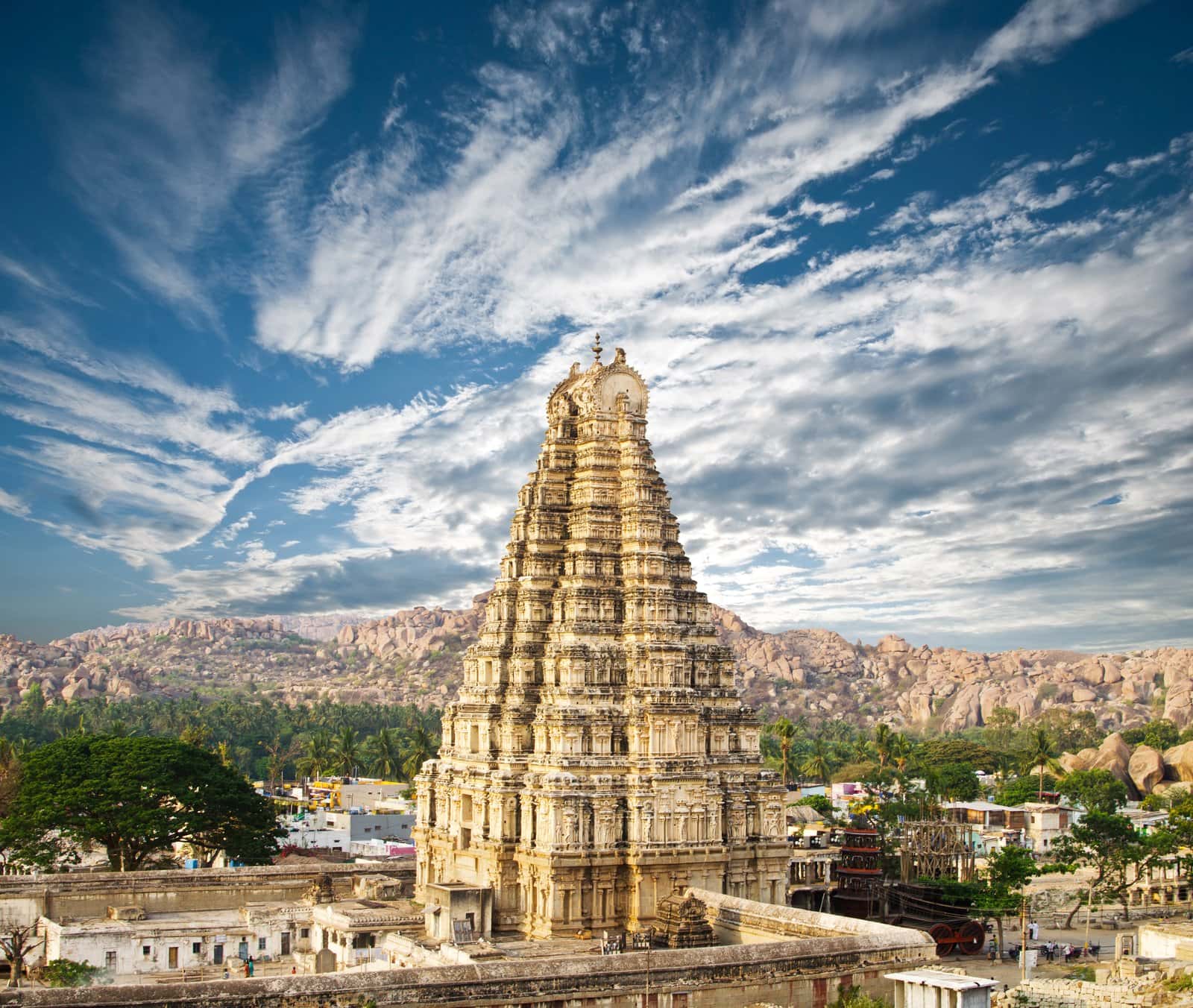
Hampi is a vast field of ruins, not one monument. It splits into the Sacred Centre around Virupaksha and the river, the Royal Centre with its palaces and stables, and the Vittala complex with the famous stone chariot.
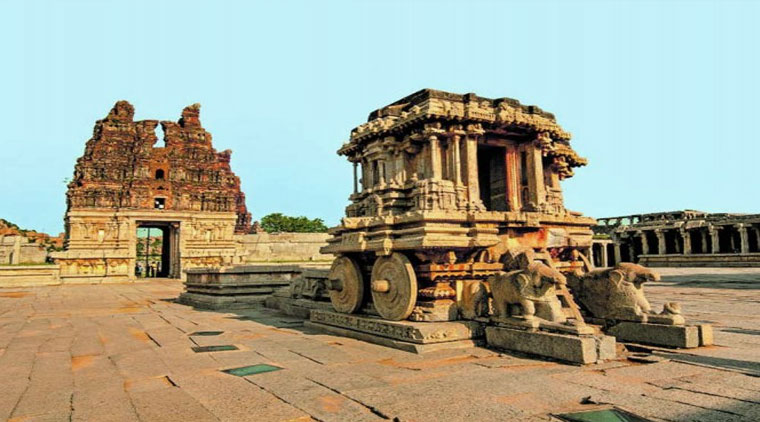
- Vittala Temple and the stone chariotThe masterpiece of Hampi: the Vittala complex holds the Stone Chariot, a stone shrine to Garuda that is the very image on the Indian 50 rupee note, and the Ranga Mandapa with its 56 carved musical pillars. Tapping the pillars is now prohibited to protect them, so admire, do not play. Private vehicles stop about 2 km short, so walk the last stretch or take the battery buggy, about 10 rupees per person each way.
- Virupaksha Temple and Hampi BazaarThe living heart of Hampi, in worship since the 7th century, with its towering gopuram over the old bazaar street. Entry is only about 2 rupees, plus about 50 rupees if you carry a still camera. It opens roughly sunrise to sunset with a common midday break, so come early, and you may meet Lakshmi, the resident temple elephant, in the morning.
- The Royal Centre: Lotus Mahal and Elephant StablesAcross the site, the Royal Centre holds the elegant Lotus Mahal, the grand Elephant Stables, the Queen's Bath and the stepped tank. Your one Vittala Temple ticket also covers the Lotus Mahal and Elephant Stables the same day, so keep the stub and do them together.
- Hemakuta and Matanga HillsHemakuta Hill, just above the bazaar, is dotted with early shrines and is the easy sunset hill. Matanga Hill is the highest point in the Hampi bowl and the classic sunrise climb over the ruins and the river. Both are covered in the experiences and safety sections below.
Hampi is both a living temple town and a protected world heritage site. Do not climb on or touch carvings, do not tap the musical pillars, dress modestly at Virupaksha and remove shoes where asked, and carry your litter out. The ruins are largely unfenced and the terrain is rocky, so watch your footing and keep children close, especially near drops and the river.
Signature experiences in Hampi
Beyond the temples, these are the experiences people remember, and how to arrange them honestly, from the sunrise hill to the coracle on the river.
- Sunrise from Matanga HillThe signature Hampi experience: climb Matanga Hill in the dark for first light over the boulders, the ruins and the Tungabhadra. It is a steep, rocky scramble of around 30 to 45 minutes, so wear proper shoes, carry water and a torch, and go in a small group rather than alone in the pre-dawn dark.
- Sunset from Hemakuta HillThe gentle counterpart, a short walk up from Hampi Bazaar among early shrines and boulders, busy and sociable at golden hour. It is the easiest sunset in Hampi and the natural end to a first day, with the gopuram of Virupaksha lit below you.
- A coracle ride on the TungabhadraThe round basket-boats have ferried people across the river here for centuries, and a short scenic spin is a lovely, gentle thing to do, typically a few hundred rupees negotiated in advance. Wear the life jacket, agree the price and length first, and read the safety section: the river itself is dangerous to swim.
- Explore by bicycle, auto or on footBecause scooter and moped rental is banned on the Hampi side, you cover the spread-out ruins by hired auto for the day, by bicycle if you are fit, on foot around the Sacred Centre, or by guided car. A hired auto with a driver who knows the site is the easy way to link the far-flung Royal Centre and Vittala.
- Cross to the Anegundi sideThe north bank around Anegundi is older than Hampi itself in legend, greener and quieter, with paddy fields, the Pampa Sarovar and Anjanadri Hill. With the old Hippie Island guesthouses gone since 2024, treat it now as a day-trip across the river rather than a place to base yourself.
- The living bazaar and evening aartiLinger in the old Hampi Bazaar lane below Virupaksha, watch the evening rituals at the temple, and soak up the unhurried pace. The temple, the river and the boulders at dusk are what people remember long after the monuments blur together.
If you do only one thing slowly, make it a hilltop at either end of the day. Sunrise from Matanga and sunset from Hemakuta are what stay with people long after the individual temples fade, and both cost nothing but the climb. Give yourself an unhurried dawn and an unhurried dusk, and Hampi opens up in a way a single hurried day never allows.
Where to stay in Hampi, and how many nights
Stay in Hampi Bazaar to be in the heart of the ruins, in Kamalapura for more comfort, or in Hosapete for branded hotels and the railhead. Two to three nights is the sweet spot.
- Hampi Bazaar: in the thick of the ruinsThe atmospheric, walkable backpacker heart, steps from Virupaksha, Hemakuta and the river. Because this is the protected heritage core, rooms are mostly simple guesthouses rather than smart hotels, but you wake up inside the ruins. Best for first-timers and backpackers who want to step straight into the scene.
- Kamalapura: more comfort, near the Royal CentreAbout 4 km away near the Royal Centre and the Vittala approach, with more comfortable hotels and a quieter feel than the bazaar. A good middle ground if you want decent rooms without the long commute from Hosapete, and an easy base for the palaces and Vittala.
- Hosapete (Hospet): hotels and the railheadThe nearest proper town, about 12 to 13 km away, with branded and business hotels, more dining, and the railway and bus stands. Best for travellers who want comfort and easy arrivals and departures and do not mind a daily 30 minute drive into the ruins.
- Room budgets and how many nightsBudget guesthouse rooms commonly start around 500 to 800 rupees, with mid-range hotels and resorts well above that and prices climbing during Hampi Utsav. Plan two to three nights: one full day only scratches the Sacred and Royal centres, while two to three days add Vittala, a sunrise, a sunset and the Anegundi side.
If an old blog tells you to base yourself on Hippie Island (Virupapur Gaddi) across the river, that advice is out of date. Government demolitions around March 2024 cleared the riverside guesthouses, cafes and the Hippie Bazaar sunset point, and the budget-stay island of the 2010s is largely gone. Book on the mainland in Hampi village, Kamalapura, Hosapete, or in Anegundi and Sanapur on the north bank, and treat the island as a day trip, not a stay.
Hampi costs and a realistic daily budget
Hampi is gentle on the wallet: most of the site is free to walk, and only three places are ticketed. Here is what the main things cost so you can plan and avoid being overcharged.
- The fixed entry feesMost of Hampi is free. The Vittala Temple complex is about 30 rupees for Indian, SAARC and BIMSTEC nationals and about 500 rupees for other foreign nationals on the official listing, with children up to 15 free, and that one ticket also covers the Lotus Mahal and Elephant Stables the same day; a few 2026 listings show about 40 and 600, so confirm at the counter. Virupaksha is about 2 rupees plus about 50 rupees for a still camera, and the Kamalapura museum about 5 rupees. The Vittala battery buggy is about 10 rupees per person each way.
- Getting aroundA hired auto-rickshaw for a day around the ruins is the main on-ground cost, negotiated in advance, with bicycles much cheaper if you are fit. Remember scooter and moped rental is banned on the Hampi side, so do not budget for self-drive two-wheelers there.
- A rough daily budgetExcluding your room and long-distance transport, plan on roughly 1,000 to 1,800 rupees a day as a backpacker, more for a mid-range traveller using hired autos, a guide and sit-down meals. A coracle ride is typically a few hundred rupees, negotiated first.
- Cash, cards and a guideCarry cash for autos, the coracle, small eateries and entry gates, with ATMs more reliable in Hosapete than in Hampi Bazaar. A licensed guide at Vittala or for a half day is worth it to read the carvings and the history, and adds a few hundred to a thousand rupees depending on length, agreed up front.
The single most useful money habit in Hampi is to keep your Vittala Temple ticket stub, because the same ticket also lets you into the Lotus Mahal and the Elephant Stables on the same day. Travellers who throw it away or do not know the rule sometimes get talked into a second payment. One ticket, one day, three sites, so hold on to the stub until you have seen all three.
Practical logistics: getting around, the dry zone, money and the heat
The small things that make a Hampi day smooth, from the scooter ban and the dry-zone rule to ATMs, water and how the two banks of the river fit together.
- Getting around: no rented scooters on the Hampi sideSelf-drive scooter and moped hire is effectively banned on the Hampi (south) side to protect the auto-rickshaw drivers, so cover the spread-out ruins by hired auto, bicycle, walking or guided car. Two-wheeler rental is still available across the river on the Anegundi (north) side for use there, so plan around that split.
- A dry, religious zoneAlcohol is generally not sold or served around the temples and the bazaar, and there are no real bars on the Hampi side. If you want a drink, it is usually found across the river on the Anegundi side or in Kamalapura and Hosapete, so do not plan a night out in Hampi Bazaar itself.
- Money, water and the heatATMs are more reliable in Hosapete than in Hampi Bazaar, so draw cash before you settle in. Carry plenty of water and sun protection, as the open ruins give little shade and the climbs are tiring; in the warmer months keep the middle of the day for rest.
- The two banks of the riverHampi proper sits on the south bank; the older, greener Anegundi and the former Hippie Island sit on the north. A coracle or the local boat links them for a day trip, but with the island guesthouses gone since 2024, base yourself on the south-bank mainland and treat the north as an excursion.
Safety on the river, the rocks and in the heat
Hampi is a calm, friendly place, but a fast river, unfenced boulders and fierce heat are the real hazards. A little awareness keeps the visit happy.
- Do not swim in the TungabhadraThis is the single most important warning in Hampi. On-site signs and traveller accounts report strong undercurrents that have drowned even expert swimmers where the surface looks calm and inviting, and crocodile sightings, though rare, do happen. Enjoy the coracle with a life jacket, but never swim or wade into the river, and keep children well back from the water.
- Mind your footing on the bouldersThe ruins and the sunrise and sunset hills are rocky, largely unfenced, and slippery in places. Wear proper shoes, do not climb on carvings, take the hill scrambles slowly, and come down from Matanga and Hemakuta before the light fully goes so you are not picking your way over rocks in the dark.
- Heat, hydration and timingIn the hot months the open site is exhausting and sunstroke is a real risk. Start at dawn, carry far more water than you think you need, wear a hat and sunscreen, and rest in shade through the middle of the day. The cool season removes most of this risk, which is another reason to come October to February.
- General precautionsHampi is generally safe and low-crime, with the usual care for valuables in crowds and gentle firmness with persistent guides or sellers. Pre-dawn climbs are best done in a small group rather than solo, and let your guesthouse know your plan if you set off alone for a sunrise.
The Tungabhadra is the one thing in Hampi that has genuinely cost lives. The water near the coracle crossings can look flat and tempting, especially after a hot climb, but the undercurrents are powerful and have pulled under strong swimmers. Treat the river as scenery and a short ferry, never a swim, wear the life jacket on the coracle, and keep a close hold on children anywhere near the bank.
Hampi for every kind of traveller, and on access
Hampi suits very different visitors in different ways. Here is what it offers you and the one tip that matters for each, including how a senior or a family covers a vast, hot, hilly site.
- CouplesAtmospheric and unhurried: sunrise from Matanga, sunset from Hemakuta, a coracle on the river and slow evenings by the temple. An overnight or two rather than a day trip lets you catch both ends of the light, which is where the romance of Hampi lives.
- Families with childrenColourful and full of space to roam, with the temple elephant, the boulders and the coracle. But the ruins are largely unfenced and the river is dangerous, so keep little ones close near drops and water, hire an auto rather than walking them out in the heat, and skip the steepest climbs.
- Senior travellers and on accessibilityVery doable with planning. Stay in Kamalapura or Hosapete for comfort, hire an auto or car to link the far-flung sites rather than walking the full spread, use the battery buggy at Vittala, and visit in the cool months and the cool hours. Skip the steep Matanga scramble and enjoy the gentler Hemakuta for sunset instead.
- Backpackers and budget travellersA long-loved travellers' favourite, full of simple guesthouses and cafes around Hampi Bazaar, easy to reach by overnight bus or the Hampi Express via Hosapete, and a fine place to slow down for several days. Just know the scooter ban and that the old Hippie Island scene has gone.
- Solo female travellersHampi is generally relaxed and well used to independent travellers. Take the usual precautions, do pre-dawn climbs in company rather than alone, dress modestly at the temples, and prefer the busier lanes after dark. The main friction is sales pressure, not danger.
- PhotographersOne of the most photogenic places in India: the stone chariot, the boulder-strewn hills at golden hour, the river and the gopurams. Carry the still-camera ticket for Virupaksha, ask before photographing people at worship, and shoot Matanga at dawn and Hemakuta at dusk.
A suggested two to three day Hampi itinerary
How to shape two or three unhurried days so you catch the ruins at the best light, link the far-flung sites sensibly, and avoid the worst of the heat.
- Day one: the Sacred CentreStart at dawn with the climb up Matanga Hill for sunrise, then come down to Virupaksha Temple and the old bazaar before the heat. Rest through the middle of the day, then take the gentle walk up Hemakuta Hill for sunset above the gopuram.
- Day two: Vittala and the Royal CentreHead early to the Vittala complex for the stone chariot and the musical pillars, taking the battery buggy from the road. Use the same Vittala ticket for the Lotus Mahal and Elephant Stables in the Royal Centre, with the Queen's Bath and tanks nearby, and keep a hired auto for the day to link them.
- Day three, if you have itCross the river by coracle or boat for a slow day around Anegundi: the paddy fields, Pampa Sarovar and Anjanadri Hill, the greener, older side of the legend. A third day turns a tick-the-box visit into the unhurried Hampi people fall for.
- The one-day versionIf you only have a day, do sunrise at Matanga or sunset at Hemakuta, Virupaksha and the bazaar, and the Vittala stone chariot, and accept that you are skimming. Hampi genuinely needs two to three days to do it justice, so build that in if you can.
The thing that breaks a Hampi day is doing the open ruins and the boulder hills in the midday heat. Build your plan so the climbs and the long walks fall at dawn and dusk, keep the hot middle of the day for a meal and a rest, and use a hired auto to cover the spread-out sites rather than trudging between them in the sun. Get the rhythm right and even a summer visit becomes bearable.
The real questions travellers ask about Hampi
Straight answers to the questions that come up again and again on traveller forums, so you arrive already knowing the score.
- How many days do I need?Two to three days is the right answer for most people. One day only scratches the Sacred and Royal centres; two to three lets you add Vittala, a sunrise, a sunset and the Anegundi side. If you like to slow down, Hampi easily fills a week.
- Hampi Bazaar or Hospet as a base?Stay in Hampi Bazaar for atmosphere and walkable ruins but basic rooms, Kamalapura for more comfort near the Royal Centre, or Hosapete for branded hotels and the railhead with a daily drive in. There is no single right answer; it depends on whether you want atmosphere or comfort.
- Can I rent a scooter to explore?Not on the Hampi side. Self-drive scooter and moped hire is effectively banned there to protect the auto drivers, so cover the ruins by hired auto, bicycle or on foot. Two-wheeler rental is available across the river on the Anegundi side for use there.
- Can I get a drink in Hampi?Not really in Hampi Bazaar, which is a dry, religious zone with no real bars. Travellers who want a drink usually find it across the river on the Anegundi side or in Kamalapura and Hosapete, so plan accordingly.
- What happened to Hippie Island?Government demolitions around March 2024 cleared the riverside guesthouses, cafes and the sunset bazaar on Virupapur Gaddi, so the budget-stay island of old blogs is largely gone. Stay on the mainland and treat the north bank as a day trip.
- Is the coracle safe and can I swim?The coracle is a fine short scenic ride with a life jacket, but do not swim in the Tungabhadra: undercurrents have drowned strong swimmers and crocodile sightings, though rare, happen. Treat the river as scenery, not a swim.
Planning Hampi from abroad
Hampi is the most atmospheric ruin field in India and pairs naturally with Goa and Bengaluru. A little preparation makes the two-bank layout, the changed Hippie Island and the dry-zone rule easy to handle.
- Pair it with Goa and BengaluruFly into Goa or Bengaluru, then take an overnight bus or the Hampi Express via Hosapete. Hampi is a classic South India backpacker hop from Goa and slots onto a Karnataka heritage loop, an easy add to a wider trip rather than a destination you fly to directly.
- Know the foreigner ticket pricesMost of Hampi is free to walk. The one ticketed highlight that matters is the Vittala complex, about 500 rupees for foreign nationals other than SAARC and BIMSTEC citizens on the official listing, and that ticket also covers the Lotus Mahal and Elephant Stables the same day; a few 2026 listings quote about 600, so confirm at the counter. Virupaksha is about 2 rupees plus about 50 rupees for a still camera. Children up to 15 are free.
- The Hippie Island scene has changedIf your guidebook sends you to stay on Hippie Island across the river, that is out of date: demolitions around March 2024 cleared its guesthouses and cafes. Base yourself on the mainland in Hampi village, Kamalapura or Hosapete, and cross the river as a day trip.
- It is a dry, walking-paced siteHampi Bazaar is a dry, religious zone with no real bars, and the ruins are spread over kilometres with little shade. Come in the cool months, walk and ride at a gentle pace, and you will find Hampi one of the most rewarding heritage experiences in India.
Money, connectivity and timing for foreign visitors
The practical basics an overseas traveller needs for a spread-out ruin field: cash, cards, a SIM, the heat, and how many days to give Hampi on a wider India trip.
- Carry cash, expect to negotiateCards and UPI work in some hotels and bigger places, but the autos, the coracle, small eateries and entry gates run on cash, and prices for rides are negotiable. ATMs are more reliable in Hosapete than in Hampi Bazaar, so draw cash before you settle in and keep small notes.
- Get a SIM in a city firstPick up an Indian tourist SIM or an eSIM when you land in Goa, Bengaluru or Hyderabad rather than hunting for one in a small ruin town. Coverage in Hampi is generally fine for maps and calls, weaker out among the far ruins and across the river.
- How long to give it on a bigger tripOn a South India trip, two to three nights in Hampi is the right weight: enough for the Sacred and Royal centres, Vittala, a sunrise and a sunset, without slowing the whole itinerary. Slot it between Goa and Bengaluru or onto a Karnataka heritage loop with Badami and Pattadakal.
- Time it to the cool seasonOctober to February is the comfortable window for a walking-heavy site. Avoid March to June, when highs around 40 to 42 degrees Celsius make the open ruins punishing. If you can only come in the heat, do everything at dawn and dusk and rest through the day.
Hampi is an unforgettable introduction to South India: a whole vanished empire laid out across boulders and a river, walkable, atmospheric and gentle once you understand its scale. Give it two to three nights, ride and walk rather than rush, base on the mainland, and let it be the slow, wondering chapter between Goa's beaches and Bengaluru's bustle. Many overseas visitors say it ends up the part of the trip they remember most.
Why a stone chariot stands on your 50 rupee note
Hampi was Vijayanagara, the City of Victory, capital of the last great Hindu empire of the south, which rose in the 14th century and reached its dazzling height under Krishna Deva Raya, who ruled from 1509 to 1530. Foreign travellers of the time described a city richer and larger than any in Europe, its markets heaped with gems and its temples gilded. In 1565 a coalition of Deccan sultanates broke the empire at the battle of Talikota and the city was sacked and abandoned, left to the boulders that still surround it. The most perfect thing the Vijayanagara stonemasons left is the Stone Chariot in the Vittala temple, a shrine to Garuda carved as a temple-car, its stone wheels once able to turn. It is so emblematic of India's heritage that its image was chosen for the 50 rupee note, so most Indians have carried a picture of Hampi in their wallet without knowing it. The ruins are history, well documented and dated, not legend, and that is what makes walking them so moving.
Planning a Hampi trip?
Our Karnataka travel experts plan your full journey for you: route, hotels, darshan timings and transport. You get a free day-by-day plan and an exact quote on WhatsApp, usually within a few hours. No payment is needed to get your plan.
Tour packages that visit Hampi
Every journey below is private, hand-crafted and fully customizable. Tell us your dates and we tailor the itinerary, the pace and the priests or guides around you.
 3D / 2N
Hampi Tour From Hyderabad
- Chandramouliswara Temple
- Malyavanta Raghunathswamy Temple
 11D / 10N
Karnataka Holidays
- Bangalore Sightseeing
- Visit Mysore Palace