Hemis Travel Guide
The main season is June to September , and the great set-piece is the Hemis Tsechu masked-dance festival in late June. The opposite, quiet end of the year, around February, is...
When to visit Hemis, and the festival to plan around
The main season is June to September, and the great set-piece is the Hemis Tsechu masked-dance festival in late June. The opposite, quiet end of the year, around February, is for the snow leopard.
- June to September: the main windowThis is when Ladakh's roads and the Leh flights run reliably and the high passes are open. Days are bright and mild, nights are cold, and the monastery is at its busiest and easiest to reach. Carry layers even in summer, as the high desert turns cold fast after sunset.
- Late June: the Hemis TsechuThe two-day masked-dance festival is the cultural high point of the Ladakh year and falls in late June or early July. The town fills, rooms in Leh go quickly, and the courtyard is packed, but the cham dances are unforgettable. Decide early whether you want the spectacle or the calm.
- January to March: the snow leopardThe far quieter winter window is for wildlife travellers only. Most of Ladakh shuts down, but the Rumbak valley inside Hemis National Park becomes one of the best places on earth to look for a snow leopard, with February the prime month. It is cold, high and demanding, not a casual visit.
- Festival or no festival, decide firstThe Tsechu is a wonderful spectacle but rooms are scarce and the courtyard is crowded, while a normal summer day at Hemis is calm and contemplative. Both are rewarding, so choose the experience you want before you fix your Leh dates, because the festival pulls the whole region's accommodation.
Hemis Tsechu falls on the 10th day of the fifth month of the Tibetan lunar calendar and marks the birth anniversary of Guru Padmasambhava, so its Gregorian date shifts every year. The festival is held every year, on the 10th and 11th of that lunar month: the Leh district administration lists it among the annual monastic festivals and the Government of India festival portal describes it as a yearly two-day affair, though one official Ladakh Tourism page loosely calls it biennial, so do not be confused if you see the word, the Tsechu itself is annual. For 2026 it is widely listed for about 24 to 25 June 2026, but the official Ladakh administration holiday page lists it only as a Leh-district local holiday without a fixed date, and tour pages copy each other. Treat 24 to 25 June 2026 as expected, not confirmed, and reconfirm the exact dates on the official Ladakh Tourism and administration sites before you book flights or rooms. Beware any page that states a single fixed date as hard fact.
How to reach Hemis
Everyone comes through Leh, the only airport in Ladakh. Hemis is a road trip of about 45 km southeast down the Indus valley, best done after you have acclimatised.
- Fly into Leh firstLeh has the only airport in Ladakh, with flights mainly from Delhi and a few other cities. There is no airport or railway anywhere near Hemis itself, so Leh is the hub for everyone. Crucially, do not drive out to Hemis on the day you land, because of the altitude.
- Leh to Hemis by roadHemis is about 45 km southeast of Leh on the west bank of the Indus, roughly 1 to 1.5 hours by road depending on stops. A hired taxi or a tour car is the usual way; the route runs down the Indus valley past Shey and Thiksey, so it pairs naturally with those monasteries.
- Combine it with Thiksey and SheyThe smart way to see Hemis is as part of the classic Indus-valley monastery loop. Once you are acclimatised, a single well-paced day covers Shey Palace, the 12-storey Thiksey Monastery and then Hemis at the far end, which is exactly how our Ladakh itineraries sequence it.
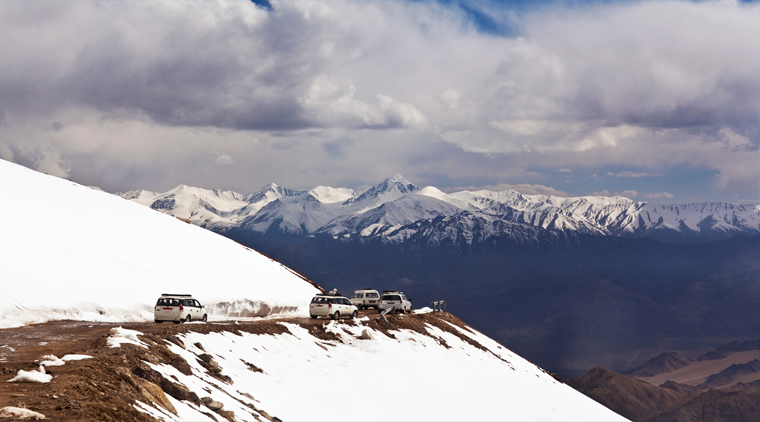
- By road from Manali or SrinagarSome travellers reach Leh overland on the Manali-Leh or Srinagar-Leh highways, open mainly in summer. These multi-day mountain drives acclimatise you more gradually than a flight, but they are long and weather-dependent, so build in buffer days before you head out to Hemis.
Fly into Delhi, the main international gateway, then take a domestic flight to Leh. From Leh, Hemis is a short drive, but give yourself acclimatisation days in Leh first. There are no international flights into Ladakh.
Fly into Delhi, then connect to Leh by domestic flight. Hemis sits on the easy Indus-valley monastery loop from Leh once you have settled into the altitude.
Fly to Leh from Delhi or other metros, or drive in on the Manali-Leh or Srinagar-Leh highways in summer. From Leh, Hemis is about 45 km down the Indus valley by taxi or tour car.
The monastery, the museum, and the giant thangka
Hemis is the largest and wealthiest monastery in Ladakh: a Drukpa-lineage gompa with a rich museum, a famous giant thangka, and a setting in a sheltered gorge above the Indus.
- The main monasteryFounded in the 17th century and following the Drukpa lineage of Tibetan Buddhism, Hemis is set in a sheltered side-gorge above the Indus, which is why you do not see it until you are almost there. The assembly halls, murals and ritual artefacts are the heart of a visit. Dress modestly, remove shoes where asked, and move quietly through the prayer halls.
- The museumHemis has one of the better monastery museums in Ladakh, with thangkas, statues, ritual objects and relics that explain the Drukpa tradition. It is worth the extra time and usually the small extra ticket. Photography rules vary inside, so ask before you raise a camera near sacred objects.
- The giant thangkaHemis owns one of the largest thangkas in Ladakh, a vast embroidered silk scroll traditionally unfurled only once every 12 years. That full ceremonial unveiling is a rare event, so if seeing it is your goal, confirm the exact year with the monastery rather than assuming it coincides with the annual festival.
- The setting and the walk aboveAbove the monastery a short, steep path leads to a hermitage and viewpoints over the gorge. It is rewarding but it is at altitude, so take it slowly and turn back if you feel breathless or headachy. The setting, tucked into the mountains rather than perched on a hill, is part of what makes Hemis feel different from Thiksey.
Hemis is a living Drukpa monastery, not a museum piece. Cover shoulders and knees, take off shoes and hats where indicated, walk clockwise around shrines and chortens, lower your voice in the prayer halls, and never point your feet at an altar or a monk. Ask before photographing monks or sacred objects, and switch off flash. A little respect is repaid with a warm welcome.
Signature experiences at Hemis
Beyond the prayer halls, these are the experiences people remember, from the masked cham dances of the Tsechu to the winter search for a snow leopard.
- The cham masked dances at the TsechuIf your dates match the festival, the cham is the experience of a Ladakh trip: monks in silk brocade and elaborate masks portray gods, goddesses, dakinis and the eight manifestations of Guru Padmasambhava, to drums, cymbals and longhorns in the courtyard. The dances run mainly through the late morning and midday, so arrive early to find a seat against the courtyard wall.
- The museum and the muralsOn a normal day, slow down for the museum and the wall paintings. Hemis is the wealthiest monastery in Ladakh and its collection shows it, so this is not a five-minute photo stop. Give it an hour, and read a little about the Drukpa lineage before you go to make sense of what you are seeing.
- The Indus-valley monastery loopPair Hemis with Shey Palace and its gold-plated copper Buddha and the photogenic 12-storey Thiksey Monastery for a full day of contrasts: a palace, a hilltop gompa and a hidden-gorge monastery in one well-paced loop down the Indus valley.
- The winter snow-leopard trekIn deep winter, the Rumbak valley inside Hemis National Park is one of the best places on earth to look for a wild snow leopard. It is a cold, high, patient trek with community homestays, best around February and arranged through local operators. This is a serious wildlife trip, not a side excursion from a summer monastery tour.
- A morning of quietOutside the festival, come early before the tour buses and simply sit in the courtyard as the day starts. The hidden-gorge setting and the unhurried rhythm of a working monastery are the real reward, and they are free. A rushed midday stop misses the point of Hemis entirely.
If you do only one thing slowly at Hemis, make it the cham at the Tsechu if your dates allow, or the museum and the early-morning courtyard if they do not. The masked dances and the hidden-gorge calm are what people remember long after the photo stops fade. Give Hemis an unhurried half-day rather than fifteen minutes off a bus, and a monastery that can feel like just another stop opens up into the spiritual high point of a Ladakh trip.
Where to stay for Hemis, and how long to give it
Hemis is a tiny settlement, so almost everyone bases in Leh and day-trips out. The exceptions are the festival and the winter snow-leopard trek, which change the picture.
- Base in LehLeh has the range of hotels, guesthouses and homestays, the restaurants, the ATMs and the agents, and it is the right altitude to acclimatise. From Leh, Hemis is an easy half-day or part of a full monastery day. There is essentially no tourist accommodation at Hemis village itself.
- Thiksey as an alternative baseIf you want to be deeper into the Indus valley and closer to the monasteries, a stay near Thiksey is a quieter alternative to Leh and shortens the run to Hemis. It suits travellers who have already acclimatised and want calm over the bustle of Leh's main bazaar.
- How long to give HemisHemis itself is a half-day: the monastery, the museum and the short walk above. Most travellers fold it into a single Shey-Thiksey-Hemis day. The festival needs a planned overnight in Leh and an early start; the winter snow-leopard trek is a multi-day expedition with homestays inside the park.
- Festival and winter staysDuring the Tsechu, Leh's rooms fill fast and prices rise, so book well ahead. For the snow-leopard trek, you sleep in simple community homestays in Rumbak and nearby hamlets inside Hemis National Park, which is part of the experience and supports local conservation, not a comfort holiday.
Wherever you base, the rule is the same: spend at least one full day, ideally two, resting in Leh before you drive out to Hemis. Hemis is at about 3,600 m and the long-loved mistake is to land in Leh and rush straight to the monasteries the same day. Rest, hydrate, skip alcohol, and let your body settle, and the whole Indus-valley loop, Hemis included, becomes a pleasure instead of a headache.
Hemis costs, fees and a realistic budget
Hemis itself is cheap to enter, but the real Ladakh costs are the flight, the taxi and the permits. Here is what the main things cost so you can plan and avoid surprises.
- Monastery entry and cameraEntry to Hemis is modest, commonly quoted from about 50 to 100 rupees per person, sometimes with a separate camera or museum charge of about 100 to 200 rupees. Sources disagree on the exact figure and the monastery revises it, so carry small cash and reconfirm at the gate rather than trusting an old blog.
- The permit and environment feeIndian travellers pay the Ladakh Environment and Development Fee online, commonly about 400 rupees plus about 20 rupees per day, roughly 590 rupees for a week. Foreigners do not need an inner-line permit for Hemis itself but need a Protected Area Permit through a registered Leh agent for the deeper valleys.
- The big costs: flight and taxiThe flight to Leh and the hired taxi are where your money goes, not the monastery ticket. Ladakh taxi rates are fixed by the local union, so a Leh to Hemis or a full Indus-valley loop has a set tariff; ask your hotel or agent for the current union rate before you set off.
- Cash, cards and foodHemis village has no real shops, ATM or reliable card machine, so eat in Leh or Thiksey and carry cash and water. Leh has ATMs and accepts cards and UPI in many places, but the moment you leave town, plan on cash for everything.
The Hemis ticket is the small money; the flight, the taxi and the permit are the real budget. Sort your Leh flight early, agree the taxi on the local union tariff before you drive, pay the Environment and Development Fee online if you are Indian or arrange the Protected Area Permit through an agent if you are a foreigner, and carry enough cash for the day. Do that and Hemis has no nasty cost surprises waiting at the gate.
Practical logistics: timings, permits, food and signal
The small things that make a Hemis day smooth, from the early-afternoon lunch closure to the permit picture, cash, food and patchy network.
- Timings and the lunch closureHemis is generally open daily, commonly about 8 am to 1 pm and again about 2 pm to 6 pm, so it effectively shuts for a couple of hours over lunch. Plan to arrive in the morning or after about 2 pm, and reconfirm hours locally, as small monasteries adjust for season and rituals.
- Permits in plain termsFor Hemis itself, Indians pay the Environment and Development Fee online and foreigners need no inner-line permit. Foreigners only need a Protected Area Permit, via a registered Leh agent, for restricted areas like Pangong and Nubra. Carry a printout or screenshot of whatever permit applies to you.
- Food, water and altitudeThere is no proper restaurant at Hemis, so eat in Leh or Thiksey and carry water and snacks. Keep drinking water through the day, as the dry high-altitude air dehydrates you faster than you expect, and that makes any altitude niggle worse.
- Network, cash and languageMobile signal is patchy to absent at Hemis and prepaid SIMs from outside Ladakh often do not work; a postpaid Indian SIM is more reliable in the region. Carry cash, as there is no ATM. Ladakhi and Hindi are spoken, and English is widely understood in the tourist trade.
Altitude, acclimatisation and staying well at Hemis
Hemis is gentle and welcoming, but the real safety issue is altitude, not crime. Acclimatise properly and the rest of the visit looks after itself.
- Never visit on your first day in LehHemis is at about 3,600 m and Leh itself is high. If you fly straight in, take Day 1 as full rest in Leh and do not sightsee, then visit Hemis on Day 2 or later. Travellers who rush to the monasteries on arrival are the ones who end up with headaches, nausea and a cut-short visit. This single rule matters more than anything else on this page.
- Know the symptoms of acute mountain sicknessHeadache, nausea, dizziness, breathlessness and poor sleep are the warning signs. Mild symptoms ease with rest, fluids and time; if they worsen, descend and seek medical help. Do not push uphill to the hermitage above Hemis if you already feel unwell, and tell your guide or driver how you feel.
- Hydrate, go slow, skip alcoholDrink far more water than usual, walk slowly, and avoid alcohol and heavy exertion for the first couple of days. Many travellers ask a doctor about acetazolamide before the trip; that is a personal medical decision, so take it up with your own doctor rather than acting on travel-blog advice.
- The ordinary safety pictureCrime is not a meaningful worry at Hemis; this is a quiet monastery village. The genuine risks are altitude, the long mountain drives, cold nights and the sun at altitude, so carry sun protection, warm layers and any regular medication, and keep your driver's number handy.
If you remember one thing from this page, remember this: give yourself at least one full rest day in Leh, ideally two, before you drive out to Hemis at about 3,600 m. Altitude does not care how fit you are, and the people who get caught out are usually the keen ones who try to see everything on day one. Rest first, then enjoy the monasteries. Anyone with heart, lung or serious health conditions should clear a Ladakh trip with their doctor before booking.
Hemis for every kind of traveller, and on access
Hemis suits very different visitors in different ways. Here is what it offers you and the one tip that matters for each, including how a senior handles the altitude.
- CouplesQuiet, soulful and scenic: the hidden-gorge monastery, the Indus-valley drive and the calm of a working gompa. Fold Hemis into an unhurried monastery day rather than a tick-box stop, and let the early-morning courtyard be the highlight.
- Families with childrenDoable and colourful, especially the masked dances if your dates match the festival, but mind the altitude for little ones and the long drive. Keep children hydrated, take rest days seriously in Leh first, and do not over-pack the day.
- Senior travellers and on accessibilityManageable with planning, but the altitude is the real factor, not the steps. Take extra acclimatisation days in Leh, keep the day short, skip the steep climb to the hermitage above the monastery if it feels hard, and tell your driver to keep an easy pace. Anyone with heart or lung conditions should clear the trip with a doctor first.
- PhotographersThe cham masks at the Tsechu, the murals and the gorge setting are the draws. Ask before photographing monks or sacred objects, switch off flash inside, and arrive early at the festival for a clear line to the courtyard before the crowd builds.
- Wildlife travellers and trekkersHemis National Park is the prize: the largest national park in South Asia and a genuine chance at a wild snow leopard on a winter Rumbak trek, best around February. Plan it as a dedicated cold-weather expedition with community homestays, not as an add-on to a summer monastery tour.
- Solo female travellersLadakh is generally regarded as one of the safer regions in India for solo women, with the usual sensible precautions. The practical challenges are the altitude, the remoteness and arranging transport, rather than personal safety at the monastery.
A suggested Hemis itinerary
How to slot Hemis into a Ladakh trip so you respect the altitude, catch the monastery at the right hours and pair it with Thiksey and Shey.
- Day 1 in Leh: rest, do not rushArrive in Leh and do almost nothing. Rest at the hotel, hydrate, take a gentle short walk at most, and let your body adjust to the altitude. This is not a wasted day; it is what makes the rest of the trip, Hemis included, go smoothly.
- Day 2: the Indus-valley monastery loopOnce acclimatised, do Shey Palace, the 12-storey Thiksey Monastery and Hemis as one well-paced day down the Indus valley. Reach Hemis in the morning or after its lunch closure, give the museum and courtyard real time, and keep the climb above the monastery optional.
- The festival versionIf you are here for the Tsechu, plan an early start from Leh on the festival day, arrive before the cham dances begin in the late morning, settle against the courtyard wall, and accept that the day will be crowded. Book your Leh room well ahead, as the festival fills the town.
- The winter snow-leopard versionA completely different trip: fly into Leh in winter, acclimatise, then trek into the Rumbak valley inside Hemis National Park over several days with community homestays, ideally around February. Go with an experienced operator and the right cold-weather gear.
Two things break a tight Hemis plan: visiting too soon after landing, and arriving during the early-afternoon lunch closure, roughly between about 1 pm and 2 pm. Build at least one full rest day in Leh before the monastery loop, and time your Hemis arrival for the morning or after about 2 pm. Do both and you will never be standing breathless at a shut gate with the clock running.
The real questions travellers ask about Hemis
Straight answers to the questions that come up again and again on traveller forums, so you arrive already knowing the score on altitude, fees, permits and the festival.
- Can I visit Hemis on my first day in Leh?Better not. Hemis is at about 3,600 m and you should rest in Leh for at least a full day, ideally two, before driving out. The headache-and-nausea stories almost always come from people who rushed the monasteries on arrival day.
- Is one day enough for Hemis?Hemis itself is a half-day. Most people fold it into a single Shey-Thiksey-Hemis day once acclimatised. The festival needs a planned festival day, and the winter snow-leopard trek is a separate multi-day expedition entirely.
- Do I need a permit, and is it different for foreigners?For Hemis itself, Indians pay the Environment and Development Fee online and foreigners need no inner-line permit. Foreigners need a Protected Area Permit, through a registered Leh agent, only for restricted areas like Pangong and Nubra, not for the core monasteries.
- What exactly is the entry fee and timing?Entry is commonly quoted from about 50 to 100 rupees, sometimes with a camera or museum charge of about 100 to 200 rupees, and the monastery is generally open about 8 am to 1 pm and 2 pm to 6 pm. Sources disagree on the exact fee, so carry small cash and reconfirm at the gate.
- Can I really see a snow leopard near Hemis?Yes, but only on a dedicated winter trek into the Rumbak valley inside Hemis National Park, best around February, with community homestays and an experienced operator. It is a patient, cold, high wildlife trip, not a summer side-excursion from the monastery.
- Can I photograph the monks and the cham dances?Generally yes in the festival courtyard, but always ask before photographing monks, lamas or sacred objects up close, and switch off flash inside the prayer halls and museum. Respect any sign or instruction; the welcome is warm when you ask first.
Planning Hemis from abroad
Hemis is the spiritual high point of a Ladakh trip and pairs naturally with the Leh monasteries. A little preparation makes the altitude, the foreigner permit and the cash-only village easy to handle.
- Respect the altitude on a short tripIf you have flown a long way and have limited days, the temptation is to pack everything in. Resist it. Ladakh is high, Hemis is at about 3,600 m, and you must give Leh at least a full rest day before the monasteries. Build that buffer into your plan from the start.
- Sort your foreigner permitFor Hemis itself you need no inner-line permit, but for the deeper valleys like Pangong and Nubra foreign nationals need a Protected Area Permit arranged through a registered Leh travel agent, typically valid about 7 days. Arrange it before or on arrival in Leh, not at the last minute.
- Pair it with the Leh monastery loopFly Delhi to Leh, acclimatise, then do Shey, Thiksey and Hemis together as the Indus-valley loop. Hemis is the calm, hidden-gorge climax of that day, and the wealthiest monastery in Ladakh, so give it more than a photo stop.
- Carry cash and manage connectivityHemis village has no ATM, no real shops and patchy signal, and prepaid SIMs from outside Ladakh often do not work, so a postpaid Indian SIM is more reliable. Draw cash in Leh, keep small notes for the ticket and tips, and do not rely on cards once you leave town.
Timing Hemis and the Tsechu for foreign visitors
The practical basics an overseas traveller needs to time a Hemis trip well: when the festival falls, how to plan around the lunar date, and how many days to give Ladakh.
- Plan around the lunar festival dateThe Hemis Tsechu follows the Tibetan lunar calendar, the 10th day of the fifth month, so its Gregorian date moves each year. For 2026 it is widely listed for about 24 to 25 June, but reconfirm on the official Ladakh Tourism and administration sites before you book international flights around it.
- Give Ladakh enough daysOn a first Ladakh trip, plan for several days: a rest day in Leh, the Indus-valley monastery loop including Hemis, and time for Pangong or Nubra if you want them. Trying to do Hemis and the high lakes in a rushed two or three days is how the altitude catches people out.
- Choose the season for your goalCome in summer, June to September, for the monasteries, the roads and the festival. Come in deep winter, around February, only if your goal is the snow leopard in Hemis National Park. The two trips are opposite seasons and completely different in feel and difficulty.
- Book early for the festivalIf you are travelling specifically for the Tsechu, Leh fills up and rooms get dear, so book your flights and accommodation well ahead. Arrive in Leh a couple of days before the festival both to acclimatise and to avoid a last-minute scramble for a room.
Hemis is an unusually rewarding introduction to Tibetan Buddhist Ladakh: the wealthiest monastery in the region, a hidden-gorge setting, and, if your dates align, the masked dances of the Tsechu. The thing that makes or breaks the trip is not the monastery but the altitude, so slot Hemis after a rest day in Leh, give the whole region a generous handful of days, and let the Indus-valley monasteries be the calm, soulful core of your Ladakh journey.
The vast silk scroll unfurled once in twelve years
Hemis is the largest and wealthiest monastery in Ladakh, and its most famous treasure is a giant thangka: a vast embroidered silk scroll depicting Guru Padmasambhava, kept rolled away and traditionally unfurled across the monastery facade only once every 12 years, in the Year of the Monkey. When it is shown, pilgrims travel from across Ladakh and beyond to receive its blessing, and the courtyard that hosts the annual cham dances becomes the stage for one of the rarest sights in the Himalayas. The monastery itself, founded in the 17th century and following the Drukpa lineage, is tucked into a sheltered side-gorge above the Indus, so the great scroll appears almost out of nowhere when the mountains finally open. If seeing the thangka unfurled is your dream, confirm the exact ceremonial year directly with the monastery, as the 12-year cycle and its Gregorian dates are reported inconsistently across travel sources.
Planning a Hemis trip?
Our Ladakh travel experts plan your full journey for you: route, hotels, darshan timings and transport. You get a free day-by-day plan and an exact quote on WhatsApp, usually within a few hours. No payment is needed to get your plan.
Tour packages that visit Hemis
Every journey below is private, hand-crafted and fully customizable. Tell us your dates and we tailor the itinerary, the pace and the priests or guides around you.