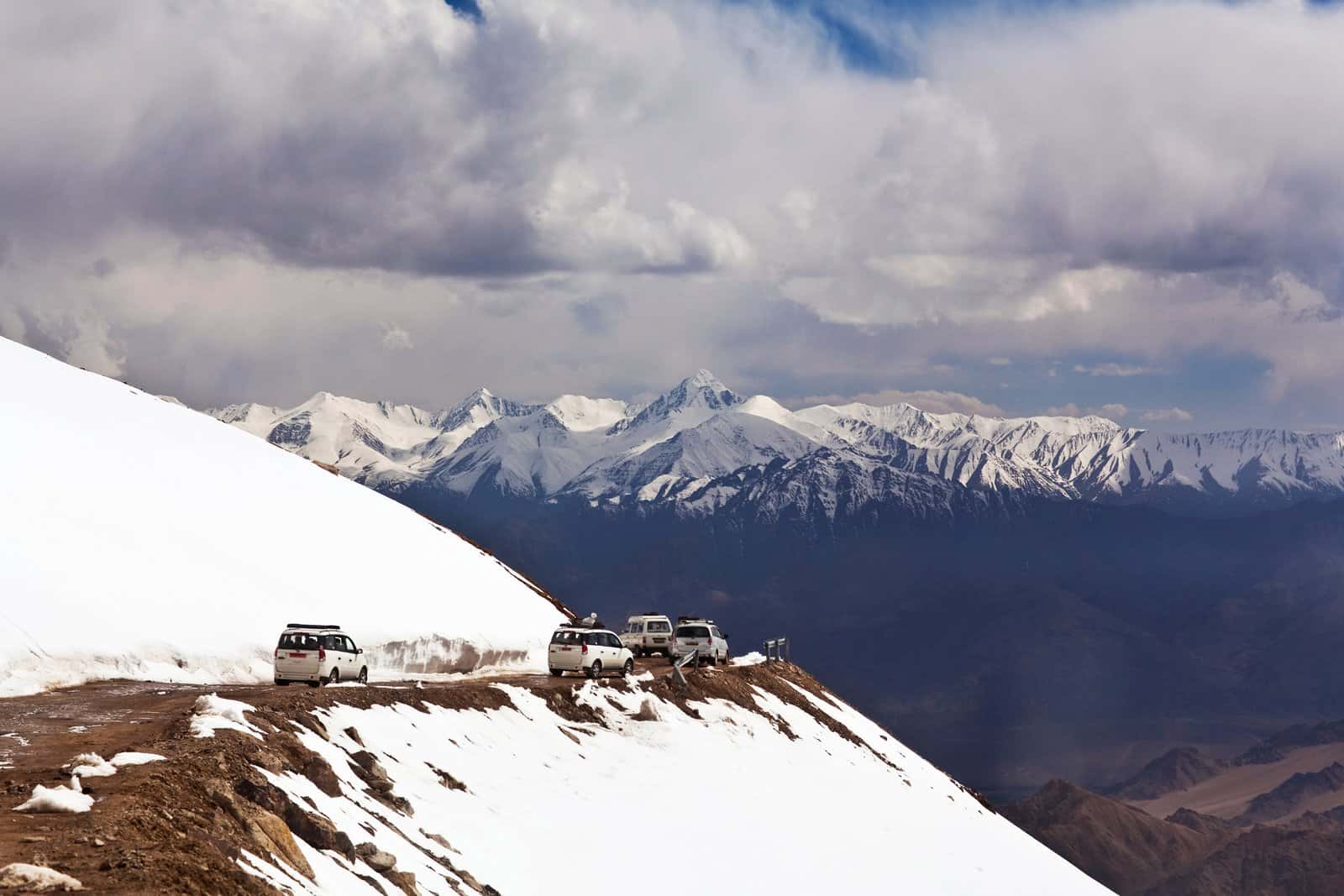
Leh Travel Guide
The season is short: June to September , when the high passes and highways are open. The roads close through winter, the altitude shapes everything, and timing and pacing matter...
When to visit Leh Ladakh, and why timing matters
The season is short: June to September, when the high passes and highways are open. The roads close through winter, the altitude shapes everything, and timing and pacing matter more here than anywhere in India.
- June to September: the open seasonThis is the reliable window, when Khardung La, Chang La and both highways are clear and the lakes are at their bluest. September to mid-October adds golden autumn colour and thinner crowds, with genuinely cold nights, so carry warm layers even in summer.
- The highways open late, and on snow's termsThe Srinagar-Leh highway usually reopens to civilian traffic about mid-April (sometimes early May) once the Border Roads Organisation clears Zoji La, and the Manali-Leh about mid to late May. Both shut through winter, and the exact dates move a week or two with the snow, so we confirm them for your travel window before anything is booked.
- Fly in any time, but rest firstLeh airport runs year-round, so you can fly in even in winter. But the flight lands you straight at about 3,500 metres, so the first day must be a rest day to acclimatise, whatever the season, and afternoon flights are often cancelled by mountain weather, so fly in the morning and keep a buffer day.
Ladakh is not a place to rush. The Leh District Administration expects a rest of about 24 to 48 hours in Leh before you go higher to Pangong, Nubra or Tso Moriri, and it is enforced as advice for fly-in arrivals for good medical reason. Build that rest into the plan from the start, and see the acclimatisation section below for exactly how to do it safely.
How to reach Leh, by air and by the two great highways
You can fly straight into Leh, or take one of the two Himalayan highways from Srinagar or Manali. Each choice has a real effect on how well you acclimatise, so it is a decision to make early.
- By air to LehKushok Bakula Rimpochee airport (IXL), at about 3,256 metres one of the highest commercial airports anywhere, has nonstop flights from Delhi on IndiGo, Air India and Akasa Air, mostly early-morning departures. It is the quick way in, but it lands you at altitude in roughly 90 minutes from sea level, so the first day must be a complete rest.
- Overland from Srinagar: the gentle climbThe Srinagar-Leh highway, open from about April, climbs gradually over two days with an overnight at Kargil, which gives the kindest altitude gain and the best acclimatisation. The route of choice for first-timers, families and older travellers who want to arrive already adjusted.
- Overland from Manali: the dramatic oneThe Manali-Leh highway, open from about mid to late May, is the great high-pass road trip, but it climbs fast over several passes above 5,000 metres, so it is harder on the body and not the place to skip rest stops. We pace it with the right overnights at Jispa or Sarchu so the altitude does not catch you out.
Fly into Delhi, then take a short morning flight to Leh, or combine with Kashmir and drive in from Srinagar for a gentler climb. There are no direct international flights to Ladakh, and foreign nationals should sort the Protected Area Permit before arriving.
Fly into Delhi and connect to Leh by air, or route via Srinagar for the overland approach. Plan the first day in Leh as a rest day either way, and keep a buffer day for a weather-cancelled flight.
Leh is a short morning flight from Delhi, or a multi-day road trip from Srinagar or Manali. The Srinagar and Manali circuits pair Ladakh with Kashmir or Himachal, and the drive-up, fly-down combination is many travellers' favourite.
The monasteries, the lakes, the passes, and the permits
Ladakh is its Buddhist monasteries, its high-altitude lakes and its dramatic passes. The big practical thing to sort is the permit, which changed for Indians in 2021.
- Leh town and the monasteriesThiksey, Hemis (which holds the famous summer festival), Diskit, Alchi and Lamayuru are the great gompas, and in Leh itself the Leh Palace, the Shanti Stupa and the old bazaar fill the acclimatisation days perfectly, all at or near Leh's own altitude so they are kind on a still-adjusting body.
- Pangong Tso and Tso MoririPangong (about 4,350 metres) is the famous blue lake, about 5 to 6 hours from Leh over Chang La, and Tso Moriri (about 4,522 metres) is the quieter high lake to the south. Go only after your rest days, and an overnight by Pangong, cold but unforgettable, is the classic Ladakh night.
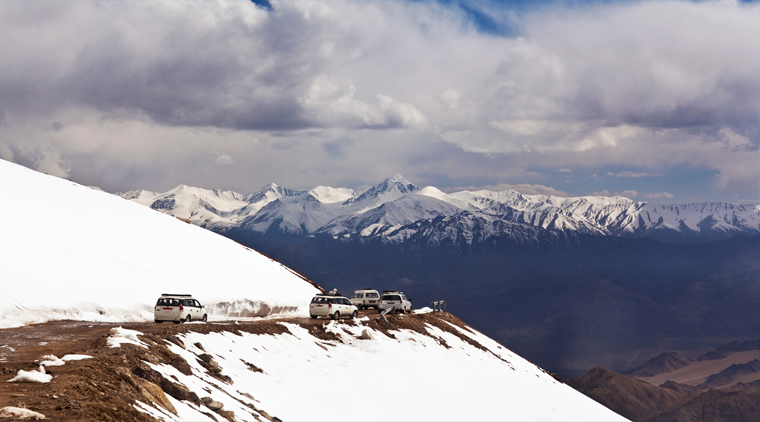
- Nubra Valley over Khardung LaCross Khardung La, about 40 km from Leh and one of the world's highest motorable roads, into the Nubra Valley, with its sand dunes and double-humped Bactrian camels at Hunder, an old Silk Road oasis. A long but unforgettable day, best taken as an overnight to break the passes.
- Magnetic Hill, Gurudwara Pathar Sahib and the SangamOn the road west are Magnetic Hill, the Gurudwara Pathar Sahib and the Sangam, where the Indus and Zanskar rivers meet in two different colours. Easy, lower-altitude sights perfect for the early acclimatisation days before the high passes.
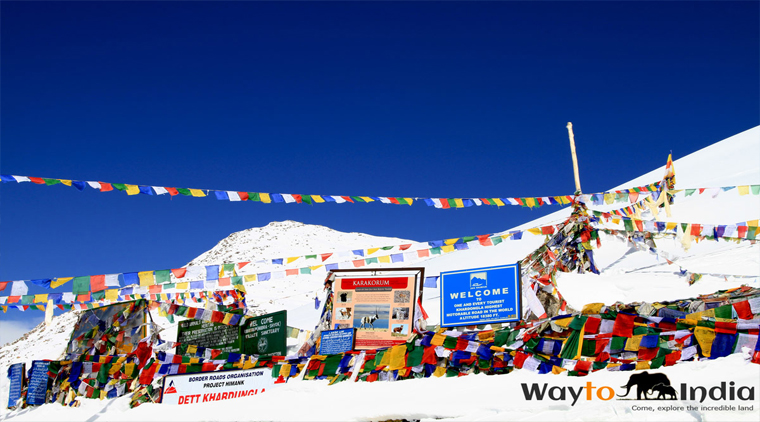
The Khardung La signboard claims about 18,379 feet (about 5,602 metres) and the official tourism note calls it the second highest motorable pass after Umling La, but GPS and satellite surveys put it nearer 5,359 metres. We describe it honestly as one of the world's highest motorable roads rather than repeating the disputed record, which several pages copy as gospel. Either way it is very high, so cross it well-acclimatised and do not linger long at the top.
Acclimatise first: altitude, AMS and the 48-hour rule
Ladakh's altitude is the one thing that can make or break the trip, and it is a real medical matter, not a formality. Get this right and everything else falls into place. Here is how, honestly.
- Rest the first 24 to 48 hours in LehThe Leh District Administration expects a rest of about 24 to 48 hours in Leh before you go higher, and it is enforced as advice for those who fly in. Use the time for the low-altitude sights, the Leh Palace, the Shanti Stupa and the nearer monasteries, and let your body adjust before Pangong or Nubra.
- Know the signs of AMSAbove about 3,000 metres most people feel some headache, nausea, breathlessness or broken sleep. Mild symptoms ease with rest and water. But confusion, a staggering walk, severe breathlessness at rest or a persistent wet cough can signal HACE or HAPE, which are emergencies, so descend at once and seek help; never push higher to keep a plan.
- Drink water, go slow, skip the alcoholDrink far more water than usual, about 3 to 4 litres a day, avoid alcohol and heavy exertion for the first days, and climb gradually. The slower you go at the start, the better the rest of the trip will be, and the more you will actually enjoy the high passes when you reach them.
- Ask your doctor about DiamoxMany travellers take Diamox (acetazolamide) to help acclimatise, usually started about 24 to 48 hours before arrival, but it is a prescription medicine and not a cure for AMS, so ask your own doctor before the trip. Carry your regular medicines too, and a basic kit; our mined road-trip notes also list Aspirin and Dexamethasone, again only on a doctor's advice.
- Choose the route to suit youIf altitude worries you, enter overland from Srinagar for the gradual climb rather than flying straight to 3,500 metres. We build the itinerary around a gentle, safe altitude profile, with the high passes only after the rest days have done their work.
The altitude is a genuine medical consideration. Older travellers, anyone with a heart condition, lung problem, severe asthma or high blood pressure, and very young children should get a doctor's clearance before booking; this is non-negotiable, not a formality. Many seniors travel Ladakh safely every season with the right pacing, so it is not a no, but it must be a planned yes, often via the gradual Srinagar route or a Leh-only trip. We are happy to advise honestly on whether the high passes are right for you.
Signature experiences in Ladakh, sequenced around the altitude
Beyond the views, these are the experiences people remember, and how to arrange them in the right order so the altitude works for you and not against you.
- An overnight by Pangong TsoSleep beside the great blue lake under one of the clearest night skies anywhere. Go only after your Leh rest days, carry warm layers for the cold night, and start back early. The single classic Ladakh experience, and worth the long drive over Chang La.
- Nubra Valley and the Bactrian camelsCross Khardung La into Nubra for the sand dunes and the double-humped Bactrian camels at Hunder, the old Silk Road oasis. A long high-altitude day, best taken as an overnight at Hunder or Diskit to break the passes rather than rushing both ways in a day.
- The monastery circuit and Hemis festivalThiksey at dawn for the morning prayers, then Hemis, Shey and Stakna. If you visit in summer, the Hemis Tsechu festival fills the monastery with masked dances; the dates follow the Tibetan lunar calendar so they shift each year, and we check them for you.
- Sunset at Shanti StupaThe white hilltop stupa above Leh glows at sunset with the whole valley below. A gentle, moving evening, perfect for an acclimatisation day before the high passes, and an easy walk or short drive from the bazaar.
- Rafting on the Zanskar or IndusFor the adventurous and well-acclimatised, a raft on the Zanskar or Indus through dramatic gorges, often launching near the Sangam, is a thrilling half-day. We match the stretch to your comfort and the water level, and it is best kept for after your rest days.
The secret to Ladakh is not which sights you pick but the order you do them in. Spend the first two days low and slow around Leh, the Shanti Stupa, the Palace and the near monasteries; then take Nubra over Khardung La; and save Pangong for after that, by which point your body is ready for the cold high night by the lake. Done in that sequence the high passes feel like a reward, not an ordeal.
Where to stay in Ladakh, and how long to give it
Base in Leh for the rest days and the sights, then choose between a long day trip and an overnight at Pangong and Nubra. About a week is the comfortable length for the full circuit.
- Leh town: your base for the rest daysAlmost everyone bases in Leh, walking distance to the bazaar, the Palace and the cafes, with guesthouses, mid-range hotels and a few heritage and boutique stays. Pick somewhere quiet for the acclimatisation nights, since good sleep is part of adjusting, and many properties run on solar so power and hot water can be limited.
- Pangong and Nubra: camps and homestaysOut at Pangong the stays are tented camps and basic guesthouses near Spangmik and Lukung; in Nubra they are camps and homestays at Hunder and Diskit. Comfortable but simple, cold at night and often without reliable power, so carry layers and a power bank. Book ahead in peak summer, as the good camps fill.
- How many daysAbout 6 to 7 days lets you fly in, rest two days in Leh, do Nubra as an overnight and Pangong as an overnight, with a buffer for weather; a road trip in from Srinagar or Manali needs about 9 to 12 days. Do not try to fly in and reach Pangong the same day, which is the commonest unsafe mistake.
- Booking and the season squeezeJuly and August are the busiest months and the camps and the better Leh hotels sell out, so book well ahead. Shoulder dates in June and September are quieter and often better value, with the trade-off of colder nights and the chance of an early or late road closure.
The mountaineer's rule applies to a Ladakh holiday too: it is better to sleep at a lower altitude than the highest point you reached that day. That is why we keep your base in Leh for the first nights and treat Pangong and Nubra as single overnights rather than long stays, so you spend most of your sleeping hours as low as the itinerary allows and wake up fresher for the next high day.
Leh Ladakh costs, taxi-union rates and the permit fee
Ladakh is not a cheap trip, and the taxi is the biggest line item. Here is what the main things cost, including the published union rates and the permit fee, so you can budget honestly.
- A realistic trip budgetPlan on roughly 20,000 to 55,000 rupees per person for a 5 to 8 day trip including flights, stay, transport, permits and meals. Excluding airfare, a comfortable mid-range circuit is about 30,000 to 45,000 rupees per person, with the taxi the single biggest cost, especially for a small group splitting one vehicle.
- The published taxi-union ratesThe Ladakh Taxi Union fixes and publishes its rates each season, and they are not negotiable on the spot. As a guide, a one-day Leh to Pangong return is about 10,470 rupees and a two-day Nubra trip about 12,988 rupees, with longer Nubra-Pangong circuits higher. Quote the union card, not a roadside figure, and split a vehicle to keep the per-head cost down.
- The permit feeIndians pay the Ladakh Environment and Development Fee, about 590 rupees per person for a week (a one-time 400, about 20 a day wildlife, and an optional 50 Red Cross), online at lahdclehpermit.in. Foreign nationals arrange a Protected Area Permit through a registered Leh agent. Either way it is a small line next to the taxi and the flights.
- Cash, cards and fuelLeh has ATMs and many places take cards or UPI, but the camps, small eateries and fuel stops out at Pangong and Nubra run on cash, and ATMs there are scarce. Draw enough cash in Leh for the whole circuit, and budget for fuel if you are self-driving, since pumps are far apart.
On a typical Ladakh circuit the flight and the taxi together are usually more than half the total, the stay is modest because much of it is camps and guesthouses, and the permit is almost a rounding error. So the single biggest saving is sharing one taxi across a small group against the fixed union rate, not haggling over rooms; four people in one vehicle pay roughly a quarter each of the same fixed fare.
Practical logistics: SIM, ATMs, fuel and the permit step by step
The remote, high realities that make or break a Ladakh day: the SIM that will not work, the scarce ATMs, the far-apart fuel, and how to actually get the permit.
- Your prepaid SIM will not workOnly postpaid mobile connections issued inside Jammu and Kashmir or Ladakh work here; prepaid SIMs from the rest of India and most out-of-region numbers simply do not. Arrange a postpaid or local SIM in advance. BSNL and Airtel postpaid have the widest coverage, and BSNL reaches the remotest spots like Hanle and Tso Moriri, where others have no signal.
- ATMs and cashATMs are limited to Leh and a few towns such as Kargil, Diskit and Ganderbal, and machines run dry or offline in peak season. Draw enough cash in Leh for the whole circuit; out at Pangong and Nubra it is cash only, and there is no fallback if a card fails.
- Fuel: fill up in Leh, carry a spare canPetrol pumps are far apart. On the Srinagar-Leh road they sit only at Leh, Khaltsi, Wakha, Mulbekh, Kargil, Sonmarg and Srinagar, so fill the tank in Leh before heading out to Pangong or Nubra and carry a spare can on the longer legs. If you are self-driving, also carry a basic toolkit and a puncture kit, as mechanics are only at a handful of towns.
- Getting the permit, step by stepIndians: go to lahdclehpermit.in, fill the form, pay the Environment and Development Fee online (card, UPI or net banking), and print the receipt to carry and show at checkpoints. Foreign nationals: apply through a registered Leh travel agent for the Protected Area Permit, in a group of two or more, and carry it with your passport. Sort either one before you set out for the high passes, as it is checked.
Almost every hard Ladakh story comes from the same three oversights: a prepaid SIM that died at the airport, an empty wallet past the last Leh ATM, and an empty tank between Khardung La and the next pump. Sort a postpaid or local SIM before you fly, draw all your circuit cash in Leh, and fill up (plus a spare can) before every long leg, and the remoteness becomes part of the magic rather than a crisis.
Safety and health: altitude, sun, roads and the border
Ladakh is friendly and low on crime; the real risks are environmental, the altitude above all, then the sun, the cold and the long mountain roads. A little care keeps the trip a joy.
- Altitude is the main riskAMS is the thing that actually spoils or endangers Ladakh trips, far more than any scam or crime. Respect the rest days, watch for the warning signs in your group, and treat confusion, severe breathlessness or a staggering walk as an emergency that means descend now. Carry your medicines and tell us about any heart or lung condition.
- Sun, cold and drynessThe high-desert sun is fierce even when the air is cold, so carry strong sunscreen, sunglasses and lip balm, and cover up. Nights are cold year-round, so pack proper layers, and the dry air dehydrates you faster than you notice, which also worsens AMS, so keep drinking water.
- The roads and the weatherThe mountain roads are long, narrow and prone to landslides and the odd water crossing, and drives take longer than the distance suggests. Use an experienced local driver, start early, do not push on after dark, and keep a buffer day for a closed pass or a weather-cancelled flight. Mountain weather changes fast.
- The border and photographyLadakh borders sensitive areas, so respect the photography restrictions near military zones and the border, do not photograph army installations or personnel, and carry your permit, since checkpoints do verify it. Stay on the marked roads in the protected areas.
Ladakh is a high desert with very little water and a short season, and the Environment and Development Fee exists because the place is under real pressure. Carry out your rubbish, refuse single-use plastic where you can, do not wash or swim in the holy lakes, ask before photographing monks and locals, and dress modestly at the monasteries. The fee you pay is a promise to leave Ladakh as you found it.
Ladakh for every kind of traveller, and on the altitude question
Ladakh rewards very different visitors, but the altitude shapes what suits whom. Here is what it offers you, and the one honest tip that matters for each.
- Couples and honeymoonersA Pangong overnight under the stars and the monastery dawns make Ladakh wonderfully romantic. Take it slowly, build in the rest days, and the gentle pace becomes part of the magic rather than time lost.
- Families with childrenOlder children love the camels, the dunes and the lakes, but very young children feel the altitude and cannot always tell you what is wrong, so take medical advice, keep to a gentle profile with plenty of rest and water, and be ready to descend if a child is unwell.
- Senior travellersVery possible and rewarding with care. Consider the gradual Srinagar route or a Leh-and-monasteries trip rather than the highest passes, get a doctor's clearance first if you have any heart or lung condition or high blood pressure, and let us pace it gently with the right rest days. Many seniors do Ladakh happily every season.
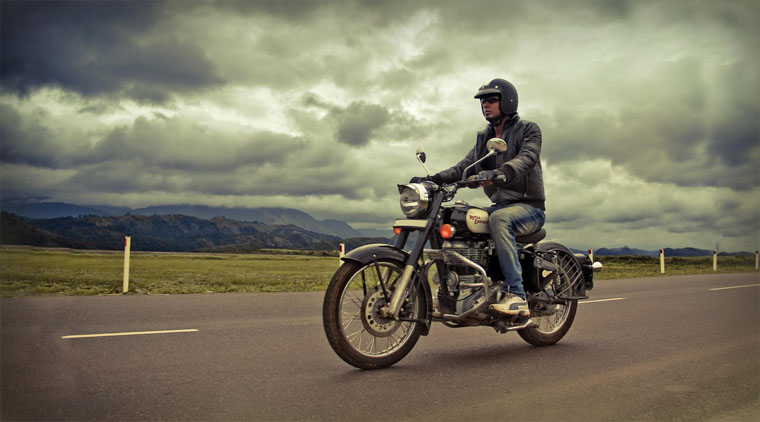
- Bikers and adventurersThe Manali-Leh and the high passes are the dream ride, but even the fittest need to acclimatise, so plan the first days in Leh, carry spares, fuel and a toolkit, ride within the weather and the light, and never treat youth or fitness as a substitute for the rest days.
- Backpackers and budget travellersShared jeeps, guesthouses and the local buses make Ladakh doable on a budget, but carry cash, sort a working postpaid SIM, and still respect the rest days; altitude does not care about your budget, and the union taxi rate is fixed whether you share it or not, so find people to split with.
- PhotographersThe lakes, the passes, the monasteries and the night skies are extraordinary. September light is the cleanest, and a Pangong overnight gives you both the sunset and the stars. Carry spare batteries, as the cold drains them fast, and respect the no-photography zones near the border.
A suggested Leh Ladakh itinerary built around the rest days
How to shape about a week so the altitude works for you: low and slow first, then the high passes in the safest order. Stretch it for the overland routes.
- Days one and two: rest and acclimatise in LehFly in, then keep the first two days low and gentle around Leh: the Shanti Stupa, the Leh Palace, the bazaar and the near monasteries of Thiksey, Hemis and Shey. Drink plenty of water, sleep well, and do not be tempted to rush a high pass on day one, however good you feel.
- Days three and four: Nubra over Khardung LaCross Khardung La into the Nubra Valley, overnight at Hunder or Diskit for the dunes and the Bactrian camels, and return the next day. This is your first high day, taken only once the rest days have done their work, and broken with an overnight so you are not on the passes twice in a day.
- Days five and six: Pangong TsoDrive over Chang La to Pangong, sleep beside the lake for the night sky, and start back early the next morning. By now your body is ready for the cold high night, and Pangong is the crescendo of the trip rather than a gamble on an unadjusted body.
- The overland and longer versionsDriving in from Srinagar (about 9 days) or Manali (about 10 to 12 days) adds the great highway journeys and a gentler climb, and you can add Tso Moriri and Hanle for the dark skies if you have the time. Keep a buffer day whichever way you come, for a closed pass or a weather-cancelled flight.
Never reach a high pass or a high lake on the day you fly in. The single thing that turns a dream Ladakh trip into a hospital story is going straight from the airport up to Khardung La or Pangong. Build the two Leh rest days in first, then layer the high days on top in rising order, and the itinerary almost writes itself around that one safety rule.
The real questions travellers ask about Leh Ladakh
Straight answers to the questions that come up again and again on TripAdvisor, IndiaMike and Reddit, so you arrive already knowing the score.
- Should I fly in or drive in?Driving in from Srinagar or Manali gives a gentler, gradual climb and better acclimatisation, but needs more days. Flying saves two days but lands you straight at altitude, so the first day must be a rest day. Many travellers love the drive-up, fly-down combination if they have the time.
- How many days do I need?About 6 to 7 days if you fly in, allowing two rest days plus Nubra and Pangong as overnights and a buffer for weather. A road trip in from Srinagar or Manali needs about 9 to 12 days. Anything shorter forces an unsafe rush at the passes.
- Do Indians still need an Inner Line Permit?No. Since 2021 Indians pay the Ladakh Environment and Development Fee online at lahdclehpermit.in, about 590 rupees per person for a week, and carry the printed receipt; there is no separate Inner Line Permit. Ignore older pages that still say otherwise.
- What permit do foreigners need?Foreign nationals need a Protected Area Permit, arranged through a registered Leh agent, and must travel in a group of two or more, so a solo foreigner cannot get it alone. Some nationalities face extra restrictions, so plan it well ahead with your operator.
- Will my SIM work?Only postpaid connections from Jammu and Kashmir or Ladakh work; prepaid SIMs from the rest of India do not. Sort a postpaid or local SIM before you fly, and BSNL reaches the remotest spots where others go dark.
- Is Khardung La really the highest motorable road?Not quite. Its signboard claims about 18,379 feet, but GPS surveys put it nearer 5,359 metres, and the official tourism note now calls it the second highest after Umling La. It is genuinely one of the world's highest motorable roads, just not the record-holder some pages claim.
Planning Ladakh from abroad: the permit and the altitude
Ladakh is a bucket-list Himalayan trip, very doable from overseas with the right planning around the Protected Area Permit and the altitude, which catch out unprepared visitors.
- Sort the Protected Area PermitForeign nationals need a Protected Area Permit for Nubra, Pangong and the other protected areas, arranged through a registered Leh travel agent, and must travel in a group of two or more, carrying it with the passport. Nationals of certain countries face extra restrictions, so tell us your nationality early and we set it up before you arrive.
- Fly via Delhi, and rest on arrivalReach Leh on a short morning flight from Delhi on IndiGo, Air India or Akasa, or drive in from Srinagar for a gentler climb. Either way, the first day in Leh is a rest day; the altitude is real and the gradual approach is kindest, especially after a long-haul flight.
- Plan for connectivity and cashAn overseas or out-of-region prepaid SIM will not work in Ladakh, and ATMs are scarce outside Leh, so arrange a local postpaid SIM and carry cash drawn in Leh. Wi-Fi in Leh hotels is limited and slow, and there is no reliable signal at Pangong, so plan to be offline out there.
- Take the altitude seriouslySpeak to your doctor before the trip, especially for older travellers or anyone with a heart or lung condition, and consider the gradual Srinagar route. We will advise honestly on whether the high passes suit you, and pace the trip safely rather than selling you every pass.
Fitting Ladakh into a bigger India trip from overseas
How Ladakh slots into a longer India itinerary, how long to give it, and the practical basics an overseas traveller needs for a high, remote region.
- Where it sits on the map and the calendarLadakh works best as its own chapter, reached via Delhi, ideally bolted to Kashmir if you drive in from Srinagar. Because the season is only about June to September, plan a summer India trip around it; it does not combine with a winter Golden Triangle visit, when the passes are shut.
- How long to give itGive Ladakh at least 6 to 7 days as a fly-in trip, or about 9 to 12 days if you drive in for the great highway journeys. It is not a place to squeeze into two or three days, because the rest days are not optional and the drives are long.
- Money, cards and a bufferCards and UPI work in Leh but the camps and the remote stops are cash only, so draw cash in Leh. Keep a buffer day in your wider plan for a weather-cancelled Leh flight, which is common; missing an onward international connection because of a grounded Leh departure is the classic overseas mistake.
- What to pack for the altitude and coldProper layers for cold nights even in summer, strong sun protection for the high-desert glare, lip balm and moisturiser for the dry air, any prescription medicines including a doctor-advised altitude plan, and a power bank, since power at the camps is unreliable. Travel insurance that covers high-altitude travel is well worth it.
Ladakh is one of the most rewarding but also most demanding chapters of an India trip: remote, high and weather-dependent in a way the cities are not. If it is your first visit to India, treat it as the centrepiece of a summer trip with a real buffer around it, not an add-on to a packed itinerary, and let the rest days be days you actually rest. Done that way, the cold-desert silence, the monasteries and the impossible blue of Pangong are what most overseas travellers say they remember longest.
Why they call it the land where the Indus meets the monasteries
Ladakh is a high, cold desert in the rain shadow of the Himalaya, where the great Indus river, born near Mount Kailash in Tibet, runs the length of the valley past whitewashed gompas clinging to the cliffs. For centuries this was a Buddhist kingdom on the Silk Road, its monasteries (Hemis, Thiksey, Alchi, Lamayuru) keeping a Tibetan Buddhist tradition that the modern border largely sealed off in Tibet itself. The prayer flags strung across every pass are not decoration: each colour stands for an element, and the wind is believed to carry the printed prayers across the mountains as it frays the cloth. At Nimmu the green Indus meets the muddier Zanskar at the Sangam, two rivers running side by side before they merge, a sight Ladakhis treat as quietly sacred. The land asks something of you, the thin air, the cold, the distance, and gives back a stillness travellers spend the rest of their lives trying to describe.
Planning a Leh trip?
Our Ladakh travel experts plan your full journey for you: route, hotels, darshan timings and transport. You get a free day-by-day plan and an exact quote on WhatsApp, usually within a few hours. No payment is needed to get your plan.
Tour packages that visit Leh
Every journey below is private, hand-crafted and fully customizable. Tell us your dates and we tailor the itinerary, the pace and the priests or guides around you.
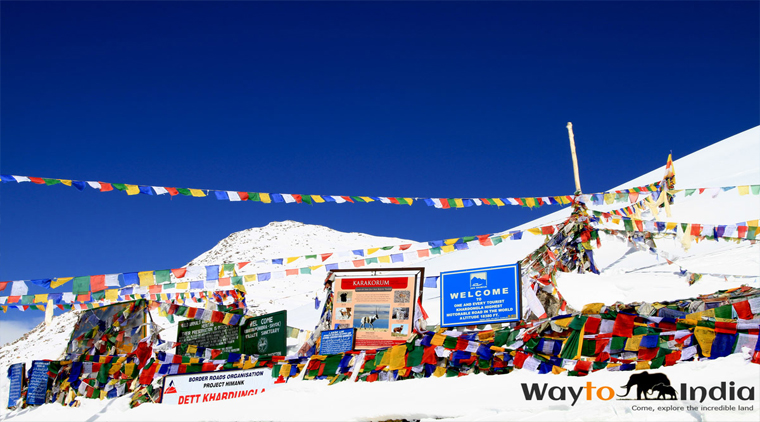 7D / 6N
Incredible Ladakh Holiday
- Visit Gurudwara Pathar Sahib
- Visit Pangola Lake
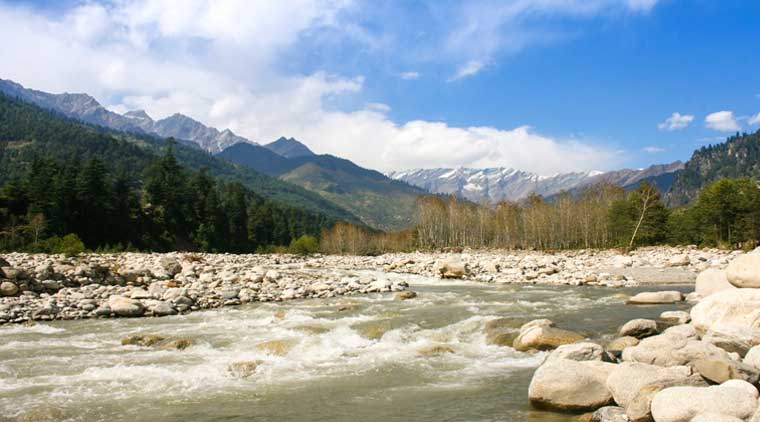 8D / 7N
Manali to Leh Tour
- Visit Sarchu
- Visit Nubra Valley
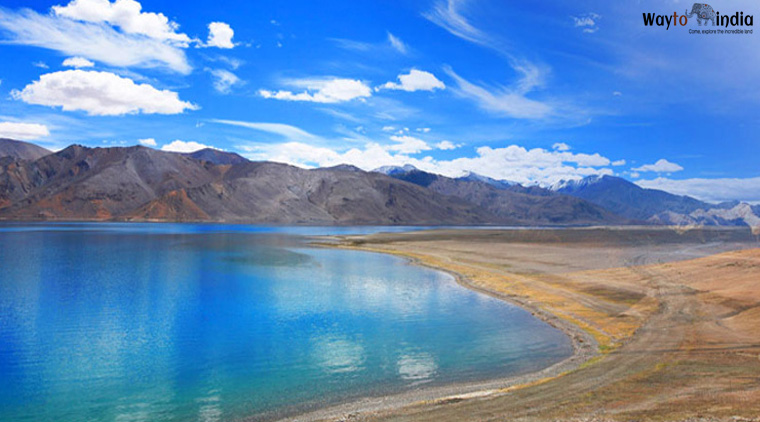 10D / 9N
Kashmir Ladakh Tour Package
- Shikara Ride
- River Indus and River Zanskar
 10D / 9N
Srinagar Leh Ladakh Tour Package
- Pangong Lake
- Nubra Valley
 6D / 5N
Leh Ladakh Tour Package for Couples
- Visit Leh Palace
- Visit Pangong Lake
 6D / 5N
Majestic Ladakh Tour
- Visit Royal Shey Palace
- Visit Thiksey Monastery
 9D / 8N
Leh Ladakh Road Trip
- Tiger Hill
- The Tololing Peak
 8D / 7N
Manali Leh Tour
- Visit of Spituk and Phyang Monastery
- Visit old Pagoda Temple of Hadimba Devi
 8D / 7N
Srinagar To Leh Tour Package
- Visit Dal lake & Nigeen lake
- Visit Shalimar Bagh