Bandavgarh Travel Guide
The comfortable months are October to March , and the hot months of April to June give the best tiger sightings as animals gather at shrinking water. One thing to fix first: the...
When to visit Bandhavgarh, and the monsoon rule
The comfortable months are October to March, and the hot months of April to June give the best tiger sightings as animals gather at shrinking water. One thing to fix first: the core zones close for the monsoon, from about 1 July to 30 September.
- October to March: cool and comfortableThe pleasant window, mild by day and genuinely cold at the dawn safari, with January mornings dropping to around freezing. Easiest for families and older travellers, with green forest early in the season. Carry serious warm layers for the open gypsy at first light.
- April to June: hot, but best for sightingsThe afternoons get very hot, often around 40 degrees Celsius and higher by May, yet this is when tigers come to the shrinking water holes, so sighting odds are at their highest. Take the early morning slot, carry sun cover and water, and rest through the middle of the day.
- Book early and take two or more safarisSightings are never guaranteed in a wild reserve, so plan at least two drives across different shifts, and ideally two to three nights for two morning and two afternoon drives. Permits for the popular Tala zone go fast, so book as far ahead as you can on the official portal.
- Festival and weekly closures to noteThe park can close fully on Holi day, with the exact date set each year by the MP Forest Department, and the evening safari is not run on Wednesdays. Check both against your dates before you lock flights or trains so a key drive is not lost.
Bandhavgarh's core safari zones, Tala, Magadhi and Khitauli, are closed for the monsoon, commonly from about 1 July to 30 September each year, and the season runs roughly October to the end of June. The reopening date varies a little by year, sometimes the start of October and sometimes mid-October, so reconfirm on MP Tourism or the MP Forest portal. The three buffer zones stay open through the monsoon, so a wet-season visit is still possible, but never plan a core-zone safari for July, August or September.
How to reach Bandhavgarh
Most visitors come by train to Umaria and drive in, or fly into Jabalpur and continue by road. There are no flights to Bandhavgarh itself.
- By train to Umaria, then roadUmaria is the nearest railhead, about 32 to 37 km from the Tala gate, roughly a 45 minute to one hour drive. Katni, at around 100 to 102 km, has better long-distance connections and is the practical railhead from many cities. We arrange the pickup and transfer to your resort.
- By air via JabalpurJabalpur airport (JLR) is the nearest, about 165 to 200 km and roughly 4 to 5 hours by road; MP Tourism lists it at about 190 km. Khajuraho and the newer Rewa airport are alternative gateways for some routes. From any of them it is a long road leg, so build in the travel time.
- By road and combining reservesBandhavgarh links by road to Umaria, Katni, Jabalpur and Khajuraho, and pairs naturally with Kanha for a longer central-India wildlife loop. We provide a car with an experienced driver who knows the forest roads and the resort gates.
Fly into Delhi or Mumbai, then take a domestic flight to Jabalpur and drive in, or take a train towards Umaria or Katni. Bandhavgarh has no airport of its own, so allow a half-day for the final road leg.
Fly into Delhi, Mumbai or Nagpur and connect to Jabalpur, then continue by road. Nagpur and Jabalpur are the usual domestic hops onto the central-India circuit.
Trains to Umaria or Katni are the simplest approach, or fly to Jabalpur. Khajuraho and Kanha both sit within a comfortable drive for a combined itinerary.
The safari zones, and what a gypsy actually costs
Bandhavgarh is its tigers, its three core zones and three buffer zones, and the ancient Bandhavgarh Fort on the hill. The cost has a few quirks worth knowing before you book.
- Tala zone, the classicThe oldest and most popular core zone, with the meadows around Chakradhara and the strongest record of tiger sightings. It fills first, so book early on the official portal, and aim for the first morning entry for the best activity.
- Magadhi and Khitauli zonesMagadhi shares a boundary with Tala, has several natural and man-made waterholes that draw animals in summer, and typically allows around 20 jeeps per shift. Khitauli is quieter and good for birds and herbivores, and is the easier core zone to secure when Tala is full.
- The three buffer zonesDhamokhar, Johila and Panpatha are the buffer zones, cheaper and quieter, and crucially they stay open through the monsoon when the core is shut. Tiger sightings happen here too, and they are a sensible fallback when core permits are gone.
- Bandhavgarh Fort and Shesh ShaiyaWithin the Tala zone stand the roughly 2,000-year-old Bandhavgarh Fort on its plateau and the 10th-century reclining Vishnu, Shesh Shaiya. Fort access is restricted by the forest department, but both shape the historic landscape you drive through.
The headline number on many sites is only the entry permit, which is one charge for the whole jeep of up to about 6, commonly around 1,500 rupees, or around 250 rupees for a single shared seat. A licensed guide is compulsory and charged separately, commonly around 480 to 700 rupees per safari, and the open gypsy is hired on top at commonly around 2,500 rupees. That is why a single all-in jeep safari lands in the roughly 7,500 to 10,300 rupees range. Reconfirm current rates on the portal, as a yearly hike is normal.
Booking the gypsy safari, the zone allotment, and the craft of a sighting
The safari is the whole reason you come, and the booking has real mechanics: an official portal, a zone you request rather than simply choose, two shifts a day, and a guide who reads the forest for you. Here is how it actually works.
- Book on the official MP Forest portalThe genuine booking is the Madhya Pradesh Forest portal at forest.mponline.gov.in, where you pick the park, the zone, the date and the shift. Bookings usually open about 120 days before the safari date, and Tala goes quickly, so plan months ahead. Many sites that look official are private agents, so check the web address before you pay.
- The zone is requested, not guaranteedEach zone allows only a limited number of jeeps per shift, around 20 in Magadhi for example, so when the popular zones fill, the system allots what is available. Treat your preferred zone as a request, keep a second choice ready, and remember that good sightings happen in every zone, buffer included.
- Morning versus afternoon slot, with the season clockThere are two drives a day of about 3 hours each. From mid-October to mid-February they run about 7:00 am to 10:30 am and 2:00 pm to 5:30 pm; from mid-February the morning shifts earlier to about 6:00 am, and in the April to June heat the evening drive runs to about 7:00 pm. Mornings are usually best for activity. The evening shift is not run on Wednesdays.
- Carry the exact ID on the permitThe permit is tied to a photo ID. Carry the same ID, a passport for foreign nationals, on safari day, and make sure the number matches the booking exactly, or entry can be refused at the gate. Book with the document you will actually travel on.
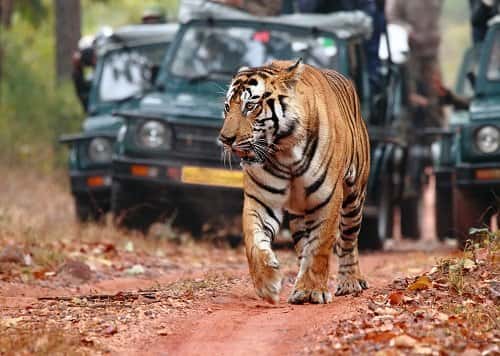
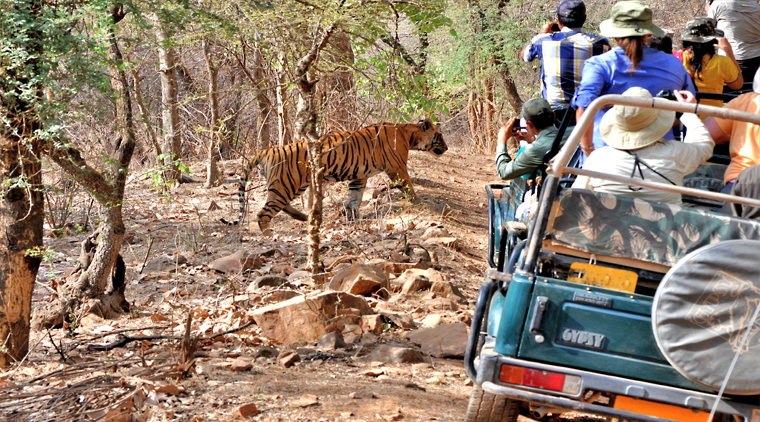
- How a sighting really happensA good guide and driver work the alarm calls of langurs, spotted deer and sambar, and the fresh pug marks on the track, to place you where a tiger may cross. Stay quiet, be patient across the whole drive, and consider a full-day safari, roughly dawn to dusk at a higher cost, if a sighting matters most to you.
Bandhavgarh recorded about 135 tigers in the 2022 NTCA census and has among the highest tiger densities in India, which tilts the odds your way, but it is a wild forest and nothing is guaranteed on a single drive. Book two or more safaris across different shifts and zones, and enjoy the deer, birds and the forest itself as the reward of every drive.
Signature experiences in Bandhavgarh
Beyond the headline tiger drive, these are the experiences people remember, and how to arrange them.
- A full-day safariOutside the monsoon, a limited number of jeeps run a full-day drive, roughly dawn to dusk, at a notably higher cost than a half-day, around 3,000 rupees entry for Indians on a weekday and more on weekends and for foreign nationals. It buys time and patience, which is exactly what a tiger sighting rewards. We arrange it where slots allow.
- A buffer-zone safariThe buffer zones, Dhamokhar, Johila and Panpatha, stay open through the monsoon and offer a quieter, cheaper drive with a different feel of the forest. Good when the core zones are closed or fully booked, and Johila has its own waterfall as a draw.
- BirdwatchingBandhavgarh records around 250 bird species, and the Khitauli zone and the marshy nalas are rewarding. Carry binoculars, and a morning drive doubles as a birding drive even when the tiger stays hidden.
- The fort, caves and Shesh ShaiyaOn the Tala side, the ancient hill fort, the sandstone caves and the 10th-century reclining Vishnu of Shesh Shaiya add a layer of history to the wildlife. Your guide can point them out on the drive, though fort access itself is restricted.
- Combine with KanhaBandhavgarh pairs beautifully with Kanha for a fuller central-India tiger circuit. Two reserves over a few days raises your overall sighting chances and shows two different forests, the meadows of Bandhavgarh and the sal forests of Kanha.
A tiger reserve runs on quiet, patient, low-impact visitors. Keep your voice down, never ask a driver to chase or block an animal, do not get out of the gypsy except at marked points, carry your litter out, and never feed wildlife. Wear muted colours, not bright reds and whites, and switch your phone to silent. Good behaviour protects the animals and your own chance of a calm, close sighting.
Where to stay in Bandhavgarh, and how many nights
Stay near the Tala gate to be closest to the classic zone, or by Magadhi or Khitauli for quieter access. Two to three nights is the sweet spot so you can fit several drives.
- Near the Tala gate, in the thick of itTala village and the lane to the Tala gate hold the densest cluster of resorts and the budget guesthouses, closest to the classic zone and the shortest pre-dawn drive. Best for first-timers who want Tala and an easy early start, though it is the busiest stretch.
- Near the Magadhi and Khitauli gatesQuieter resorts cluster near the Magadhi gate, with easy access to the Magadhi and Khitauli zones and fewer crowds. A good choice if you have those zones allotted, or simply want a calmer base away from the Tala bustle.
- How many nightsTwo to three nights is the sweet spot, enough for two morning and two afternoon drives across different zones, which is what gives a realistic shot at a tiger. One night and a single drive is a coin toss; three nights lets you slow down and try the buffer too.
- Room budgetsBudget rooms in Tala village run from roughly 1,500 to 3,500 rupees, comfortable mid-range resorts roughly 3,500 to 9,000 rupees, and premium safari lodges roughly 11,000 to 20,000 rupees and well up for the top names. All rise in peak season and over holidays, so book early.
Because the zone is allotted rather than freely chosen, the smart move is to lock your safari permits first, then pick a resort near the gate you have been given so the pre-dawn drive to the gate is short. Staying near Tala but being allotted Khitauli, or the reverse, means a longer cold drive before sunrise. Tell us your permits and we will place you at the right gate.
Bandhavgarh costs and a realistic budget
A Bandhavgarh trip is mostly the safaris and the room. Here is what the main things cost so you can plan and avoid overpaying an agent.
- The safari, broken downA single core-zone jeep safari all-in is commonly roughly 7,500 to 10,300 rupees for the vehicle, split between the per-jeep entry permit of around 1,500 rupees, the compulsory guide of around 480 to 700 rupees, and the gypsy hire of around 2,500 rupees. Shared up to 6 people, that is roughly 1,300 to 1,700 rupees a head.
- Foreign nationals pay more on entryThe entry permit costs more for foreign nationals. A full-day Indian entry can be around 3,000 rupees on a weekday and 5,000 rupees on weekends, while a foreign-national full-day entry can be around 6,000 rupees weekday and 10,000 rupees on weekends and holidays, before the separate guide and gypsy. Reconfirm on the portal, as rates change by notification.
- A rough daily budgetExcluding your room, plan on about 3,000 to 5,000 rupees a day per person if you share two jeep safaris, more if you take a full-day drive or do not share the gypsy. Meals are usually included at resorts; tips for the driver and guide on top are customary and appreciated.
- Pay the forest, not just the agentThe cheapest route is to book the permit yourself on forest.mponline.gov.in and arrange a gypsy locally or through your resort. An agent or package is fine for convenience, but know you are paying a service fee on top of the fixed government charges. There is no premium that buys a guaranteed tiger.
Because the entry permit is per jeep, not per head, the single move that cuts cost is to fill the gypsy: a shared jeep of six splits the same permit and gypsy hire six ways, turning a roughly 7,500 to 10,300 rupee drive into roughly 1,300 to 1,700 rupees a person. Solo and couple travellers should ask their resort to pool them into a shared vehicle, or accept a slightly less flexible drive for a much lower price.
Practical logistics: connectivity, money, food and what to pack
The small things that make a Bandhavgarh trip smooth, from patchy mobile signal to cash, meals and the layers that save a cold dawn drive.
- Connectivity and signalMobile coverage around Tala is patchy and varies by network, with the better signal at the resorts rather than deep in the forest. Download offline maps and your permit before you arrive, and tell people at home you may be off-grid during drive hours.
- Money and cashCarry enough cash for tips, the local market and any gate-counter charges, as ATMs near the park are few and can be empty. Resorts and bigger operators take cards or UPI, but the village and the gate run largely on cash.
- Food and waterMost resorts include buffet meals, often with a campfire dinner, and cater to vegetarian and overseas diets with notice. Drink bottled or filtered water, and carry a flask of something warm and a snack for the long morning drive, as nothing is sold inside the zone.
- What to packWarm layers, a windproof and a cap or beanie for the open gypsy at dawn in winter; sun cover, sunglasses and plenty of water for April to June; muted clothing, binoculars, a long camera lens, and a dust cover for your gear, because the tracks are dusty and the gypsy is open.
The single thing first-timers underestimate is how cold an open Maruti Gypsy is at first light in winter, with the wind chill on a moving vehicle on a January morning near freezing. A proper jacket, a beanie, gloves and a blanket make the difference between a magical drive and a miserable one. Resorts often lend blankets and hot water bottles, so ask the night before.
Safety, the agent trap, and staying well in the forest
Bandhavgarh is safe and well organised, but a few traps and health basics are worth knowing so the trip stays smooth and fairly priced.
- The agent-markup trapMany polished sites that look official are private agents who add a markup over the fixed government charges. The genuine permit booking is forest.mponline.gov.in. Using an agent or a resort package is fine for convenience, just know you are paying a service fee, and never pay a premium that claims to guarantee a sighting, because none can.
- Match your ID, do not miss your slotThe permit is tied to a photo ID number, a passport for foreign nationals; a mismatched name or number can mean refusal at the gate. Reach the gate well before opening for the first entry, and remember the Wednesday evening closure and possible Holi-day full closure when planning.
- On the drive itselfStay seated, keep hands and gear inside the gypsy, never get out except at marked points, and follow the guide and driver without argument near an animal. Do not stand to chase a shot. The forest is safe when you respect it; accidents come from impatience, not from the tigers.
- Heat, cold and healthBring sun protection and plenty of water for the hot months and warm layers for winter dawns. Take the usual care with food and water, carry any personal medicines as the nearest good hospital is in Umaria or Jabalpur, and consider basic travel insurance for a remote-area trip.
Bandhavgarh is a comfortable, well-run destination for solo travellers and first-time safari-goers alike. The resorts are used to independent guests, the safaris are tightly regulated by the forest department, and the main friction is logistical, securing permits and matching your gate, rather than any safety worry. Share a gypsy to keep costs down, listen to your guide, and the place looks after you.
Bandhavgarh for every kind of traveller, and on access
A tiger reserve rewards different visitors in different ways. Here is what it offers you, and the one tip that matters for each, including how a senior does the dawn drive comfortably.
- Families with childrenA real-life jungle book, and children love the deer, monkeys and the thrill of the search. Pack warm layers for the dawn drive, pick a resort close to the gate so the early start is gentle on little ones, and brief them to stay quiet and seated in the gypsy.
- Senior travellers and on accessVery doable with planning. The dawn gypsy is open and cold and the tracks are bumpy, so carry warm layers, a cushion and a blanket, take the morning slot, and stay close to your allotted gate to shorten the pre-dawn drive. The gypsy steps are high, so ask for a steady hand getting in. Tell us and we will pace it gently.
- Wildlife photographersAmong the best tiger-density reserves in India, with the meadows of Tala for classic frames. Take the morning shift, consider a full-day safari for time and patience, book early to lock the zone you want, and bring a long lens and a dust cover for the open, dusty gypsy.
- CouplesA quiet, atmospheric escape into the forest, with lodges that suit a slower pair of days between drives, campfire dinners and birdsong. Two safaris and a relaxed resort make an easy, memorable break away from city noise.
- Backpackers and budget travellersReach Umaria or Katni cheaply by train, stay in Tala village for budget rooms within reach of the gate, and share a gypsy so the per-jeep permit splits up to about six ways. That is the difference between an affordable trip and an expensive one.
- First-time safari-goersAn ideal first tiger reserve thanks to the high density and the easy logistics from Umaria or Jabalpur. Book two drives, listen to your guide, keep your hopes realistic and your camera ready, and enjoy the whole forest, not just the tiger.
A suggested Bandhavgarh itinerary
How to shape two or three days around the safari shifts so you get several drives and a real chance at a tiger, without an exhausting plan.
- Day one, arrival and first driveArrive into Umaria or Jabalpur and transfer to your resort near the gate, check your permits and IDs against the bookings, then take an afternoon safari if your arrival is early enough. Rest, dinner by the fire, and an early night for the dawn start.
- Day two, two drivesA pre-dawn morning safari, wrapped in warm layers, is the prime drive; back for breakfast and a rest through the middle of the day, then the afternoon safari, ideally in a different zone, so you cover more of the reserve and raise your odds.
- Day three, the clincherOne more morning drive, the buffer zone or a full-day safari if a tiger has stayed hidden, then depart after lunch. Three nights and four to five drives is the gold-standard plan that gives a realistic, repeated chance at a sighting.
- The short versionOn a tight schedule, one night with an afternoon and a morning drive is the workable minimum, though it is more of a coin toss. Combine with Kanha over a week for the fuller central-India circuit if you have the days.
The single thing that breaks a tight Bandhavgarh plan is forgetting that the evening safari is not run on Wednesdays, and that the park can close fully on Holi. Sketch your morning and afternoon drives against the calendar before you book trains or flights, keep a buffer-zone drive as a fallback if a core permit is missed, and you will never lose a key slot to a closure you did not see coming.
The real questions travellers ask about Bandhavgarh
Straight answers to the questions that come up again and again on the TripAdvisor Bandhavgarh forum, so you arrive already knowing the score.
- Which zone is best for tigers?Tala has the longest record and is the most sought after, but Magadhi rivals it and Khitauli has grown in recent years, and good sightings happen in the buffer too. Treat the zone as allotted, not chosen, and do not despair if you miss Tala; the density is high across the reserve.
- How many days or safaris do I need?Two to three nights with four to five drives gives a realistic chance, which is why seasoned visitors advise against a single safari. One drive is a coin toss; spread your drives across mornings, afternoons and zones to stack the odds.
- What does it really cost?A single core jeep safari is commonly roughly 7,500 to 10,300 rupees all-in for the vehicle, made up of the per-jeep permit of around 1,500 rupees, the compulsory guide of around 480 to 700 rupees, and the gypsy hire of around 2,500 rupees. Foreign nationals pay a higher entry permit. Share the jeep to cut the per-head cost.
- Is the permit per person or per jeep?The whole-jeep entry permit is one charge for the vehicle of up to about six, so sharing splits it; a single-seat permit of around 250 rupees lets a solo traveller join a shared gypsy. Either way the gypsy and guide are paid for the vehicle, not per head.
- Is Bandhavgarh open in the monsoon?The core zones, Tala, Magadhi and Khitauli, close from about 1 July to 30 September. The three buffer zones, Dhamokhar, Johila and Panpatha, generally stay open through the monsoon, so a wet-season visit means buffer drives only. Reconfirm the reopening date, which varies between early and mid-October.
- Is it worth it for a first safari?Yes. The high tiger density, about 135 in the last census, and the easy logistics from Umaria or Jabalpur make Bandhavgarh one of the best first tiger reserves in India. Book two or more drives, keep expectations honest, and even a tiger-less day is a rich one of deer, birds, gaur and forest.
Planning Bandhavgarh from abroad
Bandhavgarh is arguably the strongest single-stop tiger trip in India for a visitor with limited days. A little planning, and the right document, make it smooth.
- Carry the passport on your permitForeign nationals book the safari against a passport number, and the same passport must be carried on safari day and match the permit exactly. A mismatch can mean refusal at the gate, so book with the document you will actually travel on, not an old or expired one.
- Know the foreigner entry feeThe entry permit costs more for foreign nationals, with a full-day entry commonly around 6,000 rupees on a weekday and 10,000 rupees on weekends and holidays, before the separate guide and gypsy. Budget for this so the gate counter holds no surprise, and reconfirm current rates before you travel.
- Fly in via JabalpurFrom abroad, route through Delhi, Mumbai or Nagpur to Jabalpur airport, then drive about 165 to 200 km, roughly 4 to 5 hours, to the park. There are no flights to Bandhavgarh itself, so allow a half-day for the final leg, or take a train towards Umaria or Katni.
- Why Bandhavgarh for a short tripWith among the highest tiger densities of any Indian reserve, about 135 tigers in the last census, it gives strong sighting odds in just a couple of days, which suits an overseas visitor short on time. Book two to four drives, and we will line your dates up with the official season.
Money, comfort and timing for foreign visitors
The practical basics an overseas traveller needs for a remote forest reserve: cash, connectivity, the cold-dawn reality, and how many days to give it on a wider India trip.
- Carry cash, expect patchy signalATMs near the park are few and can be empty, and mobile coverage is patchy in the forest. Draw cash before you arrive for tips and incidentals, download your permit and offline maps, and rely on the resort for wifi and the better signal.
- Dress for a cold dawn and a hot noonThe open gypsy at first light in winter is genuinely cold, near freezing on a January morning with the wind chill, while April to June afternoons can pass 40 degrees Celsius. Pack a warm jacket, a beanie and gloves for the dawn drive and sun cover and water for the heat.
- How long to give it on a bigger tripOn a wider India itinerary, two to three nights in Bandhavgarh is the right weight: enough for several drives and a realistic tiger, without slowing the whole trip. Pair it with Khajuraho's temples or with Kanha for a fuller central-India loop.
- Time your visit to your comfortOctober to March is the comfortable window; April to June is hot but gives the best sightings as animals gather at water. Avoid July to September for the core, when only the buffer zones run. We will line your dates up with the official season and your tolerance for heat.
Bandhavgarh is an unusually rewarding introduction to Indian wildlife: a high-density reserve where the logistics are simple, the resorts are used to overseas guests, and a couple of days can deliver a tiger, a leopard or a sloth bear plus deer, gaur and 250-odd birds. Slot it after Delhi and Khajuraho or alongside Kanha, give it two or three nights, and let the forest, not just the headline tiger, be the reward.
The fort that Rama gave his brother, and the hill of the tigers
Bandhavgarh takes its name from the ancient fort on its highest hill: in the local telling, bandhav means brother and garh means fort, the fort said to have been given by Lord Rama to his brother Lakshmana to watch over Lanka after the great war of the Ramayana. The roughly 2,000-year-old fort still crowns the plateau at the heart of the Tala zone, with the 10th-century reclining Vishnu of Shesh Shaiya carved at its foot, so the tigers of Bandhavgarh prowl beneath one of the oldest inhabited landscapes in central India. The reserve was once the private hunting ground of the Maharajas of Rewa, the line that gave India its famous white tigers, before it became a national park in 1968 and a Project Tiger reserve, and today it carries among the highest tiger densities in the country. The name, the fort and the white-tiger legacy are all real and documented; the Rama and Lakshmana origin is local tradition rather than a single fixed scriptural verse, and is offered here as the living story the place tells about itself.
Planning a Bandavgarh trip?
Our Madhya Pradesh travel experts plan your full journey for you: route, hotels, darshan timings and transport. You get a free day-by-day plan and an exact quote on WhatsApp, usually within a few hours. No payment is needed to get your plan.
Tour packages that visit Bandavgarh
Every journey below is private, hand-crafted and fully customizable. Tell us your dates and we tailor the itinerary, the pace and the priests or guides around you.
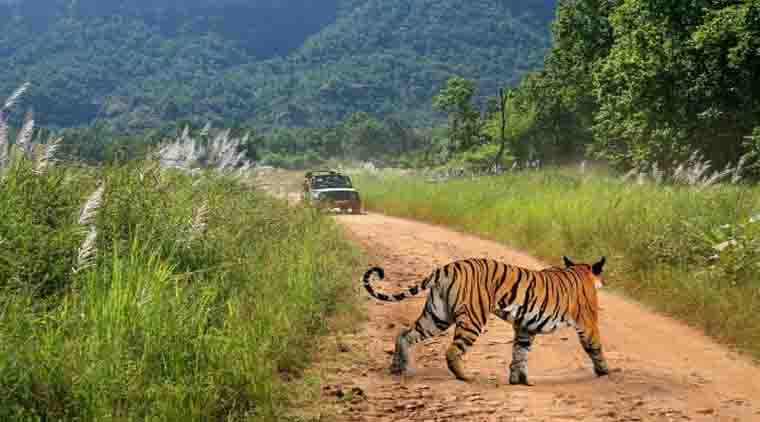 5D / 4N
Bandhavgarh National Park Tour Package
- Jeep Safaris In Bandhavgarh National Park
- Stay in Luxury Jungle Resorts
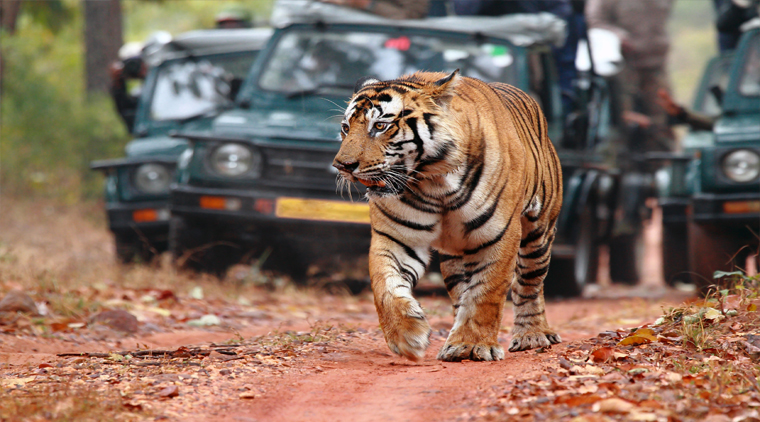 4D / 3N
Bandhavgarh Wildlife Safari Tour From Pune
- Visit Bandhavgarh National Park Enjoy Adventurous Jeep Safari Sightseeing of Sanchi
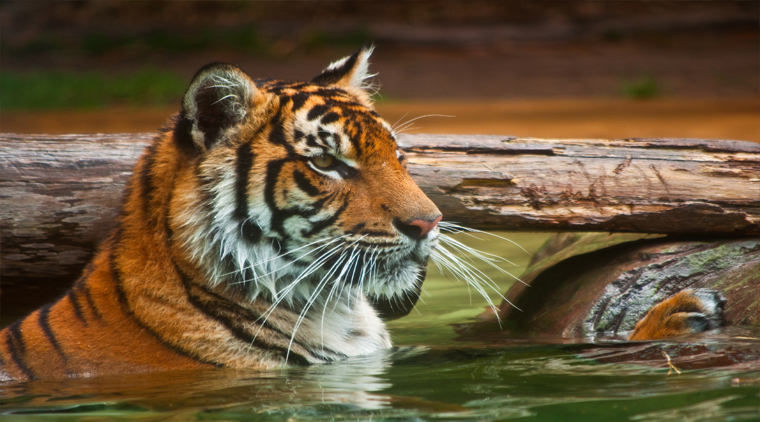 4D / 3N
Bandhavgarh Wildlife Safari Tour From Ahmedabad
- Visit Bandhavgarh National Park
- Enjoy Adventurous Jeep Safari
 3D / 2N
Bandhavgarh Tour From Mumbai
- Travel by chartered flight from Mumbai to Umaria.
- Enjoy tiger safaris in Bandhavgarh National Park.
 3D / 2N
Bandhavgarh National Park Tour
- Visit Enjoy 2 jeep safaris.
- Visit Chenchpur waterfall.
 4D / 3N
Bandhavgarh Safari
- Visit Chenchpur Waterfall
- Visit Gharpuri Dams
 5D / 4N
Bandhavgarh Wildlife Safari Tour From Bangalore
- Visit Omkareshwar Jyotirlinga Near Indore.
- Enjoy Safari At Bandhavgarh National Park.
 11D / 10N
India Wildlife Tour
- Sightseeing Agra
- Kanha National Park