Pune Travel Guide
The comfortable months are October to February , but the monsoon turns the surrounding Sahyadri hills green and the waterfalls full. Decide whether you want clear sightseeing...
When to visit Pune, and what each season gives you
The comfortable months are October to February, but the monsoon turns the surrounding Sahyadri hills green and the waterfalls full. Decide whether you want clear sightseeing weather or the rain-washed hills.
- October to February: clear and pleasantThe most comfortable window, with daytime temperatures roughly 15 to 28 degrees Celsius and cool evenings. Best for the forts, the city sights and the evening light-and-sound show, and the right time for first-timers who want everything open and dry.
- March to June: hot and dryThe plains around Pune climb toward the low 40s Celsius by May, so keep the middle of the day for indoors and museums, and do Sinhagad or any fort early in the morning. Pune is still a touch cooler than Mumbai, but this is the season to plan around the heat.
- June to September: the green monsoonThe southwest monsoon brings heavy rain, with July usually the wettest month. The hills turn vivid green, the waterfalls run full and Lonavala and the fort treks are at their most beautiful, but roads are slow, the open-air show may be cancelled, and popular spots get crowded on weekends.
- Festival timing: Ganesh ChaturthiIf you want the city at its most alive, Ganesh Chaturthi in late August or September fills Pune with some of India's grandest Ganesh pandals and immersion processions. It is wonderful but very crowded, so book rooms early and expect packed streets around the old city.
The two best versions of Pune are different trips. Winter, about October to February, is for relaxed city sightseeing with everything open and the evening show running. The monsoon, about June to September, is for the green Sahyadri, the Lonavala waterfalls and the fort treks, with the trade-off of rain, slow roads and weekend crowds. Pick the experience you want before you book, and time your fort and waterfall days for weekday mornings whichever season you choose.
How to reach Pune, and getting around in 2026
Pune has its own airport with a new terminal, a major railway junction and fast road links to Mumbai. Two metro lines and metered rickshaws now make getting around easy.
- By air, with the new terminalPune International Airport at Lohegaon, about 10 to 11 km northeast of the centre, opened a new integrated terminal for regular operations in July 2024 and now handles over 10 million passengers a year, mostly on domestic routes with a few international flights. A prepaid taxi or app cab is the simplest way into town.
- By train and roadPune Junction is a major railhead with frequent fast trains from Mumbai, roughly 3 to 4 hours, and long-distance services across India. By road the Mumbai-Pune Expressway is quick and scenic, and Pune is the gateway for Lonavala, Mahabaleshwar and the Sahyadri hill stations.
- The Pune MetroTwo lines now run: the Purple Line from PCMC to Swargate and the Aqua Line from Vanaz to Ramwadi, interchanging at Civil Court. Fares are distance-based at about 10 to 35 rupees, a daily unlimited pass is about 100 rupees, and trains run until about 11 pm. There is no station inside the airport, so use the Ramwadi Aqua Line stop and a short feeder hop for the last 3 km.
- Airport buses and rickshawsPMPML runs airport shuttle buses about every 30 minutes between Pune Station and the airport for roughly 50 to 110 rupees, the budget option. Auto-rickshaws use the RTO meter from about 26 rupees for the first 1.5 km; insist on the meter or use an app cab and the city is cheap and easy to cross.
Fly into Mumbai, the nearest major international gateway, then reach Pune by the fast expressway in about 3 to 4 hours or by train. A few international flights also serve Pune directly, so check current routes.
Fly into Mumbai or directly into Pune, which has limited international connections, then continue by road or rail. Pune sits easily on a Mumbai and Sahyadri circuit.
Take a fast train or flight to Pune, well connected to Mumbai, Delhi, Bengaluru and beyond. The Mumbai-Pune Expressway makes the road trip from Mumbai quick and comfortable.
Shaniwar Wada, Aga Khan Palace and the city's landmarks
Pune's headline sights are its Peshwa-era fort, the Gandhi memorial palace and the much-loved Ganpati temple. A few ticket and timing details are worth knowing first.
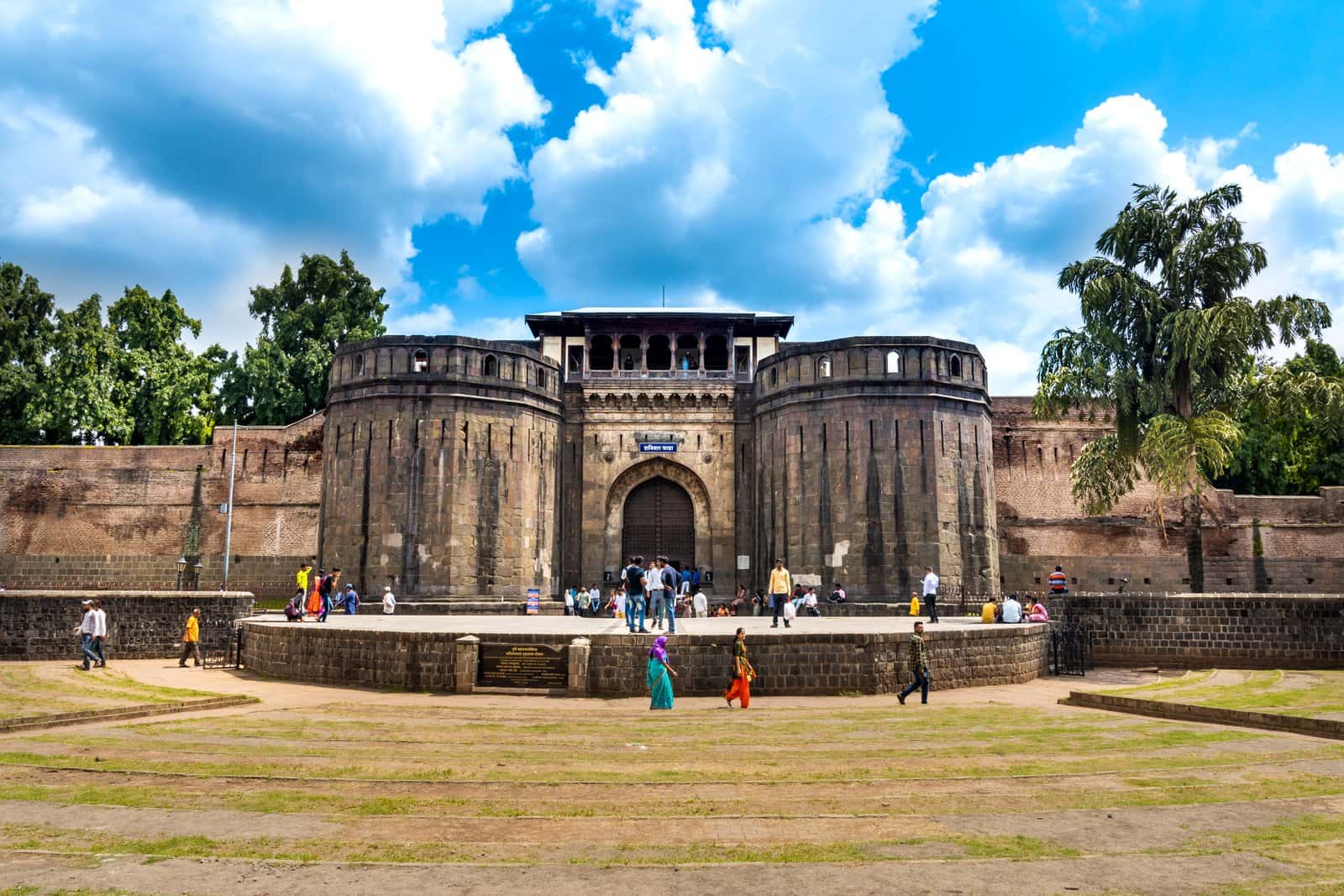
- Shaniwar WadaThe 1730s Peshwa palace fort, managed by the Archaeological Survey of India, open daily about 8 am to 6:30 pm. Entry is about 20 rupees for Indians and about 250 rupees for foreign nationals. A great fire in 1828 destroyed the palace, so what survives is the grand stone foundations, gates and ramparts; come for the history and the evening show rather than intact rooms.
- Aga Khan PalaceThe 1892 palace where Mahatma Gandhi, Kasturba Gandhi and Mahadev Desai were interned in 1942, now the Gandhi National Memorial under ASI, open daily about 9 am to 5:30 pm. An ASI online ticket is about 20 rupees for Indians and about 250 rupees for foreign nationals, cheaper than the gate. Note it closes for a lunch hour, so avoid arriving around midday.
- Dagdusheth Halwai Ganpati templePune's most beloved temple in the old city, free to enter for regular darshan and open roughly 6 am to 11 pm. It is the spiritual heart of the city's famous Ganesh Chaturthi. Dress modestly, leave shoes outside, and expect long but well-managed queues on festival days.
- Museums and gardensThe Raja Dinkar Kelkar Museum of everyday Indian artefacts, the tribal and miniature-railway museums, and gardens like Saras Baug and Bund Garden fill out a city day, especially useful in the hot middle of the afternoon or a rainy hour.
Two things trip up visitors at Aga Khan Palace. First, it closes for about an hour in the early afternoon for lunch, so do not arrive around midday. Second, the ASI online ticket, about 20 rupees for Indians and about 250 rupees for foreign nationals, is cheaper than buying at the gate, where it is about 25 rupees for Indians and about 300 rupees for foreign nationals. Children below 15 generally enter free. Book online before you go and time your visit for the morning or mid-afternoon.
Signature experiences in and around Pune
Beyond the museums, these are the experiences people remember, and how to do them without the overhyped or overcrowded version.
- The Shaniwar Wada light-and-sound showOn a dry evening the show brings the Peshwa story to life across the ruined ramparts. The Marathi screening is about 7:15 pm and the English about 8:15 pm, each roughly an hour, on a separate ticket of about 25 rupees that is best bought on arrival as seating is limited. It does not run in heavy rain, so it is more of a winter and shoulder-season treat.
- Sinhagad Fort for the viewsThe hill fort about 30 to 35 km out is a classic Pune outing, with sweeping Sahyadri views, pithla-bhakri and hot kanda bhaji stalls at the top. You can trek up free from the Donje base in about 1.5 to 2 hours, or drive the road for a small vehicle toll. In the monsoon it is gorgeous but slippery, so go early and carefully.
- A morning at the Osho resortThe Osho International Meditation Resort in Koregaon Park draws meditators from around the world. It is a paid participatory centre, not a walk-around sight: register first, wear the required robes, and join a session if you want to experience it. Even non-participants enjoy the leafy Koregaon Park cafes around it.
- Monsoon waterfalls and LonavalaFrom June to September the Sahyadri runs with waterfalls. Lonavala, about 65 km away, and the Bhushi Dam, Kune falls and Tamhini Ghat are the classic monsoon runs. Go on a weekday and early to dodge the crowds, mind the slippery rocks, and never enter fast-flowing water at the dams.
- Pune food and cafesPune is a food city: misal paav, bhakarwadi, the German Bakery and FC Road cafes, and the Koregaon Park restaurant scene. A relaxed afternoon eating your way along FC Road or MG Road is part of the experience.
- Ganesh Chaturthi, if your dates matchIf you are here in late August or September, the Ganesh festival fills Pune with enormous decorated pandals, music and the great immersion processions. It is crowded and joyful; visit the big pandals in the morning and keep valuables close in the crowds.
If you do one thing slowly, make it a fort morning. Reach Sinhagad early, before the day-trippers and the heat or the worst of the rain, walk the ramparts as the Sahyadri opens up below, and have hot bhaji and tea at the top. It is the experience that turns a city break into a memory, and it costs almost nothing beyond a small vehicle toll or a bus fare.
Where to stay in Pune, and how many days
Stay in leafy Koregaon Park for cafes and calm, or central Camp and the station area for the old-city sights. Two to three days suits the city, more with the hills.
- Koregaon Park: leafy and relaxedThe green, upmarket quarter with the best cafes, restaurants and nightlife, and home to the Osho resort. Calmer and more spread out, well served by the Aqua Line at Ramwadi and Kalyani Nagar nearby. Best for couples, longer stays and anyone who wants a comfortable base.
- Camp, MG Road and the station areaCentral and well connected, handier for Shaniwar Wada, the temples and the old-city sights, and close to the railway station for early departures or day trips. Busier and less leafy, but convenient for a short, sight-focused visit.
- How many daysTwo to three days covers Pune itself: Shaniwar Wada, Aga Khan Palace, the Dagdusheth temple, a museum and a relaxed wander. Add a day for Sinhagad and another for a Lonavala or Mahabaleshwar excursion if you want the Sahyadri hills and forts as well.
- Room budgetsBudget rooms in Koregaon Park and similar areas run from about 1,000 to 2,000 rupees, mid-range about 2,000 to 4,500 rupees, and four-star or boutique stays about 4,500 rupees and up. Rates rise around Ganesh Chaturthi and busy weekends, so book ahead then.
If your trip is about cafes, calm and the Osho resort, stay in Koregaon Park and use the metro and rickshaws for the sights. If it is a quick sightseeing run focused on Shaniwar Wada, the temples and an early train to Lonavala, the central Camp and station area saves you crossing the city. Either way Pune is compact enough that the choice is about comfort, not distance.
Pune costs and a realistic daily budget
Pune is gentle on the wallet. Here is what the main things cost, so you can plan and avoid being overcharged on rides.
- A rough daily budgetExcluding your room and long-distance transport, plan on about 1,200 to 2,000 rupees a day as a budget traveller, about 2,500 to 4,000 rupees mid-range, and more for a comfortable day with cabs, good restaurants and a couple of paid sights.
- The fixed-price sightsShaniwar Wada is about 20 rupees for Indians and about 250 for foreign nationals, the light-and-sound show about 25 rupees extra, and Aga Khan Palace about 20 rupees online for Indians and about 250 for foreign nationals. The Dagdusheth temple is free. These are useful anchors as they are not negotiable.
- Getting around cheaplyThe metro is about 10 to 35 rupees a ride or about 100 rupees for a day pass, airport buses about 50 to 110 rupees, and rickshaws on the meter from about 26 rupees. Sinhagad costs only a vehicle toll of about 20 to 50 rupees or a bus at about 35 rupees, so days out are inexpensive.
- Cash, cards and UPICards and UPI are widely accepted in Pune's cafes, shops and bigger restaurants, but keep some cash for rickshaws, small eateries, temple offerings and the fort stalls. ATMs are everywhere in the city.
Pune is an honest city to travel in, and the single habit that keeps costs down is to use the meter or the app for rickshaws and cabs rather than agreeing a lump sum. Metered rickshaws start at about 26 rupees for the first 1.5 km and about 17 rupees per km after, on the RTO card revised in February 2025, and app-booked autos were told to follow the same meter from April 2025, so a ride across town is usually a modest fare. Combine that with the metro at about 10 to 35 rupees and you can see the whole city for very little.
Practical logistics: food, money, SIM and language
The small things that make a Pune day smooth, from eating well to money, connectivity and getting around the compact centre.
- Eating wellPune eats brilliantly, from Maharashtrian misal paav and bhakarwadi to the FC Road and Koregaon Park cafe scene and good restaurants of every kind. Vegetarian and non-vegetarian are both easy, unlike some holy towns, and street food is part of the pleasure if you take the usual care.
- Getting around the centreThe old-city sights cluster together and are walkable, while the metro, rickshaws and app cabs cover the longer hops to Koregaon Park, the airport and the station. Traffic is busy at peak hours, so allow time and lean on the metro where it goes.
- Money and connectivityCards and UPI work almost everywhere, ATMs are plentiful, and mobile coverage is strong across the city. Pune is a tech and education hub, so wifi and data are reliable and English is widely understood.
- Language and etiquetteMarathi is the local language and Hindi and English are widely understood. Dress modestly at the temples and the Gandhi memorial, remove shoes where asked, and be ready for the Osho robe rules if you visit the resort.
Safety, monsoon hazards and staying well
Pune is a safe, easy city. The real risks are monsoon-season slips at the forts and waterfalls and ordinary big-city care, not crime.
- Monsoon at the forts and waterfallsThe biggest seasonal hazard is slippery rock at Sinhagad and the Lonavala waterfalls and dams. Wear non-slip footwear, trek early before the rain peaks, never enter fast-flowing water at Bhushi Dam or the falls, and avoid the climbs in heavy rain or thunderstorms. Most monsoon mishaps here are slips and people venturing into flooded streams.
- City safety and scamsPune is among the safer Indian cities and serious scams are uncommon. The usual care applies: insist on the rickshaw meter or use an app, keep valuables close in festival crowds, and cross the busy roads carefully. There is no donation-trap or aggressive-tout culture of the kind found at some pilgrimage sites.
- Heat and waterIn the March to June heat carry water and sun protection, especially at the open forts, and keep the hot midday for indoors. Drink bottled or filtered water and take the usual care with street food, and Pune's clean reputation makes stomach trouble less common than in many places.
- The Osho resort rulesIf you visit Osho, follow the rules to avoid being turned away: register at the Welcome Center in its open hours, wear maroon robes by day and white in the evening, and carry your passport with a valid visa if you are a foreign national. It is a paid participatory centre, so go prepared rather than expecting a casual look around.
Pune is widely regarded as one of the more comfortable Indian cities for women travelling alone, with a large student and professional population and an easy cafe culture. Standard precautions apply: use app cabs or metered rickshaws at night, keep to busy areas after dark, and take normal care in festival crowds. The friction here is ordinary big-city caution, not the persistent tout pressure of some tourist towns.
Pune for every kind of traveller, and on access
Pune suits very different visitors in different ways. Here is what it offers you and the one tip that matters for each, including how a senior visits the forts comfortably.
- CouplesRelaxed and green, with the Koregaon Park cafes, rooftop dinners and easy day trips into the Sahyadri. An overnight at a hill station like Lonavala or Mahabaleshwar pairs naturally with a couple of city days.
- Families with childrenEasy and varied: the miniature-railway and tribal museums, the gardens, the Dagdusheth temple and a fort day out. Keep the hot midday for indoor museums, and at Sinhagad use the vehicle road rather than the trek with small children.
- Senior travellers and on accessibilityVery doable with a little planning. Use the metro and app cabs rather than crowded buses, drive the vehicle road to the top of Sinhagad instead of trekking, visit Aga Khan Palace and Shaniwar Wada in the cooler morning, and avoid the slippery monsoon climbs. The old-city lanes are flat but busy, so take them slowly.
- Students and young travellersPune is a famous education and youth city, full of cafes, music, affordable food and a lively scene around FC Road and Koregaon Park. Cheap to get around on the metro and metered rickshaws, and an easy base for weekend treks.
- Trekkers and the outdoorsyThe Sahyadri forts, Sinhagad, Rajgad, Torna and the monsoon waterfall treks around Lonavala, are the real draw. Go early, carry rain gear and grip footwear in the monsoon, and check conditions before any climb in heavy rain.
- Solo female travellersOne of the more comfortable Indian cities to travel alone, with a big student and professional population. Use app cabs at night, keep to busy areas after dark, and take normal care in festival crowds.
A suggested Pune itinerary
How to shape two or three days so you catch the city sights at the right hours and add the forts and hills without rushing.
- Day one: the city sightsStart at Shaniwar Wada in the morning, walk to the Dagdusheth Ganpati temple and the old-city lanes, then visit the Raja Dinkar Kelkar Museum. Keep the hot midday for the museum or a long lunch, and return to Shaniwar Wada for the evening light-and-sound show if it is a dry season.
- Day two: Gandhi, gardens and cafesVisit Aga Khan Palace in the morning, after booking the ASI ticket online and avoiding the lunch-hour closing, then a garden like Saras Baug, and spend the afternoon and evening in the Koregaon Park cafes or along FC Road. Add the Osho area if it interests you.
- Day three: Sinhagad or the hillsHead out early to Sinhagad Fort by the vehicle road or on foot, with hot bhaji and tea at the top, and back by afternoon. Alternatively make this a Lonavala day for the monsoon waterfalls and viewpoints, on a weekday to dodge the crowds.
- The short versionWith only a day, do Shaniwar Wada, the Dagdusheth temple and Aga Khan Palace in the morning and early afternoon, and the evening show if the weather is dry. It gives you the heart of the city without the forts and hills.
Two timing traps break a tight Pune plan. The first is arriving at Aga Khan Palace during its early-afternoon lunch closing, so put it in the morning or mid-afternoon and book the cheaper online ticket first. The second is counting on the Shaniwar Wada evening show in the monsoon, when heavy rain can cancel it. Build a dry-season evening around the show and a rainy-season evening around the cafes, and you will not be left at a shut gate.
The real questions travellers ask about Pune
Straight answers to the questions that come up again and again on traveller forums, so you arrive already knowing the score.
- How many days, and is it worth it over Mumbai?Two to three days is right for the city, more with the forts and hills. Pune is well worth a visit in its own right: it is greener, calmer and more livable than Mumbai, with strong history, food and easy Sahyadri day trips, rather than only a Mumbai add-on.
- Is Shaniwar Wada worth it, and the show?The palace itself is ruins, mainly foundations, gates and ramparts after the 1828 fire, so manage expectations by day. The evening light-and-sound show, about 25 rupees on a separate ticket, brings the history alive and is the reason many people go in the cooler dry months.
- Is the Aga Khan Palace ticket cheaper online?Yes. The ASI online ticket is about 20 rupees for Indians and about 250 for foreign nationals, while the gate price is about 25 and about 300. Book online, arrive outside the lunch-hour closing, and children below 15 generally enter free.
- Sinhagad by car or trek?Both work. The trek from the Donje base is about 3 km and 1.5 to 2 hours and is free; the vehicle road to the top costs a toll of about 20 rupees for a two-wheeler and about 50 for a four-wheeler, and there is a Swargate PMPML bus number 50 at about 35 rupees. In the monsoon drive or go very early, as the trek is slippery.
- Can a tourist visit the Osho resort?Yes, but it is a paid participatory meditation centre, not a free walk-around sight. Register at the Welcome Center in its open hours, wear the required maroon and white robes, and bring your passport with a valid visa if you are a foreign national. Go to take part, not just to look.
- Monsoon or winter for Pune?Winter, about October to February, is best for relaxed city sightseeing with the show running. The monsoon, about June to September, is best for the green Sahyadri, the Lonavala waterfalls and the fort treks, with the trade-off of rain, slow roads and weekend crowds.
Planning Pune from abroad
Pune is the easy, livable counterpoint to Mumbai and a comfortable first stop in Maharashtra. A little preparation makes the monument tickets and the Osho rules simple to handle.
- Know the two-tier monument ticketsForeign nationals pay more at the ASI monuments: about 250 rupees at Shaniwar Wada and about 250 rupees online or 300 at the gate for Aga Khan Palace, against about 20 rupees for Indians. It is normal and modest in absolute terms; book the Aga Khan Palace ticket online to save, and carry some cash for the smaller sites.
- Be ready for the Osho rulesIf the Osho resort is your reason to come, register at the Welcome Center in its open hours, wear the required maroon robes by day and white in the evening, and bring your passport with a valid visa. It is a paid participatory centre, so plan to take part in a session rather than just look around.
- Pair it with Mumbai and the SahyadriFly into Mumbai, the nearest major international gateway, and reach Pune by the fast expressway or by train in about 3 to 4 hours. From Pune, the hill stations of Lonavala and Mahabaleshwar and the Sahyadri forts are easy add-ons.
- Gentle and senior-friendly with planningPune is calm, green and easy compared with a big metro: use the metro and app cabs, drive up Sinhagad rather than trekking, and visit the monuments in the cool morning. It is a comfortable choice for parents and grandparents on a first Maharashtra trip.
Money, connectivity and timing for foreign visitors
The practical basics an overseas traveller needs for a modern Indian city: cards and cash, a SIM, and how many days to give Pune on a wider trip.
- Cards, UPI and cashPune is card and UPI friendly in cafes, shops and restaurants, so you will rarely be stuck. Keep some cash for rickshaws, temple offerings, the fort stalls and small eateries, and draw it from the plentiful ATMs. Always use the rickshaw meter or an app cab so the fare is fair.
- Get a SIM on arrivalPick up an Indian tourist SIM or an eSIM when you land in Mumbai or Pune. Coverage in Pune itself is strong, as it is a tech hub, so maps, calls, UPI and ride-hailing all work smoothly across the city.
- How long to give it on a bigger tripOn a Maharashtra trip, two to three days in Pune is the right weight, enough for the city sights, a fort day and the food, before or after Mumbai and the Sahyadri hill stations. Add a day if you want both Sinhagad and a Lonavala or Mahabaleshwar overnight.
- Time your visit to your comfortOctober to February is the comfortable window for sightseeing. If you want the dramatic green Sahyadri and the waterfalls, come in the June to September monsoon and accept the rain, the slow roads and the weekend crowds at the popular spots.
Pune is an unusually easy introduction to urban India: safe, green, English-friendly and well run, with a modern airport terminal, two metro lines and metered transport. Slot it alongside Mumbai, give it two or three days, and let it be the calm, cultured chapter between the big city and the hills. Many overseas visitors find it the part of Maharashtra they would most happily return to.
The fort the Peshwas built, and the fire that took it
Shaniwar Wada was raised in the 1730s by Bajirao I, the great Peshwa general, as the seat of Maratha power in Pune, and for nearly a century it was the political heart of an empire that reached across much of India. Its grand gates were said to be studded with iron spikes to stop war elephants, and the Delhi Darwaza faced north toward the capital the Marathas aspired to. Tradition tells of the young Peshwa Narayanrao, murdered within these walls in 1773, and locals still speak of a haunting cry on certain nights, a legend told and retold rather than recorded fact. In 1828 a great fire swept through the palace and left only the stone foundations, gates and ramparts that visitors walk today. What survives is not the splendour of the Peshwa court but its outline, and on a dry evening the light-and-sound show fills that outline back in with the story of how Pune once ruled.
Planning a Pune trip?
Our Maharashtra travel experts plan your full journey for you: route, hotels, darshan timings and transport. You get a free day-by-day plan and an exact quote on WhatsApp, usually within a few hours. No payment is needed to get your plan.
Tour packages that visit Pune
Every journey below is private, hand-crafted and fully customizable. Tell us your dates and we tailor the itinerary, the pace and the priests or guides around you.
 6D / 5N
Lonavala Khandala Tour Package
- Visit Haji Ali Dargah
- Visit Siddhi Vinayak Temple
 19D / 18N
12 Jyotirlinga Tour Package from Delhi
- All Jyotirlinga darshans
- Ganga Aarti experiences
 18D / 17N
12 Jyotirlinga Tour Package from Mumbai
- Transparent and Customizable Pricing
- Smart, Time-Saving Logistics
Kullu Manali Tour Package from Pune
- Visit Chail Palace
- Visit Buddhist Monasteries