Pachmarhi Travel Guide
The most comfortable months are October to February , cool and clear; the monsoon from July to September fills the waterfalls but makes some forest trails and falls areas tricky...
When to visit Pachmarhi, and the season to plan around
The most comfortable months are October to February, cool and clear; the monsoon from July to September fills the waterfalls but makes some forest trails and falls areas tricky. Decide whether you want crisp viewpoints or thundering falls.
- October to February: cool, clear and best for viewpointsThe most comfortable window, pleasant by day and genuinely cold at night, sometimes down to a few degrees, so carry warm clothes and an extra layer. Skies are clear, the post-monsoon greenery is still around, and Dhupgarh sunsets are at their best. This is also the busiest long-weekend season, so book rooms ahead.
- March to June: warm by plains standards, fine on the hillAs a hill station Pachmarhi stays milder than the Madhya Pradesh plains, so spring and early summer are still good for treks and the caves. Afternoons warm up, so do the viewpoints and climbs earlier in the day and keep the middle for rest.
- July to September: monsoon, when the falls roarThe waterfalls (Bee Falls, Rajat Prapat, Duchess Falls, Apsara Vihar) are at their fullest and the forest is vivid green. The trade-off is slippery trails, leeches on some walks, and that the forest department can close falls areas in heavy rain, so build in flexibility and wear non-slip shoes.
- Pick the experience firstCrisp winter air and big sunsets, or the dripping green and thundering falls of the monsoon, are two very different Pachmarhis. Both are rewarding, so choose the experience you want before you book, and remember the great Nagdwari pilgrimage only opens for a short window in the monsoon.
The weather up here turns quickly. From our own Pachmarhi tour notes: carry an umbrella for erratic showers, a set of warm clothes even outside winter, comfortable walking shoes for the long cave and viewpoint walks, and a torch and power bank, as power cuts are not unusual. In peak season pre-book your rooms and your Pipariya transfer to avoid last-minute scrambles.
How to reach Pachmarhi
Pachmarhi has no airport or railway of its own. Almost everyone comes through Pipariya railhead, about 47 to 52 km away, or drives from Bhopal.
- Via Pipariya, the nearest railheadPipariya is the closest railway station, about 47 to 52 km away, roughly 1.5 to 2 hours by road on NH347. Many Delhi, Mumbai, Bhopal and Jabalpur trains stop here, and it is the practical way in by rail for most travellers.
- From Pipariya to townFrom the station you can take a private taxi (commonly about 1,500 to 1,700 rupees one way for the car), a state or private bus (fares roughly about 50 to 200 rupees), or a shared jeep (about 120 to 200 rupees per person). Buses and jeeps run regularly and drop at the Pachmarhi bus stand.
- Nearest airportsBhopal (Raja Bhoj) is the practical airport at about 195 to 210 km, roughly 5 hours by road, with the widest connections. Jabalpur (Dumna) is the next option at about 230 to 250 km. There are no flights into Pachmarhi itself, so plan to fly to Bhopal and drive.
- By road from BhopalThe drive from Bhopal is about 195 to 210 km on a decent highway, a half-day run that most package itineraries use, and we can arrange a car with an experienced hill driver. The last stretch winds up into the Satpura hills, so allow extra time and avoid night driving on the ghat section.
Fly into Delhi or Mumbai, then connect to Bhopal by a short domestic flight and drive about 5 hours up to Pachmarhi, or take a train to Pipariya and drive the last 47 to 52 km. There are no international or direct flights to Pachmarhi.
Fly into Delhi or Mumbai, then onward to Bhopal, the nearest airport. From Bhopal it is a half-day drive into the Satpura hills. Pachmarhi pairs naturally with Bhopal, Bhimbetka and the Satpura tiger country.
Take a train to Pipariya and drive or share a jeep over the last 47 to 52 km, or drive from Bhopal (about 5 hours) or Jabalpur. The Pipariya railhead, on the Delhi to Jabalpur and Mumbai lines, is the simplest way in by rail.
The viewpoints, waterfalls and caves
Pachmarhi is its forest viewpoints, its waterfalls and its rock-cut caves and Shiva shrines. The catch is that most of the famous points sit on forest land and need a permit and usually a gypsy.
- Dhupgarh, the sunset pointAbout 10 km from town at roughly 1,350 m, Dhupgarh is the highest point in Madhya Pradesh and central India, and the signature sunset spot with a 360-degree view over the Satpura ridges. You reach it only by gypsy and forest permit (see the experiences and logistics sections), and the forest does not allow staying after dark.
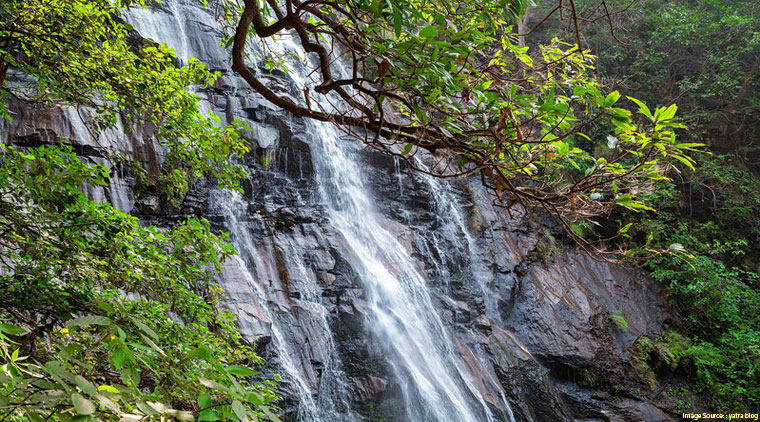
- Bee Falls and the other waterfallsBee Falls (Jamuna Prapat) drops around 35 m and is reached by a walk down from the road; it is the most-visited fall and the town's main drinking-water source. Rajat Prapat (Silver Falls) is among the tallest in the state, seen from a viewpoint, and Apsara Vihar and Duchess Falls are quieter monsoon picks.
- Pandav Caves and the cave shrinesThe Pandav Caves are a cluster of five hilltop rock-cut chambers above a garden, the kind of easy, atmospheric stop families like. Jata Shankar and the Mahadeo caves hold natural Shiva lingams under huge rock overhangs, central to Pachmarhi's pilgrim identity.
- Chauragarh and Handi KhohChauragarh, a hilltop Shiva temple reached by a climb of around 1,250 steps, draws a vast mela at Mahashivratri. Handi Khoh is a dramatic ravine with a cliff falling several hundred feet, a short and rewarding viewpoint when the light is good.
This is the single thing rival pages skip: Dhupgarh, Bee Falls, Rajat Prapat, Reechgarh, Apsara Vihar and several other points lie inside the Satpura Tiger Reserve and need a forest permit, a registered guide and, for the deeper points, a gypsy. Private vehicles have not been allowed up to Dhupgarh since about 1 April 2019. Plan a gypsy day rather than expecting to drive yourself to every point.
Signature experiences and the gypsy-and-permit day
Beyond the temple-and-falls list, these are the experiences people remember in Pachmarhi, and exactly how the forest gypsy system works so the day runs smoothly.
- The forest gypsy sightseeing dayThe classic way to see the points is to hire a registered Maruti Gypsy at the Bison Lodge interpretation centre, where you also take the forest permit and guide. The Gypsy union runs fixed day-package routes covering the forest viewpoints and falls. Agree the route and price before you set off, as rates are negotiable.
- Sunset at DhupgarhHundreds gather on the stone terraces for the sun dropping behind the Satpura ridges. Go by gypsy in the late afternoon; the forest does not permit a sunrise visit here and clears the point after dark. Wednesday is the forest weekly off, when Dhupgarh and the viewpoints are effectively closed, so plan your sunset for any day except Wednesday.
- A Satpura tiger safari from MadhaiA real tiger reserve sits next door. Safaris run mainly from the Madhai gate, reached by boat across the Tawa reservoir, not from town, so this is a planned day trip booked through the MP forest portal. Satpura is loved for walking safaris, boat safaris and canoeing as much as for tigers.
- Treks and the caves on footPachmarhi rewards walkers: the climbs to Chauragarh, the descents to the falls, and forest trails like Reechgarh. Longer or off-trail treks need a forest guide arranged through Bison Lodge. Wear proper shoes, as our own tour notes warn the walks are long and the paths uneven.
- The Nagdwari pilgrimage, in seasonIf you come in the monsoon month of Shravan you may catch the Nagdwari yatra, a hard 30 km-plus forest pilgrimage to a cave temple, open for only about ten days to Nag Panchami. It is a devotional trek, not a casual outing, and access is set by the administration each year.
If you do one thing slowly, make it Dhupgarh at sunset. Take the gypsy up with time to spare, walk out to the terraces, and let the Satpura ridges turn gold and then violet as the light goes. Pair it with an unhurried morning at one of the falls, and Pachmarhi opens up in a way a rushed, tick-the-box day never allows.
Where to stay in Pachmarhi, and how many nights
Stay in or near the small town core to be close to the bazaar and the gypsy stand, or at a quieter resort on the edge for space. Two nights is the comfortable sweet spot.
- The town core: close to everythingAround the bazaar and the lake you are walking distance from shops, eateries and the Bison Lodge gypsy point. MP Tourism heritage properties such as Glen View and Champak Bungalow sit here, the dependable, atmospheric choice. Best for first-timers who want everything to hand.
- Edge-of-town resorts: space and calmQuieter resorts and homestays on the forested fringes give you gardens, views and slower mornings, but you will need a vehicle into the bazaar and the gypsy stand. Better for couples and families who want to settle and unwind.
- How many nightsTwo nights is the sweet spot: one full gypsy day for the forest viewpoints and falls, and a second day for the caves, the bazaar and a sunset. One night only is a rush; three nights suits trekkers, monsoon waterfall-chasers or anyone adding a Satpura safari from Madhai.
- Room budgetsMP Tourism rooms commonly run about 3,500 to 5,500 rupees; private budget rooms and homestays from about 1,000 to 2,000 rupees, and resorts about 5,000 to 12,000 rupees. All rise on long weekends, in the winter peak and during the Nagdwari season, so book ahead.
Pachmarhi is a favourite weekend escape for Bhopal, Nagpur and central India, and the Nagdwari pilgrimage brings huge crowds in Shravan. On long weekends and during the yatra, rooms sell out and prices climb, so book early. If everything in town is full, some travellers base in Pipariya, but that adds the 47 to 52 km transfer to every day.
Pachmarhi costs and the official forest charges
Pachmarhi is gentle on the wallet, but the forest viewpoint and gypsy charges are the part people get wrong. Here are the official figures so you can plan and avoid being overcharged.
- The official forest viewpoint chargesPer the Satpura Tiger Reserve schedule, expect about 30 rupees basic entry, about 100 rupees for a two-wheeler with up to 2 people, about 300 to 500 rupees for a light vehicle (car, jeep or gypsy, maximum 6) to a tourist place, about 150 rupees per single viewpoint by such a vehicle, and about 1,000 rupees for a 3-day vehicle pass to all the points.
- The gypsy and the guideA registered guide fee of about 600 rupees is payable for touring the Pachmarhi areas. On top of the forest charges, the Gypsy union commonly quotes a full sightseeing day at roughly about 1,500 rupees in the normal season and up to about 4,000 rupees in peak season for a vehicle seating up to 6. Rates are negotiable, so settle the route and price first.
- A rough daily budgetExcluding your room and the long-distance transfer, plan on about 1,500 to 2,500 rupees a day as a budget traveller, about 3,500 to 5,000 rupees mid-range, and about 6,000 rupees and up for a comfortable day with a private gypsy, the safari extras and good meals.
- Cash, cards and the safariCarry cash: gypsy drivers, small eateries and the forest gates run on it, and ATMs are limited. A Satpura tiger safari from Madhai is a separate, planned cost, with a light vehicle in the core about 2,400 to 3,000 rupees (about 6,000 for foreign tourists) and an elephant ride about 1,600 rupees per half hour.
The forest viewpoint charges are fixed and published, while the gypsy day is negotiable. So the habit that saves money and stress in Pachmarhi is to know the official figures, take the permit and guide at Bison Lodge, and agree the gypsy route and rate before you start, anchored to the roughly 1,500 rupee normal-season day. Do that and the only friction on the hill disappears.
Practical logistics: permits, signal, fuel and getting around
The small things that make a Pachmarhi day smooth, from where to take the forest permit to patchy mobile signal, fuel and the cantonment rules.
- Permits and gypsies at Bison LodgeBison Lodge, the old interpretation centre, is where you take the forest permit and guide and where the Gypsy union operates. Start your sightseeing day here. Carry a photo ID for the permit, and remember the deeper forest points need the gypsy, not your own car.
- Signal, power and fuelMobile coverage in the hills is patchy and power cuts are not unusual, so download offline maps, carry a power bank and a torch, and do not rely on constant data. Fill fuel before you leave Pipariya or Bhopal, as petrol pumps in and around town are limited.
- Getting around townThe bazaar and lake core is walkable. For the viewpoints you use the gypsy; for short hops a local jeep or auto works. There is no app cab network up here, so arrange vehicles through your hotel or at the gypsy stand.
- It is an Army cantonmentPachmarhi is a working Army cantonment run by the Cantonment Board, so some land is military and a few roads or areas may be restricted. It is welcoming to tourists, but follow signage, keep to public areas, and do not photograph defence installations.
Safety, the forest rules, and staying well
Pachmarhi is a calm, low-crime hill town. The real risks are the terrain, the monsoon trails and wildlife rules, so a little care keeps the trip happy.
- Respect the forest timings and wildlifeThis is tiger-reserve country. Stick to the permitted gypsy routes and timings, do not wander off-trail without a guide, and remember the forest clears the viewpoints after dark and does not allow sunrise entry at Dhupgarh. These rules are for your safety as much as the wildlife's.
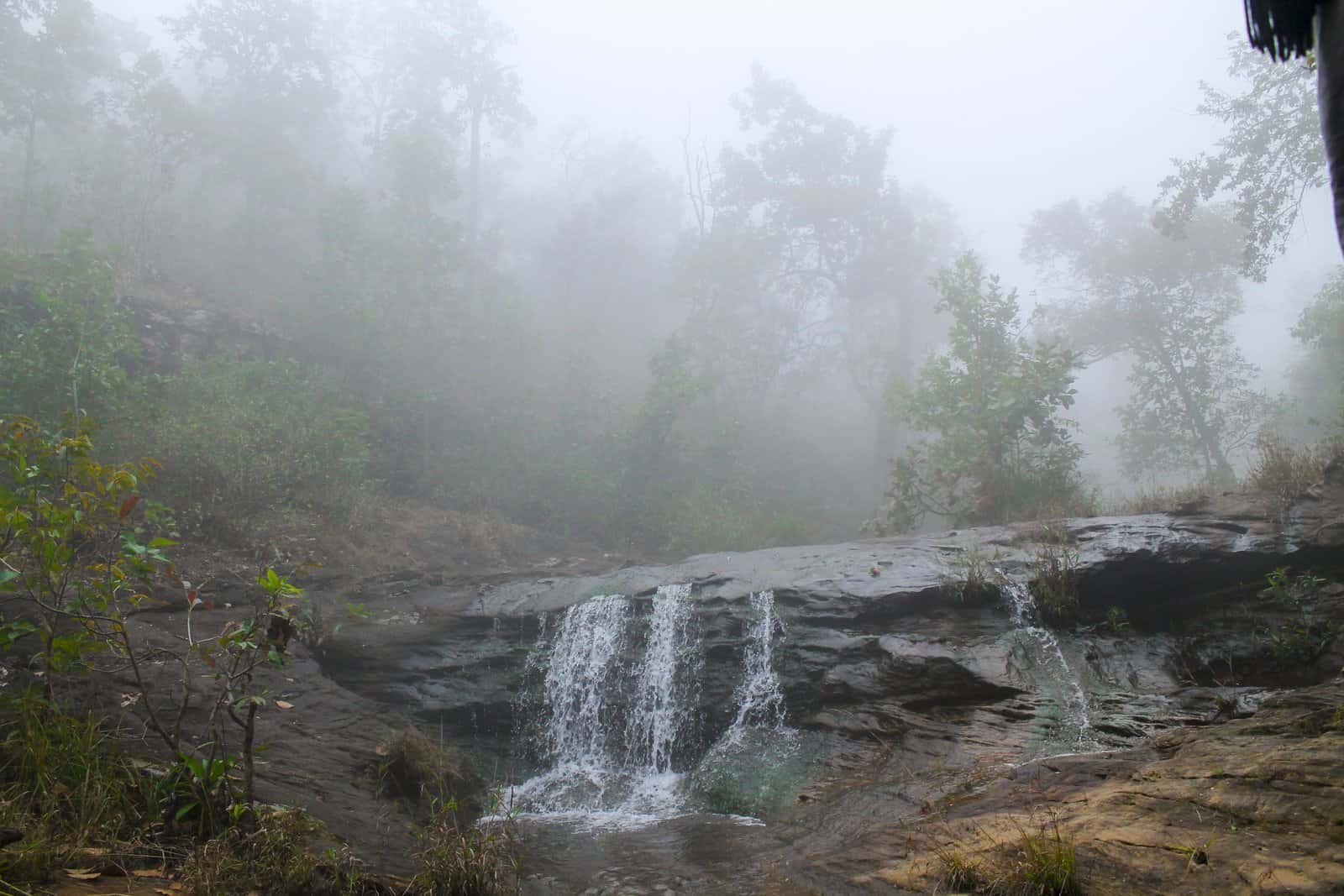
- Monsoon trails and waterfallsIn July to September the falls are spectacular but the rocks are slippery and currents strong. Keep back from the edge during heavy flow, wear non-slip shoes, watch for leeches on wet trails, and accept that the forest may close some falls areas in heavy rain.
- The climbs and the heatChauragarh is around 1,250 steps and several points involve steep descents and ascents. Pace yourself, carry water, start Chauragarh early and begin the descent by mid-afternoon, around 3 pm, before the light fails on the steps. The gypsy spares seniors the worst climbs to the viewpoints.
- Health basicsDrink bottled or filtered water and take the usual care with street food. Carry your regular medicines and some over-the-counter remedies for colds and stomach upsets, as our own tour notes advise, since pharmacies are small and the nearest big hospitals are down in Pipariya and Bhopal.
Pachmarhi is one of the gentler, lower-hassle destinations in central India, with little of the tout pressure of the big tourist towns, and most solo and women travellers find it relaxed with standard precautions. The main hazards are natural, the terrain and the monsoon water, not crime. Travel with a guide on the longer treks, keep to lit areas at night, and it is a comfortable place to slow down.
Pachmarhi for every kind of traveller, and on access
Pachmarhi suits very different visitors in different ways. Here is what it offers you and the one tip that matters for each, including how a senior sees the viewpoints comfortably.
- Families with childrenEasy and green, with the gypsy ride itself a hit, plus the Pandav Caves, the falls and the museum. Mind the long road transfer from Pipariya or Bhopal, and keep little ones well back from the waterfall edges in the monsoon.
- Senior travellers and on accessibilityVery doable with planning. Use the gypsy for the viewpoints rather than walking, skip the 1,250 steps at Chauragarh if stairs are hard, stay in the town core to limit walking, and do the points in the cool of morning or late afternoon. Bee Falls and the deeper caves involve steps, so choose the gentler stops.
- CouplesQuiet, forested and unhurried: Dhupgarh sunsets, misty mornings and a slow bazaar. An overnight rather than a day trip lets you catch both a sunset and an early walk, and an edge-of-town resort adds the calm.
- Trekkers and adventure travellersThe real draw for many: forest trails, the climb to Chauragarh, rappelling and rock-climbing operators, and the hard Nagdwari pilgrimage in season. Longer treks need a forest guide from Bison Lodge, so plan those rather than setting off alone.
- Solo and women travellersGenerally relaxed and low-hassle by Indian-hill-town standards. Travel with a guide on the longer forest treks, keep to lit areas at night, and you will find Pachmarhi one of the calmer central-India stops to travel alone.
- PhotographersDhupgarh at sunset, the falls in spate, the cave shrines and the misty Satpura ridges. Carry a tripod for the low light, ask before photographing pilgrims, and remember not to photograph any military installation in the cantonment.
A suggested Pachmarhi itinerary
How to shape two unhurried days so you catch the forest viewpoints on a gypsy day, the caves and bazaar on foot, and Dhupgarh at its best light.
- Day one: the forest gypsy dayStart at Bison Lodge for the permit, guide and gypsy. Cover the forest points (Bee Falls, Rajat Prapat, Reechgarh, Apsara Vihar) through the day, and time the route to finish at Dhupgarh for sunset. Avoid making this a Wednesday, the forest weekly off, when Dhupgarh and the viewpoints are effectively closed.
- Day two, morningDo the non-forest stops on foot or by local jeep: the Pandav Caves, Jata Shankar, the Mahadeo caves, and Handi Khoh. If you are fit and devotional, add the Chauragarh climb early, starting the descent by mid-afternoon.
- Day two, afternoonSlow down in the bazaar for tribal Bastar and Gond crafts, bamboo work, honey and ayurvedic goods, as our own tour notes flag. Close with a second sunset or a quiet lakeside evening before the drive out the next morning.
- If you have a third dayAdd a Satpura tiger safari from the Madhai gate (a planned day trip via the Tawa boat crossing), or in the monsoon chase the bigger waterfalls and forest trails. Three days turns a quick hill break into a proper Satpura immersion.
The thing that breaks a tight Pachmarhi plan is the forest timing at Dhupgarh: you cannot drive yourself up, the forest does not allow a sunrise visit, and Wednesday is the forest weekly off when Dhupgarh and the viewpoints are effectively closed. Build your gypsy day so Dhupgarh is the late-afternoon finish on a non-Wednesday, take the permit early at Bison Lodge, and you will not find yourself turned back at a forest barrier with the sun going down.
The real questions travellers ask about Pachmarhi
Straight answers to the questions that come up again and again on the TripAdvisor Pachmarhi forum, so you arrive already knowing the score.
- Is one day enough?One day is a rush. Two nights and two days is the comfortable plan: a gypsy day for the forest viewpoints and falls, and a second day for the caves, the bazaar and a sunset. Three days suits trekkers, monsoon waterfall-chasers and anyone adding a Satpura safari.
- Do I have to take a gypsy?For the deeper forest points, effectively yes. Private vehicles are not allowed up to Dhupgarh, and the Gypsy union runs the routes from Bison Lodge with the forest permit and guide. You can still reach the in-town stops and some closer points by your own vehicle or on foot.
- How much is the gypsy and permit day?The forest viewpoint charges are official and modest (about 30 rupees entry, about 300 to 500 rupees per light vehicle to a point, about 1,000 rupees for a 3-day all-points pass, about 600 rupees guide). The gypsy itself is negotiable, commonly about 1,500 rupees in normal season and up to about 4,000 rupees in peak season for up to 6 people.
- Can I see sunrise from Dhupgarh?No: the forest does not permit early-morning entry to Dhupgarh, so it is a sunset point in practice. Wednesday is also the forest weekly off, when Dhupgarh and the viewpoints are effectively closed. Plan Dhupgarh as a late-afternoon, non-Wednesday finish to your gypsy day.
- When is the Nagdwari yatra?It opens for only about ten days in the monsoon month of Shravan, culminating on Nag Panchami, which falls on about 17 to 18 August 2026. It is a hard forest pilgrimage rather than a casual visit, and the exact opening and access are set by the administration each year, so reconfirm before planning around it.
- How do I get from Pipariya to town?It is about 47 to 52 km, roughly 1.5 to 2 hours. Take a private taxi (commonly about 1,500 to 1,700 rupees one way), a bus (about 50 to 200 rupees), or a shared jeep (about 120 to 200 rupees per person) from outside Pipariya station. This is the last leg of almost every journey into Pachmarhi.
Planning Pachmarhi from abroad
Pachmarhi is the quiet, forested side of central India and pairs naturally with Bhopal, Bhimbetka and a Satpura tiger safari. A little preparation makes the permit-and-gypsy system and the cantonment rules easy to handle.
- Understand the gypsy-and-permit systemYou cannot simply drive to the famous viewpoints. The deeper forest points need a permit, a guide and a registered gypsy taken at Bison Lodge, and private vehicles are barred from Dhupgarh. Plan a guided gypsy day; it is the normal way everyone sees the points, not an inconvenience.
- It is an Army cantonmentPachmarhi is a working military cantonment as well as a hill resort. It is welcoming, but some land is restricted and you should not photograph defence installations. Keep to public areas and follow signage, and carry your passport for the forest permit and any checks.
- Pair it with Bhopal and a Satpura safariFly to Bhopal, see the Sanchi stupas and the Bhimbetka rock-art on the way, give Pachmarhi two or three nights, and add a Satpura tiger safari from Madhai. It is a calmer, greener, less-touristed circuit than the Golden Triangle.
- Foreign-tourist forest ratesSome forest charges are higher for foreign nationals: a core-area safari light vehicle at Satpura is about 6,000 rupees for foreign tourists against about 2,400 to 3,000 rupees otherwise. Budget for this and book the safari ahead through the MP forest portal or your operator.
Money, connectivity and timing for foreign visitors
The practical basics an overseas traveller needs for a small forest hill town: cash, a SIM, patchy signal, and how many days to give it on a wider India trip.
- Carry cash, expect limited ATMsGypsy drivers, the forest gates, small eateries and the bazaar run on cash, and ATMs are few. Draw cash in Bhopal or Pipariya before you arrive and keep small notes for the gypsy, the guide and tips. Cards and UPI work only at the bigger hotels.
- Get a SIM before you arrivePick up an Indian tourist SIM or an eSIM in a big city, as buying one in a small cantonment town is slow. Even then, expect patchy coverage in the hills, so download offline maps and confirm your hotel and gypsy plans in advance.
- How long to give it on a bigger tripOn a central-India trip, two to three nights in Pachmarhi is the right weight: a forest gypsy day, the caves and bazaar, and a Satpura safari, slotted after Bhopal, Sanchi and Bhimbetka, before moving on to Jabalpur and the Kanha or Bandhavgarh tiger parks.
- Time your visit to your comfortOctober to February is the comfortable window with the best viewpoints. The monsoon brings the dramatic waterfalls but slippery trails and possible forest closures, and the Nagdwari pilgrimage season is very crowded. Choose calm clear winter or dramatic green monsoon, and book ahead either way.
Pachmarhi is an unusually gentle, uncommercial stop: a small forested hill station with rock-cut shrines, big sunsets and a real tiger reserve next door, far from the tour-bus crush. Slot it into a central-India loop, give it two or three nights, accept the permit-and-gypsy rhythm, and many overseas visitors find it the calm, green chapter they remember most warmly from the trip.
Why they call it Pachmarhi, and the Pandavas' five caves
Pachmarhi takes its name, by the most-told local tradition, from panch marhi, the five caves or dwellings cut into a sandstone hill above the town. The story holds that the five Pandava brothers of the Mahabharata sheltered here during their long exile, each taking one of the five chambers, which is why the cluster is still called the Pandav Caves and why Pachmarhi wears the title Satpura ki Rani, the Queen of the Satpuras. Around this older legend the hill gathered its Shaivite layer: the natural lingams of Jata Shankar and the Mahadeo caves, and Chauragarh on its hilltop where, devotees say, Lord Shiva left his trident, the climb of around 1,250 steps now thronged at Mahashivratri. The name and the caves are tradition rather than excavated fact, and no single inscription dates them to the Pandavas, but the five chambers, the Shiva shrines and the deep forest around them are why this small cantonment hill town has been a place of pilgrimage and retreat for well over a century.
Planning a Pachmarhi trip?
Our Madhya Pradesh travel experts plan your full journey for you: route, hotels, darshan timings and transport. You get a free day-by-day plan and an exact quote on WhatsApp, usually within a few hours. No payment is needed to get your plan.
Tour packages that visit Pachmarhi
Every journey below is private, hand-crafted and fully customizable. Tell us your dates and we tailor the itinerary, the pace and the priests or guides around you.