Mandawa Travel Guide
The comfortable window is October to March , cool enough to walk the lanes and read the frescoes in good light. Summer on the desert plain is fierce, so plan around the heat.
When to visit Mandawa and the Shekhawati havelis
The comfortable window is October to March, cool enough to walk the lanes and read the frescoes in good light. Summer on the desert plain is fierce, so plan around the heat.
- October to March: cool and clearThe most comfortable time, with daytime temperatures roughly in the 10 to 25 degrees Celsius range and pleasant light for the frescoes. Nights get genuinely cold in December and January, so carry a layer. This is the season for walking the haveli lanes at an unhurried pace.
- April to June: hot, and best avoidedHigh summer on the Shekhawati plain is harsh, often around 30 to 45 degrees Celsius, tiring for the open lanes and the fort climb. If you must come then, keep the middle of the day for shade and rest, and walk the havelis early or late.
- July to September: humid monsoonThe monsoon brings some relief from the heat but is humid and occasionally wet, and the dust settles less photogenically. It is the quietest and cheapest time, but most travellers prefer the dry winter months for the frescoes and the circuit.
- Time it with a wider Rajasthan tripBecause Mandawa is a short add-on rather than a destination on its own, the practical answer is to come whenever your Rajasthan loop passes through in the October to March window. The town is small, so even a single good-weather day shows you the best of it.
Mandawa is a painting town, so the season is really about light and comfort, not festivals. The frescoes read best in the soft early morning and late afternoon of the cool months, when the lanes are walkable and the colours are not bleached by a harsh overhead sun. Aim for a winter visit and give yourself the two golden hours of the day, and the open-air gallery rewards you in a way a hot midday stop never will.
How to reach Mandawa
Mandawa has no airport and only limited rail, so almost everyone arrives by road from Jaipur or Delhi, or by train to Jhunjhunu and a short drive on.
- From Jaipur by roadJaipur is the practical gateway, about 168 to 188 km away, roughly 3.5 to 4 hours by car on a decent highway. This is the most common approach and slots Mandawa onto a Jaipur and Bikaner loop. We can arrange a car with an experienced driver for the run and the day's sightseeing.
- From Delhi by roadDelhi is about 245 to 260 km away, roughly 6 to 7 hours by road, which makes Mandawa a feasible if long weekend escape. Many travellers break the journey or come down via Jaipur rather than pushing the full distance in one go.
- By train via JhunjhunuThe nearest useful railhead is Jhunjhunu, about 27 to 29 km away, roughly 30 to 40 minutes by road, with train links towards Delhi. Mandawa itself has only very limited rail, so most rail travellers alight at Jhunjhunu, or sometimes Sikar, and take a taxi or local transport the last stretch.
- Nearest airportsThere is no usable airport at Mandawa. Jaipur, about 3.5 to 4 hours away, is the nearest major airport with wide connections, and Delhi is the bigger international gateway. Plan to fly into Jaipur or Delhi and continue by road; do not rely on a Mandawa flight, as there is none.
Fly into Delhi, the main international gateway, then reach Mandawa via Jaipur or directly by road, or fold it into a Rajasthan loop through Jaipur and Bikaner. Mandawa has no international flights of its own.
Fly into Delhi or Jaipur, then drive on to Mandawa. It sits naturally on the Jaipur, Shekhawati and Bikaner road circuit through the desert north of the state.
Drive from Jaipur in about 3.5 to 4 hours, or take a train to Jhunjhunu and drive the short hop on. The Jaipur road is the simplest and most reliable way in for most domestic travellers.
The painted havelis, the fort, and what is worth your time
Mandawa is its frescoed havelis and the old fort. A handful of mansions reward a slow look, and a few quirks of access are worth knowing before you go.
- Bansidhar Newatia Haveli, the quirky frescoesBuilt around 1920 and now used partly as a bank, this is the town's most photographed haveli for its playful early-modern panels: a boy on a telephone, women watching the Wright brothers' flight, a European woman in a chauffeur-driven car, a strongman hauling a car and a man in a winged flying machine. The exterior panels are visible from the lane without any fee.
- The Goenka and Murmuria havelisThe Hanuman Prasad Goenka Haveli is dense with detail, the Goenka Double Haveli is one of the grander facades, and the Murmuria Haveli carries surprising British-era and modern scenes. These mix Hindu mythology, local life and early-20th-century novelties like trains and cars on the same walls.
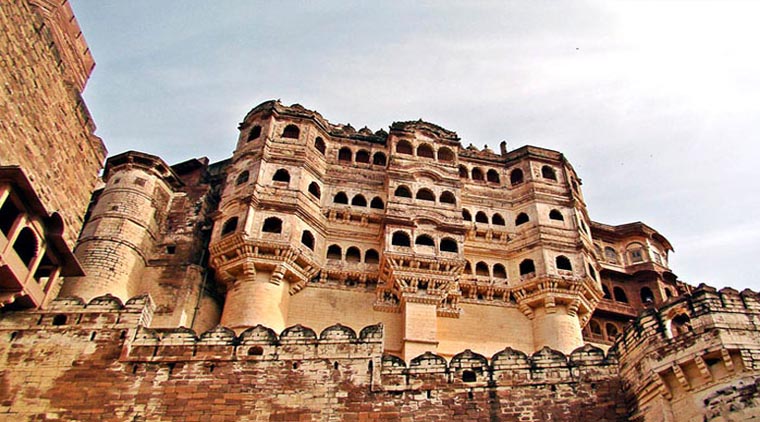
- Mandawa Fort and Castle MandawaThe 18th-century fort above town now runs as the heritage hotel Castle Mandawa. Non-resident visitors are usually asked for a small entry or refreshment charge, best confirmed at the gate on the day, as it is not a formally ticketed monument. Even a quick look at the ramparts and painted gateways is worthwhile.
- The Gulab Rai Ladia and Jhunjhunwala havelisThe Gulab Rai Ladia Haveli is among the more palatial, and the quieter Jhunjhunwala Haveli lets you appreciate the art without a crowd. Mandawa is small, so the main lane of havelis is an easy walking circuit of an hour or two.
Do not try to tick off every haveli. The pleasure of Mandawa is reading a few walls closely: spotting the train, the gramophone, the aeroplane and the European visitor that the Marwari merchants painted to show off their worldliness a century ago. Pick four or five of the named havelis, look slowly, and the town opens up far more than a rushed dash past a dozen locked gates ever will.
How haveli entry and caretaker fees really work
Mandawa has no proper ticket system. Entry to most havelis is informal, negotiated with a caretaker, and some are simply locked. Knowing this in advance saves confusion and a little money.
- There is no standard ticketMost Mandawa havelis are private or in the care of a caretaker rather than a ticketed monument. Where someone shows you around, a small token fee or baksheesh is expected, commonly quoted at about 100 to 150 rupees per person per haveli, with no fixed rate. Treat every figure as approximate and agree it politely before you step in.
- Some havelis are lockedA number of the mansions are abandoned or locked, and the caretaker is not always on site. A local guide knows which doors can be opened and can fetch the caretaker, which is one good reason to take one. Many of the finest panels are on the outer walls anyway and cost nothing to admire from the lane.
- Photography sometimes costs extraA few havelis ask a separate small charge for photography inside. It is rarely large, but it is worth asking up front so there is no awkward surprise at the end. Outside in the lanes you can photograph the facades freely, with the usual courtesy of asking before pointing a camera at people.
- Carry small cashBecause the fees are informal and small, this is a cash situation. Keep a stash of small notes for caretakers, tips and the odd photography charge, as no one here runs a card machine for a 100 rupee look around a haveli.
The one habit that keeps Mandawa friendly is to settle the amount before anything begins. Ask the caretaker or your guide what the look around costs, agree it, and pay at the end without drama. Quotes can drift upward for foreign visitors, but a sum agreed in advance, usually about 100 to 150 rupees a haveli, turns the town's only friction into a non-event, and you spend the day enjoying the art rather than haggling at every door.
Signature experiences in Mandawa
Beyond ticking off havelis, these are the experiences people remember, and how to arrange them without the rushed coach-stop version.
- A slow haveli walk with a guideThe defining Mandawa experience is a walking tour of the painted lanes, ideally with a local guide who reads the frescoes and unlocks the right doors. Guides typically charge about 500 rupees for a half day and about 1,200 rupees for a full day, usually arranged through your hotel desk. An hour or two on foot covers the best of the town.
- Stay in a heritage haveli or the castleSleeping inside a frescoed haveli or the old fort hotel is half the point of coming. Castle Mandawa and several converted havelis let you wake up inside the heritage rather than just photograph it, and the rooftops are lovely at sunset over the painted town.
- Photograph the frescoes at golden hourEarly morning and late afternoon give the warm, raking light that makes the painted walls sing, and the lanes are quieter then. Ask before photographing people, especially at prayer, and remember a few havelis charge a small photography fee inside.
- Spot the Bollywood setsMandawa is one of Hindi cinema's favourite Rajasthan backdrops, standing in for old-world and even Pakistan-side scenes. Films shot here include Bajrangi Bhaijaan, PK, Paheli and Jab We Met, so parts of the town will feel oddly familiar to many Indian visitors.
- Do the wider Shekhawati circuitUse Mandawa as a base for a day of the circuit: Nawalgarh for the densest frescoes and museum-havelis, Dundlod and Mukundgarh for forts and quieter lanes, and Fatehpur for grand decayed mansions, all reachable by car within about half an hour to an hour.
- Watch desert life and the bazaarThe little bazaar, the camel carts and the slow rhythm of a Shekhawati market town are part of the charm. There is no big-ticket attraction beyond the havelis, and that unhurried, lived-in feel is exactly what draws people who want the real Rajasthan rather than a fort queue.
If you do only one thing slowly, make it a guided morning walk through the haveli lanes. A good guide turns a row of faded walls into a story of the merchants who painted their fortunes, their travels and the new world of trains and aeroplanes onto their homes. That walk, not the count of havelis, is what people remember about Mandawa long after the trip, and it is the difference between a tick-box stop and a real visit.
Where to stay in Mandawa, and how many nights
Stay in a converted heritage haveli or the old fort for atmosphere, or a simpler guesthouse for budget. One overnight is the sweet spot for the town itself.
- Heritage havelis and Castle MandawaThe signature stays are the converted painted havelis and Castle Mandawa inside the old fort, where you sleep surrounded by the frescoes and the history. These are the natural choice if the heritage is the reason you came, and the rooftops give lovely sunset views over the town.
- Simpler guesthousesFor a tighter budget there are plain guesthouses and small hotels in and around the town. They are functional rather than atmospheric, fine for a single night when the havelis, not the room, are the point of the trip.
- How many nightsOne full day or a single overnight covers Mandawa itself, the haveli walk and the fort. Add a second night for a Shekhawati circuit day to Nawalgarh and Fatehpur, and give it two to three nights if you are serious about the frescoes. A day trip from Jaipur is doable but tight.
- Room budgetsIndicative rates run roughly from about 1,500 to 3,000 rupees for budget and simpler rooms, about 3,000 to 7,000 rupees for mid-range heritage stays, and about 7,000 to 15,000 rupees and up for premium heritage suites. Rates move with season and demand, so confirm when you book.
Unlike many towns where the hotel is just a bed, in Mandawa the heritage stay is part of the sight itself. A night inside a painted haveli or the fort, with frescoes over your head and a rooftop dinner above the lanes, is the experience most people remember, and it lets you walk the town in the soft early and late light when the day trippers have gone. If the budget stretches even a little, this is where to spend it.
Mandawa costs and a realistic budget
Mandawa is gentle on the wallet, but the informal fees catch people out. Here is what the main things cost, so you can plan and avoid being overcharged.
- Haveli fees and a guideBudget for informal caretaker fees of about 100 to 150 rupees per haveli for the few you enter, plus a guide at about 500 rupees for a half day or about 1,200 rupees for a full day. The guide is the single best-value spend, because it unlocks doors and reads the walls for you.
- Where the money really goesYour two big costs are the room, from about 1,500 rupees for a simple guesthouse up to about 7,000 to 15,000 rupees for a premium heritage suite, and the car if you arrive from Jaipur. The town itself, food, fees and a guide, is inexpensive by comparison.
- Food and small spendsMeals in hotels and dhabas are modest, and there is no entry-fee circus once you are past the informal haveli charges. Keep a little cash for tips, the bazaar and the odd photography fee, and Mandawa is one of the cheaper stops on a Rajasthan trip.
- Cash over cardsThere are a few ATMs in the bazaar, but the caretaker fees, tips and small vendors run on cash. Draw enough before you arrive or early on, as not everyone takes cards or UPI, and the informal fees never do.
Almost everything in Mandawa beyond your room is small and negotiable, so the habit that saves money is the same as the one that keeps the day pleasant: ask the price and agree it first, whether that is a roughly 100 to 150 rupee haveli look-around, a guide for the morning or a souvenir in the bazaar. Settle the number before anything starts and the only friction in this gentle town simply disappears.
Practical logistics: getting around, money and food
The small things that make a Mandawa day smooth, from walking the lanes to ATMs, cards and what to eat in a small Shekhawati town.
- Getting around on footMandawa is tiny and the main haveli lanes are best walked, an easy circuit of an hour or two. For the wider Shekhawati circuit you will want a car, arranged through your hotel or driver, since public transport between the villages is slow and infrequent.
- Money and ATMsThere are a few ATMs and shops in the bazaar, but carry cash for the informal haveli fees, tips and small purchases. Cards and UPI work at the bigger hotels, but not for the caretaker fees and the bazaar, so cash is king here.
- Food and waterExpect simple, hearty Rajasthani food in hotels and dhabas, both vegetarian and non-vegetarian, rather than a big restaurant scene. Drink bottled or filtered water and take the usual care with street food, and the heritage hotels do the most reliable meals in town.
- SIM, signal and languageMobile coverage in town is generally adequate for calls, maps and data. Hindi and Rajasthani are the local languages, and English is understood at the hotels and by guides, though less so in the bazaar, so a few words of Hindi and a smile go a long way.
Safety, the touts, and staying well in Mandawa
Mandawa is a calm, low-crime market town. The main friction is sales pressure around the havelis and the informal fees, so a little firmness and awareness keeps the visit happy.
- Pushy guides and inflated feesThe common annoyance is unofficial guides and caretakers quoting high or pressing their services. A polite, firm no works, and agreeing any haveli fee or guide rate in advance, about 100 to 150 rupees a haveli or about 500 to 1,200 rupees for a guide, removes the haggling. There is little hard crime, mostly just sales pressure.
- Photography courtesyAsk before photographing people, especially women and children and anyone at prayer, and do not push or offer money for a picture. Inside a few havelis a small photography fee applies, so check first. Respect that some mansions are private homes, not museums.
- Heat, water and the lanesIn the warmer months carry water and sun protection for the open lanes and the fort, and rest through the harsh midday. The old lanes are flat but uneven and dusty, so sturdy shoes help. Drink bottled or filtered water and take normal care with food.
- General precautionsStandard small-town India sense applies: keep valuables close in the bazaar, use registered taxis or your hotel's driver for the circuit, and keep your hotel's number handy. Mandawa is one of the gentler, less hassly stops in Rajasthan once the fee question is settled.
Most solo women find Mandawa and the Shekhawati towns manageable with standard precautions. The friction reported is sales pressure and persistent would-be guides rather than serious crime. Dress modestly for a conservative rural area, be firm with the touts, prefer daylight for the quieter lanes, and use your hotel's driver after dark. It is one of the calmer corners of Rajasthan to travel independently, and a heritage-hotel base adds an easy comfort and safety net.
Mandawa or Nawalgarh, and which suits you
The two main Shekhawati bases pull in different directions: Nawalgarh for the finest frescoes, Mandawa for comfort and atmosphere. Here is how to choose, and what each kind of traveller gets.
- Nawalgarh for the frescoesMany seasoned travellers rate Nawalgarh as having the finest and densest concentration of painted havelis, with organised museum-havelis like the Podar and Morarka that are easy to enter and well explained. If the art is your priority, Nawalgarh edges it.
- Mandawa for comfort and atmosphereMandawa is smaller and more touristed but has the better range of heritage hotels and tourist comforts, including Castle Mandawa in the fort. It is the easier, more polished base, which is why most tours stay here. The two are barely half an hour apart, so a common plan is to stay in one and visit both.
- Couples and photographersBoth suit couples and photographers, with painted walls, rooftop sunsets and quiet lanes. Mandawa's heritage hotels make the romantic, comfortable base; Nawalgarh rewards the photographer who wants the densest and best-preserved frescoes.
- Senior travellers and on accessibilityVery doable with a little planning. Base in a heritage hotel to limit walking, take the haveli lanes slowly as they are flat but uneven and dusty, visit in the cool of morning or late afternoon, and use a car and a guide rather than hunting for caretakers on foot. Mandawa's comfortable hotels make it the gentler of the two bases for an older traveller.
If you have only one night and want comfort and a heritage stay, base in Mandawa and take a half-day car trip to Nawalgarh for the best frescoes. If the art is the whole point and you do not mind plainer rooms, base in Nawalgarh. Either way, do not pick just one town: the towns are so close that seeing both, Mandawa for the stay and Nawalgarh for the painting, gives you the real Shekhawati rather than half of it.
Mandawa for every kind of traveller
Mandawa suits very different visitors in different ways. Here is what it offers you, and the one tip that matters for each.
- CouplesQuiet, painterly and romantic: a heritage haveli stay, rooftop sunsets over the frescoed town and unhurried lanes. An overnight rather than a day trip lets you catch the soft early and late light when the day trippers have gone.
- Families with childrenEasy and colourful, with the storybook frescoes, camel carts in the bazaar and the fort to explore. There is no big-ticket attraction, so keep it short, make it a treasure hunt to spot the aeroplane and train paintings, and pair it with a circuit drive.
- Senior travellers and on accessibilityComfortable with planning: a heritage hotel base limits walking, the lanes are flat but uneven so take them slowly, and a car and guide spare you hunting for caretakers. Visit in the cool hours and skip the harsh midday, and Mandawa is one of the gentler Rajasthan stops.
- Photographers and art loversThis is a photographer's town: facades of frescoes, golden-hour light and the surprising early-modern panels at the Bansidhar Newatia Haveli. Shoot early and late, ask before photographing people, and budget for the odd small photography fee inside a haveli.
- Solo travellersGenerally relaxed and low-hassle once the fee question is settled. Be firm with would-be guides, agree prices first, and a heritage-hotel base gives you an easy, safe anchor. One of the calmer corners of Rajasthan to wander alone.
- History and architecture buffsMandawa is a living museum of Marwari merchant wealth and early-20th-century aspiration painted onto walls. A guide and a couple of unhurried hours, ideally paired with Nawalgarh and Fatehpur, give you the fullest read of the Shekhawati fresco tradition.
A suggested Mandawa and Shekhawati itinerary
How to shape a day, an overnight, or a two-day circuit so you catch the frescoes in good light and fold in the best of the wider Shekhawati towns.
- The day trip from JaipurLeave Jaipur early, around 7 am, for the roughly 3.5 to 4 hour drive, do a guided two-hour haveli walk and the fort late morning, lunch in town, and drive back. It works but is a long day in the car, and you miss the soft light. Better as an overnight if you can.
- The overnight in MandawaArrive by afternoon, walk the havelis in the golden late light, stay in a heritage haveli or the fort, and enjoy a rooftop sunset and dinner. Next morning, walk the lanes again early before driving on, refreshed and with the best photographs.
- The two-day Shekhawati circuitBase in Mandawa, give day one to the town and day two to a circuit by car: Nawalgarh for the museum-havelis and finest frescoes, Dundlod or Mukundgarh for forts, and Fatehpur for grand decayed mansions, each within about half an hour to an hour.
- Fitting it into a Rajasthan loopMandawa slots neatly between Jaipur and Bikaner on a northern desert loop, an easy add-on that breaks the longer drive and shows you a side of Rajasthan beyond the big forts. Give it a night on the way through rather than a rushed photo stop.
The single thing that makes a Mandawa plan work is booking a local guide for a morning or late-afternoon walk and timing it to the golden hours, rather than racing to enter as many havelis as possible. A guide unlocks the right doors and reads the walls, and the soft light is what makes the frescoes and your photographs come alive. Build the day around those two things and Mandawa repays you far beyond its small size.
The real questions travellers ask about Mandawa
Straight answers to the questions that come up again and again on traveller forums, so you arrive already knowing the score.
- How long do I need, is a day trip enough?A day trip from Jaipur covers the highlights but is a long drive there and back and misses the best light. One overnight is the sweet spot, and two to three nights with a Shekhawati circuit if the frescoes really grip you. Half a day in transit only scratches the surface.
- Do I need a guide?You can wander the lanes and enjoy the facades without one, but a local guide, about 500 rupees for a half day or about 1,200 rupees for a full day, is the best-value spend here: they unlock locked havelis, fetch caretakers and read the frescoes you would otherwise walk past.
- Is there an entry fee for the havelis?There is no standard ticket. Most havelis are private or caretaker-run, and a small informal fee of about 100 to 150 rupees per person is usual where someone shows you around. Some are locked, and a few charge extra for photography inside, so carry small cash and agree the amount first.
- Mandawa or Nawalgarh as a base?Stay in Mandawa for comfort and the heritage hotels, base in Nawalgarh for the finest and densest frescoes. They are barely half an hour apart, so most travellers stay in one and visit both rather than choosing only one.
- Is Mandawa worth it, or run-down and touristy?Mandawa is faded and parts feel run-down, and there is sales pressure around the havelis, but the frescoes, the heritage stays and the slow desert-town pace are the real thing. Manage the fees and take a guide, and it rewards anyone interested in art, history or photography.
- How do I get there without flying?Drive from Jaipur in about 3.5 to 4 hours, or from Delhi in about 6 to 7 hours, or take a train to Jhunjhunu, about 27 to 29 km away, and a taxi the last half hour. There is no usable airport at Mandawa itself.
Planning Mandawa from abroad
Mandawa is the quiet, painterly heart of a Rajasthan trip and pairs naturally with Jaipur and Bikaner. A little preparation makes the informal fees and the locked havelis easy to handle.
- Expect informal, not ticketed, entryUnlike a European museum, Mandawa's havelis have no fixed ticket. A caretaker shows you around for a small fee, about 100 to 150 rupees, agreed on the spot, and some mansions are locked. This is normal, not a scam; carry small cash and agree the amount before you enter.
- Take a guide, it is worth itA local guide, about 500 rupees for a half day or about 1,200 rupees for a full day, is the single best thing an overseas visitor can do here. They unlock the right havelis, fetch caretakers and explain the frescoes, turning faded walls into a vivid story of Marwari merchant life.
- Pair it with Jaipur and BikanerFly into Delhi or Jaipur, then loop Jaipur, Mandawa and on to Bikaner, or back through Shekhawati. Mandawa is the soulful, low-key pause between the big forts, an easy 3.5 to 4 hour drive from Jaipur, and a heritage haveli stay is the highlight.
- Gentle and senior-friendly with planningStay in a heritage hotel to keep things comfortable, take the uneven lanes slowly, use a car and guide rather than walking far, and visit in the cool hours. Mandawa is one of the easier, gentler stops in Rajasthan for parents and grandparents on a first trip.
Money, connectivity and timing for foreign visitors
The practical basics an overseas traveller needs for a small Shekhawati town: cash, cards, a SIM, and how many days to give it on a wider India trip.
- Carry cash, expect informal feesCards and UPI work at the bigger hotels, but the haveli fees, caretaker tips and bazaar all run on cash, and prices are negotiable. Draw cash in Jaipur or at the bazaar ATMs and keep small notes for the roughly 100 to 150 rupee haveli charges and tips.
- Get a SIM at the airportPick up an Indian tourist SIM or an eSIM when you land in Delhi or Jaipur rather than hunting for one in a small town. Coverage in Mandawa itself is generally fine for maps, calls and arranging your car and guide.
- How long to give it on a bigger tripOn a first Rajasthan trip, one night in Mandawa is the right weight between Jaipur and Bikaner: enough for the haveli walk, the fort and a heritage stay, without slowing the whole itinerary. Add a Shekhawati circuit day only if the frescoes really grab you.
- Time your visit to your comfortOctober to March is the comfortable window, cool enough for the open lanes and the fort. Avoid the April to June heat, often around 30 to 45 degrees Celsius, which is hard going for walking. Come in winter and you will have the soft light and the calm lanes to yourself.
Mandawa is an unusually gentle, low-key introduction to rural Rajasthan: small, walkable, painterly and far quieter than the big fort cities. Slot it after Jaipur, give it a night, stay inside a painted haveli or the fort, and let it be the slow, artistic chapter between the headline forts. Many overseas visitors say the Shekhawati havelis end up being the most surprising and memorable part of their Rajasthan trip.
Why a desert market town became a gallery of frescoes
Mandawa and the wider Shekhawati region owe their painted walls to the Marwari merchants who grew rich on the caravan trade between the ports of Gujarat and the cities of north India in the 18th and 19th centuries. As their fortunes swelled, these trading families built grand havelis in their home towns and competed to cover them, inside and out, with frescoes: gods and epics first, then, as the wider world reached them, trains, motor cars, gramophones, telephones, Europeans and even the Wright brothers' aeroplane, painted by local artists who had often never seen the machines themselves. When the merchants moved to Bombay and Calcutta and the caravans gave way to railways, the towns were left behind, and their painted mansions slowly faded. That is why Mandawa today is at once a living museum and a gently decaying one, an open-air art gallery of a vanished mercantile world. The exact builders, dates and stories vary from haveli to haveli and are best confirmed locally, as much of the detail is oral tradition rather than a single documented record.
Planning a Mandawa trip?
Our Rajasthan travel experts plan your full journey for you: route, hotels, darshan timings and transport. You get a free day-by-day plan and an exact quote on WhatsApp, usually within a few hours. No payment is needed to get your plan.
Tour packages that visit Mandawa
Every journey below is private, hand-crafted and fully customizable. Tell us your dates and we tailor the itinerary, the pace and the priests or guides around you.
 8D / 7N
Bikaner Camel Festival Tour
- Sightseeing of Old & New Delhi
- Visit Mandawa
 10D / 9N
Heritage of Rajasthan Tour Package
- Visit Mandawa Fort
- Visit Junagarh Fort Enjoy Unforgettable Camel Safari