01
Mayureshwar
Morgaon
Where the yatra begins, in a fort-like temple
Overview
The Ashtavinayak yatra is a darshan of eight ancient Ganpati temples in Maharashtra. Each one has its own murti of Lord Ganesha and its own old story. Five lie in Pune district, one in Ahilyanagar district, and two in Raigad district. This package plans the full circuit for you, in the right order, with real distances and a route that keeps your driving sensible. You do darshan of all eight, and by tradition you return to the first temple to complete the yatra.
Ashtavinayak means "eight Vinayakas". The yatra is a darshan of eight old Ganpati temples in Maharashtra. Devotees believe each murti is swayambhu, which means it appeared on its own. Each temple has its own story and its own form of Lord Ganesha. Many families do this yatra to fulfil a vow, before a wedding, or after a child is born.
Five of the eight temples are in Pune district. Siddhatek is in Ahilyanagar (Ahmednagar) district, just across the Bhima river. Pali and Mahad are in Raigad district, on the Mumbai side of the ghats. So Pune is the natural base for the yatra.
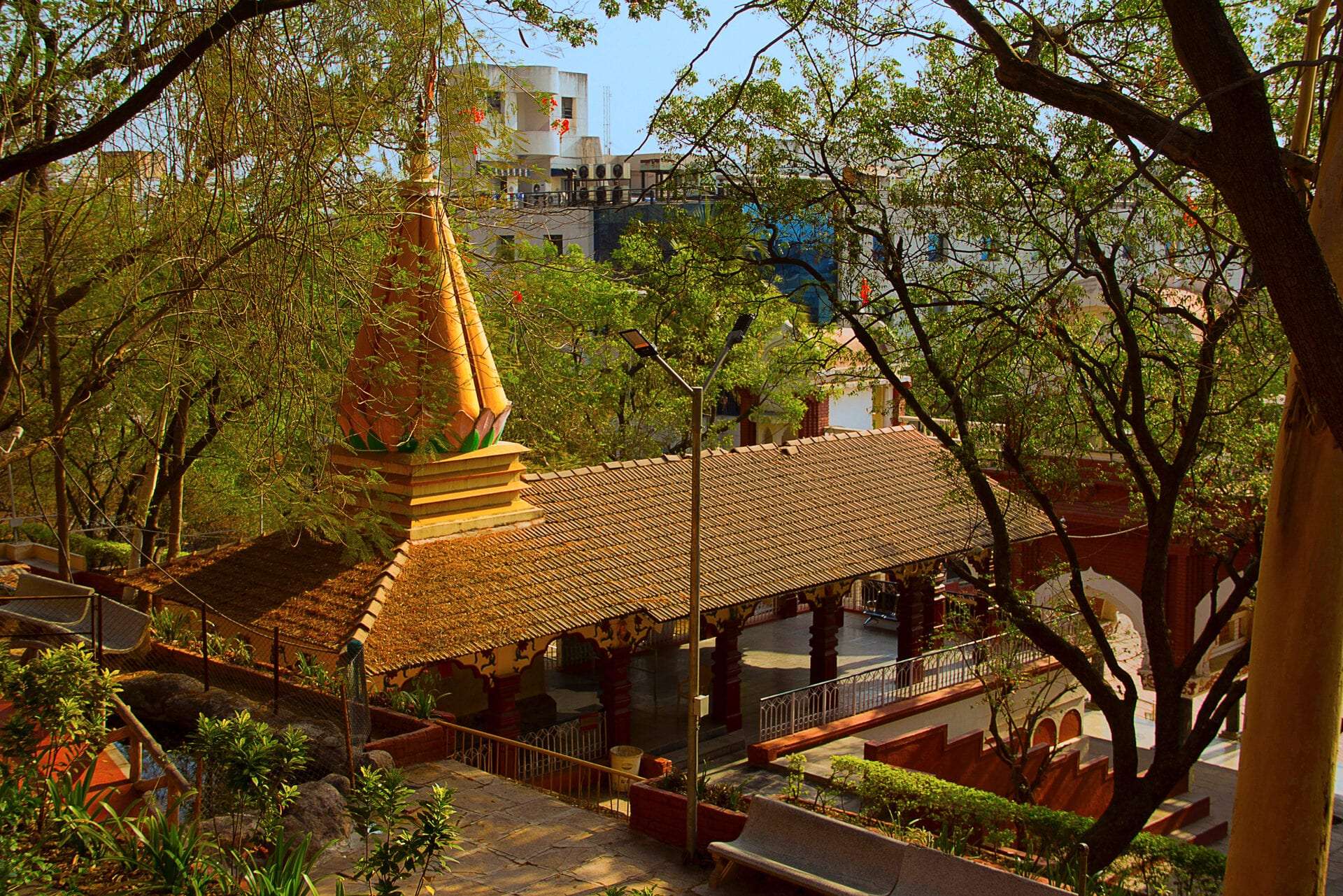
Mayureshwar (Moreshwar) at Morgaon, Pune district. The yatra starts and ends here.
Siddhivinayak at Siddhatek, on the bank of the Bhima river. Here the trunk of the murti turns to the right.
Ballaleshwar at Pali, Raigad district. It is named after the young devotee Ballal.
Varadvinayak at Mahad village, Khalapur taluka near Khopoli, Raigad district. An oil lamp, the Nandadeep, is said to have burned here since 1892.
Chintamani at Theur, the closest temple to Pune city.
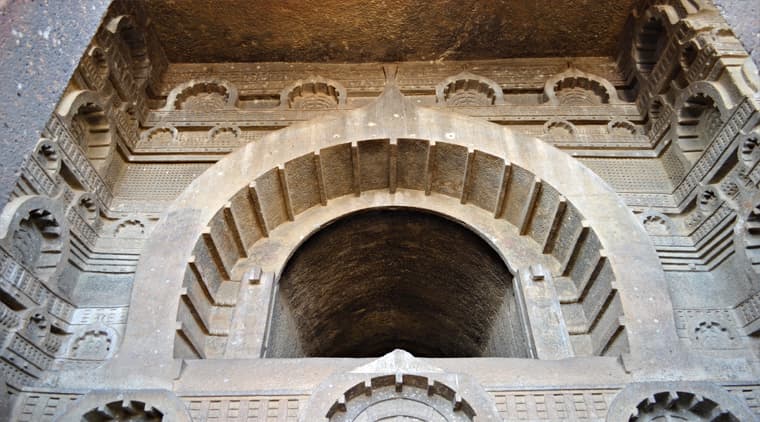
Girijatmaj at Lenyadri near Junnar. It sits inside an old Buddhist rock-cut cave on a hill.
Vighneshwar (Vighnahar) at Ozar, on the Kukdi river near Junnar.
Mahaganapati at Ranjangaon, on the Pune to Ahmednagar road.
After Ranjangaon, tradition says you return to Morgaon once more to complete the yatra.
Lenyadri is the only Ashtavinayak temple on a hill. The shrine is inside Cave 7 of the Lenyadri caves, which date from the 1st to 3rd century AD. To reach it, you climb about 300 stone steps. Most people take 20 to 35 minutes to go up. A palkhi (carried chair) is usually available at the foot of the hill for those who cannot climb. Please confirm the current charge at the counter.
The other seven temples are at ground level and easy to reach by car. So only Lenyadri needs a plan for parents and grandparents.
Theur: about 25 to 30 km.
Ranjangaon: about 50 to 55 km.
Morgaon: about 65 to 80 km, by the Jejuri road.
Ozar and Lenyadri: about 85 to 100 km, near Junnar. The two are about 15 km apart.
Siddhatek: about 100 km or more by road. Daund is the nearest railway station.
Pali and Mahad: about 110 to 120 km. From Mumbai, Mahad is about 80 to 85 km.
The full circle, with the return to Morgaon, is about 600 to 700 km by road. Three days and two nights is the comfortable plan. Two days is possible, but the days are long.
This package keeps the spirit of the traditional order. It also follows the road, so you do not drive back and forth. On day 1 you do the eastern side: Theur, Morgaon and Siddhatek. On day 2 you do Ranjangaon, then the Junnar pair, Lenyadri and Ozar. On day 3 you cross the ghats to Pali and Mahad, and finish in Pune or Mumbai.
If you start from Mumbai, we turn the plan around. You do Mahad and Pali first, then the Pune side.
October to February is the most comfortable time. The weather is cool, the roads are dry, and the Lenyadri steps are easy. From March to May the days are hot, so start at dawn and rest in the afternoon. From June to September the hills turn green, but the roads are slow and the steps can be slippery.
Ganesh Chaturthi, Maghi Ganesh Jayanti and Sankashti Chaturthi bring very large crowds. If you want a calm darshan, choose a normal weekday. If you want to feel the festival, come on these days and keep extra time.
Darshan is open to all devotees. Each temple keeps its own hours, usually from early morning to night, and timings change on festival days. Please confirm the timing at each temple on the day. Wear modest clothes. You leave your shoes outside every temple. Photography is not allowed in the sanctum of most of these temples.
At Mahad, devotees are allowed to go close to the murti, which is rare. At Pali, the besan laddu is the usual prasadam.
Seven of the eight temples need very little walking. Plan Lenyadri for the morning, climb slowly and rest on the way. If someone in the family does not climb, they can wait in the shade at the foot of the hill while the others go up. This does not take anything away from the yatra. A private car with one driver for all three days lets you stop whenever someone needs rest.
Simple Maharashtrian thali, poha, misal pav and sabudana khichdi are easy to find near the temples. Many temples run a bhojanalaya or annadan for devotees. Keep fruit and water in the car, because some stretches between villages have few good stops.
Most families from abroad fly into Mumbai, then drive or take a short flight to Pune. No permit is needed for any of the eight temples. Keep some cash for offerings and village shops, as cards do not work everywhere. Take an Indian SIM in Pune, as the signal can drop in the ghats near Lenyadri and Pali.
Image credits: photographs of the Siddhivinayak temple at Siddhatek by Vinayak Jagtap and Ephotocorp, and of the Mahaganapati idol at Ranjangaon by Dvdfotos, all licensed via Dreamstime.com.
Oct to Feb
Families, seniors and pilgrims
Easy, with one 300-step climb at Lenyadri
Route & distances
Accurate distances and travel times for every leg: 612 km by road. Road times include a traffic buffer; distances marked “aerial” are straight-line for flight, helicopter, ropeway and water legs.
| # | Leg | Mode | Distance | Time |
|---|---|---|---|---|
| 1 | Pune → Theur (Chintamani) | By road | 29 km | ~32mest. |
| 2 | Theur (Chintamani) → Morgaon (Mayureshwar) | By road | 63 km | ~1h 3mest. |
| 3 | Morgaon (Mayureshwar) → Siddhatek (Siddhivinayak) | By road | 65 km | ~1h 13mest. |
| 4 | Siddhatek (Siddhivinayak) → Ranjangaon (Mahaganapati) | By road | 78 km | ~1h 33mest. |
| 5 | Ranjangaon (Mahaganapati) → Lenyadri (Girijatmaj) | By road | 73 km | ~1h 53mest. |
| 6 | Lenyadri (Girijatmaj) → Ozar (Vighneshwar) | By road | 13 km | ~28mest. |
| 7 | Ozar (Vighneshwar) → Pali (Ballaleshwar) | By road | 169 km | ~3h 4mest. |
| 8 | Pali (Ballaleshwar) → Mahad (Varadvinayak) | By road | 40 km | ~39mest. |
| 9 | Mahad (Varadvinayak) → Pune | By road | 82 km | ~1h 29mest. |
Day by day
A carefully paced plan, day by day. Tap any day for the stay, meals and altitude detail.
Today you start early from Pune. Your first darshan is at Chintamani in Theur, about 25 to 30 km from the city. Devotees believe Lord Ganesha here removes worry from the mind.
Next you drive to Morgaon, about 65 to 80 km from Pune. Mayureshwar is the first temple of the yatra. The temple looks like a small fort, with walls and four corner towers.
In the afternoon you cross toward the Bhima river to Siddhatek. Here the murti of Siddhivinayak has its trunk turned to the right. Tonight you stay near Siddhatek or on the way back toward Pune.
Special Tips for This Day: Start at dawn to fit three temples in one day. The last part of the road to Siddhatek is through villages and can be slow, so keep extra time.
Today you start with darshan of Mahaganapati at Ranjangaon, on the Pune to Ahmednagar road. Tradition says Lord Shiva prayed to Ganesha here before his battle with the demon Tripurasura.
Then you drive north toward Junnar. At Lenyadri you climb about 300 stone steps to the cave shrine of Girijatmaj. The view of the valley from the top is lovely. If you cannot climb, a palkhi is usually available at the foot of the hill.
Ozar is about 15 km away. Vighneshwar temple has a golden dome and a big courtyard. Tonight you stay near Junnar, or drive back to Pune.
Special Tips for This Day: Climb Lenyadri in the cooler part of the day. Wear good shoes and carry water. If you have time near Junnar, you can also visit Shivneri Fort, the birthplace of Chhatrapati Shivaji Maharaj.
Today you cross the ghats into Raigad district. First comes Ballaleshwar at Pali, the only Ashtavinayak temple named after a devotee, the boy Ballal. The usual prasadam here is the besan laddu.
Then you drive to Varadvinayak at Mahad village near Khopoli. Here devotees can go close to the murti. Please look for the Nandadeep, the oil lamp said to have burned since 1892.
From Mahad you can end the yatra in Mumbai, about 80 to 85 km away, or return to Pune. If you wish to complete the yatra in the old way, we can add a short final visit to Morgaon.
Special Tips for This Day: This is the longest day, so start early. Mahad is the Mahad village near Khopoli, not the bigger Mahad town further south in Konkan.
Travel tips
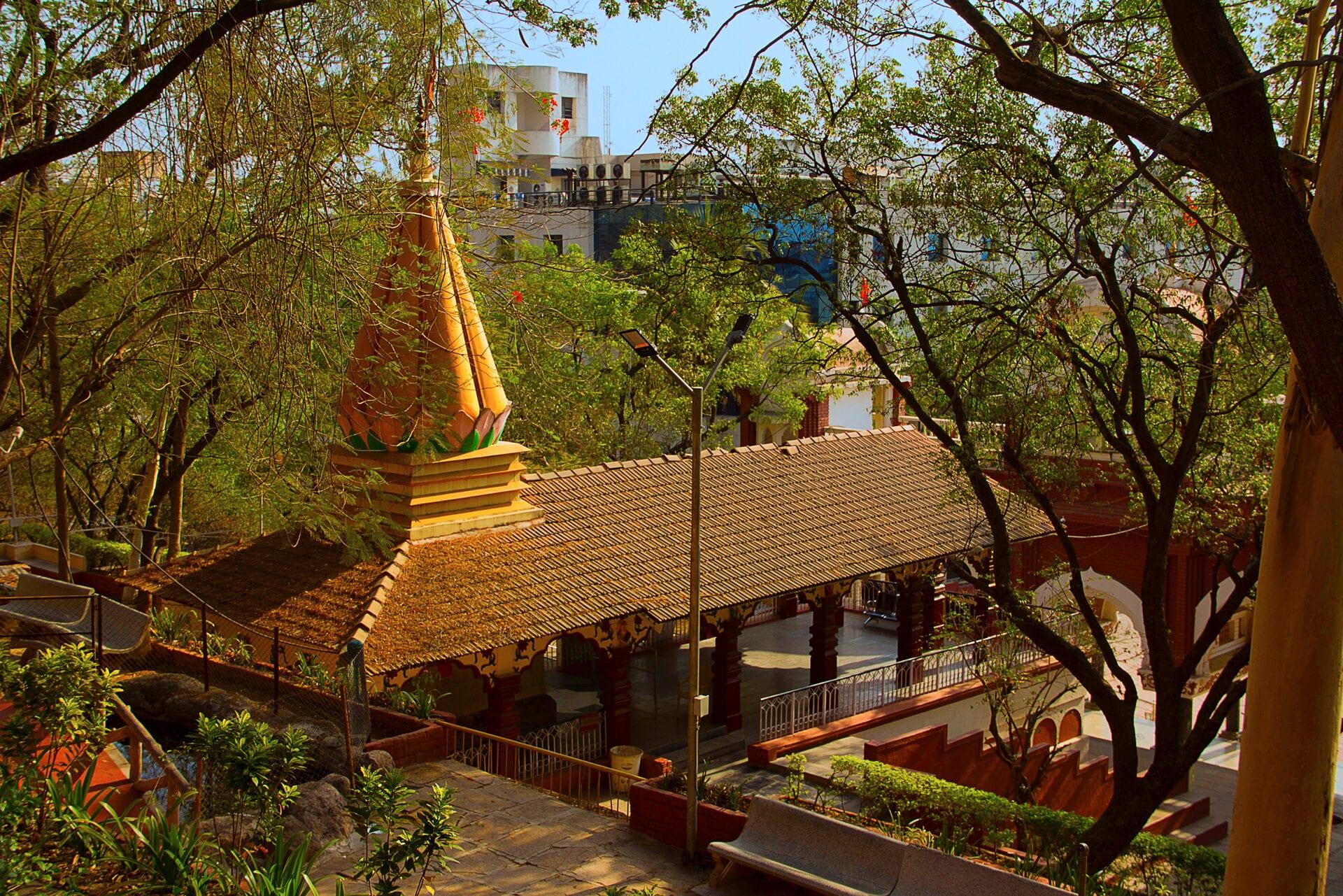
Eight ancient Ganesha temples sit in a circle around Pune. Here, in one place, is how to do all eight in the right order, over two or three easy days, for families flying in from abroad and for pilgrims driving from Pune or Mumbai.
The Ashtavinayak yatra is a road circuit across the country around Pune, so the season shapes the whole trip. The best months are the cooler, drier ones of about October to February, when the driving between the eight temples is comfortable, the mornings fresh, and the long day on the road never a trial. The monsoon, roughly June to September, greens the ghats and fields beautifully, but the village and hill roads to Pali, Mahad and Lenyadri turn slow and slippery, and the Lenyadri steps grow wet, so if you come in the rains, allow more time and drive gently. The heart of summer, from March to early June, is hot and tiring on a full day of temple hopping, so start each day at first light and rest through the afternoon. Whatever the month, the yatra is an early-morning affair: the first darshan of the day, before the queues and the heat build, is always the calmest and the most unhurried.
The Ashtavinayak circuit is best in the cool, dry months of about October to February, with the monsoon slower on the ghat roads and summer hot on a full temple day. But in every season the golden rule is the same: start early. The first darshan of the morning, before the queues and the heat, is the calmest, and an early start is the only way to fit several temples into one comfortable day of driving around Pune.
Ashtavinayak is not one address but eight, scattered across the country around Pune, so the first thing to understand is that Pune is your base and the yatra is a loop by road. The nearest airport is Pune (code PNQ) and the main railhead is Pune Junction, both well linked to Mumbai and the rest of India; Daund station is a handy nearer railhead for Siddhatek. From Pune, the traditional shastrokt order begins and ends at Morgaon: Moreshwar at Morgaon, then Siddhivinayak at Siddhatek, Ballaleshwar at Pali, Varadvinayak at Mahad, Chintamani at Theur, Girijatmaj at Lenyadri, Vighneshwar at Ozar and Mahaganapati at Ranjangaon, before a closing return to Morgaon. The eight lie in different directions, some near Pune like Theur, some off on the Konkan side like Pali and Mahad, and one, Siddhatek, off the main loop beyond the Bhima river. A car or a tour that knows the roads makes the whole circle far smoother than trying to string the villages together yourself.
Pune is the gateway. The airport (PNQ) has flights from the major Indian cities, and overseas travellers usually route through Mumbai and hop across or drive down. Pune Junction is the main railway station, well connected to Mumbai, and Daund is a useful nearer railhead for the Siddhatek side. From Pune you then travel the circuit by road, as none of the eight villages has its own airport or a temple at a station.
The shastrokt yatra starts and ends at Morgaon and runs: Moreshwar (Morgaon), Siddhivinayak (Siddhatek), Ballaleshwar (Pali), Varadvinayak (Mahad), Chintamani (Theur), Girijatmaj (Lenyadri), Vighneshwar (Ozar), Mahaganapati (Ranjangaon), then back to Morgaon to complete the circle. Many two-day trips reorder the temples for driving sense while keeping this as the devotional sequence.
The temples lie in three loose clusters around Pune: Theur, Morgaon and Ranjangaon on the eastern and southern side near Pune; Pali and the Mahad village near Khopoli, which is not the Konkan town of Mahad, away to the west beyond the ghats; and Lenyadri and Ozar to the north near Junnar. Siddhatek sits off on its own beyond the Bhima river, which is why it needs a detour. Understanding these clusters is the key to planning the driving.
Reach Pune by air (PNQ) or rail (Pune Junction, or Daund for Siddhatek), then do the eight temples as a road circuit of roughly 650 to 700 km over two to three days. The traditional order starts and ends at Morgaon, but the eight lie in different directions, some near Pune, some on the Konkan side, and Siddhatek off the main loop, so a car or a tour that knows the villages makes the whole circle far easier.
The whole point of the yatra is the eight temples themselves, and each has its own face and its own legend, so it repays knowing a little about each before you arrive. Together they tell eight different stories of Ganesha, from the peacock-riding Mayureshwar at Morgaon to the fierce Mahaganapati at Ranjangaon, and no two idols or temples are alike. Morgaon, the fort-like temple with four corner minarets, is the first and last. Siddhatek holds the rare right-turned trunk. Pali is named for a devotee boy. Mahad keeps a lamp burning since 1892. Theur, nearest to Pune, stills the worried mind. Lenyadri sits high in a Buddhist cave up a long stair. Ozar wears a golden dome. Ranjangaon enshrines the mightiest form. Give each its due, look at the carving and the setting, and the eight together become far more than a checklist of darshans.
The eight are not repeats of one shrine but eight distinct temples and legends: the peacock-rider at Morgaon, the right-trunked idol at Siddhatek, the devotee-named Ballaleshwar at Pali, the ever-burning lamp at Mahad, the worry-remover at Theur, the cave on the hill at Lenyadri, the golden dome at Ozar, and the mighty form at Ranjangaon. Knowing each one's story before you arrive turns the yatra from a run of quick darshans into a journey through eight faces of the same beloved deity.
An Ashtavinayak yatra is something you do, not merely see, and the doing is what stays with you. The heart of it is completing the eight darshans in order, closing the circle back at Morgaon, a devotional arc that many families undertake once in a lifetime or to fulfil a vow. Along the way there are moments that stand out: the long climb up to Girijatmaj at Lenyadri, over 300 stone steps into the cool of an old Buddhist cave, breathless and rewarding; the quiet of an early weekday darshan when you have the sanctum almost to yourself; the fort-like walls of Morgaon at first light; the golden dome of Ozar catching the sun. If you wish, you can arrange a puja or abhishekam at the temples, and simply sitting a while in each after the darshan, rather than rushing to the car, is its own experience. The rhythm of the road, temple to temple through the Maharashtra countryside, is as much the yatra as the shrines.
Beyond the darshans, the rhythm of the road, temple to temple through the fields, ghats and villages of the country around Pune, is itself the experience of an Ashtavinayak yatra. Arrange a puja or abhishekam where you wish, sit a while in each sanctum, climb the Lenyadri steps in the cool of the morning, and let the days settle into the gentle pace of the circle. Done unhurried, the journey between the eight is as devotional as the shrines themselves.
A few practical things make the difference between a smooth yatra and a fraught one. The first is the driving: the circuit is long, roughly 650 to 700 km in all, over highways, village lanes and a stretch of ghat road towards Pali and Mahad, so a rested driver, an early start each day and no night driving on the lonely roads keep it safe. The second is the Lenyadri climb of over 300 steps, which needs water, decent shoes and time, and which shapes how you plan for anyone less mobile. The third is the queues: on ordinary weekdays the darshan is quick, but on festival days and Chaturthis they stretch long, so time your visit and reach the busy temples early. Beyond these, dress modestly for temple entry, remove footwear at the shrines, carry cash for the villages, keep phones and valuables minimal, and remember that each temple keeps its own hours, so confirm timings on the day.
Each temple keeps its own hours, and timings change on festival days. Please confirm the timing of each temple on the day. Reach Lenyadri early, so you climb in the cool and never arrive to a closed sanctum after a long drive.
The Ashtavinayak circuit is most comfortably done in three days, and can be done in a tight two, both from a Pune base. A common and workable two-day plan takes the temples in driving order rather than strict shastrokt order while keeping the traditional sequence as the devotion: day one does the eastern and southern cluster, Theur, then Morgaon, Siddhatek and Ranjangaon; day two does the far and northern temples, an early start for Ozar and the Lenyadri climb, then the long drive west to Mahad and Pali on the Konkan side. It is a full two days with real driving, including one long stretch of well over a hundred kilometres, so it suits the fit and the determined. A gentler three-day plan spreads the same eight out, giving the Konkan-side Pali and Mahad and the Siddhatek detour their own unhurried time, and leaves room to sit a while in each temple. Whichever you choose, keep Lenyadri early in a day for the cool climb, and close the circle, in spirit, back at Morgaon.
Whatever the length, two rules keep the plan sound: do Lenyadri early in its day so the over-three-hundred-step climb is done in the cool before the heat and the crowds, and treat Morgaon as both the start and the close of the circle in the traditional sequence, even if your driving order differs. Build a night on the route near a cluster if you can, so the second day starts close to the temples rather than after a long drive out from Pune.
The Ashtavinayak yatra draws every kind of pilgrim, and a little planning lets each get what they came for, with the Lenyadri steps the one thing that really needs thought. For devout pilgrims, the completion of all eight in order is the whole reward, and the pace can be slow and prayerful. For families with children, the road trip, the different temples and the Lenyadri climb make a real adventure, though small children tire on the long driving days. For elderly parents and the less mobile, seven of the eight temples are easy and close to the road, but Lenyadri, up over 300 steps, is the hurdle: some seniors manage it slowly with rests, others use a carried palanquin or doli where available, and some choose to rest at the base while the family climbs, which takes nothing from the yatra as a whole. For solo travellers and first-timers, a group tour or a hired car with a driver who knows the route removes all the guesswork. The yatra rewards the whole family; only Lenyadri asks you to plan for the legs in the group.
For an overseas or NRI family, the Ashtavinayak yatra is a wonderfully doable pilgrimage, because everything hangs off Pune, a well-connected city. Most travellers from abroad fly into Mumbai and take a short hop or drive down to Pune (airport code PNQ), then do the whole eight-temple circle by road over two or three days. Nothing unusual is asked of a foreign passport or an OCI card: darshan at all eight temples is free and open to every respectful visitor, and no special permit is needed. The two things worth fixing before you come are the plan and the pace: arrange a hired car with a driver who knows the villages and the traditional order, or join a reputable group tour, so you are not navigating remote lanes yourself; and be honest about the Lenyadri climb of over 300 steps when there are elders in the group. Time the trip for the cool October-to-February window, keep the days early, and the yatra folds neatly into a wider Maharashtra trip taking in Pune, Mumbai and beyond.
The simplest route from abroad is Mumbai, then Pune (PNQ), then the eight-temple road circuit over two or three days with a driver or a group tour. Darshan is free and welcoming to visitors from anywhere, no permit is needed, and the only real planning points are the pace, the Lenyadri steps for any elders, and coming in the cool season. It pairs naturally with a wider Pune and Maharashtra trip.
The practical logistics for an overseas visitor to the Ashtavinayak circuit are gentle, and a little preparation makes them gentler still. Carry cash in Indian rupees, because the temple offerings, the village eateries, the smaller shrines and the trust rooms all work best with notes and coins, even though cards and phone payments are common in Pune itself; the villages on the route are far less reliable for digital payment. Get an Indian prepaid SIM in Pune for the trip, as mobile coverage, though generally fine along the route, can be patchy in the hill and ghat stretches around Lenyadri and the Konkan-side temples, and download your maps and the temple details in advance. For timing, build each day around an early start, both to beat the heat and to catch the calmest darshan, and give the circuit three days rather than two if the trip allows, especially with elders or children. If you visit around Ganesh Chaturthi or a Chaturthi you will see the temples at their most fervent and their most crowded, so allow extra time and patience. A driver or a group tour handles the rest.
Pilgrims planning the Ashtavinayak yatra tend to ask the same handful of practical questions, and the honest answers are simple. The traditional darshan order starts and ends at Morgaon and runs Morgaon, Siddhatek, Pali, Mahad, Theur, Lenyadri, Ozar, Ranjangaon; many two-day trips reorder the driving while keeping this as the sequence. You need two days at a push and three for comfort, over a circuit of roughly 650 to 700 km from Pune. Darshan at all eight is free; your cost is the car or bus and the stays. Lenyadri is the one real climb, over 300 steps, and the one to plan around for seniors. Siddhatek sits off the main loop beyond the Bhima and needs a detour. Weekdays are calm; festival days and Chaturthis are very crowded. And the MSRTC bus tour is the cheapest way round, while a hired car is the most flexible. Settle these before you go and the yatra itself is easy.
Eight villages, one circle around Pune, and the same Lord Ganesha waiting at each.
Tradition says the yatra is complete only when you return to Morgaon, where it began. Take it slowly over three days, pause at the cave of Girijatmaj at Lenyadri, and you carry home the blessing of all eight.
What's included
What travellers say
“Had a wonderful experience with way to india for my badrinath kedarnath yatra.everything was well organized-from travel accommodation to food. A special thanks to Ms. Neha who managed everything so beautifully n was extremely supportive n cooperative throughout the journey. They took great care of us n darshan was done very smoothly.”a month ago · Google
“A big thanks to Way To India for organising such a truly memorable and spiritually fulfilling experience during our 12 Jyotirlinga Darshan pilgrimage from 1st May to 18th May. They organized the entire journey exceptionally well, ensuring that every aspect of the trip was smooth, comfortable, and hassle-free. From transportation and hotel arrangements to darshan planning and coordination, everything was managed professionally. Despite the extensive travel across multiple destinations, the itinerary was well-structured, allowing us to complete all the Jyotirlinga darshans comfortably. Thanks to staff of Way To India, especially, Ms Neha, who was supportive, responsive, and attentive throughout the journey, always ready to assist whenever needed. Her dedication and careful planning made this sacred pilgrimage stress-free and enjoyable. I sincerely appreciate their excellent service, commitment, and hospitality. Highly recommend Way To India to anyone planning a spiritual tour, especially for the 12 Jyotirlinga Yatra. Thank you for making this divine journey so special and memorable.”5 months ago · Google
“We have successfully completed the 12 Jyotirlinga Yatra, with Waytoindia and it was a truly blessed and unforgettable journey. Every aspect of the tour was well planned and professionally organized, from transportation and accommodations to temple visits and sightseeing. Visiting all twelve sacred Jyotirlingas was a deeply spiritual experience. The itinerary was designed efficiently, allowing us to have darshan at each shrine comfortably while enjoying the cultural and religious significance of every destination. We sincerely appreciate the excellent support and coordination throughout the trip. The team was always available to assist, ensuring a smooth and stress-free pilgrimage. Thank you Waytoindia for making our dream of completing the 12 Jyotirlinga Yatra a reality. We highly recommend this tour to anyone seeking a well-organized and spiritually enriching pilgrimage experience. Har Har Mahadev! 🙏🕉️”5 months ago · Google
Travelled with Way to India?
Share your experience on Google — it takes a minute and helps fellow travellers plan with confidence.
FAQ
The eight are Mayureshwar at Morgaon, Siddhivinayak at Siddhatek, Ballaleshwar at Pali, Varadvinayak at Mahad, Chintamani at Theur, Girijatmaj at Lenyadri, Vighneshwar at Ozar, and Mahaganapati at Ranjangaon. Five lie in Pune district, Siddhatek lies in Ahilyanagar (Ahmednagar) district, and two lie in Raigad district. Each has its own murti and its own old story.
The traditional order begins at Morgaon and moves through Siddhatek, Pali, Mahad, Theur, Lenyadri, Ozar and Ranjangaon, then returns to Morgaon to complete the yatra. On the road, most people follow a geography-friendly route to save time, which we plan for you, while keeping the spirit of the tradition.
Three days and two nights is the comfortable choice. A two-day trip is possible but tight. One day is far too rushed, since the full circuit covers about 600 to 700 km by road. Three days let you rest and do calm darshan at each temple.
Girijatmaj at Lenyadri is the only one on a hill. To reach the cave shrine you climb a long flight of about 300 stone steps. That is the one hard temple. The other seven are at ground level and easy to reach, so seniors only need to plan for Lenyadri.
Five of the eight are in Pune district and Siddhatek is just across in Ahilyanagar district, so Pune is the usual base. The other two, Pali and Mahad, lie in Raigad, toward Mumbai. Starting from Mumbai, do the Raigad pair first, and move to the Pune cluster after.
Yes, with care. Seven temples are easy to reach and involve little walking. Lenyadri is the exception, with about 300 steps, so seniors may rest often, climb slowly, or arrange help for that one temple. The rest of the yatra is gentle.
October to February is the most pleasant, with cool weather and easy drives. The monsoon, from June to September, turns the hills green, but the roads slow down and the Lenyadri steps get slippery. Summer is hot for long drives. Also avoid Ganesh festival days and Sankashti Chaturthi, when crowds peak.
By road the full circuit is about 600 to 700 km in all, across the Pune region and Raigad. Distances between temples vary widely, from about 25 km for the nearest to over 100 km for the far ones, which is why a planned route saves so much time.
Yes. From Mumbai you can begin with the two Raigad temples, Ballaleshwar at Pali and Varadvinayak at Mahad, which are on that side. Then you move to the Pune cluster for the other six. We plan the route to suit a Mumbai start or a Pune start.
Each temple keeps its own timings, usually from early morning to night, and some close for a short midday break. These can change on festival days. We advise you to confirm the current timings at each temple on the day, and we plan the route so you arrive within darshan hours.
You may also like
 6D / 5N
 18D / 17N
 19D / 18N3D / 2N
 4D / 3N
Tell us your dates and group size. A WayToIndia travel expert replies within a few hours with a plan you can customise freely. Planning India journeys since 2010.
Explore Way to India
© 2026 Way to India. All rights reserved.