 18D / 17N 5
 All Sacred Circuits
Jyotirlinga · Shiva
Grishneshwar Jyotirlinga
Grishneshwar is the twelfth and last of the twelve Jyotirlingas, and it sits quietly in the village of Verul, barely 2 km from the world famous Ellora caves. It is one of the smallest Jyotirlinga temples, yet the darshan here feels close and personal in a way the bigger shrines rarely allow. Come for the caves if you wish, but give the Lord of Ghushma his unhurried hour first.
The story of this place
The tradition, as told in the Shiva Purana, remembers a devoted woman named Ghushma. Every day she made 101 shivlingas, worshipped them, and immersed them in the pond near her home. Her sister Sudeha, burning with jealousy, killed Ghushma's young son and threw his body into that same pond. Ghushma did not stop her worship. She went to the pond as always, and there, devotees believe, Lord Shiva restored her son to life and appeared before her. At her request he agreed to stay at that spot forever, and he is worshipped here as Grishneshwar, also called Ghushmeshwar, the Lord of Ghushma.
The temple you see today carries the devotion of two great families. In the 16th century it was rebuilt by Maloji Bhosale of Verul, the grandfather of Chhatrapati Shivaji Maharaj. In the 18th century, Queen Ahilyabai Holkar of Indore, who restored so many of our great temples, gave Grishneshwar its present form. In the traditional list of the twelve Jyotirlingas, Grishneshwar comes last, so many yatris complete their twelve Jyotirlinga sankalp at this very door.
What you will see
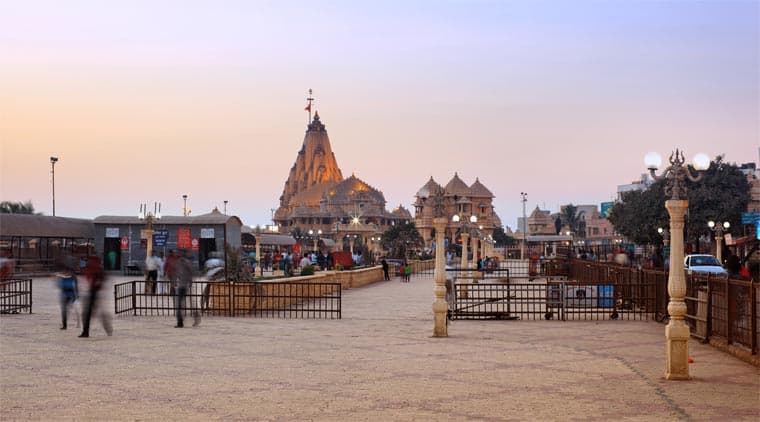
The temple is built of red stone, and its walls and pillars carry fine carvings of Lord Shiva, Goddess Parvati and scenes from our scriptures. A shikhara rises above the sanctum, and a Nandi sits facing his Lord at the entrance, as he does in every Shiva temple.
The garbhagriha is small, and this is the sweetness of Grishneshwar. You do not see the Jyotirlinga from thirty feet away across a barricade. You come close, and on most days devotees are allowed to touch the shivling and offer jal with their own hands. Very few of the twelve Jyotirlingas allow this, so receive it as the blessing it is. Stand a moment in the courtyard afterwards and look at the carvings; the whole temple can be seen slowly and well in about an hour.
Darshan, timings and temple etiquette
The temple follows the usual rhythm of a Jyotirlinga shrine. Doors open early, around 5:30 in the morning with the first aarti, darshan continues through the morning, there is a short break around midday, and darshan then runs through the afternoon and evening until about 9 at night. In the month of Shravan and on Mahashivratri the temple keeps much longer hours and the queues grow long. Timings shift with the season and the crowd, so please check the current schedule on the temple website or with your consultant before you go.
One rule is followed strictly here: men must remove their shirt and upper garment before entering the sanctum. Ladies should dress traditionally and modestly. Keep your footwear at the stand outside, carry only your puja items, and follow the pujaris' guidance inside. If you wish to do abhishekam, tell the temple staff and they will guide you on the proper way.
Plan Ellora and Grishneshwar together
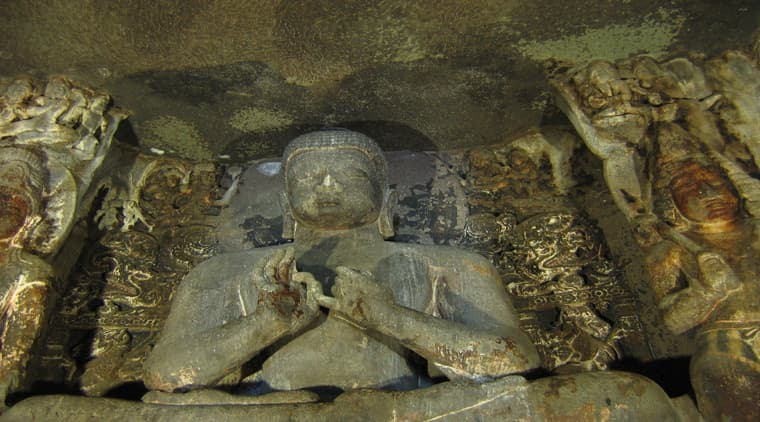
This is one of the rare places in India where a Jyotirlinga and a UNESCO World Heritage Site sit side by side. The Ellora caves are barely 2 km from the temple, and the great Kailasa temple there, carved out of a single rock, is itself dedicated to Lord Shiva. Seeing the two together on one day makes the whole journey richer: darshan of the living shrine in the morning, and the carved mountain of faith in the cooler part of the day.
Remember one thing when you plan: the Ellora caves stay closed every Tuesday, while the Grishneshwar temple is open all seven days. There is an entry fee for the caves, please check the current rate on the official website. Daulatabad Fort and the Bhadra Maruti temple at Khuldabad also fall on the same road if you have time in hand.
Best time to visit
October to March is the most comfortable season, when the Deccan is cool and pleasant. April to June is very hot in this region, so if you must come then, finish your darshan and the caves early in the morning.
Shravan, Mahashivratri and other Shiva festivals bring very large crowds and a wonderful atmosphere. Come at these times only if the festival itself is your purpose; for a calm, close darshan, an ordinary weekday morning outside the festival season is best.
How to reach
The temple is about 30 km from the city of Chhatrapati Sambhajinagar, which many of us still call Aurangabad. The city's airport, about 30 km from the temple, has flights from Delhi and Mumbai, and the main railway station is also about 30 km away. From the city, taxis and buses run regularly to Verul and Ellora.
If you are coming from Shirdi, the drive is about 130 km, and many of our guests join Shirdi and Grishneshwar in one journey. From Mumbai it is a long road of about 350 km, so a train or flight to Chhatrapati Sambhajinagar is the easier way.
Tips from our travel experts
Reach the temple by 6 or 7 in the morning. The queue is short, the air is cool, and you will still have the whole day for Ellora. On ordinary days the darshan queue takes well under an hour.
Carry a simple cloth bag for your puja items and leave the rest in your car. Men, wear something you can remove easily at the sanctum. And do not rush away after darshan; sit in the courtyard for a few minutes, as generations of pilgrims have done, before the world calls you back.
For our NRI and OCI travellers
If you are flying in from abroad, come through Mumbai or Delhi and take the short connecting flight to Chhatrapati Sambhajinagar. Two nights here are enough for a full and unhurried experience: Grishneshwar and Ellora on one day, Daulatabad and the city on the next.
Many of our overseas guests are completing the twelve Jyotirlingas across several trips to India. Grishneshwar pairs naturally with Shirdi, Shani Shingnapur and Nashik's Trimbakeshwar in a single Maharashtra circuit, and we plan this route often. Tell us your dates and we will build the drive so no day is too long for your parents.
Questions travellers ask us
Can I touch the Grishneshwar Jyotirlinga?
Yes, on most days devotees are allowed into the sanctum to touch the shivling and offer jal, which is rare among the twelve Jyotirlingas. This can change on heavy festival days, so follow the pujaris' guidance on the day of your visit.
Is there a dress code at Grishneshwar temple?
Yes. Men must remove their shirt and upper garment before entering the sanctum, and ladies should dress traditionally and modestly. Keep your footwear at the stand outside the temple.
How far is Grishneshwar from the Ellora caves?
Barely 2 km. Most travellers see both on the same day, with temple darshan in the early morning and the caves afterwards. Remember that the Ellora caves are closed every Tuesday, while the temple is open daily.
What are the temple timings?
The temple opens around 5:30 in the morning and closes around 9 at night, with a short break around midday. Hours are extended in Shravan and on Mahashivratri. Timings shift, so check the current schedule on the temple website before you travel.
Which is the nearest city and airport?
Chhatrapati Sambhajinagar, earlier called Aurangabad, is about 30 km away and has the nearest airport and main railway station, with flights from Delhi and Mumbai. Shirdi is about 130 km by road.
Why is Grishneshwar called the last Jyotirlinga?
In the traditional stotra that lists the twelve Jyotirlingas, Grishneshwar comes twelfth, so it is remembered as the last. Many devotees plan it as the final darshan of their twelve Jyotirlinga sankalp.
A note on the tours below. These packages travel close to Grishneshwar Jyotirlinga, but a package may not include a guided visit to the site itself. If you would like this place added to your journey, please tell your Way to India travel consultant and they will happily build it into your itinerary for you.
Yatras where you stay right by the temple
18D / 17N 5You stay at Aurangabad
 4D / 3N
You stay at Aurangabad
 13D / 12N
You stay at Aurangabad
 5D / 4N
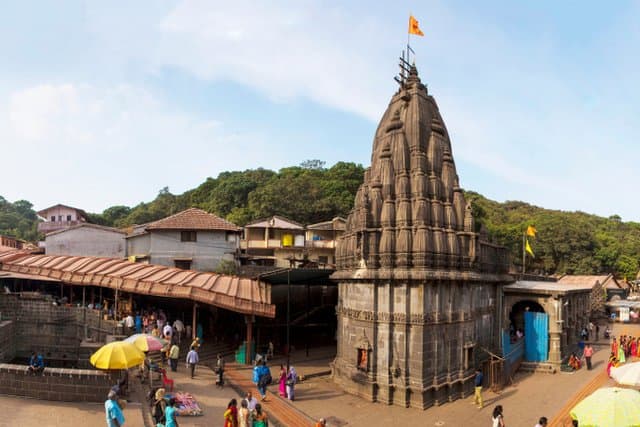
Trimbakeshwar Grishneshwar Bhimashankar Jyotirlinga Tour
From₹25,056* / person
Explore →EMI from ₹1,227/mo
You stay at Aurangabad