01
Trimbakeshwar
near Nashik
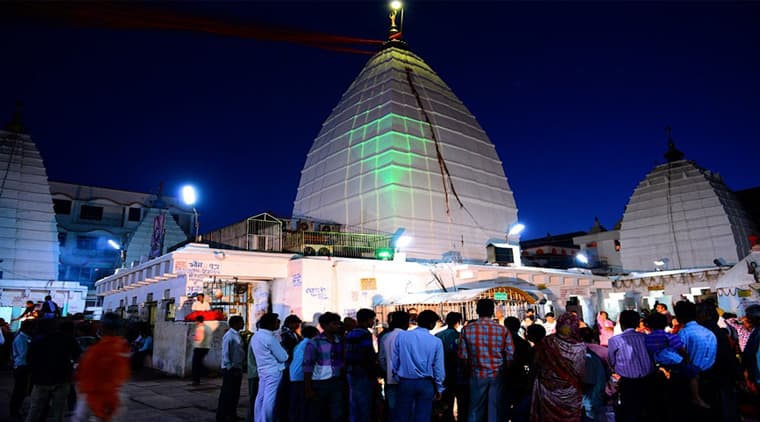
A three-faced linga at the source of the Godavari river

Overview
Trimbakeshwar Grishneshwar Bhimashankar Jyotirlinga Tour 2026, Jyotirlinga in Maharashtra tour is one opportunity to visit five of the twelve Jyotirlinga temples of Lord Shiva. The Western India state of Maharashtra hosts the maximum number of Shiva Jyotirlinga in India which attracts flocks of pilgrims every year.
For more information about our 12 Jyotirlinga Tour Package
Trimbakeshwar Grishneshwar Bhimashankar Jyotirlinga Tour Jyotirlinga in Maharashtra tour (also famously known as Panch Jyotirlinga tour from Mumbai) is one opportunity to visit five of the twelve Jyotirlinga temples of Lord Shiva . The Western India state of Maharashtra hosts the maximum number of Shiva Jyotirlinga in India which attracts flocks of pilgrims every year. These include Trimbakeshwar Jyotirlinga, Aundha Nagnath Jyotirlinga, Parli Vaidyanath (or Vaijnath) Jyotirlinga, Bhimashankar Jyotirlinga and Grishneshwar Jyotirlinga Temple. You would be enthralled by the spiritual ambiance of Jyotirlinga in Maharashtra, each having its own historical and mythological importance.
It is also exciting to discover fascinating architectural styles of these temples. Jyotirlinga in Maharashtra tour begins at the dream city of Mumbai and also covers other coveted pilgrimage destinations in the state. One of them is the Shani Shingnapur Temple which is considered as ‘alive’ with the presiding deity, God Shani, actually living inside. You would also visit the peaceful holy town of Shirdi where the Samadhi of Saint Sai Baba is visited by millions of pilgrims from every corner of the world. Visiting these places along with the 5 Jyotirlinga in Maharashtra is a life-changing experience and should be done at least once in a lifetime.
Oct–Mar
Shiva Devotees
Easy
Route & distances
Accurate distances and travel times for every leg: 1,609 km by road. Road times include a traffic buffer; distances marked “aerial” are straight-line for flight, helicopter, ropeway and water legs.
| # | Leg | Mode | Distance | Time |
|---|---|---|---|---|
| 1 | Mumbai → Trimbakehwar | By road | 192 km | ~3h 38m |
| 2 | Trimbakehwar → Aurangabad | By road | 208 km | ~3h 53m |
| 3 | Aurangabad → Aundha Nagnath Temple | By road | 200 km | ~4h |
| 4 | Aundha Nagnath Temple → Parli Vaijnath Temple | By road | 118 km | ~2h 20m |
| 5 | Parli Vaijnath Temple → Aurangabad | By road | 218 km | ~4h 16m |
| 6 | Aurangabad → Grishneshwar | By road | 41 km | ~43mest. |
| 7 | Grishneshwar → Shani Shingnapur | By road | 102 km | ~2h 3m |
| 8 | Shani Shingnapur → Shirdi | By road | 72 km | ~1h 48m |
| 9 | Shirdi → Bhimashankar | By road | 188 km | ~3h 56m |
| 10 | Bhimashankar → Pune | By road | 124 km | ~3h |
| 11 | Pune → Mumbai | By road | 146 km | ~2h 39mest. |
Day by day
A carefully paced plan, day by day. Tap any day for the stay, meals and altitude detail.
Panch Jyotirlinga tour from Mumbai (also famously called by some as Mumbai Jyotirlinga tour) begins with your arrival in Mumbai, the state capital. As pre-decided, our Jyotirlinga tour representative meets you at the airport or railway station or any other location. We immediately begin the journey by road to the town of Trimbak, the first destination of the Jyotirlinga list.
On arrival, visit Trimbakeshwar Jyotirlinga temple which houses a Shiva Lingam with 3 small lingams embodying the faces of Brahma, Vishnu and Shiva(Mahesh). As per the legend, Sage Gautama, in order to get rid of the sin of accidentally killing a cow performed penance to Lord Shiva who appeared at the nearby Brahmagiri Hill and commanded River Ganga to flow as River Godavari from here. When the river, disappointed at leaving the lord, appeared and disappeared at different places, Gautama managed to stop it at Kushavarta, a water tank still present in the temple premises. The sage bathed in the tank to wipe off his sin and prayed to Shiva to stay here forever and he complied by appearing in the form of the Lingam.
The temple opens from 05:30 a.m. to 09:00 p.m. and is famous for the most revered place in India to perform pujas to get rid of horoscope doshas (curses) like Pitru Dosha and Kalsarpa Dosha.
It is worth mentioning that a highly precious crown (with emeralds, diamonds and other jewels) is displayed over the Lingam every Monday. Visitors are only allowed to have darshan of the lingam from a distance and only male visitors who book special Pooja are allowed to touch it after wearing the instructed dress.
Later, leave Trimbak to start the road journey to Aurangabad. On arrival, check in at the booked hotel and stay overnight.
Start the day early and join us on the road trip to the second among the Panch Jyotirlinga tour from Mumbai, it is Aundha Nagnath Jyotirlinga which is located in the town by the same name.
According to the legend, Lord Shiva decided to stay here in the form of a lingam to protect the people from a demon named Daruka. Another popular story associated with the temple is that when the eminent Saint Namdev was denied to sing bhajans (songs praising God) at the front of the temple by the priests, he went to the back of the temple and started singing there. However, the Almighty who was impressed by his singing rotated the temple by 180 degrees. This is the reason that the statue of Nandi, Shiva's Bull, which usually faces the Lingam is found at the back of this temple. The temple opens from 04:00 a.m. to 09:00 p.m. Pray at the temple and admire its stunning carvings.
Later, start the road trip to Parli Vaidyanath Jyotirlinga which is located in the town of Parli on the mountain named Meru and near three ancient rivers named Venu, Brahma and Saraswati. The legend states that when Amrit (holy nectar) and Dhanavantri (the physician of Gods) emerged out of Sagar Manthan (churning of the ocean) performed by Gods and demons, Lord Vishnu hid them in the Shiva Lingam at Parli to save them from demons. When demons tried to touch the lingam, the flames erupted but Amrit flew out of it when the Gods and devotees touched the lingam. Even today, the lingam is believed to empower devotees who touch it with the holy nectar and healing powers. This is the reason that it is known as Vaidyanath (or Lord of Physicians). The entire region is full of herbs with medicinal powers. Pray at the temple which opens from 05:00 a.m. to 09:00 p.m. (closes between 03:30-06:00 p.m.).
Then, start the return trip to Aurangabad for night stay.
In the early morning, we start the road trip to Grishneshwar Jyotirlinga Temple(the fourth among the Panch Jyotirlinga tour from Mumbai) which is located in a small village called Verul.
On arrival, visit the temple which opens from 05:30 a.m. to 09:00 p.m. The mythological story associated with the temple states that an ardent Shiva devote named Ghushma lived in the area along with her husband and his second wife named Sudeha. Ghushma used to worship Lord Shiva by making 101 Lingams and immersing them in a lake every single day. Once, Sudeha kills Ghushma's son out of jealousy and throws his body in the same lake. When Ghushma came to know about his son's absence, she was not moved even a bit and believed firmly that Shiva will protect her son. Her belief came true as his son returned soon in perfectly fine condition. Then, Ghushma requests Lord Shiva to forgive Sudeha and stay there forever. Shiva granted her wishes and established himself as the lingam. Pray at the temple which is among few Shiva Jyotirlinga temples where devotees can actually touch the lingam.
Later, start the journey to the village of Shani Shingnapur which is home to the popular temple dedicated to God Shani (associated with the planet Saturn). The residents of the village don't put doors or locks to their properties as they firmly believe that no theft or robbery is possible due to the presence of Shani Dev in the village.
On arrival, visit the shrine which houses the swayambhu (self-manifested) stone image of God Shani. The Devasthan, where the image is installed in open, stays open for darshan 24 hours a day. If time allows, you may stay till sunset to attend the evening mass aarti.
Continue the road trip and reach the village of Shirdi which hosts one of the world's most visited religious sites called Sai Baba Temple (opens till 11:00 p.m.). The temple is built around the Samadhi of Sai Baba, the respected saint and guru who has millions of followers from all religions and faiths.
Check in at the booked hotel and pray at the temple and visit other popular places associated with Baba's life. These include Dwarkamai (Baba's dwelling place), Chawdi (where he would sleep every alternative night), Khandoba Temple, Gurusthan (where Baba was first spotted in the state of meditation) and Museum (housing various articles used by him). Stay overnight at Shirdi.
On the fourth day of Panch Jyotirlinga tour from Mumbai, you would leave Shirdi and travel by road to . Located in the Sahaydri Range Western Ghats amidst lush green surroundings, the temple isolates itself from the chaotic world. It is believed that Lord Shiva established himself as a Jyotirlinga after killing the demon Bhima. Another legend states that Lord Shiva killed the demon Tipurasur here after a long battle. River Bhima which starts its journey near the temple is believed to have been formed by Shiva's sweat after the battle.
Visit the temple (open from 04:30 a.m. to 09:30 p.m.) and pray to the lingam. You would also be stunned by the magnificent Nagara Architectural style of the temple.
Later, start the road trip to Pune and check in at the booked hotel on arrival.
Temples on the way
On this journey you come close to 1 holy temple of India, from the Jyotirlinga circuit. Below you can see each temple and how far it is from where you stay, so you can plan your darshan with a calm mind and enough time.
Jyotirlinga · Shiva · Maharashtra
While you stay at Aurangabad, you can have darshan at Grishneshwar Jyotirlinga.
UNESCO World Heritage
This tour takes you close to 3 UNESCO World Heritage Sites of India. These are places the world has recognised as our shared treasure. Below you can see each one and how far it is from where you stay, so you can plan your darshan and sightseeing with time to spare.
Cultural · Inscribed 1983 · Maharashtra
While you stay at Aurangabad, you can visit Ajanta Caves, a UNESCO World Heritage Site.
Cultural · Inscribed 1983 · Maharashtra
While you stay at Aurangabad, you can visit Ellora Caves, a UNESCO World Heritage Site.
Cultural · Inscribed 2025 · Maharashtra
While you stay at Pune, you can visit Maratha Military Landscapes of India, a UNESCO World Heritage Site.
Want to plan your trip around India’s World Heritage Sites? See all UNESCO World Heritage Sites of India.
Travel tips
On this journey you take darshan of five of Lord Shiva's twelve Jyotirlingas, all within Maharashtra. You begin from Mumbai, worship at Trimbakeshwar near Nashik, drive across Marathwada to Aundha Nagnath and Parli Vaijnath, bow before Grishneshwar beside the Ellora Caves, visit Shani Shingnapur and Shirdi, and end at Bhimashankar high in the Sahyadri hills. Here, in one place, is everything you should know before you travel and while you are on the road.
The comfortable months are October to February, when Maharashtra cools down and the long drives across Marathwada are easy. The one place that changes with the season is Bhimashankar: the monsoon makes it green and beautiful, but the ghat road needs care.
Nashik and Trimbakeshwar host the Simhastha Kumbh Mela roughly every twelve years, and it returns in 2027. If your travel falls in that period, please read the dedicated Kumbh note further down this page before you fix dates, because the town gets extraordinarily crowded during the main bathing days.
This is a loop out of Mumbai and back: Mumbai to Trimbakeshwar to Aurangabad, out to Aundha Nagnath and Parli, back for Grishneshwar, then Shani Shingnapur, Shirdi, Bhimashankar and Pune. The temples are far apart, so this is a driving yatra. Please read the honest drive times below.
The kilometres above follow the tour itinerary, and road conditions, diversions and temple queues can change the real driving time a lot, especially on the Marathwada stretch and the Bhimashankar ghat. We plan each day with a buffer and confirm the timing with your driver on the ground.
Maharashtra holds five of the twelve Jyotirlingas, and this tour visits all five. Two of them, Aundha Nagnath and Parli Vaijnath, are also claimed by temples in other states, so here is the honest picture, told with respect for every shrine.
The scriptures do not settle these places beyond all doubt, and generations of devotees have worshipped at each with complete faith. On this tour you visit the Maharashtra shrines, and the darshan is no less sacred for the debate. If your own family tradition counts Dwarka or Deoghar, we can help you plan those on a separate journey another time.
Mumbai is one of India's two main international gateways, with a single big airport and several long-distance rail hubs. Knowing which terminal and which station saves real time on arrival.
Fly direct or via the Gulf into Mumbai (Terminal 2), one of India's two main international gateways alongside Delhi. It is the natural start for the western and southern circuits, the Jyotirlinga pilgrimages and the Goa coast.
Mumbai has frequent direct flights from the Gulf and Southeast Asia into Terminal 2. From here it is a short hop to Goa, the Maharashtra hills and the Jyotirlinga pilgrimage towns, and an easy onward domestic flight to almost anywhere.
Mumbai is linked by air and train to every major city. CSMT, Mumbai Central, Dadar and LTT are the long-distance rail hubs, and the Konkan line south to Goa is one of India's prettiest train journeys.
Trimbakeshwar is one of the stricter temples on this route, and knowing its rules before you arrive saves a lot of trouble at the gate. It is also the most famous place in India for the Narayan Nagbali and Kaal Sarp pujas.
Temple opening hours and the garbhagriha entry timings can change on festival days and during Shravan. Reconfirm the current darshan and garbhagriha timings with the Shri Trimbakeshwar Devasthan Trust or your guide before you go, especially if you want the inner-sanctum darshan.
Nashik and Trimbakeshwar host the Simhastha Kumbh roughly every 12 years, and it returns in 2027. Here is what is known, and what to reconfirm.
Many pages quote exact Kumbh bathing dates as certain. The cycle (about every 12 years, last 2015, next 2027) is reliable, and the flag-hoisting and Shahi Snan windows are published, but exact dates can be adjusted by the administration. Always reconfirm on the official Nashik Kumbh and Maharashtra government channels close to your travel, and never book non-refundable travel around an unconfirmed bathing date.
These two temples in the Marathwada region make the longest driving day of the tour, but they are among its most rewarding stops. Here is what to expect at each, and how to plan the day honestly.
This Marathwada day is genuinely tiring because of the hours in the car. If seniors are travelling, we can plan extra rest stops, split the day differently, or on request drop these two shrines and keep the tour to the three nearer Jyotirlingas. Please tell us honestly at booking so we plan the right pace.
Ellora is 34 rock-cut caves in three faiths across about 2 km, crowned by the Kailasa Temple at Cave 16, widely held to be the largest monolithic rock excavation in the world.
What makes Ellora unlike any other single site is that you walk through three faiths in one afternoon: Buddhist caves first, then a long Hindu stretch including the Kailasa monolith, then the Jain group. They were carved across roughly four centuries, between about the 6th and 10th, under the Rashtrakuta and earlier dynasties, side by side on the same Charanandri ridge. Reading even a little about each tradition before you go turns a row of caves into a story you can follow as you walk.
The ASI fee is modest and fixed, but it was recently revised upward, so here are the current numbers and what a day at Ellora actually costs.
For years the ASI fee at Ellora was about 10 rupees for Indians and about 250 rupees for foreigners, and a great many travel pages, some operator sites, and even the older WayToIndia tour tab still print those numbers. They have been revised up to about 40 rupees and about 600 rupees. The fees are small either way, but it is worth knowing the current figure and reconfirming on the ASI ticketing portal, because a page that has the old fee wrong has often not checked anything else recently either.
Grishneshwar at Verul is only a short walk from the Ellora Caves, so most pilgrims do both together. The temple has one clear rule for men that surprises first-time visitors, so it helps to know it before the queue.
The rhythm of Shirdi is its darshan and four aartis. Knowing the official times and the free-versus-paid options is the single biggest thing that makes a smooth visit.
Copied schedules on travel blogs often get the Shirdi aarti times wrong. The figures here, Kakad about 5:15 am, Madhyan about 12:00 noon, Dhoop at sunset and Shej about 10:00 pm, with darshan from about 6:25 am, are from the Shri Saibaba Sansthan Trust daily programme on sai.org.in, and the official site is the only schedule to trust. Festival and special days change the programme, so check it again close to your visit, and book any aarti seat in advance because they are limited.
The most popular excursion from Shirdi is Shani Shingnapur, the village famous for houses without doors and an open Shani temple. Here is the honest distance, the timing, and the women-entry rule that changed.
Several pages and even some tour itineraries quote a wrong, tiny Shirdi-to-Shani-Shingnapur distance. It is not a few kilometres: it is about 65 to 75 km each way, roughly 1.5 to 2 hours, so plan a half to full day for the round trip rather than squeezing it into an hour. If a package claims you can pop over in minutes, ask the operator to confirm the route, because the real drive is a proper excursion across the Ahmednagar countryside.
Bhimashankar is the most scenic of the five, set high in the Sahyadri hills inside a wildlife sanctuary. It is the source of the Bhima river and a very peaceful place to end the yatra, with a few honest cautions for the road and the season.
This tour begins and ends at Mumbai, but Pune and Nashik can also work as your entry or exit. The right choice depends on where you are coming from and going next.
Chhatrapati Shivaji Maharaj International Airport in Mumbai has the widest choice of domestic and international flights, which makes it the natural start and end for the tour, above all for NRI travellers flying in from the Gulf, Singapore, the UK or the US. The first drive to Trimbakeshwar begins the same day.
The tour reaches Pune on the last night, so flying out from Pune airport can save you the final Pune to Mumbai drive. Pune has good domestic flights and some international ones. If your onward flight suits Pune, tell us and we will end the tour there.
Nashik has its own railhead with good trains from Mumbai and other cities, and a small airport with limited flights. Pilgrims who want to begin right at Trimbakeshwar, rather than drive up from Mumbai, can start from Nashik. Please confirm the current Nashik flight and train options when you plan.
Aurangabad, now also called Chhatrapati Sambhaji Nagar, has its own airport with flights to Mumbai, Delhi and a few other cities. Because the tour spends two nights near Aurangabad, some travellers fly in or out from here to cut driving. Tell us your onward plan and we will set your entry and exit accordingly.
Many overseas Hindu and NRI families come home to complete the Maharashtra Jyotirlingas together. A little preparation on dress, money and phones makes the trip smooth from the first darshan.
If this is a once-in-many-years journey with parents or elders from abroad, tell us. We can add rest nights, arrange wheelchair help where the ground allows, and keep the hardest Marathwada day gentle, so the yatra is remembered for its peace and not its tiredness.
This is a rewarding yatra, but it is a driving tour with some long road days and a few flights of temple steps. Here is an honest picture so you can decide the right pace, above all if elders are travelling.
This route crosses the heart of Maharashtra, so the food is warm, simple and satisfying. Eat the vegetarian thali where the local people eat, and carry home a few honest keepsakes.
Many pilgrims fast on Mondays and during Shravan. Sabudana khichdi, fruit, peanuts and rajgira are the usual fasting foods and are easy to find on this route. Tell your driver you are fasting and he will stop at the right kind of place.
Paralyam Vaidyanatham cha Dakinyam Bhimashankaram. Setubandhe tu Ramesam Nagesam Darukavane. Varanasyam tu Visvesam Tryambakam Gautamitate. Himalaye tu Kedaram Ghushmesam cha Shivalaye.
This much loved stotram names all twelve Jyotirlingas in a few lines. In these lines alone you can hear five of the temples on your route: Vaidyanath at Parli, Bhimashankar, Nagesha in the Darukavana forest, Tryambakam on the bank of the Gautami which is our Godavari, and Ghushmesha, who is Grishneshwar. Devotees say that one who recites the full stotram morning and evening remembers the Lord in all twelve of his shining forms. It is a blessing to keep with you, even before you have completed the whole yatra.
What's included
What travellers say
“Had a wonderful experience with way to india for my badrinath kedarnath yatra.everything was well organized-from travel accommodation to food. A special thanks to Ms. Neha who managed everything so beautifully n was extremely supportive n cooperative throughout the journey. They took great care of us n darshan was done very smoothly.”a week ago · Google
“A big thanks to Way To India for organising such a truly memorable and spiritually fulfilling experience during our 12 Jyotirlinga Darshan pilgrimage from 1st May to 18th May. They organized the entire journey exceptionally well, ensuring that every aspect of the trip was smooth, comfortable, and hassle-free. From transportation and hotel arrangements to darshan planning and coordination, everything was managed professionally. Despite the extensive travel across multiple destinations, the itinerary was well-structured, allowing us to complete all the Jyotirlinga darshans comfortably. Thanks to staff of Way To India, especially, Ms Neha, who was supportive, responsive, and attentive throughout the journey, always ready to assist whenever needed. Her dedication and careful planning made this sacred pilgrimage stress-free and enjoyable. I sincerely appreciate their excellent service, commitment, and hospitality. Highly recommend Way To India to anyone planning a spiritual tour, especially for the 12 Jyotirlinga Yatra. Thank you for making this divine journey so special and memorable.”4 months ago · Google
“We have successfully completed the 12 Jyotirlinga Yatra, with Waytoindia and it was a truly blessed and unforgettable journey. Every aspect of the tour was well planned and professionally organized, from transportation and accommodations to temple visits and sightseeing. Visiting all twelve sacred Jyotirlingas was a deeply spiritual experience. The itinerary was designed efficiently, allowing us to have darshan at each shrine comfortably while enjoying the cultural and religious significance of every destination. We sincerely appreciate the excellent support and coordination throughout the trip. The team was always available to assist, ensuring a smooth and stress-free pilgrimage. Thank you Waytoindia for making our dream of completing the 12 Jyotirlinga Yatra a reality. We highly recommend this tour to anyone seeking a well-organized and spiritually enriching pilgrimage experience. Har Har Mahadev! 🙏🕉️”4 months ago · Google
Travelled with Way to India?
Share your experience on Google — it takes a minute and helps fellow travellers plan with confidence.
FAQ
This tour takes you to all five Jyotirlingas in Maharashtra. You visit Trimbakeshwar near Nashik, Grishneshwar near Ellora, and Bhimashankar in the Sahyadri hills. You also reach Aundha Nagnath and Parli Vaijnath. On the way you stop at Shirdi for Sai Baba and at Shani Shingnapur. That makes it one of the most complete Shiva pilgrimages in the state.
The tour runs for 5 days and 4 nights. It begins and ends in Mumbai, so it suits travellers who fly into the city. You spend your first nights in Aurangabad, then move on to Shirdi and Pune. We handle every drive and transfer, so you only focus on darshan.
October to March is the most comfortable window. The weather stays cool and dry, which makes the temple visits and long drives easy. Bhimashankar looks beautiful in the monsoon, but the ghat roads turn slippery then. If you travel in summer, we start each temple visit early to avoid the midday heat.
At Trimbakeshwar, only men may step into the inner sanctum near the linga. They must be bare-chested and wear a dhoti or sovala. Women and other devotees have darshan from the main hall. For general darshan, wear modest traditional clothing and avoid shorts or short skirts. The temple opens around 5:30 AM and closes by 9:00 PM, with short breaks for aarti.
Yes, Trimbakeshwar is the main centre in India for these pujas. Kaal Sarp Dosh Nivaran puja usually costs between Rs 1,100 and Rs 5,100, depending on the format. Narayan Nagbali is a three-day ceremony and costs around Rs 11,000. Please tell us in advance if you want a puja. We will arrange a pandit and set aside time in your plan.
Grishneshwar follows a strict dress code inside the sanctum. Men must remove their shirt and wear a dhoti to approach the linga. Women should wear a saree or salwar suit, not jeans or trousers. The temple sits just 1.6 km from the Ellora Caves. You can easily pair your darshan with a heritage visit. It opens at 5:30 AM and closes by 9:30 PM.
Bhimashankar sits deep in the Sahyadri hills, about 125 km from Pune. From the car park, you walk down roughly 200 steps to the shrine. You then climb the same steps back. The path is paved but steep, so take it at your own pace. The temple opens at 4:30 AM, and the forest setting stays cool and green.
Yes, most of the tour is comfortable for seniors, because we travel by private vehicle. The one effort is the stepped walk at Bhimashankar. There, palkis (carry-chairs) are usually available for a fee. Please tell us about any mobility needs when you book. We plan the pace so your family can pray without feeling rushed.
This is a common question among pilgrims. Parli Vaijnath in Maharashtra is worshipped as the Vaidyanath Jyotirlinga. Many devotees also revere Baidyanath Dham in Deoghar, Jharkhand, as the same Jyotirlinga. Both temples carry deep faith, and this tour lets you complete the Maharashtra circuit in one journey. The Parli temple opens around 5:00 AM.
Yes, both are part of the itinerary. You visit the Sai Baba temple at Shirdi, one of India's most loved shrines. You also stop at Shani Shingnapur, the village famous for homes built without doors. These stops add a lovely blend of devotion alongside the five Jyotirlingas.
Photography is not allowed inside the main sanctums of these Jyotirlingas. You can leave your phone in the vehicle or use the cloakroom near each temple. You are welcome to photograph the outer courtyards and the scenery. This keeps the darshan calm and peaceful for everyone.
On regular days, you can usually walk in for darshan without a pass. On Mondays, festival days, and through the month of Shravan, queues grow long at every Jyotirlinga. On those days a VIP or special darshan pass, where offered, saves you a lot of time. Your guide advises you each morning and helps arrange passes where possible.
You travel in a private, air-conditioned vehicle with an experienced driver. The route covers long but scenic drives across Maharashtra, so we build in rest stops. We arrange comfortable hotels in Aurangabad, Shirdi, and Pune. Breakfast is included, and your guide helps you find clean vegetarian meals near each temple.
You may also like
Tell us your dates and group size. A WayToIndia travel expert replies within a few hours with a plan you can customise freely. Planning India journeys since 2010.
Explore Way to India
© 2026 Way to India. All rights reserved.