01
Haridwar
Uttarakhand
The gateway on the Ganga, where you begin with the evening Aarti at Har Ki Pauri
Overview
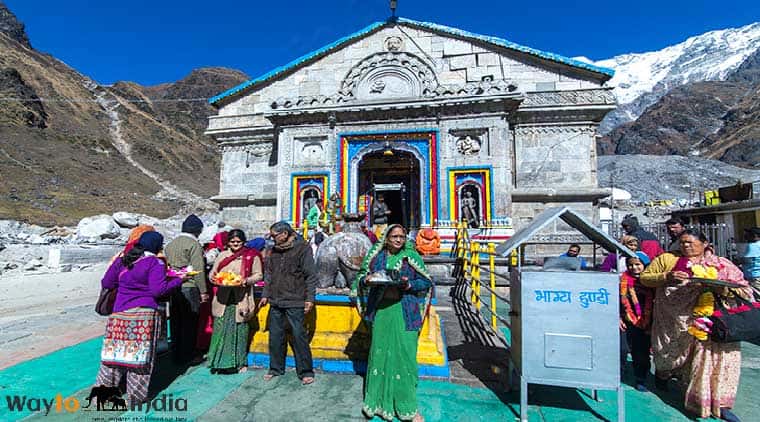
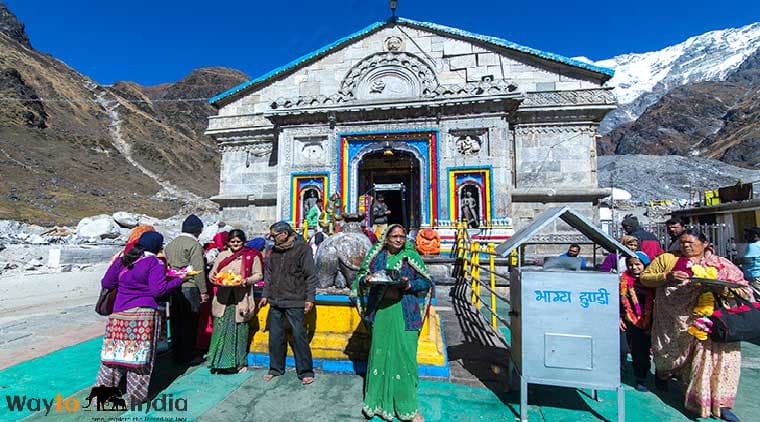
Kedarnath Yatra or Kedarnath Jyotirlinga tour takes one to the enthralling world of Himalayas in the state of Uttarakhand. It is the remotest 12 Jyotirlinga place in the list of Jyotirlinga shrines dedicated to Lord Shiva. Located close to River Mandakini, the temple is surrounded by snow-capped Himalayan peaks and lush green pastures that confer the place with paradisaical beauty.
We offer Kedarnath Yatra by helicopter which saves a lot of time and is ideal for visitors from all age groups. Our Kedarnath Yatra tour also covers other holy towns of Uttarakhand which is popularly known as Devbhoomi (the Land of Gods). You would be visiting Haridwar on the bank of River Ganga and attending the mesmerizing river aarti (prayer) – one of the best sights you would ever see.
Temples of Guptkashi, Ukhimath and Rudraprayag are also included in the package. Get ready to witness the holy confluences of rivers like Alaknanda and Mandaikini which ultimately amass to form River Ganga. Remember that Kedarnath Yatra opens only for 6 months and we guide tourists and pilgrims about the exact dates every year.
For more information about our 12 Jyotirlinga Tour Package
Kedarnath Jyotirlinga Tour Package
This divine Jyotirlinga tour takes one to the enthralling world of Himalayas in the state of Uttarakhand. It is the remotest 12 Jyotirlinga place in the list of Jyotirlinga shrines dedicated to Lord Shiva known as Shree Kedarnath Jyotirling.
The Highest Jyotirlinga of Lord Shiva:
Kedarnath is the highest among the 12 Jyotirlingas, located at an altitude of about 3,583 meters (11,755 ft) in the Garhwal Himalayas.
Jyotirlinga Linked to the Mahabharata:
It is believed that after the Mahabharata war, the Pandavas came here seeking forgiveness from Lord Shiva. Shiva avoided them by taking the form of a bull and later manifested here.
The Unique Back (Hump) Worship:
Unlike other Jyotirlingas, at Kedarnath Lord Shiva’s hump (back part) is worshipped, as the rest of his form appeared at the Panch Kedar temples.
Self-Manifested (Swayambhu) Jyotirlinga:
The Kedarnath Lingam is believed to be naturally formed, not installed by human hands.
Built with No Cement:
The ancient temple is constructed with massive stone slabs interlocked without cement, showcasing extraordinary ancient engineering.
Miracle of the 2013 Floods:
During the devastating 2013 floods, a huge rock (now called Bhima Shila) stood behind the temple and diverted the flow of water, protecting the shrine from destruction.
Temple Faces South:
Unlike most temples, Kedarnath temple faces south, a direction associated with Lord Shiva as the destroyer and transformer.
Limited Darshan Period:
The temple remains open only for about 6 months (April/May to October/November) due to extreme winter conditions. During winter, the deity is worshipped at Ukhi Math.
Powerful Spiritual Vibrations:
Devotees believe that Kedarnath radiates immense spiritual energy, offering inner peace, liberation, and karmic cleansing.
April to October
N/A
Moderate
Day by day
A carefully paced plan, day by day. Tap any day for the stay, meals and altitude detail.
Your Kedarnath Yatra begins at Haridwar, the sacred town where the holy River Ganga descends from the Himalayas to the Northern Plains. On arrival by train or bus, meet our Shiva Jyotirlinga tour representative at the pre-decided location and transfer to your booked hotel. Take some time to relax and refresh.
Later, proceed for Haridwar sightseeing. Counted among the Sapta Puri (the seven holiest cities of Hinduism), Haridwar is also one of the four sacred places where drops of Amrit (nectar) are believed to have fallen, making it the host of the grand Kumbh Mela, held once every 12 years.
Sanctified by the Ganga, Haridwar is filled with ancient temples, ashrams, and spiritual landmarks that create a deeply devotional atmosphere. You may visit popular attractions such as Mansa Devi Temple and Chandi Devi Temple (accessible by ropeway; timings 08:00 a.m. to 06:00 p.m., combined ticket approx. INR 228), along with Maya Devi Temple and Bharat Mata Temple.
In the evening, reach the sacred ghat Har Ki Pauri—the site believed to have received the nectar drops—to witness the mesmerizing Ganga Aarti. Experience a divine moment as thousands of earthen lamps illuminate the ghats in reverence to the holy river.
Return to the hotel for a comfortable overnight stay in Haridwar.
After breakfast, begin your road journey towards Kedar Khand in the majestic Garhwal Himalayas. En route, arrive at Guptkashi, a sacred town believed to be the place where Lord Shiva hid in the form of a bull to avoid meeting the Pandavas after the Mahabharata war. This is why it is called Guptkashi (‘Gupt’ means hidden, and ‘Kashi’ refers to the holiest city of Lord Shiva).
Upon arrival, check in to your hotel and take some time to relax and refresh. Later, you may choose to explore the town and enjoy the breathtaking views of the snow-capped Chaukhamba Peaks and the Mandakini Valley, dotted with magnolia trees and lush Himalayan scenery.
Spend the night at Guptkashi, preparing for the next leg of your Kedarnath Yatra.
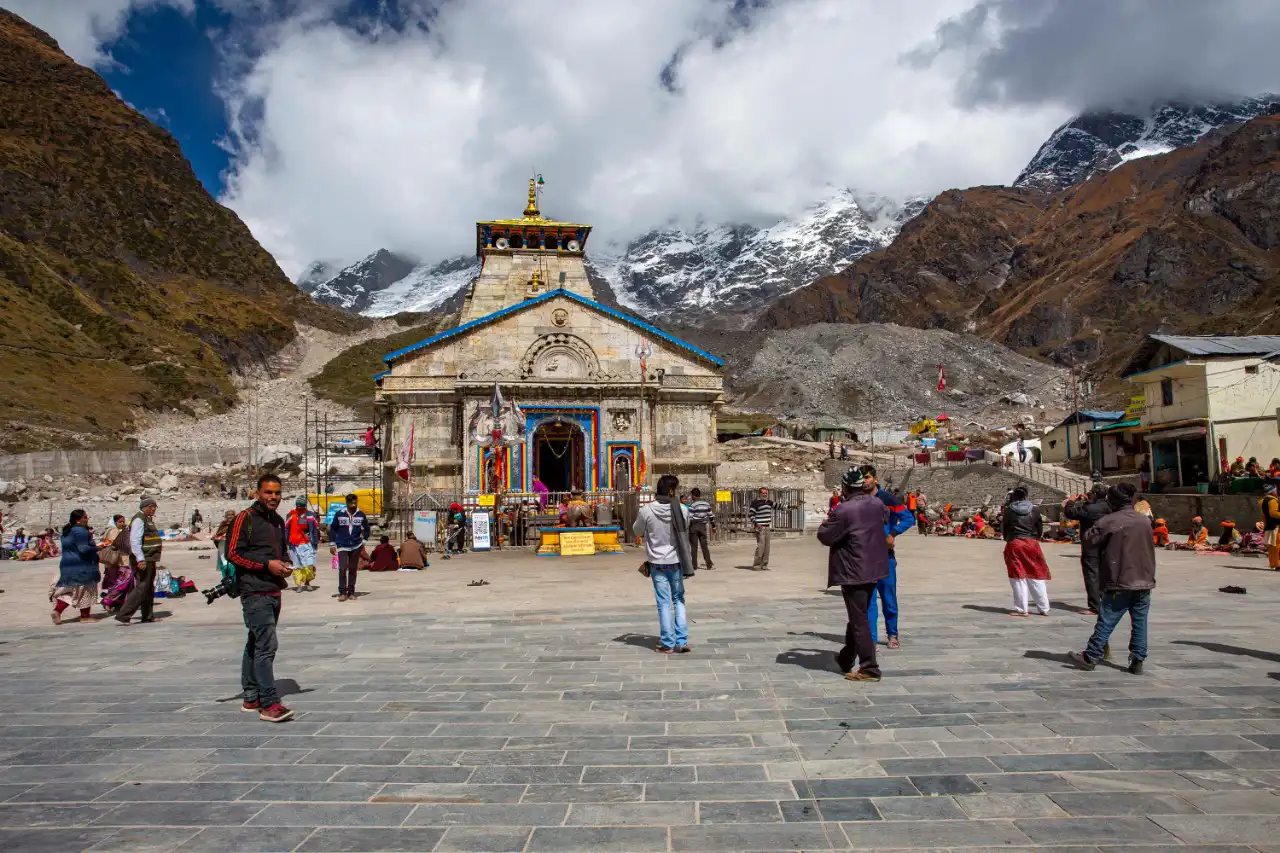
After breakfast, proceed by road to the helipad at Guptkashi or Phata. Board the helicopter as per the scheduled timing and enjoy a spectacular flight to Kedarnath, situated near the Chorabari Glacier, the source of the River Mandakini. Nestled at an elevation of 11,750 ft, Kedarnath is surrounded by majestic peaks including Kedarnath Peak and Kedar Dome.
Upon arrival, visit the Kedarnath Temple (opens 04:00 a.m. – 09:00 p.m., closed 03:00–05:00 p.m.), one of the Chhota Char Dham shrines. According to legend, after the Mahabharata war, when the Pandavas pursued Lord Shiva in the form of a bull, he tried to hide in the ground. Bhima grabbed the bull’s tail, and Shiva manifested at five different places, with his hump appearing at Kedarnath, establishing himself as a Jyotirlinga.
Devotees perform pujas here, with rates ranging from INR 650 to INR 16,000 for rituals such as Mahabhishek, Rudrabhishek, and Laghuabhishek. Note that darshan is allowed only after 05:00 p.m., and no rituals are permitted beyond this time.
The temple remains accessible from April to early November; heavy snowfall closes it during winter. Pray to the conical-shaped Jyotirlinga and other deities worshipped here. If time permits, visit Bhairava Temple and the Samadhi of Adi Shankaracharya, credited with building the present temple.
Return by helicopter to Guptkashi or Phata. Spend the remaining day exploring local temples, including Vishwanath Temple, modeled after Kashi Vishwanath Jyotirlinga, and visit nearby Ukhimath, the winter abode of Kedarnath idols when the main shrine is inaccessible due to snow.
Overnight stay at Guptkashi.
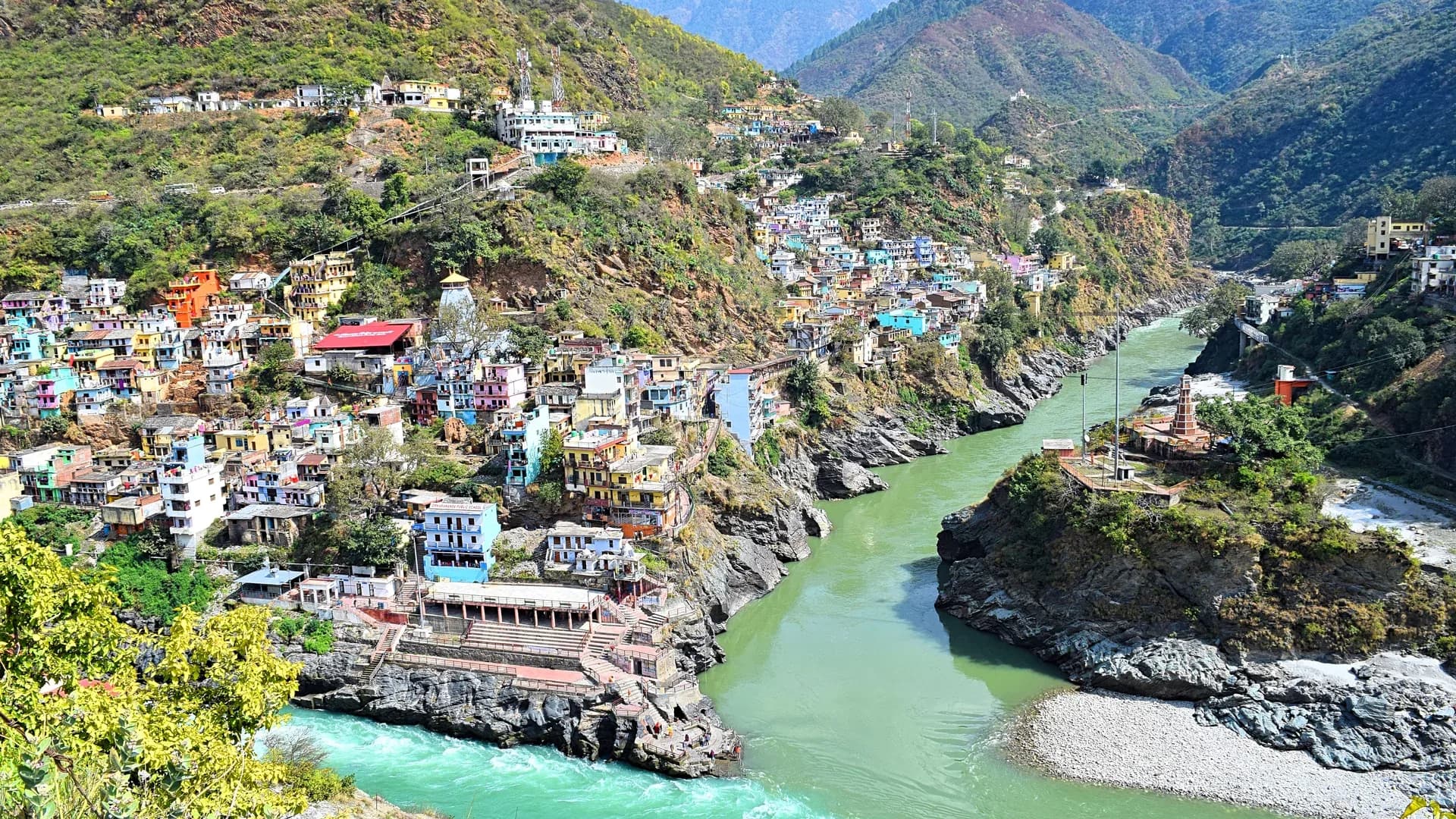
After breakfast, begin the road journey back to Haridwar. En route, stop at Rudraprayag, the sacred confluence where River Mandakini meets River Alaknanda, forming part of the journey of the holy Ganga. Take a moment to admire the breathtaking views and the spiritual significance of the spot.
Continue the drive to Haridwar, and upon arrival, transfer to the railway station or bus stand for your onward journey. With this, your Kedarnath Yatra comes to a peaceful conclusion, carrying with you the divine blessings of Lord Shiva and cherished memories of the Himalayas.
“WayToIndia customizes every tour to suit your unique needs.”
Temples on the way
On this journey you come close to 3 holy temples of India, from the Jyotirlinga, Chota Char Dham, Char Dham circuits. Below you can see each temple and how far it is from where you stay, so you can plan your darshan with a calm mind and enough time.
Jyotirlinga · Chota Char Dham · Shiva · Uttarakhand
Kedarnath Jyotirlinga is a short drive from your stay at Guptkashi (about 23 km). You can go for darshan and come back the same day.
Char Dham · Chota Char Dham · Vishnu · Uttarakhand
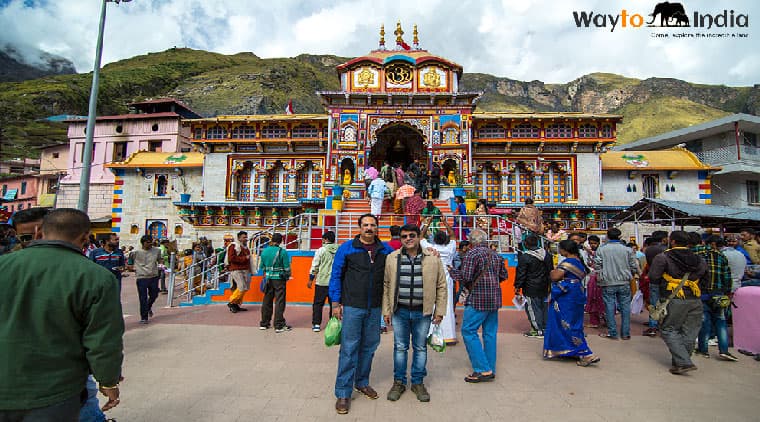
Badrinath Dham is an easy day trip from your stay at Guptkashi (about 46 km).
Chota Char Dham · Ganga · Uttarakhand
Gangotri Dham is an easy day trip from your stay at Guptkashi (about 53 km).
UNESCO World Heritage
This tour takes you close to 1 UNESCO World Heritage Site of India. These are places the world has recognised as our shared treasure. Below you can see each one and how far it is from where you stay, so you can plan your darshan and sightseeing with time to spare.
Natural · Inscribed 1988 · Uttarakhand
Nanda Devi and Valley of Flowers National Parks makes an easy day trip from your stay at Guptkashi (about 46 km).
Want to plan your trip around India’s World Heritage Sites? See all UNESCO World Heritage Sites of India.
Travel tips
On this short and sacred journey you begin at Haridwar with the Ganga Aarti, drive up into the Garhwal Himalaya to Guptkashi, take darshan of Lord Kedar, the highest of the twelve Jyotirlingas, and come down through the holy confluence of Rudraprayag. Here, in one place, is everything you should know before you travel and while you are on the road.
Kedarnath is open for only about six months a year. The comfortable windows are May and June and then September and October. The shrine sits very high, so the weather, not just the calendar, decides your dates.
For 2026 the Kedarnath gates opened on 22 April 2026, the date declared on Maha Shivratri by the Badri-Kedar Temple Committee, and the shrine stays open for roughly six to seven months, closing tentatively around mid-November (about 10 to 13 November, on Bhai Dooj). The exact closing date is announced later by the temple committee, usually on Vijayadashami and Bhai Dooj, and it shifts every year with the Hindu calendar. Please always reconfirm the current dates on the Badri-Kedar Temple Committee site (badrinath-kedarnath.gov.in) or Uttarakhand tourism before you book your travel. We tell every guest the confirmed dates for their year.
This is a short and focused yatra: Haridwar, then Guptkashi, then Kedarnath by helicopter, then back through Rudraprayag. You gain height slowly, take darshan on the third day, and come down the same valley you climbed. Here is how each day works.
The route is built so your body has time to adjust. You spend the first night low at Haridwar, the second night at Guptkashi at a middle height, and only on the third day do you go up to Kedarnath. This slow climb is safer and more comfortable than rushing straight to the top, especially for elders and for families travelling from abroad.
Before you set out, one thing is compulsory for every pilgrim: the free Char Dham registration. It is a hard gate, scanned at checkpoints on the way to Kedarnath, and there is no darshan and no helicopter without it. Here is exactly how it works.
Registration is done only on registrationandtouristcare.uk.gov.in or its official app, and the Kedarnath helicopter is booked only on heliyatra.irctc.co.in. Any other website or agent that claims to sell either is unauthorised, and the state warns about this every season. When in doubt, use the official portal, or let us do it for you.
There is no road to the temple itself. You reach Lord Kedar in one of two ways: a climb of about 16 to 18 km on foot from Gaurikund, or a short helicopter flight. This tour is helicopter-first, and here is the honest picture of both.
Helicopter services to Kedarnath run only when the weather is clear, and clouds can ground the flights at short notice. This is a safety rule, not a delay to argue with. Plan a flexible day, be ready for a possible wait, and never pressure a pilot or operator to fly in bad weather.
Haridwar is the great riverside ghat of Har Ki Pauri and the hill shrines of Mansa Devi and Chandi Devi. The evening Aarti is the heart of it all, and a few facts help you do it well.
There is no ticket for the Ganga Aarti at Har Ki Pauri; just arrive early, keep your shoes and valuables safe, and be wary of anyone pressing you to pay a fixed large sum for a ritual. The hill-temple ropeway fares above are the main paid items in Haridwar, and are best reconfirmed at the counter or on the official Udan Khatola site.
Guptkashi is small but old and sacred. Its name means Hidden Kashi, and its temples and the Manikarnik Kund make a quiet, meaningful halt on the way up to Kedarnath.
Guptkashi means Hidden Kashi. The story is that Lord Shiva hid here from the Pandavas, who had come seeking his forgiveness after the Kurukshetra war, before later revealing himself at Kedarnath. Knowing the legend makes the small temples here far more meaningful as you head up to the shrine.
Guptkashi is one of the main helicopter bases for Kedarnath, alongside Phata and Sersi. The booking rules are strict and easy to get wrong, so here is the official position for 2026.
Flying up is gentler than the trek, but you still rise quickly from about 1,300 to 2,000 m at the helipads to about 3,583 m at the shrine, and you can still feel mountain sickness. Spend an unhurried night at Guptkashi to acclimatise, keep darshan calm and short, and for elderly pilgrims get a doctor's clearance before the trip. Note too that phones and cameras are not allowed inside the Kedarnath temple in 2026.
Kedarnath is one of the twelve Jyotirlingas of Lord Shiva and one of the four Char Dham shrines. The temple itself is the heart of the trip, with a few sacred sites around it.
Darshan at the Kedarnath temple is free. Your real costs are the travel to the gateway, the trek aids (pony or palki) or the helicopter, and your stay. Special poojas can be pre-booked through authorised channels, typically from about 300 rupees up to about 25,000 rupees depending on the ritual. The one thing you must arrange in advance is the free Char Dham registration, covered in the next sections.
Kedarnath is a high-altitude pilgrimage in a disaster-scarred valley. The altitude, the medical-screening rule and the weather are the real risks, and a little preparation keeps the journey safe.
A worsening headache, nausea or vomiting, breathlessness at rest, dizziness or unusual fatigue are the signals of Acute Mountain Sickness, and the safest treatment is to stop climbing and descend. Do not let determination or a tight itinerary push a struggling member of your group higher. The medical posts on the route and at the shrine exist for exactly this, so use them early rather than late.
Kedarnath sits at about 3,583 metres, high enough that the thin air is a real thing to respect, not a small detail. A little fitness and slow climbing keep the yatra safe and comfortable, and this matters most for elders and for families flying in from abroad.
If you are flying in from the US, the UK, the Gulf, Singapore or Australia, give yourself a night or two in Delhi or Haridwar to rest and adjust before the hills, and take travel insurance that covers an emergency helicopter evacuation. It is strongly recommended for a family travelling from abroad.
You enter and leave this yatra through the plains around Haridwar. There is no airport near Kedarnath, so the last long stretch is always a mountain road. The nearest airport is Dehradun, and Haridwar is the main railway gateway.
Jolly Grant airport near Dehradun is the closest airport to the yatra, with regular flights from Delhi and other cities. From here it is a short drive to Haridwar, where the tour begins. There is no airport up in the high valleys, so you always drive up from the plains.
Haridwar is very well connected by train from Delhi and across the country, and this tour begins and ends here. Most pilgrims rest a night here to settle in, complete any pending registration, and take the evening Ganga Aarti before starting the mountain leg early the next morning.
For travellers coming from abroad, Delhi is the natural entry point, with a short onward flight to Dehradun or a train or road transfer to Haridwar. Give yourself a night in the plains to rest before the hills, especially if you are travelling with elders.
Because the helicopter and the mountain roads both depend on the weather, it is wise to keep a spare day between the end of this yatra and any fixed onward flight or train. A held helicopter or a blocked road can push the day, and a buffer keeps you calm rather than rushed.
For NRI and OCI families, a Kedarnath yatra is very doable with a little planning. The main things to get right early are your registration on the right ID, the timing, your connectivity, and insurance. Here is a simple checklist for an overseas family.
The paperwork, the helicopter booking, the ID rules and the weather can feel like a lot from far away. This is exactly the part we handle for our overseas guests, so that your family can keep its heart on the darshan of Lord Kedar rather than the logistics.
Rudraprayag is the hinge of the Char Dham: two holy rivers join here, and the road to the two great shrines splits here. Understanding this makes the town far more than a refuelling stop.
Because Rudraprayag is the single point where both the rivers and the roads of the Char Dham meet, it is the natural pivot for a Kedarnath-and-Badrinath trip. Spend a night here, complete or carry your free registration, time your onward drive to beat the night ban, and you can reach either shrine without backtracking far. We build many Char Dham itineraries around exactly this.
Rudraprayag is small but sacred. Its heart is the river confluence, with the Koteshwar cave temple nearby, the Dhari Devi shrine a short drive away, and the Kartik Swami sunrise ridge a little further out. Most of its sights are free to enter.
The sangam, the Koteshwar cave temple, the Dhari Devi shrine, the Kartik Swami ridge and the town temples are all free to enter. Your real costs at Rudraprayag are the road travel, your stay and any guide or pujari you choose to engage. The one thing you must arrange in advance is the free Char Dham registration, covered in the logistics and overseas sections below.
This is a satvik, vegetarian pilgrimage, and the mountain food is simple and warming. Eat where the local people eat, buy prasadam only from the official counters, and carry home a few honest keepsakes from Devbhoomi.
At Kedarnath and the other shrines, buy prasadam and any special pooja tickets only from the official temple counters, not from sellers who approach you at the gates. The official prices are fixed, and this simple habit keeps you clear of touts and overcharging all along the route.
वाराणस्यां तु विश्वेशं त्र्यम्बकं गौतमीतटे। हिमालये तु केदारं घुश्मेशं च शिवालये॥
This couplet is from the Dwadasha Jyotirlinga Stotram, the short hymn that names all twelve Jyotirlingas of Lord Shiva in a single breath. Its last line, Himalaye tu Kedaram, means Kedar in the Himalaya, the very shrine you are travelling to. Many pilgrims recite the whole stotram morning and evening on the road up, and it is said to carry the blessing of all twelve abodes at once. It is best carried as a living blessing rather than argued over as a fixed text.
What travellers say
“A big thanks to Way To India for organising such a truly memorable and spiritually fulfilling experience during our 12 Jyotirlinga Darshan pilgrimage from 1st May to 18th May. They organized the entire journey exceptionally well, ensuring that every aspect of the trip was smooth, comfortable, and hassle-free. From transportation and hotel arrangements to darshan planning and coordination, everything was managed professionally. Despite the extensive travel across multiple destinations, the itinerary was well-structured, allowing us to complete all the Jyotirlinga darshans comfortably. Thanks to staff of Way To India, especially, Ms Neha, who was supportive, responsive, and attentive throughout the journey, always ready to assist whenever needed. Her dedication and careful planning made this sacred pilgrimage stress-free and enjoyable. I sincerely appreciate their excellent service, commitment, and hospitality. Highly recommend Way To India to anyone planning a spiritual tour, especially for the 12 Jyotirlinga Yatra. Thank you for making this divine journey so special and memorable.”2 months ago · Google
“We have successfully completed the 12 Jyotirlinga Yatra, with Waytoindia and it was a truly blessed and unforgettable journey. Every aspect of the tour was well planned and professionally organized, from transportation and accommodations to temple visits and sightseeing. Visiting all twelve sacred Jyotirlingas was a deeply spiritual experience. The itinerary was designed efficiently, allowing us to have darshan at each shrine comfortably while enjoying the cultural and religious significance of every destination. We sincerely appreciate the excellent support and coordination throughout the trip. The team was always available to assist, ensuring a smooth and stress-free pilgrimage. Thank you Waytoindia for making our dream of completing the 12 Jyotirlinga Yatra a reality. We highly recommend this tour to anyone seeking a well-organized and spiritually enriching pilgrimage experience. Har Har Mahadev! 🙏🕉️”3 months ago · Google
“We recently entrusted our honeymoon planning to 'Way to India', and it turned out to be one of the best decisions we made. From itinerary finalization to on-ground execution, everything was handled with remarkable professionalism, warmth, and attention to detail. Every aspect of our trip — flights, hotels, transfers, experiences, and even the small thoughtful touches — was perfectly curated. The itinerary was balanced, well-planned, and tailored exactly to what we wanted. We never had to worry about a single thing; all arrangements were seamless and absolutely hassle-free. What truly stood out was their responsiveness and genuine care. They were always available, always patient, and consistently went the extra mile to ensure our journey was special. Special thanks to Neha Ma'am for planning everything. We are incredibly grateful and wholeheartedly recommend their services to anyone looking for a stress-free, personalised, and delightful travel experience. Thank you for making our honeymoon truly magical!”6 months ago · Google
Travelled with Way to India?
Share your experience on Google — it takes a minute and helps fellow travellers plan with confidence.
FAQ
For the Kedarnath Jyotirlinga tour, no special permits are required for Indian citizens. However, foreign nationals may need to check with local authorities regarding any specific regulations. It is advisable to carry valid identification and any necessary travel documents.
The best time to visit Kedarnath is from late April to early November. The temple opens in May and remains accessible until the onset of winter. Monsoon season (July-August) can lead to landslides, so it's best to avoid this period.
From Guptkashi, you can reach Kedarnath by helicopter or on foot. The helicopter service is available from Phata or Guptkashi helipads and offers a quick and scenic route. Alternatively, a trek of about 16 km is required if you choose to walk.
Pack warm clothing, sturdy trekking shoes, a raincoat or poncho, and personal essentials like medications and toiletries. Don't forget a water bottle, snacks, and a camera to capture the stunning landscapes.
Yes, it is generally safe to travel to Kedarnath, but travelers should stay updated on weather conditions and local advisories. During monsoon, landslides can occur, so exercise caution and consider travel insurance.
The Kedarnath Temple is open from 4:00 AM to 9:00 PM, with a closure from 3:00 PM to 5:00 PM for afternoon rituals. Plan your visit accordingly to avoid missing the darshan.
Yes, visitors should dress modestly and maintain decorum while inside the temple premises. Photography is generally not allowed inside the temple, and it's respectful to follow the rituals and customs observed by the devotees.
Mobile connectivity can be limited in Kedarnath due to its remote location. BSNL and Airtel networks generally have better coverage. It's advisable to inform family or friends about your travel plans before heading to the area.
Guptkashi offers a range of accommodation options, from budget guesthouses to mid-range hotels. It's advisable to book in advance, especially during peak pilgrimage seasons, to ensure availability.
Yes, hiring a local guide for the Kedarnath trek is recommended, especially for first-time visitors. Guides can provide valuable insights about the area and ensure your safety during the trek.
You may also like
 11D / 10N 5
 18D / 17N 5
 8D / 7N
 12D / 11N
 6D / 5N
 11D / 10N
Tell us your dates and group size. A WayToIndia travel expert replies within a few hours with a plan you can customise freely. Planning India journeys since 2010.
Explore Way to India
© 2026 Way to India. All rights reserved.