1
Thiru Vadamathura (Mathura)
Uttar Pradesh
Govardhana Nesan with Sathyabama Nachiyar; five Alvars sang of Krishna's birthplace city.
May to June and September to October, when Badrinath is open
Overview
Of the 108 Divya Desams praised by the Alvars, eleven lie in the Vada Naadu, the northern land. Seven of them sit in Uttar Pradesh and Uttarakhand, far from the Tamil country where most pilgrims live. This 11 day yatra from Delhi completes all seven in one carefully paced circle: Mathura, Gokul, Naimisharanya, Ayodhya, Devprayag, Joshimath and Badrinath. You travel with a North India specialist that runs these roads every week, so the hard parts, the Badrinath registration, the mountain drives, the darshan timings, are handled before you arrive.
A temple becomes a Divya Desam for one reason only: an Alvar sang of the Lord there. The twelve Alvars were Tamil poet saints, and their 4,000 verses form the Nalayira Divya Prabandham, compiled by Nathamuni and revered as the Tamil Veda. The act of singing that benediction is called mangalasasanam. There are 108 Divya Desams in all. Two of them, Thirupparkadal and Thiruparamapadam, are celestial and cannot be visited in this body. That leaves 106 on earth, and the Tamil tradition groups them by region. The northern group is called Vada Naadu, and it holds 11 shrines.
Here is the part most pilgrims discover late. Eighty four of the earthly shrines are in Tamil Nadu and eleven are in Kerala, so a devotee from Chennai or Trichy can reach most of the 106 by car. The northern shrines are the hard ones. Seven of them stand in Uttar Pradesh and Uttarakhand: Thiru Vadamathura (Mathura), Thiruvaaipadi (Gokul), Thiru Naimisaranyam (Naimisharanya), Thiru Ayodhi (Ayodhya), Thirukkandam ennum Kadi Nagar (Devprayag), Thiruppiridi (Joshimath) and Thiruvadari Aachramam (Badrinath). The remaining four of the Vada Naadu eleven are Thiru Dwarakai (Dwarka in Gujarat), Thiru Salagramam (Muktinath in Nepal), Thiruvengadam (Tirumala) and Thiru Singavel Kundram (Ahobilam). This tour completes the seven that belong together on one northern road. The other four have their own natural routes, and we tell you exactly how to add them below.
Thirumangai Alvar, the great pilgrim poet, opens his Periya Thirumozhi with decads on these Himalayan shrines. Tradition says he walked to more than 80 Divya Desams on foot. You will do the same circle in an air conditioned vehicle, in eleven days, with hotel beds every night. It is worth remembering him on the mountain roads.
At Mathura, the Divya Desam deity is Govardhana Nesan, the Lord who loved Govardhan hill, with Sathyabama Nachiyar. Five Alvars sang here, led by Periyalvar and Andal. The shrine tradition is tied to the Krishna Janmasthan area, the birthplace of the Lord.
At Gokul, across the Yamuna, the deity is Navamohana Krishnan, the child Krishna of the cowherd village. Periyalvar sang 10 pasurams here, Andal 5 and Thirumangai Alvar 7. You feel pure vatsalya here, the love of a parent for a child.
At Naimisharanya, the forest where the Puranas were first narrated to the sages, the deity is Devaraja Perumal with Pundarikavalli Thayar. Thirumangai Alvar alone sang here, 10 pasurams. This is the only Divya Desam that is a forest, not a built town, and the tradition treats the whole tirtha as the deity, so the forest you walk through is itself the shrine.
At Ayodhya, the deity is Lord Rama himself, Chakravarthy Thirumagan, with Sita Devi. Five Alvars sang of Ayodhya. Since the new Ram Mandir opened, darshan runs in orderly slots through the day and the town has been rebuilt around pilgrims like you.
At Devprayag, where the Alaknanda and Bhagirathi meet and the river first takes the name Ganga, the deity is Neelamega Perumal, called Purushottaman, worshipped locally as Raghunathji. Periyalvar sang 11 pasurams of this shrine, calling it Kandam ennum Kadi Nagar. The temple sits above the confluence, and the sangam itself feels like your first darshan.
At Joshimath, the deity is Paramapurushan, the Vasudeva of Thiruppiridi, with Parimalavalli Nachiyar. Thirumangai Alvar sang 10 pasurams. The ancient Vasudeva temple stands beside the Narasimha temple linked to Adi Shankara, and in winter the worship of Badrinath itself moves here. Some Sri Vaishnava traditions place Thiruppiridi at Nandaprayag nearby, and we tell you this honestly rather than hide the debate.
At Badrinath, the crown of the circuit, the deity is Badri Narayanan, a black shaligram form seated in padmasana, with Aravindavalli Thayar. Periyalvar sang 11 hymns here and Thirumangai Alvar 13. The temple stands at about 3,133 metres between the Nar and Narayan peaks, on the young Alaknanda. It is open only about six months a year, and your tour is built around that window.
The circle runs Delhi, Mathura and Gokul, then east by expressway to Lucknow, north to Naimisharanya, on to Ayodhya, then across to Haridwar by a short flight via Delhi or by the direct overnight train, and finally the mountain road through Devprayag and Joshimath to Badrinath, returning through Rishikesh to Delhi. Road legs are sequenced so that none of your darshan days follows a very long drive, and the one long road transfer sits in the middle of your trip, not at the start. You can read the full leg table below, and every distance on it comes from official or corroborated sources, stated as a range where sources differ.
The whole tour depends on one calendar: Badrinath. The temple opens in late April or early May, on a date fixed on Basant Panchami at the Narendranagar royal court, and closes in late October or November, announced on Vijayadashami. For 2026 the opening is 23 April. So the yatra runs May to June and September to October. July and August are monsoon months, and the Rishikesh to Badrinath highway sees landslides then, so we do not operate the mountain leg in those weeks. The plains shrines, Mathura, Gokul, Naimisharanya and Ayodhya, are open all year. In winter you can still do a shorter Uttar Pradesh yatra, and at Joshimath you can have darshan of Badri's winter seat at the Narasimha temple, a detail almost no tour page tells you.
May and June are hot on the plains, often above 40 degrees, so we plan your temple visits for early morning and evening and keep your midday for travel. September and October give you the best of both worlds: the plains have cooled and the mountain skies are clear. October is the single best month for this circuit.
This is one of the rare high Himalayan pilgrimages with no trekking at all. Badrinath is a roadhead temple: the vehicle stops a short walk from the sanctum. That makes this circuit far kinder to senior pilgrims than Kedarnath or the full Char Dham. The one thing every pilgrim must respect is altitude. Devprayag is at 618 metres, Joshimath at about 1,875 metres, and Badrinath at about 3,133 metres. Altitude effects generally begin above 2,500 metres. Our itinerary sleeps you at Joshimath level before Badrinath, keeps you hydrated, and never rushes the climb. If you have a heart or lung condition, ask your doctor before booking, and tell us so we plan a gentler pace. Uttarakhand also requires every Char Dham pilgrim to register online before the yatra. We assist and guide every guest through this registration as part of the package.
Four Vada Naadu shrines are not on this route, and honesty demands we say so plainly rather than stretch the itinerary thin. Thiru Salagramam is Muktinath in Nepal, at about 3,800 metres in Mustang. Indians need no visa, but the journey needs its own days: Kathmandu, Pokhara, a short mountain flight to Jomsom, then the road up. We run a separate Muktinath Yatra with Pokhara, and it joins this tour cleanly as an extension. Thiru Dwarakai is Dwarkadhish in Gujarat, best reached by flying Delhi to Rajkot and driving, and it pairs with our Dwarka and Somnath package. Thiruvengadam is Tirumala and Thiru Singavel Kundram is Ahobilam, both in Andhra Pradesh, and our Tirupati packages cover that corner. Do the seven northern shrines on this tour first. The other four then fall into place one short trip at a time, and you will have completed all eleven Vada Naadu Divya Desams, something very few devotees ever finish.
WayToIndia is a Delhi based operator, and these are our home roads. The Char Dham highway, the Ayodhya corridor, the Braj circuit: our drivers and hotel partners work them through the season, every season. A Divya Desam yatra in the north fails on small things, a missed registration, a driver who does not know the Joshimath gate timings, a hotel too far from the ghat. Our job is to make sure none of those small things happens to you. We also keep the facts on this page verified against official sources, and where something changes with the season, we say "confirm the current rate" instead of printing a stale number.
May to June and September to October, when Badrinath is open
Sri Vaishnava families, senior pilgrims, NRI and OCI devotees
Easy to Moderate
Route & distances
Accurate distances and travel times for every leg: 1,705 km by road. Road times include a traffic buffer; distances marked “aerial” are straight-line for flight, helicopter, ropeway and water legs.
| # | Leg | Mode | Distance | Time |
|---|---|---|---|---|
| 1 | Delhi → Mathura | By road | 146 km | ~2h 34mest. |
| 2 | Mathura → Gokul | By road | 14 km | ~23mest. |
| 3 | Gokul → Lucknow | By road | 374 km | ~6h 22mest. |
| 4 | Lucknow → Naimisharanya | By road | 95 km | ~1h 59mest. |
| 5 | Naimisharanya → Ayodhya | By road | 220 km | ~4h 2mest. |
| 6 | Ayodhya → Haridwar | By flight | 528 km (aerial) | — |
| 7 | Haridwar → Devprayag | By road | 95 km | ~2h 57mest. |
| 8 | Devprayag → Joshimath | By road | 181 km | ~6h 3mest. |
| 9 | Joshimath → Badrinath | By road | 43 km | ~1h 29mest. |
| 10 | Badrinath → Rishikesh | By road | 294 km | ~9h 51mest. |
| 11 | Rishikesh → Delhi | By road | 243 km | ~4h 21mest. |
Day by day
A carefully paced plan, day by day. Tap any day for the stay, meals and altitude detail.
Leave Delhi by 8 am and take the Yamuna Expressway south. The drive is about 165 to 180 km and takes 3 to 3.5 hours, so you reach Mathura by lunch. Check in, rest through the afternoon heat, and step out around 5 pm for Vishram Ghat, the old bathing ghat where tradition says Lord Krishna rested after the defeat of Kamsa. The evening Yamuna aarti here is smaller and closer than the famous river aartis of Varanasi, and you can stand near the lamps. For dinner, try Mathura's own dishes: the town is famous for its peda, and Brijwasi Mithai Wala is the best known name for it, with shops across the city. Eat light. Tomorrow is a full darshan day.
Special Tips for This Day: Carry a cloth bag for footwear at the ghats, and small notes for offerings. In summer, do not plan anything between 12 and 4 pm; Braj afternoons are fierce. Photography is restricted inside most Braj temples, so enjoy the ghat light for your camera instead.
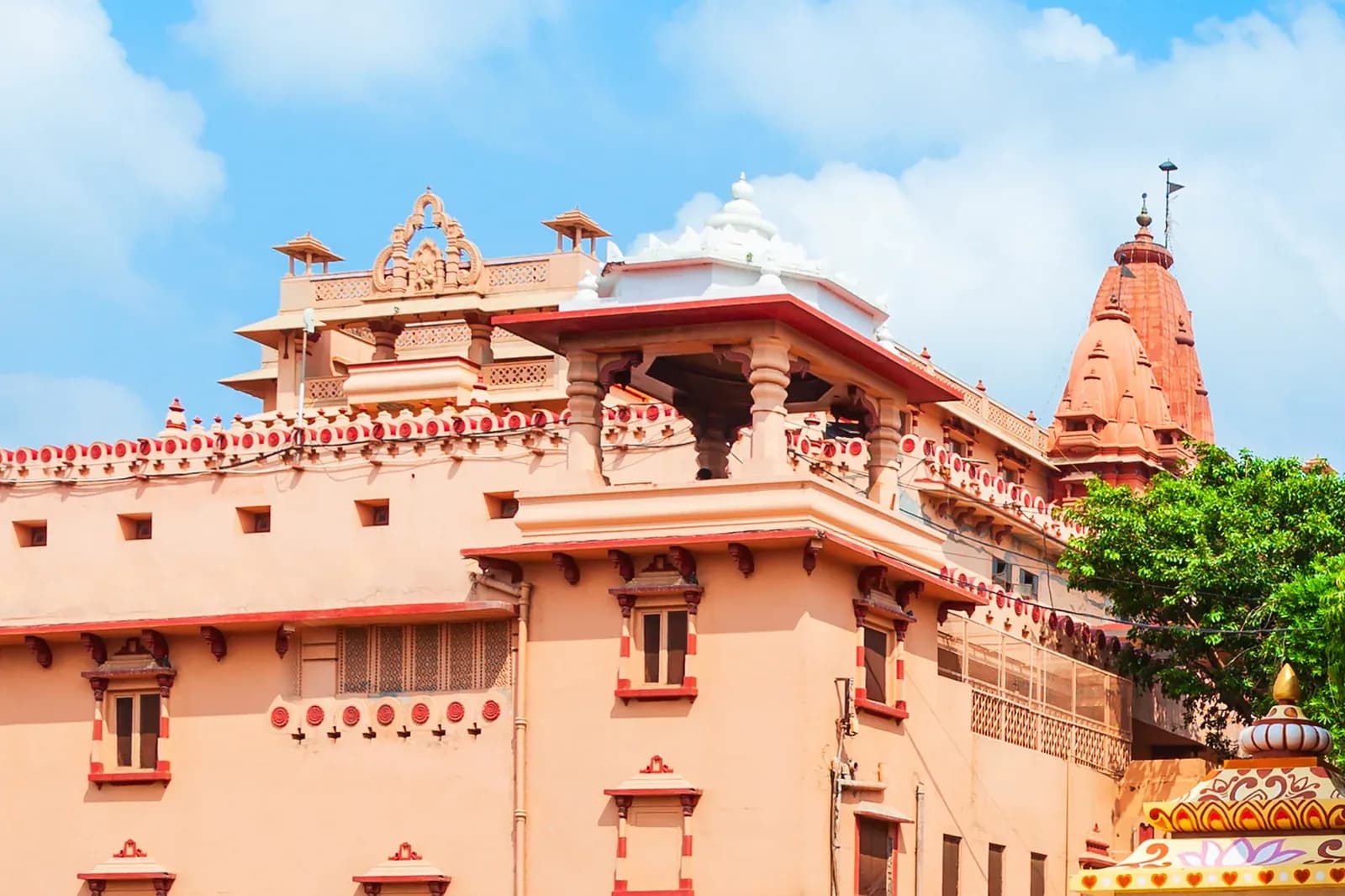
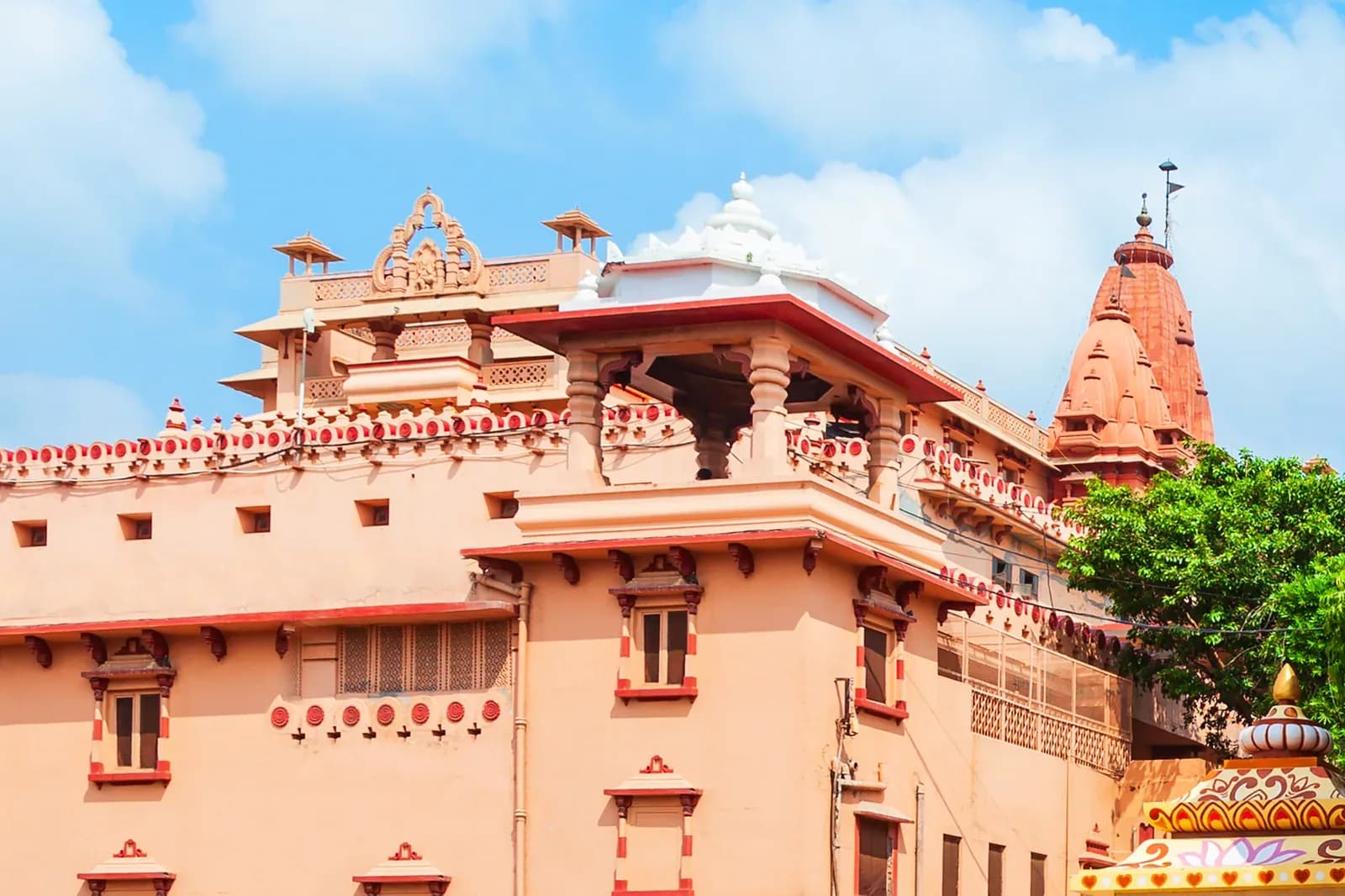
Start early at the Krishna Janmasthan complex, tied by tradition to the Divya Desam of Thiru Vadamathura, where the deity is Govardhana Nesan with Sathyabama Nachiyar. Security here is airport style: no phones, no bags, so leave everything in the vehicle. Later in the morning drive about 12 to 15 km to Gokul, across the Yamuna, for Thiruvaaipadi, the Divya Desam of Navamohana Krishnan, the butter loving child of the cowherds. Periyalvar's pasurams here read like a mother's diary, and Andal sang of this soil too. The present temple is a modern rebuilding of an ancient site, and we say so honestly. In the evening, if you wish, drive to Vrindavan for Banke Bihari darshan. Be clear on one thing: Banke Bihari is deeply loved, but it is not a Divya Desam. We include it because no devotee of Krishna should pass Vrindavan without it. Expect a dense, moving crowd and keep elders at the edges.
Special Tips for This Day: Lockers at Krishna Janmasthan are basic; it is simpler to leave valuables with your driver. Buy peda only from established shops, and check the weight before packing boxes for family. If a local offers to be your priest guide unasked, a polite no thank you works.
Today you make the long plains transfer: about 400 to 420 km on the Agra Lucknow Expressway, 6.5 to 7.5 hours with a lunch halt. Leave by 8 am and your drive stays easy; the expressway is one of the smoothest roads in India. You reach Lucknow by late afternoon, and your evening is free. Lucknow is a city of Nawabi manners and gentle food; for a vegetarian evening, the old chowk lanes are known for khasta kachori and makkhan malai in winter. Sleep early. Tomorrow you enter the forest of the sages.
Special Tips for This Day: Ask the driver to halt at the expressway food courts rather than roadside stalls; cleaner and faster. Keep a light shawl handy in the vehicle; long AC drives chill older travellers. Download your Ayodhya and Naimisharanya darshan plan offline; network dips on the branch roads.
Drive out early to Naimisharanya in Sitapur district, about 90 to 110 km, 2.5 to 3 hours. This is Thiru Naimisaranyam, where Devaraja Perumal presides with Pundarikavalli Thayar, and the only Alvar who sang here was Thirumangai, 10 pasurams. The tradition holds that the whole forest is the deity, which is why this Divya Desam has no single towering gopuram. Visit Chakra Tirth, the circular kund where tradition places the fall of the Lord's discus, and the Vyas Gaddi, where the Puranas were first narrated to the sages. Sit for a while. This is the quietest shrine of the whole yatra, and many pilgrims later name it their favourite. After lunch, drive on to Ayodhya, about 200 to 210 km, 4.5 to 5 hours, reaching by evening. If energy allows, walk to the Sarayu ghats for the evening aarti.
Special Tips for This Day: Naimisharanya's parikrama path is unpaved in stretches; wear covered walking shoes you can slip off easily. Carry drinking water; shops are simple here. At Chakra Tirth, bathing is traditional but the steps are worn, so elders should sprinkle the water rather than take a full dip.
Today you have a full day in Thiru Ayodhi. Go early to Ram Janmabhoomi for your darshan of Ram Lalla. The temple trust runs free darshan in slots from 7 am to 9 pm, and the queue is orderly and shaded, but mornings are calmest. Phones and bags are not allowed inside; free lockers exist, though leaving things at the hotel is easier. After darshan, climb the steps to Hanuman Garhi, the fort like shrine where Hanuman is said to guard Rama's city; the lanes below it sell fresh besan laddoos that pilgrims carry home as prasad. In the afternoon see Kanak Bhawan, gifted by tradition to Sita, whose halls still keep the feel of old Ayodhya. End the day on the Sarayu at Ram ki Paidi for the evening aarti, when the ghats are lit end to end. Five Alvars sang of this city. Watching the river at dusk, you understand why.
Special Tips for This Day: Aarti passes at the Ram Mandir (mangala and shringar) are free but limited; ask us to apply well before your travel date. Wheelchairs are available near the temple entry for elders; the walking distance inside the complex is the longest of this yatra. Dress modestly; shoulders and knees covered for all shrines.
This is the hinge of the yatra, from the plains shrines to the mountain shrines, and you cross it without one long road day. By default we fly you across: a short flight from Ayodhya’s Maharshi Valmiki International Airport to Delhi, a connection onward to Dehradun’s Jolly Grant Airport, about five hours of travel in all, and then an easy drive of about an hour down to Haridwar. You reach the door of the Ganga by evening, in time for dinner.
There is also a second way, and some pilgrims prefer it: the Doon Express, a direct overnight train from Ayodhya to Haridwar that runs daily. You board in the late afternoon, sleep in an AC berth, and step onto the platform at Haridwar before dawn. We book the flight by default and offer the train as the alternative, depending on availability and what suits your group; exact timings for both are confirmed at the time of booking. Either way, you skip a road journey of more than ten hours that tires even young pilgrims.
Special Tips for This Day: Keep hand baggage light for the flight, and remember that airline cabin rules apply to prasad boxes with ghee. If you take the overnight train, carry a small lock for your luggage and your own bedsheet if you prefer. Haridwar hotels near Har Ki Pauri are walkable to the aarti but noisy till late; tell us if you want quiet over closeness. Keep one warm layer accessible; the mountain mornings start tomorrow.
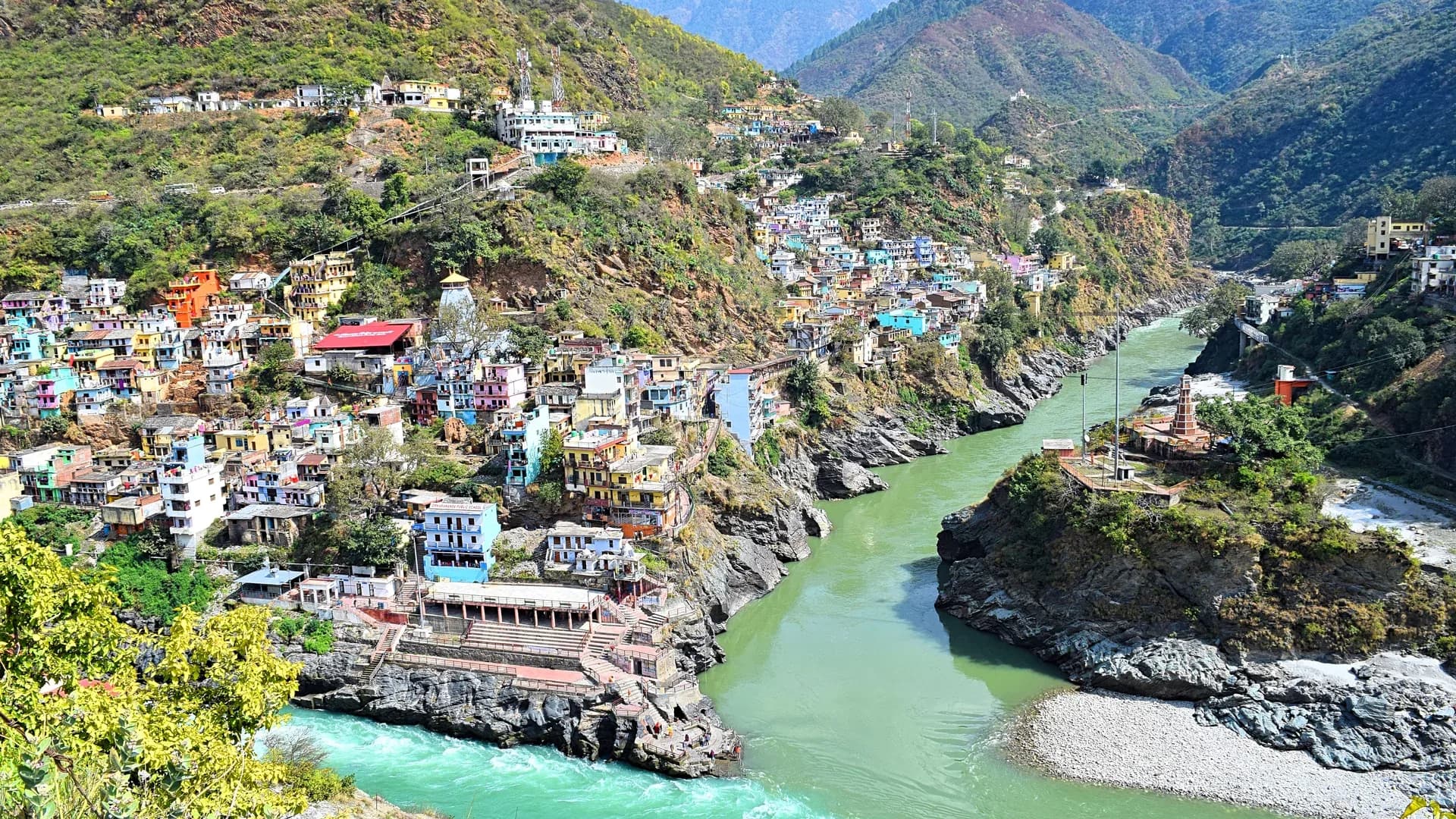
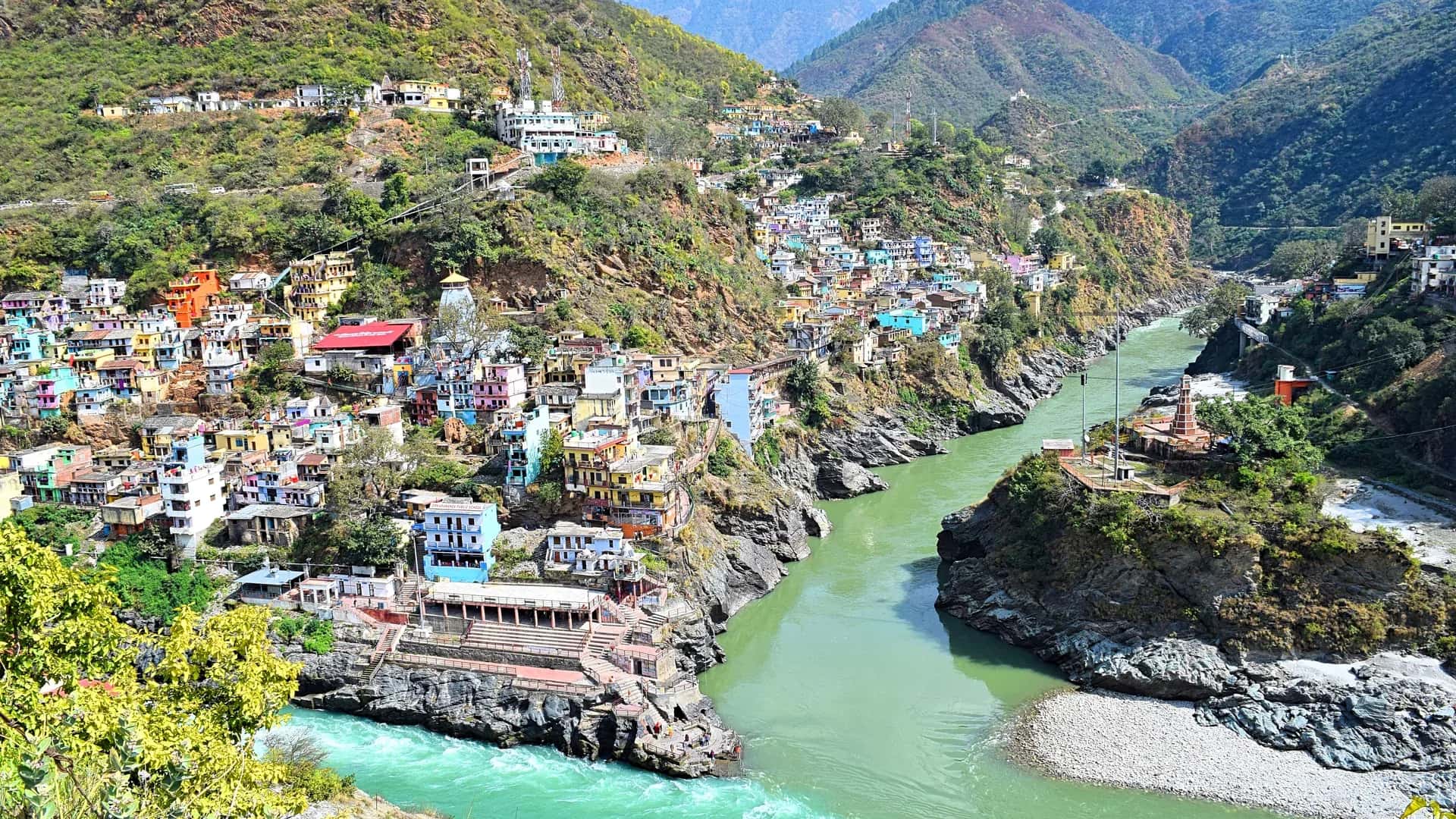
Whether you slept in Haridwar after the flight or stepped off the overnight train at dawn, you leave by 8 am on NH 7 through Rishikesh. Devprayag is about 95 to 100 km, 3 to 3.5 hours on a winding hill road. Here the Bhagirathi and the Alaknanda meet, and only below this point is the river called Ganga. Walk down to the confluence first: two colours of water, one river, and a small bathing platform with chains for safety. Then climb the lanes to the Raghunathji temple, the Divya Desam of Thirukkandam ennum Kadi Nagar, where Neelamega Perumal, Purushottaman, faces the meeting of the rivers. Periyalvar alone sang here, 11 pasurams. The climb through the old village is stepped and takes about 15 to 20 minutes; go slowly and let the town reveal itself. After lunch, continue up the Alaknanda valley to your night halt at Rudraprayag or Pipalkoti, about 155 to 180 km of slow, beautiful hill road. This graded halt is deliberate: it is your acclimatisation night.
Special Tips for This Day: Hill roads demand empty stomachs for those prone to motion sickness; take your usual remedy 30 minutes before leaving Haridwar. At the Devprayag sangam, bathe only at the chained platform; the current is deceptively strong. From today, drink more water than you feel you need; the altitude dries you out quietly.
Today you drive a shorter day, built for the mountains. You reach Joshimath by late morning. This is Thiruppiridi, where Paramapurushan, the Vasudeva, stands with Parimalavalli Nachiyar; Thirumangai Alvar sang 10 pasurams of this shrine. Visit the ancient Vasudeva temple and, beside it, the Narasimha temple linked to Adi Shankara. Remember this second temple: every winter, when Badrinath closes under snow, the worship of Badri moves here. Some Sri Vaishnava lists place Thiruppiridi at Nandaprayag, which you passed on the way up, so on this yatra you have honoured both claimants. After lunch, drive the final 45 km to Badrinath through the gated hill section; the road runs in timed convoys and takes 1.5 to 2 hours. Arrive, rest, and in the evening walk to the temple for your first darshan of Badri Narayanan, with the Alaknanda rushing past and the Neelkanth peak catching the last light. Bathe first at the Tapt Kund, the hot spring beside the temple; it is the tradition here, and after a cold evening it is a mercy.
Special Tips for This Day: Badrinath is at about 3,133 metres. Walk slowly today, skip alcohol entirely, and tell your trip manager at the first sign of headache or nausea. Evenings drop near freezing even in June; thermals, a woollen cap and gloves belong in your day bag. The temple area has basic medical posts; carry your regular medicines in original strips.
Wake before dawn if you can. The early morning worship at Badrinath is the most sought darshan of the yatra; ask us to check the current schedule and any special darshan arrangements for your date, and confirm the current rate for special pujas at the temple counter itself. The deity is a black shaligram form of the Lord seated in padmasana, discovered, tradition says, by Adi Shankara from the Narad Kund. Periyalvar sang 11 hymns here, Thirumangai 13; standing in the sanctum line you are inside their verses. After breakfast, drive 10 minutes to Mana, the last Indian village before the Tibet frontier, where the Saraswati emerges from rock and the Vyas and Ganesh caves keep the Mahabharata tradition. By late morning begin the descent, sleeping at Rudraprayag, about 160 km down the valley.
Special Tips for This Day: The queue at Badrinath is coldest before sunrise; elders can join after 7 am with little loss. In Mana, buy wool: caps and mufflers knitted in the village are honest souvenirs and the money stays here. Do not delay departure past noon; the hill convoys and light fade early.
An easy descent, about 140 to 165 km, 4.5 to 5.5 hours, tracing the Alaknanda and then the Ganga. Stop where the river bends beautifully; your driver knows the safe viewpoints. Reach Rishikesh by afternoon. Walk the Ram Jhula and Lakshman Jhula bridges if your legs allow, and eat at Chotiwala, the famous vegetarian restaurant by the ghats that generations of pilgrims know by its painted mascot. In the evening, either the Rishikesh Triveni Ghat aarti or a return to Har Ki Pauri in Haridwar; both are worthy, and we time it by the traffic. Night in Haridwar or Rishikesh.
Special Tips for This Day: Rishikesh is monkeys and bridges; keep spectacles and prasad bags zipped away while crossing the jhulas. Haridwar's markets are the best place on this route for rudraksha and copper lotas; buy from fixed price shops. Tonight, repack so that temple clothes are out and travel clothes are on top for the last day.
After breakfast, drive back to Delhi, about 220 to 240 km, 5.5 to 6.5 hours with a lunch halt. You arrive by late afternoon, with buffers built in for a same night onward flight if you must, though we recommend a Delhi night before international travel. Seven Divya Desams are now behind you: two of Krishna's childhood, one forest of the sages, the city of Rama, and three Himalayan houses of Narayana. Only four Vada Naadu shrines remain, Muktinath, Dwarka, Tirumala and Ahobilam, and each has its own clean extension with us. Most pilgrims book the next one before they reach the airport.
Special Tips for This Day: Keep temple prasad in hand baggage; checked bags and laddoos end badly. If you fly international tonight, allow at least 4 hours at Delhi airport. Share your yatra photos with us; we love seeing the sangam through your eyes.
Travel tips
Seven of the 108 Divya Desams stand in Uttar Pradesh and Uttarakhand, and they are the hardest ones for most devotees to reach. These tips cover the things the pasurams do not tell you: the Badrinath window, your registration, the altitude, and what you should pack for a yatra that runs from the Yamuna plains to 3,133 metres.
The northern group is 11 shrines, but they do not sit on one road. Plan them as three clean journeys and the whole canon becomes finishable.
108 Divya Desams in all: 106 on earth and 2 celestial. Tamil Nadu holds 84 and Kerala 11, which is why the northern 11 are the ones most families never finish. Do your seven on this circle first and the rest fall into place for you.
Badrinath is open only about six months a year. Every plan for this yatra starts from that fact.
Uttarakhand requires every Char Dham pilgrim to register online before the yatra, and vehicles need permits of their own. Travel without it and you can be turned back at the checkposts. We complete the registration for every guest as part of this package; you simply carry your yatra letter with your ID.
Every shrine on this circuit has a sensible railhead and airport. Knowing them is what turns an 11 day plan into a flexible one.
Mathura Junction sits on the Delhi trunk line, about 3 to 4 km from the Janmasthan area; Gokul is a short drive across the Yamuna. From Delhi your expressway drive takes 3 to 3.5 hours.
Ayodhya Dham Junction is about 1 km from the Ram Mandir, and your direct trains from Delhi include a Vande Bharat. The city's own Maharshi Valmiki International Airport connects Delhi and other metros.
Your best route is the road from Lucknow, 2.5 to 3 hours. A small branch line station exists but services are sparse; the Sitapur district portal itself recommends the road.
Haridwar and Rishikesh are the railheads, Jolly Grant at Dehradun the airport. From Rishikesh it is about 73 km to Devprayag and about 251 km to Joshimath; Badrinath is 45 km beyond Joshimath on a gated hill section.
Delhi to Kathmandu by air, Pokhara by air or road, then the 20 minute mountain flight to Jomsom, which operates mornings only in good weather. Plan your buffer days; the wind decides.
This is the gentlest of the high yatras, but it still climbs to about 3,133 metres. Respect that number and the trip stays easy.
The mountain air dries you out before you feel it. From Devprayag onward, drink more water than you think you need and skip alcohol entirely. Most altitude complaints on this route are simply dehydration wearing a bigger name.
Each shrine has its own discipline. Knowing the rules before the queue is the difference between a rushed visit and a real darshan.
Vrindavan's Banke Bihari and the other Braj temples are deeply loved, but they are not Divya Desams; no Alvar pasuram is dedicated to them. We include Vrindavan as an optional evening and keep the canon straight, so you always know which darshan is which.
Finishing this circle puts you seven shrines into the Vada Naadu eleven. The remaining four are three well-marked journeys, not one impossible one.
Seven on one road, one across the border, one by the western sea, two in the southern hills.
The Alvars walked to these shrines with nothing but verses. You will ride good roads, sleep warm, and still feel what they felt at the sangam at Devprayag and in the cold sanctum line at Badri. That feeling is your real souvenir. The peda is just packaging.
What's included
What travellers say
“A big thanks to Way To India for organising such a truly memorable and spiritually fulfilling experience during our 12 Jyotirlinga Darshan pilgrimage from 1st May to 18th May. They organized the entire journey exceptionally well, ensuring that every aspect of the trip was smooth, comfortable, and hassle-free. From transportation and hotel arrangements to darshan planning and coordination, everything was managed professionally. Despite the extensive travel across multiple destinations, the itinerary was well-structured, allowing us to complete all the Jyotirlinga darshans comfortably. Thanks to staff of Way To India, especially, Ms Neha, who was supportive, responsive, and attentive throughout the journey, always ready to assist whenever needed. Her dedication and careful planning made this sacred pilgrimage stress-free and enjoyable. I sincerely appreciate their excellent service, commitment, and hospitality. Highly recommend Way To India to anyone planning a spiritual tour, especially for the 12 Jyotirlinga Yatra. Thank you for making this divine journey so special and memorable.”2 months ago · Google
“We have successfully completed the 12 Jyotirlinga Yatra, with Waytoindia and it was a truly blessed and unforgettable journey. Every aspect of the tour was well planned and professionally organized, from transportation and accommodations to temple visits and sightseeing. Visiting all twelve sacred Jyotirlingas was a deeply spiritual experience. The itinerary was designed efficiently, allowing us to have darshan at each shrine comfortably while enjoying the cultural and religious significance of every destination. We sincerely appreciate the excellent support and coordination throughout the trip. The team was always available to assist, ensuring a smooth and stress-free pilgrimage. Thank you Waytoindia for making our dream of completing the 12 Jyotirlinga Yatra a reality. We highly recommend this tour to anyone seeking a well-organized and spiritually enriching pilgrimage experience. Har Har Mahadev! 🙏🕉️”3 months ago · Google
“We recently entrusted our honeymoon planning to 'Way to India', and it turned out to be one of the best decisions we made. From itinerary finalization to on-ground execution, everything was handled with remarkable professionalism, warmth, and attention to detail. Every aspect of our trip — flights, hotels, transfers, experiences, and even the small thoughtful touches — was perfectly curated. The itinerary was balanced, well-planned, and tailored exactly to what we wanted. We never had to worry about a single thing; all arrangements were seamless and absolutely hassle-free. What truly stood out was their responsiveness and genuine care. They were always available, always patient, and consistently went the extra mile to ensure our journey was special. Special thanks to Neha Ma'am for planning everything. We are incredibly grateful and wholeheartedly recommend their services to anyone looking for a stress-free, personalised, and delightful travel experience. Thank you for making our honeymoon truly magical!”6 months ago · Google
Travelled with Way to India?
Share your experience on Google — it takes a minute and helps fellow travellers plan with confidence.
FAQ
The Tamil tradition counts 11 Divya Desams in the Vada Naadu, the northern land. Seven of them lie on one road circle in Uttar Pradesh and Uttarakhand: Mathura, Gokul, Naimisharanya, Ayodhya, Devprayag, Joshimath and Badrinath, and this tour covers all seven. The other four are Muktinath in Nepal, Dwarka in Gujarat, and Tirumala and Ahobilam in Andhra Pradesh, which we offer as separate extensions.
May to June and September to October. The circuit is built around Badrinath, which opens in late April or early May and closes in late October or November on a date announced at Vijayadashami. For 2026 the opening date is 23 April. We avoid July and August because the mountain highway is landslide-prone in the monsoon. October is the single best month: cool plains, clear mountains.
There is no trekking anywhere on this tour. Badrinath is a roadhead temple, so the vehicle stops a short walk from the sanctum, which makes this the most elder-friendly of all high Himalayan yatras. The itinerary sleeps at a lower altitude before Badrinath and keeps driving days moderate. Pilgrims with heart or lung conditions should take their doctor's advice first and tell us, so we plan a gentler pace.
Yes. The Uttarakhand government requires every Char Dham pilgrim to register before the yatra, online or through its app, and vehicles need their own permits. We assist and guide every guest through this registration as part of the package, so you carry your yatra registration letter with your ID and simply travel.
Thirumangai Alvar is the great northern pilgrim: he sang Thiruppiridi (Joshimath), Naimisharanya and Badrinath among others, and his Periya Thirumozhi opens with the Himalayan shrines. Periyalvar sang Badrinath and is the sole Alvar of Devprayag, and with Andal he dominates the Krishna shrines of Mathura and Gokul. Five Alvars, including Nammalvar and Kulasekhara Alvar, sang of Ayodhya. At every shrine we tell you who sang there and what the pasurams celebrate.
No. The two Divya Desams of the Braj region are Mathura (Thiru Vadamathura) and Gokul (Thiruvaaipadi). Vrindavan's beloved temples, such as Banke Bihari, are not Divya Desams because no Alvar pasuram is dedicated to them. We still include an optional Vrindavan evening, because few devotees of Krishna wish to pass it by, but we are careful to keep the canon accurate.
Muktinath, the Divya Desam of Thiru Salagramam, is in Nepal's Mustang region at about 3,800 metres. Indian citizens do not need a visa for Nepal, but adults must carry a valid Indian passport or the original voter ID card; downloaded copies are not accepted at entry. The journey runs Kathmandu, Pokhara, a short mountain flight to Jomsom and then the road up, and it needs 4 to 5 days of its own. We run it as a separate Muktinath Yatra package that fits cleanly after this tour.
Badrinath sits at about 3,133 metres, above the 2,500 metre line where altitude effects generally begin. We manage it three ways: the route climbs gradually over two days, you sleep a night at or below Joshimath level (about 1,875 metres) before Badrinath, and the itinerary keeps the Badrinath day light. Drink extra water, skip alcohol, and report a headache early. There is no trekking, which keeps exertion low.
Cottons for the plains and real warm layers for the mountains, in every season. Even in June, Badrinath evenings fall close to freezing, so carry thermals, a woollen cap, gloves and a windproof jacket. Add covered walking shoes, a cloth bag for footwear at ghats, your regular medicines in original strips, and modest temple wear that covers shoulders and knees. In the monsoon shoulder weeks, a rain layer.
At Ram Janmabhoomi in Ayodhya and at Krishna Janmasthan in Mathura, phones and bags are not allowed inside at all; lockers exist, but leaving devices with your driver is easier. Most other shrines on this route restrict sanctum photography. The ghats, the sangam at Devprayag, Mana village and the mountain road give you more than enough for the camera.
If you travel outside the temple's open window, we run the shorter Uttar Pradesh circuit and take you to Joshimath's Narasimha temple, where Badri's worship moves every winter, so the Thiruppiridi leg still completes. If a landslide blocks the highway during your yatra, our driver and trip manager rework the day using the timed convoy windows, and we keep buffer built into the mountain legs. We never push a night drive in the hills.
Yes, and that is exactly how we designed it. After the seven northern shrines, add our Muktinath Yatra with Pokhara for Thiru Salagramam, our Dwarka and Somnath package for Thiru Dwarakai, and our Tirupati packages for Thiruvengadam, with Ahobilam as a day extension from that side. Guests who complete all eleven receive our Vada Naadu completion letter, a small keepsake of a very large achievement.
You may also like
 18D / 17N 5
 11D / 10N 5
 12D / 11N
 3D / 2N
 4D / 3N
Tell us your dates and group size. A WayToIndia travel expert replies within a few hours with a plan you can customise freely. Planning India journeys since 2010.
Explore Way to India
© 2026 Way to India. All rights reserved.