01
Kedarnath
3,583 m
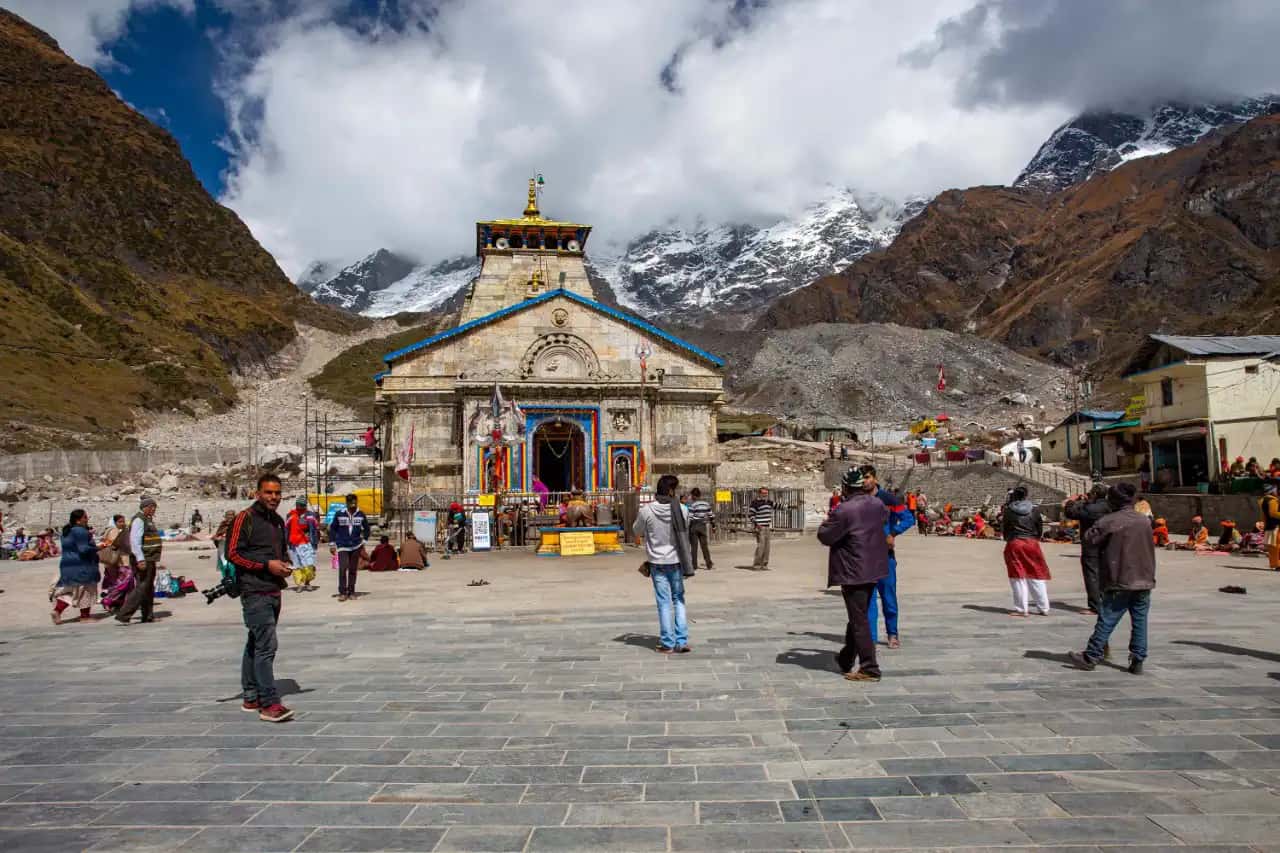
The hump of Shiva, a Jyotirlinga, the grandest of the five
Two windows: mid May to June, and September to mid October, after the monsoon. Avoid July and August (landslides). 2026 opening: Kedarnath 22 Apr, Tungnath 2 May, Rudranath 18 May, Madhyamaheshwar 21 May; Kalpeshwar all year.
Overview
Panch Kedar is the five Himalayan temples where, in the old story, Lord Shiva appeared after taking the form of a bull. The hump rose at Kedarnath, the navel at Madhyamaheshwar, the arms at Tungnath, the face at Rudranath, and the hair at Kalpeshwar.
The Pandavas built a temple at each place to atone for the Kurukshetra war, and pilgrims have walked between them ever since. This 12-day Panch Kedar tour package takes you to all five, in the order that keeps the driving and the trekking sensible, and closes with darshan of Lord Vishnu at Badrinath, which tradition says completes the yatra.
This is a real Himalayan pilgrimage, not a temple day trip. You will walk about 95 to 100 kilometres in all, sleep in small mountain villages and temple hamlets, and cross oak forests, rhododendron slopes and open alpine meadows with the peaks of Chaukhamba, Nanda Devi and Neelkanth in front of you.
Four of the five temples have no road to them, so your legs, not your car, would take you to these abodes of Lord Shiva. We tell you honestly which day is easy and which is hard, help you build the fitness for it, and arrange ponies, porters and steady local guides so that the yatra stays within your reach.
After the great war of Kurukshetra, the Pandavas wished to be freed of the sin of killing their own kin. Lord Shiva, still angry, did not want to meet them and took the form of a bull to hide in the Garhwal hills near Guptkashi, the "hidden Kashi". When Bhima recognised the bull and caught hold of it, the form dived into the earth and rose again in five parts.
The hump appeared at Kedarnath, the navel and stomach at Madhyamaheshwar, the arms at Tungnath, the face at Rudranath, and the hair and head at Kalpeshwar. The Pandavas built the five temples and were released from their sin. This is why the five are worshipped together as Panch Kedar, and why devotees try to complete all five in one journey.
The five temples sit in different valleys between the Mandakini and the Alaknanda, so the route has to be planned with care or you waste days going back and forth. This tour follows the sequence that pilgrims and mountaineers use for the least backtracking: Kedarnath first, then Madhyamaheshwar, then Tungnath, then Rudranath, then Kalpeshwar, ending near Badrinath.
Kedarnath is the main temple and one of the twelve Jyotirlingas, so it is fitting to begin there. Kalpeshwar, the only one open through the year and the easiest to reach, sits closest to Badrinath, so it is the natural last stop before you complete the yatra with Vishnu darshan.
Kedarnath, the hump
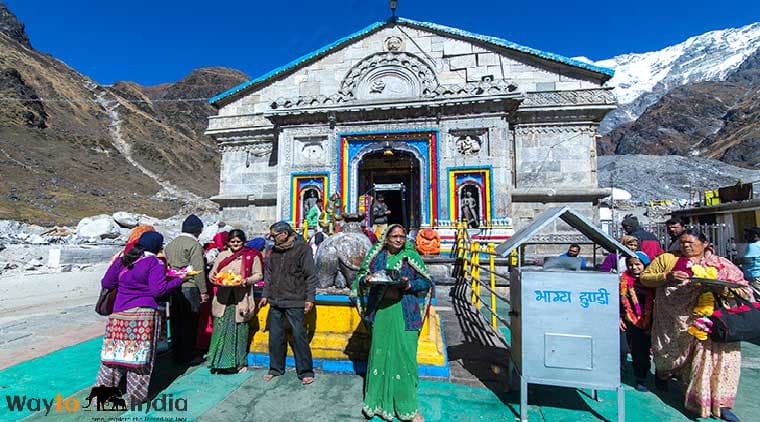
The journey into the mountains starts from Rishikesh and reaches Gaurikund, the road head for Kedarnath. From here you trek about 16 to 18 km up the Mandakini valley to the temple at 3,583 metres. Kedarnath is the grandest of the five, a stone temple that has stood through centuries and even survived the 2013 floods. You take darshan of the pointed rock that is worshipped as Shiva's hump, with the Kedarnath peak rising white behind the shrine. Ponies, palki and porters are available on this trail, so of the five treks this is the best supported.
Madhyamaheshwar, the navel
From Kedarnath you return to Gaurikund and drive to Ukhimath, then on to Ransi village. From Ransi a trek of about 16 km through the villages of Gaundhar and Bantoli, along the Madhyamaheshwar Ganga, brings you to the temple at 3,490 metres, where the navel of the bull is worshipped. The short climb above the temple to Buda Madhyamaheshwar gives one of the finest close views of the Chaukhamba mountain anywhere in Garhwal. This valley is green, quiet and far less crowded than Kedarnath.
Tungnath, the arms
A drive from Ukhimath to Chopta sets up the easiest darshan of the five. From Chopta a short, steep walk of about 3.5 km takes you to Tungnath at 3,680 metres, the highest Shiva temple in the world, where the arms of the bull are worshipped. Most walkers carry on another 1.5 km to the Chandrashila summit for a sweep of the great peaks from Nanda Devi to Bandarpunch. This is the one Kedar that people of most fitness levels can manage.
Rudranath, the face
Rudranath is the hardest and the most beautiful of the treks. From Sagar village near Gopeshwar you climb about 20 km through dense oak and rhododendron forest and the high meadows of Panar and Lyuti Bugyal to the temple at 3,559 metres, set in a natural rock shelter, where the face of Shiva is worshipped. This leg needs real stamina and is done over two days with a night in the meadows. The reward is a shrine that feels utterly remote, with the Vaitarani stream and the Nanda Devi range for company.
Kalpeshwar, the hair
The last Kedar is the gentlest. From Helang on the Rishikesh to Badrinath highway you reach Urgam valley and walk a short, easy trail of about 2 km through apple orchards and potato terraces to Kalpeshwar at 2,200 metres, where the matted hair of Shiva is worshipped inside a small cave. It is the only Panch Kedar temple open all through the year, welcoming even to elders after the long circuit.
Closing at Badrinath
By old custom, a devotee who has taken darshan of Shiva at all five Kedars then visits Lord Vishnu at Badrinath, as a final seal on the pilgrimage. From Kalpeshwar it is a short drive up to Badrinath, one of the Char Dham, for a calm last darshan, the hot Tapt Kund spring, and a walk to Mana, the last village before the Tibet border.
Travelling this yatra with WayToIndia
This is a private, guided pilgrimage, planned around your family and your fitness. You get careful road transport, hand-picked stays in the mountain towns, tented and temple-hamlet nights on the trek legs, experienced Garhwali guides, and ponies and porters arranged where the trails allow. We plan your departure inside the safe windows, help with the Char Dham and trek registrations, and grade every day honestly so that nobody is caught out by a hard climb. Tell us your dates and who is walking, and we will shape the circuit to match.
Two windows: mid May to June, and September to mid October, after the monsoon. Avoid July and August (landslides). 2026 opening: Kedarnath 22 Apr, Tungnath 2 May, Rudranath 18 May, Madhyamaheshwar 21 May; Kalpeshwar all year.
Fit Shiva devotees and serious pilgrims wanting all five Kedars in one journey; experienced trekkers; NRI and OCI devotees on a once-in-a-lifetime yatra. Not for those who cannot walk long distances at altitude.
Moderate to Challenging
Route & distances
Accurate distances and travel times for every leg: 984 km by road, 132 km on foot. Road times include a traffic buffer; distances marked “aerial” are straight-line for flight, helicopter, ropeway and water legs.
| # | Leg | Mode | Distance | Time |
|---|---|---|---|---|
| 1 | Jolly Grant Airport, Dehradun → Rishikesh | By road | 19 km | ~30mest. |
| 2 | Rishikesh → Guptkashi | By road | 213 km | ~6h 40m |
| 3 | Guptkashi → Gaurikund | By road | 32 km | ~1h 30m |
| 4 | Gaurikund → Kedarnath | On foot / trek | 18 km | ~7h 30m |
| 5 | Kedarnath → Gaurikund | On foot / trek | 18 km | ~7h 30m |
| 6 | Gaurikund → Ukhimath | By road | 65 km | ~2h 31mest. |
| 7 | Ukhimath → Ransi, Uttrakhand | By road | 24 km | ~1h 15m |
| 8 | Ransi, Uttrakhand → Madhyamaheshwar | On foot / trek | 18 km | ~8h |
| 9 | Madhyamaheshwar → Ransi, Uttrakhand | On foot / trek | 18 km | ~7h 30m |
| 10 | Ransi, Uttrakhand → Chopta Valley, Uttarakhand | By road | 60 km | ~2h 39m |
| 11 | Chopta Valley, Uttarakhand → Tungnath Temple | On foot / trek | 4 km | ~3h 29m |
| 12 | Tungnath Temple → Chopta Valley, Uttarakhand | On foot / trek | 4 km | ~3h |
| 13 | Chopta Valley, Uttarakhand → Sagar Village, Uttrakhand | By road | 46 km | ~1h 40m |
| 14 | Sagar Village, Uttrakhand → Rudranath Temple | On foot / trek | 24 km | ~10h 50m |
| 15 | Rudranath Temple → Sagar Village, Uttrakhand | On foot / trek | 24 km | ~10h 20m |
| 16 | Sagar Village, Uttrakhand → Joshimath | By road | 66 km | ~2h 30m |
| 17 | Joshimath → Helang, Uttrakhand | By road | 15 km | ~45m |
| 18 | Helang, Uttrakhand → Urghm Valley Road | By road | 33 km | ~1h 34m |
| 19 | Urghm Valley Road → Kalpeshwar Mahadev, Uttrakhand | On foot / trek | 2 km | ~1h |
| 20 | Kalpeshwar Mahadev, Uttrakhand → Urghm Valley Road | On foot / trek | 2 km | ~50m |
| 21 | Urghm Valley Road → Helang, Uttrakhand | By road | 33 km | ~1h 34m |
| 22 | Helang, Uttrakhand → Joshimath | By road | 15 km | ~45m |
| 23 | Joshimath → Badrinath | By road | 58 km | ~3h 20m |
| 24 | Badrinath → Rudraprayag | By road | 150 km | ~6h |
| 25 | Rudraprayag → Jolly Grant Airport, Dehradun | By road | 155 km | ~5h 30m |
Day by day
A carefully paced plan, day by day. Tap any day for the stay, meals and altitude detail.
Today you arrive at Haridwar or Rishikesh, the doorway into the Garhwal Himalaya and the start of your Panch Kedar yatra.
Our driver receives you at the railway station or at Dehradun's Jolly Grant airport, about 35 km away, and brings you to your hotel by the Ganga. Take rest, because the coming days are long and the roads are winding. In the evening you can walk down for the Ganga Aarti, at Har Ki Pauri in Haridwar or at Triveni Ghat and Parmarth Niketan in Rishikesh, where rows of lamps are floated on the river as the priests sing. It is a quiet, hopeful way to begin a pilgrimage.
Use the evening to check your gear. You will need good trekking shoes that are already broken in, warm layers, a raincoat, a torch, and a small medical kit. If you are missing anything, the Rishikesh market has plenty of trekking shops. Eat a simple, light dinner and sleep early.
Insider fact: Rishikesh is the first entry point into Garhwal from the plains, and the old pilgrim road to all the Himalayan shrines, including the Panch Kedar, has started here for centuries. The nearest railway station for the whole circuit is Rishikesh, and the nearest airport is Jolly Grant, Dehradun.
Special Tips for This Day : Arrive a day early if you can, so a delayed flight never eats into the trek. Break in your trekking shoes at home before the trip, never on Day 3. Carry your original ID and a few passport photos for the Char Dham and trek registrations. If you take any regular medicine, pack more than you think you need.
After an early breakfast you begin the long, beautiful drive into the mountains, about 180 km to Guptkashi and roughly 6 to 7 hours on the road(note that timing the road journey in mountains can never be accurate woing to travel snarls and occasional landslides, thus leaving early in the morning is always desired).
You follow the Ganga and then the Mandakini, passing the holy river meetings of Devprayag, where the Bhagirathi and Alaknanda join to become the Ganga, and Rudraprayag. The road climbs steadily through Srinagar and terraced hillsides, and the air grows cooler and cleaner as you go.
You reach Guptkashi by late afternoon and check in. The name means "hidden Kashi", from the very story of your yatra, because this is where Shiva, in the form of the bull, hid from the Pandavas. Visit the Vishwanath temple and the Ardhanareshwar temple here, and see the Manikarnik Kund where two streams, said to be the Ganga and the Yamuna, meet.
Guptkashi is also the winter home of the Panch Kedar spirit, because the temple town of Ukhimath nearby keeps the deities of Kedarnath and Madhyamaheshwar through the snow months.
For dinner, Guptkashi is the best food town on this stretch of the route. Try simple, warming Garhwali food: aloo ke gutke with mandua ki roti, hot rajma chawal, and local kafuli (the green curry of spinach and fenugreek).
Sleep early, because tomorrow you climb to Kedarnath.
Insider fact: the deities of both Kedarnath and Madhyamaheshwar spend the winter at the Omkareshwar temple in Ukhimath, just above Guptkashi, so this small area is the off-season heart of two of your five Kedars.
Special Tips for This Day : Start by 6 am to beat the hill traffic and reach Guptkashi with light to spare. Keep a light jacket handy in the car, as the temperature drops fast after Rudraprayag. Buy any last woollens or a walking stick in Guptkashi bazaar tonight; the choice thins out higher up.
Today is the first big day of the yatra.
You leave early and drive about 35 km to Gaurikund, the road head. From Gaurikund the trek to Kedarnath begins, about 16 to 18 km of steady uphill along the Mandakini, through forests, past waterfalls, with the Kedarnath peak growing ahead of you. The path is well made and busy with fellow pilgrims.
Alternatively, if you wish, you can book helilcopter service from Guptkashi or Phata to Kedarnath (travellers have to book their own tickets for helicopter service and cost is not included in the package cost). If treking from Gaurikund, the travellers can hire ponies, palki (a carried chair) and porters which are available at Gaurikund, and this is the best supported trail of the whole circuit.
You reach Kedarnath by evening, at 3,583 metres, the grandest of the five temples and one of the twelve Jyotirlingas of Shiva. Here the hump of the bull is worshipped.
Check in to your simple stay, rest and drink plenty of water to settle into the height. If you have the energy, attend the evening aarti, when the stone temple glows in the lamplight against the dark mountains. Food on this trail is simple, hot and vegetarian.
At Gaurikund the dhabas open before dawn and serve rajma chawal, aloo gutk and endless glasses of chai for the climb, and there are tea and Maggi points all the way up. At Kedarnath itself, keep to hot, freshly cooked food and hot water.
Insider fact: the Kedarnath temple survived the terrible floods of June 2013 because of a large boulder that stopped behind the shrine and split the debris around it; pilgrims now revere it as the Bhim Shila.
Special Tips for This Day: Begin the trek by 6 or 7 am so you reach before dark and before the afternoon weather. Walk slowly and steadily rather than in bursts, and sip water often, because this is the first big gain in height. Book your pony or palki at Gaurikund early, as they go fast on busy days. Keep a warm layer and your raincoat within reach; the weather at Kedarnath changes within minutes.
Wake before dawn for the morning darshan at Kedarnath, the calmest and most moving hour at the temple, before the day's crowds arrive. Take your time in the sanctum, then step out to watch the first light touch the Kedarnath peak.
After breakfast you begin the trek back down to Gaurikund(or helicopter if you have booked the helicopter service), which is easier on the lungs but harder on the knees, so a walking stick and an unhurried pace help.
From Gaurikund your vehicle drives you to Ukhimath, about 60 km, the temple town that is the winter seat of Kedarnath and Madhyamaheshwar. Check in and rest your legs. If time allows, visit the Omkareshwar temple in Ukhimath, where the deities are worshipped through the snow months, and enjoy the wide view over the Kedar valley.
Ukhimath bazaar is a good place to eat and to shop. Have hot Garhwali food, and buy hand-knitted woollen caps, sweaters and shawls, rudraksha beads and religious items, and, in season, a bottle of buransh (rhododendron) juice. These make honest, useful souvenirs of the yatra.
Insider fact: Ukhimath is where the chief priest, the Rawal, and the temple rituals of Kedarnath move for the winter, so the town quietly becomes Kedarnath's home for six months of the year.
Special Tips for This Day: Do the morning darshan before you pack, so you are not rushing the most important part of the day. Going downhill, tighten your shoelaces and lean slightly forward to save your knees. Reach Ukhimath in daylight so you can rest properly before the Madhyamaheshwar trek.
Today you go to the navel of Shiva. After an early breakfast you drive from Ukhimath to Ransi village, about 20 to 25 km, the road head for Madhyamaheshwar.
From Ransi the trek begins, about 16 km through the small villages of Gaundhar and Bantoli, crossing wooden bridges over the Madhyamaheshwar Ganga and climbing through green forest and terraced fields. Sources differ a little on the exact distance, from about 16 to 21 km depending on the start point, so treat this as a long, full walking day.
You reach Madhyamaheshwar by evening, at 3,490 metres, a quiet stone temple in the old Kedarnath style, where the navel and stomach of the bull are worshipped. This valley sees far fewer people than Kedarnath, and the peace here is its own reward. Check in to a simple stay near the temple, rest, and attend the evening aarti if you are not too tired. Food on this trek is basic and warming: dal, rice, roti, potatoes and hot tea at the trail dhabas and at the temple hamlet. Eat well, because tomorrow you walk back.
Insider fact: a short, steep climb of about 1.5 to 2 km above the temple leads to Buda Madhyamaheshwar, a tiny shrine on a ridge, from where the Chaukhamba peaks stand up so close and clear that many trekkers call it the best view of the whole Panch Kedar.
Special Tips for This Day: Leave Ukhimath by 7 am so you finish this long trek in daylight. Carry enough water and some dry snacks, as the dhabas thin out on the higher part of the trail. If your body feels strong on arrival, keep the Buda Madhyamaheshwar climb for the clear light of early next morning.
If you saved it for the morning, climb to Buda Madhyamaheshwar at first light for the Chaukhamba view, then return for a peaceful darshan at the main temple.
After breakfast you trek back down to Ransi, where your vehicle is waiting. From Ransi you drive to Chopta, about 2 to 3 hours through Ukhimath, into the meadow country that people call the mini Switzerland of Uttarakhand. Chopta sits among tall pine and rhododendron forest at around 2,700 metres, and it is the base for tomorrow's darshan at Tungnath.
Check in early and rest, because the high, thin air here rewards an easy evening. Chopta has some of the friendliest food on the circuit. The roadside Shri Mangalam Dhaba on the Tungnath trail is known among trekkers for mandua ki roti and chainsoo, the roasted black-gram curry of Garhwal, and the Snow View Restaurant in Chopta market is liked for kandalee ka saag and jhangore ki kheer, the millet pudding.
On the drive, and in Chopta, look out for local buransh juice, organic honey and herbal teas to carry home.
Insider fact: Chopta stays green and open even in winter and is one of the few places in Garhwal where you can sometimes see snow-covered meadows without a hard climb, which is why it draws both pilgrims heading to Tungnath and ordinary holidaymakers.
Special Tips for This Day: Come down from Madhyamaheshwar early so you reach Chopta with the afternoon free. Drink plenty of water at Chopta and go easy tonight; a calm evening at this height makes tomorrow's climb much easier. Layer up after sunset, as Chopta gets cold quickly.
Today is the easiest and one of the most rewarding darshans of the yatra.
After an early breakfast you begin the walk from Chopta to Tungnath, a steep but short and well-paved trail of about 3.5 km. At 3,680 metres, Tungnath is the highest Shiva temple in the world, and here the arms of the bull are worshipped. The little stone temple, wrapped in prayer flags with the great peaks behind it, is one of the sights of the Himalaya. If your breath and the weather allow, carry on another 1.5 km to the Chandrashila summit at about 4,000 metres, from where, on a clear morning, you can see a full arc of peaks from Nanda Devi and Trishul to Chaukhamba and Bandarpunch.
Then walk back down to Chopta for lunch. In the afternoon you drive towards Sagar village near Gopeshwar, the road head for the Rudranath trek, about 3 to 4 hours away. Check in early and sleep well, because tomorrow begins the hardest walk of the circuit. Eat a good, filling dinner tonight.
Insider fact: Tungnath's deity is said to have been established by Rama, or in other tellings by the Pandavas, and the temple is believed to be more than a thousand years old, making it not only the highest but one of the oldest Shiva shrines in these mountains.
Special Tips for This Day: Start the Tungnath climb early for the clearest peak views and the calmest summit. Decide honestly at Tungnath whether to add Chandrashila; if the sky is closing in, the temple darshan alone is complete. Rest your legs in the car on the way to Sagar and prepare your day pack for Rudranath tonight.
Today you begin the toughest and most beautiful trek of the Panch Kedar.
From Sagar village you climb steadily through thick oak and rhododendron forest, then out onto the open high meadows, or bugyals, of Panar and Lyuti.
The full trail to Rudranath is about 20 km one way, so it is split over two days, and today you walk to a meadow camp, gaining height slowly. The forest is alive with birds, and as you rise the trees give way to rolling grassland with the big peaks ahead.
You spend tonight in a tented camp or a simple meadow shelter, high and quiet, under a sky thick with stars. It is cold up here after dark, so your warm layers matter. Your trek team cooks a hot dinner of dal, rice, roti and vegetables, and hot tea and soup keep you going. This is a demanding day with real height gain, so walk at a steady rhythm, drink often, and tell your guide at once if you feel a headache or nausea, the early signs of altitude sickness.
Insider fact: the meadows on this trail, Panar and Lyuti Bugyal, are classic Garhwali bugyals, high summer pastures where shepherds still bring their flocks, and in the clear months they carpet with wildflowers.
Special Tips for This Day: Keep your day pack light but carry water, snacks, a warm layer and your raincoat within reach. Match your pace to your breath, not to the group, and never race the climb. Fill your water at the marked sources your guide points out, and keep some cash, as there are no shops up here.
An early start takes you on to Rudranath, at 3,559 metres, through the last stretch of high meadow and a steep climb over the Pitradhar ridge before the final descent to the temple.
Rudranath sits in a natural rock shelter facing the Nanda Devi range, and here the face of Shiva, the Rudramukha, is worshipped. Of all the five, this shrine feels the most remote and the most wild, with the Vaitarani stream flowing nearby and hardly a crowd in sight.
For many pilgrims, reaching Rudranath after the long climb is the emotional peak of the whole yatra. Take your darshan slowly, rest, and eat the hot food your team prepares. You spend the night in a simple stay or tented camp near the temple, high in the mountains, so keep warm and hydrated and let your body recover. The priests here are of the Dasnami Gosain tradition, different from the Lingayat priests at Kedarnath and Madhyamaheshwar, one of the small signs of how these five temples, though worshipped together, each keep their own old ways.
Insider fact: several small sacred ponds, or kunds, lie around Rudranath, including the Surya Kund and Chandra Kund, and pilgrims traditionally bathe or sprinkle the cold water before darshan.
Special Tips for This Day: Start at first light so you have time for a calm darshan and rest before the cold evening. Watch your footing on the Pitradhar ridge, especially if it is wet. Keep taking water and eating even if the height dulls your appetite, as it helps your body adjust.
After a last darshan at Rudranath, you begin the long trek back down to Sagar village, retracing the meadows and forest.
Downhill is quicker but tiring on the knees, so use your stick, tighten your shoes and take it steadily.
Your vehicle meets you at Sagar. From Sagar you drive to Joshimath, about 2 to 3 hours, on the Rishikesh to Badrinath highway. Joshimath is an old town linked with Adi Shankaracharya and one of his four principal maths, and it is the road town for Badrinath, Auli and the Niti valley.
Check in, rest your tired legs, and enjoy a proper hot meal and a comfortable bed after the high, basic nights. Joshimath has a good choice of eating places after the simple trail food, with local restaurants serving North Indian, Chinese and Garhwali dishes. Rest well tonight; the hard trekking is now behind you, and the last Kedar is a gentle one.
Insider fact: Joshimath, also called Jyotirmath, holds the sacred Kalpavriksha, a mulberry tree said to be over a thousand years old, and is the winter seat of the Badrinath deity, so it ties directly into the closing part of your yatra.
Special Tips for This Day: Set out from Rudranath early to reach Sagar with time for the drive in daylight. Stretch your legs gently at Joshimath to ease the trek soreness. This is a good evening to charge every device and repack, because tomorrow you finish the five Kedars.
Today you reach the fifth and final Kedar.
You drive down from Joshimath to Helang and turn into the green Urgam valley, a lovely pocket of apple orchards and potato terraces. From the Urgam road head a short, easy walk of about 2 km brings you to Kalpeshwar at 2,200 metres, where the matted hair of Shiva, the Jata, is worshipped inside a small cave shrine.
After the long climbs of the past days, this gentle trail feels like a blessing, and Kalpeshwar is the only Panch Kedar temple open through the whole year. With the five Kedars now complete, you drive up to Badrinath, about 45 to 50 km via Joshimath, one of the Char Dham and the abode of Lord Vishnu. By old custom, a Panch Kedar pilgrim finishes the yatra with darshan of Vishnu here.
Reach in the afternoon, take a dip in the hot Tapt Kund spring if you wish, and attend the evening aarti at the colourful temple by the Alaknanda. At Badrinath and Joshimath the food is simple, hot and vegetarian, as non-vegetarian food and alcohol are not sold in the holy town. Warm dal, rice, roti and local vegetables, and hot tea, round off the day.
Insider fact: the Urgam valley around Kalpeshwar grows some of the finest apples in Garhwal, and its old wooden temples and quiet hamlets make it one of the least spoiled corners on the whole circuit.
Special Tips for This Day: Enjoy the easy Kalpeshwar walk slowly; after the hard days it is meant to be savoured. Carry warm clothes for Badrinath, which is high and cold even in summer. If you plan to bathe in the Tapt Kund, keep a change of clothes and a towel handy.
Wake early for the morning darshan at Badrinath, the quiet hour before the crowds, to complete your Panch Kedar and Badrinath yatra with Lord Vishnu. You may also book Abhishek Aarti which takes place very early in the morning at Badrinath Temple(the only time when you can view the Saligram Idol of Lord Badrivishal , which is not included in the trip cost and has to be pre-booked.)
After the temple, drive the short 3 km to Mana, the last Indian village before the Tibet border, and see the Vyas Gufa and Ganesh Gufa caves, the Bhim Pul rock bridge over the roaring Saraswati river, and the point where the Saraswati is said to join the Alaknanda.
Then you begin the long drive back towards Rishikesh or Haridwar. It is a long day on the road, so depending on your onward travel we either drive through with breaks or arrange a night halt on the way at Rudraprayag, Srinagar or Devprayag. Our driver drops you at Rishikesh, Haridwar or Dehradun airport for your journey home, carrying the blessing of all five Kedars and of Badrinath.
Insider fact: Mana is home to a small tea stall proudly signed as the last tea shop of India, and the Bhim Pul is a natural rock slab said in the Mahabharata to have been laid by Bhima so that Draupadi could cross the Saraswati.
Special Tips for This Day: Do the Badrinath darshan first thing, then Mana, so the long drive starts by late morning. Keep some snacks and water in the car for the road. If your flight is the same evening, allow a generous buffer, because mountain roads can slow down without warning.
Travel tips
On this journey you take darshan of Lord Shiva in five forms across the high Garhwal Himalaya: the hump at Kedarnath, the navel at Madhyamaheshwar, the arms at Tungnath, the face at Rudranath and the matted hair at Kalpeshwar, closing with Lord Vishnu at Badrinath. Four of the five have no road, so this is a real trek of about 95 to 100 km. Here is everything you should know before you go and while you walk.
There are two safe windows: mid May to end June, and September to mid October. The one season to avoid completely is the July to August monsoon, when landslides close the Garhwal roads and trails.
For 2026 the temples open on Kedarnath 22 April, Tungnath 2 May, Rudranath 18 May and Madhyamaheshwar 21 May, while Kalpeshwar stays open all year. Closing dates near Diwali are announced later in the season. Always reconfirm both before you lock non-refundable travel, as weather can shift the high-temple dates.
The five Kedars are not five separate stories but one. After the Kurukshetra war the Pandavas sought Shiva to be freed of their sin. He hid as a bull, and when caught, dived into the earth and rose again in five parts, each of which became a temple.
The five are worshipped together but keep different traditions. The chief priests at Kedarnath and Madhyamaheshwar are Lingayat Jangamas from Karnataka, Rudranath and Kalpeshwar are served by Dasnami Gosains, and Tungnath by local Garhwali Brahmins. These small differences are part of the living history of the circuit.
The five temples sit in different valleys, so the order matters. This tour runs Kedarnath, Madhyamaheshwar, Tungnath, Rudranath, Kalpeshwar, then Badrinath, with Rishikesh as the single base at the start. Total walking is about 95 to 100 km.
Because the temples are spread across separate valleys, there is no single trail that strings all five together for a normal pilgrim. The practical way, and the way this tour is built, is to use Rishikesh as the entry point and drive between the five road heads, trekking in and out of each temple. That is why the circuit needs about 12 days.
Kedarnath at 3,583 metres is the first and grandest of the five, one of the twelve Jyotirlingas, and part of the Chota Char Dham. Here the hump of the bull is worshipped, in a stone temple that has stood for centuries.
When Kedarnath closes for winter, its deity and rituals move to the Omkareshwar temple at Ukhimath, where they are worshipped through the snow months. Madhyamaheshwar's deity also winters at Ukhimath, so this one small town is the off-season home of two of your five Kedars.
Rudranath is the hardest trek of the Panch Kedar, about 20 km each way over two days through high meadows, with a steep climb over the Pitradhar ridge. It is also the most beautiful and the most remote of the five.
On the meadow camp and the final climb you gain real height. Walk at a steady pace, drink water often, and eat even when the height dulls your appetite. Tell your guide at once about any headache, nausea or dizziness. Descending is the surest cure, so never push on while feeling unwell.
Not every Kedar is a hard climb. Tungnath at 3.5 km from Chopta and Kalpeshwar at about 2 km from Urgam are short and manageable, and Kalpeshwar stays open all year.
This is a high Himalayan trek, not a car pilgrimage. About 95 to 100 km on foot over 12 days, with cold nights and thin air. A few weeks of honest preparation change everything.
For a trek at this height, travel insurance that covers mountain evacuation is strongly advised. Keep a spare day in your overall plan, because landslides, snow or weather can hold up a leg, and you never want to be racing a flight down a Garhwal road.
The circuit crosses the heart of Garhwali food country. The trail food is simple and vegetarian, but the towns of Guptkashi, Ukhimath and Chopta serve real Pahadi cooking worth slowing down for.
On the walking legs, stick to hot, freshly cooked food and boiled or filtered water, and avoid anything cold or stale that has been carried far. Your trek team cooks fresh dal, rice, roti and vegetables at the camps, which is exactly what a cold high day calls for.
The whole circuit uses Rishikesh as its entry point, the old road head into Garhwal. The nearest airport is Jolly Grant, Dehradun, and the nearest big railway station is Rishikesh or Haridwar.
Dehradun's Jolly Grant airport is about 35 km from Rishikesh and has regular flights from Delhi and other metros. It is the fastest way in for travellers coming from far, including NRI and OCI devotees connecting through Delhi.
Haridwar is a major railhead on the national network, and Rishikesh has its own station. From either, the drive into the mountains to Guptkashi is the first leg of the tour. Many pilgrims from Delhi take an overnight train to Haridwar and start fresh in the morning.
Rishikesh is about 230 km from Delhi by road, an easy overnight or early-morning drive. From there the mountain roads begin, so most people spend the first night at Rishikesh or Haridwar before heading up.
The yatra ends with the long drive back from Badrinath to Rishikesh, Haridwar or Dehradun airport, which is a full day on the road. Depending on your flight or train, we either drive through with breaks or add a night halt at Rudraprayag, Srinagar or Devprayag, so you are never rushing a mountain road in the dark.
This is one of the harder pilgrimages in India, so it needs honest planning for overseas families and older devotees. The full five are for the fit; a shorter three-temple cut brings the darshan within gentler reach.
Om Namah Shivaya
The Panch Kedar teaches a simple truth in a hard and beautiful way. Shiva is one, worshipped here as the hump, the navel, the arms, the face and the hair, scattered across five valleys of the Garhwal Himalaya. To walk to all five, over forests and meadows and cold high nights, is to gather those pieces back together, and to close the journey with Vishnu at Badrinath is to say that the whole of it is complete. Pilgrims have made this walk for centuries, and the mountains have not changed. Go fit, go slow, and let each darshan be earned.
What's included
What travellers say
“Had a wonderful experience with way to india for my badrinath kedarnath yatra.everything was well organized-from travel accommodation to food. A special thanks to Ms. Neha who managed everything so beautifully n was extremely supportive n cooperative throughout the journey. They took great care of us n darshan was done very smoothly.”in the last week · Google
“A big thanks to Way To India for organising such a truly memorable and spiritually fulfilling experience during our 12 Jyotirlinga Darshan pilgrimage from 1st May to 18th May. They organized the entire journey exceptionally well, ensuring that every aspect of the trip was smooth, comfortable, and hassle-free. From transportation and hotel arrangements to darshan planning and coordination, everything was managed professionally. Despite the extensive travel across multiple destinations, the itinerary was well-structured, allowing us to complete all the Jyotirlinga darshans comfortably. Thanks to staff of Way To India, especially, Ms Neha, who was supportive, responsive, and attentive throughout the journey, always ready to assist whenever needed. Her dedication and careful planning made this sacred pilgrimage stress-free and enjoyable. I sincerely appreciate their excellent service, commitment, and hospitality. Highly recommend Way To India to anyone planning a spiritual tour, especially for the 12 Jyotirlinga Yatra. Thank you for making this divine journey so special and memorable.”3 months ago · Google
“We have successfully completed the 12 Jyotirlinga Yatra, with Waytoindia and it was a truly blessed and unforgettable journey. Every aspect of the tour was well planned and professionally organized, from transportation and accommodations to temple visits and sightseeing. Visiting all twelve sacred Jyotirlingas was a deeply spiritual experience. The itinerary was designed efficiently, allowing us to have darshan at each shrine comfortably while enjoying the cultural and religious significance of every destination. We sincerely appreciate the excellent support and coordination throughout the trip. The team was always available to assist, ensuring a smooth and stress-free pilgrimage. Thank you Waytoindia for making our dream of completing the 12 Jyotirlinga Yatra a reality. We highly recommend this tour to anyone seeking a well-organized and spiritually enriching pilgrimage experience. Har Har Mahadev! 🙏🕉️”4 months ago · Google
Travelled with Way to India?
Share your experience on Google — it takes a minute and helps fellow travellers plan with confidence.
FAQ
Panch Kedar is a group of five Himalayan temples of Lord Shiva in the Garhwal region of Uttarakhand: Kedarnath (3,583 m), Tungnath (3,680 m), Rudranath (3,559 m), Madhyamaheshwar (3,490 m) and Kalpeshwar (2,200 m). In the legend, Shiva took the form of a bull, and when it dived into the earth it reappeared in five parts: the hump at Kedarnath, the arms at Tungnath, the face at Rudranath, the navel at Madhyamaheshwar and the hair at Kalpeshwar. The Pandavas built a temple at each place.
Covering all five temples properly takes about 10 to 12 days from Rishikesh, because four of the five have no road and must be reached on foot. This tour is planned over 12 days, which includes travel days, the five treks and a closing darshan at Badrinath. The total distance walked is about 95 to 100 km.
The order that keeps the driving and trekking sensible is Kedarnath first, then Madhyamaheshwar, then Tungnath, then Rudranath, and Kalpeshwar last, before closing the yatra with Badrinath. Kedarnath is the main temple and is visited first, while Kalpeshwar, being the easiest and open all year, sits closest to Badrinath and makes a natural final stop.
For 2026, Kedarnath opens on 22 April, Tungnath on 2 May, Rudranath on 18 May and Madhyamaheshwar on 21 May. Kalpeshwar remains open through the whole year because it sits at a lower altitude. These dates were announced on Maha Shivratri; always reconfirm before booking, as the closing dates near Diwali are declared later.
There are two good windows: from mid May to the end of June, and from September to mid October after the monsoon. Avoid July and August, when heavy rain and landslides make the Garhwal roads and trails dangerous. May and June are warmer and greener; September and October are clearer and colder, with the sharpest mountain views.
It is a moderate to challenging pilgrimage. Tungnath, at about 3.5 km from Chopta, is the easiest and suits most fitness levels. Kedarnath, at 16 to 18 km, is long but well supported with ponies and porters. Madhyamaheshwar, at about 16 km, is a long forest walk. Rudranath, at about 20 km each way over two days through high meadows, is the hardest. Kalpeshwar, at about 2 km, is the gentlest. You should be able to walk long distances and climb steadily; start training weeks in advance.
It depends on their fitness. Kedarnath, Tungnath and Kalpeshwar can be managed by fit elders, with ponies or a palki on the Kedarnath trail. Rudranath and Madhyamaheshwar are long and hard, and are not advised for those who cannot walk long distances at altitude. If elders in the family want the darshan without the toughest treks, we can plan a shorter three-temple version instead of the full five.
Yes on some, not on others. The Kedarnath trail has a full service of ponies, palki and porters from Gaurikund. The other trails offer porters and, in places, ponies, but the service is limited, especially on the remote Rudranath route. We arrange what is available in advance, but you should be prepared to walk most of the circuit on your own legs.
Carry warm layers including a fleece and a windproof jacket, a good raincoat or poncho, sturdy broken-in trekking shoes, a woollen cap and gloves, a torch with spare batteries, a refillable water bottle, sunscreen, sunglasses, a personal medical kit with any regular medicines, and a walking stick. Pack light, because you carry your own day pack, and keep a dry bag for documents and a phone.
Yes. Kedarnath and Badrinath require Char Dham Yatra registration, and it is wise to register your trek plans for the remote routes and inform the local authorities. We help you complete the registrations and carry the right documents. Always keep your original photo ID and a few passport photographs with you.
Before you book
You may also like
 18D / 17N 5
 11D / 10N 5
 4D / 3N
 6D / 5N
 11D / 10N
Tell us your dates and group size. A WayToIndia travel expert replies within a few hours with a plan you can customise freely. Planning India journeys since 2010.
Explore Way to India
© 2026 Way to India. All rights reserved.