01
Yamunotri
Uttarakhand
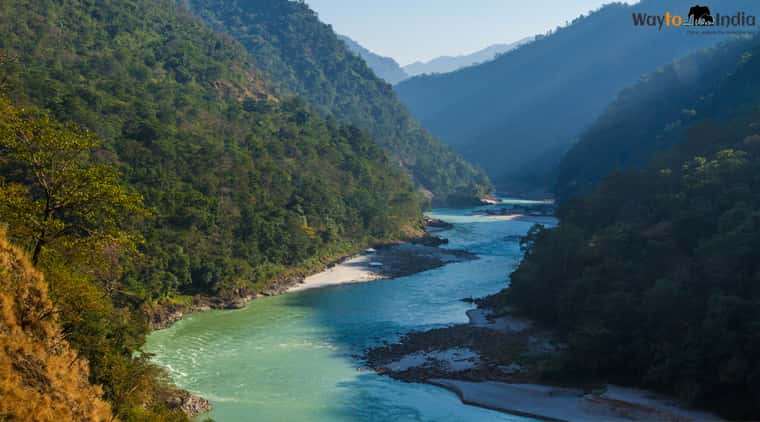
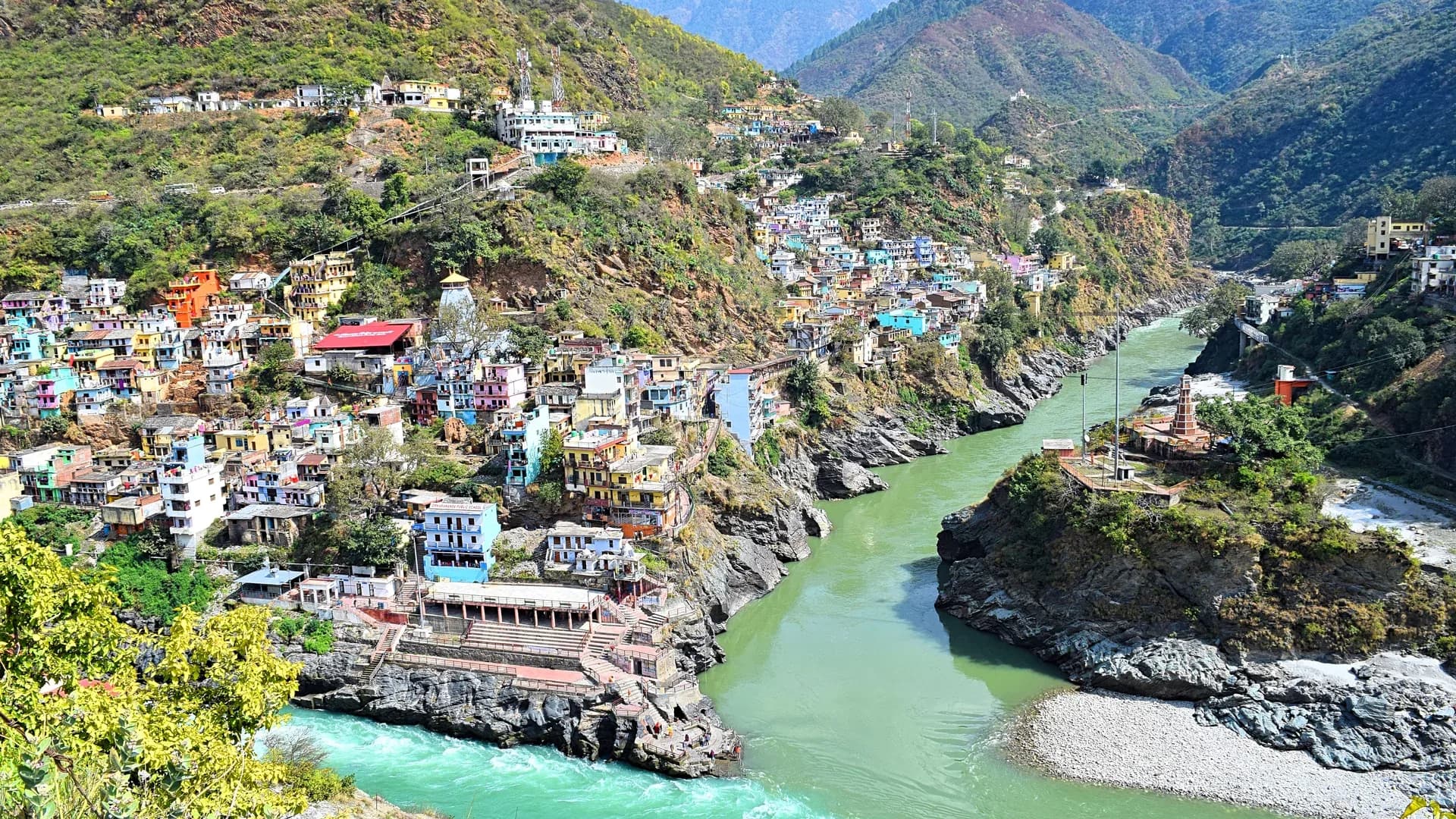
The source of the Yamuna, reached by a short trek from Janki Chatti
Overview
Embark on a divine journey with our Chardham Yatra 2026, an extraordinary pilgrimage to four of Uttarakhand’s most sacred destinations. This tour takes you to the holy abodes of Lord Badrinath (Vishnu) and Lord Shiva (Kedarnath), as well as the temples dedicated to Goddess Ganga and Goddess Yamuna, all nestled in the breathtaking folds of the Himalayas. The itinerary offers a perfect blend of spirituality, natural beauty, and adventure, ensuring a deeply enriching and unforgettable experience for every devotee.
Chardham Yatra 2026 – Opening- The Chardham Yatra 2026 is expected to run from April to November 2026, with the temples opening on Akshaya Tritiya: Yamunotri (April 19), Gangotri (April 19), Kedarnath (April 22), and Badrinath (April 24). The pilgrimage season concludes around Bhai Dooj (late October/early November).
For the safety and smooth management of devotees, mandatory online registration is required. Pilgrims should be prepared for the challenging Himalayan terrain, and both helicopter and road travel options are available. Health checks are advised, especially for elderly pilgrims, to ensure a safe and fulfilling spiritual journey.
At WayToIndia, we personalize every trip to match your interests and requirements.
Chardham Yatra Tour Package Thrilling heights, melting glaciers and nature’s unspoilt splendour in abundance – the premises set for the very popular Chardham Yatra tour package is simply apt for a reviving experience. Though, it is the apparent presence of the supreme almighty which accounts for the main reason that this tour itinerary is undertaken by thousands every year.
Gangotri happens to be the place from where Goddess Ganga begins its journey on the earth in the form of the very pious River Ganga after leaving her celestial abode. Goddess Yamuna imitates Ganga and takes the form of River Yamuna that finds its source at Yamunotri.
Kedarnath is one of the many abodes of Lord Shiva and one of the 12 Jyotirlingas, where the lord is worshipped as an endless pillar of light. The final destination of the pilgrimage is Badrinath, where resides Lord Vishnu in his eternally meditating incarnation.
Visiting each of these Dhams, which open only for six months from April-end to early November, is one way to get rid of all the sins and sorrows, as per the belief in the Hindu mythology. During Chardham Yatra tour package, one enters a world away from the maddening materialistic world to discover the greatest respite in life.
May–June & Sep–Oct
Pilgrims/Devotees, Families, Seniors (with assistance)
Challenging
Day by day
A carefully paced plan, day by day. Tap any day for the stay, meals and altitude detail.
Arrive in Haridwar on your own at least one day in advance to the start of the tour. This day is not included in your tour cost, however, at special additional cost all arrangements can be made for your stay at Haridwar also. While you are at Haridwar, you may visit the hilltop temples or other attractions like Daksha Mahadev Temple, where Sati sacrificed her life in the holy fire not bearing the insult of her husband Lord Shiva at the hands of her father Daksha. Bharat Mata Mandir (photography strictly prohibited) is an interesting venue showcasing the vast cultural and historical exhibits of India.
Attend the Ganga aarti for an experience you would never forget. Overnight stay at Haridwar.
Haridwar –A Gateway to Divine Bliss
Haridwar is adorned with scores of temples along the holy banks of the Ganga, with some perched atop hills and accessible via ropeways. Pilgrims can visit the hilltop Mansa Devi and Chandi Devi Temples using thrilling cable car rides (combo ticket INR 257). A holy dip at Har-ki-Pauri is a spiritual highlight, believed to cleanse the soul. The evening Ganga Aarti, with thousands of flickering earthen lamps and melodious chants, creates a mesmerizing spectacle, as if summoning the Gods to the earthly realm. The main attraction is the fascinating Ganga aarti in the evening where thousands of earthen lamps and melodious chants appear to summon the Gods on the earth.
Your tour starts as you meet us at the pre-designated place in Haridwar. Drive from Haridwar to Barkot, from where the first Dham Yamunotri is only about 50 km. away. On arrival, check-in at the booked hotel.
Later, you can explore the area on foot and enjoy the visual treat of the snow-capped Himalayan massifs like Bandarpoonch. You may also like to shop for the local handicrafts, paintings and woollens. Overnight stay at Barkot.
Barkot – A Scenic Trails, Apple Orchards, and Himalayan Bliss
At a height of about 4,000 ft., this quaint town of Uttarakhand is absolutely charming. It is located on the banks of Yamuna and is popular for apple orchards, mesmerizing landscapes and adventure activities like camping, trekking and white water rafting.
Get up early in the morning to visit the first holy shrine of Chardham Yatra 2026, the Yamunotri Temple. We would drive you to the base camp at Janki Chatti from where you would trek to reach the temple dedicated to Goddess Yamuna. Return to Barkot at the end of the day for an overnight stay.
Yamunotri – Source of Divinity and Devotion
Situated at an altitude of approximately 10,800 ft, Yamunotri is home to the Yamunotri Temple, dedicated to Goddess Yamuna, believed to be the daughter of Surya (Sun God) and sister of Yama. The temple houses a black marble idol of the goddess. The exact source of the Yamuna River is located at Saptarishi Kund, about 10 km trek from the temple.
Legend has it that the great Sage Asit Muni bathed daily in the holy waters of the Ganga and Yamuna. In his old age, traveling to Gangotri became difficult, so a branch of the Ganga began flowing at Yamunotri to enable him to continue his ritual. Pilgrims often take a holy dip in Gaurikund, a lukewarm spring, before offering prayers at the temple. Another sacred pond, Surya Kund, contains boiling hot water; it is considered auspicious to boil rice and potatoes in this water as offerings. Taking a dip in the icy waters of the Yamuna is believed to protect one from untimely death and suffering. Near the temple, the Divya Shila, a sacred rock, is also worth visiting for its spiritual significance.
Yamunotri Temple is dedicated to Goddess Yamuna, daughter of Sun God (Surya) and sister of Yama.
The source of Yamuna is at Saptarishi Kund, about 10 km trek from the temple.
Surya Kund, a boiling hot spring near the temple, is considered auspicious for boiling rice and potatoes as offerings.
Taking a dip in the icy waters of Yamuna is believed to protect one from untimely death and suffering.
The Divya Shila, a sacred rock near the temple, is considered highly spiritually significant and worth visiting.
Leave Barkot to reach the next destination of Chardham Yatra tour package, the town of Uttarkashi, known for a number of temples and ashrams.
On arrival, check in at the booked hotel. You may later visit the religious sites like Vishwanath Temple which gets its name after a similar Shiva temple at Kashi (Varanasi). It is believed that when Kashi would be drowned under water, Shiva, in the form of Lord Vishwanath, would shift his abode to this temple.
A nearby attraction is the Shakti Temple which features a sacred Trishul (trident) which remains unmovable even if one applies the full body force but vibrates when pressed with a finger. It is believed that Goddess Durga threw this trident to kill demons.
Another interesting attraction of the town is Kuteti Devi Temple which is built on the site where Goddess Durga was discovered embodied in three precious stones. Overnight stay at Uttarkashi.
Uttarkashi – Pilgrimage, Peaks, and Peace
Located at an altitude of approximately 3,800 ft on the banks of the Bhagirathi River, Uttarkashi is a charming town surrounded by tributaries of holy rivers and lush green landscapes. It serves as a gateway to thrilling trekking expeditions in Uttarakhand, including Dodital Lake, Nachiketa Lake, Har ki Doon Valley, and Dayara Bugyal, a breathtaking alpine meadow.
Uttarkashi is also renowned for its mountaineering institutes, spiritual centers, and temples, including the Kashi Vishwanath Temple and Maneri Dam area. Pilgrims and adventure enthusiasts alike are drawn here for a mix of devotion, natural beauty, and outdoor activities. The town offers a peaceful base for Yamunotri yatra and a chance to experience the Himalayan culture, flora, and fauna up close.
On the fifth day of Chardham Yatra, you would be driving to the second dham called Gangotri. On arrival, pray at the Gangotri Temple which houses a silver idol of the goddess with the golden mask. You may visit the spectacular Surya Kund and Gauri Kund Waterfalls formed by River Bhagirathi.
Another popular site is Jalmagna Shivalinga, a natural rock in the form of Shiva Lingam, which stays submerged in water during summers. It is believed to be the place where Shiva held Ganga in his locks when the river descended on earth with unbearable force. Bhagirath Shila is the rock where the kind performed his penance. Get back to Uttarkashi for the night stay.
Gangotri – Spiritual Majesty at the River’s Source
Situated at an altitude of approximately 10,200 ft, Gangotri is home to the stunning white granite Gangotri Temple, dedicated to Goddess Ganga. Surrounded by deodar and pine forests and accompanied by the melodious flow of the Bhagirathi River, the ambience is truly awe-inspiring.
Gangotri is also the starting point for several adventurous treks, including those to Gaumukh, the original source of the Ganga, and the Tapovan Meadows. According to legend, King Bhagirath performed severe penance here to bring the holy river from the heavens to earth, so that the sins of his ancestors could be absolved, making Gangotri one of the most spiritually significant pilgrimage sites in the Himalayas.
The Gangotri Temple is made entirely of pristine white granite.
The Bhagirathi River flowing here is considered the living form of Goddess Ganga.
Gangotri is the starting point for the trek to Gaumukh, the original source of the Ganga.
Taking a holy dip in the Bhagirathi River is believed to wash away sins and purify the soul.
The region is part of Gangotri National Park, home to rare Himalayan wildlife like snow leopards and musk deer.
Bid adieu to Uttarkashi as we drive to Guptkashi which is popular as the gateway to Kedarnath, the next Dham of Char dham Yatra package.
On arrival, check in at the booked hotel. Later, you can visit Vishwanath Temple, which like the one located in Uttarkashi is named after the Kashi Vishwanath Temple. Ardhnareeshwar Temple is where the half-man half-woman form of Shiva and Parvati is worshipped. You may also visit the holy temple town of Ukhimath which is the winter abode of Lord Kedarnath. Overnight stay in Guptakashi.
Guptkashi – Gateway to Shiva’s Magical Blessings
Guptkashi is one of the 6 sacred Kashis in addition to one main Kashi (Varanasi). It is believed that those who can’t perform pilgrimage to Kashi can gain Lord Shiva’s blessings by visiting Guptakashi. There are temples, lakes and arrays of Shiva Lingams in and around the town. At the height of about 4,330 ft. and on the banks of River Mandakini, it offers awe-inspiring views of the lofty Chaukhamba Peak. It is believed that Lord Shiva hid in the ground as a bull at Guptakashi while avoiding the Pandavas.
Let the day start early in the morning as we drive you to the Phata/Sersi/Sitapur Helipad(as per the availability of helicopter tickets for Shri Kedarnath Shrine). From here, you would board the helicopter to reach Kedarnath Helipad. From the helipad, the third Dham is less than 300 m. away.
Kedarnath – Where Devotion & Spiritual Magic Touches the Sky
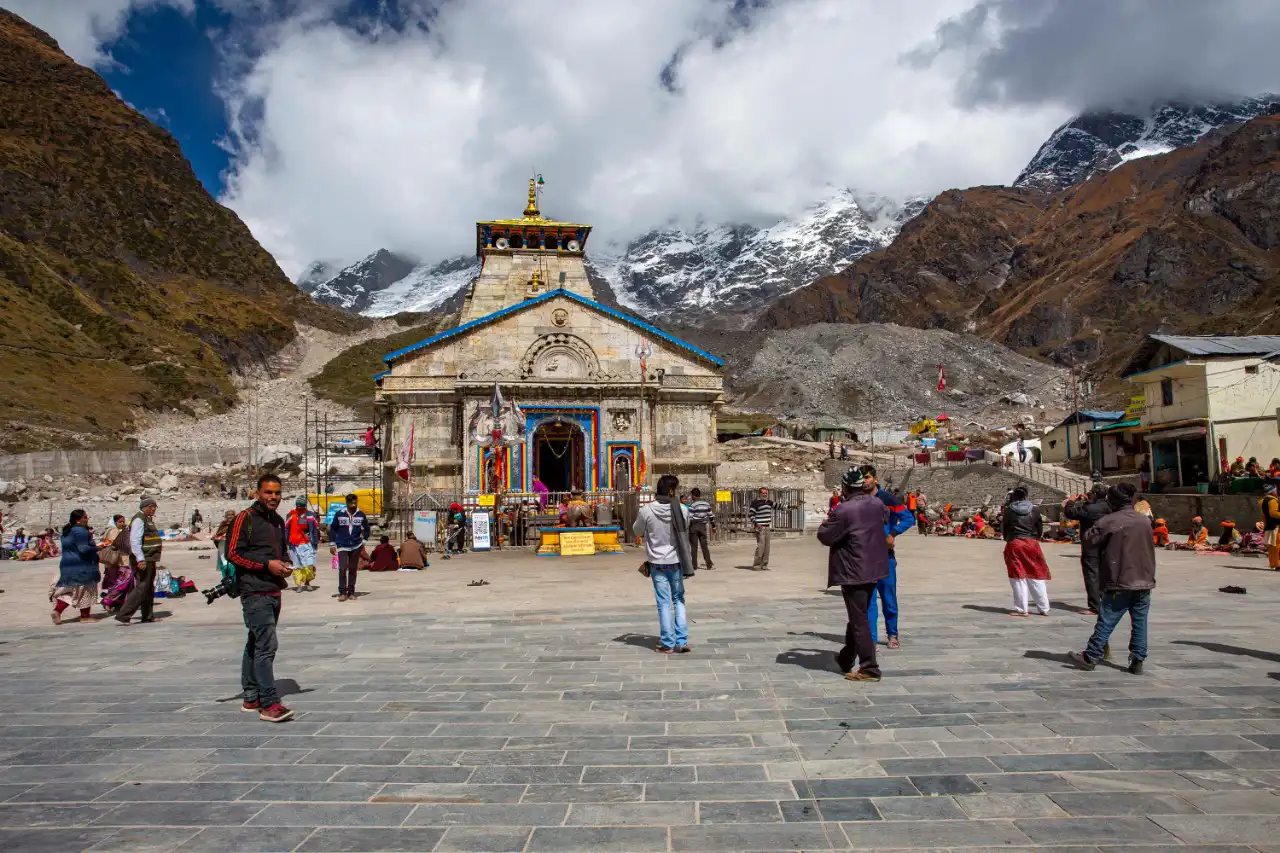
At about 11,660 ft. above sea level, Kedarnath Temple is the remotest of all four temples of Chardham Yatra tour package 2026. River Mandakini, beginning from the Chorabari Glacier near the town, adds magnificence to the whole region which is flanked by the hoary Himalayan peaks like Kedarnath Peak and Kedar Dome. According to the mythological beliefs, Shiva in the form of a bull re-emerged from ground at five different places, his hump appearing at Kedarnath.
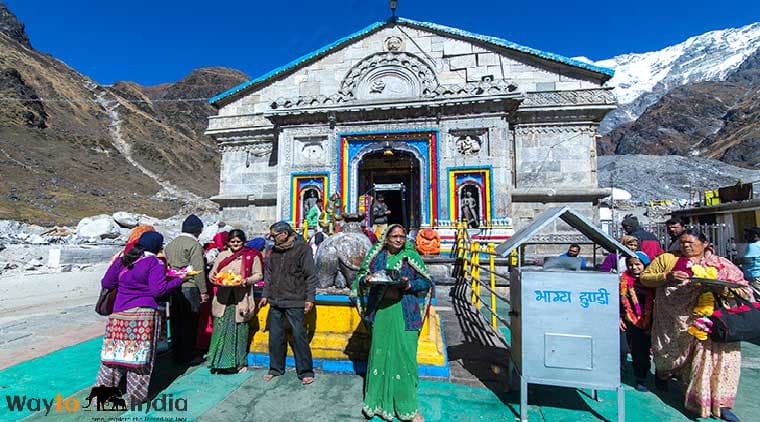
Hence, the Pandavas built a temple here. On arrival, visit the Kedarnath Temple which houses one of the 12 Jyotirlingas of Lord Shiva. It is believed that those who worship the conical shaped lingam with pure heart are absolved of all sins and they ascend to Kailasha, the ultimate abode of Shiva. Later, you may visit Bhairav Temple located in the close vicinity. Finally, fly back to Phata and drive to Guptakashi for night stay.
Sacred Streams: Kedarnath is blessed with the holy waters of Amrit Dhara and Madhu Dhara, which devotees drink for spiritual purification and blessings. These natural springs are considered divine nectar.
Glacial Mystique: The Kedarnath Glacier nearby feeds the Mandakini River, and the area is dotted with mysterious high-altitude meadows and cascading waterfalls rarely explored by tourists.
Udhav Kund: Kedarnath also houses Udhav Kund, a sacred water well whose water is believed to relieve devotees from Pitru Dosha and ancestral karmic burdens. Drinking its water is considered highly auspicious.
Resilience Against Nature: The devastating 2013 floods and landslides damaged the town, but the ancient temple withstood the catastrophe, symbolizing divine protection.
Dhari Devi’s Guardian Presence: The Dhari Devi idol, considered the guardian deity of Kedarnath and Mandakini Valley, is believed to protect the temple and surrounding region; her relocation during the 2013 floods was crucial in minimizing further disaster.
Leave Guptakashi as we drive to the fourth Dham of Chardham Yatra package, the Badrinath Temple located in the holy town of Badrinath.
Badrinath – A Supreme & Divine Abode of Nara-Narayana
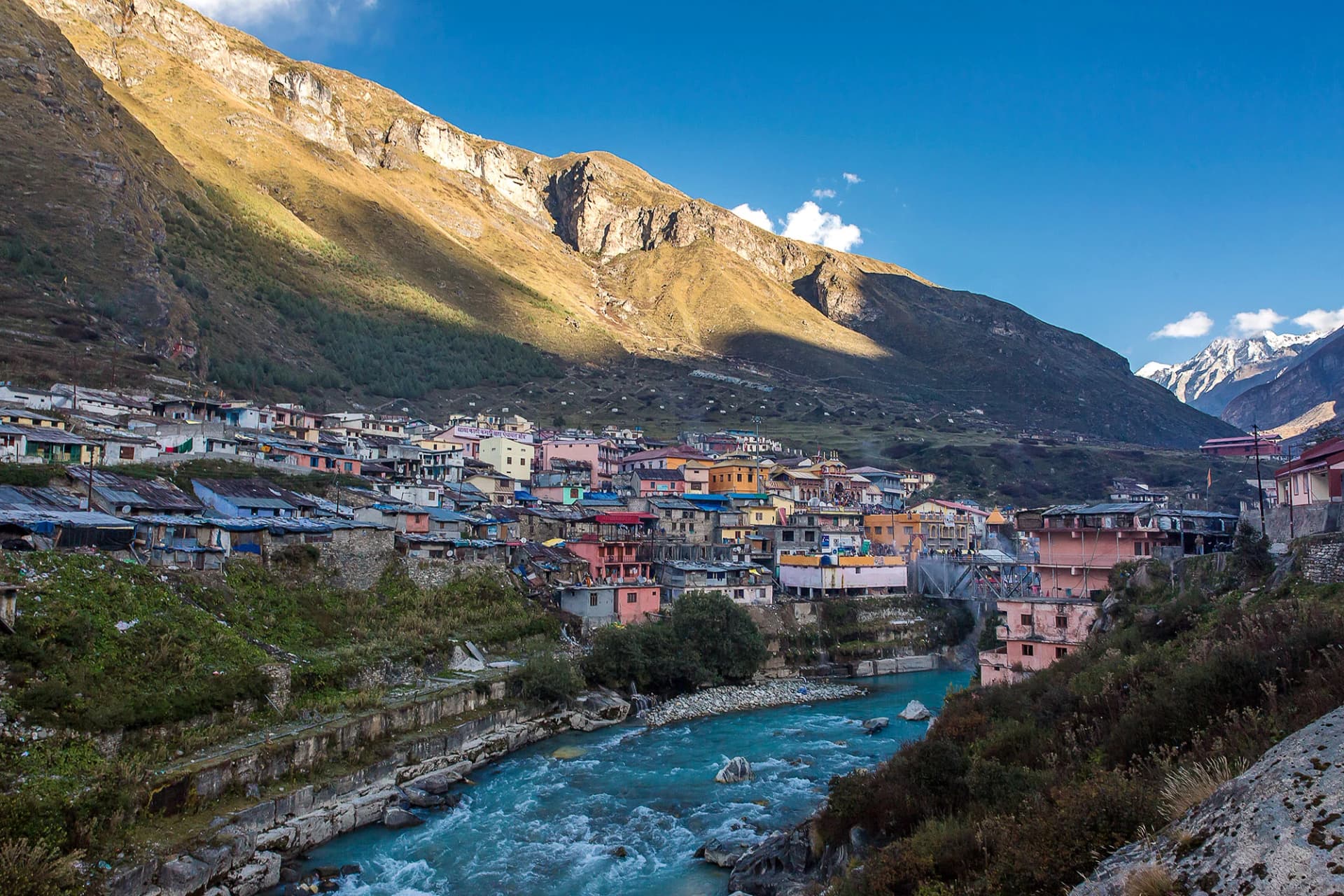
Badrinath was once full of Badri (a form of berry) trees which are believed to have lent the name to the town. One interesting legend about Badrinath Temple is that Lord Vishnu is eternally meditating here under a Badri tree in the form of Nar and Narayana. The temple is also a part of the bigger Chardham Yatra which consists of four holy destinations in four corners of India. The place has many mythological places in the close vicinity, including the Nara and Narayana Mountains, Swargarohini (believed to be the stairs that lead to Swarga or heaven) and numerous places associated with the Pandavas.
On arrival, check-in at the booked hotel. You can visit Badrinath Temple in the evening. The temple houses a black marble(Saligram) idol of Lord Badrinath (Vishnu) and is counted among the 108 Divya Desams of Lord Vishnu. Many people visit Badrinath for Pitr Tarpan at Brahma Kapal, along with the banks of River Alaknanda. At about 10,300 ft. above the sea level, the temple has its mention in many ancient scriptures and rests peacefully near River Alaknanda. Overnight stay at Badrinath.
Sacred Peaks: Badrinath is flanked by the Nar-Narayan Parvat and Neelkanth Parvat, considered highly sacred. These peaks symbolize the divine couple Nara and Narayana, and devotees often offer prayers to them during the pilgrimage.
Vasudhara Falls: A short trek from Badrinath leads to the Vasudhara Falls, whose waters are believed to purify the soul and bestow spiritual blessings, described in legends as divine nectar falling from the heavens.
Tapt Kund: Before entering the temple, pilgrims often visit the Tapt Kund, a natural hot spring whose water is considered sacred and therapeutic, believed to cleanse physical impurities and prepare the body for worship.
Adi Badri: Located a short distance from Badrinath, Adi Badri is an ancient temple complex, believed to be the original place of Badrinath worship before the idol was installed at its current site. It holds immense historical and spiritual significance.
Temple Idol and Spiritual Rivers: The Badrinath Temple houses a black stone idol of Lord Vishnu in the form of Nara-Narayana, believed to have been worshipped since time immemorial. The temple rests beside the holy Alaknanda River, adding to the sanctity of the site and enhancing spiritual merit for devotees.
Spend another day of Char dham Yatra at Badrinath to explore some very interesting places. Start the say with another visit to Badrinath Temple and then visit the holy Tapt Kund. The water of this hot spring pond is believed to contain healing properties. Later, you may visit Charan Paduka, a natural rock which is believed to feature the footprints of Lord Vishnu himself. Narad Kund formed due to Alaknanda’s recession is another holy site from where the sacred shaligram stone used in carving the idol of Lord Badrinath was obtained miraculously.
The area is surrounded by many mythological and sacred landmarks, including the Neelkanth Peak, believed to guard the temple, Swargarohini, considered the stairway to heaven, Vasudhara Falls, whose waters are spiritually purifying, Adi Badri, the ancient site of original Badrinath worship, and Brahmkapal, a revered spot associated with spiritual liberation and ancestral rites. Numerous sites nearby are also connected to the Pandavas and ancient sages, adding to the mystical charm of this Himalayan pilgrimage.
Brahma Kapal - Where Souls Find Salvation: Located near the banks of the Alaknanda River, Brahma Kapal is revered as a sacred platform where pilgrims perform Shraddha and pind-daan rituals for their departed ancestors. It is believed that conducting these rites here helps the souls of the deceased attain salvation (moksha) from the cycle of birth and death. According to mythology, this is also the place associated with Lord Brahma’s presence and penance, adding to its spiritual importance. As a result, many devotees visit Brahma Kapal during their Badrinath pilgrimage to offer prayers and seek blessings for their forebears’ peace.
You have the options to visit the natural caves named after Lord Ganesha and Sage Vyasa. It is believed that Vyas dictated while Ganesha wrote the epic Mahabharata in one of these caves. Mata Murti temple, dedicated to the mother of Lord Badrinath, and Panch Dhara, from where five holy streams originate, are worth visiting. If you wish, we would drive you to the pristine waterfall called Vasudhara, the divine river named Saraswati the Bheema Pul (bridge) formed by the Pandavas and Mana Village which is the last inhabited town before India’s border with Tibet. If time permits and you wish, you can also undertake the Vasudhara Trek — it is not just a beautiful trek, but also a small spiritual journey."
Short Spiritual Story of Vasudhara:
According to ancient tales, Vasudhara is blessed by the goddess Vasudhara, the embodiment of earthly abundance and divine energy. Once, a saint arrived here, tired from his travels, and sat by the lake, meditating and invoking the goddess with devotion. Instantly, the waters of the lake shimmered with divine energy, and he felt profound peace and bliss in his soul. And another story is Vasudhara is said to have been visited by the sons of the Ganga, known as Vasu, who meditated here in deep devotion. The place is considered sacred, and the waters of Vasudhara are believed to have remarkable medicinal properties, healing both body and soul. Travelers and devotees who visit with faith often experience inner peace, spiritual upliftment, and a refreshing sense of rejuvenation. Since then, it is believed that those who visit this sacred place with faith and humility experience inner calm, spiritual up-liftment, and a sense of abundance in life.
From Mana, the Vasudhara Trek typically takes about 3–5 hours one-way on foot, depending on your pace and breaks.
Distance: Around 14–15 km (one-way)
Elevation gain: Approximately 1000–1200 meters
Difficulty: Moderate to challenging (includes steep and rocky sections)
Tip: It’s best to start early in the morning so you can return to Mana or a nearby stay by evening.
The area is not only a treat for the eyes but also soothing for the mind and soul, making it a perfect spiritual and nature escape.
Return back and stay overnight at the hotel.
Towards the end of Chardham Yatra tour package 2026, you leave Badrinath and drive to Srinagar, yet another charming town in the Himalayas. On arrival, check in at the booked hotel.
Srinagar-Breathe in Nature, Walk in Tranquility
At the height of about 1,840 ft., the town is an erstwhile capital of the Garhwal Kingdom. It is believed that the place gets its name from an evil rock called Sri Yantra which was submerged in Alaknanda River by Saint Adi Shankracharaya. The scenic town is also home to numerous old temples.
Later, you may visit Kamleshwar Mahadev Temple dedicated to Lord Shiva. It is believed that Lord Rama worshipped Shiva here using hundreds of kamal (lotus) flowers. Another popular temple is called Kilkileshwar Mahadev Temple which is located on the banks of Alaknanda. Keshorai Math is a temple built by an ardent devotee of Lord Badrinath, named Kesho Rai. According to the popular story, Kesho dug the place and found an idol of the lord here. Finally, retire to the hotel and stay overnight.
Srinagar to Delhi
Today marks the final day of your Chardham Yatra Tour Package from Waytoindia.com . After breakfast, we will depart directly from Srinagar, Uttarakhand, to Delhi. The journey takes approximately 10–11 hours by road, and upon arrival, we will drop you at your destination (airport/railway station/other). Here, our services conclude, but the blessings of the Himalayas and the divine experiences of this sacred journey will stay with you forever.”
At WayToIndia, we tailor every tour to meet each client’s specific requirements and preferences.
Temples on the way
On this journey you come close to 4 holy temples of India, from the Jyotirlinga, Chota Char Dham, Char Dham circuits. Below you can see each temple and how far it is from where you stay, so you can plan your darshan with a calm mind and enough time.
Jyotirlinga · Chota Char Dham · Shiva · Uttarakhand
While you stay at Kedarnath, you can have darshan at Kedarnath Jyotirlinga.
Char Dham · Chota Char Dham · Vishnu · Uttarakhand
While you stay at Badrinath, you can have darshan at Badrinath Dham.
Chota Char Dham · Ganga · Uttarakhand
While you stay at Gangotri, you can have darshan at Gangotri Dham.
Chota Char Dham · Yamuna · Uttarakhand
While you stay at Yamunotri, you can have darshan at Yamunotri Dham.
UNESCO World Heritage
This tour takes you close to 1 UNESCO World Heritage Site of India. These are places the world has recognised as our shared treasure. Below you can see each one and how far it is from where you stay, so you can plan your darshan and sightseeing with time to spare.
Natural · Inscribed 1988 · Uttarakhand
Nanda Devi and Valley of Flowers National Parks is a short drive from your stay at Badrinath (about 22 km). You can see it as a half-day trip.
Want to plan your trip around India’s World Heritage Sites? See all UNESCO World Heritage Sites of India.
Travel tips
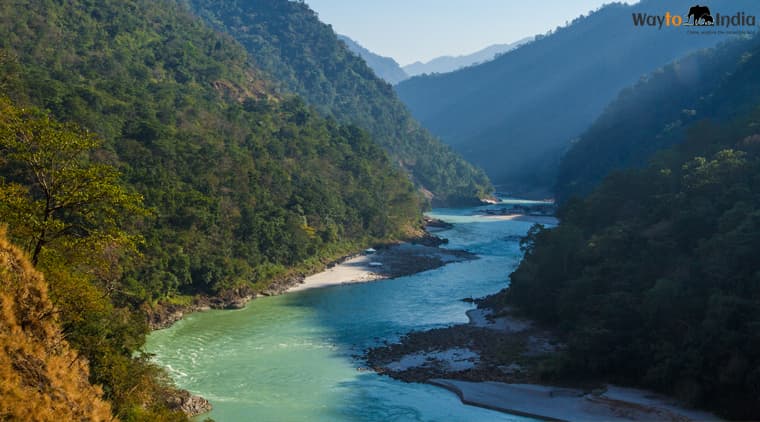
On this sacred journey you take darshan at the four Himalayan abodes: Yamunotri, the source of the Yamuna; Gangotri, where Mother Ganga descends; Kedarnath, the great Jyotirlinga of Lord Kedar; and Badrinath, the seat of Badri Vishal. Here, in one place, is everything you should know before you travel and while you are on the road.
The shrines are open for only about six months a year. The comfortable windows are May and June and then September and October. One temple, Kedarnath, sits highest and decides how careful you must be with the weather.
For 2026 the gates opened on 19 April for Yamunotri and Gangotri (on Akshaya Tritiya), on 22 April for Kedarnath and on 23 April for Badrinath. The season runs to about mid-November, with tentative closing dates around 10 to 13 November that are announced later on Vijayadashami and Bhai Dooj. These dates shift every year with the Hindu calendar, so always reconfirm the current window on the Badri-Kedar Temple Committee or Uttarakhand tourism site before you book your travel.
The traditional yatra runs from west to east: Yamunotri, then Gangotri, then Kedarnath, then Badrinath. You start from Haridwar or Rishikesh, climb into one valley at a time, and come back down through Srinagar Garhwal to Delhi. This order is followed for a reason, not just for convenience.
The shrines are visited in this order because it moves you from west to east across the Garhwal Himalaya, gaining height gradually so your body adjusts, and because it follows the old parikrama tradition of finishing at Badrinath, the seat of Lord Vishnu. Doing Yamunotri and Gangotri first also lets you build fitness and acclimatise before the highest and hardest dham, Kedarnath. If you have less time, you can also do the eastern pair, Kedarnath and Badrinath, as a shorter Do Dham.
Before you set out, one thing is compulsory for every pilgrim: the free Char Dham registration. It is a hard gate, scanned at checkpoints on the route, and there is no entry to the shrines without it. Here is exactly how it works.
Registration is done only on registrationandtouristcare.uk.gov.in or its official app, and the Kedarnath helicopter is booked only on heliyatra.irctc.co.in. Any other website or agent that claims to sell either is unauthorised, and the state warns about this every season. When in doubt, use the official portal, or let us do it for you.
Beyond ticking off temples, these are the things people remember, and how to do them well.
If you do only one thing slowly, make it the evening Aarti at Har Ki Pauri. Get there early, sit on the steps near the water with the crowd settling around you, and stay through to the lamps and the river of light. It is free, it is the soul of Haridwar, and people remember it long after the temples and the shopping blur together.
Yamunotri is the goddess Yamuna's shrine, the boiling Surya Kund where pilgrims cook prasad, the worshipped Divya Shila rock, and the winter-seat village of Kharsali across the river.
The proper sequence rewards a little knowledge: cook your rice and potatoes in Surya Kund, take a dip or sprinkle in the warm bathing kund if you wish, offer the cooked prasad and your prayers at Divya Shila, and only then enter the temple for darshan of the goddess. Pandas and priests at the shrine help with the puja; agree any dakshina in advance so the moment stays peaceful.
The walk up is the heart of a Yamunotri visit. It is a graded Himalayan trek of about 5 to 6 km with a steep final stretch, and you can walk it, ride a pony, or be carried by kandi or dandi.
Janki Chatti is at about 2,370 metres and the shrine at about 3,293 metres, high enough that altitude can be felt, especially on the steep final steps. Go slowly, drink water, and do not rush. Anyone with a cardiac, breathing or knee condition should consult a doctor before the trek and seriously consider a prepaid pony, kandi or dandi rather than walking the whole way.
Gangotri is the seat of the Goddess Ganga: the riverside temple, the sacred Bhagirathi ghats, and the rocks of legend. The one thing to sort before anything else is your mandatory, free registration.
A common surprise: the actual source of the Ganga is the Gaumukh glacier snout, about 18 to 19 km on foot beyond Gangotri, inside Gangotri National Park. At Gangotri itself you worship at the temple and bathe in the Bhagirathi. Reaching the glacier source is a serious trek with its own paid forest permit, covered in the next section.
Uttarkashi is the Kashi of the north: the Vishwanath temple, the Shakti trishul, the Bhagirathi ghats, and India's famous mountaineering institute.
Uttarkashi is a deeply religious place and a cremation ghat sits in the middle of it. Cover shoulders and knees near the temples and ghats, remove shoes where asked, do not photograph cremations or people at prayer without consent, and remember the whole yatra route is vegetarian and best treated as alcohol-free. A little respect goes a long way in a town where pilgrims have come for centuries.
Kedarnath is one of the twelve Jyotirlingas of Lord Shiva and one of the four Char Dham shrines. The temple itself is the heart of the trip, with a few sacred sites around it.
Darshan at the Kedarnath temple is free. Your real costs are the travel to the gateway, the trek aids (pony or palki) or the helicopter, and your stay. Special poojas can be pre-booked through authorised channels, typically from about 300 rupees up to about 25,000 rupees depending on the ritual. The one thing you must arrange in advance is the free Char Dham registration, covered in the next sections.
Two things trip people up before they even start: the Kedarnath helicopter can be booked on only one website, and the free Char Dham registration is a hard gate with no entry past Sonprayag without it. Here is exactly how both work.
Helicopter seats are sold only on heliyatra.irctc.co.in and registration is done only on registrationandtouristcare.uk.gov.in. Anything else risks a scam or a wasted trip. Remember the helicopter still lands you at about 3,583 m within minutes, with no time to adjust, so read the altitude and safety section before you choose it for an older traveller.
Badrinath is the temple of Lord Vishnu as Badri Vishal, the hot spring of Tapt Kund just below it, and the high valley around. A few rules and the afternoon closing are worth knowing before you go.
Badrinath is a deeply revered shrine. Dress modestly and warmly, remove shoes where asked, keep phones away inside the sanctum, and do not photograph the deity. The vegetarian, alcohol-free discipline of a pilgrimage applies here as on the rest of the Char Dham route, covered in the logistics and overseas sections below.
Beyond darshan, these are the experiences people remember, and how to do them honestly at altitude without overreaching.
If you do only one thing slowly, make it the morning: the dip and the dawn darshan, then the gentle walk to Mana. The Vasudhara trek and the climb to Charanpaduka are wonderful for the fit, but at this altitude the quiet morning by the temple and the Saraswati at Mana are the memories that last, and neither asks anything your body cannot give.
You enter the circuit through the plains around Haridwar and Rishikesh, and you leave the same way, coming down the Alaknanda to Delhi. There is no airport near the shrines, so the last stretch is always a mountain road.
Jolly Grant airport near Dehradun is the closest airport to the yatra, with regular flights from Delhi and other cities. From here it is a short drive to Haridwar or Rishikesh, where the circuit begins. There is no airport in the high valleys, so you always drive up from the plains.
Haridwar is very well connected by train from Delhi and across the country, and Rishikesh sits just beside it. Most pilgrims rest a night here to acclimatise, complete any pending registration, and take the evening Ganga aarti before starting the mountain leg early the next morning.
For travellers coming from abroad, Delhi is the natural entry point, with a short onward flight to Dehradun or a train or road transfer to Haridwar. Give yourself a night in the plains to rest before the hills, especially if you are travelling with elders.
On the way out, this route comes down from Badrinath through Rudraprayag and Srinagar Garhwal, the old hill town on the Alaknanda in Uttarakhand. It is a comfortable overnight halt before the final drive to Delhi or Haridwar. Please note this is Srinagar in Garhwal, not the Srinagar in Kashmir, so do not confuse the two when you plan your onward tickets.
The Char Dham is a Himalayan pilgrimage, not a plains temple tour. It rewards a little fitness and real respect for the altitude, which is exactly why NRI and OCI families should plan it with care, especially when travelling with elderly parents.
A worsening headache, nausea, breathlessness at rest, dizziness or unusual tiredness are the warning signs of Acute Mountain Sickness, and the safest treatment is to stop climbing and descend. Do not let a tight itinerary push a struggling family member higher. The medical posts on the route exist for exactly this, so use them early rather than late.
Badrinath is the high Himalayan climax of a Char Dham trip and a deeply meaningful one for a diaspora family. A little preparation - registration, season, altitude - makes it safe and smooth.
The Char Dham route is a satvik, vegetarian pilgrimage, and the mountain food is simple and warming. Eat where the local people eat, carry a few keepsakes from the shrines, and buy only from the official counters for prasadam.
At each shrine, buy prasadam and any special pooja tickets only from the official temple counters, not from sellers who approach you at the gates. The official prices are fixed and printed, and this simple habit keeps you clear of touts and overcharging all along the route.
गङ्गे च यमुने चैव गोदावरि सरस्वति। नर्मदे सिन्धु कावेरि जलेऽस्मिन् सन्निधिं कुरु॥
This short invocation calls the seven holy rivers to be present in the water before you, and its first two names are Ganga and Yamuna. On this yatra you stand at their very sources: Yamunotri, where the Yamuna is born, and Gangotri, where Mother Ganga is worshipped as she comes to earth. Many pilgrims recite this line at every ghat and every bath along the route, so it makes a fitting keepsake for the whole journey. It is a traditional daily ritual verse, recited across Hindu practice at the time of the sacred bath and worship; it is living tradition rather than a line from one fixed author, so it is best carried as a blessing rather than cited to a single source.
What's included
What travellers say
“A big thanks to Way To India for organising such a truly memorable and spiritually fulfilling experience during our 12 Jyotirlinga Darshan pilgrimage from 1st May to 18th May. They organized the entire journey exceptionally well, ensuring that every aspect of the trip was smooth, comfortable, and hassle-free. From transportation and hotel arrangements to darshan planning and coordination, everything was managed professionally. Despite the extensive travel across multiple destinations, the itinerary was well-structured, allowing us to complete all the Jyotirlinga darshans comfortably. Thanks to staff of Way To India, especially, Ms Neha, who was supportive, responsive, and attentive throughout the journey, always ready to assist whenever needed. Her dedication and careful planning made this sacred pilgrimage stress-free and enjoyable. I sincerely appreciate their excellent service, commitment, and hospitality. Highly recommend Way To India to anyone planning a spiritual tour, especially for the 12 Jyotirlinga Yatra. Thank you for making this divine journey so special and memorable.”3 months ago · Google
“We have successfully completed the 12 Jyotirlinga Yatra, with Waytoindia and it was a truly blessed and unforgettable journey. Every aspect of the tour was well planned and professionally organized, from transportation and accommodations to temple visits and sightseeing. Visiting all twelve sacred Jyotirlingas was a deeply spiritual experience. The itinerary was designed efficiently, allowing us to have darshan at each shrine comfortably while enjoying the cultural and religious significance of every destination. We sincerely appreciate the excellent support and coordination throughout the trip. The team was always available to assist, ensuring a smooth and stress-free pilgrimage. Thank you Waytoindia for making our dream of completing the 12 Jyotirlinga Yatra a reality. We highly recommend this tour to anyone seeking a well-organized and spiritually enriching pilgrimage experience. Har Har Mahadev! 🙏🕉️”4 months ago · Google
“We recently entrusted our honeymoon planning to 'Way to India', and it turned out to be one of the best decisions we made. From itinerary finalization to on-ground execution, everything was handled with remarkable professionalism, warmth, and attention to detail. Every aspect of our trip — flights, hotels, transfers, experiences, and even the small thoughtful touches — was perfectly curated. The itinerary was balanced, well-planned, and tailored exactly to what we wanted. We never had to worry about a single thing; all arrangements were seamless and absolutely hassle-free. What truly stood out was their responsiveness and genuine care. They were always available, always patient, and consistently went the extra mile to ensure our journey was special. Special thanks to Neha Ma'am for planning everything. We are incredibly grateful and wholeheartedly recommend their services to anyone looking for a stress-free, personalised, and delightful travel experience. Thank you for making our honeymoon truly magical!”6 months ago · Google
Travelled with Way to India?
Share your experience on Google — it takes a minute and helps fellow travellers plan with confidence.
FAQ
The Chardham Yatra is best undertaken from late April to early November. During this period, the temples are open, and the weather is relatively pleasant. However, be cautious during the monsoon months from July to September, as heavy rainfall can lead to landslides and roadblocks.
Special permits are required for Indian citizens to visit the Chardham shrines. However, foreign nationals may need to check with local authorities for any specific regulations. It’s advisable to carry valid identification and any necessary travel documents.
The trek to Yamunotri Temple is approximately 7 km from Janki Chatti and can be moderately challenging. It involves uphill walking, so travelers should be in good health and prepared for a physical exertion. Consider acclimatizing to the altitude before starting the trek.
Pack a mix of cotton and woollen clothes, depending on the season. Essential items include sturdy walking shoes, rain gear, sunscreen, moisturizers, and a light blanket. Don’t forget personal medications and a flashlight with extra batteries for emergencies.
Yes, it is important to dress modestly and respectfully when visiting the temples. Remove your shoes before entering the temple premises, and maintain silence during prayers. Photography may be restricted in certain areas, so always check for signs.
Safety is paramount during the Chardham Yatra. Always stay with your group, avoid trekking alone, and keep an eye on weather updates. Carry a basic first-aid kit and stay hydrated. Inform someone about your itinerary and expected return times.
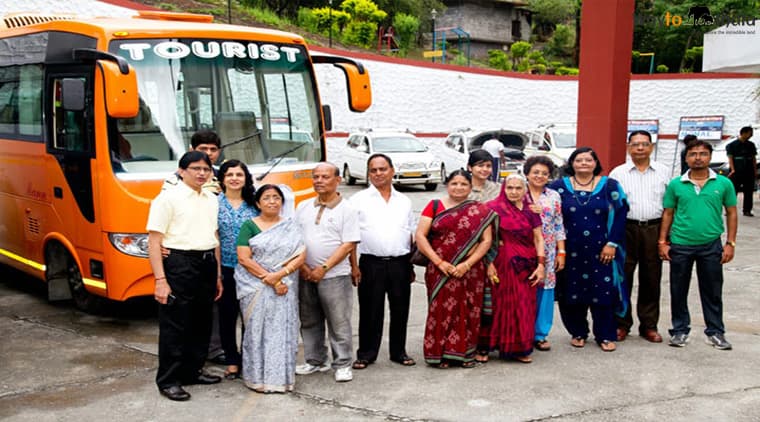
Transportation is typically provided via an exclusive A/C vehicle, such as a Tempo Traveller or Toyota Innova. Note that air conditioning may not function in hilly areas due to engine strain. Ensure your driver is experienced with the local terrain.
Meals are not included in the standard package. However, luxury packages may offer meal options. It’s advisable to carry snacks and bottled water, as dining options can be limited in remote areas.
Mobile connectivity can be limited in the Chardham region, especially in remote areas. BSNL and Airtel generally have better coverage. It’s advisable to inform family or friends about your travel plans, as communication may be sporadic.
The VIP Darshan at Badrinath allows you to skip long queues, ensuring a more comfortable experience. It is advisable to confirm the arrangements in advance and arrive at the temple on time to make the most of this privilege.
Before you book
After booking confirmation: 5% of the total tour cost.
45–30 days before Travel date: 15% of the total tour cost.
29–14 days before Travel date: 30% of the total tour cost.
13–9 days before Travel date: 50% of the total tour cost.
8–4 days before Travel date: 80% of the total tour cost.
3–0 days before Travel date: 100% of the total tour cost.
You may also like
 18D / 17N 5
 2D / 1N
 11D / 10N
 6D / 5N
 12D / 11N
 4D / 3N
Tell us your dates and group size. A WayToIndia travel expert replies within a few hours with a plan you can customise freely. Planning India journeys since 2010.
Explore Way to India
© 2026 Way to India. All rights reserved.