01
Ranthambore National Park
Rajasthan
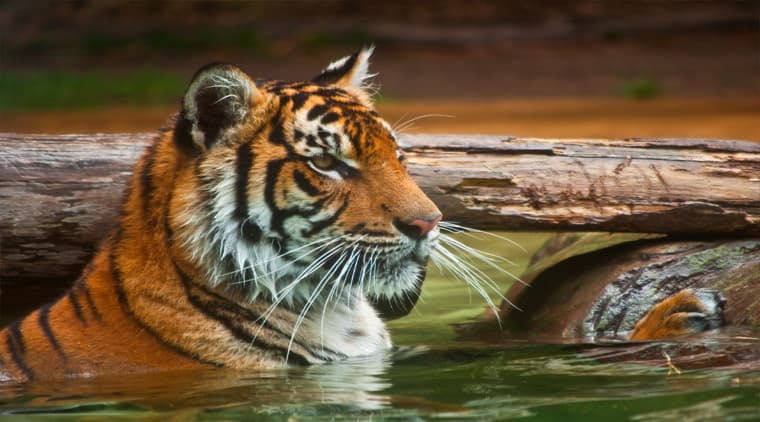
Tiger forest with lakes and a 10th-century fort inside
October to March is best. Both parks shut their main zones from 1 July to 30 September. April to June is very hot but open. Confirm open zones on the official portals.
Overview
This Kuno National Park tour package is a 4-night, 5-day private car trip. It joins Kuno National Park in Sheopur district, Madhya Pradesh, with Ranthambore National Park in Sawai Madhopur, Rajasthan. You arrive at Sawai Madhopur by train. You take two tiger safaris at Ranthambore. Then you drive about 120 to 150 km to Kuno for three cheetah safaris. On Day 5 you drive back to the same station.
Kuno is the only park in India where cheetahs now run free. They came under Project Cheetah, which began on 17 September 2022 with eight cheetahs from Namibia. Ranthambore is one of India's best-known tiger forests, with a 10th-century fort inside it. Two parks, two states, two big cats, and only one easy road between them.
If you only need the permit steps, read our Kuno cheetah safari permit guide first. This page plans the whole trip for you, with honest notes for every day.
No one can promise you a cheetah. Please do not trust any page that does. The cheetahs at Kuno are wild and free. Forest teams follow them with radio collars, but the cats choose where they go.
Here is where things stood when we checked. On 17 September 2026, The Week reported 52 cheetahs in India, with 49 in Kuno and 3 in Gandhi Sagar. Of these, 32 were born in India. Reports that week said about 17 to 18 cheetahs were roaming free in the open forest. The rest, including many young cubs, were inside large fenced areas. Numbers change month by month, so treat these as a dated snapshot.
What does this mean for you? Some days the cats are near the tourist routes. Some days they are far away, even outside the park. In January 2025, when only a few cheetahs were free, the Free Press Journal reported sightings about once a week. By October 2025, tourists were filming cheetahs resting near the safari tracks. That is why this plan gives you three Kuno safaris, not one. More drives mean more chances. Never a guarantee.
Kuno has much more than cheetahs. Leopard is the main predator here. You may also see the Indian wolf, striped hyena, sloth bear, nilgai, chinkara, sambar and spotted deer. Gharial and mugger crocodile live in the Kuno river.
Sawai Madhopur Junction is on the Delhi to Mumbai main line, and it also has trains from Jaipur. Many long-distance trains stop here, so check current trains on IRCTC. The Ranthambore safari gates are only about 8 to 15 km from the station. Sheopur is about 61 to 65 km away by road, and the Kuno gate side near Sesaipura is about 120 km from the station by our routing check.
So one station serves both parks. You never backtrack. The longest drive of the trip is about 3 to 4 hours.
Gwalior is the other choice. It has an airport and fast trains from Delhi. But Gwalior is about 150 to 175 km from Kuno, roughly 3.5 to 4.5 hours, and it is far from Ranthambore. Choose Gwalior only if you must fly. We can end the trip at Gwalior instead of Sawai Madhopur on request.
Coming from Delhi for the first time? Our Ranthambore from Delhi page explains the train choices in detail.
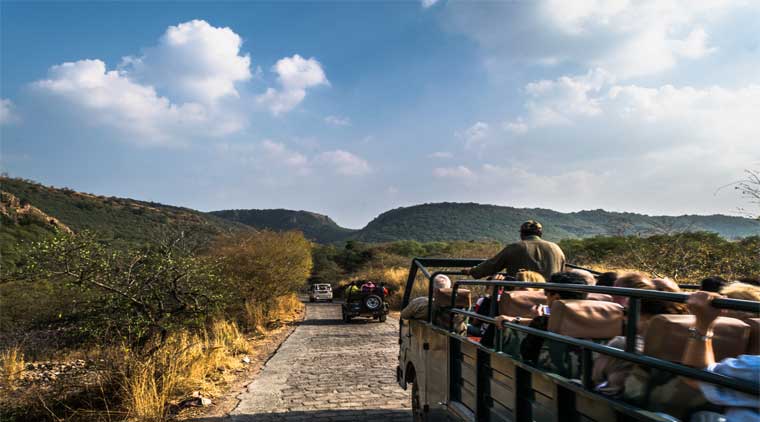
Kuno safaris are sold by the Madhya Pradesh Forest Department on its official portal, forest.mponline.gov.in. MP Tourism also points visitors to this portal. Bookings open about 120 days ahead. You need one government photo ID for each traveller. You go in a registered forest gypsy (open jeep) with a guide. A gypsy usually seats up to six people, so a family of five can sit together.
Tourists enter Kuno through gates on the Sheopur side. Reports name three: Tiktoli (also written Tikoli or Tikauli), Ahera (Ahira) and Peepalbawdi (Pipal Bawdi). The forest team decides each season which gates and routes are open, depending on where the cheetahs are. Check the gate printed on your permit. Our Madhya Pradesh safari booking portal guide walks you through each screen.
Ranthambore safaris are sold only by the Rajasthan Forest Department. Book only on the department's government portal, fmdss.forest.rajasthan.gov.in, and check that the web address ends with gov.in before you pay. The park has 10 zones. Zones 1 to 5 are the core zones. You choose a gypsy or a larger open bus called a canter. Read our Ranthambore safari booking guide and our Rajasthan safari portal guide before you pay.
Look-alike websites add their own charges. We only use the official portals, and every permit stays in your own name.
October to March is the best time. Days are pleasant and the grass at Kuno turns gold. December and January mornings are very cold in an open jeep, so carry a warm jacket, cap and gloves.
Madhya Pradesh parks close for the monsoon from 1 July and reopen on 1 October. In 2024, heavy rain delayed Kuno's opening to 6 October. At Ranthambore, zones 1 to 5 close from July to September, while zones 6 to 10 can stay open.
One more rule matters. In 2023 Rajasthan announced a weekly Wednesday break for tourism in its tiger reserves, and in 2025 the core zones still rested on Wednesdays. Check the weekly-off rule for your dates on the portal before you fix your Ranthambore days.
April to June is open but very hot. May and June days are very hot. Animals come to water, so sightings can be good, but it is hard for children and elders.
All distances are hedged. Village roads near Kuno are narrow, so we plan with extra time.
Here is something most pages miss. Kuno and Ranthambore are part of one larger landscape. In February 2026, a young male tiger, thought to have come from Ranthambore, was filmed near the Tikoli gate at Kuno. In April 2026, ThePrint reported that a Kuno-born cheetah called KP-2 walked into Ranthambore and was photographed in Zone 9. The animals do not know state borders.
History links the two places too. The World Monuments Fund names Hammir Dev of Ranthambore, and also Alauddin Khalji, among the rulers who tried to win Sheopur Fort. On this trip you see both forts.
Kuno's own story is moving. Around 1998 to 2003, 24 villages, mostly of the Sahariya tribe, moved out of the forest so that Asiatic lions could be brought from Gir. The lions never came. The cheetahs came instead, in 2022.
For families: drives are short and the day has rest time built in. Small children can get restless in a long open-jeep ride, so carry snacks, water and a warm layer.
For photographers: a 100 to 400 mm lens is the most useful. Cheetahs often rest in tall grass, so a long lens matters more than speed. Since a Supreme Court ruling of November 2025, tiger reserves have been told not to allow mobile phones in the tourism zones of their core areas. At Ranthambore you may be asked to switch off or deposit your phone. Proper cameras are generally allowed. Kuno's rules can differ from tiger reserve rules, so we confirm the latest rule for your dates.
For NRI and OCI families: foreign passport holders pay a different safari rate on both portals. Enter the right nationality when you book, and carry the same passport to the gate. Mobile signal and ATMs are thin near Kuno, so carry some cash from Sawai Madhopur.
Want more tiger time? Add days with our Ranthambore tour package, or join the Golden Triangle tour with Ranthambore. For a bigger circuit, see our Rajasthan wildlife tour and India wildlife tour.
Food on this trip is simple and home-style. In Rajasthan, ask for dal baati churma, bajra roti and ker sangri. Most safari hotels cook these on request. In winter, buy fresh Sawai Madhopur guavas. The district grows guava on about 15,000 hectares, and it held a Guava Festival on 18 and 19 January 2026.
In Sheopur, look for lac-turned wooden toys, spinning tops, rolling pins and small stools, made on hand lathes by local families. At Ranthambore, the Ranthambhore School of Art on the park road sells tiger paintings by local artists. Buy from the maker or a fixed shop, ask the price before you hold the item, and pay by UPI so you have a record.
October to March is best. Both parks shut their main zones from 1 July to 30 September. April to June is very hot but open. Confirm open zones on the official portals.
Indian families with children, wildlife photographers, senior travellers who can sit 3 to 4 hours in an open jeep, and NRI and OCI families who want cheetahs and tigers in one trip.
Easy
Day by day
A carefully paced plan, day by day. Tap any day for the stay, meals and altitude detail.
Today you arrive at Sawai Madhopur Junction by train. Your driver meets you on the platform with a name card. The drive to your Ranthambore hotel is short, about 8 to 15 km, roughly 20 to 30 minutes.
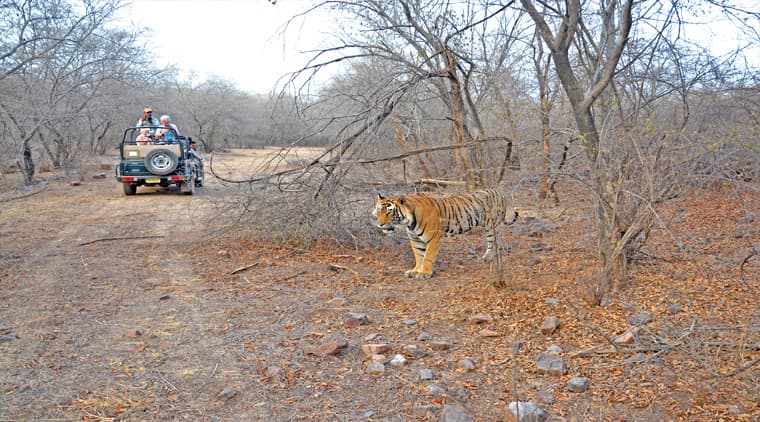
If your train reaches by late morning, you can rest, have lunch and take your first afternoon safari in Ranthambore National Park. Reach the hotel lobby at least 30 minutes before the gypsy or canter picks you up. If your train is late, we move this safari to the next morning.
Best time today: the afternoon safari. Depending on your zone, your route may pass the park's lakes: Padam Talao, Malik Talao and Raj Bagh Talao.
Food today: ask your hotel kitchen for dal baati churma or a simple Rajasthani thali with bajra roti. In winter, buy a bag of fresh Sawai Madhopur guavas from a fruit cart near the station.
What to buy: glass and lac bangles at the market near the railway station. Ask the price first and compare two shops.
Did you know? Ranthambore became a sanctuary in 1955, a Project Tiger reserve in the 1970s, and a national park in 1980. Its most famous tigress, Machli, died in August 2016.
Special Tips for This Day: Keep your original photo ID in your hand bag, not in the big suitcase. The guide checks it at the gate against the name on the permit. A cap, a light scarf for dust and a warm layer are useful even in an afternoon safari from November to February.
Today you wake up early for your morning safari in Ranthambore. Morning drives start around sunrise and last about 3 to 3.5 hours. The hotel gives tea before you leave. Come back for a late breakfast and a rest.
In the afternoon, you can visit Ranthambore Fort, on the UNESCO World Heritage list since 2013 as one of the Hill Forts of Rajasthan. The fort is open from 6 am to 6 pm. The climb up the steps is steady, so elders should go slowly and rest on the way.
Inside the fort you take darshan at the Trinetra Ganesh temple. Devotees send letters and wedding cards to Lord Ganesha here, and a postman brings them every day. The temple is busiest on Wednesdays and on Ganesh Chaturthi.
Distance today: the fort is about 13 to 15 km from Sawai Madhopur station, roughly 40 to 50 minutes on the slow forest road.
What to buy: a wildlife painting from the Ranthambhore School of Art on the park road. Ask for the artist's name on the bill.
Did you know? UNESCO notes that the remains of Hammir's palace at Ranthambore are among the oldest surviving palace buildings in India.
Special Tips for This Day: Carry a small bag for prasadam and keep footwear you can slip off fast at the temple. Langurs live around the fort, so do not carry open food. If your safari falls on a Wednesday, check first whether the core zones are closed that day.
Today you leave Rajasthan for Madhya Pradesh. After breakfast, you drive about 61 to 65 km to Sheopur, roughly 1.5 to 2 hours, and cross from Rajasthan into Madhya Pradesh.
Stop for an hour at Sheopur Fort on the Seep river. It is looked after by Madhya Pradesh State Archaeology. The Durbar Hall holds a small museum on the Sahariya community. Then you continue about 60 to 75 km to the Kuno gate side near Sesaipura and Tiktoli, roughly 1.5 to 2 hours.
Check in, have lunch and get ready for your first Kuno safari in the afternoon. The guide tells you where cheetahs were seen recently. Watch the grass for a still, golden shape.
Food today: lunch in Sheopur is simple dal, sabzi and roti. Places near Kuno are few, so we confirm lunch with your Kuno stay in advance.
What to buy: lac-turned wooden toys and spinning tops in the Sheopur bazaar. Buy from the craftsman's shop and check that the colour does not rub off.
Did you know? Sheopur was once linked to Gwalior by the Gwalior Light Railway, a narrow-gauge line built by Maharaja Madho Rao Scindia of Gwalior. Its small trains stopped running in March 2020.
Special Tips for This Day: Fill fuel and take cash in Sheopur. Mobile signal and ATMs are thin near Kuno. Wear earth colours, not white or red. Inside the park, vehicles keep below 20 km per hour, you stay seated, and music is not allowed.
Today is your full Kuno day, with two safaris. The morning safari starts at sunrise. In October and November, the Madhya Pradesh portal's timing table shows morning entry from about 6 am. Dress warm. The open jeep is cold until the sun is up.
Your guide reads the grass, the alarm calls of chital and the movement of nilgai. If the cats are far away, enjoy the wide grasslands, the Kuno river and the birds. Kuno has vultures, eagles and owls.
Rest at your stay through midday. Go for your afternoon safari after 3 pm. A different route or gate can change your luck, so ask your guide which side has had recent sightings.
Distance today: only the drives from your stay to the gate, about 10 to 20 km, roughly 20 to 40 minutes each way.
Food today: hot poha or paratha before the morning drive, and a home-style thali at lunch. Carry dry snacks and water in the jeep.
Did you know? The cheetah was declared extinct in India in 1952. Kuno's first cheetahs came from Namibia in September 2022, and the first cubs born in India followed in 2023.
Special Tips for This Day: Keep your lens ready and your voice low. Do not ask the driver to leave the track for a better photo; it is against park rules. If you see a cheetah, watch it for a minute before you shoot. The memory matters as much as the picture.
Today you say goodbye to Kuno. If your train leaves late in the day, you can take an optional early safari before breakfast. Book it in advance on the portal; we tell you if the timing is safe for your train.
After breakfast, you drive back to Sawai Madhopur Junction, about 120 to 150 km, roughly 3 to 4 hours. We plan to reach the station at least 1.5 hours before your train.
If you are flying instead, we can drop you at Gwalior, about 150 to 175 km from Kuno, roughly 3.5 to 4.5 hours.
Food today: breakfast at your stay. On the way, stop for tea and a snack at a clean dhaba your driver knows on the Sheopur road.
What to buy: if you missed them, pick up guavas or bangles near Sawai Madhopur station. Do not buy any animal part, feather or horn as a souvenir; it is illegal.
Did you know? Kuno was first prepared in the 1990s as a second home for Asiatic lions from Gir. The lions never came, and the cheetahs arrived in September 2022.
Special Tips for This Day: Keep one bag ready the night before so that an early safari does not make you rush. Download your train ticket and permits as PDFs, because mobile signal near Kuno is weak. Elders should sit in the front seat for the longer drive.
Travel tips
On this trip you take tiger safaris in Ranthambore, pray at the Trinetra Ganesh temple inside a fort on the UNESCO World Heritage list, stop at Sheopur Fort, and then try your luck with India's free-ranging cheetahs at Kuno National Park. Here is what you should know before you go and while you travel.
The best months are October to March. Both parks rest their main zones from 1 July to 30 September.
In 2023 Rajasthan announced a weekly Wednesday break for tourism in its tiger reserves, and in 2025 Ranthambore's core zones still rested on Wednesdays. Check the rule for your dates on the official portal before you fix your safari days.
Maybe. No one can promise it. The cheetahs are wild and free, so this plan gives you three Kuno safaris to raise your chances.
We never sell a cheetah sighting. We book your safaris on the official portal, plan three drives at Kuno, and tell you the truth about what was seen in the days before you arrive.
Kuno permits come from the Madhya Pradesh Forest Department. Ranthambore permits come from the Rajasthan Forest Department. Use only their official sites.
Some websites copy the forest department look and add their own charges. Check the web address before you pay. Fees change, so confirm the current rate on the official site.
Sawai Madhopur Junction is on the Delhi to Mumbai main line and has trains from Jaipur. Ranthambore is next door, and Kuno is about 3 to 4 hours away.
About 8 to 15 km from Ranthambore and about 120 to 150 km from Kuno, roughly 3 to 4 hours. Many long-distance trains stop here. Check current trains on IRCTC.
Has an airport. About 150 to 175 km from Kuno, roughly 3.5 to 4.5 hours, but far from Ranthambore. We can end your trip here on request.
About 60 to 70 km from Kuno. Good for a Kuno-only trip, not for joining Ranthambore.
Winter weekends and holidays fill fast on the Delhi and Jaipur routes. Book your train on IRCTC as soon as your safari dates are fixed.
Stay seated, keep quiet, and follow your guide. At Ranthambore, mobile phones may have to be switched off or deposited.
A Kuno gypsy usually seats up to six, so a family of five can sit together. Book all five names in one booking so the seats stay together.
Drives are short and every day has rest time. NRI and OCI travellers must book with the correct nationality and carry the same passport.
Mobile signal and ATMs are thin near Kuno. Take cash and fill fuel in Sheopur. Save your permits and train tickets as PDFs on your phone.
Ask for dal baati churma in Rajasthan, buy winter guavas in Sawai Madhopur, and pick up lac-turned wooden toys in Sheopur.
Ask the price before you hold an item, compare two shops, and pay by UPI for a record. Never buy feathers, horns or any animal part; it is against the law.
Vakratunda Mahakaya Suryakoti Samaprabha, Nirvighnam Kuru Me Deva Sarva Karyeshu Sarvada
On Day 2 you climb to the Trinetra Ganesh temple and ask Lord Ganesha to remove obstacles from the road ahead. Devotees even post letters and wedding cards to him here. Say this shloka before your first safari, and let the forest decide the rest.
What's included
What travellers say
“Had a wonderful experience with way to india for my badrinath kedarnath yatra.everything was well organized-from travel accommodation to food. A special thanks to Ms. Neha who managed everything so beautifully n was extremely supportive n cooperative throughout the journey. They took great care of us n darshan was done very smoothly.”a month ago · Google
“A big thanks to Way To India for organising such a truly memorable and spiritually fulfilling experience during our 12 Jyotirlinga Darshan pilgrimage from 1st May to 18th May. They organized the entire journey exceptionally well, ensuring that every aspect of the trip was smooth, comfortable, and hassle-free. From transportation and hotel arrangements to darshan planning and coordination, everything was managed professionally. Despite the extensive travel across multiple destinations, the itinerary was well-structured, allowing us to complete all the Jyotirlinga darshans comfortably. Thanks to staff of Way To India, especially, Ms Neha, who was supportive, responsive, and attentive throughout the journey, always ready to assist whenever needed. Her dedication and careful planning made this sacred pilgrimage stress-free and enjoyable. I sincerely appreciate their excellent service, commitment, and hospitality. Highly recommend Way To India to anyone planning a spiritual tour, especially for the 12 Jyotirlinga Yatra. Thank you for making this divine journey so special and memorable.”5 months ago · Google
“We have successfully completed the 12 Jyotirlinga Yatra, with Waytoindia and it was a truly blessed and unforgettable journey. Every aspect of the tour was well planned and professionally organized, from transportation and accommodations to temple visits and sightseeing. Visiting all twelve sacred Jyotirlingas was a deeply spiritual experience. The itinerary was designed efficiently, allowing us to have darshan at each shrine comfortably while enjoying the cultural and religious significance of every destination. We sincerely appreciate the excellent support and coordination throughout the trip. The team was always available to assist, ensuring a smooth and stress-free pilgrimage. Thank you Waytoindia for making our dream of completing the 12 Jyotirlinga Yatra a reality. We highly recommend this tour to anyone seeking a well-organized and spiritually enriching pilgrimage experience. Har Har Mahadev! 🙏🕉️”5 months ago · Google
Travelled with Way to India?
Share your experience on Google — it takes a minute and helps fellow travellers plan with confidence.
FAQ
Plan at least 2 nights and 3 safaris at Kuno. The cheetahs roam free and move across a wide area, so one safari often is not enough. This 5-day Kuno National Park tour package gives you 3 Kuno safaris and 2 Ranthambore safaris.
Yes, tourists have seen and filmed cheetahs on Kuno safaris since October 2025, but no one can guarantee a sighting. The cheetahs are wild and free-ranging, and on some days they are far from tourist routes. More safaris give you more chances.
Book Kuno safaris on the Madhya Pradesh Forest Department's official portal, forest.mponline.gov.in. Bookings open about 120 days ahead. You need one government photo ID per traveller, and you carry the same original ID to the gate.
Book Ranthambore safaris only through the Rajasthan Forest Department. Use its government portal, fmdss.forest.rajasthan.gov.in, and check that the address ends with gov.in. Choose a gypsy or a canter, and carry the same ID you used to book.
October to March is best for both parks. Madhya Pradesh parks close from 1 July to 30 September, and Ranthambore's core zones 1 to 5 also close in that period. April to June is open but very hot.
Sawai Madhopur Junction is the best station for this trip. It is about 8 to 15 km from Ranthambore and about 120 to 150 km from Kuno, roughly 3 to 4 hours. Shivpuri, about 60 to 70 km from Kuno, is closer to Kuno alone but far from Ranthambore.
Kuno is about 120 to 150 km from Ranthambore by road, roughly 3 to 4 hours, via Sheopur. Sawai Madhopur to Sheopur is about 61 to 65 km, and Sheopur to the Kuno gate side is about 60 to 75 km.
Yes. The drives are short, safaris last about 3 to 3.5 hours, and a gypsy at Kuno usually seats up to six, so a family of five can sit together. Bring warm layers for winter mornings and snacks for children.
Leopard is Kuno's main predator. You may also see the Indian wolf, striped hyena, sloth bear, nilgai, chinkara, sambar and spotted deer, plus gharial and mugger crocodile in the Kuno river and several kinds of vultures.
Stays near Kuno are few and simple. Most visitors stay on the Sesaipura side near the Tiktoli gate or in Sheopur town. MP Tourism ran a seasonal tent stay, the Kuno Forest Retreat, from 14 November 2025 to 31 March 2026.
After a Supreme Court ruling in November 2025, tiger reserves such as Ranthambore have been told not to allow mobile phones in the tourism zones of their core areas. You may need to switch off or deposit your phone. Proper cameras are generally allowed. Confirm the rule for your dates.
Yes. Delhi and Jaipur have direct trains to Sawai Madhopur, where this tour starts and ends. If you prefer to fly, we can end the trip at Gwalior, about 150 to 175 km from Kuno, roughly 3.5 to 4.5 hours.
Before you book
You may also like
 8D / 7N
 3D / 2N
 4D / 3N
 3D / 2N
 5D / 4N
 4D / 3N
Tell us your dates and group size. A WayToIndia travel expert replies within a few hours with a plan you can customise freely. Planning India journeys since 2010.
Explore Way to India
© 2026 Way to India. All rights reserved.