
Bhuj Travel Guide
The window that matters is November to February , cool by day and cold at night, when the salt Rann is dry and the Rann Utsav is on. The summer is fierce and the monsoon floods...
When to visit Bhuj and the Rann of Kutch
The window that matters is November to February, cool by day and cold at night, when the salt Rann is dry and the Rann Utsav is on. The summer is fierce and the monsoon floods the desert.
- November to February: the seasonThis is the comfortable window and the only sensible time for the White Rann. Days are pleasant and nights are genuinely cold, sometimes dropping near or below freezing on the open salt, so carry warm layers and a cap. It also overlaps the Rann Utsav, so the desert is at its liveliest and its most booked.
- October and early March: the shoulderBhuj town, Mandvi and the artisan villages are fine in these weeks, with fewer crowds. The Tent City typically opens around late October and stays up into early March, but the deep-winter weeks are when the cold-night Rann magic is at its best.
- April to June: too hotHigh summer on the Kutch plain is extreme, reaching the mid 40s Celsius, tiring and genuinely unsafe for long spells on the open salt. If you must come then, keep the middle of the day for shade and rest and do everything early or late.
- July to September: the Rann floodsThe monsoon greens the Banni grasslands and is lovely for birdlife, but the salt Rann itself floods and becomes inaccessible, so this is not the time for the White Rann or the Tent City. Plan the desert for winter and save the monsoon for the grasslands if birds are your thing.
The Rann Utsav ran officially from about 23 November 2025 to about 20 February 2026, with the Dhordo Tent City open until about 4 March 2026, according to Gujarat Tourism. The 2026-27 season dates and tariff are not yet officially announced, and the operator site itself says packages will be announced soon. Treat any 2026-27 date you see on a blog or OTA as unconfirmed, and reconfirm the official dates on the Gujarat Tourism and Rann Utsav sites before you book flights or rooms. Beware pages that quote a fixed future date as fact, as old or invented dates are copied across the web every year.
How to reach Bhuj, and on to the White Rann
Bhuj has its own small airport and a railhead, and sits about 80 km from the White Rann at Dhordo. The honest catch is the last leg, since there is no reliable public transport out to the Rann.
- By air, via Bhuj or AhmedabadBhuj airport is only about 4 km from the city and is served mainly by flights to and from Mumbai and Ahmedabad, though schedules change, so confirm current routes before you rely on it. Ahmedabad, about 330 to 350 km and roughly 6 hours by road, is the more reliable air gateway with wider connections, including for travellers coming via Delhi.
- By train to BhujBhuj is on the rail map with daily long-distance trains, including the Kutch Express between Bhuj and Bandra Terminus in Mumbai, a journey of roughly 15 hours that also passes Ahmedabad, Vadodara and Surat. From Ahmedabad the rail run to Bhuj is roughly 7 to 8 hours, a comfortable overnight option.
- By road from AhmedabadThe drive from Ahmedabad is about 330 to 350 km and roughly 6 hours on a good highway, an easy day with stops. Many travellers fly or train into Ahmedabad and pick up a car there, which also solves the Rann transport problem at the other end.
- The last leg to the RannDhordo and the White Rann are about 80 to 85 km from Bhuj, roughly 1.5 to 2 hours, but this is the hard part: there is effectively no reliable public transport. Plan on a private taxi for the day, or the seasonal tourism bus during Rann Utsav, covered in the logistics section below.
Fly into Mumbai or Ahmedabad, both major gateways, then continue to Bhuj by a short domestic flight or an overnight train, and arrange a car for the Rann. There are no international flights into Bhuj itself.
Fly into Ahmedabad or Mumbai, then take a connecting flight or train to Bhuj. Kutch sits on a natural Gujarat loop with Ahmedabad, so a car from Ahmedabad works well for the whole trip.
Take the Kutch Express or another long-distance train to Bhuj, or fly via Mumbai or Ahmedabad. From Ahmedabad it is a comfortable 6 hour drive, and self-driving or a hired car is the simplest way to handle the Rann transfers.
The White Rann, Kala Dungar and the Bhuj palaces
The headline sight is the White Rann salt desert at Dhordo, but Kutch is also Kala Dungar, the Bhuj palaces around Hamirsar Lake, and the seaside town of Mandvi. A few closures and a permit are worth knowing first.
- The White Rann at DhordoThe Great Rann is the world-famous sheet of white salt, vast and silent, most magical at sunset and under a full moon. It sits in a border-security zone, so you need a permit, covered in the safety section. Arrive in the late afternoon for the orange and pink light on the salt, then stay for the moon and stars.
- Kala Dungar, the Black HillKala Dungar is the highest point in Kutch at about 462 metres, about 90 to 97 km from Bhuj and about 48 km from Dhordo, with a roughly 400-year-old Dattatreya temple and the famous India Bridge border view over the Rann from the top. It is a separate long day-trip, not a quick add-on, and is usually folded into a Dhordo visit.
- The Bhuj palaces and Kutch MuseumAround Hamirsar Lake in town sit the Aina Mahal, the Hall of Mirrors, the adjacent Prag Mahal with its bell-tower climb for a view over Bhuj, and the Kutch Museum of 1877, the oldest in Gujarat. Mind the weekly closures: the Aina Mahal is usually closed on Thursday and the Kutch Museum is closed on the second and fourth Saturday, and reportedly on Wednesday.
- Mandvi and its beachMandvi, about 60 km from Bhuj, pairs a long beach with the Vijay Vilas Palace and a centuries-old riverside yard where craftsmen still hand-build large wooden dhows. It is a relaxed seaside contrast to the desert and a good half-day to full-day trip, best for the shipyard in the morning.
The Bhuj palaces, the Kutch Museum and the Vijay Vilas Palace at Mandvi all charge small entry and camera fees, but Gujarat Tourism does not publish these officially, so the figures travellers quote are approximate and change. Reconfirm the current entry fee, camera charge and the weekly closed day at the ticket counter, and plan your route so you do not arrive on a closure day. The detail and the numbers sit in the costs section below.
Signature experiences in Kutch
Beyond the salt, Kutch is craft villages, a full-moon desert night and a hilltop border view. Here is how to do each well, and the timing that makes the difference.
- Sunset and moonrise on the White RannThe salt looks its best as the sun goes down and the surface turns orange then silver, so arrive in the late afternoon, walk the roughly 20 minutes out onto the white, and stay on for the moon or the stars. A full moon makes the flat glow without any artificial light; a no-moon night gives the darkest skies for the Milky Way. Decide which you want before you fix your dates.
- The artisan-village circuitThis is the uncopyable side of Kutch. Bhujodi for handloom weaving is about 8 km from Bhuj, Ajrakhpur for Ajrakh natural-dye block printing is about 15 km, and Nirona, about 40 km, is home to Rogan art, copper bells and lacquerwork. Artisans usually welcome genuinely interested visitors into their workshops, and there is no pressure to buy.
- Kala Dungar and the India Bridge viewFrom the Black Hill you look out over the endless Rann to the India Bridge and the border beyond, a view quite unlike anything in town. Pair it with the old Dattatreya temple and time it for the late afternoon light, remembering it is a long drive each way.
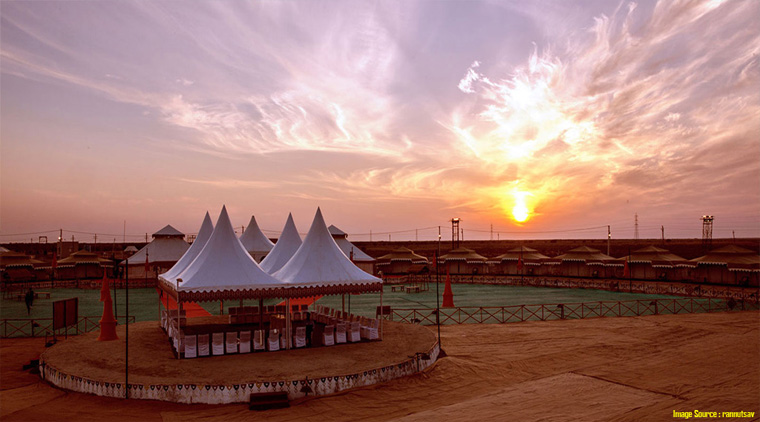
- The Rann Utsav cultural programmeIf your dates fall in the festival window, the Tent City lays on folk music and dance, craft stalls, camel and jeep activities and adventure add-ons like paramotoring and hot-air balloon rides on some days. It is organised and family-friendly, though many travellers find the real magic is still the salt itself at dusk.
- Mandvi beach and the dhow yardAt Mandvi you can wander a long, breezy beach with the wind farms on the horizon, tour the Vijay Vilas Palace, and watch craftsmen hand-build huge wooden ships at the riverside yard, a centuries-old trade still alive. Come to the shipyard in the morning, when the work is underway.
- Birds and the Banni grasslandsThe wetlands and grasslands around Kutch are a birding paradise in winter, with flamingos, pelicans, storks and bustards, and the Banni villages and the wild-ass country add a quieter, wilder day for naturalists away from the festival crowds.
If you do only one thing slowly, make it the White Rann at dusk into night. The salt at sunset and then under the moon or the stars is what people remember long after the tents and the stalls fade, and it costs nothing beyond the permit. Give it an unhurried late afternoon and evening rather than a quick photo stop, and the desert opens up in a way a rushed visit never allows.
Where to stay in Kutch, and how many nights
Base yourself in Bhuj town for the sights and the craft villages, or out at the Dhordo Tent City or a Banni village camp for the desert. Three to five days is the sweet spot.
- Bhuj town: the practical baseBhuj has the widest choice of hotels and guesthouses, and it puts the palaces, the museum and the artisan villages within easy reach. It is the natural base for the craft circuit and for day-trips to the Rann, Kala Dungar and Mandvi, and far cheaper than the Tent City.
- The Dhordo Tent City: the desert experienceThe official Tent City beside the White Rann lets you wake on the edge of the salt and catch both sunset and sunrise without the long drive. It is comfortable and organised but pricey, with standard-season tariffs published per person from about 5,900 rupees a night for a non-AC tent up to about 9,900 rupees for the top tents, rising on full-moon and holiday dates, exclusive of taxes.
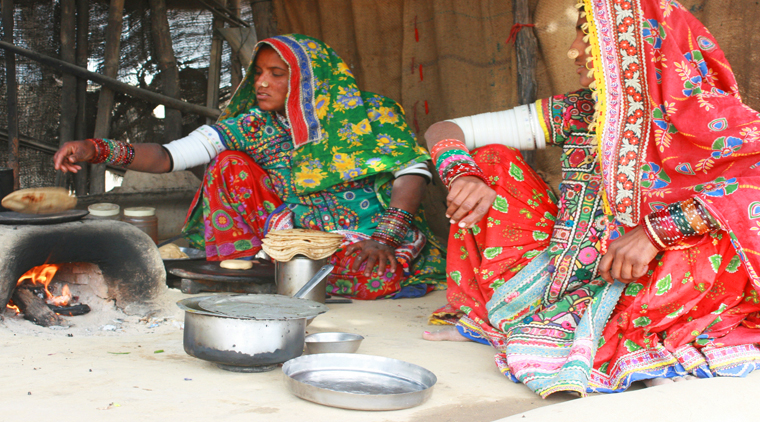
- Banni village camps and homestaysHodka, Dhordo and other Banni villages have private camps, eco-stays and homestays that many travellers find better value than the Tent City, while still keeping you close to the salt for sunset and sunrise. They are the value play if the Tent City price gives you pause.
- How many nightsPlan on 3 days minimum to cover Bhuj town, the White Rann and Mandvi, and 4 to 5 days to add the Indus Valley site at Dholavira, which is too far for a casual add-on. Even one night out near the salt beats a Bhuj day-trip if you want both sunset and sunrise.
During Rann Utsav, and especially on full-moon, Diwali and New-Year dates, the Tent City and the better village camps book out months in advance at peak prices. If your dates fall in the festival window, book well ahead, and remember the value debate: many travellers feel the Tent City is overpriced and prefer a Bhuj base or a Banni village camp, covered in the real-questions section below.
Kutch costs, fees and a realistic budget
Bhuj town is gentle on the wallet; the Rann adds the permit, the transport and, if you choose it, the Tent City. Here is what the main things cost so you can plan and avoid being overcharged.
- The permit and the transportThe White Rann permit is commonly reported at about 100 rupees per adult, about 50 rupees per child aged 6 to 12, free under 5, plus about 50 rupees for a vehicle, though these are reported rather than officially published figures, so confirm them at the check post. The bigger cost is the transport: a private taxi for the Rann day, or the seasonal tourism bus reported at about 500 rupees per head during Rann Utsav.
- The town sightsThe Bhuj palaces are cheap: the Aina Mahal and Prag Mahal are commonly reported at about 20 rupees entry with a camera charge of about 30 to 50 rupees, and the Kutch Museum at about 5 rupees for Indians and about 50 rupees for foreign nationals. The Vijay Vilas Palace at Mandvi is similar at about 20 rupees for Indians and about 50 rupees for foreign nationals. All are approximate and best reconfirmed at the counter.
- The Tent City, if you choose itThe standard-season Tent City tariff was published per person from about 5,900 rupees a night for a non-AC tent up to about 9,900 rupees for the top tents, exclusive of taxes, and rising on full-moon, Diwali and New-Year dates. A Banni village camp or a Bhuj hotel is usually a good deal cheaper, which is why the value debate runs hot on traveller forums.
- Cash and cardsBhuj town has bank ATMs and many places take cards or UPI, but carry cash for the permit, the village artisans, small eateries and the Rann day, where vendors and the check post run on cash. Draw what you need in Bhuj before you head out to Dhordo.
The single biggest swing in a Kutch budget is whether you sleep in the Tent City or not. A non-AC Tent City night was published from about 5,900 rupees per person, exclusive of taxes, while a Bhuj hotel or a Banni village camp can be a fraction of that. Decide early whether the wake-on-the-salt convenience is worth the premium for you, because that one choice moves your trip cost more than anything else, and reconfirm the current tariff on the official Rann Utsav site before you book.
Practical logistics: the permit, transport and getting around
The two things that trip people up in Kutch are the White Rann permit and the lack of transport to the Rann. Sort both in advance and the rest of the trip runs smoothly.
- The White Rann permit, step by stepVisiting the White Rann at Dhordo needs a permit because it sits in a border-security zone. The official route is the online portal at rannpermit.gujarat.gov.in, but travellers widely report it is unreliable, so the dependable fallback is the Bhirandiyara check post on the Bhuj to Dhordo road, which issues permits on the spot. Carry a government photo ID, and a passport if you are a foreign national.
- 1-day versus 2-day permitA 1-day permit covers a same-day return to Bhuj. If you stay overnight near the Rann so your entry and exit fall on different dates, you need a 2-day permit and the fee roughly doubles. Work out your plan before you reach the check post so you buy the right one.
- Getting to the Rann without a carThere is effectively no reliable public transport from Bhuj to Dhordo. During Rann Utsav the tourism department runs a full-day bus tour reported at about 500 rupees per head; outside the festival, most car-less travellers hire a private taxi for the day. By contrast, buses to Mandvi from Bhuj are frequent, so the seaside trip is easy without a car.
- SIM, signal and languageMobile coverage is generally fine in Bhuj and along the main roads, though it thins out on the open Rann near the border, so download maps offline. Gujarati and Hindi are the local languages, and English is understood in the tourist and craft trade, so communicating is easy.
Safety, the border zone, and staying well
Kutch is calm and welcoming, and Gujarat is among the safer states to travel. The real cautions are the border-security rules, the cold desert nights and the desert sun, not crime.
- Respect the border-security rulesThe White Rann and Kala Dungar lie close to the India-Pakistan border, so carry your permit and a photo ID at all times, do not stray beyond the marked areas or off alone, and follow the instructions of the Border Security Force. Foreign nationals must carry a passport. These rules are taken seriously, and a permit checked at the post is normal.
- The cold nights and the sunWinter nights on the open salt can drop near or below freezing, so carry proper warm layers even if the day was mild. By contrast the daytime sun on the white surface is harsh and glaring, so bring sunglasses, sunscreen, a hat and water, and never attempt the Rann in the summer heat.
- Permit-payment problemsSome travellers report money deducted on the online portal with no permit issued and no easy refund. The practical answer is not to rely solely on the portal: the Bhirandiyara check-post counter reliably issues permits on the spot. For an online dispute, contact the Kutch district administration and the Gujarat Tourism helpline.
- Water, food and the off-season RannDrink bottled or filtered water and take the usual care with street food. If you visit the salt outside the festival season there are very few food or water options out there, so carry your own. The remoteness, not crime, is the main thing to plan around.
Gujarat is widely regarded as one of the safer states in India for women, and Kutch itself is considered low-risk. Take the normal big-city precautions, especially after dark, and the main practical concern is the remoteness and the lack of late transport out at the Rann rather than personal safety. Travelling with a hired car and driver, or joining the seasonal tourism bus, removes most of that friction for a solo traveller.
Kutch for every kind of traveller, and on access
Kutch rewards very different visitors in different ways. Here is what it offers you and the one tip that matters for each, including how a senior does the cold, remote Rann comfortably.
- CouplesSlow and atmospheric: a full-moon night on the salt, a Mandvi beach sunset and the craft villages by day. An overnight near the Rann rather than a day-trip lets you catch both sunset and sunrise, which is the romantic heart of the trip.
- Families with childrenThe Rann Utsav is organised and family-friendly, with camel rides, stalls and activities, and Mandvi beach is an easy day out. Keep the cold nights and the long transfers in mind, dress children warmly for the salt, and do not over-pack the days.
- Senior travellers and on accessibilityVery doable with planning. Base in a Bhuj hotel or a comfortable village camp, travel by hired car and driver to avoid the transport gaps, dress warmly for the freezing Rann nights, and keep the salt walk gentle, since it is roughly 20 minutes out over uneven ground. Skip the bell-tower climb at Prag Mahal if stairs are hard, and let the driver handle the permit run.
- PhotographersKutch is a photographer's trip: the salt at sunset and under the moon, the India Bridge view from Kala Dungar, the colour of the craft villages and the dhow yard at Mandvi. Arrive at the salt in the late afternoon for the light, and ask before photographing artisans and villagers at work.
- Craft and textile loversThis is where Kutch is unmatched. Give a full day to Bhujodi, Ajrakhpur and Nirona, visit the craft museums in and around Bhuj, and buy directly from the artisans. Genuine interest opens workshop doors that a quick shopping stop never will.
- Solo female travellersGenerally relaxed, with Gujarat regarded as one of the safer states. Take normal precautions after dark, and solve the one real issue, the lack of late transport at the Rann, by using a hired car and driver or the seasonal tourism bus. Kutch is a comfortable region to travel alone.
A suggested Bhuj and Kutch itinerary
How to shape 3 to 5 unhurried days so you catch the salt at the right light, the craft villages properly, and Mandvi or Dholavira without rushing.
- Day one: Bhuj town and the craft villagesStart with the palaces around Hamirsar Lake and the Kutch Museum, watching the weekly closed days, then spend the afternoon at Bhujodi and Ajrakhpur for weaving and block printing. This eases you into Kutch before the long desert drives.
- Day two: the White Rann and Kala DungarSort the permit, drive out towards Dhordo, take in Kala Dungar and the India Bridge view in the day, then reach the salt for sunset and the moon or stars. Stay the night out near the Rann if you can, so you also catch the quiet sunrise.
- Day three: Mandvi and the coastDrive down to Mandvi for the beach, the Vijay Vilas Palace and the morning shipyard, a relaxed seaside contrast to the desert. This rounds out the classic three-day Kutch trip nicely.
- Days four and five: Nirona and DholaviraWith more time, add Nirona for Rogan art and copper bells, more of the Banni grassland villages, and the Indus Valley site at Dholavira, which is a long haul each way and best given its own day rather than squeezed in.
Two things break a tight Kutch plan: arriving at the Aina Mahal on a Thursday or the Kutch Museum on a second or fourth Saturday when they are closed, and reaching the Bhirandiyara check post without having worked out whether you need a 1-day or 2-day permit. Build your town day around the open days, sort the permit before the desert day, and your itinerary holds together instead of stalling at a shut gate or a confused counter.
The real questions travellers ask about Kutch
Straight answers to the questions that come up again and again on traveller forums, so you arrive already knowing the score on the Tent City, the permit and the timing.
- Is Rann Utsav and the Tent City worth it?Forum sentiment runs heavily that the Tent City is overpriced for what it is, and many travellers prefer a Bhuj base or a Banni village camp and visit the salt with just a permit. The salt at dusk is the real draw and is open to all permit-holders, so the Tent City is a convenience-and-comfort choice, not a requirement, and worth it mainly if waking on the edge of the salt matters to you.
- Can I see the White Rann without staying in the Tent City?Yes. The salt-flat viewpoint is open to anyone with a valid permit, so you can visit for sunset and the moon without booking a tent. You only miss the Tent City's own premises and cultural programme, which you cannot enter without a booking there.
- Do I need a permit, and is it 1-day or 2-day?A permit is mandatory year-round because it is a border zone. Get it on the official portal at rannpermit.gujarat.gov.in or, more reliably, at the Bhirandiyara check post on the way. Take a 1-day permit for a same-day return and a 2-day permit if you stay overnight near the Rann, since the dates must match your stay and the fee roughly doubles for two days.
- Full moon or no moon, which is better?Both are wonderful for different reasons. A full moon makes the salt glow silver without any artificial light, the iconic image, though those dates are the most expensive and booked-out. A no-moon night gives the darkest skies for the Milky Way and stargazing. Pick the experience first, then fix your dates around it.
- How do I reach Dhordo without a car?This is the biggest practical pain point, because there is no reliable public transport from Bhuj to Dhordo. During Rann Utsav the tourism department runs a full-day bus tour reported at about 500 rupees per head; otherwise hire a private taxi for the day. Buses to Mandvi, by contrast, are frequent and easy.
- Can I see the salt outside Rann Utsav season?Yes, from about October to March the salt is dry and you can visit with a permit, but there is little food, water or infrastructure out there off-season, so carry your own. From April the heat is extreme and from July the monsoon floods the Rann, so winter remains the window whether or not the festival is on.
Planning Kutch from abroad
Kutch is the most distinctive corner of Gujarat and pairs naturally with Ahmedabad. A little preparation makes the border permit, the passport rule and the transport easy to handle.
- The permit and your passportThe White Rann is a border-security zone, so you need a permit and, as a foreign national, you must carry your passport at the check post. Apply on the official portal at rannpermit.gujarat.gov.in or, more reliably, at the Bhirandiyara check post on the way. Keep a photocopy of your passport and visa handy.
- Sort transport before you arriveThere is no reliable public transport from Bhuj to the Rann, so arrange a car and driver in advance, easiest if you fly or train into Ahmedabad and pick up a car there. This single arrangement removes the trip's main friction and lets you reach the salt for sunset and the craft villages on your own schedule.
- Pair it with Ahmedabad and GujaratFly into Mumbai or Ahmedabad, then continue to Bhuj by a short flight or an overnight train. Kutch sits on a natural Gujarat loop with Ahmedabad, the heritage city, and works well as the wild, distinctive end of a wider Gujarat trip.
- Dress for the desert extremesWinter nights on the salt can drop near or below freezing while the days are mild and bright, so pack genuine warm layers as well as sun protection. Many overseas visitors underestimate how cold the open Rann gets after dark.
Money, connectivity and timing for foreign visitors
The practical basics an overseas traveller needs for a remote desert region: cash, a SIM, and how many days to give Kutch on a wider India trip.
- Carry cash for the Rann dayBhuj town has ATMs and many places take cards or UPI, but the permit, the village artisans, small eateries and the check post run on cash. Draw enough in Bhuj before you head out to Dhordo, where there is little chance to top up.
- Get a SIM at the airportPick up an Indian tourist SIM or an eSIM when you land in Mumbai or Ahmedabad rather than hunting for one in a small town. Coverage is fine in Bhuj and on the main roads, but it thins on the open Rann near the border, so download maps offline.
- How long to give it on a bigger tripOn a wider India or Gujarat trip, give Kutch 3 days for Bhuj, the White Rann and Mandvi, and 4 to 5 if you want Dholavira and more of the craft villages. It is remote, so it rewards a proper block of time rather than a rushed overnight.
- Time your visit to the seasonNovember to February is the only comfortable and sensible window, dry, cool and the Rann Utsav season. Avoid the April to June heat and the July to September monsoon flooding entirely. If you want the full-moon spectacle, plan around it and book far ahead.
Kutch is an unusually distinctive introduction to Gujarat: a vast white desert, living craft traditions and a strong community-led tourism scene, with Dhordo recognised by UN Tourism as a Best Tourism Village. Slot it after Ahmedabad, give it 3 to 5 days, arrange a car, and let the salt at dusk be the chapter you remember. Many overseas visitors say Kutch ends up being the most unexpected and memorable part of a Gujarat trip.
Why the Great Rann turns white, and then disappears
The Great Rann of Kutch is one of the largest salt deserts on earth, and its strangeness is that it is not really desert at all but a seasonal sea. Through the monsoon, water from the Arabian Sea and the rivers floods the low, flat basin and turns it to a shallow marsh. As the dry winter comes, the water evaporates and leaves behind a vast, gleaming crust of salt, so smooth and white that on a full-moon night it glows like snow under the sky with no other light needed. By spring the crust cracks and bakes, and by the next monsoon the sea returns and the cycle begins again. This is why the White Rann can only be walked in winter, why the Rann Utsav is a winter festival, and why the village of Dhordo on its edge, recognised by UN Tourism as a Best Tourism Village, has built a whole season of tourism around a few months when the salt is dry enough to stand on.
Planning a Bhuj trip?
Our Gujarat travel experts plan your full journey for you: route, hotels, darshan timings and transport. You get a free day-by-day plan and an exact quote on WhatsApp, usually within a few hours. No payment is needed to get your plan.
Tour packages that visit Bhuj
Every journey below is private, hand-crafted and fully customizable. Tell us your dates and we tailor the itinerary, the pace and the priests or guides around you.
 5D / 4N
Rann of Kutch Tour Package
- Visit Swaminarayan Temple & Aina Mahal Museum at Bhuj.
- Visit Great Rann of Kutch.
 6D / 5N
Rann of Kutch Festival Packages
- Enjoy Jeep Safri along the Rann of Kutch.
- Visit Aina Mahal Museum at Bhuj.