Amritsar Travel Guide
The comfortable window is October to March . Summer on the Punjab plain is fierce, and the monsoon is humid, both of which matter because the Golden Temple parikrama and the open...
When to visit Amritsar, and what each season feels like
The comfortable window is October to March. Summer on the Punjab plain is fierce, and the monsoon is humid, both of which matter because the Golden Temple parikrama and the open Wagah stand are out in the weather.
- October to March: the comfortable monthsDays are pleasant, roughly 10C to 25C in the shoulder months and cold at night in December and January, so carry a warm layer. This is the easiest time for the marble parikrama around the Golden Temple, the open Wagah stand and a full day of sightseeing on foot.
- April to June: hot and tiringHigh summer on the plain is regularly around 40C and higher. The white marble around the sarovar can be searing underfoot by midday, so if you must come then, do the temple at dawn and after dark and keep the middle of the day for rest and indoor sights.
- July to September: the monsoonWarm and humid with showers. The temple is still lovely in the rain, but the Wagah ceremony is in an open stand, so a wet evening can be uncomfortable. Crowds are thinner and rooms cheaper outside the festival weeks.
- Festivals to plan aroundBaisakhi in April and Guru Nanak Gurpurab in November are spiritually charged and beautiful at the Golden Temple, but the city and the langar are at their most crowded then, so book rooms early and expect long darshan queues.
Two of Amritsar's three signature experiences happen outdoors: the walk around the sarovar at the Golden Temple and the Beating Retreat at Wagah, watched from an open concrete stand. In the cool months both are a joy. In May and June the marble is too hot to stand on barefoot at midday and the Wagah crowd bakes in the sun, so the calendar shapes your day far more than at an indoor-museum city. Plan a winter trip if you can.
How to reach Amritsar, and getting around
Amritsar has its own international airport and a major railway junction, so it is easy to reach by air, rail or road. In town the core is compact, and autos and cabs cover the rest.
- By air into ATQSri Guru Ram Dass Jee International Airport (code ATQ) is about 11 km from the city, with a single integrated terminal for domestic and international flights. Domestic links to Delhi, Mumbai and other metros are frequent, and there are direct international flights to the UK and the Gulf, which makes flying in straightforward.
- By train to Amritsar JunctionFrom Delhi the fastest comfortable option is the New Delhi to Amritsar Shatabdi (12013), covering about 448 km in roughly 6 hours 35 minutes with a meal included; many overnight trains also run. Amritsar Junction is about 2 km from the Golden Temple, an easy auto ride. Book on IRCTC ahead in season.
- By roadAmritsar sits on good highways from Delhi (about 450 km, a long day or an overnight), Chandigarh and Jammu. A hired car with a driver is comfortable and lets you fold in roadside dhabas, and we can arrange one as part of a tour.
- Getting around townThe old city around the Golden Temple is best on foot; the lanes are narrow and often closed to cars near the complex. Auto-rickshaws, cycle-rickshaws, app cabs and the cab to Wagah cover everything else. Agree auto fares before you set off.
Amritsar has direct flights from London and Birmingham, so UK travellers can fly straight into ATQ without changing in Delhi. From elsewhere in Europe, route via Delhi or a Gulf hub.
There are direct services from Gulf hubs such as Dubai, Sharjah and Doha into Amritsar, and one-stop options via Delhi from Southeast Asia. This is a genuine advantage over most Indian Tier-2 cities.
Fly or take the Shatabdi or an overnight train from Delhi to Amritsar Junction, or drive. The junction is about 2 km from the Golden Temple, so the last leg into the heart of the city is short.
The Golden Temple, Jallianwala Bagh and the Partition Museum
Three sights anchor any Amritsar visit: the Golden Temple, the Jallianwala Bagh memorial right beside it, and the Partition Museum a short walk away. Each has rules or timings worth knowing first.
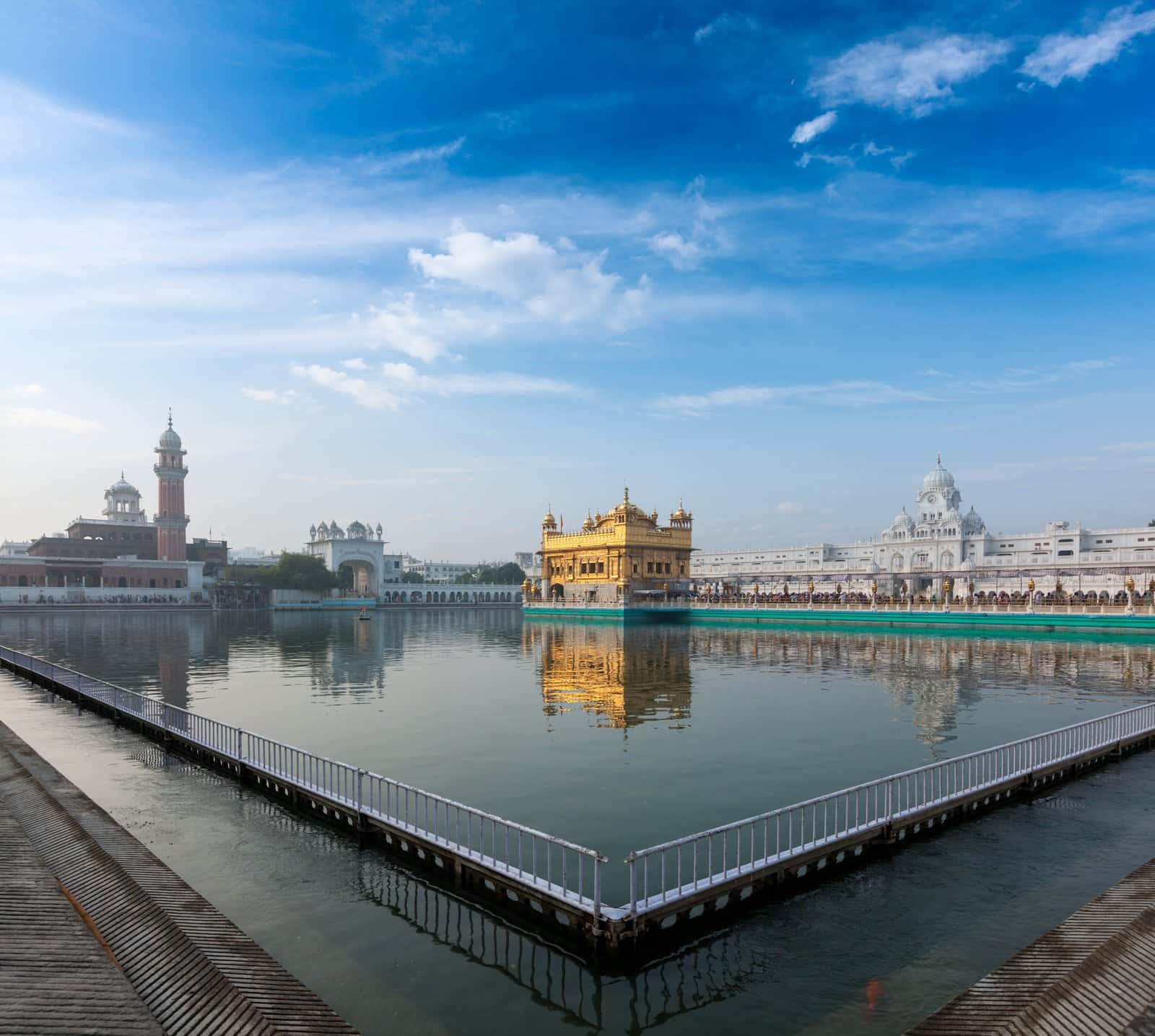
- The Golden Temple (Sri Harmandir Sahib)The holiest Sikh shrine, open to all and free, with the gilded sanctum set in a sacred tank. It is broadly open around the clock, with the early Amrit Vela prayers from about 2:30 am to 3 am and the night Palki and Sukhasan closing the sanctum around 10:30 pm. Go at dawn or after dark for the most serene, least crowded darshan, and read the rules section before you enter.
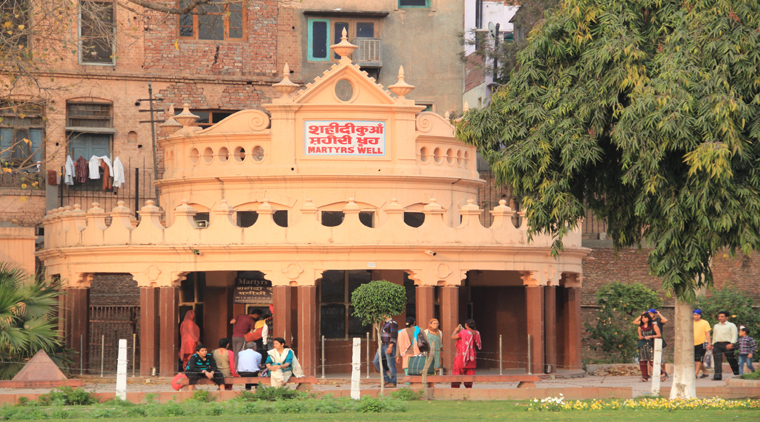
- Jallianwala BaghThe memorial garden right beside the Golden Temple marks the 13 April 1919 massacre, with the preserved bullet-marked wall and the Martyrs' Well. Entry is free; it is generally open through the day (commonly cited from about 6:30 am to 7:30 pm, though some sources list about 9 am to 6 pm, so reconfirm locally). There is a paid evening sound-and-light show.
- The Partition MuseumHoused in the historic Town Hall, the world's first museum of the 1947 Partition tells that story through objects and oral histories. It is open about 10 am to 6 pm, closed on Mondays, with tickets of about 10 rupees for Indians and about 250 rupees for foreign nationals, and free entry for Partition survivors. It is moving and well worth ninety minutes.
- Gobindgarh FortThe restored fort of Maharaja Ranjit Singh is now a cultural complex with museums, a 7D show on Amritsar's history, a light-and-sound show and live bhangra and gatka. It has its own entry and show tickets, and is a good paid add-on for an evening or a second day.
Jallianwala Bagh and the Partition Museum are not light sightseeing; they hold real grief and are best visited quietly and unhurried, not ticked off between photos. Many travellers find it works to do the Golden Temple and these two memorials in the morning, then let the afternoon and the food lift the mood before the patriotic theatre of Wagah at sunset. Give the memorials the respect of a slow walk and no loud selfies.
The Wagah border Beating Retreat, and how to do it right
The daily flag-lowering at the Attari-Wagah border is Amritsar's other unmissable experience. It is free, it is loud and emotional, and getting the timing and a seat right is the whole game.
- The timing changes by season, so reconfirmThe BSF revises the start time with the seasons and daylight. For the summer of 2026 it was moved to about 6:00 pm to 6:30 pm with effect from 1 May 2026, from the earlier 5:30 pm slot; in winter it usually starts earlier, around 4:30 pm. Always reconfirm the current time before you go, as it is the single fact blogs most often get wrong.
- Leave Amritsar with time to spareThe border is roughly 28 to 32 km from the city, about an hour by road, but you need to allow for security checks and a walk to the stand. Leave about two to three hours before the ceremony; many travellers aim to be in their seat well before the start, as the stand fills and gates can close once it is full.
- It is free, and foreigners get a VIP enclosureThere is no entry fee for Indians or foreigners. Foreign passport holders are directed to a separate, free VIP enclosure with chairs, so carry your passport to claim it. Booking is not mandatory and seating is first-come even with an online ticket, so arriving early matters more than any ticket.
- What to carry and leave behindCarry a valid photo ID (passport for foreigners) and water; large bags, and often phones beyond a basic camera, are restricted at the checkpoint, so travel light. There are few food options at the border, so eat beforehand. Expect a big, patriotic, noisy crowd; it is part of the experience.
The Attari-Wagah retreat is a daily ceremony, but it can be suspended at short notice during periods of tension between India and Pakistan, on security grounds, or in extreme weather. Before you build an afternoon around it, ask your hotel or driver to confirm it is running that day and the exact start time, so a long drive does not end at a closed gate.
Signature experiences: langar, the night darshan and the food
Beyond the headline sights, these are the experiences people remember: eating in the great langar, the lit temple at night, and the legendary Amritsari food.
- Eat in the langarThe Golden Temple's free community kitchen serves on the order of 100,000 simple vegetarian meals a day, run by the SGPC and open to everyone of any faith. You sit on the floor in rows for dal, sabzi, roti and kheer. It is free, humbling and one of the most moving things you will do in India. You can also volunteer in the kitchen.
- The night darshanThe lit Golden Temple reflected in the dark sarovar, with the Palki procession around 10:30 pm, is what travellers say is worth staying a night for. It is quieter and cooler than midday, the queues are shorter, and the atmosphere is unforgettable. Do an early-morning visit too if you can.
- The food crawlAmritsar is a destination for food: the Amritsari kulcha with chole, the fish fry, thick lassi, jalebi and the dhabas of the old city. Away from the langar, the town is happily not vegetarian-only, so plan a hungry afternoon around the bazaar near the temple.
- Gobindgarh Fort showsFor an evening with children or anyone who likes a bit of spectacle, the fort's light-and-sound show, 7D film and live bhangra and gatka are an easy, ticketed couple of hours, and a change of pace from the temples and memorials.
If you do only one thing slowly, sit through a langar meal and then walk the parikrama at night. The kitchen feeding a hundred thousand strangers for free, and the gold sanctum glowing on the black water, are the two images people carry home from Amritsar long after the food and the border theatre fade. Give yourself an unhurried evening rather than a quick daytime tick, and the city opens up.
Where to stay in Amritsar, and how many nights
Stay within walking distance of the Golden Temple so you can do a dawn and a night visit on foot. One night works for the essentials; two is more comfortable.
- Near the Golden Temple: the obvious choiceAim for a hotel within about 1 to 1.5 km of the temple so you can walk to an early-morning and a night darshan. The old-city lanes around the complex are atmospheric and packed with food, though busier and noisier; this is where most first-timers should stay.
- The SGPC pilgrim SaraisThe SGPC runs free and very low-cost pilgrim accommodation (Sarais such as Guru Arjan Dev Niwas) beside the complex for devotees. It is basic, fills fast, and is meant for pilgrims, not as a cheap hotel substitute for tourists. Treat it respectfully if you use it, and consider it only if a genuine pilgrimage stay suits you.
- Quieter and smarter areasIf you want more space, calm or a pool, the hotels along the Mall Road and towards the airport and Ranjit Avenue are quieter and a short ride from the temple. Better for families, couples and anyone who prefers comfort over being in the thick of the old city.
- How many nightsOne night covers the three essentials if you are efficient. Two nights is the sweet spot: a dawn or night darshan, Jallianwala Bagh and the Partition Museum, Wagah at sunset, Gobindgarh Fort and the food, without rushing the heavy history.
Around Baisakhi in April and Guru Nanak Gurpurab in November, rooms near the Golden Temple sell out well ahead and prices climb. If your dates fall on a major Sikh festival, book early, expect crowds and long darshan queues, and consider a hotel a little further out with a short ride in.
Amritsar costs and a realistic daily budget
Amritsar is gentle on the wallet, especially because its two greatest experiences, the Golden Temple darshan and the langar, are free. Here is what the rest costs.
- The free thingsThe Golden Temple darshan, the shoe stand, the head cloth and the langar are all free, as is entry to Jallianwala Bagh and to watch the Wagah ceremony. The most memorable parts of Amritsar cost nothing, which keeps a day here cheap.
- The fixed-price thingsThe Partition Museum is about 10 rupees for Indians and about 250 rupees for foreign nationals. Gobindgarh Fort and the Jallianwala Bagh sound-and-light show have their own modest ticket and show charges, which it is best to reconfirm on the day.
- A rough daily budgetExcluding your room and long-distance transport, plan on about 800 to 1,500 rupees a day as a backpacker, about 2,500 to 4,000 rupees mid-range, and more for taxis, fort shows and a big food crawl. A return cab to Wagah is the main variable cost; share it to bring the price down.
- Cash, cards and the helper trapCards and UPI work in hotels and bigger restaurants, but the dhabas, autos and the Wagah cab often want cash, so carry some. And remember nobody at the Golden Temple should ask you for money: darshan, shoes and langar are free, so politely refuse any sewadar or helper who demands a payment.
Agree the price before anything begins, whether that is an auto fare, a return cab to Wagah or a meal at a stand, and never hand cash to anyone offering to 'help' you at the temple. The genuine services there are free, the only real cost is transport and food, and a fare or a cab settled in advance turns Amritsar's small frictions into non-events.
Practical logistics: gurdwara etiquette, money, SIM and dress
The small things that make an Amritsar day smooth, from how to dress and behave at the Golden Temple to money, connectivity and getting between sights.
- Cover your head and lose the shoesEveryone, men and women, must cover their head inside the Golden Temple complex; bring a scarf or use the free head cloths at the entrance. Remove and deposit shoes at the free shoe stand, take the token (photograph it on your phone as backup), leave leather items behind, and wash your feet in the shallow channel before you enter.
- Dress and behave for a holy placeCover shoulders and knees; jeans are fine if modest. Walk clockwise around the sarovar, do not point your feet at the sanctum, do not swim, and keep photography respectful and out of the inner sanctum. Speak softly. The same etiquette applies at every gurdwara in town.
- Money, ATMs and SIMATMs are easy to find around the old city and the Mall. Carry cash for autos, dhabas and the Wagah cab. Mobile coverage is good; pick up a tourist SIM or eSIM at the airport if you are flying in from abroad, rather than hunting for one near the temple.
- Getting between the sightsThe Golden Temple, Jallianwala Bagh and the Partition Museum are within walking distance of each other in the old city. Gobindgarh Fort is a short ride, and Wagah is an afternoon trip by cab. An auto on hire for the in-town sights is cheap and saves the heat.
Safety, scams and staying well in Amritsar
Amritsar is welcoming and broadly safe, but the temple area has its share of touts and the summer heat and crowds need managing. A little awareness keeps the visit happy.
- The helper and donation toutsNear the Golden Temple, people may offer to 'help' with your shoes, guide you in, or solicit donations for the temple, then demand a fee. The genuine services are free and run by sewadars who never ask for money. Politely decline, use the official free shoe stand, and give to the temple only through the official counters if you wish.
- Auto and cab overchargingFares to Wagah and around town are quoted high to visitors, especially foreigners. Agree the price before you set off, ask your hotel for the going rate, and share a Wagah cab to split the cost. App cabs help anchor a fair price.
- Heat, crowds and your feetIn summer the marble around the sarovar is hot and the Wagah stand is in the sun, so go early or late, carry water and sun protection, and watch your footing on wet marble near the tank. The temple and Wagah both get very crowded; keep valuables close and children in hand.
- Food and waterThe street food is a highlight, but ease into it: eat at busy, popular stands, drink bottled or filtered water, and the langar food, cooked fresh in huge volume, is generally safe. Carry any personal medication, as the old-city lanes are busy and pharmacies can be a walk away.
Most solo women find Amritsar manageable with standard precautions. The temple complex is calm, well-policed and family-heavy; the friction is mainly sales pressure and crowding at Wagah rather than threat. Dress modestly, be firm with touts, prefer shared or app cabs after dark and the busy lanes near the temple, and Amritsar is one of the easier north-Indian cities to visit alone.
Amritsar for every kind of traveller, and on access
Amritsar suits very different visitors in different ways. Here is what it offers you and the one tip that matters for each, including how a senior visits comfortably.
- Families with childrenEasy and rewarding: the langar is a gentle introduction to seva for children, the food is a hit, and Gobindgarh Fort's shows fill an evening. Keep little ones close in the temple and Wagah crowds, and visit memorials briefly with older children who can understand them.
- Senior travellers and on accessibilityVery doable with planning. Stay within walking distance of the temple, go for darshan at quiet hours to avoid the crush, and ask about wheelchair assistance, which the complex can arrange. At Wagah, the walk from parking and the stadium steps are the hard part, so arrive early for a lower seat, and skip Wagah on a very hot day if standing in the sun is a struggle.
- CouplesQuietly romantic in its own way: a night darshan, the food crawl, and an unhurried two days. Stay a little out of the busiest lanes for calm, and do the temple at dawn when it is most serene.
- First-time India visitorsA gentle, welcoming first stop, especially with direct flights from the UK and the Gulf. The temple is calm and well-organised, the people are warm, and the etiquette is simple once you know it. Read the rules section and you will feel at ease.
- Solo female travellersGenerally relaxed and family-heavy around the temple. Dress modestly, be firm with touts, use app or shared cabs after dark, and you will find Amritsar one of the easier northern cities to travel solo.
- History lovers and photographersJallianwala Bagh, the Partition Museum and Gobindgarh Fort reward a slow, thoughtful visit, and the temple at dawn and night is a photographer's gift. Ask before photographing people at prayer, and keep cameras out of the inner sanctum.
A suggested Amritsar itinerary
How to shape one or two days so you catch the temple at its best hours, give the memorials their due, and reach Wagah in good time for a seat.
- Day one, morningStart at dawn with darshan at the Golden Temple before the crowds, then eat in the langar. Walk next door to Jallianwala Bagh and, a short stroll away, the Partition Museum (closed on Mondays), giving the memorials an unhurried, quiet visit.
- Day one, afternoon and eveningRest and eat through the heat (kulcha, lassi, jalebi), then leave for Wagah about two to three hours before the ceremony so you get a seat; reconfirm the day's start time first. Return for a night darshan at the lit temple around the Palki procession.
- Day two, if you have itA second day lets you do Gobindgarh Fort and its shows, a slower food crawl, and a return visit to the temple at the other end of the day. Two days turns a rushed tick-list into a calm, complete Amritsar.
- The one-day versionIf you only have a day, do the temple and the two memorials in the morning, the food at lunch, and Wagah in the late afternoon. It works, but you will miss the night darshan and the fort, which are the rewards of staying over.
The thing most likely to break an Amritsar plan is misjudging Wagah: arriving late for a ceremony whose start time the BSF has shifted by season, or leaving the city too late to clear security and get a seat. Reconfirm the day's exact start time, leave Amritsar two to three hours ahead for the roughly 28 to 32 km drive, and keep the rest of the day flexible around it.
The real questions travellers ask about Amritsar
Straight answers to the questions that come up again and again on traveller forums, so you arrive already knowing the score.
- Is one day enough?One efficient day covers the Golden Temple, the two memorials and Wagah at sunset. But forum regulars say two days is better, mainly so you can see the lit temple at night and not rush the heavy history. If you can spare a second night, take it.
- What is the Wagah timing and how do I get a seat?It changes by season; for summer 2026 it was revised to about 6:00 pm to 6:30 pm from 1 May, and winter is earlier, around 4:30 pm, so reconfirm the day's time. Leave Amritsar two to three hours ahead, carry ID, and arrive early because seating is first-come even with a ticket.
- Do foreigners get special seating, and is it free?Yes. The ceremony is free for everyone, and foreign passport holders are directed to a separate free VIP enclosure with chairs, so carry your passport. Booking is not required, but arriving early still matters for the best view.
- Do I have to pay anyone at the Golden Temple?No. Darshan, the head cloth, the free shoe stand and the langar are all free. Anyone demanding money to 'help' with your shoes or guide you in is a tout; decline politely and use the official free facilities. Donations are voluntary and given only at the official counters.
- Can I fly direct to Amritsar from abroad?Often, yes. ATQ has direct flights from London and Birmingham in the UK and from Gulf hubs such as Dubai, Sharjah and Doha, so many overseas Sikh and NRI travellers fly in without changing in Delhi. Check current routes for your city.
- How much is the Partition Museum and when is it shut?It is about 10 rupees for Indians and about 250 rupees for foreign nationals, open about 10 am to 6 pm, and closed on Mondays and major national holidays. Entry is free for people who lived through Partition. Plan around the Monday closure.
Planning Amritsar from abroad
Amritsar is one of the few Indian cities you can fly into directly from the UK and the Gulf, and a gentle, welcoming first stop. A little preparation makes the gurdwara rules and Wagah easy to handle.
- You may not need to route through DelhiAmritsar's airport (ATQ) has direct flights from London and Birmingham and from Gulf hubs such as Dubai, Sharjah and Doha. For many overseas Sikhs and NRIs that means flying straight to the Golden Temple without the Delhi change, which is a real and unusual convenience for a Tier-2 Indian city.
- Learn the simple gurdwara etiquetteCover your head (free cloths are provided), remove shoes at the free stand, leave leather behind, and wash your feet before entering. Darshan and the langar are free and open to all faiths. Once you know these few rules, the Golden Temple is one of the most welcoming places of worship anywhere.
- Claim your free Wagah VIP seatForeign passport holders are directed to a separate, free VIP enclosure at the Wagah ceremony, so carry your passport. The ceremony is free for everyone, seating is first-come, and the time shifts by season, so reconfirm it and arrive early.
- Eat well, and respect the holy spacesAway from the langar, Amritsar is a food city, not vegetarian-only, so enjoy the kulcha, fish fry and lassi. At the temple and the memorials, keep photography respectful and your voice low; this is living faith and grief, not a backdrop.
Money, connectivity and timing for foreign visitors
The practical basics an overseas traveller needs: cash, cards, a SIM, and how to slot Amritsar into a wider India trip.
- Carry some cash, but cards workHotels and bigger restaurants take cards and UPI, but the dhabas, autos and the Wagah cab often want cash. Draw rupees at the airport or city ATMs and keep small notes for autos and tips. Agree fares before you ride, as visitors are quoted high.
- Get a SIM on arrivalPick up an Indian tourist SIM or an eSIM when you land at ATQ or another Indian airport rather than searching near the temple. Coverage in Amritsar is good for maps, calls and ride-hailing to Wagah.
- How long to give it on a bigger tripOn a wider India or Golden Triangle trip, one to two nights in Amritsar is the right weight: a night lets you see the temple by day and after dark and fit Wagah in, while two nights add the memorials, the fort and the food without a rush. It pairs naturally with Delhi by train or a short flight.
- Time it to the cool monthsOctober to March is the comfortable window, when the open temple parikrama and the Wagah stand are pleasant. If you come in the April to June heat, do everything outdoors at dawn and after dark and keep the middle of the day indoors.
Amritsar is an unusually gentle introduction to India, especially if you can fly in direct: the Golden Temple is calm and beautifully organised, the langar shows the best of the culture, and the etiquette is simple once explained. Give it a night or two early in your trip, learn the few gurdwara rules, and let it set a warm, grounded tone before the bigger cities. Many overseas visitors say it becomes the part of the trip they remember most fondly.
The pool of nectar that gave the city its name
Amritsar takes its name from the Amrit Sarovar, the pool of nectar, the sacred tank around which the Golden Temple stands. The site was developed in the sixteenth century by the fourth Sikh Guru, Guru Ram Das, and the central shrine, Sri Harmandir Sahib, was completed under the fifth Guru, Guru Arjan, who installed the Adi Granth there in 1604. The Guru deliberately set the shrine lower than the surrounding land, with an entrance on each of its four sides, so that people would step down to it in humility and come to it from every direction and every caste and faith. The gold that gives the temple its popular name was added much later, under Maharaja Ranjit Singh in the early nineteenth century. To this day the langar that feeds a hundred thousand strangers a day, and the four open doors, carry that founding idea: that the divine is reached by stepping down, and that the door is open to everyone.
Planning a Amritsar trip?
Our Punjab travel experts plan your full journey for you: route, hotels, darshan timings and transport. You get a free day-by-day plan and an exact quote on WhatsApp, usually within a few hours. No payment is needed to get your plan.
Tour packages that visit Amritsar
Every journey below is private, hand-crafted and fully customizable. Tell us your dates and we tailor the itinerary, the pace and the priests or guides around you.
 7D / 6N
Gurudwara In Punjab Tour
- Visit Gurdwara Sisganjji
- Visit Gurdwara Bangla Sahibji
 7D / 6N
Amritsar Dalhousie Dharamshala Tour
- Visit Golden Temple
- Visit Jallianwala Bagh & Wagah Border
 2D / 1N
Golden Temple Tour
- Visit Wagah Border
- Visit Golden Temple
 6D / 5N
Golden Temple Tour Amritsar
- Visit Anandpur Sahib
- Visit Sukhna Lake