01
Sis Ganj Sahib
Delhi
Where Guru Tegh Bahadur was martyred in 1675
Late October to mid March. Avoid May and June heat. Fog from mid December to late January can slow travel.
Overview
Your Golden Temple tour by WayToIndia is a 5 night, 6 day gurdwara yatra by road from Delhi. You bow at Sis Ganj and Bangla Sahib in Delhi, see Chandigarh, stand at Takht Sri Kesgarh Sahib where the Khalsa was born, and then spend three days in Amritsar. There you take darshan at Sri Harmandir Sahib, eat in the langar, watch the Beating Retreat at Attari and Wagah, and visit Tarn Taran, Goindwal and Baba Bakala. The best months are late October to mid March.
This is a pilgrim's route across Punjab, by private car with a driver. It begins in Delhi at the gurdwaras of the ninth and eighth Gurus. It climbs to Anandpur Sahib in the Shivalik foothills. Then it settles for three nights in Amritsar, so you can visit the Golden Temple more than once.
On day 1 you arrive in Delhi and visit Gurdwara Sis Ganj Sahib and Gurdwara Bangla Sahib.
On day 2 you drive to Chandigarh and see the Rock Garden and Sukhna Lake.
On day 3 you visit Anandpur Sahib and Parivar Vichhora, then reach Amritsar for your first darshan.
On day 4 you see the Palki Sahib, Jallianwala Bagh and the Partition Museum, then the Wagah ceremony.
On day 5 you visit Tarn Taran, Goindwal and Baba Bakala, and return for an evening darshan.
On day 6 you drive back to Delhi.
Delhi to Chandigarh: about 270 km, about 4.5 to 5 hours.
Chandigarh to Anandpur Sahib: about 85 km. Anandpur Sahib to Parivar Vichhora: about 30 km. Parivar Vichhora to Amritsar: about 195 km. In all, about 310 km and 5.5 to 6 hours of driving on Day 3.
The Day 5 loop of Tarn Taran, Goindwal and Baba Bakala: about 120 km, about 3.5 hours of driving.
Amritsar to Delhi: about 480 km, about 7 to 8 hours. If you prefer, we can book a flight or a train for this leg.
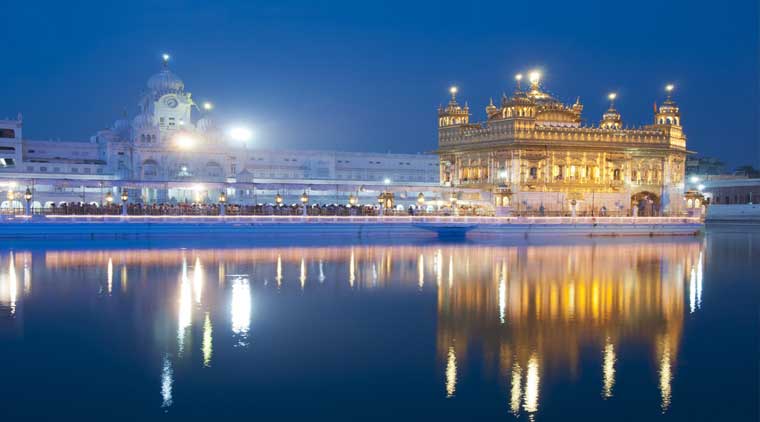
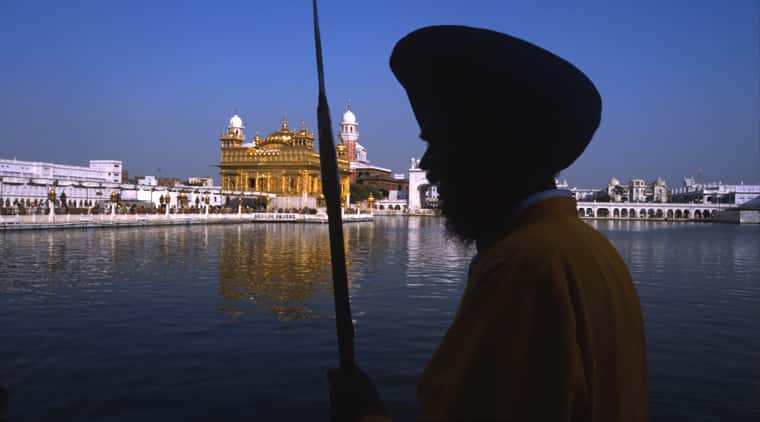
The Golden Temple stands in the middle of the holy Sarovar. A narrow bridge takes you across to the sanctum. A door opens on each of its four sides. The SGPC, which runs the temple, explains that the four doors show that people of every faith may enter. The SGPC records that the foundation stone was laid in 1588 and the temple was finished by 1604.
Each night the Guru Granth Sahib is carried to the Akal Takht to rest. This is the Sukhasan. Before dawn it is brought back in the golden Palki Sahib. The times shift with the season, so confirm them on sgpc.net.
The Golden Temple runs one of the largest free kitchens in the world. It stays open day and night. Everyone sits together on the floor and eats as equals. Many visitors help wash plates or roll rotis as seva. Your children can help too.
Cover your head inside the whole complex. Free scarves are kept near the entrance.
Remove your shoes at the shoe counter and wash your feet in the shallow channel.
No tobacco, no alcohol and no other intoxicants.
Do not record videos anywhere in the complex. Ask the sevadars before you take any photo.
Gurdwara Sis Ganj Sahib, Chandni Chowk: marks the place where Guru Tegh Bahadur was martyred in 1675. The Sikh leader Baghel Singh built the first shrine here in 1783.
Gurdwara Bangla Sahib, near Connaught Place: once the bungalow of Raja Jai Singh of Amber, where Guru Har Krishan stayed in Delhi. Its sarovar water is taken home by devotees.
Takht Sri Kesgarh Sahib, Anandpur Sahib: where Guru Gobind Singh founded the Khalsa on Vaisakhi in 1699. It is one of the five Takhts.
Gurdwara Parivar Vichhora Sahib, near Ropar: marks the place where Guru Gobind Singh's family was separated near the Sarsa river in December 1705.
Gurdwara Tarn Taran Sahib: founded by Guru Arjan Dev. It has the largest sarovar of all gurdwaras.
Goindwal Sahib: the Baoli Sahib built by Guru Amar Das, with 84 steps down to the water.
Baba Bakala Sahib: where Guru Tegh Bahadur meditated, and where the trader Makhan Shah Lubana announced that he had found the true Guru.
Jallianwala Bagh is a few minutes walk from the Golden Temple. On 13 April 1919, Baisakhi day, British troops under Brigadier General Reginald Dyer fired on a peaceful crowd here. Several hundred people were killed. You can see the Martyrs Well and bullet marks on the walls. The Partition Museum in the old Town Hall is close by. It tells the story of 1947. It is closed on Mondays.
Late October to mid March: mild days and cool evenings. The best time.
Mid December to late January: thick fog can slow flights, trains and road travel. Keep your plans loose.
May and June: very hot, often above 40 degrees. Hard for elders.
July to September: monsoon rain and humidity.
Amritsari kulcha with chole at Bharawan da Dhaba near the Town Hall.
Thick dal and parathas at Kesar da Dhaba, a landmark for many decades.
The langar at the Golden Temple, the simplest and most humble meal of all.
Many families come from Canada, the UK, Australia and the USA for a first darshan or an ardas. The Parikrama around the Sarovar is long and flat, so a wheelchair helps elders. Go for darshan in the early or late hours, when it is cooler and calmer. The SGPC also runs sarais near the temple, including the Sri Guru Gobind Singh Ji NRI Niwas. Book them on the official SGPC sarai site.
Late October to mid March. Avoid May and June heat. Fog from mid December to late January can slow travel.
Sikh and Hindu families, NRI and OCI families, senior pilgrims, first time visitors to Punjab
Easy (long drives on Day 2, Day 3 and Day 6)
Day by day
A carefully paced plan, day by day. Tap any day for the stay, meals and altitude detail.
Today you arrive in Delhi. Our team meets you and takes you to your hotel. Rest for a while.
In the afternoon you go to Gurdwara Sis Ganj Sahib in Chandni Chowk. Here Guru Tegh Bahadur was martyred in 1675 on the orders of Aurangzeb. The Sikh leader Baghel Singh built the first shrine here in 1783.
Then you go to Gurdwara Bangla Sahib near Connaught Place. It was once the bungalow of Raja Jai Singh of Amber. Guru Har Krishan stayed here during his time in Delhi and served the sick of the city. Devotees take home water from its sarovar. Stay for the evening kirtan and eat in the langar.
Special Tips for This Day Chandni Chowk lanes are crowded, so go by metro or a cycle rickshaw for the last stretch. Carry a head scarf in your bag for both gurdwaras.
Today you drive north on the highway to Chandigarh, a planned city at the foot of the Shivalik hills.
In the afternoon you walk through Nek Chand's Rock Garden. A road inspector named Nek Chand built it in secret from broken tiles, bangles and waste. Then you walk by Sukhna Lake at sunset.
Chandigarh's Capitol Complex, designed by Le Corbusier, is part of a UNESCO World Heritage Site listed in 2016. Visits need a pass. Ask us if you want to see it.
Special Tips for This Day Start early to avoid highway traffic near Delhi. The Rock Garden has many narrow passages and steps, so elders should walk slowly.
Today you start early for Anandpur Sahib, about 85 km away. You bow at Takht Sri Kesgarh Sahib. Here, on Vaisakhi in 1699, Guru Gobind Singh founded the Khalsa. It is one of the five Takhts.
Then you drive about 30 km to Gurdwara Parivar Vichhora Sahib, near Ropar. It marks the cold night of December 1705 when Guru Gobind Singh's family was separated near the Sarsa river.
After lunch you drive about 195 km to Amritsar. In the evening you go for your first darshan at the Golden Temple. Walk the Parikrama slowly and sit by the Sarovar as the kirtan plays.
Special Tips for This Day Anandpur Sahib has langar for all, so you can eat there. Keep the evening calm. Reach the Golden Temple after 8 pm to miss the biggest crowds.
Today you rise before dawn for the Palki Sahib, when the Guru Granth Sahib is brought back to the sanctum. In winter this is near 5 am. Confirm the time on sgpc.net.
After breakfast you walk to Jallianwala Bagh. On 13 April 1919, British troops under Brigadier General Reginald Dyer fired on a peaceful crowd here. See the Martyrs Well and the bullet marks on the walls. Then walk to the Partition Museum in the Town Hall. It is closed on Mondays.
For lunch, try an Amritsari kulcha at Bharawan da Dhaba near the Town Hall.
In the afternoon you drive about 28 to 32 km to the Attari and Wagah border for the Beating Retreat before sunset. The start time changes with the season, so confirm it on the day. Seating is free and fills early.
Special Tips for This Day Carry a valid ID and only a small bag to Wagah, as security is strict. Elders should avoid the steep upper stands.
Today you visit three great gurdwaras of the Majha region.
First you drive about 21 km to Tarn Taran Sahib. Guru Arjan Dev founded it. It has the largest sarovar of all the gurdwaras.
Then you drive about 23 km to Goindwal Sahib on the Beas. Guru Amar Das built the Baoli Sahib here, with 84 steps down to the water. Devotees believe that reciting the Japji Sahib on each step brings liberation.
Then you drive about 34 km to Baba Bakala Sahib. Guru Tegh Bahadur meditated here. Tradition says the trader Makhan Shah Lubana found the true Guru here and climbed to the roof to tell everyone.
Return to Amritsar for a last evening darshan. For dinner, try the dal and parathas at Kesar da Dhaba.
Special Tips for This Day Goindwal's baoli steps are steep and can be wet, so hold the railing. Carry cash for offerings and for prasad.
Today you take one last early darshan, the calmest hour of the day. Buy prasad, karas or books for family as keepsakes.
Then you drive back to Delhi on the highway. If you prefer, we can book a flight or a train instead.
Special Tips for This Day In the fog season, from mid December to late January, start later in the morning when the road is clearer. Keep water and snacks in the car.
UNESCO World Heritage
This tour takes you close to 4 UNESCO World Heritage Sites of India. These are places the world has recognised as our shared treasure. Below you can see each one and how far it is from where you stay, so you can plan your darshan and sightseeing with time to spare.
Cultural · Inscribed 1993 · Delhi
While you stay at Delhi, you can visit Qutb Minar and its Monuments, Delhi, a UNESCO World Heritage Site.
Cultural · Inscribed 1993 · Delhi
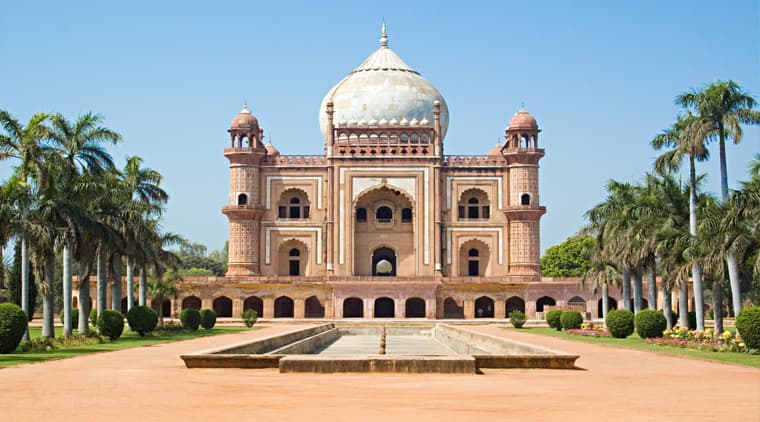
While you stay at Delhi, you can visit Humayun's Tomb, Delhi, a UNESCO World Heritage Site.
Cultural · Inscribed 2007 · Delhi
While you stay at Delhi, you can visit Red Fort Complex, a UNESCO World Heritage Site.
Cultural · Inscribed 2016 · Chandigarh
While you stay at Chandigarh, you can visit The Architectural Work of Le Corbusier (Capitol Complex), a UNESCO World Heritage Site.
Want to plan your trip around India’s World Heritage Sites? See all UNESCO World Heritage Sites of India.
Travel tips
On this yatra you bow at Sis Ganj and Bangla Sahib, stand where the Khalsa was born at Anandpur Sahib, take darshan at the Golden Temple, eat in the langar and visit Tarn Taran, Goindwal and Baba Bakala. Here is what you should know before you go.
Come between late October and mid March. Watch for fog from mid December to late January.
Cover your head, remove your shoes, and come for the Palki Sahib before dawn.
Go for darshan very early or after 8 pm to avoid the biggest crowds. The middle of the day is the busiest and hottest.
From Sis Ganj in Delhi to Baba Bakala near Amritsar, each stop marks a part of Sikh history.
Two honest places of memory near the temple, and a loud, proud evening at the border.
Carry a valid ID and only a small bag. Large bags and big cameras may be stopped at the gate.
Have an Amritsari kulcha, a glass of lassi, and at least one meal in the langar.
The SGPC runs the NRI Niwas near the temple. Book on the official SGPC sarai site.
Sri Harmandir Sahib
The Golden Temple has a door on each of its four sides. The SGPC explains that this shows people of every faith and every background may enter. Sit by the water for a while before you leave, and listen to the kirtan.
What's included
What travellers say
“Had a wonderful experience with way to india for my badrinath kedarnath yatra.everything was well organized-from travel accommodation to food. A special thanks to Ms. Neha who managed everything so beautifully n was extremely supportive n cooperative throughout the journey. They took great care of us n darshan was done very smoothly.”a month ago · Google
“A big thanks to Way To India for organising such a truly memorable and spiritually fulfilling experience during our 12 Jyotirlinga Darshan pilgrimage from 1st May to 18th May. They organized the entire journey exceptionally well, ensuring that every aspect of the trip was smooth, comfortable, and hassle-free. From transportation and hotel arrangements to darshan planning and coordination, everything was managed professionally. Despite the extensive travel across multiple destinations, the itinerary was well-structured, allowing us to complete all the Jyotirlinga darshans comfortably. Thanks to staff of Way To India, especially, Ms Neha, who was supportive, responsive, and attentive throughout the journey, always ready to assist whenever needed. Her dedication and careful planning made this sacred pilgrimage stress-free and enjoyable. I sincerely appreciate their excellent service, commitment, and hospitality. Highly recommend Way To India to anyone planning a spiritual tour, especially for the 12 Jyotirlinga Yatra. Thank you for making this divine journey so special and memorable.”5 months ago · Google
“We have successfully completed the 12 Jyotirlinga Yatra, with Waytoindia and it was a truly blessed and unforgettable journey. Every aspect of the tour was well planned and professionally organized, from transportation and accommodations to temple visits and sightseeing. Visiting all twelve sacred Jyotirlingas was a deeply spiritual experience. The itinerary was designed efficiently, allowing us to have darshan at each shrine comfortably while enjoying the cultural and religious significance of every destination. We sincerely appreciate the excellent support and coordination throughout the trip. The team was always available to assist, ensuring a smooth and stress-free pilgrimage. Thank you Waytoindia for making our dream of completing the 12 Jyotirlinga Yatra a reality. We highly recommend this tour to anyone seeking a well-organized and spiritually enriching pilgrimage experience. Har Har Mahadev! 🙏🕉️”5 months ago · Google
Travelled with Way to India?
Share your experience on Google — it takes a minute and helps fellow travellers plan with confidence.
FAQ
Two to three days in Amritsar is enough for the Golden Temple, Jallianwala Bagh and Wagah. This six day tour adds the Delhi gurdwaras, Anandpur Sahib, Tarn Taran, Goindwal and Baba Bakala.
Yes. Everyone must cover the head inside the whole complex, of every faith. Free scarves are kept near the entrance. You also remove your shoes and wash your feet before you enter.
Yes. The temple has a door on each of its four sides, which the SGPC explains as a welcome to all. There is no entry fee. You only follow the simple rules of dress and conduct.
Late October to mid March is the best time. May and June are very hot. Thick fog can slow travel from mid December to late January.
It takes place every evening before sunset. The start time changes with the season. Reach early, as seating is free and fills fast, and confirm the time on the day.
Guru Gobind Singh founded the Khalsa at Anandpur Sahib on Vaisakhi in 1699. Takht Sri Kesgarh Sahib stands on the spot. This tour visits it on Day 3.
Tarn Taran Sahib, founded by Guru Arjan Dev, has the largest sarovar of all gurdwaras. Goindwal Sahib has the Baoli Sahib of Guru Amar Das, with 84 steps down to the water.
The SGPC runs sarais near the temple, including the Sri Guru Gobind Singh Ji NRI Niwas. Book on the official SGPC sarai site. Many hotels are also a short walk away.
No. The Partition Museum in Amritsar's Town Hall is closed on Mondays. Plan your visit for another day.
You may also like
Tell us your dates and group size. A WayToIndia travel expert replies within a few hours with a plan you can customise freely. Planning India journeys since 2010.
Explore Way to India
© 2026 Way to India. All rights reserved.